913 Results for "

basal ,cell

" in MedChemExpress (MCE) Product Catalog:
Products (913)

913 Results for "basal ,cell" in MCE Product Catalog:

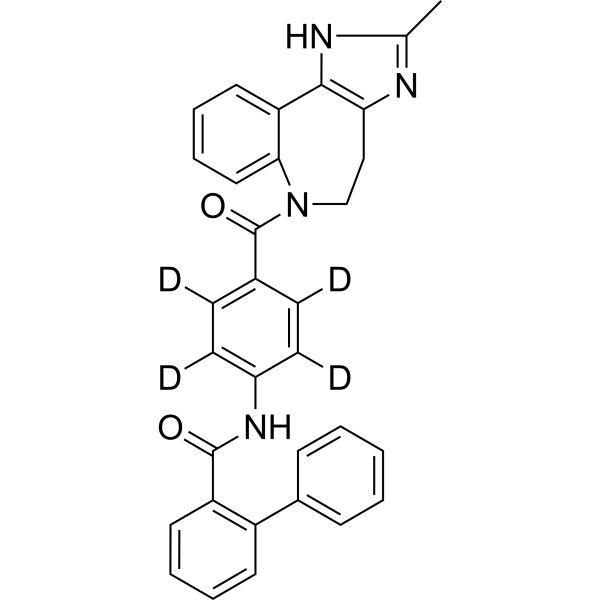
製品番号: HY-129511
CAS 番号: 1129433-63-1
別名: YM 087-d4
Conivaptan-d4 (YM 087-d4) is the deuterated-labeled Conivaptan (HY-18347). Conivaptan (YM 087 free base) is an orally active dual vasopressin V1a/V2 receptor antagonist with Ki values of 0.48 nM and 3.04 nM for vasopressin V1a receptor and V2 receptor, respectively. Conivaptan competitively and reversibly blocks vasopressin-mediated antidiuresis, vasoconstriction, and cellular hypertrophy, while inhibiting CYP3A4. Conivaptan inhibits vasopressin-induced intracellular calcium, cAMP, and mitogen-activated kinase activation in vascular smooth muscle cells and cardiomyocytes. Conivaptan induces water diuresis while improving hemodynamics in heart failure models, reducing left ventricular end-diastolic pressure, vascular resistance, and organ weight. Conivaptan is used for research on hyponatremia and congestive heart failure .
loading...
    loading...
製品番号: HY-164236S
CAS 番号: 2738376-81-1
C22 Glucosylceramide (d18:1/22:0)-d4 is deuterium labeled C22 Glucosylceramide (d18:1/22:0) (HY-164236). C22 Glucosylceramide (d18:1/22:0) is a bioactive sphingolipid composed of a d18:1 sphingoid base and a 22:0 fatty acid chain. C22 Glucosylceramide (d18:1/22:0) specifically exists in Doxorubicin (HY-15142A)-sensitive cancer cells, and its circulating concentration is positively correlated with the incidence of cardiovascular events. C22 Glucosylceramide (d18:1/22:0) has been widely used in research related to cardiovascular diseases, hypercholesterolemia, metabolic syndrome, breast adenocarcinoma and other fields .
loading...
    loading...
製品番号: HY-D3090
CAS 番号: 2757682-04-3
Target:  

Fluorescent Dye

研究分野:  

Others

NRLD is a lipid droplet-targeting solvatochromic fluorescent probe developed based on Nile Red (HY-D0718), which can target lipid droplets and sense the non-polar lipid microenvironment inside lipid droplets. NRLD exhibits superior lipid droplet-targeting selectivity compared to the parent Nile Red dye in HeLa cell imaging. NRLD achieves detection relying on the solvatochromic effect generated by excited-state charge transfer, and its emission wavelength shifts according to the local polarity changes of the microenvironment it locates in: the more compact and ordered the lipid packing and the lower the environmental polarity, the more blue-shifted the emission; the looser the lipid packing or the stronger the hydration and the higher the environmental polarity, the more red-shifted the emission. NRLD shows blue shift in the non-polar oil core of lipid droplets and red shift in high-polarity environments such as phosphate buffer .
loading...
    loading...
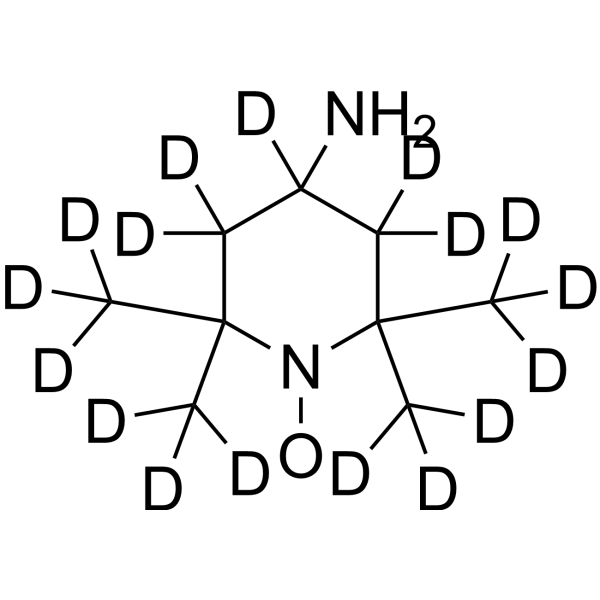
製品番号: HY-W002004S1
CAS 番号: 70588-04-4
別名: 4-Amino-2,2,6,6-tetramethylpiperidine-1-oxyl-d17
4-Amino-TEMPO-d17 (4-Amino-2,2,6,6-tetramethylpiperidine-1-oxyl-d17) is the deuterium labeled 4-Amino-TEMPO (HY-W002004). 4-Amino-TEMPO (4-Amino-2,2,6,6-tetramethylpiperidine-1-oxyl) is a stable nitroxide radical and N-nucleophile based on TEMPO. 4-Amino-TEMPO has superoxide dismutase-mimetic activity, can protect cells from oxidative damage, and has radioprotective effects. 4-Amino-TEMPO is widely used in fields such as biomedicine, materials science, and industrial production. 4-Amino-TEMPO can be used as a spin label to detect free radicals, an oxidation catalyst in industrial production, and an antioxidant stabilizer for polymers, among others .
loading...
    loading...
製品番号: HY-W016174
CAS 番号: 139-66-2
研究分野:  

Others

Diphenyl sulfide is an additive for organic photovoltaic devices. Diphenyl sulfide modulates vertical composition distribution of PTB7-Th:PC71BM photoactive layers, promoting enrichment of PTB7-Th at the upper surface and PC71BM at the bottom. Diphenyl sulfide promotes ordered molecular packing and crystallinity of PTB7-Th:PC71BM photoactive layers, including more compact π−π stacking of PTB7-Th. Diphenyl sulfide improves exciton dissociation, charge transport, and charge collection in PTB7-Th:PC71BM-based inverted polymer solar cells. Diphenyl sulfide acts as a solvent additive to improve the photovoltaic performance of inverted organic photovoltaic devices .
loading...
    loading...
製品番号: HY-L231
25 compounds

The TCA cycle (tricarboxylic acid cycle)—is also known as the Krebs cycle or the citric acid cycle (CAC). The TCA cycle is a series of chemical reactions that release stored energy through the oxidation of acetyl-CoA in carbohydrates, fats, and proteins.

For decades, the TCA cycle has been considered as the central pathway for cell oxidative phosphorylation to produce energy and biosynthesis. Research shows that TCA cycle is associated with many diseases, especially cancer. In colon carcinoma, liver cancer and other cancers, there are mutations that lead to the imbalance of TCA cycle metabolites, indicating that TCA cycle may be related to the occurrence of cancer. Understanding the role and molecular mechanism of TCA cycle in inhibiting or promoting cancer progression will promote the development of new metabolite-based cancer treatment methods in the future.

MCE supplies a unique collection of 25 key intermediates of the TCA cycle, which can be utilized for TCA-related research and metabolomics identification studies.

製品番号: HY-L207
661 compounds

Metabolomics is the large-scale study of cellular metabolic complement, with proven utility in both basic and applied studies of plants, microorganisms, and mammals. As an important tool for the study of complex biological systems, metabolomics monitors the complex molecular networks that exist in the natural flow of information from genes to mRNA and proteins to organisms. The metabolome is composed of biomolecules that most closely resemble the phenotype of an organism, and changes in its composition can easily lead to the production of diseases. Therefore, metabolomics has received much attention in drug target discovery, drug response and translational research of disease mechanisms. Mass spectrometry-based metabolomics methods can simultaneously detect and quantify thousands of metabolite signatures, thereby characterizing the pathophysiological mechanisms of various biomedical symptoms.

MCE can provide 661 mass spectrometry human endogenous metabolites that can be used for metabolite identification and quantification, functional cell detection and phenotypic screening of mass spectrometry.

製品番号: HY-L914
3,211 compounds

In the research of covalent inhibitors targeting serine and threonine, scientists have found that the nucleophilicity of these hydroxyl groups is significantly enhanced due to the influence of their surrounding environment. This results in higher activity during catalytic reactions. Aspirin, which targets the non-catalytic domain serine (Ser529 in human COX1) of cyclooxygenase, exerts its anti-inflammatory effect through covalent binding. β-lactam antibiotics, which targets the catalytic domain serine of penicillin-binding proteins, interferes with bacterial cell wall synthesis.

Through careful selection, we constructed a structural filter containing over 110 electrophilic groups. By analyzing the electrophilic fragments selected by the structural filter, we removed any molecules with trivial or undesirable structural features. Ultimately, we obtained 3,300 fragment molecules which can target serine and threonine residues and can be used for fragment-based covalent drug discovery.

製品番号: HY-L148
72 compounds

The TCA cycle (tricarboxylic acid cycle)—is also known as the Krebs cycle or the citric acid cycle (CAC). The TCA cycle is a series of chemical reactions that release stored energy through the oxidation of acetyl-CoA in carbohydrates, fats, and proteins.

For decades, the TCA cycle has been considered as the central pathway for cell oxidative phosphorylation to produce energy and biosynthesis. Research shows that TCA cycle is associated with many diseases, especially cancer. In colon carcinoma, liver cancer and other cancers, there are mutations that lead to the imbalance of TCA cycle metabolites, indicating that TCA cycle may be related to the occurrence of cancer. Understanding the role and molecular mechanism of TCA cycle in inhibiting or promoting cancer progression will promote the development of new metabolite-based cancer treatment methods in the future.

MCE supplies a unique collection of 72 compounds related to the TCA cycle. MCE TCA Cycle Compound Library is a useful tool for the TCA cycle related research and anti-cancer drug development.

製品番号: HY-134813R
CAS 番号: 2621928-55-8
Target:  

Reference Standards Ras

研究分野:  

Cancer

MRTX1133 (Standard) is the analytical standard of MRTX1133 (HY-134813). This product is intended for research and analytical applications. MRTX1133 is a noncovalent, potent, and selective alkyne-based KRAS G12D inhibitor. MRTX1133 optimally fills the switch II pocket and extends three substituents to favorably interact with the protein, resulting in an estimated KD against KRAS G12D of 0.2 pM. MRTX1133 prevents SOS1-catalyzed nucleotide exchange and/or formation of the KRAS G12D/GTP/RAF1 complex, thereby inhibiting mutant KRAS-dependent signal transduction. MRTX1133 selectively inhibits KRAS G12D mutant, but not KRAS wild-type, tumor cells. MRTX1133 has single digit nanomolar activity in cellular assays and marked in vivo efficacy in tumor models harboring KRAS G12D mutations .
loading...
    loading...
製品番号: HY-163854
CAS 番号: 3048341-44-9
Target:  

HSP Apoptosis

研究分野:  

Cancer

HSP70-IN-6 (JL-15) is an inhibitor of Hsp70-Bim protein-protein interaction, with an IC50 value of 0.07 μM against Hsp70-Bim PPI, an IC50 of 4.89 μM and a Kd of 0.123 μM for BimBH3-stimulated Hsp70 ATPase activity. HSP70-IN-6 selectively blocks the binding of Hsp70-Bim without affecting the Hsp70-Bag3 interaction, and inhibits BimBH3-stimulated Hsp70 ATPase activity but has no impact on basal ATPase activity. HSP70-IN-6 induces apoptosis (apoptosis) in chronic myeloid leukemia cells in an Hsp70-Bim-dependent manner. HSP70-IN-6 can be used in research related to chronic myeloid leukemia .
loading...
    loading...
製品番号: HY-184776
CAS 番号: 586-60-7
別名: Dyclocaine
Dyclonine (Dyclocaine) is an orally active, blood-brain barrier-permeable piperidine phenylacetone small molecule commonly used as a local anesthetic. Dyclonine acts as a highly selective allosteric antagonist of TRPV3; it also reversibly inhibits G9a, ALDH2 and ALDH3A1, non-competitively blocks AChE. Dyclonine activates the Nrf2/ARE pathway, relieves the epigenetic silencing of FXN, blocks Aβ42 aggregation, and promotes remyelination and reparative polarization of microglia. Dyclonine alleviates pruritus via TRPV3 inhibition; it is used in studies of neurodegenerative disease models based on its AChE inhibitory, antioxidant and remyelinating effects; it sensitizes drug-resistant tumors through ALDH inhibition, and combined use with protease inhibitors induces more tumor cell apoptosis; it inhibits Candida albicans in vitro. Dyclonine can be used for research on multiple diseases including neurodegenerative diseases, cancer and pruritic dermatitis .
loading...
    loading...
製品番号: HY-D3119
CAS 番号: 2246946-49-4
研究分野:  

Others

MitoAIE1 is a Fluorescent probe for mitochondrial viscosity detection. MitoAIE1 contains a pyridinium structural unit, which endows it with mitochondria-targeting specificity. The detection mechanism of this probe is based on aggregation-induced emission (AIE): in low-viscosity media such as PBS buffer, intramolecular rotation leads to non-radiative energy dissipation, resulting in only weak fluorescence; however, in high-viscosity environments such as the mitochondrial matrix or the vicinity of the inner mitochondrial membrane, such intramolecular motion is restricted, thereby significantly enhancing its fluorescent signal; in addition, this probe is not interfered by changes in microenvironment polarity and pH. Its emission wavelength is 625 nm, with absorption peaks at 325 nm and 450 nm; when transferred from low-viscosity PBS to high-viscosity 99% glycerol, its fluorescence intensity at 625 nm can be increased by 38-fold. It can be used to monitor changes in mitochondrial viscosity during processes such as Stauroporine (HY-15141)-induced apoptosis and starvation-induced mitophagy in live cells, and has good biocompatibility .
loading...
    loading...
製品番号: HY-112817
CAS 番号: 139307-94-1
別名: 8-Oxo-Deoxyguanosine triphosphate
8-Oxo-dGTP (8-Oxo-Deoxyguanosine triphosphate) is an oxidized guanine nucleotide formed by ROS-mediated oxidative modification of dGTP, and it also serves as a key substrate for 8-oxo-dGTP pyrophosphohydrolases (such as hMTH1 and E. coli MutT). 8-Oxo-dGTP acts as a DNA mutagen, inserts into nascent DNA and pairs with adenine and cytosine, inducing A:T to C:G transversion mutations. Furthermore, 8-Oxo-dGTP causes oxidative DNA base modification, strand breakage and S-phase arrest, and ultimately triggers AIF-mediated apoptosis and promotes spontaneous carcinogenesis in mth1-deficient mice. Accumulation of 8-Oxo-dGTP in cells induces genomic instability, but it exhibits a tumor-suppressive effect that reduces tumor incidence in mouse models instead. 8-Oxo-dGTP is widely used in studies related to spontaneous carcinogenesis, Parkinson's disease, Alzheimer's disease, heart failure and tumor mechanisms .
loading...
    loading...
製品番号: HY-D3187
CAS 番号: 2484831-02-7
HMRef-αMan is a substrate-based green fluorescent probe (Ex/Em=465 nm/515 nm) targeting MAN2C1 (α-mannosidase). HMRef-αMan can be specifically cleaved by MAN2C1 to generate a highly fluorescent product, which thus gets activated to produce green fluorescence in malignant breast tissues, benign lesions and living cancer cells. The signal intensity of HMRef-αMan is directly correlated with MAN2C1 activity, and it can effectively detect tiny breast cancer lesions with a diameter of less than 1 mm. When used in combination with the red-emitting γ-glutamyl transpeptidase (GGT) probe gGlu-2OMe SiR600 (HY-D3188), HMRef-αMan enables precise optical differentiation of breast tissue types via a dual-color imaging strategy. HMRef-αMan has been widely used in the research of breast diseases such as breast cancer, fibroadenoma, phyllodes tumor and various types of papilloma .
loading...
    loading...
製品番号: HY-N16300
CAS 番号: 3091879-75-0
Target:  

Fluorescent Dye

研究分野:  

Others

Mito-laurdan (bromide) is a Fluorescent dye for mitochondrial membrane fluidity and packing measurement. It depends on membrane potential for targeting: it contains a cationic triphenylphosphonium moiety that accumulates at the inner mitochondrial membrane due to the membrane's negative potential, connected via a 3-carbon linker. As a solvatochromic dye derived from Laurdan (HY-D0080), it retains the characteristic mechanism where fluorescence emission shifts based on membrane packing: in more fluid, loosely packed membranes, greater water penetration leads to increased dipolar relaxation and a bathochromic red shift in emission, while more ordered membranes show a blue-shifted emission; these shifts are quantified using generalized polarization, calculated from emission intensities in ordered and disordered spectral windows. Its excitation wavelength is 352 nm, with emission detected in ordered (409-463 nm) and disordered (473-516 nm) spectral windows. It localizes specifically to mitochondria in HeLa cells, showing high signal overlap with MitoTracker Deep Red, and can detect changes in inner mitochondrial membrane fluidity .
loading...
    loading...
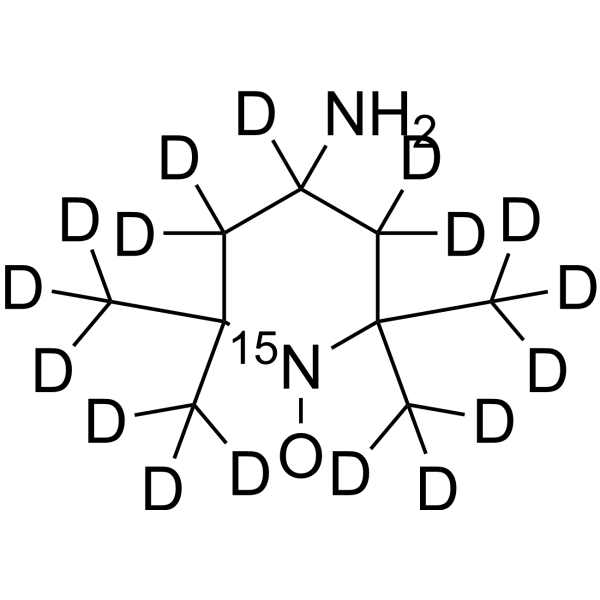
製品番号: HY-W002004S
CAS 番号: 97461-87-5
別名: 4-Amino-2,2,6,6-tetramethylpiperidine-1-oxyl-d17,15N
4-Amino-TEMPO-d17, 15N (4-Amino-2,2,6,6-tetramethylpiperidine-1-oxyl-d17, 15N) is the deuterium labeled 4-Amino-TEMPO-d17 (HY-W002004S1). 4-Amino-TEMPO (4-Amino-2,2,6,6-tetramethylpiperidine-1-oxyl) is a stable nitroxide radical and N-nucleophile based on TEMPO. 4-Amino-TEMPO has superoxide dismutase-mimetic activity, can protect cells from oxidative damage, and has radioprotective effects. 4-Amino-TEMPO is widely used in fields such as biomedicine, materials science, and industrial production. 4-Amino-TEMPO can be used as a spin label to detect free radicals, an oxidation catalyst in industrial production, and an antioxidant stabilizer for polymers, among others .
loading...
    loading...
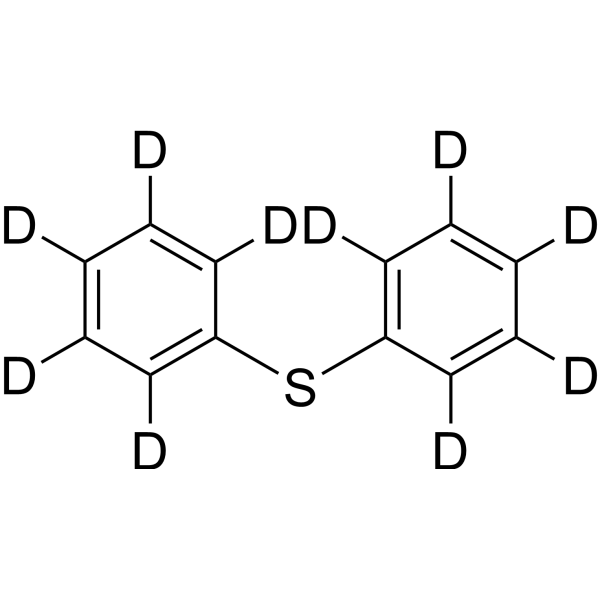
製品番号: HY-W016174S
CAS 番号: 180802-01-1
Diphenyl sulfide-d1 is the d1-labeled Diphenyl sulfide (HY-W016174). Diphenyl sulfide is an additive for organic photovoltaic devices. Diphenyl sulfide modulates vertical composition distribution of PTB7-Th:PC71BM photoactive layers, promoting enrichment of PTB7-Th at the upper surface and PC71BM at the bottom. Diphenyl sulfide promotes ordered molecular packing and crystallinity of PTB7-Th:PC71BM photoactive layers, including more compact π−π stacking of PTB7-Th. Diphenyl sulfide improves exciton dissociation, charge transport, and charge collection in PTB7-Th:PC71BM-based inverted polymer solar cells. Diphenyl sulfide acts as a solvent additive to improve the photovoltaic performance of inverted organic photovoltaic devices .
loading...
    loading...
製品番号: HY-L252
76 compounds

Carbohydrate metabolism serves as a central hub for energy supply and biosynthesis in living organisms and plays a critical role in the onset and progression of various diseases. In recent years, studies have shown that tumor cells reprogram their energy metabolism through aerobic glycolysis (the Warburg effect) to support rapid proliferation. Immune cells also rely on specific carbohydrate metabolic pathways to regulate their activation and differentiation states, while disorders such as diabetes and metabolic syndrome arise directly from dysregulation of carbohydrate metabolism. In addition, enzymes and key metabolic nodes involved in carbohydrate metabolism have become important targets for drug discovery, and therapeutic strategies targeting glycolysis, the pentose phosphate pathway, and energy metabolism are continuously advancing the treatment of cancer and metabolic diseases. Therefore, systematic analysis of carbohydrate metabolic networks and their associated metabolites is of great significance for elucidating disease mechanisms and developing novel therapeutic approaches.

The MCE Carbohydrate Metabolism Metabolite Library is constructed based on classical carbohydrate metabolic pathways and contains 76 metabolites. It systematically integrates key metabolic networks, including glycolysis, the pentose phosphate pathway, the tricarboxylic acid (TCA) cycle, monosaccharide metabolism, and sugar acid interconversions. The library comprehensively covers core metabolic nodes from glucose uptake and utilization to energy production and biosynthesis, while also incorporating important upstream and downstream intermediates. It enables accurate representation of intracellular metabolic flux dynamics and is well suited for applications such as metabolic flux analysis, target validation, and mechanistic studies. Furthermore, it provides robust support for multi-omics integration and the development of precision intervention strategies.

製品番号: HY-177442
別名: DS-3939
DS-3939a (DS-3939) is an anti-TA-MUC1 (tumor-associated mucin-1) antibody-drug conjugate (ADC). DS-3939a consists of a humanized anti-TA-MUC1 IgG1 monoclonal antibody Gatipotuzumab ( HY-P99634), a stable and cleavable tetrapeptide-based linker (Gly-Gly-Phe-Gly), and a DNA topoisomerase I inhibitor payload (DXd) (HY-13631D), and the drug-linker conjugate for ADC is Deruxtecan (HY-13631E). DS-3939a inhibits the growth of TA-MUC1-positive cancer cells (CFPAC-1, NCI-H2110) by inducing DNA damage and apoptosis. DS-3939a exhibits significant antitumor activity in a variety of TA-MUC1-expressing advanced solid tumors. DS-3939a can be used for the study of TA-MUC1-expressing advanced cancers .
loading...
    loading...

