



A 779
Based on 19 publication(s) in Google Scholar
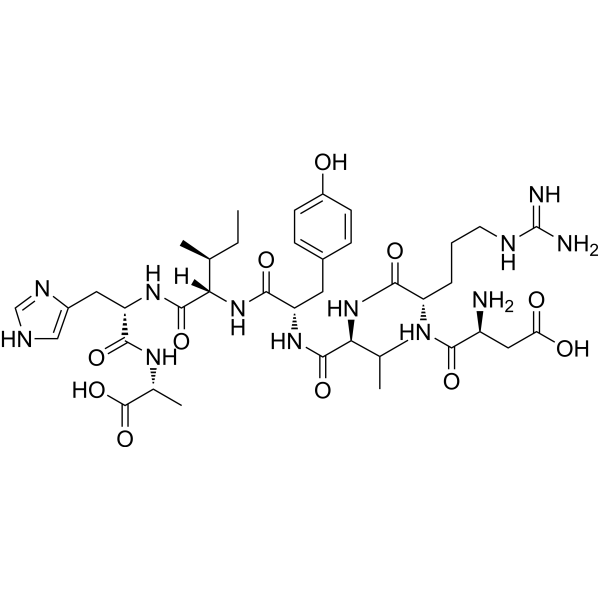
A 779 is a specific antagonist of G-protein coupled receptor (Mas receptor), which is an Ang1-7 receptor distinct from the classical AngII.
For research use only. We do not sell to patients.
- Purity : 99.55%
- CAS No.: 159432-28-7
- Formula: C39H60N12O11
- Molecular Weight:872.97
-
Storage:
Sealed storage, away from moisture.
Powder -80°C, 2 years , -20°C, 1 year* In solvent : -80°C, 2 years; -20°C, 1 year (sealed storage, away from moisture)

To place orders, for customer services and technical support, please contact: MedChemExpress USA
Tel: 609-228-6898 E-mail: [email protected] [email protected]


-
 Biological Activity
-
Chemical Information
-
Solvent & Solubility
- Purity & Documentation
- References
-
 Help & FAQs


-
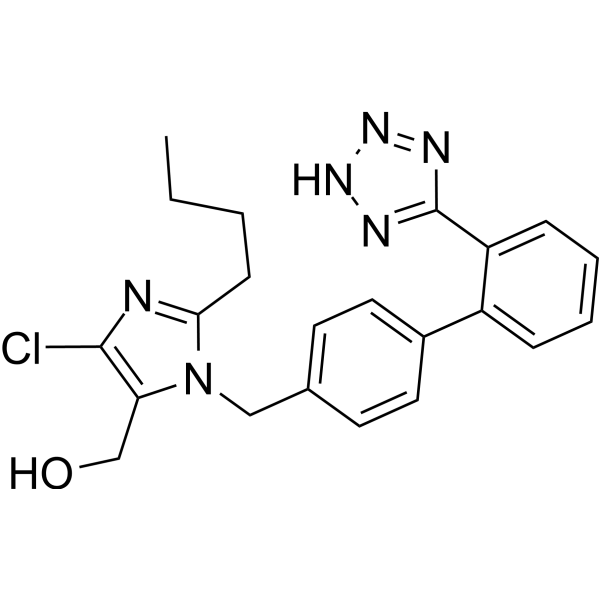
HY-17512
LosartanAngiotensin II Receptor Antagonist -
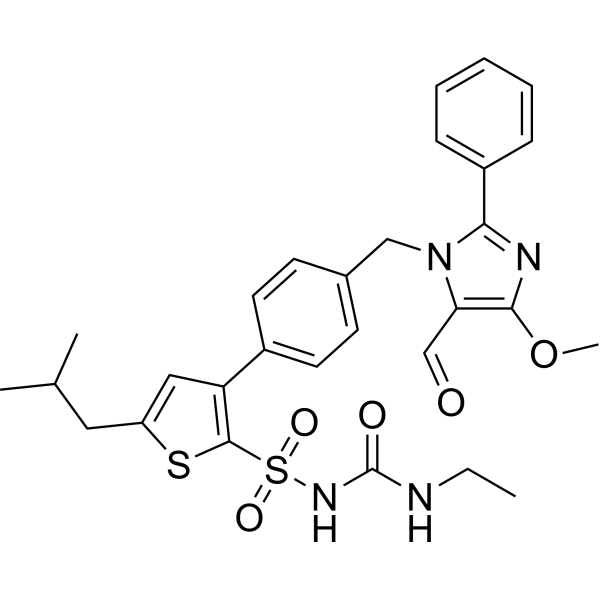
HY-15778
AVE 0991Ang-(1-7) Receptor Agonist -
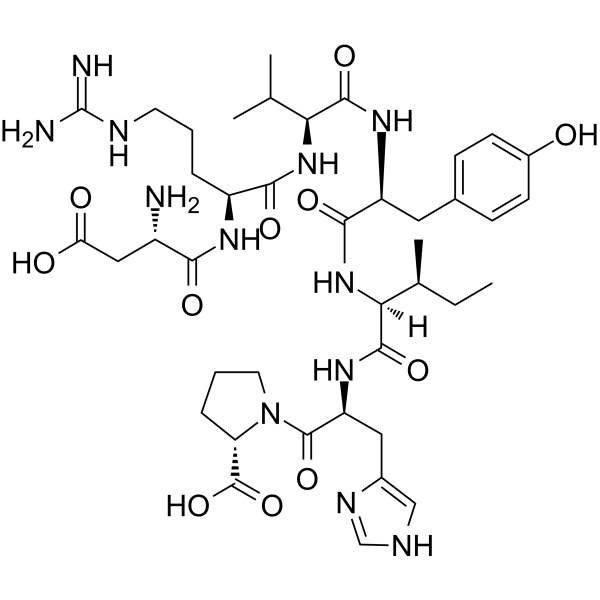
HY-12403
TalfirastideVasodilator Agent -
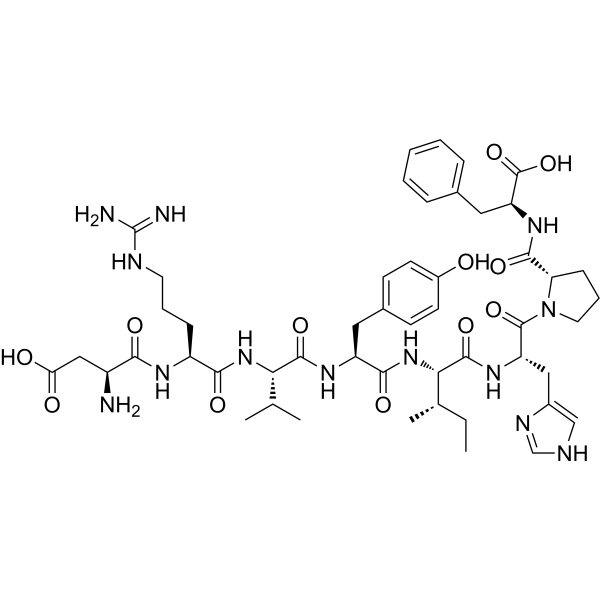
HY-13948
Angiotensin II humanVasoconstrictor -
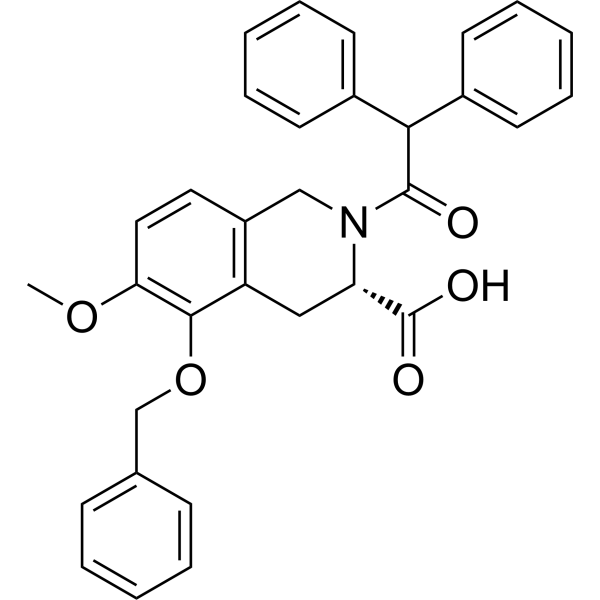
HY-13106
OlodanriganAT2R Antagonist -
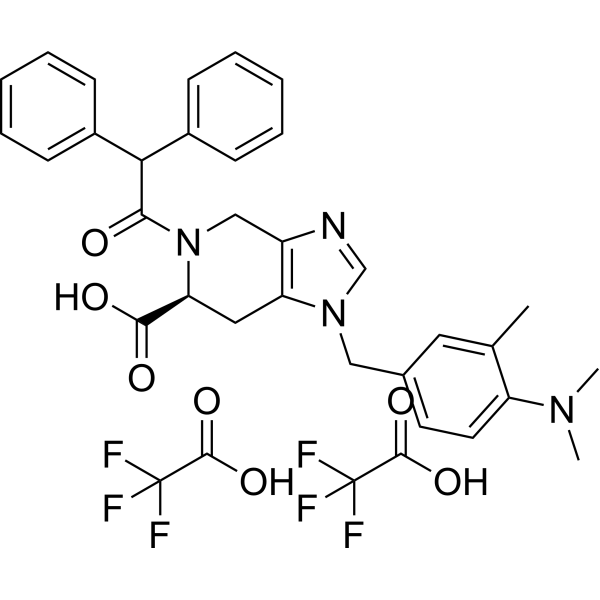
HY-10259A
PD 123319 ditrifluoroacetateAT2 Receptor Antagonist -
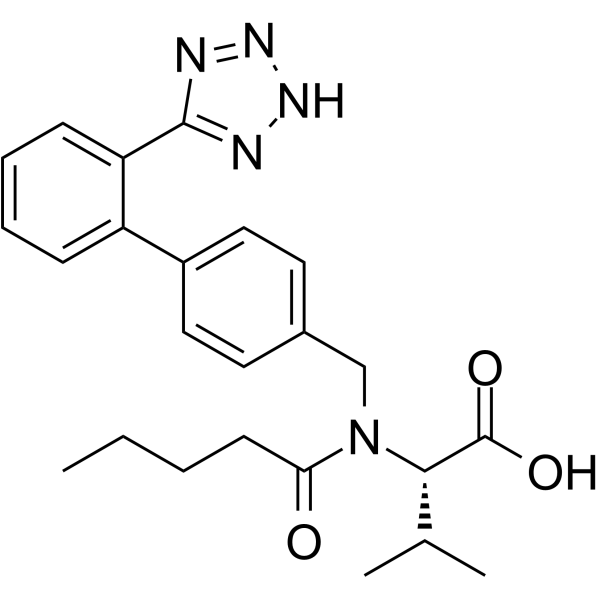
HY-18204
ValsartanAngiotensin II Receptor Antagonist -
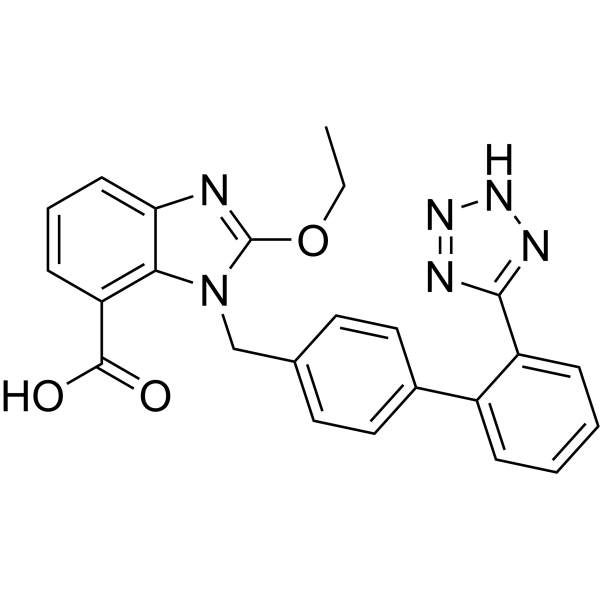
HY-B0205
CandesartanAngiotensin II AT1-Receptor Blocker -
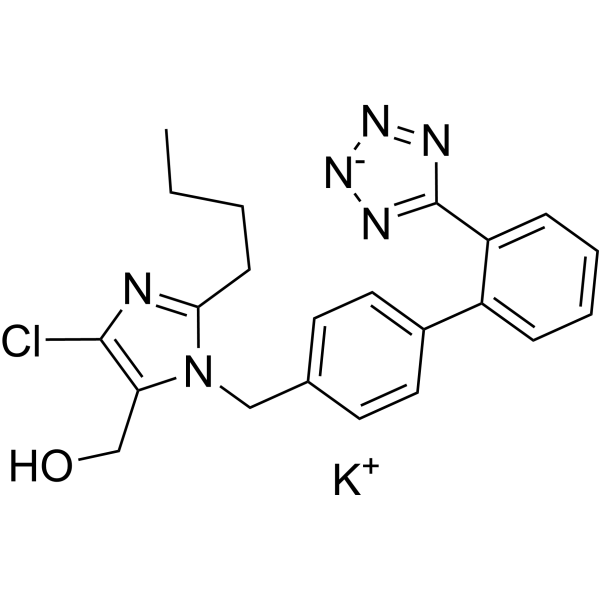
HY-17512A
Losartan potassiumAT1 Antagonist -
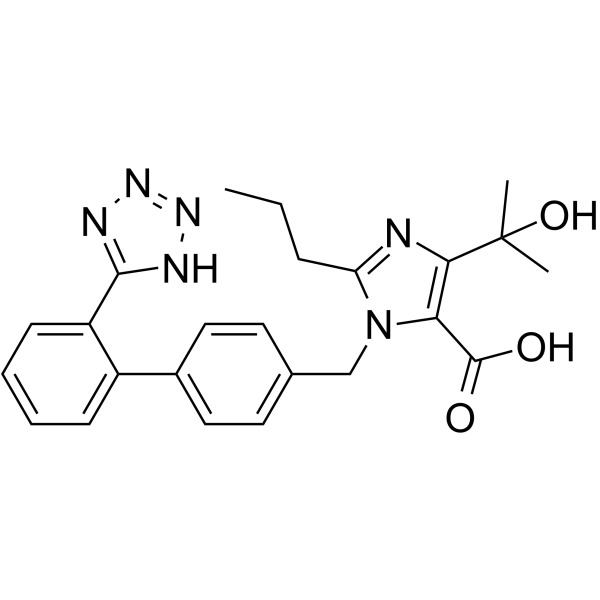
HY-17004
OlmesartanAT1R Antagonist -
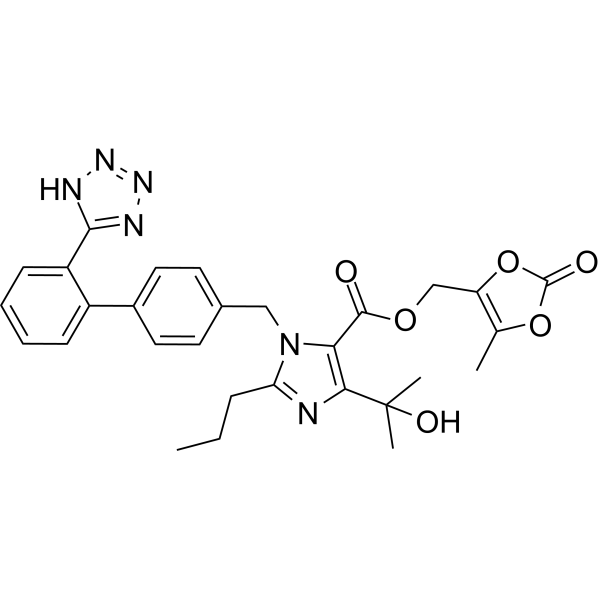
HY-17005
Olmesartan medoxomil -
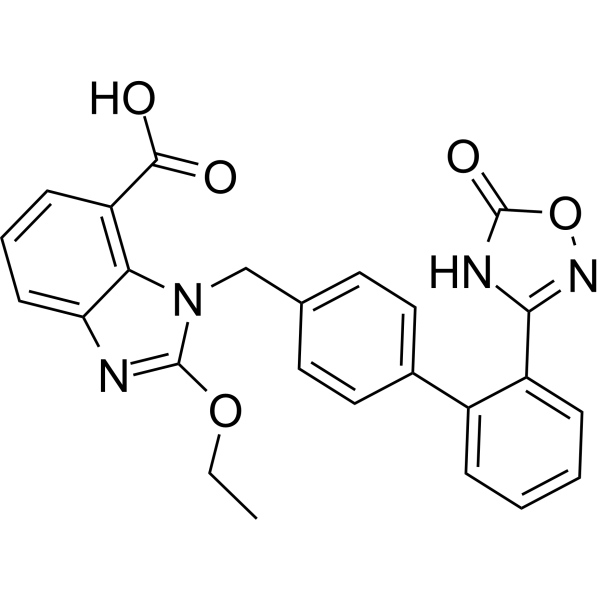
HY-14914
AzilsartanAT1 Antagonist
Publications Citing Use of MedChemExpress (MCE) A 779
More- J Hepatol. 2022 Nov 9;S0168-8278(22)03285-8. [Abstract]
- Cell Metab. 2022 Mar 1;34(3):424-440.e7. [Abstract]
- Biochem Pharmacol. 2023 Feb:208:115397. [Abstract]
- Cell Biosci. 2023 Feb 4;13(1):23. [Abstract]
- Pharm Biol. 2022 Dec;60(1):979-989. [Abstract]
- Acta Physiol. 2026 Apr;242(4):e70200. [Abstract]
- Eur J Pharmacol. 2022 Apr 15:921:174871. [Abstract]
- J Cell Mol Med. 2024 Dec;28(23):e70228. [Abstract]
- J Inflamm Res. 2024 Jan 24:17:469-485. [Abstract]
- Front Biosci (Landmark Ed). 2024 Sep 24;29(9):334. [Abstract]
- Toxicol Appl Pharmacol. 2026 Mar 27:511:117802. [Abstract]
- Peptides. 2024 Feb:172:171136. [Abstract]
- Arch Biochem Biophys. 2022 Jun 15;722:109218. [Abstract]
- J Peripher Nerv Syst. 2025 Sep;30(3):e70055. [Abstract]
- bioRxiv. 2026 Mar 25.
- SSRN. 2025 Jun 2.
- SSRN. 2025 Feb 28.
- Ann Transl Med. 2023 Jan 15;11(1):13. [Abstract]
- Research Square Preprint. 2020 Mar 27.
All Angiotensin Receptor Isoforms
More

Biological Activity
Description
IC50 & Target
|
AT2 Receptor |
AT1 Receptor |
In Vitro
A-779 inhibits the effect of Ang-(1-7), which suppresses the proliferating cell nuclear antigen (PCNA) protein expression up-regulated by Ang II, but A-779 alone has no effect to induce proliferation and migration of VSMCs. Pretreatment with Ang-(1-7) significantly retards Ang II-induced inflammatory responses of VSMCs associated with up-regulated MCP-1, VCAM-1 and IL-1β expressions, and this effect of Ang-(1-7) is blocked by A-779. But A-779 alone has no effect to induce inflammatory response of VSMCs. Pretreatment VSMCs with Ang-(1-7) for 5 min significantly inhibits Akt and ERK1/2 phosphorylation induced by Ang II, and this effect is also blocked by A-779, but alone has no effect to induce phosphorylation of Akt and ERK1/2 in VSMCs[3].
MedChemExpress (MCE) has not independently confirmed the accuracy of these methods. They are for reference only.
In Vivo
MedChemExpress (MCE) has not independently confirmed the accuracy of these methods. They are for reference only.


Chemical Information
-
CAS No. 159432-28-7
-
Appearance Solid
-
Molecular Weight 872.97
-
Formula C39H60N12O11
-
Color White to off-white
-
Sequence
Asp-Arg-Val-Tyr-Ile-His-{d-Ala}
-
Sequence Shortening
DRVYIH-{d-Ala}
-
Shipping
Room temperature in continental US; may vary elsewhere.
-
Storage
Sealed storage, away from moisture
Powder -80°C 2 years -20°C 1 year * In solvent : -80°C, 2 years; -20°C, 1 year (sealed storage, away from moisture)


Publications (19)
-
Journal Impact Factor
-
Most Recent
-
J Hepatol
Hepatocyte-specific Mas activation enhances lipophagy and fatty acid oxidation to protect against acetaminophen-induced hepatotoxicity in mice. [Abstract]2022 Nov 9;S0168-8278(22)03285-8. PMID: 36368597 -
Cell Metab
Imatinib and methazolamide ameliorate COVID-19-induced metabolic complications via elevating ACE2 enzymatic activity and inhibiting viral entry. [Abstract]2022 Mar 1;34(3):424-440.e7. PMID: 35150639 -
Biochem Pharmacol
Diminazene aceturate uses different pathways to induce relaxation in healthy and atherogenic blood vessels. [Abstract]2023 Feb:208:115397. PMID: 36566945 -
Cell Biosci
Ang-(1-7)/MasR axis promotes functional recovery after spinal cord injury by regulating microglia/macrophage polarization. [Abstract]2023 Feb 4;13(1):23. PMID: 36739421 -
Pharm Biol
Fraxinol attenuates LPS-induced acute lung injury by equilibrating ACE-Ang II-AT1R and ACE2-Ang (1-7)-Mas and inhibiting NLRP3. [Abstract]2022 Dec;60(1):979-989. PMID: 35588103 -
Acta Physiol
Angiotensin-(1-7) Alleviates Isoproterenol-Induced Cardiac Hypertrophy by Suppressing Autophagy and Apoptosis Through the Synergistic Action of Mas Receptor and Angiotensin II Type 2 Receptor. [Abstract]2026 Apr;242(4):e70200. PMID: 41886752 -
Eur J Pharmacol
Captopril alleviates glucocorticoid-induced osteonecrosis of the femoral head by mediating the ACE2/ Ang-(1-7)/Mas receptor cascade. [Abstract]2022 Apr 15:921:174871. PMID: 35283112 -
J Cell Mol Med
Geraniin Alleviates Mouse Laser-Induced Choroidal Neovascularisation by Inhibiting Choroidal Endothelial Cell ACE2/Ang-(1-7)/MasR/IL-10 Pathway. [Abstract]2024 Dec;28(23):e70228. PMID: 39622780 -
J Inflamm Res
Angiotensin-(1-7) Modulates the Warburg Effect to Alleviate Inflammation in LPS-Induced Macrophages and Septic Mice. [Abstract]2024 Jan 24:17:469-485. PMID: 38282712 -
Front Biosci (Landmark Ed)
ACE2 Alleviates Endoplasmic Reticulum Stress and Protects against Pyroptosis by Regulating Ang1-7/Mas in Ventilator-Induced Lung Injury. [Abstract]2024 Sep 24;29(9):334. PMID: 39344337 -
Toxicol Appl Pharmacol
Saikosaponin D protects against isoproterenol-induced kidney injury in rats by regulating the intrarenal renin-angiotensin system. [Abstract]2026 Mar 27:511:117802. PMID: 41903810 -
Peptides
Angiotensin 1-7 Exerts Antioxidant Effects, Suppresses Mammalian Target of Rapamycin (mTOR) Signaling, and Inhibits Apoptosis in Renal Proximal Tubular Cells. [Abstract]2024 Feb:172:171136. PMID: 38104660 -
Arch Biochem Biophys
Angiotensin-(1-7) promotes mitochondrial translocation of human telomerase reverse transcriptase in HUVECs through the TOM20 complex. [Abstract]2022 Jun 15;722:109218. PMID: 35430213 -
J Peripher Nerv Syst
Neuroprotective Effect of Mas Activation by BIO101 in Vincristine-Induced Small Fiber Neuropathy. [Abstract]2025 Sep;30(3):e70055. PMID: 40833359 -
-
-
-
Ann Transl Med
Recombinant human angiotensin-converting enzyme 2 plays a protective role in mice with sepsis-induced cardiac dysfunction through multiple signaling pathways dependent on converting angiotensin II to angiotensin 1-7. [Abstract]2023 Jan 15;11(1):13. PMID: 36760245 -


Solvent & Solubility
In Vitro:
DMSO : 33.33 mg/mL (38.18 mM; ultrasonic and adjust pH to 2 with 1 M HCL; Hygroscopic DMSO has a significant impact on the solubility of product, please use newly opened DMSO)
0.5 M HCl : 8.33 mg/mL (9.54 mM; Need ultrasonic)
Please refer to the solubility information to select the appropriate solvent. Once prepared, please aliquot and store the solution to prevent product inactivation from repeated freeze-thaw cycles.
Storage method and period of stock solution: -80°C, 2 years; -20°C, 1 year (sealed storage, away from moisture). When stored at -80°C, please use it within 2 years. When stored at -20°C, please use it within 1 year.
Please refer to the solubility information to select the appropriate solvent. Once prepared, please aliquot and store the solution to prevent product inactivation from repeated freeze-thaw cycles.
Storage method and period of stock solution: -80°C, 2 years; -20°C, 1 year (sealed storage, away from moisture). When stored at -80°C, please use it within 2 years. When stored at -20°C, please use it within 1 year.
Concentration (start) × Volume (start) = Concentration (final) × Volume (final)


Purity & Documentation
-
Data Sheet (283 KB)
-
SDS (254 KB)
- English - EN (254 KB)
- Français - FR (254 KB)
- Deutsch - DE (254 KB)
- Norwegian - NO (254 KB)
- Español - ES (254 KB)
- Swedish - SV (254 KB)
- Italian - IT (254 KB)
- Korean - KR (254 KB)
- Portuguese - PT (254 KB)
-
Handling Instructions (2659 KB)
References
[1]. Abuohashish HM, et al. Angiotensin (1-7) ameliorates the structural and biochemical alterations of ovariectomy-induced osteoporosis in rats via activation of ACE-2/Mas receptor axis. Sci Rep. 2017 May 23;7(1):2293. [Content Brief]
[2]. Abuohashish HM, et al. ACE-2/Ang1-7/Mas cascade mediates ACE inhibitor, captopril, protective effects in estrogen-deficient osteoporotic rats. Biomed Pharmacother. 2017 Aug;92:58-68. [Content Brief]
[3]. Yan WF, et al. Effects and related mechanism of angiotensin-(1-7) on Toll-like receptor 4-mediated oxidative stress in human umbilical vein endothelial cells. Zhonghua Xin Xue Guan Bing Za Zhi. 2017 Mar 24;45(3):223-229. [Content Brief]


Complete Stock Solution Preparation Table
Please refer to the solubility information to select the appropriate solvent. Once prepared, please aliquot and store the solution to prevent product inactivation from repeated freeze-thaw cycles.
Storage method and period of stock solution: -80°C, 2 years; -20°C, 1 year (sealed storage, away from moisture). When stored at -80°C, please use it within 2 years. When stored at -20°C, please use it within 1 year.
| Optional Solvent | Concentration Solvent Mass | 1 mg | 5 mg | 10 mg | 25 mg |
|---|---|---|---|---|---|
| 0.5 M HCl / DMSO | 1 mM | 1.1455 mL | 5.7276 mL | 11.4551 mL | 28.6379 mL |
| 5 mM | 0.2291 mL | 1.1455 mL | 2.2910 mL | 5.7276 mL | |
| DMSO | 10 mM | 0.1146 mL | 0.5728 mL | 1.1455 mL | 2.8638 mL |
| 15 mM | 0.0764 mL | 0.3818 mL | 0.7637 mL | 1.9092 mL | |
| 20 mM | 0.0573 mL | 0.2864 mL | 0.5728 mL | 1.4319 mL | |
| 25 mM | 0.0458 mL | 0.2291 mL | 0.4582 mL | 1.1455 mL | |
| 30 mM | 0.0382 mL | 0.1909 mL | 0.3818 mL | 0.9546 mL |


A 779 Related Classifications
HY-P0216 Related Classifications
 Powered by Bioz