



JNU-0921

Based on 1 Customer Validation
JNU-0921 is a potent and orally active CD137 agonist. JNU-0921 increases the mRNA expression of IFN-γ and GZMB. JNU-0921 induces luciferase activity with an EC50 value of 64.07 nM.JNU-0921 enhances effector and memory function of cytotoxic CD8+ T cells (CTLs) and alleviates their exhaustion. JNU-0921 also skews polarization of helper T cells toward T helper 1 type and enhances their activity to boost CTL function. JNU-0921 shows anticancer activity.
연구목적의 판매만을 진행합니다. 환자를 대상으로 한 판매는 하지 않습니다.
- Purity : 99.77%
- CAS No.: 3079468-41-7
- 화학식: C19H12N2O3
- 분자량:316.31
-
보관:Powder -20°C, 3 years , 4°C, 2 years ; In solvent -80°C, 6 months , -20°C, 1 month


To place orders, for customer services and technical support, please contact: MedChemExpress USA
Tel: 609-228-6898 E-mail: [email protected] [email protected]


-
 Biological Activity
-
Chemical Information
-
용액&용해도
- Protocol
- 순도&문서
- References
-
 Help & FAQs


-
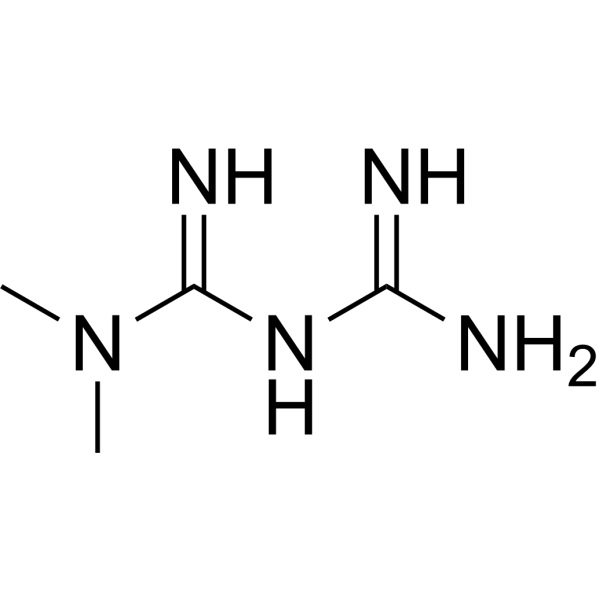
HY-B0627
MetforminAntihyperglycemic Agent -
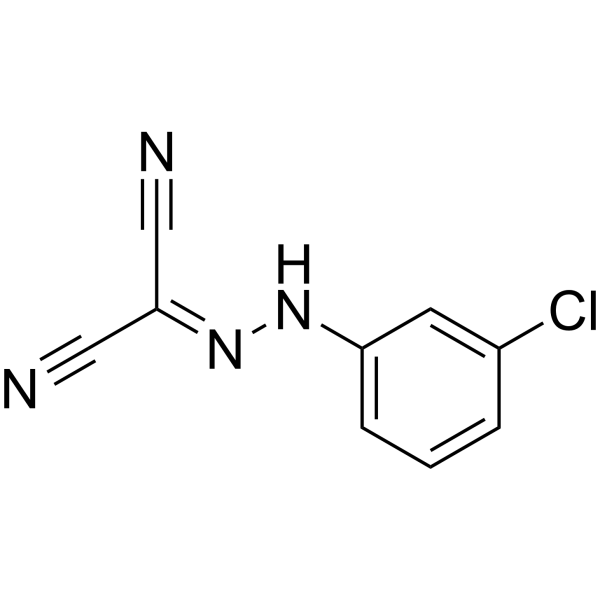
HY-100941
CCCPOXPHOS Uncoupler -
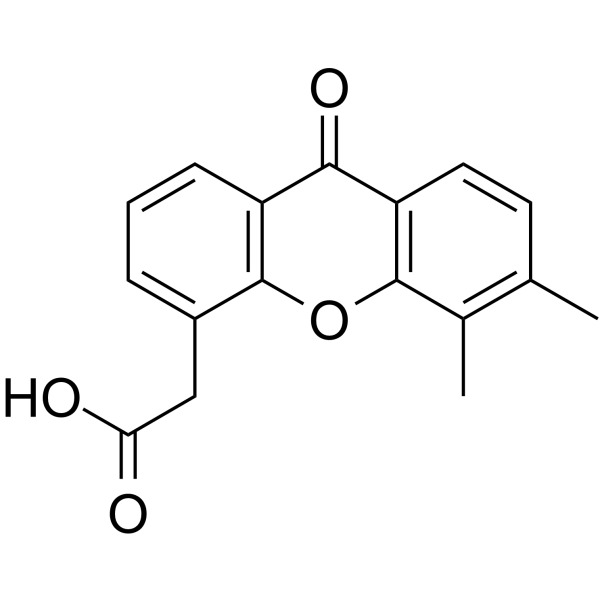
HY-10964
VadimezanVascular Disrupting Agent -
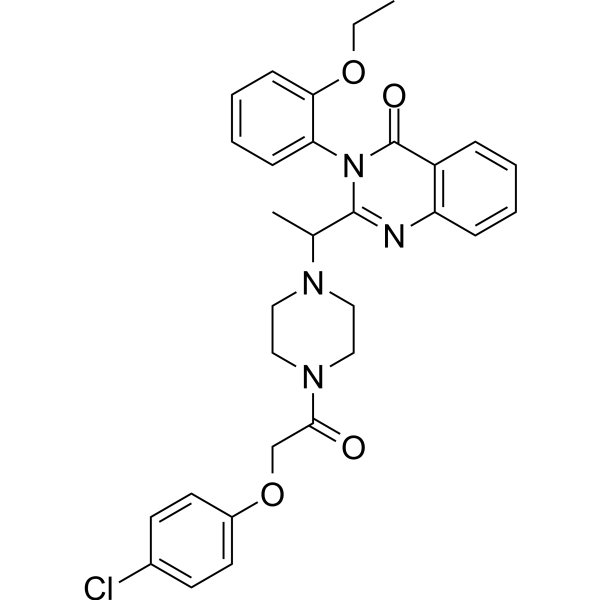
HY-15763
ErastinFerroptosis Inducer -
HY-106376A
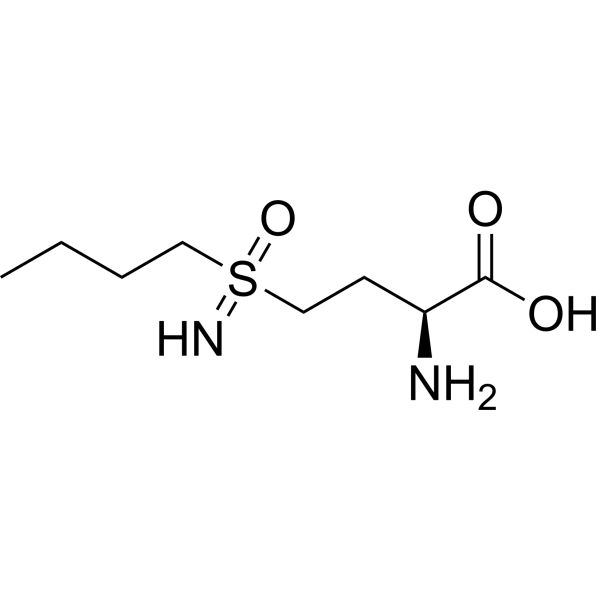
L-Buthionine-(S,R)-sulfoximineG-glutamylcysteine Synthetase Inhibitor -
HY-17394
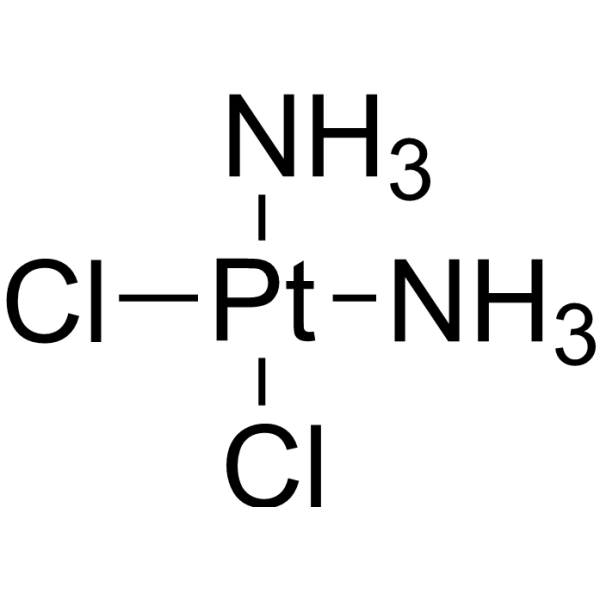
CisplatinDNA Alkylator -
HY-100575
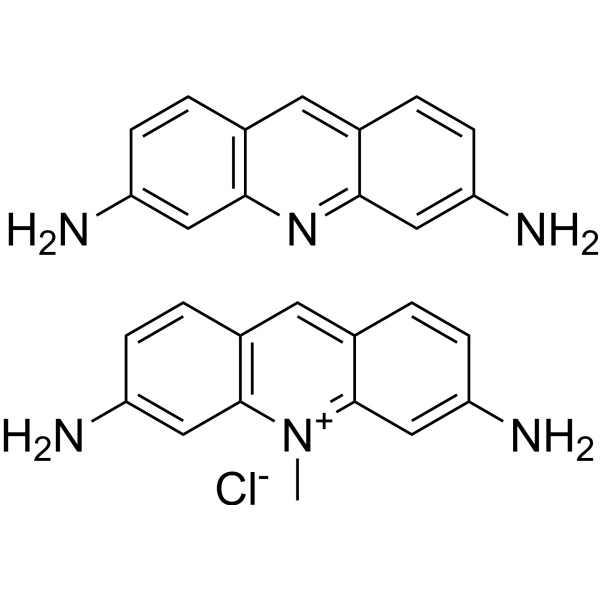
AcriflavineAntiseptic Agent


Biological Activity
제품 설명


Chemical Information
-
CAS No. 3079468-41-7
-
Appearance Solid
-
분자량 316.31
-
화학식 C19H12N2O3
-
Color White to off-white
-
SMILES
O=C(O)C1=CC(C2=NOC(C3=CC(C=CC=C4)=C4C=C3)=N2)=CC=C1
-
선적
Room temperature in continental US; may vary elsewhere.
-
보관
Powder -20°C 3 years 4°C 2 years In solvent -80°C 6 months -20°C 1 month


용액&용해도
In Vitro:
DMSO : 50 mg/mL (158.07 mM; Need ultrasonic; Hygroscopic DMSO has a significant impact on the solubility of product, please use newly opened DMSO)
Please refer to the solubility information to select the appropriate solvent. Once prepared, please aliquot and store the solution to prevent product inactivation from repeated freeze-thaw cycles.
Storage method and period of stock solution: -80°C, 6 months; -20°C, 1 month. When stored at -80°C, please use it within 6 months. When stored at -20°C, please use it within 1 month.
Please refer to the solubility information to select the appropriate solvent. Once prepared, please aliquot and store the solution to prevent product inactivation from repeated freeze-thaw cycles.
Storage method and period of stock solution: -80°C, 6 months; -20°C, 1 month. When stored at -80°C, please use it within 6 months. When stored at -20°C, please use it within 1 month.
Concentration (start) × Volume (start) = Concentration (final) × Volume (final)

Protocol
-
RT-PCR
Reverse transcription technology uses RNA as a template to synthesize DNA. RT-PCR is simple, specific and sensitive, and can be used to detect gene expression levels and expression differences in cells; detect RNA virus content; clone cDNA sequences of specific genes.
-
RNA extraction experimental
By lysing cells, releasing RNA, and removing impurities such as proteins and DNA, high-purity RNA products are finally obtained. The commonly used traditional method is the guanidine isothiocyanate/phenol/chloroform method (Trizol), which is suitable for a variety of animal materials including animal tissues, microorganisms, cultured cells, etc., and most plant materials.
-
Dual Luciferin reporter gene assay
Luciferin reporter gene assay is a reporting system to detect the activity of Firefly Luciferase using luciferin as a substrate, which is often used in the research of miRNA target gene verification and promoter transcriptive activity regulation. Dual luciferase usually refers to Firefly luciferase and Renilla luciferase.
-
Real Time qPCR (Q-PCR)
Real-time quantitative PCR (qPCR) quantifies an amplifiable nucleic-acid target by monitoring fluorescence during PCR cycling rather than measuring product only after amplification. The increase in fluorescence tracks accumulation of PCR product, and the quantification cycle (Cq; historically also Ct/CP) is related to the initial amount of target: samples containing more starting target generally reach the defined fluorescence threshold in fewer cycles.
-
Cell Viability Determination by MTT Colorimetric Assay
The following protocol uses the MTT colorimetric assay as a classic literature-established method for assessing cell viability/metabolic activity in cultured mammalian cells. MTT[3-(4,5-dimethylthiazol-2-yl)-2,5-diphenyltetrazolium bromide] is reduced by metabolically active cells to a colored formazan product; the amount of formazan is quantified spectrophotometrically and provides an indirect measure of metabolically active viable cells. Importantly, MTT reduction reflects cellular oxidoreductase/metabolic activity rather than an absolute direct count of living cells, so changes in cellular metabolism can alter the signal independently of cell number.


순도&문서
-
Data Sheet (272 KB)
-
SDS (251 KB)
- English - EN (251 KB)
- Français - FR (251 KB)
- Deutsch - DE (251 KB)
- Norwegian - NO (251 KB)
- Español - ES (251 KB)
- Swedish - SV (251 KB)
- Italian - IT (251 KB)
- Korean - KR (251 KB)
- Portuguese - PT (251 KB)
-
Handling Instructions (2659 KB)
References


Complete Stock Solution Preparation Table
Please refer to the solubility information to select the appropriate solvent. Once prepared, please aliquot and store the solution to prevent product inactivation from repeated freeze-thaw cycles.
Storage method and period of stock solution: -80°C, 6 months; -20°C, 1 month. When stored at -80°C, please use it within 6 months. When stored at -20°C, please use it within 1 month.
| Optional Solvent | Concentration Solvent Mass | 1 mg | 5 mg | 10 mg | 25 mg |
|---|---|---|---|---|---|
| DMSO | 1 mM | 3.1615 mL | 15.8073 mL | 31.6146 mL | 79.0364 mL |
| 5 mM | 0.6323 mL | 3.1615 mL | 6.3229 mL | 15.8073 mL | |
| 10 mM | 0.3161 mL | 1.5807 mL | 3.1615 mL | 7.9036 mL | |
| 15 mM | 0.2108 mL | 1.0538 mL | 2.1076 mL | 5.2691 mL | |
| 20 mM | 0.1581 mL | 0.7904 mL | 1.5807 mL | 3.9518 mL | |
| 25 mM | 0.1265 mL | 0.6323 mL | 1.2646 mL | 3.1615 mL | |
| 30 mM | 0.1054 mL | 0.5269 mL | 1.0538 mL | 2.6345 mL | |
| 40 mM | 0.0790 mL | 0.3952 mL | 0.7904 mL | 1.9759 mL | |
| 50 mM | 0.0632 mL | 0.3161 mL | 0.6323 mL | 1.5807 mL | |
| 60 mM | 0.0527 mL | 0.2635 mL | 0.5269 mL | 1.3173 mL | |
| 80 mM | 0.0395 mL | 0.1976 mL | 0.3952 mL | 0.9880 mL | |
| 100 mM | 0.0316 mL | 0.1581 mL | 0.3161 mL | 0.7904 mL |


JNU-0921 Related Classifications
HY-161982 Related Classifications
 Powered by Bioz