



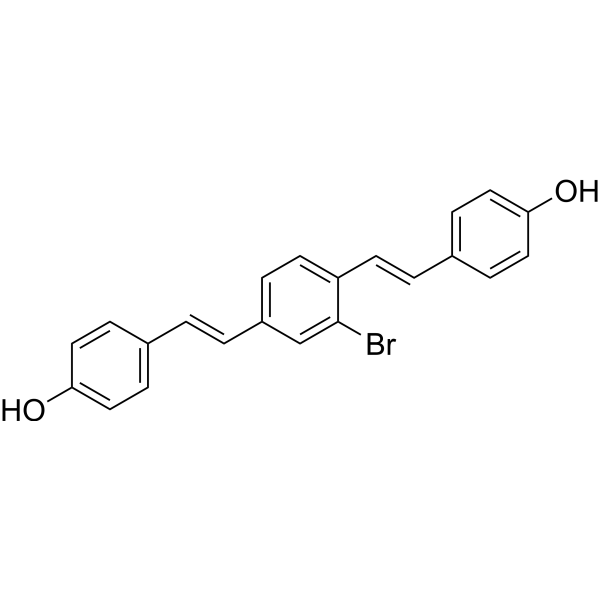
K114

Based on 1 Customer Validation
K114, a fluorescent Congo Red analogue, binds tightly to amyloid fibrils with an EC50 of 20-30 nM. K114 is an efficient detector of semen-derived enhancer of virus infection (SEVI).
연구목적의 판매만을 진행합니다. 환자를 대상으로 한 판매는 하지 않습니다.
- Purity : 99.59%
- CAS No.: 872201-12-2
- 화학식: C22H17BrO2
- 분자량:393.27
-
보관:
4°C, protect from light
* In solvent : -80°C, 6 months; -20°C, 1 month (protect from light)

To place orders, for customer services and technical support, please contact: MedChemExpress USA
Tel: 609-228-6898 E-mail: [email protected] [email protected]


-
 Biological Activity
-
Chemical Information
-
용액&용해도
- Protocol
- 순도&문서
- References
-
 Help & FAQs


-
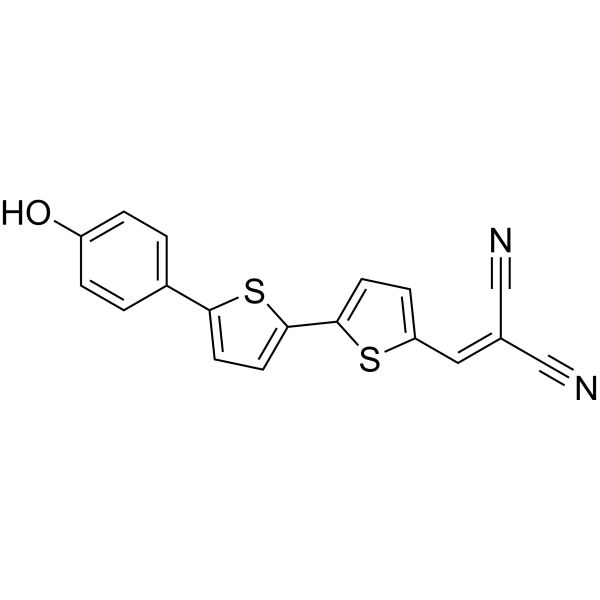
HY-111263
NIAD-4Amyloid-β Fluorophore -
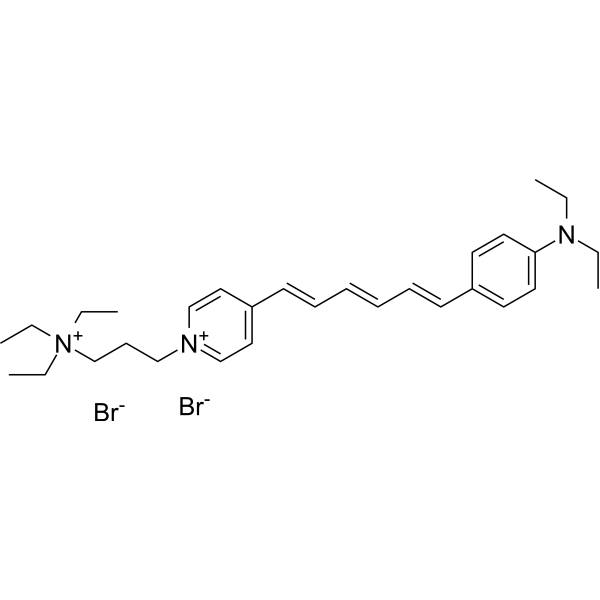
HY-103466
FM4-64Red Fluorescent Dye -

HY-DY1031
FM4-64 (solution)Red Fluorescent Dye -
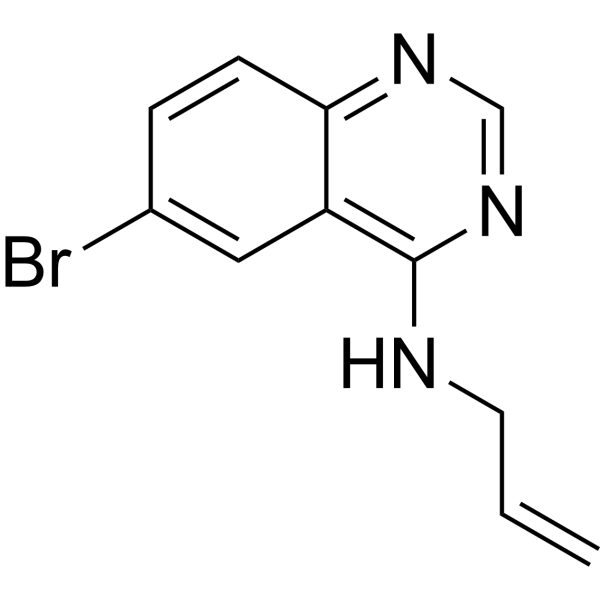
HY-100200
SMER28Autophagy Positive Regulator -
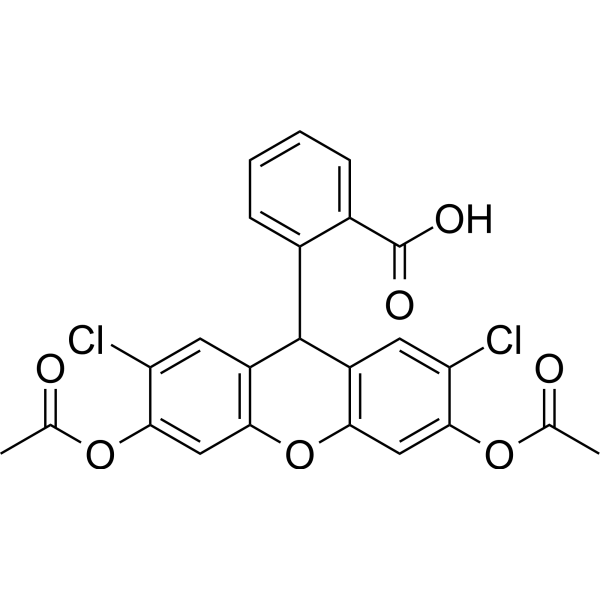
HY-D0940
H2DCFDAROS-Sensitive Probe -
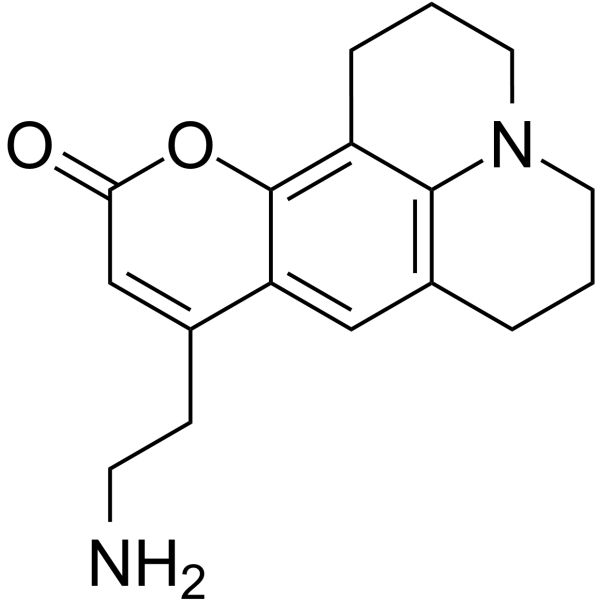
HY-103465
FFN511FFNs -
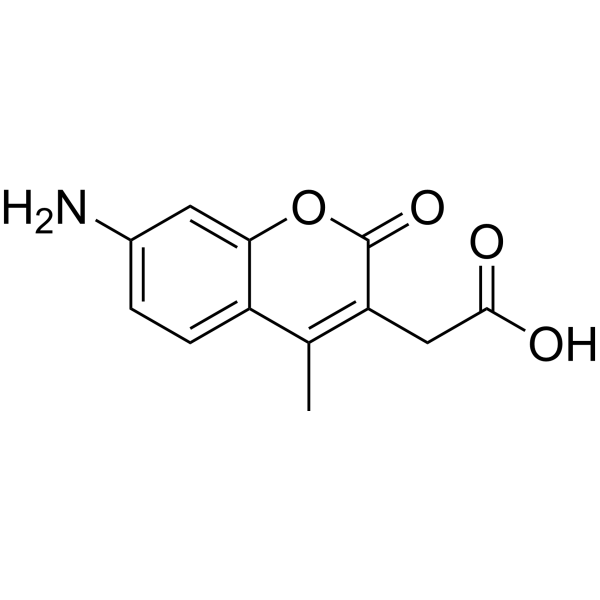
HY-D0025
7-Amino-4-methylcoumarin-3-acetic acidFluorescent Protein Labeling Agent -
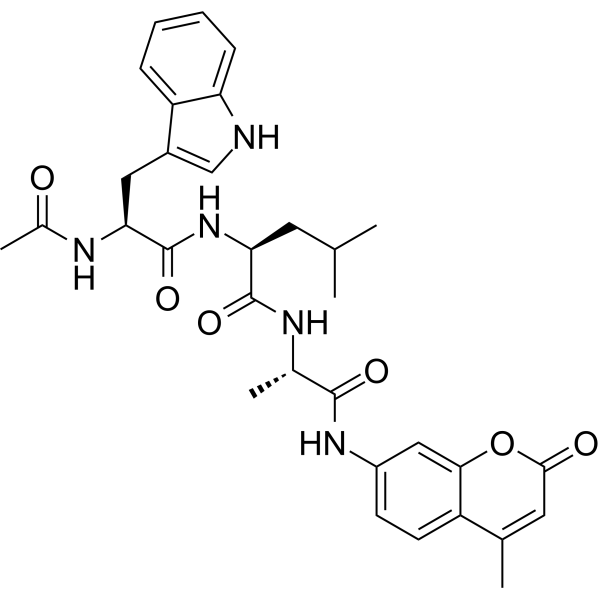
HY-123051
Ac-WLA-AMCBeta5-specific Fluorogenic Substrate -

HY-103465R
FFN511 (Standard)Reference Standard -
HY-D1303
Marina blueDye -

HY-103467
NPE-caged-HPTS sodium -

HY-134620
Cyanine 5 NHS ester tetrafluoroborateFluorescent Dye


Biological Activity
제품 설명
In Vitro
K114's unusually low buffer fluorescence is due to self-quenching in sedimentable aggregates or micelles which upon interacting with amyloid fibrils undergo an enhancement in fluorescence intensity and shifts in the excitation and emission spectra[1].
MedChemExpress (MCE) has not independently confirmed the accuracy of these methods. They are for reference only.
Emission (Em)
550
Excitation (Ex)
498


Chemical Information
-
CAS No. 872201-12-2
-
Appearance Solid
-
분자량 393.27
-
화학식 C22H17BrO2
-
Color Light yellow to yellow
-
SMILES
BrC1=CC(/C=C/C2=CC=C(O)C=C2)=CC=C1/C=C/C3=CC=C(O)C=C3
-
선적
Room temperature in continental US; may vary elsewhere.
-
보관
4°C, protect from light
* In solvent : -80°C, 6 months; -20°C, 1 month (protect from light)


용액&용해도
In Vitro:
DMSO : 100 mg/mL (254.28 mM; Need ultrasonic; Hygroscopic DMSO has a significant impact on the solubility of product, please use newly opened DMSO)
Please refer to the solubility information to select the appropriate solvent. Once prepared, please aliquot and store the solution to prevent product inactivation from repeated freeze-thaw cycles.
Storage method and period of stock solution: -80°C, 6 months; -20°C, 1 month (protect from light). When stored at -80°C, please use it within 6 months. When stored at -20°C, please use it within 1 month.
Please refer to the solubility information to select the appropriate solvent. Once prepared, please aliquot and store the solution to prevent product inactivation from repeated freeze-thaw cycles.
Storage method and period of stock solution: -80°C, 6 months; -20°C, 1 month (protect from light). When stored at -80°C, please use it within 6 months. When stored at -20°C, please use it within 1 month.
Concentration (start) × Volume (start) = Concentration (final) × Volume (final)


순도&문서
-
Data Sheet (269 KB)
-
SDS (393 KB)
- English - EN (393 KB)
- Français - FR (393 KB)
- Deutsch - DE (393 KB)
- Norwegian - NO (393 KB)
- Español - ES (393 KB)
- Swedish - SV (393 KB)
- Italian - IT (393 KB)
- Korean - KR (393 KB)
- Portuguese - PT (393 KB)
-
Handling Instructions (2659 KB)
References
[1]. LeVine H 3rd, et al. Mechanism of A beta(1-40) fibril-induced fluorescence of (trans,trans)-1-bromo-2,5-bis(4-hydroxystyryl)benzene (K114). Biochemistry. 2005 Dec 6;44(48):15937-43. [Content Brief]
[2]. Selmani V, et al. K114 (trans, trans)-bromo-2,5-bis(4-hydroxystyryl)benzene is an efficient detector of cationic amyloid fibrils. Protein Sci. 2015 Mar;24(3):420-5. [Content Brief]


Complete Stock Solution Preparation Table
Please refer to the solubility information to select the appropriate solvent. Once prepared, please aliquot and store the solution to prevent product inactivation from repeated freeze-thaw cycles.
Storage method and period of stock solution: -80°C, 6 months; -20°C, 1 month (protect from light). When stored at -80°C, please use it within 6 months. When stored at -20°C, please use it within 1 month.
| Optional Solvent | Concentration Solvent Mass | 1 mg | 5 mg | 10 mg | 25 mg |
|---|---|---|---|---|---|
| DMSO | 1 mM | 2.5428 mL | 12.7139 mL | 25.4278 mL | 63.5696 mL |
| 5 mM | 0.5086 mL | 2.5428 mL | 5.0856 mL | 12.7139 mL | |
| 10 mM | 0.2543 mL | 1.2714 mL | 2.5428 mL | 6.3570 mL | |
| 15 mM | 0.1695 mL | 0.8476 mL | 1.6952 mL | 4.2380 mL | |
| 20 mM | 0.1271 mL | 0.6357 mL | 1.2714 mL | 3.1785 mL | |
| 25 mM | 0.1017 mL | 0.5086 mL | 1.0171 mL | 2.5428 mL | |
| 30 mM | 0.0848 mL | 0.4238 mL | 0.8476 mL | 2.1190 mL | |
| 40 mM | 0.0636 mL | 0.3178 mL | 0.6357 mL | 1.5892 mL | |
| 50 mM | 0.0509 mL | 0.2543 mL | 0.5086 mL | 1.2714 mL | |
| 60 mM | 0.0424 mL | 0.2119 mL | 0.4238 mL | 1.0595 mL | |
| 80 mM | 0.0318 mL | 0.1589 mL | 0.3178 mL | 0.7946 mL | |
| 100 mM | 0.0254 mL | 0.1271 mL | 0.2543 mL | 0.6357 mL |


K114 Related Classifications
HY-103470 Related Classifications
 Powered by Bioz