



Lyn peptide inhibitor TFA
Lyn peptide inhibitor TFA is a potent and cell-permeable inhibitor of Lyn-coupled IL-5 receptor signaling pathway, while keeping other signals intact. Lyn peptide inhibitor TFA blocks Lyn activation and inhibits the binding of Lyn tyrosine kinase to βc subunit of IL-3/GM-CSF/IL-5 receptors. Lyn peptide inhibitor TFA can be used for study of asthma, allergic, and other eosinophilic disorders.
For research use only. We do not sell to patients.
- Formula: C115H184N30O24.xC2HF3O2
- Molecular Weight:2370.88 (free base)
-
Storage:
Please store the product under the recommended conditions in the Certificate of Analysis.

To place orders, for customer services and technical support, please contact: MedChemExpress USA
Tel: 609-228-6898 E-mail: [email protected] [email protected]


-
 Biological Activity
-
Chemical Information
- Purity & Documentation
- References
-
 Help & FAQs




Biological Activity
Description
|
IL-5 |
IL-3 |
In Vitro
Lyn peptide inhibitor (20 μM; 2 h) TFA specifically blocks the binding of Lyn kinase to the βc subunit of IL-5/GM-CSF receptor in purified human eosinophils, without altering the binding of Jak2 to βc[1].
Lyn peptide inhibitor (5-20 μM; 2 h) TFA dose-dependently blocks IL-5-induced cellular protein tyrosine phosphorylation and Lyn kinase activation in purified human eosinophils, without inhibiting Jak2 kinase activation[1].
N-stearoylated Lyn peptide inhibitor (20 μM; 2 h) TFA blocks IL-5/IL-3-induced differentiation of mouse bone marrow cells into eosinophils. A significant inhibitory effect is observed on day 3 of culture, and this inhibitory effect persists until day 10 of culture[1]
N-stearoylated Lyn peptide inhibitor (2-20 μM; 2 h) TFA reduces IL-5-induced viability of purified human eosinophils in a dose-dependent manner, with significant decreases in cell viability observed at concentrations of 10 μM and 20 μM[1].
MedChemExpress (MCE) has not independently confirmed the accuracy of these methods. They are for reference only.
In Vivo
MedChemExpress (MCE) has not independently confirmed the accuracy of these methods. They are for reference only.
-
Animal Model:BALB/c (OVA-sensitized)[1]
-
Dosage:2 mmol (≈0.5 mg)
-
Administration:intrabronchial; single dose
-
Result:Reduced eosinophil influx into BAL fluid to a mean count of ~2.5 × 10⁵ cells.
Showed no significant differences in lymphocyte or macrophage counts compared to controls.


Chemical Information
-
Molecular Weight 2370.88 (free base)
-
Formula C115H184N30O24.xC2HF3O2
-
Sequence
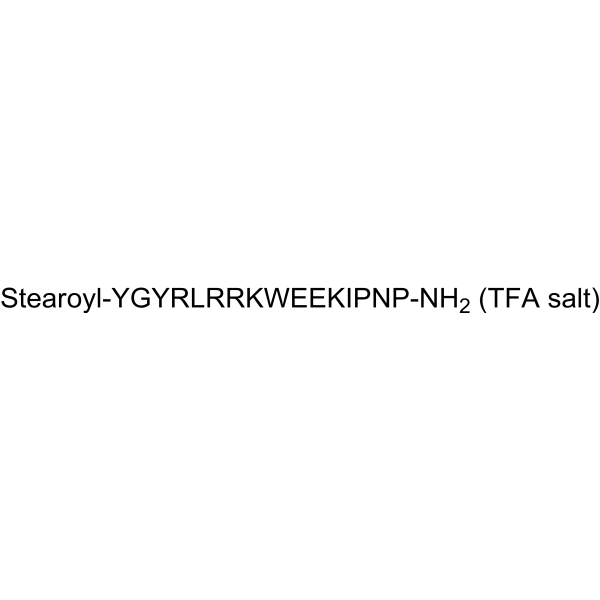
{Stearoyl}-Tyr-Gly-Tyr-Arg-Leu-Arg-Arg-Lys-Trp-Glu-Glu-Lys-Ile-Pro-Asn-Pro-NH2
-
Sequence Shortening
{Stearoyl}-YGYRLRRKWEEKIPNP-NH2
-
Shipping
Room temperature in continental US; may vary elsewhere.
-
Storage
Please store the product under the recommended conditions in the Certificate of Analysis.


Purity & Documentation
References
[1]. T Adachi, et al. The mapping of the Lyn kinase binding site of the common beta subunit of IL-3/granulocyte-macrophage colony-stimulating factor/IL-5 receptor. J Immunol. 1999 Feb 1;162(3):1496-501. [Content Brief]
[2]. T Adachi, et al. A novel Lyn-binding peptide inhibitor blocks eosinophil differentiation, survival, and airway eosinophilic inflammation. J Immunol. 1999 Jul 15;163(2):939-46. [Content Brief]

Calculators
Concentration (start) × Volume (start) = Concentration (final) × Volume (final)


Lyn peptide inhibitor TFA Related Classifications
HY-P1111A Related Classifications
 Powered by Bioz