



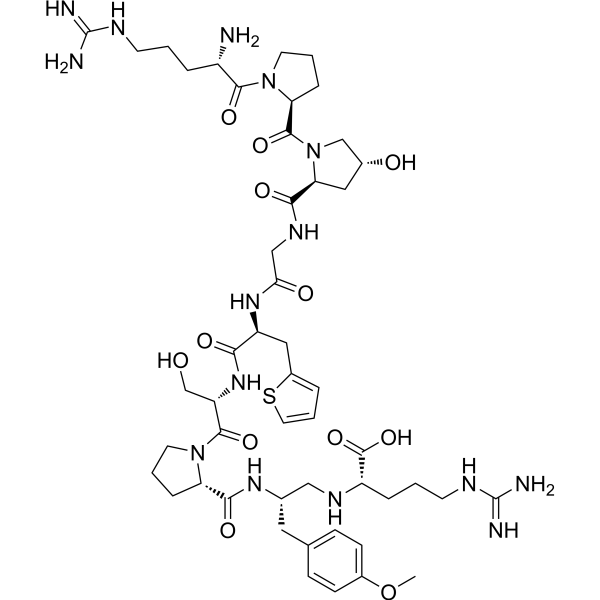
Lys-[Des-Arg9]Bradykinin
Lys-[Des-Arg9]Bradykinin, a naturally occurring kinin, is a potent and highly selective bradykinin B1 receptor agonist with a Ki of 0.12 nM, 1.7 nM and 0.23 nM for human, mouse and rabbit B1 receptors, respectively. Lys-[Des-Arg9]Bradykinin has low inhibitory activity on B2 receptors.
For research use only. We do not sell to patients.
- CAS No.: 71800-36-7
- Formula: C50H73N13O11
- Molecular Weight:1032.20
-
Storage:
Please store the product under the recommended conditions in the Certificate of Analysis.
![Lys-[Des-Arg9]Bradykinin Chemical Structure](https://file.medchemexpress.com/product_pic/hy-103295.gif "Click to View Lys-[Des-Arg9]Bradykinin Chemical Structure")

To place orders, for customer services and technical support, please contact: MedChemExpress USA
Tel: 609-228-6898 E-mail: [email protected] [email protected]


-
 Biological Activity
-
Chemical Information
-
Solvent & Solubility
- Purity & Documentation
- References
-
 Help & FAQs


-
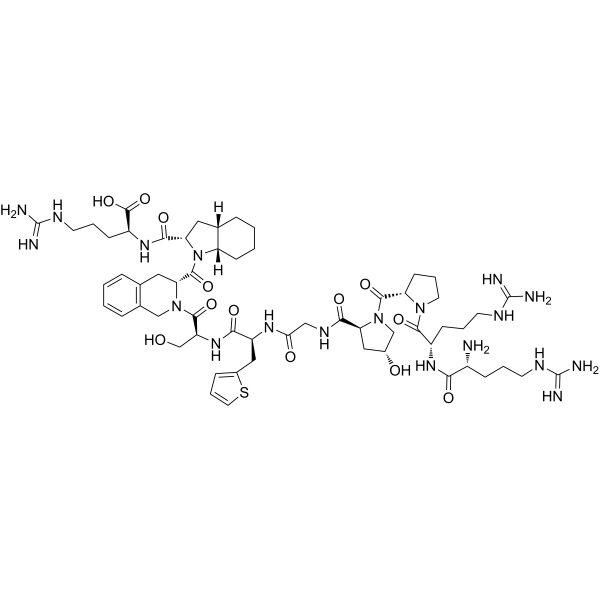
HY-17446
IcatibantBradykinin Receptor Antagonist -
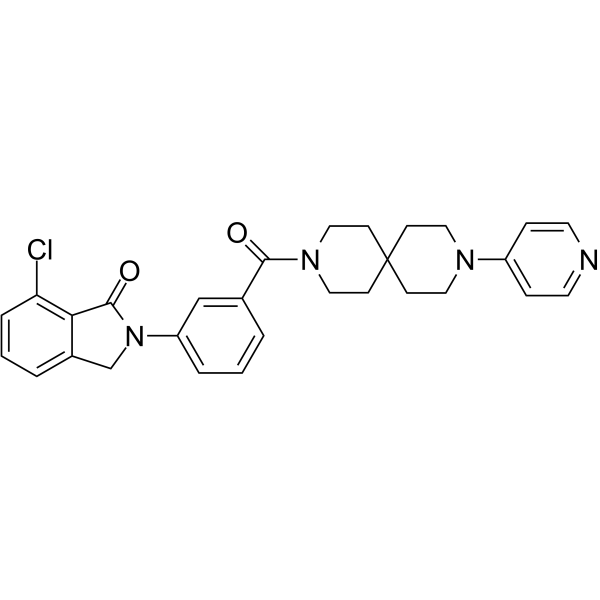
HY-15043
ELN-441958Bradykinin B1 Receptor Antagonist -
![Sar-[D-Phe8]-des-Arg9-Bradykinin](https://file.medchemexpress.com/product_pic/hy-103291.gif)
HY-103291
Sar-[D-Phe8]-des-Arg9-BradykininB1 Receptor Agonist -
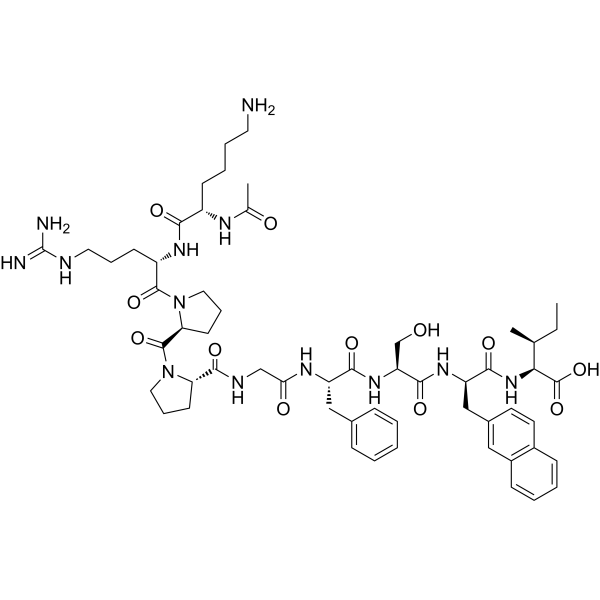
HY-103290
R715Bradykinin B1 Receptor Antagonist -
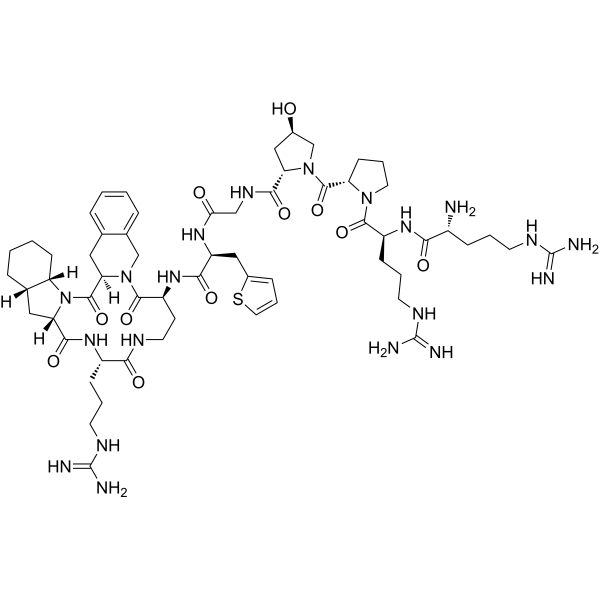
HY-103289
MEN 11270B2 Kinin Receptor Antagonist -
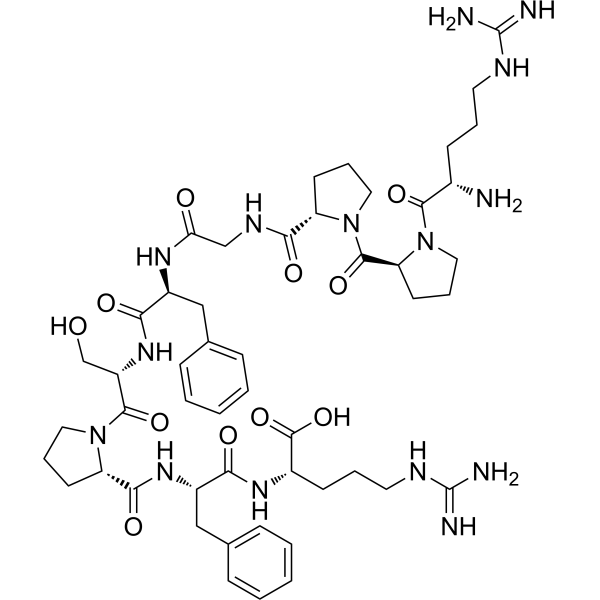
HY-P0206
BradykininBradykinin Receptor Modulator -
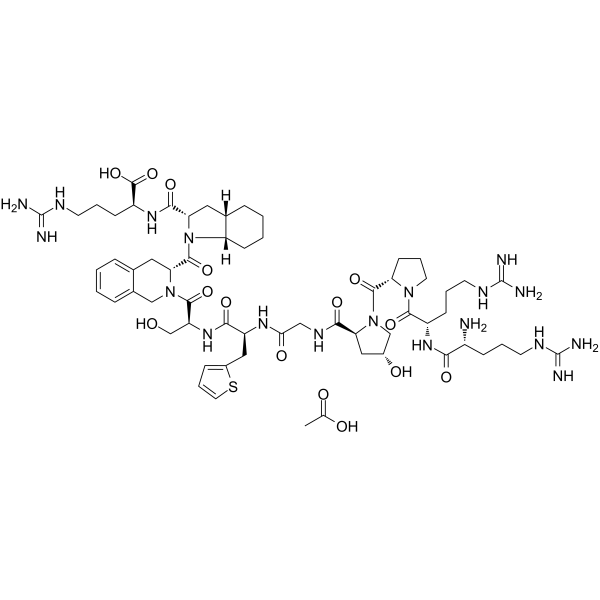
HY-108896
Icatibant acetateBradykinin B2 Antagonist -
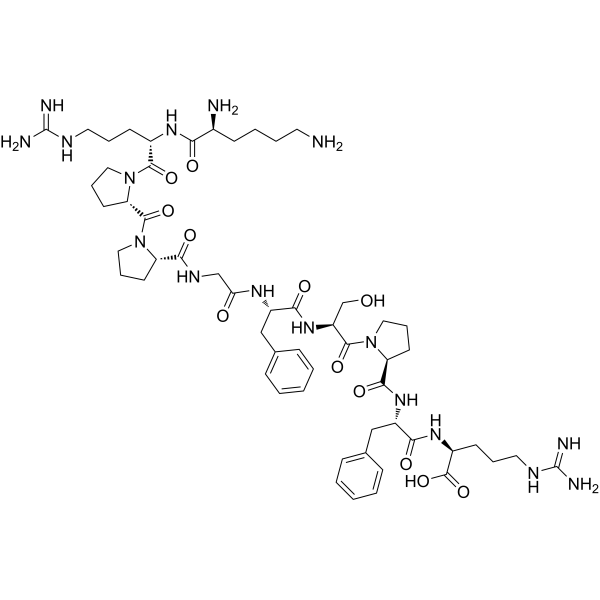
HY-103293
Lys-BradykininKallidin -
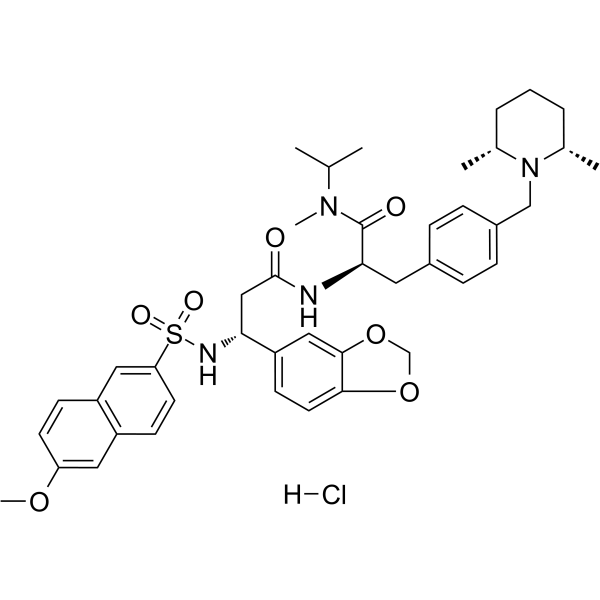
HY-15039
SSR240612 -

HY-17446R
Icatibant (Standard)Bradykinin Receptor Antagonist -
![[Phe8Ψ(CH-NH)Arg9]-Bradykinin](https://file.medchemexpress.com/product_pic/hy-103292.gif)
HY-103292
[Phe8Ψ(CH-NH)Arg9]-BradykininBradykinin receptor B2 Agonist -
HY-105155
LobradimilBradykinin B2 Receptor Agonist
All Bradykinin Receptor Isoforms
More

Biological Activity
Description
Cellular Effect
|
Cell Line

|
Type | Value | Description | References |
|---|---|---|---|---|
| IMR-90 | IC50 |
0.87 nM
Compound: (Des-Arg10)-Kallidin
|
Displacement of [3H](Des-Arg10)-Kallidin from bradykinin B1 receptor in human IMR90 cells after 60 mins
Displacement of [3H](Des-Arg10)-Kallidin from bradykinin B1 receptor in human IMR90 cells after 60 mins
|
[PMID: 23403082] |
In Vitro
Lys-[Des-Arg9]Bradykinin is formed by the proteolytic cleavage of bradykinin, exerts its effects through bradykinin B1 receptor (B1R)[1].
Lys-[Des-Arg9]Bradykinin (Lda-BK; 10 μM) enhances the secretion of IL-12p70 and inhibits the secretion of IL-12p40 by mature hMo-DCs. Pretreatment with Lys-[Des-Arg9]Bradykinin treatment reduces the migration of mature hMo-DCs toward medium alone, suggesting that Lys-[Des-Arg9]Bradykinin may inhibit the chemokinesis of mature hMo-DCs[1].
MedChemExpress (MCE) has not independently confirmed the accuracy of these methods. They are for reference only. .
In Vivo
MedChemExpress (MCE) has not independently confirmed the accuracy of these methods. They are for reference only.


Chemical Information
-
CAS No. 71800-36-7
-
Molecular Weight 1032.20
-
Formula C50H73N13O11
-
Sequence
Lys-Arg-Pro-Pro-Gly-Phe-Ser-Pro-Phe
-
Sequence Shortening
KRPPGFSPF
-
Shipping
Room temperature in continental US; may vary elsewhere.
-
Storage
Please store the product under the recommended conditions in the Certificate of Analysis.


Solvent & Solubility
In Vitro
H2O
Peptide Solubility and Storage Guidelines:
1. Calculate the length of the peptide.
2. Calculate the overall charge of the entire peptide according to the following table:
| Contents | Assign value | |
|---|---|---|
| Acidic amino acid | Asp (D), Glu (E), and the C-terminal -COOH. | -1 |
| Basic amino acid | Arg (R), Lys (K), His (H), and the N-terminal -NH2 | +1 |
| Neutral amino acid | Gly (G), Ala (A), Leu (L), Ile (I), Val (V), Cys (C), Met (M), Thr (T), Ser (S), Phe (F), Tyr (Y), Trp (W), Pro (P), Asn (N), Gln (Q) | 0 |
3. Recommended solution:
| Overall charge of peptide | Details |
|---|---|
| Negative (<0) |
1. Try to dissolve the peptide in water first. 2. If water fails, add NH4OH (<50 μL). 3. If the peptide still does not dissolve, add DMSO (50-100 μL) to solubilize the peptide. |
| Positive (>0) |
1. Try to dissolve the peptide in water first. 2. If water fails, try dissolving the peptide in a 10%-30% acetic acid solution. 3. If the peptide still does not dissolve, try dissolving the peptide in a small amount of DMSO. |
| Zero (=0) |
1. Try to dissolve the peptide in organic solvent (acetonitrile, methanol, etc.) first. 2. For very hydrophobic peptides, try dissolving the peptide in a small amount of DMSO, and then dilute the solution with water to the desired concentration. |


Purity & Documentation
References
[1]. Rosalind Gulliver, et al. Lys-des[Arg9]-bradykinin alters migration and production of interleukin-12 in monocyte-derived dendritic cells. Am J Respir Cell Mol Biol. 2011 Sep;45(3):542-9. [Content Brief]
[2]. L M Fredrik Leeb-Lundberg, et al. International union of pharmacology. XLV. Classification of the kinin receptor family: from molecular mechanisms to pathophysiological consequences. Pharmacol Rev. 2005 Mar;57(1):27-77. [Content Brief]
[3]. G Drapeau, et al. Hypotensive effects of Lys-des-Arg9-bradykinin and metabolically protected agonists of B1 receptors for kinins. J Pharmacol Exp Ther. 1991 Dec;259(3):997-1003. [Content Brief]

Calculators
Concentration (start) × Volume (start) = Concentration (final) × Volume (final)


Lys-[Des-Arg9]Bradykinin Related Classifications
HY-103295 Related Classifications
 Powered by Bioz