



Onartuzumab
Based on 2 publication(s) in Google Scholar
Onartuzumab (MetMAb) is a unique, humanized and affinity-matured monovalent (one-armed) monoclonal antibody against the MET receptor. Onartuzumab potently inhibits HGF binding and receptor phosphorylation and signaling. Onartuzumab has antibody-like pharmacokinetics and antitumor activity.
For research use only. We do not sell to patients.
- Purity : 99.62%
- CAS No.: 1133766-06-9
- Molecular Weight:98.907 kDa
-
Storage:
Please store the product under the recommended conditions in the Certificate of Analysis.


To place orders, for customer services and technical support, please contact: MedChemExpress USA
Tel: 609-228-6898 E-mail: [email protected] [email protected]


-
 Biological Activity
-
Chemical Information
- Protocols
- Purity & Documentation
- References
-
 Help & FAQs


-

HY-P99192
EmibetuzumabBivalent MET Antibody -

HY-P99217
RilotumumabAnti-HGF mAb -

HY-P9977
AmivantamabEGFR-MET Dual Antibody -

HY-P99391
TelisotuzumabAnti-c-Met Antibody -

HY-P99001
Human IgG1 kappa, Isotype ControlIgG1κ Isotype Control -

HY-P99196
FiclatuzumabHGF Antibody -

HY-141601
Telisotuzumab vedotinAnti-c-MET ADC -

HY-138298A
Trastuzumab deruxtecanHER2 ADC -
HY-10338
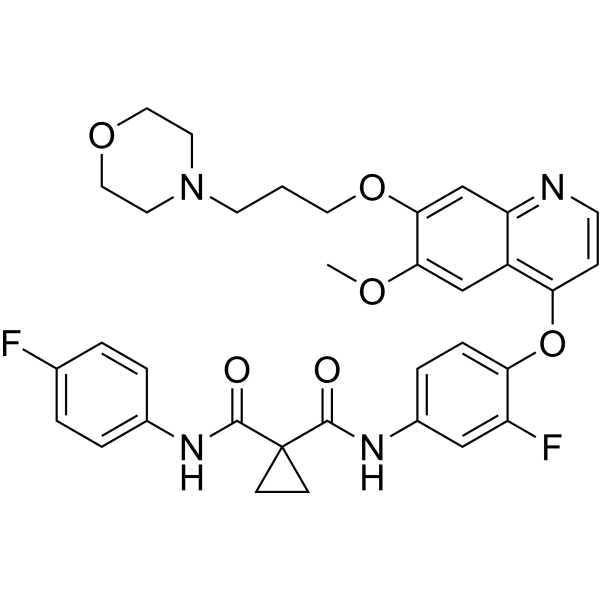
ForetinibMET/VEGFR2/KDR Inhibitor -

HY-P99045
SacituzumabAnti-TROP-2 Antibody -
HY-125017
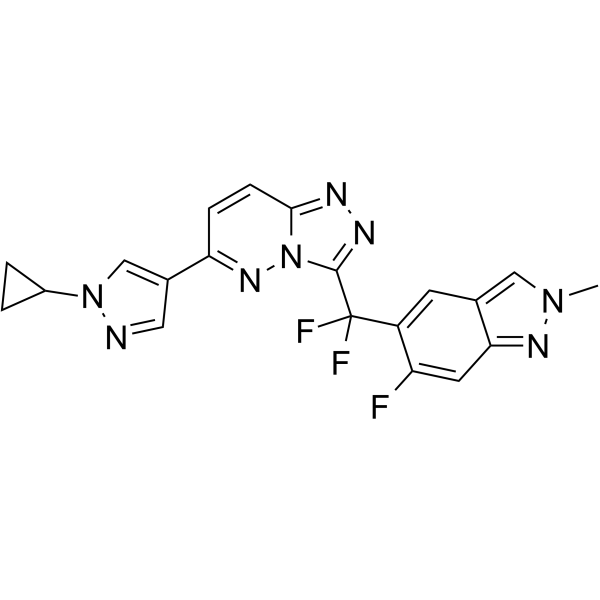
Bozitinibc-MET Kinase Inhibitor
Publications Citing Use of MedChemExpress (MCE) Onartuzumab
More Customer Validation & Images

-
Cell Proliferation/Viability Assay

-
Cell Migration/Invasion Assay


Biological Activity
Description
Isotype
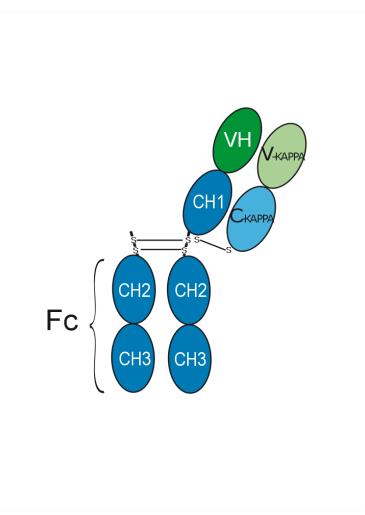
(Fab-G1-kappa)-(Fc-G1)
Recommend Isotype Controls
Species Reactivity
Human
IC50 & Target
HGFR/c-Met
In Vitro
Onartuzumab acts specifically by blocking HGF α-chain (but not β-chain) binding to MET[1].
Onartuzumab blocks HGF binding to human c-Met with an inhibitory concentration (IC)50 of 1.8 nM and inhibits the subsequent induction of c-Met auto-phosphorylation and cell proliferation in many cancer cell lines[2].
MedChemExpress (MCE) has not independently confirmed the accuracy of these methods. They are for reference only. Further protocols information, click here.
In Vivo
MedChemExpress (MCE) has not independently confirmed the accuracy of these methods. They are for reference only.
-
Animal Model:Human HGF-transgenic SCID mice implanted with BxPC3 tumor cells, nude (nu/nu) mice implanted with KP4 human pancreatic xenograft tumor cells[3]
-
Dosage:30 mg/kg
-
Administration:IP, twice a week for 2 mouth
-
Result:Suppressed tumor growth, but did not affect the mean in vivo human HGF levels.
-
Animal Model:U-87 MG tumor-bearing mice[3]
-
Dosage:30 mg/kg
-
Administration:IP, once
-
Result:Resulted in profound TGI (tumor growth inhibition) with 4/10 mice demonstrating a partial response (>50% reduction in tumor size) and 6/10 mice demonstrating a complete response (100% tumor regression).
Clinical Trial
| NCT Number | Sponsor | Condition | Start Date |
Phase

|
|---|---|---|---|---|
| NCT01329991 | Plexxikon| | 2011-05 | PHASE1 |
Gene ID
Accession
Conjugated
Unconjugated
Reconsititution
The product can be reconstituted/diluted with sterile PBS or saline.
Format
-
(Fab-G1-kappa)-(Fc-G1)
Application
ELISA, FACS, Functional assay
Verified Bioactivity
-
 Immobilized Onartuzumab can bind Human c-MET/HGFR Protein (ECD, His Tag). The EC50 for this effect is 4.21 ng/mL.
 -
 Flow cytometric analysis of 1.5×10⁶ MDA-MB-231 cells with Onartuzumab (HY-P99250, red). Cells were fixed with 4% paraformaldehyde. Then stained with the primary antibody at 1/200 dilution for an hour at 4℃. Alexa Goat Anti-Human IgG H&L (AF488) (HY-P83776) was used as the secondary antibody at 1/1,000 dilution for 30 minutes at 4℃. Human IgG1 kappa Isotype Control (HY-P99001, blue) was used as the isotype control, cells without incubation with primary antibody were used as the unlabeled control (black).


Chemical Information
-
CAS No. 1133766-06-9
-
Appearance Liquid
-
Molecular Weight 98.907 kDa
-
Color Colorless to light yellow
-
SMILES
[Onartuzumab]
-
Synonyms
MetMAb
-
Shipping
Shipping with dry ice.
-
Formulation
Please refer to the lot-specific COA for specific buffer information.
-
Storage
Please store the product under the recommended conditions in the Certificate of Analysis.


Publications (2)
-
Journal Impact Factor
-
Most Recent
-
Adv Sci (Weinh)
ETV4 Promotes Colorectal Cancer Progression by Reprogramming Asparagine Metabolism to Remodel the Stromal Microenvironment. [Abstract]2026 Mar 20:e16557. PMID: 41861091
Onartuzumab purchased from MedChemExpress. Usage Cited in: Adv Sci (Weinh). 2026 Mar 20:e16557. [Abstract]
A CCK-8 proliferation assay was used to assess the proliferation of HCT116 and DLD-1 cells; these cells were seeded in the lower chambers of Transwell inserts and co-cultured with LX-2 cells placed in the upper chambers. The MET-blocking antibody Onartuzumab (10 µg/mL) was added to evaluate the role of the MET signaling pathway.
Onartuzumab purchased from MedChemExpress. Usage Cited in: Adv Sci (Weinh). 2026 Mar 20:e16557. [Abstract]
Transwell migration assays were used to evaluate the chemotactic migration of HCT116 and DLD-1 cells toward LX-2 cells seeded in the lower chamber. Onartuzumab (10 µg/mL) was used to block the MET signaling pathway. Representative images are shown.
-
Mol Pharm
Synthesis and Evaluation of a Novel c-Met-Targeting Cyclic Peptide as a Potential Diagnostic Agent for Colorectal Cancer. [Abstract]2024 Jul 1;21(7):3613-3622. PMID: 38853512

Protocols
-
Kinase activity and phosphorylation assays
Kinase activity assays measure the ability of kinases to transfer phosphate groups from ATP to specific substrates, while phosphorylation assays detect the presence and levels of phosphorylated proteins. Common methods include radiolabeled ATP incorporation (e. g. ,), ADP release detection via bioluminescence (e. g. ,[3]), enzyme-linked immunosorbent assays (ELISA) for phospho-specific epitopes (e. g. ,[6]), and microtiter-based formats for high-throughput screening (e. g. ,[8]). The ADP-Glo assay quantifies kinase activity by measuring ADP produced during phosphorylation using a luciferase-based system. Radiometric assays involve autoradiography or scintillation counting after incorporation of 32P-labeled ATP into substrate proteins. ELISA-based approaches rely on phospho-specific antibodies to detect activated kinases in cell lysates or purified samples.
-
Western Blot
Western blotting (WB) is a commonly used experimental method in molecular biology, biochemistry, and immunogenetics for identifying and quantifying target proteins. It combines gel electrophoresis with immunoassay, enabling researchers to analyze protein expression, post-translational modifications, and molecular weight.
-
Protocol for Pharmacokinetic Study
Pharmacokinetic studies quantify how an organism handles a drug over time through absorption, distribution, metabolism, and excretion, and the core experimental readout is the concentration-time profile of parent drug and, when relevant, metabolites in biological matrices such as plasma, whole blood, urine, bile, or tissue. Pharmacokinetic analysis links dose, route, exposure, clearance, half-life, distribution, bioavailability, and systemic exposure to drug efficacy and toxicity hypotheses rather than measuring a signaling pathway directly. The literature links pharmacokinetics to drug-development phenotypes by showing that drug metabolism and pharmacokinetics influence compound progression, exposure-response interpretation, safety margins, dosing strategy, and failure risk during discovery and development. DMPK science contributes to compound optimization by integrating physicochemical properties, in vitro metabolism, transporter behavior, in vivo exposure, and pharmacodynamic contex
-
Protocol for Kinase activity and phosphorylation assays
Kinase activity assays measure transfer of phosphate from ATP to a protein or peptide substrate, generating phosphorylated substrate, ADP, or incorporated radiolabeled phosphate as the readout; phosphorylation assays measure site-specific phosphorylation in cells or tissues as a proxy for kinase-pathway activation, inhibition, or substrate regulation. Phosphorylation can be detected by phospho-specific Western blot, immunoprecipitation kinase assay, phospho-immunofluorescence, phospho-flow cytometry, luminescent ADP detection, radiolabeled ATP incorporation, or reporter-based pathway assays, and these readouts can be applied to cancer cells, primary neurons, mouse tumors, organoids, inflammatory macrophages, ferroptosis studies, and mitophagy studies when the kinase target is biologically relevant.
-
Subcutaneous Cell-Line-Derived Xenograft
Subcutaneous cell-line-derived xenograft (CDX) models are established by implanting cultured human cancer cell lines into immunodeficient mice, where the injected cells form localized tumors that can be monitored in vivo as a measure of tumorigenic potential, growth kinetics, and treatment response. These models are widely used in oncology research because they allow reproducible tumor formation and enable comparative assessment of tumor growth between different cell lines or genetic manipulations in a controlled in vivo microenvironment. Subcutaneous implantation of cancer cells in immunodeficient mice is a standard approach for evaluating tumor growth behavior and therapeutic response across multiple cancer types, including prostate, esophageal, pancreatic, and colon cancer models.


Purity & Documentation
-
Data Sheet (262 KB)
-
SDS (251 KB)
- English - EN (251 KB)
- Français - FR (251 KB)
- Deutsch - DE (251 KB)
- Norwegian - NO (251 KB)
- Español - ES (251 KB)
- Swedish - SV (251 KB)
- Italian - IT (251 KB)
- Korean - KR (251 KB)
- Portuguese - PT (251 KB)
-
Inhibitory Antibodies User Guide (603 KB)
References
[1]. Merchant M, et al. Monovalent antibody design and mechanism of action of onartuzumab, a MET antagonist with anti-tumor activity as a therapeutic agent. Proc Natl Acad Sci U S A. 2013 Aug 6;110(32):E2987-96. [Content Brief]
[2]. Prell RA, et al. Placental and Fetal Effects of Onartuzumab, a Met/HGF Signaling Antagonist, When Administered to Pregnant Cynomolgus Monkeys. Toxicol Sci. 2018 Sep 1;165(1):186-197. [Content Brief]

Calculators
Concentration (start) × Volume (start) = Concentration (final) × Volume (final)


Onartuzumab Related Classifications
HY-P99250 Related Classifications
 Powered by Bioz