



RV01

Based on 1 Customer Validation
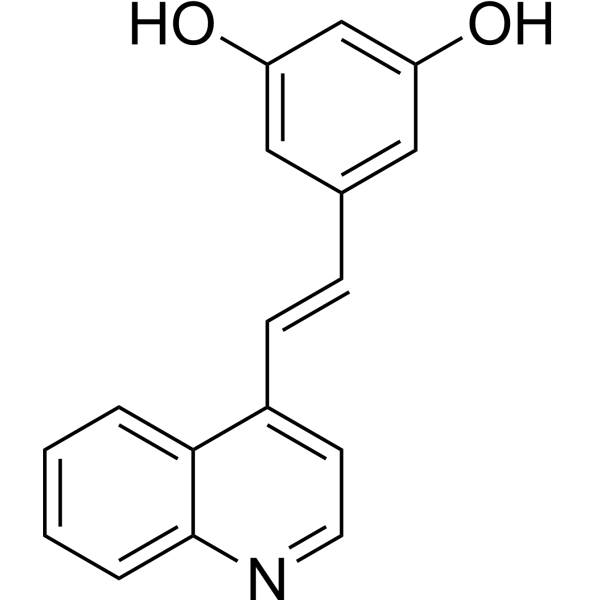
RV01 is an analogue of resveratrol, inhibits DNA damage, reduces acetaldehyde dehydrogenase 2 (ALDH2) mRNA expression induced by ethanol, and exhibits hydroxyl radical scavenging activity. RV01 decreases iNOS expression, with anti-neuroinflammatory activity.
For research use only. We do not sell to patients.
- Purity : 98.06%
- CAS No.: 1016897-10-1
- Formula: C17H13NO2
- Molecular Weight:263.29
-
Storage:Powder -20°C, 3 years , 4°C, 2 years ; In solvent -80°C, 6 months , -20°C, 1 month

To place orders, for customer services and technical support, please contact: MedChemExpress USA
Tel: 609-228-6898 E-mail: [email protected] [email protected]


-
 Biological Activity
-
Chemical Information
-
Solvent & Solubility
- Protocols
- Purity & Documentation
- References
-
 Help & FAQs


-
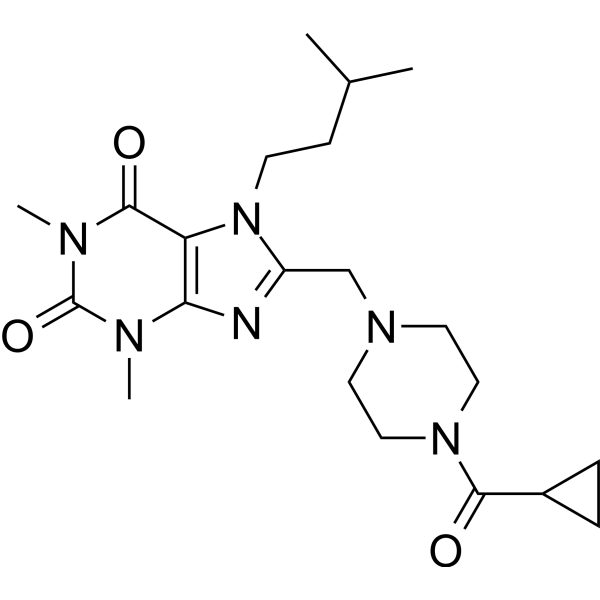
HY-18768
NCT-501ALDH1A1 Inhibitor -
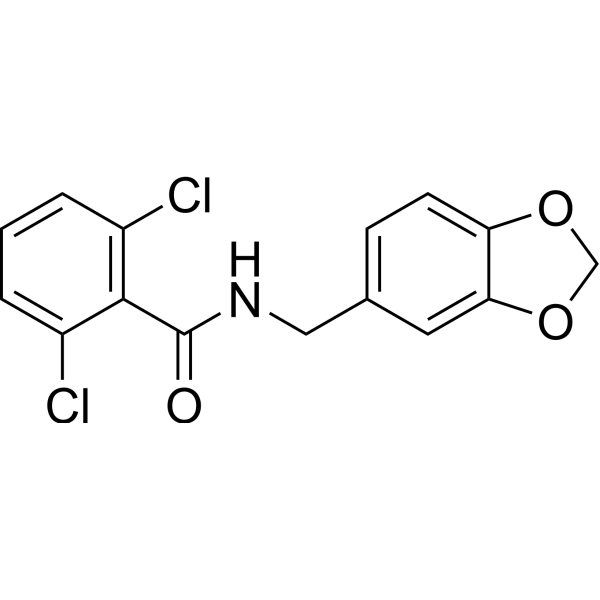
HY-18936
Alda-1ALDH2 Agonist -
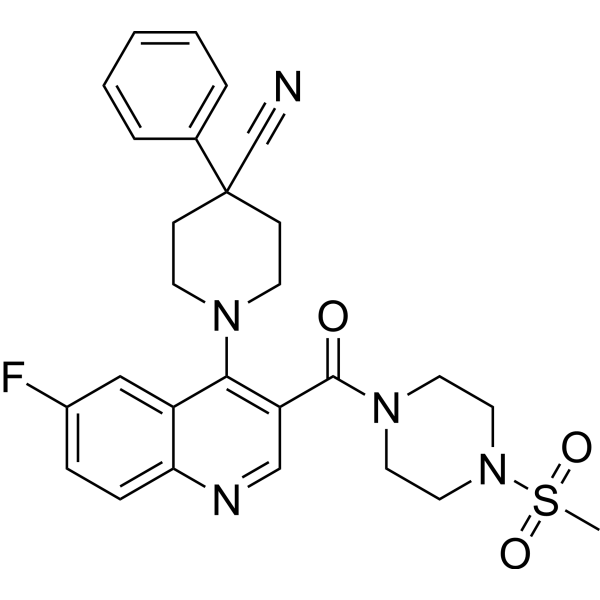
HY-112277
NCT-505ALDH Inhibitor -

HY-W016645
4-DiethylaminobenzaldehydeALDH Inhibitor -

HY-N2597
PrunetinAldehyde Dehydrogenases Inhibitor -
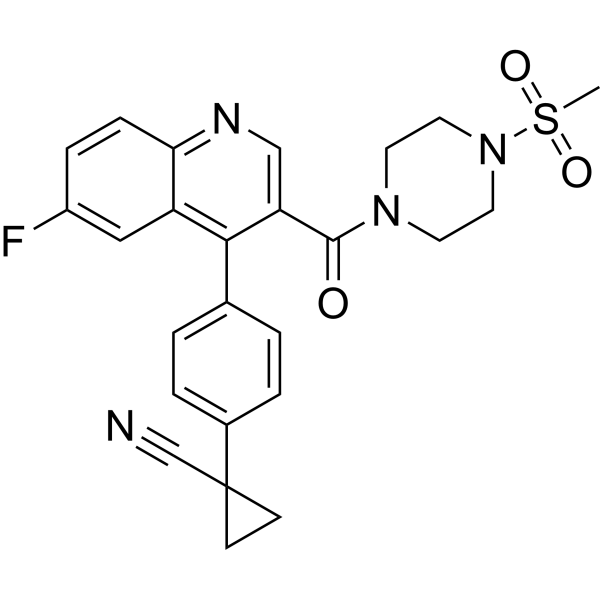
HY-112278
NCT-506ALDH Inhibitor -
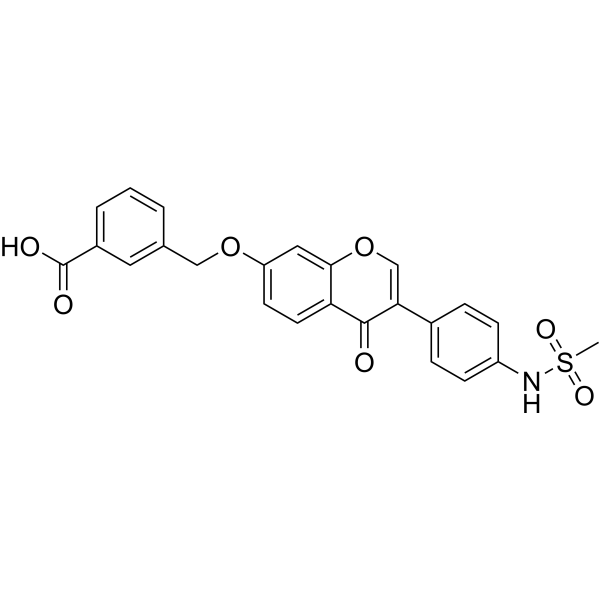
HY-19801
CVT-10216ALDH-2 Inhibitor -
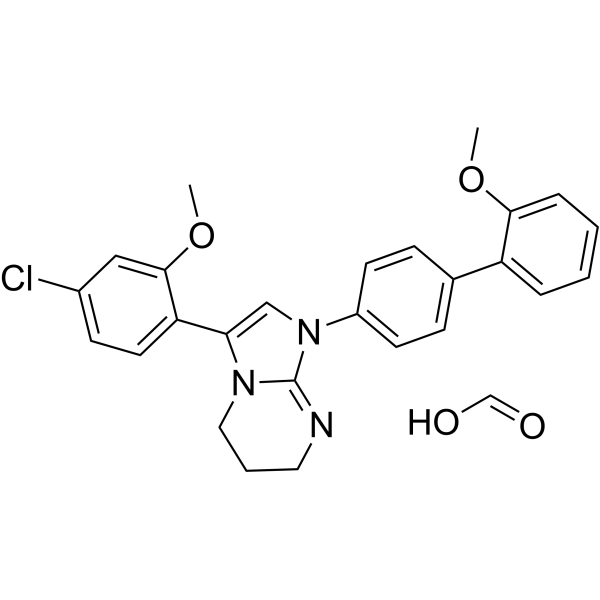
HY-148466
IGUANA-1ALDH1B1 Inhibitor -
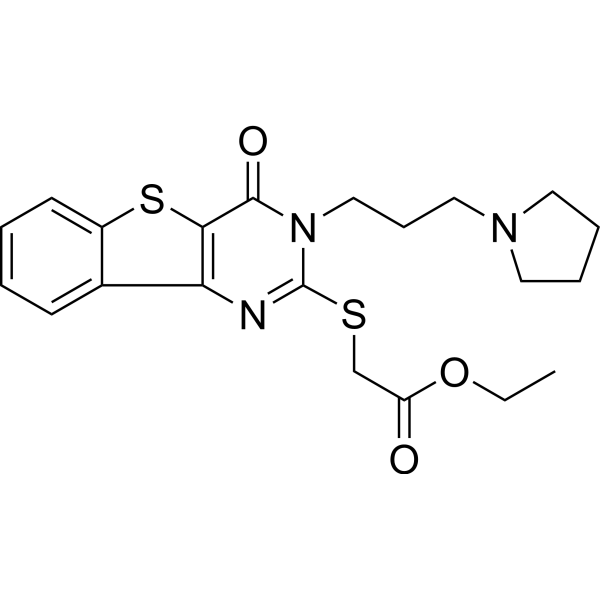
HY-110294
CM037ALDH1A1 Inhibitor -
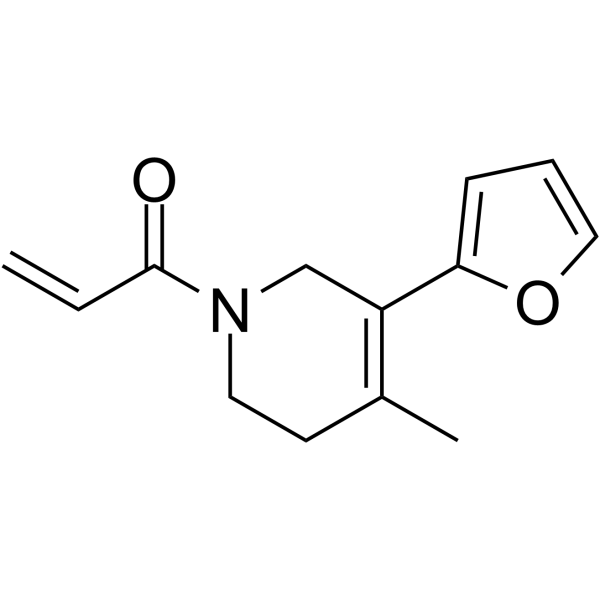
HY-122577
EN40ALDH3A1 Inhibitor -
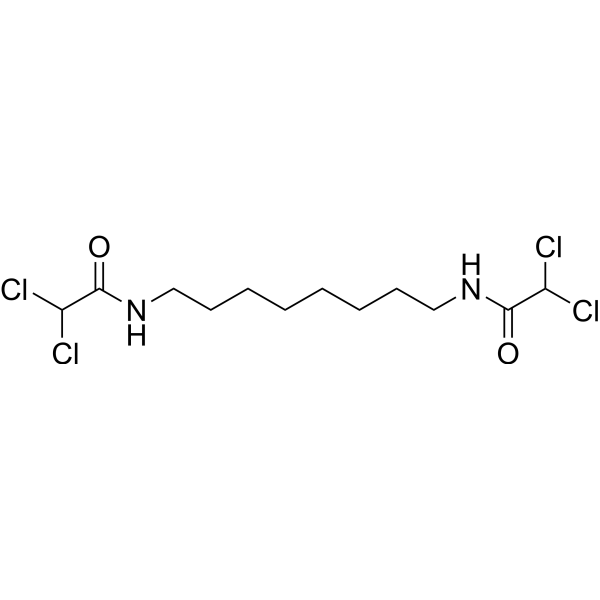
HY-W011094
Win 18446ALDH1a2 Inhibitor -

HY-18936R
Alda-1 (Standard)ALDH2 Agonist


Biological Activity
Description
IC50 & Target
|
ALDH2 |


Chemical Information
-
CAS No. 1016897-10-1
-
Appearance Solid
-
Molecular Weight 263.29
-
Formula C17H13NO2
-
Color Light yellow to yellow
-
SMILES
OC1=CC(/C=C/C2=CC=NC3=CC=CC=C23)=CC(O)=C1
-
Shipping
Room temperature in continental US; may vary elsewhere.
-
Storage
Powder -20°C 3 years 4°C 2 years In solvent -80°C 6 months -20°C 1 month


Solvent & Solubility
In Vitro:
DMSO : 5 mg/mL (18.99 mM; Need ultrasonic; Hygroscopic DMSO has a significant impact on the solubility of product, please use newly opened DMSO)
Please refer to the solubility information to select the appropriate solvent. Once prepared, please aliquot and store the solution to prevent product inactivation from repeated freeze-thaw cycles.
Storage method and period of stock solution: -80°C, 6 months; -20°C, 1 month. When stored at -80°C, please use it within 6 months. When stored at -20°C, please use it within 1 month.
Please refer to the solubility information to select the appropriate solvent. Once prepared, please aliquot and store the solution to prevent product inactivation from repeated freeze-thaw cycles.
Storage method and period of stock solution: -80°C, 6 months; -20°C, 1 month. When stored at -80°C, please use it within 6 months. When stored at -20°C, please use it within 1 month.
Concentration (start) × Volume (start) = Concentration (final) × Volume (final)

Protocols
-
RT-PCR
Reverse transcription technology uses RNA as a template to synthesize DNA. RT-PCR is simple, specific and sensitive, and can be used to detect gene expression levels and expression differences in cells; detect RNA virus content; clone cDNA sequences of specific genes.
-
RNA extraction experimental
By lysing cells, releasing RNA, and removing impurities such as proteins and DNA, high-purity RNA products are finally obtained. The commonly used traditional method is the guanidine isothiocyanate/phenol/chloroform method (Trizol), which is suitable for a variety of animal materials including animal tissues, microorganisms, cultured cells, etc., and most plant materials.
-
Genotoxicity/Mutagenicity Study
The bacterial reverse mutation assay detects point mutations that restore amino-acid prototrophy in auxotrophic Salmonella typhimurium or Escherichia coli tester strains; after exposure to a test article, mutagenic activity is read out as an increased number of revertant colonies on minimal agar compared with the vehicle control. The assay uses tester strains with different mutation targets so that base-substitution and frameshift mutagens can be detected, and testing is performed with and without exogenous mammalian metabolic activation because some chemicals require biotransformation to become mutagenic.
-
Real Time qPCR (Q-PCR)
Real-time quantitative PCR (qPCR) quantifies an amplifiable nucleic-acid target by monitoring fluorescence during PCR cycling rather than measuring product only after amplification. The increase in fluorescence tracks accumulation of PCR product, and the quantification cycle (Cq; historically also Ct/CP) is related to the initial amount of target: samples containing more starting target generally reach the defined fluorescence threshold in fewer cycles.


Purity & Documentation
-
Data Sheet (274 KB)
-
SDS (251 KB)
- English - EN (251 KB)
- Français - FR (251 KB)
- Deutsch - DE (251 KB)
- Norwegian - NO (251 KB)
- Español - ES (251 KB)
- Swedish - SV (251 KB)
- Italian - IT (251 KB)
- Korean - KR (251 KB)
- Portuguese - PT (251 KB)
-
Handling Instructions (2659 KB)
References
[1]. Yan Y, et al. Protection of resveratrol and its analogues against ethanol-induced oxidative DNA damage in human peripheral lymphocytes. Mutat Res. 2011 Apr 3;721(2):171-7. [Content Brief]
[2]. Hou Y, et al. A Novel Quinolyl-Substituted Analogue of Resveratrol Inhibits LPS-Induced Inflammatory Responses in Microglial Cells by Blocking the NF-κB/MAPK Signaling Pathways. Mol Nutr Food Res. 2019 Aug 4:e1801380. [Content Brief]


Complete Stock Solution Preparation Table
Please refer to the solubility information to select the appropriate solvent. Once prepared, please aliquot and store the solution to prevent product inactivation from repeated freeze-thaw cycles.
Storage method and period of stock solution: -80°C, 6 months; -20°C, 1 month. When stored at -80°C, please use it within 6 months. When stored at -20°C, please use it within 1 month.
| Optional Solvent | Concentration Solvent Mass | 1 mg | 5 mg | 10 mg | 25 mg |
|---|---|---|---|---|---|
| DMSO | 1 mM | 3.7981 mL | 18.9905 mL | 37.9809 mL | 94.9523 mL |
| 5 mM | 0.7596 mL | 3.7981 mL | 7.5962 mL | 18.9905 mL | |
| 10 mM | 0.3798 mL | 1.8990 mL | 3.7981 mL | 9.4952 mL | |
| 15 mM | 0.2532 mL | 1.2660 mL | 2.5321 mL | 6.3302 mL |


RV01 Related Classifications
HY-126241 Related Classifications
 Powered by Bioz