200 Results for "

RNA replication

" in MedChemExpress (MCE) Product Catalog:
Products (200)

200 Results for "RNA replication" in MCE Product Catalog:

Cat. No.: HY-180269
Research Areas:  

Infection

Anti-Influenza agent 10 (Compound 41) is an influenza A virus RNA-dependent RNA polymerase (RdRp) inhibitor. Anti-Influenza agent 10 exhibits potent antiviral activity against A/PR/8/34(H1N1) with an IC50 of 0.29μM and a KD of 4.11 μM. Anti-Influenza agent 10 can inhibit the assembly of the viral RdRp complex by disrupting the protein interaction between PA and PB1 subunits, thereby blocking the transcription and replication of the viral genome. Anti-Influenza agent 10 shows significant broad-spectrum effects on multiple influenza virus strains, such as H3N2, H3N8 and H9N2 with IC50 values of 3.96, 1.91 and 1.45 μM. Anti-Influenza agent 10 can be used for the research of influenza A Virus Infection .
loading...
    loading...
Cat. No.: HY-183761
Research Areas:  

Infection

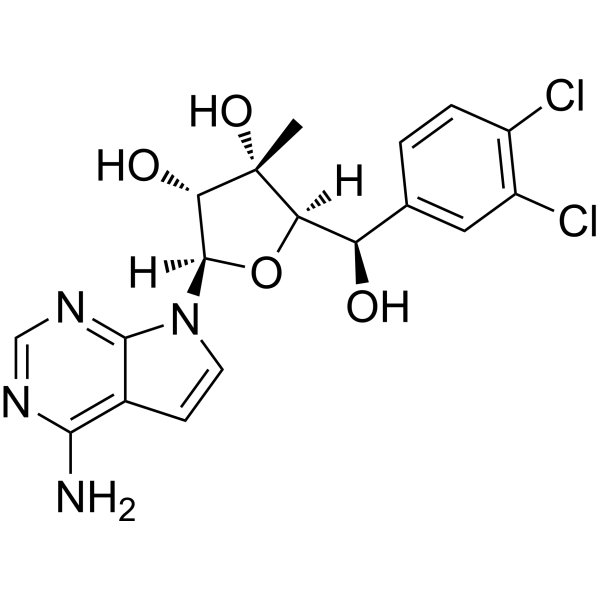
Antiviral agent 86 is an anti-coronavirus agent. Antiviral agent 86 acts as a binder of coronavirus non-structural protein 15 (nsp15), with a Kd value of 67 μM against human targets. Antiviral agent 86 inhibits the replication of HCoV-229E and SARS-CoV-2. Antiviral agent 86 exerts inhibitory effects at the post-entry lifecycle stage of coronaviruses in host cells and inhibits the formation of viral double-stranded RNA (dsRNA). Antiviral agent 86 exhibits an additive antiviral effect when used in combination with GS-441524. Antiviral agent 86 can be used in studies related to coronavirus infections .
loading...
    loading...
Cat. No.: HY-123048
CAS No.: 171744-39-1
Synonyms: PD022551; NSC 654077
Target:  

HIV

Research Areas:  

Infection

DIBA-1 (PD022551; NSC 654077) is an inhibitor of HIV-1 nucleocapsid protein (NCp7). DIBA-1 displaces zinc from the zinc finger motifs of NCp7, p7NC and Pr55gag via thiol-disulfide exchange, covalently modifies cysteine residues, forms intermolecular disulfide cross-links, and disrupts zinc coordination. DIBA-1 inhibits zinc-dependent binding of NCp7 to HIV Ψ RNA, blocks the early replication process of HIV-1, suppresses the proteolytic processing of Gag precursors, and impairs the maturation and release of viral particles. DIBA-1 can be used in studies related to human immunodeficiency virus type 1 infection .
loading...
    loading...
Cat. No.: HY-136797
CAS No.: 1622060-51-8
Target:  

Dengue Virus

Research Areas:  

Infection

BP13944 is a potential small molecule inhibitor discovered by high-throughput screening. It can effectively inhibit the expression of dengue virus (DENV) replicons with an EC50 value of 1.03±0.09 μM. BP13944 can inhibit the replication or viral RNA synthesis of all four serotypes of DENV, but is ineffective against Japanese encephalitis virus. BP13944 may target the DENV NS3 protease, and the E66G amino acid substitution in the NS3 protease region will cause the virus to become resistant to BP13944. BP13944 has no obvious cytotoxicity. As there is currently no effective dengue vaccine and treatment, BP13944, as an effective small molecule inhibitor, may become a potential agent for the treatment of dengue in the future.
loading...
    loading...
Cat. No.: HY-176268
Synonyms: RA-0188293; RA-NSP2-1
Research Areas:  

Infection

SGC-NSP2hel-1 (RA-0188293), a chemical probe, is a potent, specific and orally active nsP2 inhibitor. SGC-NSP2hel-1 has broad spectrum activity against multiple alphaviruses of the nsP2 helicase with a CC50 > 250 μM. SGC-NSP2hel-1 (RA-0188293) shows selectivity index > 4000 against human RNA helicases. SGC-NSP2hel-1 reduces virus replication and limited virus-induced pathology by forming a stable complex with nsP2 and ATP in a preclinical small animal model of CHIKV disease.
loading...
    loading...
Cat. No.: HY-179293
Target:  

SARS-CoV Virus Protease

Research Areas:  

Infection

SARS-CoV-2 PLpro-IN-3 (Compound 15) is a covalent inhibitor of the SARS-CoV-2 papain-like protease (PLpro), with an IC50 of 25 nM. SARS-CoV-2 PLpro-IN-3 has similar inhibitory activity against SARS-CoV PLpro (IC50 = 59 nM), but shows no inhibitory effect on human ubiquitin-specific protease 7 (USP7). The EC50 of SARS-CoV-2 PLpro-IN-3 in inhibiting SARS-CoV-2 replication in cells is 96 nM, significantly reducing the viral titer and viral RNA levels. SARS-CoV-2 PLpro-IN-3 can be used for studying SARS-CoV-2 drug resistance mutations .
loading...
    loading...
Cat. No.: HY-182042
Target:  

Dengue Virus

Research Areas:  

Infection

DENV-IN-15 is a sulfonyl anthranilic acid derivative and a pan-serotype anti-dengue virus (DENV) inhibitor with broad-spectrum anti-RNA virus activity. The EC50 value of DENV-IN-15 against DENV-2 in Huh-7 cells is 0.7 μM. DENV-IN-15 selectively regulates the translation of mRNAs encoding translation-related proteins and containing a 5'-oligopyrimidine tract. DENV-IN-15 reduces the expression of specific ribosomal proteins, thereby inhibiting viral replication. DENV-IN-15 exhibits enhanced membrane permeability, human plasma stability and human liver microsomal metabolic stability. DENV-IN-15 is applicable to research related to dengue virus infection .
loading...
    loading...
Cat. No.: HY-184048
CAS No.: 33580-97-1
Research Areas:  

Infection

JMX0207 is an orally active flavivirus NS2B-NS3 protease inhibitor. JMX0207 showed an IC50-SLC of 1.3 μM for blocking NS2B-NS3 protein interaction and an IC50-pro of 8.2 μM for inhibiting protease catalytic activity.. JMX0207 directly binds viral NS3 protease at the NS2B-NS3 interface with a Kd of 1.1 μM, blocks viral polyprotein precursor processing, suppresses viral RNA replication and viral protein production. JMX0207 can be used for the study of Zika virus infection and Dengue virus infection .
loading...
    loading...
Cat. No.: HY-W012282
CAS No.: 7057-27-4
Target:  

HCV

Research Areas:  

Infection

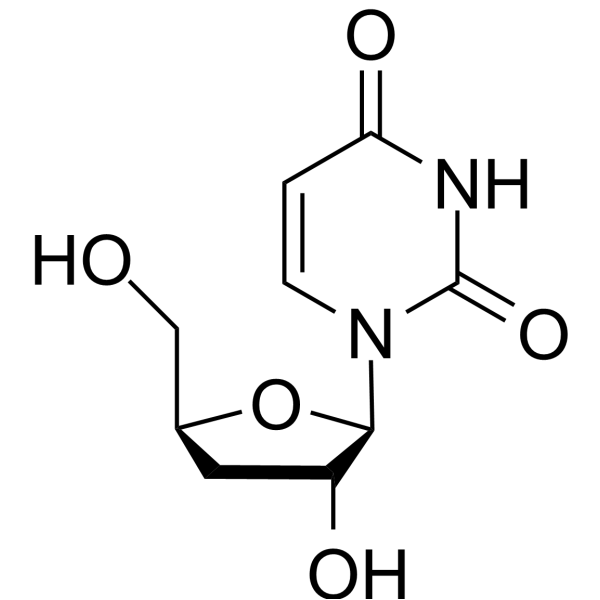
3′-Deoxyuridine is a 3'-deoxynucleoside analog and a 2',3'-dideoxynucleoside. 3′-Deoxyuridine does not inhibit the replication of HCV-like RNA templates or luciferase levels in human cells at the tested concentrations. 3′-Deoxyuridine serves as a substrate for microbial dideoxyribosylation reactions to generate various 2',3'-dideoxynucleosides, but cannot be converted into 2',3'-dideoxycytidine by resting E. coli AJ 2595 cells. 3′-Deoxyuridine can be formed by the deamination of 3'-deoxycytidine by E. coli BM-11 cytidine deaminase, and can also undergo phosphorolytic cleavage to produce uracil and the corresponding pentose phosphate. 3′-Deoxyuridine has been used in research related to HCV and other relevant fields .
loading...
    loading...
Cat. No.: HY-182309
CAS No.: 1237645-43-0
Research Areas:  

Infection

SC83288 is a Plasmodium falciparum PfDNMT2 inhibitor with an IC50 of 7 μM. SC83288 disrupts the epigenetic regulation of malaria parasites, blocks DNA replication and nuclear division, arrests the development of the asexual blood stage, induces the formation of pyknotic morphology in malaria parasites, and does not affect cytokinesis after nuclear division or parasite egress. SC83288 is applicable to malaria-related research .
loading...
    loading...
Cat. No.: HY-141876
CAS No.: 2278356-90-2
PRT543 is an orally active selective PRMT5 inhibitor. PRT543 reduces intracellular symmetric dimethylarginine (sDMA) levels, downregulates the expression of genes related to DNA damage repair and DNA replication pathways, and induces abnormal alternative splicing. PRT543 inhibits the MYB, NOTCH1 and PI3K/AKT signaling pathways, promotes nuclear translocation of FOXO1, upregulates the pro-apoptotic protein BAX, and enhances cellular sensitivity to BCL-2 inhibition. PRT543 disrupts the normal RNA splicing process and exerts a synthetic lethal effect on myeloid tumor cells carrying splicing factor mutations. PRT543 can be used in research related to various cancers including breast cancer, ovarian cancer and acute myeloid leukemia .
loading...
    loading...
Cat. No.: HY-16342
CAS No.: 827034-92-4
NA808 is an Serine Palmitoyltransferase (SPT) inhibitor. NA808 reduces sphingomyelin synthesis, inhibits its activation in hepatic stellate cells, and decreases the expression of α-SMA protein and mRNA, as well as collagen 1A1 mRNA (IC50 0.16, 0.12, and 0.11 μM, respectively). NA808 inhibits HCV replication and reduces NS3 and RdRp protein expression in HCV replicon cells without significant cytotoxicity and exhibits almost no immunosuppressive effect at effective concentrations. NA808 demonstrates broad-spectrum antiviral activity in humanized chimeric liver mice infected with various HCV genotypes, and dose-dependently reduces serum and hepatic HCV RNA levels. NA808 can be used for research on non-alcoholic steatohepatitis and hepatitis C virus infection .
loading...
    loading...
Cat. No.: HY-181107
Research Areas:  

Infection

DNA Gyrase/ribosomes-IN-1 is a bacterial ribosome and DNA gyrase inhibitor, with IC50 values of 1.11 μM and 3.31 μM, respectively. DNA Gyrase/ribosomes-IN-1 also inhibits CYP3A4, with an IC50 of 18.5 μM, and exhibits stability in mouse plasma and liver microsomes. DNA Gyrase/ribosomes-IN-1 inhibits bacterial protein synthesis by interacting with ribosomal RNA and associated sites. DNA Gyrase/ribosomes-IN-1 suppresses bacterial DNA replication by interacting with the gyrase complex. DNA Gyrase/ribosomes-IN-1 restores activity against macrolide-resistant, erm-mediated Gram-positive pathogens and enhances activity against Gram-negative bacteria such as Haemophilus influenzae and Moraxella catarrhalis. DNA Gyrase/ribosomes-IN-1 can be used in research on community-acquired bacterial pneumonia .
loading...
    loading...
Cat. No.: HY-187097
SARS-CoV-2 3CLpro-IN-40 is a SARS-CoV-2 3CL pro inhibitor with an IC50 of 2.041 μM. SARS-CoV-2 3CLpro-IN-40 reduces the expression level of viral nucleocapsid protein and the expression levels of proinflammatory cytokines (IL-6, TNF-α and IFN-β). SARS-CoV-2 3CLpro-IN-40 decreases the RNA level of infectious bronchitis virus. SARS-CoV-2 3CLpro-IN-40 inhibits SARS-CoV-2 infection. SARS-CoV-2 3CLpro-IN-40 reduces the replication level of HCoV-OC43. SARS-CoV-2 3CLpro-IN-40 is applicable to research related to coronavirus infection .
loading...
    loading...
Cat. No.: HY-128854R
CAS No.: 792-74-5
Dimethyl biphenyl-4,4'-dicarboxylate (Standard) is the analytical standard of Dimethyl biphenyl-4,4'-dicarboxylate (HY-128854). This product is intended for research and analytical applications. Dimethyl biphenyl-4,4'-dicarboxylate (Biphenyl dimethyl dicarboxylate) is a hepatoprotective agent. Dimethyl biphenyl-4,4'-dicarboxylate stimulates the Jak/Stat signaling pathway and induces the expression of IFN-α-stimulated genes, particularly 6-16 and ISG12. Dimethyl biphenyl-4,4'-dicarboxylate inhibits the replication of pregenomic RNA and HBeAg. Polymer micelles loaded with Dimethyl biphenyl-4,4'-dicarboxylate can serve as carriers for the compound. Dimethyl biphenyl-4,4'-dicarboxylate can be used as an auxiliary improving agent for chronic hepatitis. Dimethyl biphenyl-4,4'-dicarboxylate is applicable to research related to chronic hepatitis B .
loading...
    loading...
Cat. No.: HY-128854S
CAS No.: 1219803-50-5
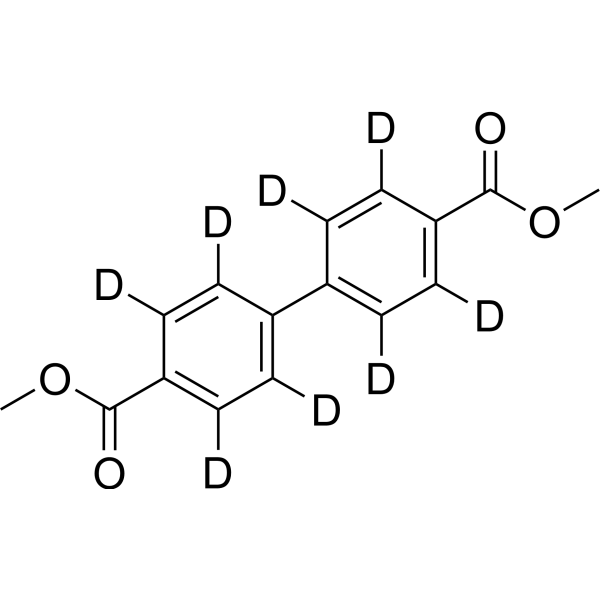
Dimethyl biphenyl-4,4'-dicarboxylate-d8 is the d8-labeled Dimethyl biphenyl-4,4'-dicarboxylate (HY-128854). Dimethyl biphenyl-4,4'-dicarboxylate (Biphenyl dimethyl dicarboxylate) is a hepatoprotective agent. Dimethyl biphenyl-4,4'-dicarboxylate stimulates the Jak/Stat signaling pathway and induces the expression of IFN-α-stimulated genes, particularly 6-16 and ISG12. Dimethyl biphenyl-4,4'-dicarboxylate inhibits the replication of pregenomic RNA and HBeAg. Polymer micelles loaded with Dimethyl biphenyl-4,4'-dicarboxylate can serve as carriers for the compound. Dimethyl biphenyl-4,4'-dicarboxylate can be used as an auxiliary improving agent for chronic hepatitis. Dimethyl biphenyl-4,4'-dicarboxylate is applicable to research related to chronic hepatitis B .
loading...
    loading...
Cat. No.: HY-164702
Synonyms: Izalontamab Brengitecan
Research Areas:  

Cancer

BL-B01D1 (Izalontamab Brengitecan) is a bispecific antibody-drug conjugate (ADC) targeting EGFR and HER3, formed by conjugating the EGFR/HER3 bispecific antibody Izalontamab (HY-P99676) to a novel TOP-I inhibitor payload Deruxtecan 2-hydroxypropanamide (HY-153891) via a cleavable linker (Mc-Gly-Gly-Phe-Gly). BL-B01D1 binds to EGFR and HER3 on the surface of tumor cells, mediates endocytosis and releases the payload, inhibits topoisomerase I, blocks DNA replication and RNA synthesis, and disrupts DNA structure. BL-B01D1 induces cell cycle S-phase arrest, apoptosis, antibody-dependent cell-mediated cytotoxicity, and tumor cell death. BL-B01D1 can be used for cancer research .
loading...
    loading...
Cat. No.: HY-30234B
CAS No.: 17162-20-8
Clemizole sulfate is an orally active, blood-brain barrier permeable TRPC5 inhibitor, with an IC50 value of 1.05-1.34 μM against mouse TRPC5. Clemizole sulfate blocks TRPC1:TRPC5, TRPC3, TRPC4, TRPC6, TRPC7, hERG, hKCNQ1/hKCNE1 and hKv1.5 channels, and activates TRPA1; it modulates 5HT-2B and HTR2A receptors; it inhibits HCV RNA replication, CrtN enzymatic activity, oxidative stress, neuroinflammation, cell apoptosis and bacterial virulence; it maintains blood-brain barrier (BBB) integrity; it enhances DNA repair capacity; it improves cell viability; and it alters cardiac electrophysiological properties. Clemizole sulfate can be used in the research of Dravet syndrome, hepatitis C virus infection, Staphylococcus aureus skin infection, Cisplatin (HY-17394)-induced nephrotoxicity, STXBP1-related diseases, traumatic brain injury and xeroderma pigmentosum type C .
loading...
    loading...
Cat. No.: HY-30234S
CAS No.: 1251554-64-9
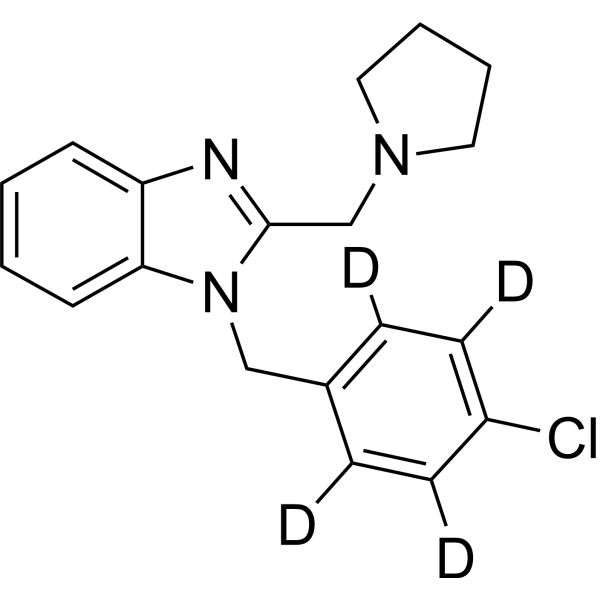
Clemizole-d4 is the deuterated-labeled Clemizole (HY-30234). Clemizole is an orally active, blood-brain barrier permeable TRPC5 inhibitor, with an IC50 value of 1.05-1.34 μM against mouse TRPC5. Clemizole blocks TRPC1:TRPC5, TRPC3, TRPC4, TRPC6, TRPC7, hERG, hKCNQ1/hKCNE1 and hKv1.5 channels, and activates TRPA1; it modulates 5HT-2B and HTR2A receptors; it inhibits HCV RNA replication, CrtN enzymatic activity, oxidative stress, neuroinflammation, cell apoptosis and bacterial virulence; it maintains blood-brain barrier (BBB) integrity; it enhances DNA repair capacity; it improves cell viability; and it alters cardiac electrophysiological properties. Clemizole can be used in the research of Dravet syndrome, hepatitis C virus infection, Staphylococcus aureus skin infection, Cisplatin (HY-17394)-induced nephrotoxicity, STXBP1-related diseases, traumatic brain injury and xeroderma pigmentosum type C .
loading...
    loading...
Cat. No.: HY-12888
CAS No.: 907543-25-3
Target:  

Topoisomerase Bacterial

Research Areas:  

Infection

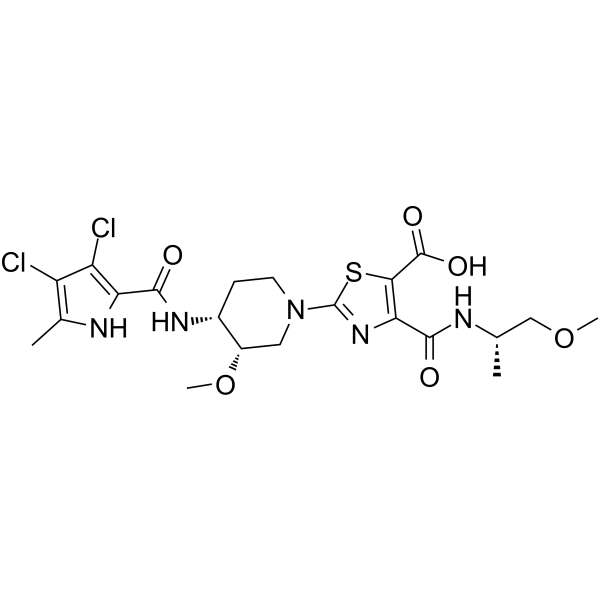
AZD5099 is an orally effective pyrrole amide inhibitor and antibacterial agent. AZD5099 shows over 10000-fold higher selectivity for bacterial type II topoisomerases than for human topoisomerase IIα, with a IC50 value of 0.032 μmol/L against Staphylococcus aureus GyrB, a IC50 of 0.760 μmol/L against Escherichia coli GyrB, a IC50 of 73 nM against Escherichia coli ParE, a Kd of 83.8 nmol/L for Staphylococcus aureus GyrB, and a IC50 of >50 μM against human topoisomerase IIα. AZD5099 inhibits rat Mrp2 ATPase activity, competitively binds to the ATP-binding site of bacterial type II topoisomerases, blocks enzyme activity, reduces bacterial DNA and RNA synthesis, disrupts DNA replication and transcription processes, and induces mitochondrial toxicity. AZD5099 exhibits activity against Gram-positive bacteria, fastidious Gram-negative bacteria and drug-resistant strains, reduces bacterial loads in mouse infection models, and has a low spontaneous resistance frequency. AZD5099 can be used in studies related to infections caused by Gram-positive bacteria and fastidious Gram-negative bacteria, methicillin-resistant Staphylococcus aureus infections, Streptococcus pneumoniae pulmonary infections, as well as Staphylococcus aureus and Escherichia coli infections .
loading...
    loading...

