236 Results for "

preferential

" in MedChemExpress (MCE) Product Catalog:
Products (236)

236 Results for "preferential" in MCE Product Catalog:

Cat. No.: HY-D1422
CAS No.: 1445108-32-6
Synonyms: BDNCA-346
Target:  

Fluorescent Dye

Domaines de recherche:  

Others

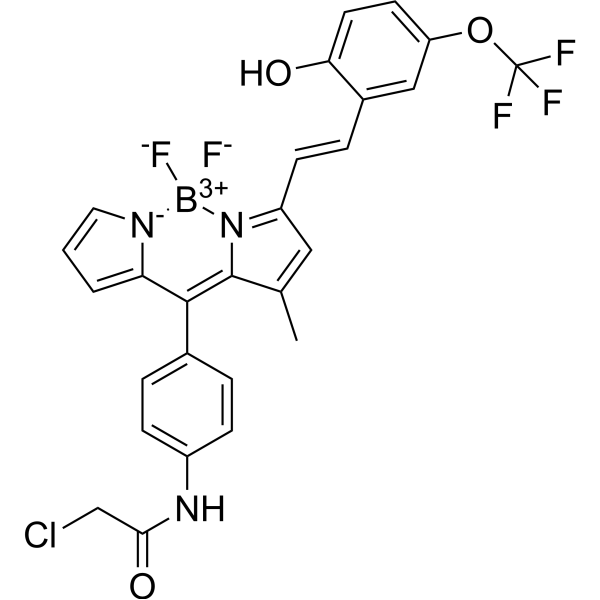
ER Tracker Yellow (BDNCA-346) is a Fluorescent probe for targeted visualization of temperature at the endoplasmic reticulum. Its detection mechanism depends on temperature, with fluorescence intensity decreasing at higher temperatures due to preferential non-radiative processes; this intensity reversibly returns to baseline when cooled, provided the probe does not precipitate or degrade. It localizes specifically to the endoplasmic reticulum, where it may covalently attach to biomacromolecules via a thiol-reactive moiety, and its fluorescence remains stable after cell fixation; its fluorescence intensity is unaffected by physiological pH ranges of 5.0–8.0 and free Ca²⁺ concentrations of 0–800 μM. Its excitation/emission wavelength is Ex/Em = 559/581 nm[1].
loading...
    loading...
Cat. No.: HY-P1221
CAS No.: 484598-36-9
Target:  

Sodium Channel

Domaines de recherche:  

Neurological Disease

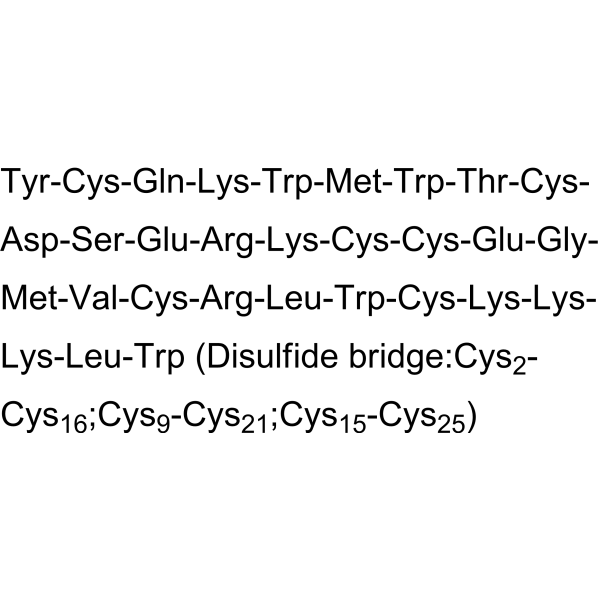
ProTx II is a selective blocker of Nav1.7 sodium channels, with an IC50 value of 0.3 nM and a Ki of 0.389 nM against human NaV1.7. ProTx II selectively blocks spinal cord NaV1.7 by reducing conductance and altering voltage dependence of activation, preferentially binds to the splice region of aNaV1.5, and can also block sodium channel subtypes such as Nav1.4 and Nav1.6. ProTx II alleviates thermal hyperalgesia in diabetic mice and prevents the propagation of action potentials in nociceptors. ProTx II can be used for research related to painful diabetic neuropathy and pain disorders .
loading...
    loading...
Cat. No.: HY-110168
CAS No.: 913830-15-6
Pureté:  98.36%
Target:  

nAChR

Domaines de recherche:  

Neurological Disease Inflammation/Immunology

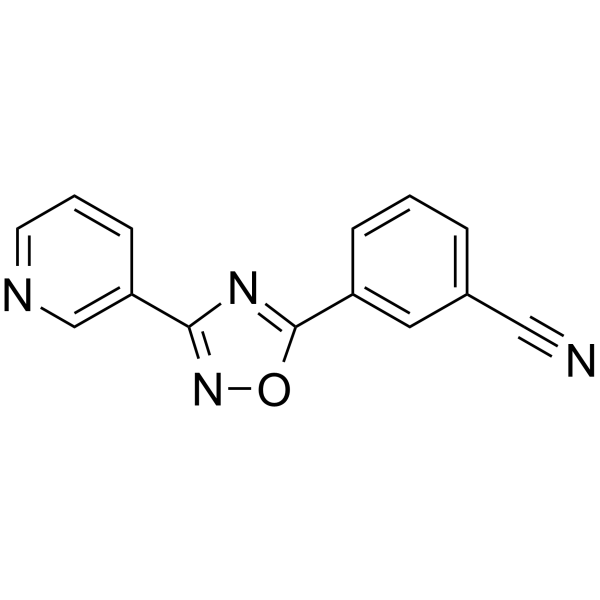
NS 9283 (A-969933) is a α4β2 nicotinic acetylcholine receptor (α4β2 nAChR) positive allosteric modulator that preferentially targets the (α4)3 (β2)2 stoichiometric conformation. NS 9283 increases the potency of ACh-induced currents without enhancing the maximal effect of ACh. NS 9283 also enhances prefrontal glutamate release, modulates attention-related electrophysiological responses, and potentiates the antinociceptive effects associated with α4β2 nAChR agonists. NS 9283 can be used in research related to inflammatory pain, postoperative pain, osteoarthritis pain, and Parkinson's disease .
loading...
    loading...
Cat. No.: HY-119468R
CAS No.: 32359-34-5
Domaines de recherche:  

Neurological Disease

Medifoxamine (Standard) is the analytical standard of Medifoxamine (HY-119468). This product is intended for research and analytical applications. Medifoxamine is an orally active monoamine reuptake inhibitor and antidepressant. Medifoxamine preferentially inhibits presynaptic dopamine reuptake. Medifoxamine acts as an intraocular pressure-lowering agent to reduce intraocular pressure, and also functions as a miotic agent to decrease pupil diameter. Medifoxamine exhibits characteristic properties of antidepressant compounds, including preventing hypothermia induced by Reserpine (HY-N0480) or Apomorphine (HY-12723), potentiating the toxic effects of Yohimbine (HY-N0127) in mice, and reducing immobility behavior in mice and rats in the "behavioral despair" model. Medifoxamine has no anticholinergic activity. Medifoxamine can be used in research related to depression .
loading...
    loading...
Cat. No.: HY-134850
CAS No.: 2267290-96-8
Pureté:  99.94%
QC-01-175 is a Tau PROTAC degrader, with Kd values of 1.2 μM, 1.7 μM and 2.5 μM for wild-type, A152T mutant and P301L mutant tau-441 proteins, respectively. QC-01-175 binds to both Tau and CRBN, triggering ubiquitination and proteasomal degradation of Tau. QC-01-175 preferentially targets disease-associated Tau proteins in frontotemporal dementia. QC-01-175 inhibits MAO activity, with an IC50 of 8.56 μM. QC-01-175 suppresses the elevation of ROS levels. QC-01-175 can be used in studies related to frontotemporal dementia and amyotrophic lateral sclerosis .
loading...
    loading...
Cat. No.: HY-182893
CAS No.: 1919889-97-6
SK-129 is a blood-brain barrier-permeable inhibitor of α-synuclein (αS) oligomers with a Kd of 221 nM. SK-129 preferentially binds to neurotoxic αS oligomers over physiological αS monomers, inhibits αS aggregation, blocks the interaction and co-aggregation of αS with tau protein, and prevents the maturation of αS-tau condensates into amyloid aggregates. SK-129 reduces ROS production, rescues dopaminergic neuron degeneration, improves motor function, restores endogenous dopamine synthesis, increases the number of Tyrosine Hydroxylase-positive neurons, prevents brain histopathological changes, alleviates neuroinflammation, and improves survival rates in relevant models. SK-129 can be used in research related to Parkinson's disease (PD) and Lewy body dementia (LBD) .
loading...
    loading...
Cat. No.: HY-189055
CAS No.: 3132205-57-0
Target:  

β-glucuronidase

Domaines de recherche:  

Inflammation/Immunology

β-Glucuronidase-IN-6 is an Escherichia coli β-glucuronidase (EcGUS) inhibitor with an IC50 of 0.39 μM, Ki of 0.60 μM, selectivity over bovine liver β-glucuronidase, and oral effectiveness. β-Glucuronidase-IN-6 preferentially binds the enzyme-substrate complex, interacts with residues Asp163, Glu413, and Trp549 to stabilize the binding complex. β-Glucuronidase-IN-6 does not inhibit Escherichia coli growth and exhibits low cytotoxicity toward human epithelial cells. β-Glucuronidase-IN-6 attenuates irinotecan-induced weight loss, diarrhea, and colonic injury in mice. β-Glucuronidase-IN-6 can be used for the research of irinotecan-induced gastrointestinal toxicity .
loading...
    loading...
Cat. No.: HY-B0661D
CAS No.: 94666-07-6
Synonyms: YM12617 free base; (Rac)-LY253351 free base
(Rac)-Tamsulosin (YM12617 (free base); (Rac)-LY253351 (free base)) is an isomer of Tamsulosin (HY-B0661). (Rac)-Tamsulosin is a sulfonamide phenethylamine derivative and a competitive antagonist of selective post-synaptic α1-adrenoceptors. (Rac)-Tamsulosin inhibits CYP3A4 activity in a non-competitive, enantiomer-specific manner, with an IC50 and Ki of 6.75 μM. (Rac)-Tamsulosin produces dose-dependent hypotension, preferentially antagonizing α1-adrenoceptor-mediated pressor responses, and inhibits α2-adrenoceptor-mediated pressor responses at high doses. (Rac)-Tamsulosin can be used in research related to various diseases such as metabolism .
loading...
    loading...
Cat. No.: HY-P11280A
Target:  

Melanocortin Receptor

Domaines de recherche:  

Cancer

PRAME peptide (425-433) acetate is a proteasome-degraded peptide derived from the cancer-testis antigen PRAME (Preferentially Expressed Antigen in Melanoma). PRAME peptide (425-433) acetate is restricted by HLA-A*02:01 and can serve as a target for bispecific T cell engager therapy in the context of major histocompatibility complex I presentation. PRAME peptide (425-433) acetate shows application potential in various malignant tumors and is widely suitable for research related to solid tumors, melanoma, ovarian cancer, endometrial cancer, and lung cancer (including lung adenocarcinoma and lung squamous cell carcinoma). PRAME peptide (425-433) acetate can be used to explore disease of triple-negative breast cancer, diffuse large B-cell lymphoma, and head and neck squamous cell carcinoma .
loading...
    loading...
Cat. No.: HY-P11932
Domaines de recherche:  

Cancer

FGLP21 is a polypeptide targeting FGL1. FGLP21 has a simulated binding affinity of -9.56 kcal/mol for FGL1, and inhibits the binding of 68Ga-NODA-FGLP21 to FGL1 in a competitive binding assay using FGL1-positive Huh7 cells, with an IC50 of 101.0 nM. FGLP21 preferentially binds to FGL1-positive Huh7 cells, and excess unlabeled FGLP21 can significantly block the uptake of 68Ga-NODA-FGLP21 in Huh7 xenograft tumors. FGLP21 can be used for FGL1-targeted tumor imaging and immune checkpoint research .
loading...
    loading...
Cat. No.: HY-P1221A
Target:  

Sodium Channel

Domaines de recherche:  

Neurological Disease

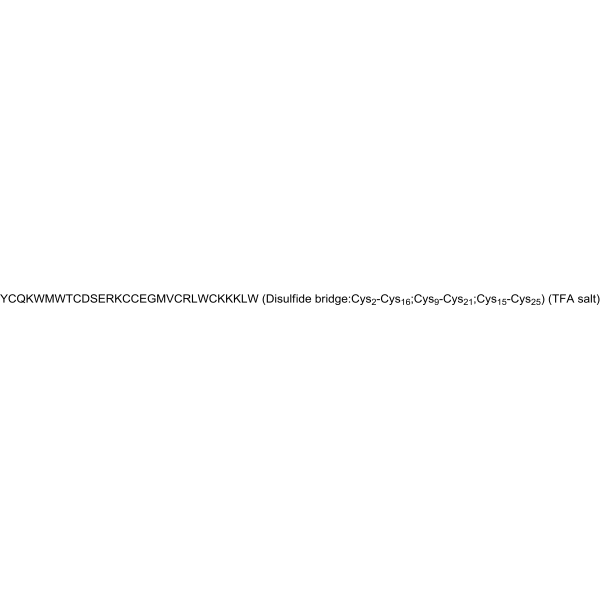
ProTx II TFA is a selective blocker of Nav1.7 sodium channels, with an IC50 value of 0.3 nM and a Ki of 0.389 nM against human NaV1.7. ProTx II TFA selectively blocks spinal cord NaV1.7 by reducing conductance and altering voltage dependence of activation, preferentially binds to the splice region of aNaV1.5, and can also block sodium channel subtypes such as Nav1.4 and Nav1.6. ProTx II TFA alleviates thermal hyperalgesia in diabetic mice and prevents the propagation of action potentials in nociceptors. ProTx II TFA can be used for research related to painful diabetic neuropathy and pain disorders .
loading...
    loading...
Cat. No.: HY-P990951
CAS No.: 2845128-05-2
Synonyms: REGN-5381

Domaines de recherche:  

Cardiovascular Disease

Vixticibart (REGN-5381) is a fully human IgG4 monoclonal antibody and NPR1 agonist that targets NPR1. Vixticibart stabilizes the receptor in an activated conformation by binding to the N-terminal domain of NPR1, and enhances the activity of endogenous ligands ANP and BNP without blocking ligand binding when these ligands are present. Vixticibart exerts vasodilatory and hypotensive effects by inducing cGMP production, preferentially dilating venous vessels to reduce systolic and venous pressure, but does not induce diuresis and may trigger a compensatory increase in heart rate. Vixticibart produces a synergistic hypotensive effect when combined with angiotensin-converting enzyme inhibitors or angiotensin receptor blockers, and is currently mainly used in research related to heart failure and hypertension .
loading...
    loading...
Cat. No.: HY-U00265
CAS No.: 20073-24-9
Synonyms: 3-Carbethoxypsoralen; 3-Ethoxycarbonylpsoralen
Target:  

Bacterial

Domaines de recherche:  

Infection

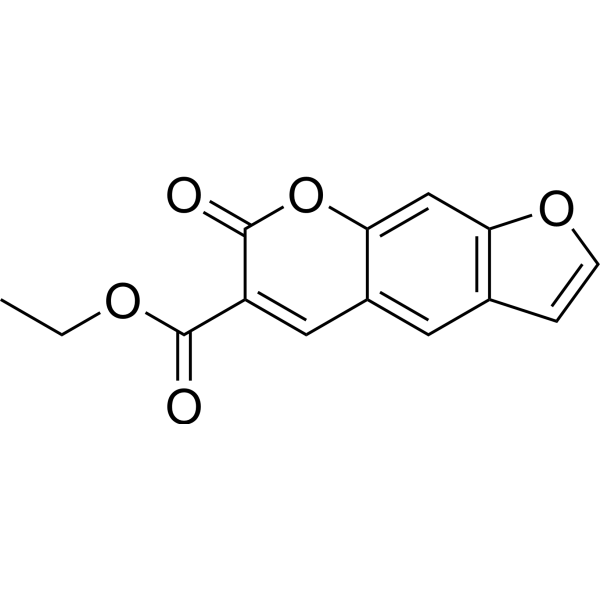
3-CPs is a monofunctional furanocoumarin and a photoprotective agent targeting Staphylococcus aureus DNA, possessesing anti-UVB lethal activity. 3-CPs competitively intercalates into DNA, forming exclusively 4',5'-furan-side mono-adducts upon UVB irradiation, and irreversibly inhibits the formation of cyclobutane pyrimidine dimers. 3-CPs prevents UVB-induced DNA damage by preferentially binding to strong (AT)n sites within the DNA, without inducing lethal interstrand DNA cross-links; the limited number of mono-adducts it induces can be efficiently repaired by bacteria. 3-CPs holds potential for use in the development of photoprotective formulations for skin diseases, as well as in studies investigating bacterial DNA photodamage repair mechanisms and the optimization of photochemotherapy safety .
loading...
    loading...
Cat. No.: HY-W747310
CAS No.: 79262-46-7
Synonyms: Cipazoxapine; CGP 19486A
Domaines de recherche:  

Neurological Disease

Savoxepine (Cipazoxapine; CGP 19486A) is a dopamine antagonist with antipsychotic activity. Savoxepine preferentially blocks hippocampal dopamine D2 receptors and also inhibits dopamine-stimulated adenylate cyclase activity. Savoxepine shows strong interactions with α-adrenergic receptors, serotonin 5-HT2 receptors and histamine H1 receptors, and moderate interactions with α2-adrenergic receptors, histamine H2 receptors, serotonin 5-HT1 receptors and cholinergic muscarinic receptors. Savoxepine inhibits dopamine agonist-induced stereotyped behaviors in animals, induces catalepsy in animals, and antagonizes Apomorphine (HY-12723)-induced climbing behavior in mice. Savoxepine can be used in schizophrenia-related research .
loading...
    loading...
Cat. No.: HY-10015R
CAS No.: 870653-45-5
Synonyms: 5-(4-Phenoxybutoxy)psoralen (Standard)
Domaines de recherche:  

Inflammation/Immunology

PAP-1 (Standard) is the analytical standard of PAP-1. This product is intended for research and analytical applications. PAP-1 (5-(4-Phenoxybutoxy)psoralen) is a potent, selective, and orally active Kv1.3 blocker (EC50=2 nM). PAP-1 blocks Kv1.3 in a use-dependent manner and acts by preferentially binding to the C-type inactivated state of the channel. PAP-1 exhibits 23-fold selectivity over Kv1.5 (EC50=45 nM), and further displays 33- to 125-fold selectivity over all other Kv1-family channels. PAP-1 does not exhibit cytotoxic or phototoxic effects .
loading...
    loading...
Cat. No.: HY-103693R
CAS No.: 2809469-05-2
Domaines de recherche:  

Cancer

NAZ2329 (Standard) is the analytical standard of NAZ2329 (HY-103693). This product is intended for research and analytical applications. NAZ2329, the first cell-permeable inhibitor of R5 subfamily of receptor-type protein tyrosine phosphatases (RPTPs), allosterically and preferentially inhibits PTPRZ (IC50=7.5 µM for hPTPRZ1) and PTPRG (IC50=4.8 µM for hPTPRG) over other PTPs. NAZ2329 binds to the active D1 domain and more potently inhibits PTPRZ-D1 fragment (IC50 of 1.1 µM) than the whole intracellular (D1 + D2) fragment (IC50 of 7.5 µM). NAZ2329 can effectively inhibit tumor growth of the glioblastoma cells and suppress stem cell-like properties .
loading...
    loading...
Cat. No.: HY-175164
Target:  

Apoptosis c-Myc

Domaines de recherche:  

Cancer

SVC112 is a translation elongation inhibitor that prevents the cyclic dissociation of EF2 from the ribosome, thereby inhibiting the elongation step of translation. SVC112 shows activity in growth inhibition among cancer cell lines of various origins (acute myeloid leukemia (AML), multiple myeloma (Myeloma), colorectal cancer (CRC), and head and neck squamous cell carcinoma (HNSCC)). SVC112 preferentially impedes ribosomal processing of mRNAs, and decreaseds CSC-related proteins including Myc and Sox2. SVC112 induces apoptosis in hematologic cancer cell lines, while phosphorylation of c-Myc correlates with sensitivity to SVC112 in colorectal cancer cell lines. SVC112 inactivates HNSCC stem cells in vitro and prevents the regrowth of HNSCC tumor xenografts in mice. SVC112 can be used for the study of HNSCC .
loading...
    loading...
Cat. No.: HY-18102BS
GLPG0492- 13C,d3 racemate is 13C-labeled GLPG0492 (racemate) (HY-18102B). GLPG0492 racemate is an orally active, non-steroidal selective androgen receptor modulator. GLPG0492 racemate exerts functional transactivation by binding to the ligand-binding domain of the receptor, exhibiting preferential partial agonist activity in muscle and bone tissues with low activity in reproductive tissues. GLPG0492 racemate effectively counteracts muscle atrophy-related pathways, significantly enhances muscle strength, maintains motor ability, reduces fibrosis and improves electrophysiological parameters. GLPG0492 racemate prevents immobilization-induced muscle atrophy and regulates muscle mass homeostasis, serving as a valuable tool compound for studies on Duchenne muscular dystrophy, muscle loss and various types of disuse musculoskeletal atrophy .
loading...
    loading...
Cat. No.: HY-182365
Target:  

Histone Demethylase

Domaines de recherche:  

Neurological Disease Inflammation/Immunology

EED-IN-4 is an orally active, EZH2-selective immunomodulator and EED-H3K27me3 inhibitor (EED, IC50=28.21 nM) with anti-inflammatory activity. In mouse models, EED-IN-4 preferentially and persistently accumulates in lymph nodes after oral administration. By reducing the H3K27me3 level of dendritic cells and inhibiting their migration, EED-IN-4 reduces the infiltration of immune cells into the central nervous system and effectively alleviates spinal cord inflammation. EED-IN-4 shows weak inhibitory activity against hERG channels and is non-mutagenic, with no obvious toxicity observed upon long-term oral administration. EED-IN-4 can be used for the research of multiple sclerosis .
loading...
    loading...
Cat. No.: HY-B0661CS
CAS No.: 1189923-88-3
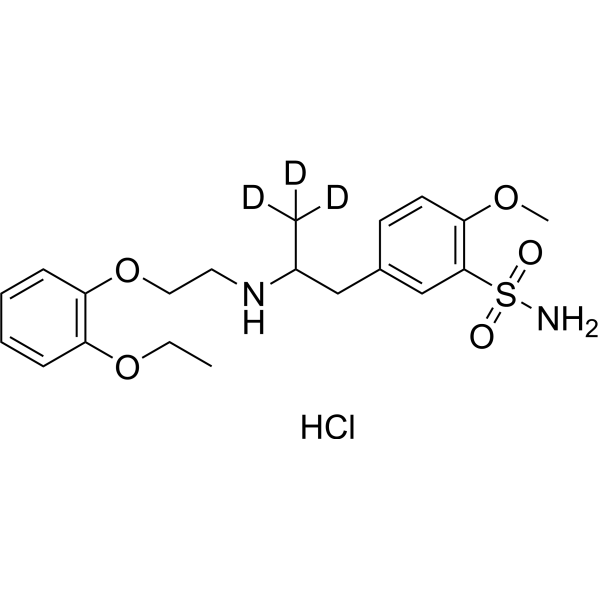
(Rac)-Tamsulosin-d3 hydrochloride is the deuterated-labeled Tamsolusin hydrochloride (HY-B0661C). Tamsolusin hydrochloride (YM12617 hydrochloride; LY253351 hydrochloride) is an isomer of Tamsulosin (HY-B0661). Tamsolusin hydrochloride is a sulfonamide phenethylamine derivative and a competitive antagonist of selective post-synaptic α1-adrenoceptors. Tamsolusin hydrochloride inhibits CYP3A4 activity in a non-competitive, enantiomer-specific manner, with an IC50 and Ki of 6.75 μM. Tamsolusin hydrochloride produces dose-dependent hypotension, preferentially antagonizing α1-adrenoceptor-mediated pressor responses, and inhibits α2-adrenoceptor-mediated pressor responses at high doses. Tamsolusin hydrochloride can be used in research related to various diseases such as metabolism .
loading...
    loading...

