284 Results for "

protons

" in MedChemExpress (MCE) Product Catalog:
Products (284)

284 Results for "protons" in MCE Product Catalog:

Cat. No.: HY-115312
CAS No.: 101387-98-8
Target:  

Na+/K+ ATPase

Research Areas:  

Others

Ro 18-5364 is an inhibitor of gastric H+/K+ ATPase, which has the effect of inhibiting the activity of the enzyme. Ro 18-5364 has a very strong inhibitory effect on gastric mucosal H+/K+ ATPase, and the inhibitory effect is more significant at low pH. At the same time, there is no selectivity difference between the two enantiomers of H+/K+ ATPase, and its inhibitory effect can be studied and verified by a variety of experimental methods, including inhibition of enzyme activity, proton transport, and studies on its binding.
loading...
    loading...
Cat. No.: HY-17507S2
CAS No.: 934294-34-5
Synonyms: BY1023-d8; SKF96022-d8
Pantoprazole-d8 (BY1023-d8) is deuterium labeled Pantoprazole. Pantoprazole (BY10232) is an orally active and potent proton pump inhibitor (PPI) . Pantoprazole, a substituted benzimidazole, is a potent H +/K +-ATPase inhibitor with an IC50 of 6.8 μM. Pantoprazole improves pH stability and has anti-secretory, anti-ulcer activities. Pantoprazole significantly increased tumor growth delay combined with Doxorubicin (HY-15142) .
loading...
    loading...
Cat. No.: HY-17507S4
CAS No.: 934294-71-0
Synonyms: BY1023-d4; SKF96022-d4
Pantoprazole-d4 (BY1023-d4) is deuterium labeled Pantoprazole. Pantoprazole (BY10232) is an orally active and potent proton pump inhibitor (PPI) . Pantoprazole, a substituted benzimidazole, is a potent H +/K +-ATPase inhibitor with an IC50 of 6.8 μM. Pantoprazole improves pH stability and has anti-secretory, anti-ulcer activities. Pantoprazole significantly increased tumor growth delay combined with Doxorubicin (HY-15142) .
loading...
    loading...
Cat. No.: HY-B1246R
CAS No.: 553-08-2
Research Areas:  

Infection

Thonzonium (bromide) (Standard) is the analytical standard of Thonzonium (bromide). This product is intended for research and analytical applications. Thonzonium bromide is an antibacterial agent that is structurally similar to Farnesol (HY-Y0248A). Thonzonium bromide is also a monocationic surface-active agent, which inhibits RANKL-induced osteoclast formation and bone resorption in vitro and prevents LPS-induced bone loss in vivo. Thonzonium bromide inhibits proton transport in a dose-dependent manner (EC50=69 μM) .
loading...
    loading...
Cat. No.: HY-B1304
CAS No.: 6160-12-9
Synonyms: (-)-Lupinidine sulfate pentahydrate
(-)-Sparteine sulfate pentahydrate ((-)-Lupinidine sulfate pentahydrate) is a chiral proton base and catalytic promoter. (-)-Sparteine sulfate pentahydrate promotes the enantioselective carbolithiation of cinnamyl derivatives with primary and secondary organolithium reagents. (-)-Sparteine sulfate pentahydrate forms mixed aggregates with lithium halides. As an exogenous chiral base, (-)-Sparteine sulfate pentahydrate deprotonates palladium-bound secondary alcohols, promotes the formation of palladium-alkoxide species, and alters the rate-limiting step of the catalytic cycle, thereby affecting reaction rate and enantioselectivity .
loading...
    loading...
Cat. No.: HY-W739793
Synonyms: BY1023-d8 sodium; SKF96022-d8 sodium
Pantoprazole-d8 (BY1023-d8) sodium is a deuterium labeled Pantoprazole (HY-17507). Pantoprazole (BY10232) is an orally active and potent proton pump inhibitor (PPI) . Pantoprazole, a substituted benzimidazole, is a potent H +/K +-ATPase inhibitor with an IC50 of 6.8 μM. Pantoprazole improves pH stability and has anti-secretory, anti-ulcer activities. Pantoprazole significantly increased tumor growth delay combined with Doxorubicin (HY-15142) .
loading...
    loading...
Cat. No.: HY-139994
CAS No.: 2820169-36-4
Synonyms: XP
Research Areas:  

Metabolic Disease

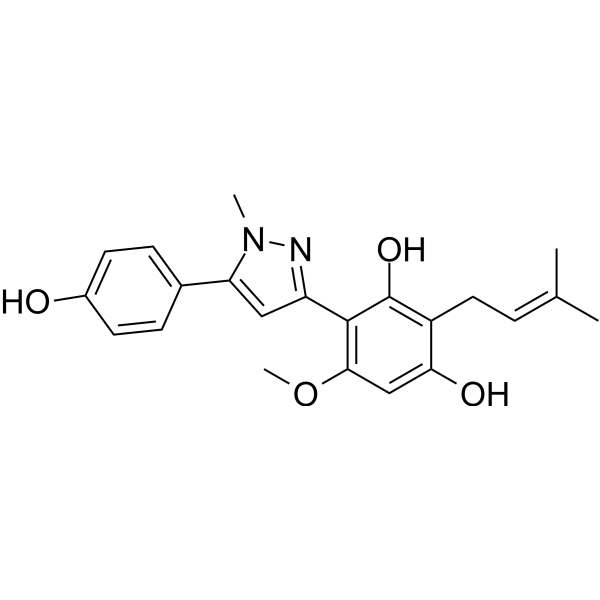
XN methyl pyrazole (XP) is an orally active, blood-brain barrier permeable uncoupler/proton carrier. XN methyl pyrazole uncouples oxidative phosphorylation, depolarizes mitochondrial transmembrane potential, increases energy expenditure, spontaneous activity levels, and cortical inosine monophosphate levels. XN methyl pyrazole reduces plasma purine and energy metabolite levels, improves glucose tolerance, and decreases weight gain, while avoiding potential estrogenic side effects. XN methyl pyrazole can be used in studies related to diet-induced obesity and insulin resistance .
loading...
    loading...
Cat. No.: HY-Y0699R
CAS No.: 493-52-7
Methyl red (Standard) is the analytical standard of Methyl red (HY-Y0699). This product is intended for research and analytical applications. Methyl red is a pH-sensitive acid-base indicator and colorimetric reagent with a pKa of 5.1. Methyl red achieves visual judgment of the titration endpoint through reversible structural changes of protonation (red, pH < 4.4) and deprotonation (yellow, pH > 6.2). Methyl red is widely used in acid-base titration in chemical analysis and buffer pH monitoring in biochemistry .
loading...
    loading...
Cat. No.: HY-Y1309S1
CAS No.: 124251-84-9
Synonyms: Furro ER-d7; NSC 9586-d7; Nako TRB-d7
1-Naphthol-d7 (Furro ER-d7) is the deuterium labeled Naphthol (HY-Y1309). 1-Naphthol (Furro ER) is an excited state proton transfer (ESPT) fluorescent molecular probe. 1-naphthol can sense the hydrophobic domains in micellar aggregation and accurately sense the sol-gel transition. 1-naphthol can be used to study the thermally induced microenvironmental changes and hydration levels of Pluronic F127 (PF127) in different microenvironments in aqueous media .
loading...
    loading...
Cat. No.: HY-100560R
CAS No.: 21293-29-8
Synonyms: (S)​-​(+)​-​Abscisic acid (Standard); ABA (Standard)
Abscisic acid (Standard) is the analytical standard of Abscisic acid. This product is intended for research and analytical applications. Abscisic acid ((S)-(+)-Abscisic acid), an orally active phytohormone in fruits and vegetables, is an endogenously produced mammalian hormone. Abscisic acid is a growth inhibitor and can regulate many aspects of plant growth and development. Abscisic acid inhibits proton pump (H+-ATPase) and leads to the plasma membrane depolarization in a Ca2+-dependent manner. Abscisic acid, a LANCL2 natural ligand, is a potent insulin-sensitizing compound and has the potential for pre-diabetes, type 2 diabetes and metabolic syndrome .
loading...
    loading...
Cat. No.: HY-D1739
Research Areas:  

Others

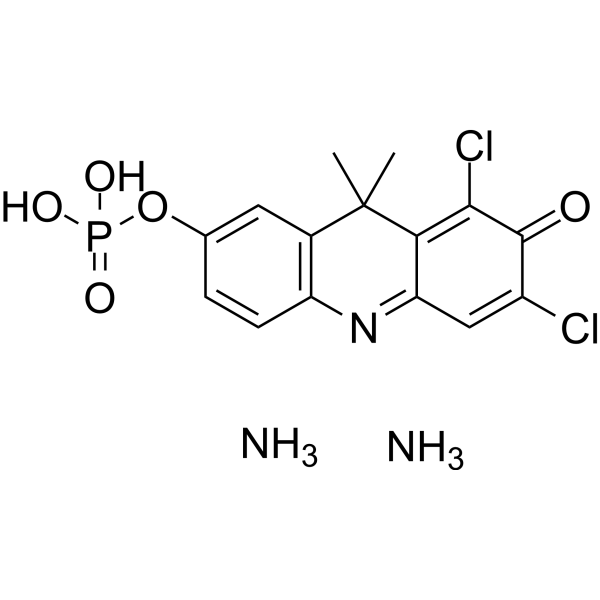
DDAO phosphate diTEA is an amphoteric surfactant derived from DDAO (dimethyldodecylamine oxide). The head group of DDAO in DDAO phosphate diTEA exists in a non-ionic state at pH > 7 and in a cationic state at pH < 5 due to protonation of the oxygen atom. When combined with the anionic surfactant SDS, DDAO can incorporate into mixed micelles, reducing the net micellar charge and attenuating electrostatic repulsion between SDS head groups. DDAO can be used to formulate the ONOO⁻-targeting probe DDAO-PN, which generates significant near-infrared fluorescence at 657 nm .
loading...
    loading...
Cat. No.: HY-D3163
Target:  

Fluorescent Dye

Research Areas:  

Others

Endo-pH is a cell-permeable, pH-responsive fluorescent probe based on BODIPY, with a pKa of 5.08. When pH decreases from 7.32 to 4.97, Endo-pH undergoes protonation under acidic conditions, resulting in a 79-fold increase in fluorescence intensity at 786 nm. The detection wavelengths of its protonated form are Ex/Em=688/786 nm, while the absorption wavelength of its non-protonated form is 745 nm. Endo-pH can be used for staining late endosomes in live cells and determining the fusion time of late endosomes and lysosomes .
loading...
    loading...
Cat. No.: HY-P10794
Target:  

Inhibitory Antibodies

Research Areas:  

Cancer

LH2 peptide is a pH-responsive cell-penetrating peptide dimer with the amino acid sequence LHHLCHLLHHLCHLAG. It can increase its uptake in tumor cells under weakly acidic conditions (such as the tumor microenvironment) through the protonation of histidine residues (pKa approximately 6). When conjugated with the anticancer drug Paclitaxel (HY-B0015), the PTX-LH2 conjugate showed superior tumor suppression effects compared to paclitaxel alone in a subcutaneous breast tumor model. The LH2 peptide holds potential as a drug delivery vehicle in cancer research .
loading...
    loading...
Cat. No.: HY-185180
CAS No.: 14836-73-8
Research Areas:  

Others

Ferrioxamine B is a bacterial desferrioxamine siderophore produced by actinomycetes. Ferrioxamine B acts as a ligand for FpvB and FoxA, and is transported into Pseudomonas aeruginosa via the FpvB and FoxA transporters. Ferrioxamine B competitively binds to FpvB, thereby antagonizing the uptake of thiostrepton into Pseudomonas aeruginosa. Ferrioxamine B can provide an iron source to support the growth of Pseudomonas aeruginosa under iron-limiting conditions .
loading...
    loading...
Cat. No.: HY-126751
CAS No.: 331686-58-9
Target:  

Na+/K+ ATPase

Research Areas:  

Metabolic Disease

DBM-819 is a reversible inhibitor of H⁺/K⁺-ATPase (H +/K +-ATPase), with an IC50 value of 5 μM. DBM-819 can reversibly block gastric acid secretion by inhibiting the proton pump in the gastric mucosa. It shows significant protective effects against duodenal ulcers induced by Cysteamine (HY-77591), gastric ulcers induced by Indomethacin (HY-14397), and gastric ulcers induced by Aspirin (HY-14654), with EC50 values of 6, 3.1, and 4 mg/kg respectively. DBM-819 can be used in ulcer prevention research .
loading...
    loading...
Cat. No.: HY-184638
APTS Fe2O3 Nanoparticles (Aminated ferric oxide magnetic nanoparticles) are magnetic nanomaterials modified with amino functional groups using APTS. This material consists of a ferric oxide (Fe3O4) nanoparticle core and an amino (-NH2) surface modification layer. The aminated surface helps improve the biocompatibility of the nanoparticles and reduce cytotoxicity. The amino functional groups can be further chemically modified for coupling with biomolecules such as drugs, proteins, and nucleic acids. The amino functional groups undergo protonation at different pH values, resulting in different surface charges on the nanoparticles in different pH environments.
loading...
    loading...
Cat. No.: HY-187478A
Synonyms: DOPE-PEG2000-Mal-Cys-LIRLWSHLIHIWFQNRRLKWKKK
Research Areas:  

Others

DOPE-PEG2000-EB1 (DOPE-PEG2000-Mal-Cys-LIRLWSHLIHIWFQNRRLKWKKK) is an amphiphilic lipid-PEG-peptide conjugate composed of DOPE (1,2-dioleoyl-sn-glycero-3-phosphoethanolamine), PEG2000, and the EB1 peptide (a penetratin analog). EB1 peptide is an endosomolytic agent that forms an amphipathic alpha helix upon protonation in endosomes, driving endosomal membrane permeabilization. DOPE-PEG2000-EB1 is used for intracellular delivery of nucleic acids (e.g., siRNA) and other macromolecular therapeutics.
loading...
    loading...
Cat. No.: HY-D3130
Target:  

Fluorescent Dye

Research Areas:  

Others

Mem-pH is a ratiometric fluorescent probe used for measuring vesicular pH. Mem-pH inserts into the plasma membrane bilayer and localizes to the vesicular lumen, switching between its basic and acidic forms via protonation during vesicular acidification to enable ratiometric pH readout. In aqueous media, Mem-pH forms non-emissive aggregates through aggregation-induced quenching, and then depolymerizes and recovers its fluorescent activity upon binding to the plasma membrane. The excitation/emission wavelengths of the basic form of Mem-pH are 405/450-550 nm, while those of the acidic form are 488/500-700 nm .
loading...
    loading...
Cat. No.: HY-W251598B
CAS No.: 144-55-8
Synonyms: Sodium hydrogen carbonate for molecular biology; Soda bicarbonate for molecular biology
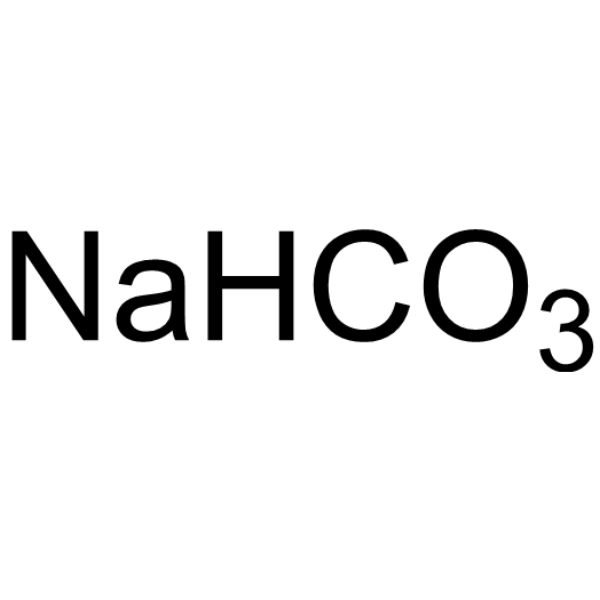
Sodium bicarbonate, for molecular biology (Sodium hydrogen carbonate for molecular biolog; Soda bicarbonate for molecular biolog) is an inorganic salt. Sodium bicarbonate can maintain the pH of the culture medium, thereby affecting the expression of inducible nitric oxide synthase (iNOS) and nitric oxide (NO) production in macrophages and reversing the acidosis of the tumor microenvironment. Sodium bicarbonate is widely used in the fields of food, cosmetics, etc. Its main uses include buffers, flavoring agents, disinfectants, pharmaceuticals, and proton gradient regulators. Sodium bicarbonate is also commonly used as an antacid to inhibit gastrointestinal diseases, neutralize gastric acid, and reduce gastric discomfort .
loading...
    loading...
Cat. No.: HY-L011
2,278 compounds

Most of molecules enter or leave cells mainly via membrane transport proteins, which play important roles in several cellular functions, including cell metabolism, ion homeostasis, signal transduction, the recognition process in the immune system, energy transduction, etc. There are three major types of transport proteins, ATP-powered pumps, channel proteins and transporters. Transport proteins such as channels and transporters play important roles in the maintenance of intracellular homeostasis, and mutations in these transport protein genes have been identified in the pathogenesis of a number of hereditary diseases. In the central nervous system, ion channels have been linked to, but not limited to, many diseases such asataxias, paralyses, epilepsies, and deafness. This indicates the roles of ion channels in the initiation and coordination of movement, sensory perception, and encoding and processing of information. Ion channels are a major class of drug targets in drug development.

MCE designs a unique collection of 2,278 smal-molecule modulators that can be used for the research of Ion Channel and Membrane Transporter or high throughput screening (HTS) related drug discovery.

