283 Results for "

protons

" in MedChemExpress (MCE) Product Catalog:
Products (283)

283 Results for "protons" in MCE Product Catalog:

Cat. No.: HY-B0113AR
CAS No.: 95510-70-6
Synonyms: H 16868 sodium (Standard)
Omeprazole (sodium) (Standard) is the analytical standard of Omeprazole (sodium). This product is intended for research and analytical applications. Omeprazole sodium (H 16868) is an orally active H +,K +-ATPase inhibitor and a proton pump inhibitor. Omeprazole sodium competitively inhibits CYP2C19, CYP3A4, and CYP2C9 activity. Omeprazole sodium inhibits gastric acid secretion and can be used for acid-related gastrointestinal disorders. Omeprazole sodium inhibits pancreatic cancer cell proliferation, induces apoptosis, autophagosome accumulation (elevated LC3-I and LC3-II levels), oxidative stress, and cytogenetic imbalance, modulates lysosomal transport, reduces inflammatory cytokines. Omeprazole sodium alters small intestinal morphology and magnesium absorption, and induces gastric mucosa morphologic changes. Omeprazole sodium aslo has neuroprotective and antibacterial effects .
loading...
    loading...
Cat. No.: HY-B0113R
CAS No.: 73590-58-6
Synonyms: H 16868 (Standard)
Omeprazole (Standard) is the analytical standard of Omeprazole. This product is intended for research and analytical applications. Omeprazole (H 16868) is an orally active H +,K +-ATPase inhibitor and a proton pump inhibitor. Omeprazole competitively inhibits CYP2C19, CYP3A4, and CYP2C9 activity. Omeprazole inhibits gastric acid secretion and can be used for acid-related gastrointestinal disorders. Omeprazole inhibits pancreatic cancer cell proliferation, induces apoptosis, autophagosome accumulation (elevated LC3-I and LC3-II levels), oxidative stress, and cytogenetic imbalance, modulates lysosomal transport, reduces inflammatory cytokines. Omeprazole alters small intestinal morphology and magnesium absorption, and induces gastric mucosa morphologic changes. Omeprazole aslo has neuroprotective and antibacterial effects .
loading...
    loading...
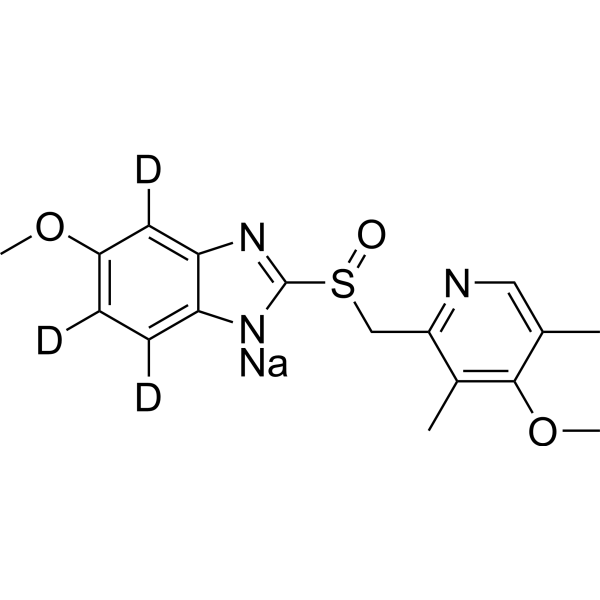
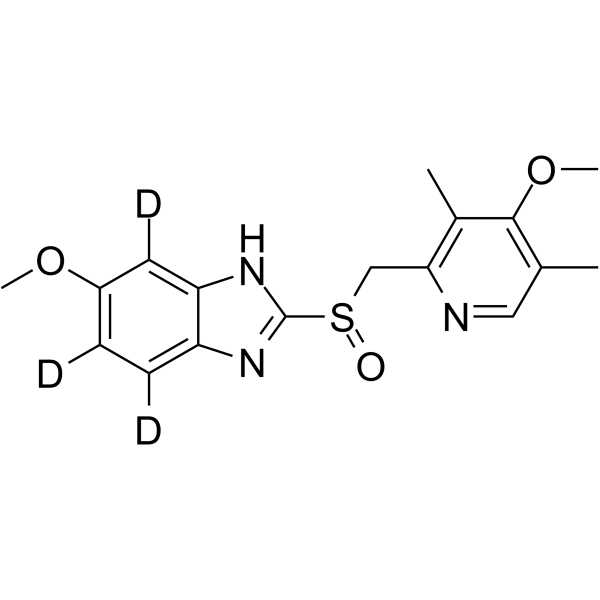
Cat. No.: HY-B0113S4
Synonyms: H 16868-d3 sodium
Omeprazole-d3 sodium is deuterated labeled Omeprazole (HY-B0113). Omeprazole sodium (H 16868) is an orally active H +,K +-ATPase inhibitor and a proton pump inhibitor. Omeprazole sodium competitively inhibits CYP2C19, CYP3A4, and CYP2C9 activity. Omeprazole sodium inhibits gastric acid secretion and can be used for acid-related gastrointestinal disorders. Omeprazole sodium inhibits pancreatic cancer cell proliferation, induces apoptosis, autophagosome accumulation (elevated LC3-I and LC3-II levels), oxidative stress, and cytogenetic imbalance, modulates lysosomal transport, reduces inflammatory cytokines. Omeprazole sodium alters small intestinal morphology and magnesium absorption, and induces gastric mucosa morphologic changes. Omeprazole sodium aslo has neuroprotective and antibacterial effects .
loading...
    loading...
Cat. No.: HY-B1422R
CAS No.: 90-45-9
Synonyms: Aminacrine (Standard)
9-Aminoacridine (Standard) is the analytical standard of 9-Aminoacridine. This product is intended for research and analytical applications. 9-Aminoacridine, a fluorescent probe, acts as an indicator of pH for quantitative determination of transmembrane pH gradients (inside acidic). 9-Aminoacridine is an antimicrobial. 9-Aminoacridine exerts its antimicrobial activity by interacting with specific bacterial DNA and disrupting the proton motive force in K. pneumoniae. 9-Aminoacridine is a HIV-1 inhibitor and inhibits HIV LTR transcription highly dependent on the presence and location of the amino moiety. 9-Aminoacridine inhibits virus replication in HIV-1 infected cell lines. 9-Aminoacridine is used as a Rifampin (RIF; HY-B0272) adjuvant for the multidrug-resistant K. pneumoniae infections .
loading...
    loading...
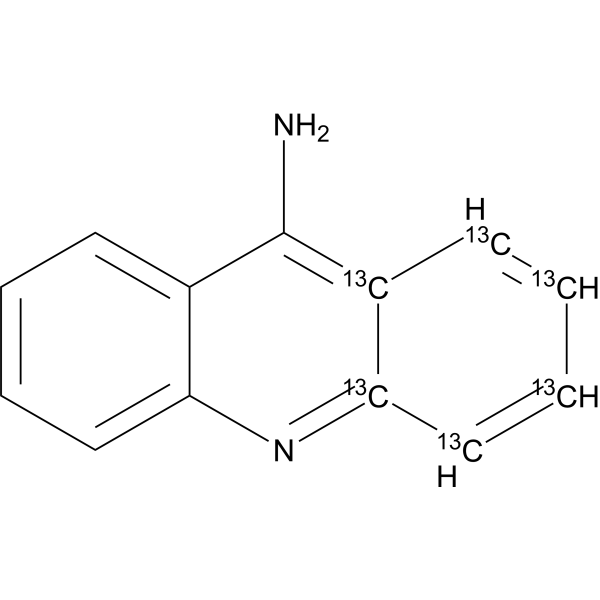
Cat. No.: HY-B1422S
Synonyms: Aminacrine-13C6
9-Aminoacridine-13C6 is the 13C-labeled 9-Aminoacridine(HY-B1422). 9-Aminoacridine, a fluorescent probe, acts as an indicator of pH for quantitative determination of transmembrane pH gradients (inside acidic). 9-Aminoacridine is an antimicrobial. 9-Aminoacridine exerts its antimicrobial activity by interacting with specific bacterial DNA and disrupting the proton motive force in K. pneumoniae. 9-Aminoacridine is a HIV-1 inhibitor and inhibits HIV LTR transcription highly dependent on the presence and location of the amino moiety. 9-Aminoacridine inhibits virus replication in HIV-1 infected cell lines. 9-Aminoacridine is used as a Rifampin (RIF; HY-B0272) adjuvant for the multidrug-resistant K. pneumoniae infections .
loading...
    loading...
Cat. No.: HY-187719
CAS No.: 318262-42-9
Target:  

Proton Pump Apoptosis

Research Areas:  

Cancer

NIK-12192 is an orally active inhibitor of vacuolar H +-ATPase. NIK-12192 reduces intracellular pH, decreases lysosomal volume and acidity, and alters the intracellular localization of V-ATPase by inhibiting proton pumps . NIK-12192 induces αvβ5 integrin polarization, cytoskeletal disruption, cell detachment, anoikis-mediated delayed apoptosis and necrosis, a delayed reduction in mitochondrial membrane potential, and lysosomal/phagosomal accumulation. NIK-12192 inhibits tumor cell migration, invasion, and three-dimensional spheroid growth, and enhances the activity of Topotecan (HY-13768). NIK-12192 suppresses spontaneous lung metastasis in vivo. NIK-12192 is used in research related to colon cancer, ovarian cancer, lung cancer, breast cancer, renal cancer, prostate cancer, acute myeloid leukemia, and melanoma .
loading...
    loading...
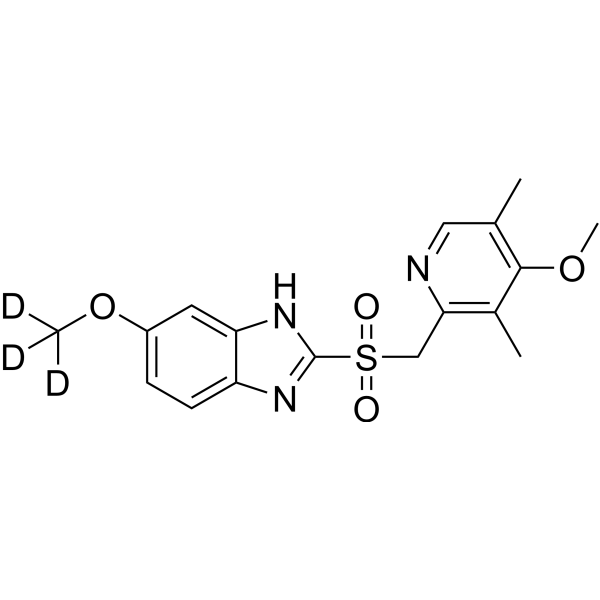
Cat. No.: HY-B0113S2
CAS No.: 1189891-71-1
Synonyms: Omeprazole sulphone (methoxy-d3)
Omeprazole sulfone (methoxy-d3) is the deuterium labeled Omeprazole sulfone. Omeprazole sulfone (H 16868) is an orally active H +,K +-ATPase inhibitor and a proton pump inhibitor. Omeprazole sulfone competitively inhibits CYP2C19, CYP3A4, and CYP2C9 activity. Omeprazole sulfone inhibits gastric acid secretion and can be used for acid-related gastrointestinal disorders. Omeprazole sulfone inhibits pancreatic cancer cell proliferation, induces apoptosis, autophagosome accumulation (elevated LC3-I and LC3-II levels), oxidative stress, and cytogenetic imbalance, modulates lysosomal transport, reduces inflammatory cytokines. Omeprazole sulfone alters small intestinal morphology and magnesium absorption, and induces gastric mucosa morphologic changes. Omeprazole sulfone aslo has neuroprotective and antibacterial effects .
loading...
    loading...
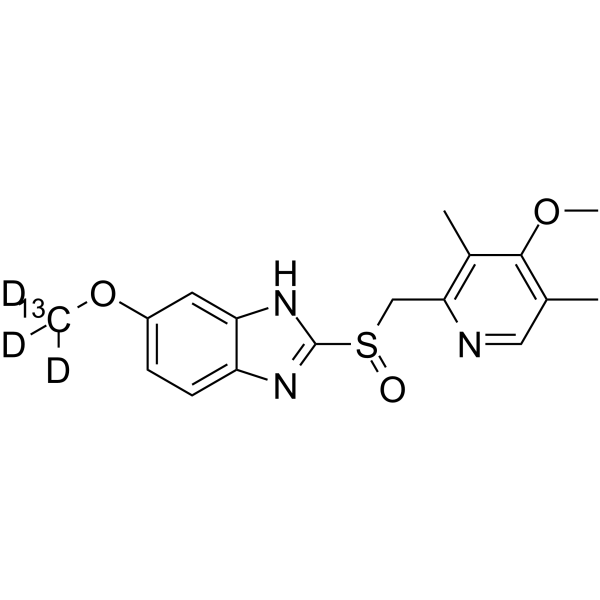
Cat. No.: HY-B0113S3
CAS No.: 1261395-28-1
Synonyms: H 16868-13C,d3
Omeprazole- 13C,d3 is a 13C-labeled and deuterium labeled Omeprazole. Omeprazole (H 16868) is an orally active H +,K +-ATPase inhibitor and a proton pump inhibitor. Omeprazole competitively inhibits CYP2C19, CYP3A4, and CYP2C9 activity. Omeprazole inhibits gastric acid secretion and can be used for acid-related gastrointestinal disorders. Omeprazole inhibits pancreatic cancer cell proliferation, induces apoptosis, autophagosome accumulation (elevated LC3-I and LC3-II levels), oxidative stress, and cytogenetic imbalance, modulates lysosomal transport, reduces inflammatory cytokines. Omeprazole alters small intestinal morphology and magnesium absorption, and induces gastric mucosa morphologic changes. Omeprazole aslo has neuroprotective and antibacterial effects .
loading...
    loading...
Cat. No.: HY-B0113S5
CAS No.: 922731-02-0
Synonyms: H 16868-d6
Omeprazole-d6 (H 16868-d6) is deuterium labeled Omeprazole. Omeprazole (H 16868) is an orally active H +,K +-ATPase inhibitor and a proton pump inhibitor. Omeprazole competitively inhibits CYP2C19, CYP3A4, and CYP2C9 activity. Omeprazole inhibits gastric acid secretion and can be used for acid-related gastrointestinal disorders. Omeprazole inhibits pancreatic cancer cell proliferation, induces apoptosis, autophagosome accumulation (elevated LC3-I and LC3-II levels), oxidative stress, and cytogenetic imbalance, modulates lysosomal transport, reduces inflammatory cytokines. Omeprazole alters small intestinal morphology and magnesium absorption, and induces gastric mucosa morphologic changes. Omeprazole aslo has neuroprotective and antibacterial effects .
loading...
    loading...
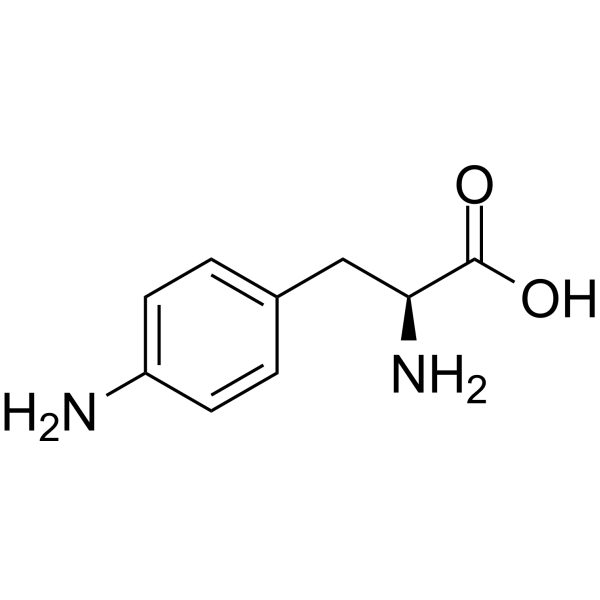
Cat. No.: HY-W016480
CAS No.: 943-80-6
Synonyms: H-Phe(4-NH2)-OH
4-Amino-L-phenylalanine (H-Phe(4-NH2)-OH) is a metabolic intermediate and an α-carbonic anhydrase (TcCA) activator with a Ka value of 0.75 μM. 4-Amino-L-phenylalanine acts through active site cavity entrance binding and a proton shuttle mechanism to enhance the catalytic rate of CO2 hydration. 4-Amino-L-phenylalanine serves as a diamine monomer for bio-based polymer synthesis and is produced in Escherichia coli via the shikimate pathway. 4-Amino-L-phenylalanine constitutes a structural component of haptens used in immunoassay development. 4-Amino-L-phenylalanine is used for the production of Chloramphenicol (HY-B0239) and Pristinamycin I in Streptomyces venezuelae and S. pristinaespiralis, respectively. 4-Amino-L-phenylalanine is used in research related to Trypanosoma cruzi infection .
loading...
    loading...
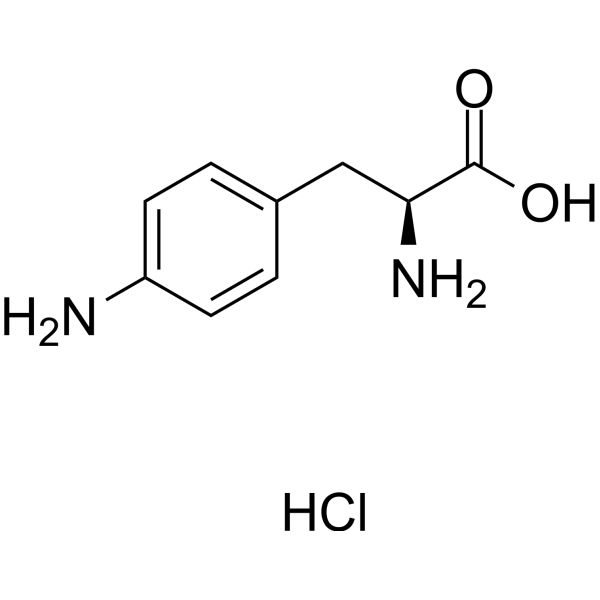
Cat. No.: HY-W141810
CAS No.: 62040-55-5
Synonyms: H-Phe(4-NH2)-OH hydrochloride
4-Amino-L-phenylalanine hydrochloride (H-Phe(4-NH2)-OH) is a metabolic intermediate and an α-carbonic anhydrase (TcCA) activator with a Ka value of 0.75 μM. 4-Amino-L-phenylalanine hydrochloride acts through active site cavity entrance binding and a proton shuttle mechanism to enhance the catalytic rate of CO2 hydration. 4-Amino-L-phenylalanine hydrochloride serves as a diamine monomer for bio-based polymer synthesis and is produced in Escherichia coli via the shikimate pathway. 4-Amino-L-phenylalanine hydrochloride constitutes a structural component of haptens used in immunoassay development. 4-Amino-L-phenylalanine hydrochloride is used for the production of Chloramphenicol (HY-B0239) and Pristinamycin I in Streptomyces venezuelae and S. pristinaespiralis, respectively. 4-Amino-L-phenylalanine hydrochloride is used in research related to Trypanosoma cruzi infection .
loading...
    loading...
Cat. No.: HY-B0113S1
CAS No.: 934293-92-2
Synonyms: H 16868-d3-1
Omeprazole-d3-1 is the deuterium labeled Omeprazole. Omeprazole-1 (H 16868) is an orally active H +,K +-ATPase inhibitor and a proton pump inhibitor. Omeprazole-1 competitively inhibits CYP2C19, CYP3A4, and CYP2C9 activity. Omeprazole-1 inhibits gastric acid secretion and can be used for acid-related gastrointestinal disorders. Omeprazole-1 inhibits pancreatic cancer cell proliferation, induces apoptosis, autophagosome accumulation (elevated LC3-I and LC3-II levels), oxidative stress, and cytogenetic imbalance, modulates lysosomal transport, reduces inflammatory cytokines. Omeprazole-1 alters small intestinal morphology and magnesium absorption, and induces gastric mucosa morphologic changes. Omeprazole-1 aslo has neuroprotective and antibacterial effects .
loading...
    loading...
Cat. No.: HY-W142456
CAS No.: 7535-59-3
Synonyms: N-Benzyl-L-pyroglutamic acid
Target:  

Na+/K+ ATPase

Research Areas:  

Inflammation/Immunology

(S)-1-Benzyl-5-carboxy-2-pyrrolidinone (N-Benzyl-L-pyroglutamic acid) is an orally active H +/K +-ATPase inhibitor. (S)-1-Benzyl-5-carboxy-2-pyrrolidinone reduces free acidity and total acidity in gastric juice. (S)-1-Benzyl-5-carboxy-2-pyrrolidinone decreases ulcer formation in pylorus-ligated rats. (S)-1-Benzyl-5-carboxy-2-pyrrolidinone can be used for the research of peptic ulcers .
loading...
    loading...
Cat. No.: HY-D3120
CAS No.: 2246946-53-0
Target:  

Fluorescent Dye

Research Areas:  

Others

LysoAIE2 is a Fluorescent probe for lysosomal viscosity detection and live-cell imaging. Its detection mechanism relies on the aggregation-induced emission effect: it exhibits only weak fluorescence in non-viscous media; in viscous environments, restricted intramolecular motion inhibits non-radiative energy dissipation pathways, thereby significantly enhancing fluorescence intensity. It achieves specific targeting of lysosomes through the proton acceptor property of its indole ring structure, while its hydroxyl group endows it with excellent water solubility. This probe is basically unaffected by microenvironmental polarity and pH within the range of pH 4.0 to pH 8.0, which avoids interference from these factors in viscosity measurement. LysoAIE2 has an emission wavelength of 570 nm. It can be used to monitor lysosomal viscosity changes during processes such as Dexamethasone (HY-14648)-induced lysosomal migration and starvation-induced mitophagy in live cells; at concentrations up to 40 μM, cell viability remains above 80%, demonstrating excellent biocompatibility .
loading...
    loading...
Cat. No.: HY-P11353
CAS No.: 117138-19-9
Research Areas:  

Infection Cancer

HA2 peptide is a potent pH-responsive fusion peptide derived from hemagglutinin (HA), corresponding to the N-terminal fusion peptide domain consisting of 23 amino acid residues of HIV-1 gp41 envelope glycoprotein. HA2 peptide adopts a random coil structure under physiological pH conditions; in acidic endosomes, protonation of carboxyl groups reduces negative charge, inducing a transition to an α-helical conformation that can fuse with and destabilize the endosomal membrane. After binding to membranes, the N-terminal and middle regions of HA2 peptide mainly adopt a β-strand conformation, while the C-terminal region remains unstructured. HA2 peptide induces lipid mixing and promotes aqueous content leakage from large unilamellar vesicles whose lipid composition matches that of HIV-1 viruses and target T cells. HA2 peptide is anionic and can bind to cationic peptides to achieve siRNA condensation. HA2 peptide can be used in studies related to cancer and human immunodeficiency virus (HIV) infection .
loading...
    loading...
Cat. No.: HY-W021016
CAS No.: 824395-67-7
Synonyms: (S,S)-Ph-BPE
Research Areas:  

Others

(+)-1,2-Bis ((2S,5S)-2,5-diphenylphospholano)ethane ((S,S)-Ph-BPE) is a chiral bisphosphine ligand and catalyst. (+)-1,2-Bis ((2S,5S)-2,5-diphenylphospholano)ethane acts as a chiral ligand in rhodium-catalyzed reductive hydroformylation of alkenyl boronic esters, enabling enantiodivergent synthesis of chiral γ-boryl alcohols. (+)-1,2-Bis ((2S,5S)-2,5-diphenylphospholano)ethane forms chiral nickel-phosphine complexes to mediate asymmetric hydrogenation of aliphatic γ- and δ-keto acids; protons promote substrate C=O bond activation and stereoselectivity control via hydrogen bonding. (+)-1,2-Bis ((2S,5S)-2,5-diphenylphospholano)ethane forms a monodentate nickel complex, which serves as the active species for asymmetric hydrogenation of aliphatic keto acids .
loading...
    loading...
Cat. No.: HY-W016480R
CAS No.: 943-80-6
Synonyms: H-Phe(4-NH2)-OH (Standard)
4-Amino-L-phenylalanine (Standard) (H-Phe(4-NH2)-OH (Standard)) is the analytical standard of 4-Amino-L-phenylalanine (HY-W016480). This product is intended for research and analytical applications. 4-Amino-L-phenylalanine (H-Phe(4-NH2)-OH) is a metabolic intermediate and an α-carbonic anhydrase (TcCA) activator with a Ka value of 0.75 μM. 4-Amino-L-phenylalanine acts through active site cavity entrance binding and a proton shuttle mechanism to enhance the catalytic rate of CO2 hydration. 4-Amino-L-phenylalanine serves as a diamine monomer for bio-based polymer synthesis and is produced in Escherichia coli via the shikimate pathway. 4-Amino-L-phenylalanine constitutes a structural component of haptens used in immunoassay development. 4-Amino-L-phenylalanine is used for the production of Chloramphenicol (HY-B0239) and Pristinamycin I in Streptomyces venezuelae and S. pristinaespiralis, respectively. 4-Amino-L-phenylalanine is used in research related to Trypanosoma cruzi infection .
loading...
    loading...
Cat. No.: HY-L251
93 compounds

Ionizable lipids are a class of specialized, functional lipid molecules with pH-sensitive charge characteristics. They are primarily divided into two major categories: ionizable cationic lipids and ionizable anionic lipids, though the term typically specifies ionizable cationic lipids within the biomedical field. Structurally, these lipids consist of an ionizable hydrophilic headgroup, a biodegradable linker, and hydrophobic tails. Their primary application is serving as the key delivery vehicle in lipid nanoparticles (LNPs) to encapsulate negatively charged nucleic acid macromolecules, such as mRNA vaccines, siRNA therapeutics, and CRISPR gene-editing components. In a physiological, neutral environment, they remain electrically neutral to minimize systemic toxicity and prolong circulation time. Upon entering the acidic microenvironment of cellular endosomes, however, they undergo protonation to become positively charged, thereby inducing membrane fusion and enabling the highly efficient intracellular release of the nucleic acid cargo. Consequently, they serve as the technological cornerstone for bringing nucleic acid therapies into clinical application.

To accelerate the translational process of cutting-edge nucleic acid drugs, MCE has meticulously constructed an ionizable lipid compound library containing 93 high-performance molecules, aiming to provide researchers and pharmaceutical professionals with a high-throughput, multi-dimensional lipid screening platform.

Cat. No.: HY-B0402AR
CAS No.: 665-66-7
Synonyms: 1-Adamantanamine hydrochloride (Standard); 1-Adamantylamine hydrochloride (Standard); 1-Aminoadamantane hydrochloride (Standard)
Amantadine (hydrochloride) (Standard) is the analytical standard of Amantadine (hydrochloride). This product is intended for research and analytical applications. Amantadine (1-Adamantanamine) hydrochloride is an orally avtive and potent antiviral agent with activity against influenza A viruses. Amantadine hydrochloride inhibits several ion channels such as NMDA and M2, and also inhibits Coronavirus ion channels. Amantadine hydrochloride also has anti-orthopoxvirus and anticancer activity. Amantadine hydrochloride can be used for Parkinson's disease, postoperative cognitive dysfunction (POCD) and COVID-19 research .
loading...
    loading...
Cat. No.: HY-B0402R
CAS No.: 768-94-5
Synonyms: 1-Adamantanamine (Standard); 1-Aminoadamantane (Standard)
Amantadine (Standard) is the analytical standard of Amantadine. This product is intended for research and analytical applications. Amantadine (1-Adamantanamine) is an orally avtive and potent antiviral agent with activity against influenza A viruses. Amantadine inhibits several ion channels such as NMDA and M2, and also inhibits Coronavirus ion channels. Amantadine also has anti-orthopoxvirus and anticancer activity. Amantadine can be used for Parkinson's disease, postoperative cognitive dysfunction (POCD) and COVID-19 research [4] .
loading...
    loading...

