3466 Results for "

Prothrombin complex concentrate

" in MedChemExpress (MCE) Product Catalog:
Products (3466)

3466 Results for "Prothrombin complex concentrate" in MCE Product Catalog:

Cat. No.: HY-126192
CAS No.: 566169-93-5
Purity:  ≥95.0%
Synonyms: PiB; 6-OH-BTA-1
Pittsburgh Compound B (PiB) is a blood-brain barrier-permeable, specific deposition PET tracer that binds to Aβ(1-40) fibrils with a Ki value of 678.4 nM. Through click chemical modification (a clickable Pittsburgh Compound B derivative is prepared by introducing a PEG3 linker and an alkynyl group at the 6-hydroxy site of Pittsburgh Compound B, followed by covalent conjugation with azide-labeled fluorescent dyes or affinity tags via copper-catalyzed azide-alkyne cycloaddition (CuAAC)), Pittsburgh Compound B and its conjugates can be used for fluorescence imaging, ultrastructural studies, and enrichment and characterization of Aβ complexes. Pittsburgh Compound B is applicable to Alzheimer's disease research .
loading...
    loading...
Cat. No.: HY-129179S
Synonyms: APG-2575-d8; Bcl-2/Bcl-xl inhibitor 1-d8
Target:  

Bcl-2 Family Apoptosis

Research Areas:  

Cancer

Lisaftoclax-d8 is the deuterated-labeled Lisaftoclax (HY-129179). Lisaftoclax is an orally active, selective BCL-2 inhibitor with a Ki of < 0.1 nM against human BCL-2. Lisaftoclax selectively binds to BCL-2, disrupts the BCL-2:BIM complex, and antagonizes the antiapoptotic function of BCL-2. Lisaftoclax induces BAX/BAK-dependent, caspase-mediated apoptosis, upregulates the pro-death proteins BIM and Noxa, and downregulates mitochondrial respiratory function and ATP production. Lisaftoclax can be used in the research of hematological malignancies including chronic lymphocytic leukemia, multiple myeloma, and diffuse large B-cell lymphoma .
loading...
    loading...
Cat. No.: HY-139972
CAS No.: 2761281-50-7
Purity:  99.42%
PROTAC (H-PGDS)-7 is a selective, linker-free H-PGDS PROTAC degrader with a DC50 of 17.3 pM. PROTAC (H-PGDS)-7 binds to CRBN and forms a ternary complex with H-PGDS, inducing the degradation of H-PGDS via the ubiquitin-proteasome system through polyubiquitination and proteasomal degradation processes. PROTAC (H-PGDS)-7 inhibits the upregulated expression of TNFα, IL-1β, TGFβ1 and CD11b in mice with cardiac hypertrophy models. PROTAC (H-PGDS)-7 can be used in studies related to Duchenne muscular dystrophy and allergic diseases .
loading...
    loading...
Cat. No.: HY-151532
CAS No.: 2819989-61-0
Purity:  99.75%
Research Areas:  

Cancer

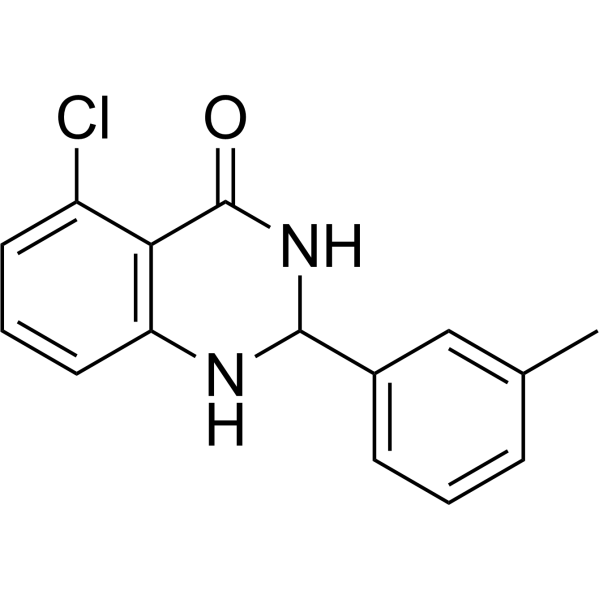
PBRM1-BD2-IN-5 is a potent PBRM1 Bromodomain inhibitor with Kd values of 1.5 μM and 3.9 μM for PBRM1-BD2 and PBRM1-BD5, respectively, and an IC50 value of 0.26 μM for PBRM1-BD2. PBRM1-BD2-IN-5 reduces the binding of full-length PBRM1 within the PBAF complex in cell lysates to acetylated histone peptide. PBRM1-BD2-IN-5 can be used to research anticancer .
loading...
    loading...
Cat. No.: HY-151662
CAS No.: 122590-77-6
Synonyms: N3-TFBA
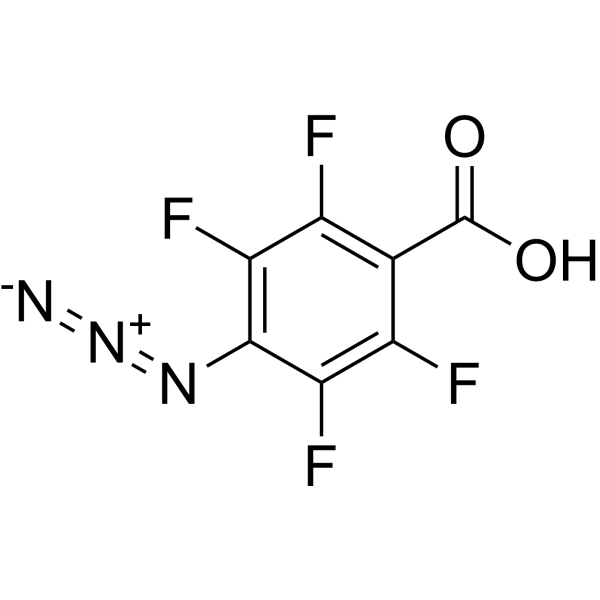
4-Azido-2,3,5,6-tetrafluorobenzoic Acid (N3-TFBA) is a click chemistry reagent containing an azide group. 4-Azido-2,3,5,6-tetrafluorobenzoic Acid is a complex with FAM-labeled DNA probe. 4-Azido-2,3,5,6-tetrafluorobenzoic Acid can be used as versatile photoaffinity labeling agents to probe biological receptors. It contains an azide group and can undergo copper-catalyzed azide-alkyne cycloaddition (CuAAc) with molecules containing alkyne groups. It can also undergo ring strain-promoted alkyne-azide cycloaddition (SPAAC) with molecules containing DBCO or BCN groups.
loading...
    loading...
Cat. No.: HY-152154
CAS No.: 3035008-40-0
Purity:  99.41%
Synonyms: Nampt degrader-2
Target:  

PROTACs NAMPT

Research Areas:  

Cancer

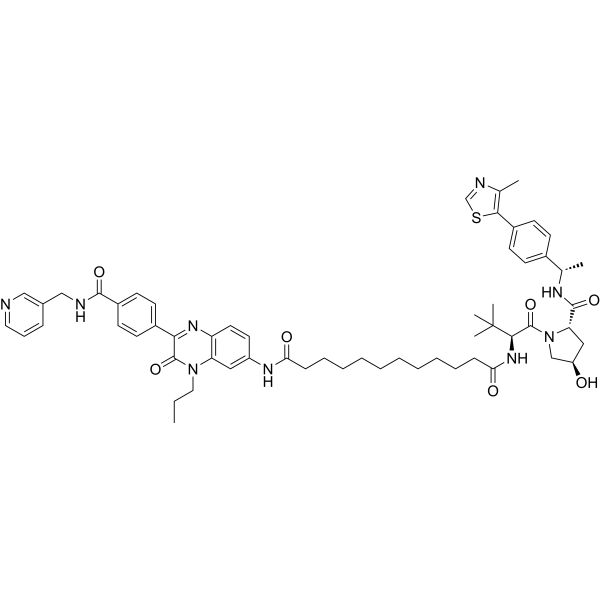
PROTAC NAMPT Degrader-30 is a PROTAC degrader targeting nicotinamide phosphoribosyltransferase (NAMPT), with a DC50 of 8.4 nM in A2780 cells. PROTAC NAMPT Degrader-30 binds to the VHL E3 ligase and forms a ternary complex with NAMPT, which induces ubiquitination and subsequent proteasomal degradation of NAMPT, thereby inhibiting the enzymatic activity of NAMPT. PROTAC NAMPT Degrader-30 reduces intracellular NAD + levels and suppresses tumor cell proliferation. PROTAC NAMPT Degrader-30 exhibits a fluorescence turn-on response to the NAMPT protein, enabling real-time visualization of the NAMPT degradation process in living cells. PROTAC NAMPT Degrader-30 is applicable for research on ovarian cancer .
loading...
    loading...
Cat. No.: HY-153575
Target:  

PROTACs Bacterial

Research Areas:  

Infection

BacPROTAC-1 is a BacPROTAC degrader that induces the degradation of the target protein mSA by recruiting ClpC/ClpC1. BacPROTAC-1 binds to mSA, Bacillus subtilis ClpCNTD and Mycobacterium smegmatis ClpC1NTD with Kd values of 3.9, 2.8 and 0.69 μM, respectively. BacPROTAC-1 forms a ternary complex between the substrate and ClpC, promotes ClpC reassembly and activation, and induces ATP-dependent degradation of mSA and mSA fusion model substrates via the ClpCP or ClpC1P1P2 protease system. BacPROTAC-1 can be used in studies on bacterial targeted protein degradation, bacterial protein homeostasis and antibacterial target discovery .
loading...
    loading...
Cat. No.: HY-158405
CAS No.: 2923674-83-1
Synonyms: MAV-104
Target:  

14-3-3 Protein SARS-CoV

Research Areas:  

Infection Inflammation/Immunology

PAV-104 (MAV-104) is a host-targeted, pan-respiratory viral assembly inhibitor. PAV-104 targets a small subset of the host protein 14-3-3 within a transient multi-protein complex. PAV-104 inhibits SARS-CoV-2 replication by blocking post-entry viral assembly/budding through interaction with viral nucleocapsid (N) protein and interference with its oligomerization. PAV-104 is orally active in cats and shows favorable pharmacokinetic properties in rats. PAV-104 can be used for the study of COVID-19 and other respiratory viral infections, including Feline Infectious Peritonitis (FIP) .
loading...
    loading...
Cat. No.: HY-158684
CAS No.: 3049076-98-1
Purity:  99.86%
Research Areas:  

Cancer

YX-02-030 is a VHL-dependent MDM2 PROTAC degrader with a Kd of 35 nM. YX-02-030 recruits the VHL E3 ligase to form a ternary complex, leading to ubiquitination and proteasome-mediated degradation of MDM2. YX-02-030 inhibits MDM2-p53 and VHL-HIF1α binding with IC50 values of 63 and 1350 nM. YX-02-030 activates TAp73, upregulates p53 family target genes and induces apoptosis. YX-02-030 demonstrates on-target efficacy in TNBC xenograft-bearing mice, extending survival without normal cell toxicity .
loading...
    loading...
Cat. No.: HY-163709
Target:  

PROTACs FAK Akt ERK

Research Areas:  

Cancer

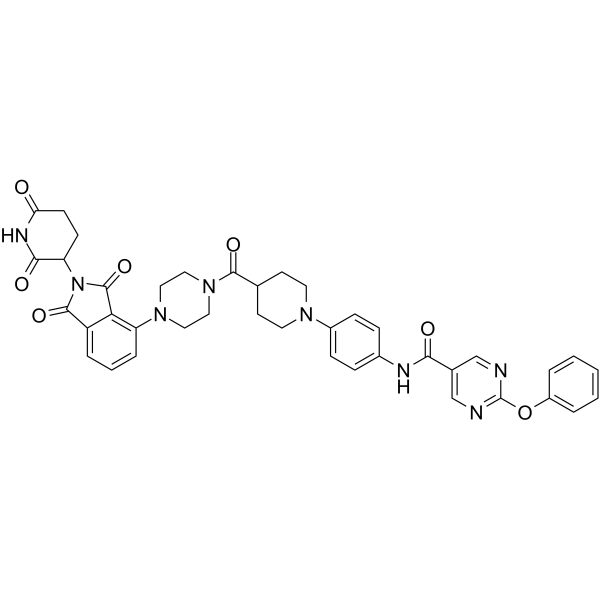
PROTAC FAK degrader 2 is an orally active PROTAC FAK degrader with a DC50 of 60.10 nM. PROTAC FAK degrader 2 forms a ternary complex with FAK and CRBN E3 ubiquitin ligase, driving proteasome-mediated degradation of total and phosphorylated FAK. PROTAC FAK degrader 2 inhibits phosphorylation of AKT and ERK, suppressing their downstream signaling pathways. PROTAC FAK degrader 2 reduces cancer cell viability, adhesion, migration, and invasion. PROTAC FAK degrader 2 exerts anti-tumor activity in HCT8/T tumor xenografts in mice. PROTAC FAK degrader 2 can be used for the research of breast cancer, colorectal cancer, lung cancer .
loading...
    loading...
Cat. No.: HY-168016
CAS No.: 3058483-58-9
Target:  

PROTACs YAP

Research Areas:  

Cancer

PROTAC YAP degrader-1 is a VHL-recruiting PROTAC degrader (DC50=8.2 μM) and antiproliferative agent that targets YAP. PROTAC YAP degrader-1 recruits the E3 ligase VHL and binds to VHL to form a ternary complex containing YAP. PROTAC YAP degrader-1 inhibits the nuclear localization of YAP in cancer cells, reduces YAP/TEAD-mediated transcription, and induces TAZ protein degradation. PROTAC YAP degrader-1 reduces the oncogenic activity of YAP and exerts antiproliferative effects in the Huh7 xenograft mouse model. PROTAC YAP degrader-1 can be used for the research of hepatocellular carcinoma and mesothelioma .
loading...
    loading...
Cat. No.: HY-168892
CAS No.: 380636-64-6
Target:  

Atg8/LC3 Autophagy

Research Areas:  

Cancer

LC3B recruiter 2 (34R) is an LC3B recruiter and a component of the autophagy-lysosome pathway degradation system (ATTEC, Autophagy-Tethering Compounds), which directly binds to LC3B. LC3B recruiter 2 binds to CDK9 inhibitor SNS-032 (HY-10008) through a linker, forming an ATTEC that targets the degradation of the CDK9 and Cyclin T1 complex (with inhibitory effects on both). Therefore, LC3B recruiter 2 exerts activity through the LC3B-dependent autophagy-lysosome pathway, interfering with the cell cycle of cancer cells, thus exhibiting antitumor activity .
loading...
    loading...
Cat. No.: HY-169072
CAS No.: 3103327-20-1
PROTAC MLKL Degrader-2 is an orally active and highly selective mixed lineage kinase domain-like pseudokinase (MLKL) PROTAC degrader with a DC50 of 0.012 μM. PROTAC MLKL Degrader-2 recruits the CRBN E3 ubiquitin ligase to form a ternary complex, leading to ubiquitination of MLKL and its degradation via a proteasome-dependent pathway. PROTAC MLKL Degrader-2 inhibits necroptosis, reduces ROS production, restores mitochondrial function, and ameliorates lysosomal dysfunction induced by necroptotic stimuli. PROTAC MLKL Degrader-2 degrades MLKL in xenograft mouse models. PROTAC MLKL Degrader-2 can be used in cancer-related research .
loading...
    loading...
Cat. No.: HY-169135
Research Areas:  

Cancer

PROTAC 20S proteasome subunit β5 degrader 2 is a PROTAC degrader targeting the 20S proteasome subunit β5, with a DC50 of 0.16 μM. PROTAC 20S proteasome subunit β5 degrader 2 forms a ternary complex with the CRBN E3 ligase, induces ubiquitination of the 20S proteasome subunit β5, and promotes its degradation via the proteasome. PROTAC 20S proteasome subunit β5 degrader 2 exerts antiproliferative effects in cancer cells and exhibits antitumor activity both in vitro and in vivo. It can be used for the research of pharyngeal cancer and drug-resistant multiple myeloma .
loading...
    loading...
Cat. No.: HY-170952
CAS No.: 3053857-55-6
Research Areas:  

Cancer

LYG-409 is a highly potent, selective, and orally active GSPT1 molecular glue degrader. LYG-409 induces GSPT1 degradation in KG-1 cells with a DC50 of 7.87 nM. LYG-409 binds to Cereblon with an IC50 of 191 nM, promotes the formation of the CRBN-GSPT1 ternary complex, and induces proteasome-dependent degradation of GSPT1. LYG-409 exhibits broad antiproliferative and GSPT1-degrading activities in a variety of hematologic and solid tumor cells. LYG-409 can be used for studies related to GSPT1-targeted protein degradation, acute myeloid leukemia, and prostate cancer .
loading...
    loading...
Cat. No.: HY-173364
CAS No.: 3114073-95-6
Synonyms: BAK-04-212
Target:  

BCL6

Research Areas:  

Cancer

EB-TCIP (BAK-04-212) is a proof-of-concept tool specifically designed for Ewing sarcoma research, serving as an EWSR1::FLI1 binder tagged with BCL6 and FKBP12 F36V. EB-TCIP forms a ternary complex with the tagged fusion protein, specifically recruits EWSR1::FLI1 to BCL6-bound DNA loci, and induces rapid chromatin remodeling and relocalization. By mediating relocalization, EB-TCIP remodels the transcriptional machinery and activates the expression of BCL6 target genes that are originally repressed. EB-TCIP is used in studies related to novel epigenetic therapies for Ewing sarcoma .
loading...
    loading...
Cat. No.: HY-175252
Research Areas:  

Cancer

PROTAC EGFR degrader 14 is a EGFR PROTAC degrader, with a DC50 of 2.9 nM against EGFR L858R/T790M/C797S. PROTAC EGFR degrader 14 forms a stable ternary complex by bridging the ATP-binding pocket of the target protein EGFR with VHL E3 ubiquitin ligase, induces efficient and specific degradation of EGFR mutants via the ubiquitin-proteasome system, and ultimately induces cell cycle arrest and apoptosis. PROTAC EGFR degrader 14 can be used in studies related to non-small cell lung cancer carrying the EGFR C797S drug-resistant mutation .
loading...
    loading...
Cat. No.: HY-175321
Research Areas:  

Cancer

PROTAC c-Met degrader-6 is an orally active c-Met PROTAC degrader with DC50 values of 0.52 nM (EBC-1) and 0.45 nM (Hs746T), respectively. PROTAC c-Met degrader-6 induces potent targeted degradation of c-Met via the ubiquitin-proteasome system by bridging the target protein c-Met and the Cullin-CRBN E3 ubiquitin ligase to form a ternary complex, thereby inducing tumor cell cycle arrest and apoptosis. PROTAC c-Met degrader-6 can be used in the research of various MET-driven cancers (such as gastric cancer, liver cancer, non-small cell lung cancer, etc.) .
loading...
    loading...
Cat. No.: HY-181075
Research Areas:  

Infection

Antibacterial agent 318 is an antibacterial agent that binds to bacterial DNA, blocks its replication, and forms supramolecular complexes. Antibacterial agent 318 acts as an oxidative stress inducer, elevating intracellular reactive oxygen species (ROS) levels, oxidizing glutathione (GSH) to glutathione disulfide (GSSG), depleting cellular GSH reserves, and inducing bacterial cell death through oxidative damage. Antibacterial agent 318 disrupts the bacterial cell membrane and reduces bacterial metabolic activity. Antibacterial agent 318 exhibits rapid bactericidal activity, inhibits bacterial biofilm formation, and displays minimal cytotoxicity toward non-cancerous mammalian cells. Antibacterial agent 318 is applicable in research on drug-resistant bacterial infections .
loading...
    loading...
Cat. No.: HY-181762
Multitarget AD-IN-6 (Compound 39) is a multi-target inhibitor, with an IC50 of 15.54 μM against PDE4B, 15.15 μM against PDE7A, 8.39 μM against PDE3A, and a Kd of 37.7 μM against CHIT1. Multitarget AD-IN-6 acts as a TRPA1 antagonist, reduces the level of the NLRP3 inflammasome multiprotein complex to inhibit its activation, while inhibiting PDE4B, PDE7A and CHIT1, and decreasing the phosphorylation of NF-κB. Multitarget AD-IN-6 improves the pathology of elastase-induced emphysema in mice. Multitarget AD-IN-6 is applicable for the research of chronic obstructive pulmonary disease .
loading...
    loading...

