
3417 Results for "

mSWI/SNF complex

" in MedChemExpress (MCE) Product Catalog:
Products (3417)

3417 Results for "mSWI/SNF complex" in MCE Product Catalog:

Cat. No.: HY-111970
CAS No.: 869796-50-9
SAR113945 is a highly selective IKK-β inhibitor with an IC50 value of 0.4 nM. SAR113945 blocks the canonical NFκB signaling pathway. SAR113945 alleviates hyperalgesia to heat and mechanical stimuli, and exerts effects in a zymosan-induced knee joint inflammation model. SAR113945 is applicable to research related to symptomatic knee osteoarthritis .
loading...
    loading...
Cat. No.: HY-111970B
CAS No.: 899418-65-6
SAR113945 monopotassium is a highly selective IKK-β inhibitor with an IC50 value of 0.4 nM. SAR113945 monopotassium blocks the canonical NFκB signaling pathway. SAR113945 monopotassium alleviates hyperalgesia to heat and mechanical stimuli, and exerts effects in a zymosan-induced knee joint inflammation model. SAR113945 monopotassium is applicable to research related to symptomatic knee osteoarthritis .
loading...
    loading...
Cat. No.: HY-113841
CAS No.: 107707-38-0
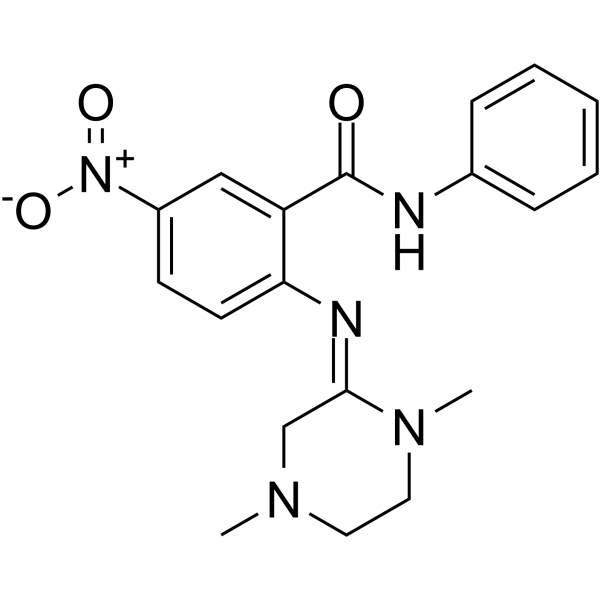
RS-87337 is an orally active piperazine-amidine hybrid class Ia (inhibiting Vmax, IC50 = 17 μM)/class III (prolonging ADP90, EC15 = 2 μM) antiarrhythmic agent with selectivity for ventricular conduction . RS-87337 inhibits cardiac sodium channel, thereby reducing the maximum depolarization rate of action potential, with moderate onset and recovery kinetics. RS-87337 reduces cardiac outward potassium conductance (I_K), thus prolonging action potential duration. RS-87337 is applicable to research related to arrhythmia, ventricular arrhythmia, ventricular fibrillation, and myocardial ischemia-reperfusion injury .
loading...
    loading...
Cat. No.: HY-12928
CAS No.: 1613465-33-0
Pureté:  99.09%
Domaines de recherche:  

Infection

ML336 is a Venezuelan equine encephalitis virus (VEEV) inhibitor with moderate passive blood-brain barrier permeability. ML336 inhibits viral RNA synthesis, virus-induced cytopathic effects and viral replication, reduces viral titers, and blocks the synthesis of VEEV genomic, subgenomic and template RNAs. ML336 can be used in studies related to VEEV infection .
loading...
    loading...
Cat. No.: HY-175802
CAS No.: 2982574-79-6
Synonyms: HYBI-084
Target:  

WDR5 Potassium Channel

Domaines de recherche:  

Inflammation/Immunology Cancer

HBI-2375 (HYBI-084) is a brain-penetrant WDR5 inhibitor with an IC50 of 4.48 nM. HBI-2375 binds to the WINR5 and disrupts MLL1-WDR5 protein-protein interactions. HBI-2375 inhibits cancer cells proliferation and shows anti-tumor activity in AML mouse models, and increases tumor CD8 + cytotoxic T lymphocyte infiltration. HBI-2375 inhibits hERG with an IC50 of 17 µM .
loading...
    loading...
Cat. No.: HY-182383
CAS No.: 1209002-42-5
Target:  

CDK Apoptosis

Domaines de recherche:  

Cancer

VMY-1-101 is a fluorescent cyclin-dependent kinase (CDK) inhibitor, with an excitation of 410 nm and emission of 512 nm. VMY-1-101 competitively inhibits ATP binding to CDKs. VMY-1-101 induces G2/M cell cycle arrest in human breast cancer cells. VMY-1-101 induces modest apoptosis in human breast cancer cells. VMY-1-101 blocks proliferation of human breast cancer cells, including multidrug resistance-positive cells, and is not a substrate for p-glycoprotein. VMY-1-101 localizes to the cytoplasm of human breast cancer cells. VMY-1-101 shows increased binding to human breast cancer tissue compared to fluorophore alone. VMY-1-101 can be used for the research of breast cancer .
loading...
    loading...
Cat. No.: HY-185260
Target:  

Liposome

Domaines de recherche:  

Cancer

AA76-lipid (Compound aa76) is a compound with a C-terminal arginine and histidine. AA76-lipid can be used to prepare pancreas-targeted lipid nanoparticles AH-LNP. After assembling with proteins, the increased size of AH-LNP promotes Capsule-filter-mediated selective accumulation in the pancreas and receptor-mediated endocytosis, thereby enhancing pancreas-targeting ability. AA76-lipid enables highly pancreas-selective delivery of mRNA. AA76-lipid can be used in the research of pancreatic cancer .
loading...
    loading...
Cat. No.: HY-188147
CAS No.: 2636048-41-2
Domaines de recherche:  

Cancer

EZH2-IN-25 is an EZH2 inhibitor that inhibits the catalytic subunit of PRC2. EZH2-IN-25 can be used for the research of diffuse large B cell lymphoma .
loading...
    loading...
Cat. No.: HY-209462
CAS No.: 2014692-47-6
Target:  

Drug Intermediate

Domaines de recherche:  

Others

4-((5-Chloropyridin-3-yl) amino)-4-oxobut-2-enoic acid is the fumaramide handle of LO-3-62 (HY-175186) .
loading...
    loading...
Cat. No.: HY-45609
CAS No.: 150465-29-5
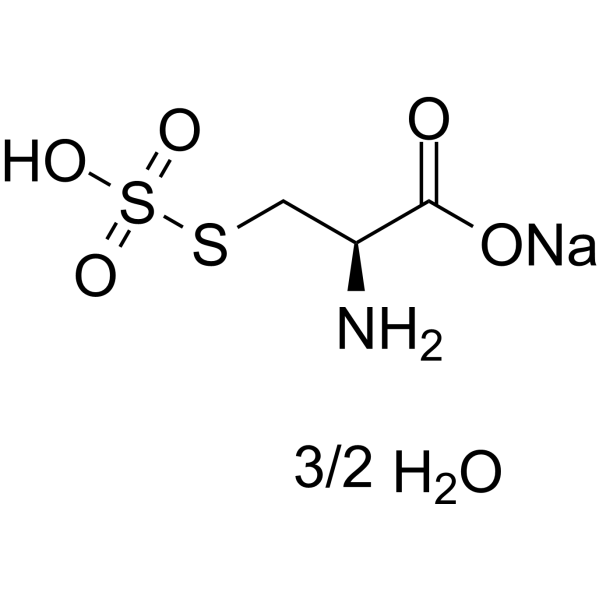
L-Cysteine S-sulfate sodium hydrate is an S-sulfated derivative of L-cysteine (HY-Y0337). L-Cysteine S-sulfate sodium hydrate is the substrate for cystine lyase, it can be used in mass spectrometry and chromatography analyses .
loading...
    loading...
Cat. No.: HY-D3435
Domaines de recherche:  

Others

Biotin-X-DHPE is a biotin-labeled phospholipid analog that can be used for semi-automated cell panning in antibody discovery. Biotin-X-DHPE enables stable immobilization of live cells on magnetic beads without damaging the cells or altering their surface protein expression levels, while ensuring that the selected antibodies recognize natural, functional epitopes on the cell surface .
loading...
    loading...
Cat. No.: HY-W099729
CAS No.: 70445-33-9
Target:  

Bacterial

Domaines de recherche:  

Infection Inflammation/Immunology

Ethylhexylglycerin is an antibacterial agent. Ethylhexylglycerin can induce allergic contact dermatitis. Ethylhexylglycerin inhibits the growth of various bacteria, disrupts the integrity of bacterial cell membranes, and causes proton leakage, reduced ATP levels, morphological abnormalities, and DNA aggregation. Ethylhexylglycerin serves as a skin conditioning agent, deodorant active ingredient, and preservative synergist. Ethylhexylglycerin is applicable to research related to contact dermatitis and bacterial infections .
loading...
    loading...
Cat. No.: HY-W145519
CAS No.: 9005-27-0
Hydroxyethyl starch (MW170-230 kDa) is a type of hydroxyethyl starch with a molecular weight of 170-230 kDa. A medium-molecular-weight hydroxyethyl starch (HES 200/0.62) exhibits minimal intravascular hydrolysis. The rapidly degradable medium-molecular-weight Hydroxyethyl starch 200/0.5 causes almost no coagulation disorders and improves hemorheological parameters .
loading...
    loading...
Cat. No.: HY-Y1366
CAS No.: 116-09-6
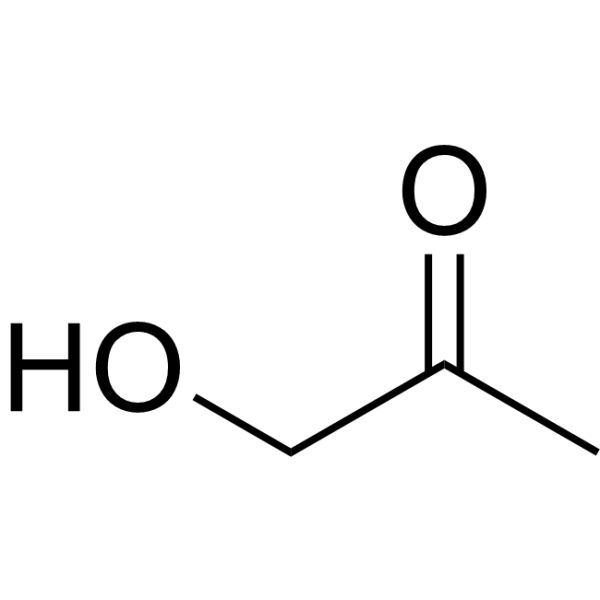
Hydroxyacetone is a toxic compound. Hydroxyacetone can be isolated from e-cigarette aerosols. Hydroxyacetone reduces the activity of cellular Mitochondrial reductase (with an IC50 of 5.53 mg/mL for mitochondrial reductase in BEAS-2B cells) and increases ROS levels. Hydroxyacetone induces mitochondrial stress and oxidative damage. Hydroxyacetone induces destabilization of F-actin. At high concentrations, Hydroxyacetone promotes cell rounding and Apoptotic body formation. Hydroxyacetone exerts toxic effects on cells including airway epithelial cells and possesses respiratory toxicity potential .\n


loading...
    loading...
Cat. No.: HY-P75361
Pureté:  ≥ 85%, as determined by reducing SDS-PAGE.
Synonyms: CDK7; Cyclin-Dependent Kinase 7 (Homolog Of Xenopus MO15 Cdk-Activating Kinase); Cyclin Dependent Kinase 7; Homolog Of Xenopus MO15 Cdk-Activating Kinase; CDKN7; Serine/Threonine Protein Kinase MO15; CAK1; Cyclin-Dependent Kinase 7 Isoform 3; MO15; Serine/Threonine Protein Kinase 1; STK1; Serine/Threonine-Protein Kinase 1; CAK; [RNA-Polymerase]-Subunit Kinase; TFIIH Basal Transcription Factor complex Kinase Subunit; Serine/Threonine Kinase Stk1; Cell Division Protein Kinase 7; Kinase Subunit Of CAK; Cyclin-Dependent Kinase 7; P39 Mo15; Cyclin-Dependent Kinase 7 (MO15 Homolog, Xenopus Laevis, Cdk-Activating Kinase); P39MO15; CDK-Activating Kinase 1; HCAK; 39 KDa Protein Kinase; CCNH; CycH; Cyclin H; Cyclin-Dependent Kinase-Activating Kinase complex Subunit; P34; CDK-Activating Kinase complex Subunit; P37; CAK complex Subunit; MO15-Associated Protein; CAK; Cyclin-H; MNAT1; CAP35; MNAT1 Component Of CDK Activating Kinase; P36; RNF66; P35; MAT1; Menage A Trois Homolog 1, Cyclin H Assembly Factor (Xenopus Laevis); CDK-Activating Kinase Assembly Factor MAT1; Menage A Trois-Like Protein 1 Cyclin H Assembly Factor Isoform 2; CDK7/Cyclin-H Assembly Factor; Menage A Trois-Like Protein 1 Cyclin H Assembly Factor; RING Finger Protein MAT1; Menage A Trois Homolog 1, Cyclin H Assembly Factor; MNAT CDK-Activating Kinase Assembly Factor 1; CDK-Activating Kinase Assembly Factor; MNAT1, CDK Activating Kinase Assembly Factor; Cyclin G1 Interacting Protein; Menage A Trois 1 (CAK Assembly Factor); Cyclin-G1-Interacting Protein; RING Finger Protein 66; TFB3; Menage A Trois
Species:  
Human
Source:  
Sf9 insect cells
loading...
    loading...
Cat. No.: HY-100138R
CAS No.: 173308-19-5
2-Aminoethyl-mono-amide-DOTA-tris(tBu ester) (Standard) is the analytical standard of 2-Aminoethyl-mono-amide-DOTA-tris(tBu ester) (HY-100138). This product is intended for research and analytical applications. 2-Aminoethyl-mono-amide-DOTA-tris(tBu ester) is a metal chelator precursor containing a DOTA macrocyclic structure. DOTA can form highly stable complexes with metal ions (such as 68Ga, 177Lu) through four nitrogen atoms and four carboxylic acid groups to mediate targeted delivery of radionuclides. The tert-butyl ester group (tBu ester) of 2-Aminoethyl-mono-amide-DOTA-tris(tBu ester) also protects the carboxylic acid group during synthesis, and forms a free carboxyl group after deprotection reaction for coupling with targeting molecules (such as antibodies, peptides). 2-Aminoethyl-mono-amide-DOTA-tris(tBu ester) may be combined with tumor pre-targeting systems through bioorthogonal reactions (such as reverse electron demand Diels-Alder reaction) to study radioactive imaging or therapy of tumor tissues, and is mainly used in tumor pre-targeting research in the field of nuclear medicine .
loading...
    loading...
Cat. No.: HY-13631J
CAS No.: 2938875-39-7
Pureté:  99.94%
Synonyms: (1R,9R)-DX8951f
Domaines de recherche:  

Cancer

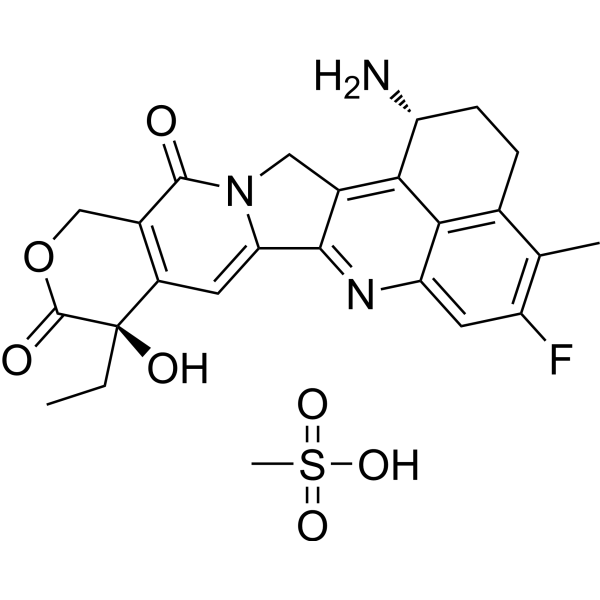
(1R,9R)-Exatecan mesylate ((1R,9R)-DX8951f) is a non-prodrug camptothecin derivative and a potent topoisomerase I inhibitor (IC50=0.975 μg/mL in mice and 0.82 μg/mL in humans). (1R,9R)-Exatecan mesylate blocks enzyme activity and induces apoptosis by stabilizing the enzyme-DNA cleavable complex. (1R,9R)-Exatecan mesylate not only effectively inhibits the proliferation of various malignant tumor cells and tumor growth, but also circumvents P-glycoprotein-mediated multidrug resistance. (1R,9R)-Exatecan mesylate is widely used in preclinical studies of multiple cancers including pancreatic cancer, lung cancer, breast cancer, and leukemia . The low-activity isomer of (1R,9R)-Exatecan mesylate is (1S,9R)-Exatecan mesylate (HY-13631I).
loading...
    loading...
Cat. No.: HY-13631V
CAS No.: 2489613-15-0
Synonyms: (1R,9R)-DX-8951
Domaines de recherche:  

Cancer

(1R,9R)-Exatecan ((1R,9R)-DX8951f) is a non-prodrug Camptothecin (HY-16560) derivative and a potent topoisomerase I (Topo I) inhibitor (IC50=0.975 μg/mL in mice and 0.82 μg/mL in humans). (1R,9R)-Exatecan blocks enzyme activity and induces apoptosis by stabilizing the enzyme-DNA cleavable complex. (1R,9R)-Exatecan not only effectively inhibits the proliferation of various malignant tumor cells and tumor growth, but also circumvents P-glycoprotein-mediated multidrug resistance. (1R,9R)-Exatecan is widely used in preclinical studies of multiple cancers including pancreatic cancer, lung cancer, breast cancer, and leukemia . The low-activity isomer of (1R,9R)-Exatecan is (1S,9R)-Exatecan (HY-13631I).
loading...
    loading...
Cat. No.: HY-138794G
CAS No.: 2417089-74-6
XL177A GMP is XL177A (HY-138794) produced by using GMP guidelines. GMP small molecules works appropriately as an auxiliary reagent for cell therapy manufacture. XL177A is a covalent USP7 inhibitor that blocks the deubiquitinase activity of USP7. XL177A destabilizes non-canonical PRC1 complexes or KDM6A and reduces chromatin deposition of H2AK119Ub, thereby relieving the repression of neuronal differentiation programs. Meanwhile, XL177A also regulates the ELOF1-UVSSA-USP7-nuclear β-catenin axis, decreasing the transcription levels of related proteins and the accumulation of nuclear β-catenin. XL177A exerts antiviral effects by reducing the expression levels of coronavirus receptors, and exhibits inhibitory activity against APC-mutated colorectal cancer cells, neuroblastoma, and coronaviruses including SARS-CoV-2 variants. XL177A is mainly used in studies related to colorectal cancer, neuroblastoma, and coronavirus infections .
loading...
    loading...
Cat. No.: HY-148062
CAS No.: 2769753-48-0
Pureté:  99.85%
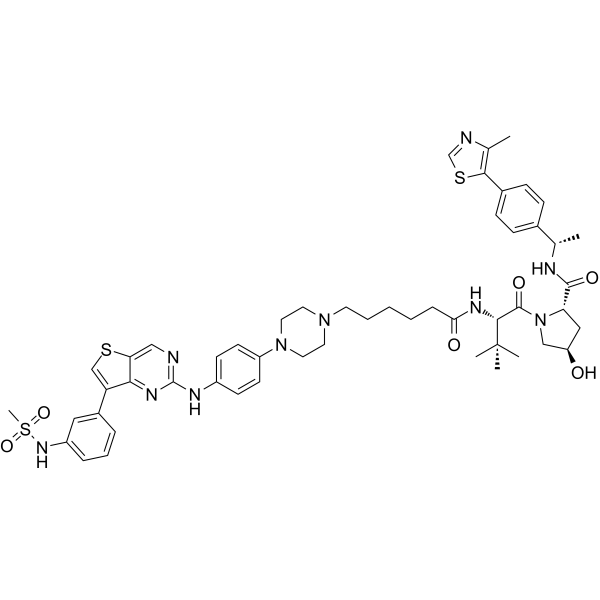
RSS0680 is a small noncoding RNA (sRNA) targeting the mRNA ribosome binding site (RBS) and a PROTAC. RSS0680 competitively binds to RBS through the conserved CCUCCUCCC anti-Shine-Dalgarno (aSD) sequence and inhibits the translation initiation of target genes. RSS0680 can interact with the DUF1127 protein CcaF1, regulate its own stability and participate in bacterial oxidative stress defense, enhancing the host's resistance to heat shock and oxidative damage by affecting pathways such as C1 metabolism and pyruvate dehydrogenase complex. RSS0680 degrades AAK1, CDK1, CDK16, CDK2, CDK4, CDK6, EIF2AK4, GAK, LATSl, LIMK2, MAPK6, MAPKAPK5, MARK2, MARK4, MKNK2, NEK9, RPS6KB1, SIK2, SNRK, STK17A, STK17B, STK35, and WEEl. RSS0680 can be used to study diseases or disorders mediated by aberrant kinase activity and regulatory mechanisms of noncoding RNAs in α-proteobacteria[1][2].
loading...
    loading...

