47 Results for "

Cross-coupling

" in MedChemExpress (MCE) Product Catalog:
Products (47)

47 Results for "Cross-coupling" in MCE Product Catalog:

Cat. No.: HY-101974
CAS No.: 1041766-91-9
Biotin-PEG3-Bromide is a short PEG linker featuring a biotin group and a bromide. The bromide is a halogen which is easily displaced by nucleophiles such as alcohols or amines. Alternatively, bromide can be applied in a number of cross-coupling reactions such as in a Suzuki reaction. Biotin is useful for affinity-based applications such as pull-down assays or for ligating with streptavidin proteins.
loading...
    loading...
Cat. No.: HY-W002734
CAS No.: 87199-18-6
Synonyms: 3-Hydroxybenzeneboronic acid
Target:  

Drug Intermediate

Research Areas:  

Metabolic Disease

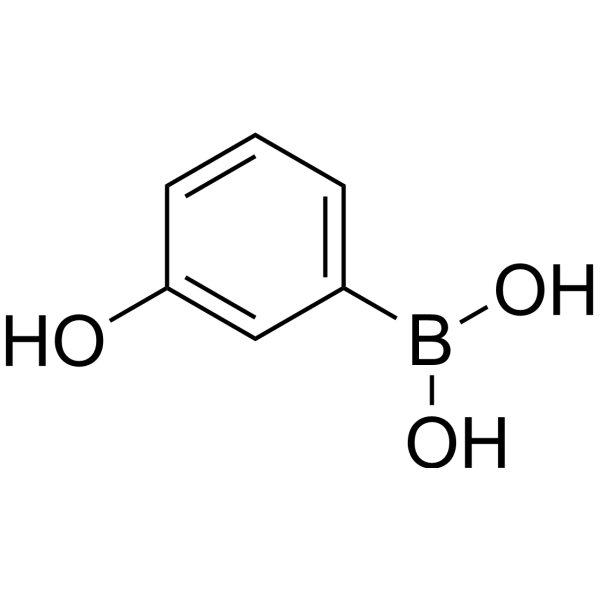
(3-Hydroxyphenyl)boronic acid (3-Hydroxybenzeneboronic acid) is a drug intermediate that can be used for the synthesis of 17β-hydroxysteroid dehydrogenase type 1 inhibitors .
loading...
    loading...
Cat. No.: HY-W048492
CAS No.: 172163-62-1
Synonyms: 7-Deaza-7-Iodo-2'-deoxyguanosine
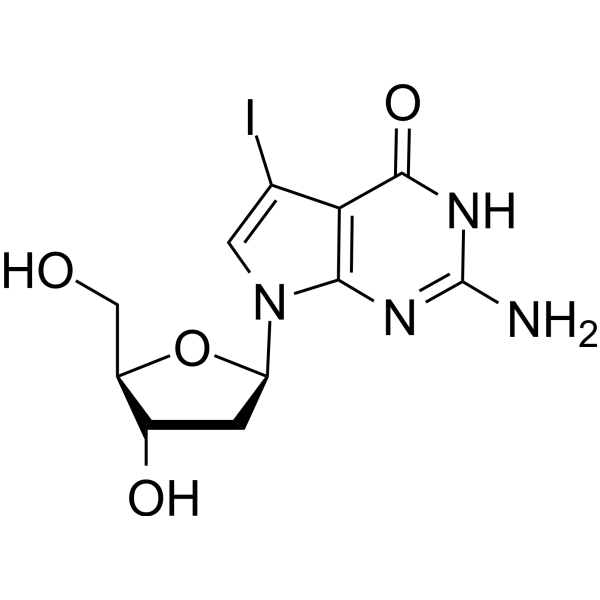
7-Iodo-7-deaza-2'-deoxyguanosine (7-Deaza-7-Iodo-2'-deoxyguanosine) is a modified deoxyguanosine nucleoside. 7-Iodo-7-deaza-2'-deoxyguanosine is used in DNA synthesis and sequencing reactions .
loading...
    loading...
Cat. No.: HY-W034801
CAS No.: 13395-16-9
Synonyms: Cupric Acetylacetonate
Research Areas:  

Others

Copper(II) acetylacetonate (Cupric Acetylacetonate) is the homoleptic acetylacetonate complex of copper(II). Copper(II) acetylacetonate is used as a catalyst in various organic reactions, including oxidation, cross-coupling, and polymerization reactions. Copper(II) acetylacetonate is also a precursor for making metal-organic frameworks (MOF) and nanomaterials .
loading...
    loading...
Cat. No.: HY-W583317
CAS No.: 2375242-78-5
Research Areas:  

Others

sSPhos Pd G2 is a palladium catalyst with excellent cross-coupling reaction activity. sSPhos Pd G2 exhibits efficient catalytic ability in the synthesis of organic molecules and compounds. sSPhos Pd G2 can effectively promote the formation of CC bonds, optimize reaction conditions and increase yields. sSPhos Pd G2 is also used in a variety of transformation reactions, helping researchers develop new materials and compounds.
loading...
    loading...
Cat. No.: HY-32928
CAS No.: 126747-14-6
Research Areas:  

Others

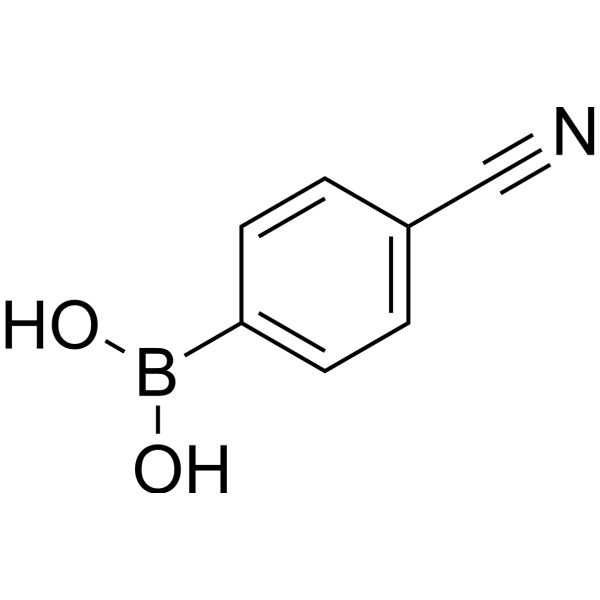
4-Cyanobenzeneboronic acid is a boronic acid derivative and also coupling reagent in Suzuki cross-coupling reactions .
loading...
    loading...
Cat. No.: HY-P3350
CAS No.: 2892148-58-0
Target:  

Bacterial

Research Areas:  

Infection

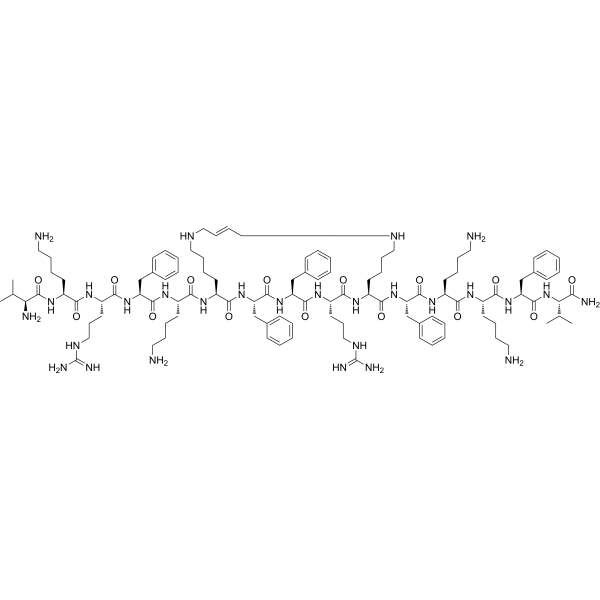
LS-BF1 is a stable and low toxic cationic antimicrobial peptide. LS-BF1 displays broad spectrum of antibacterial activity, including the challenging ESKAPE pathogens, by cell membrane disruptive mechanism. LS-BF1 shows good in vivo efficacy for elimination of bacteria in a mouse infection model[1].
loading...
    loading...
Cat. No.: HY-W000873
CAS No.: 146631-00-7
Target:  

Drug Intermediate

Research Areas:  

Metabolic Disease

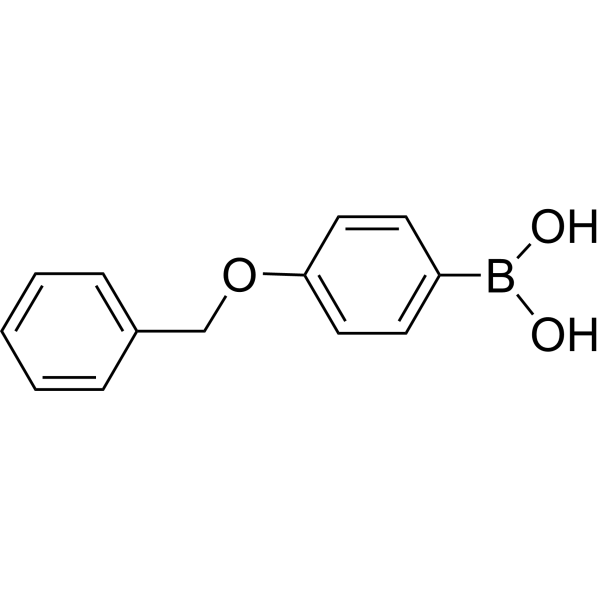
4-Benzyloxyphenylboronic acid is an arylboronic acid reagent that generates Monobenzone (HY-30272), a compound that inhibits melanin production in the skin, via electrochemical deboronation hydroxylation. 4-Benzyloxyphenylboronic acid serves as a coupling partner in Pd (0)-catalyzed Suzuki-Miyaura cross-coupling reactions for the synthesis of bent-core liquid crystals and liquid crystalline amphiphiles. 4-Benzyloxyphenylboronic acid is used in the study of hyperpigmentation .
loading...
    loading...
Cat. No.: HY-W002463
CAS No.: 63503-60-6
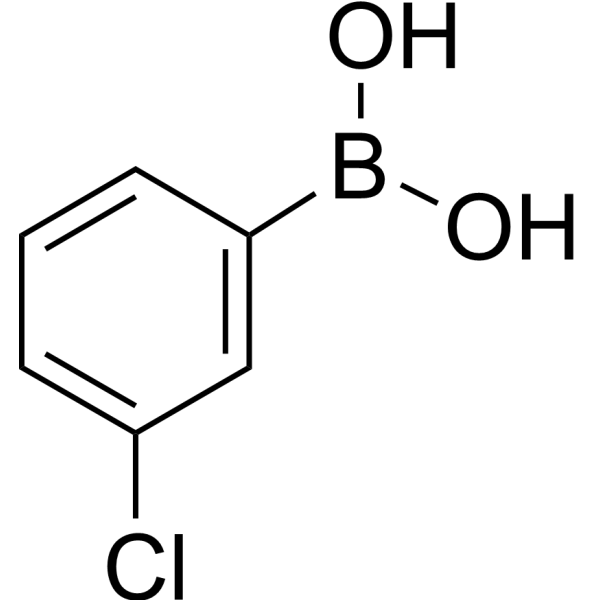
3-Chlorophenylboronic acid is employed as a reactant involved in 1,4-conjugate addition reactions with ethenesulfonamides to form arylethanesulfonamides, Suzuki-Miyaura reactions with dibromotrifluoromethylbenzene, cross-coupling reactions with diazoesters3 or potassium cyanate. 3-Chlorophenylboronic acid is involved in the synthesis of biarylketones and phthalides and synthesis of inhibitors including PDE4 inhibitors among others. 3-Chlorophenyl boronic acid can affect cell migration. 3-Chlorophenyl boronic acid can be used to study wound healing .
loading...
    loading...
Cat. No.: HY-W034606
CAS No.: 1067883-58-2
Synonyms: CM-Phos
2-[2-(Dicyclohexylphosphino)phenyl]-1-methyl-1H-indole (CM-Phos) is an organic compound with catalytic activity. 2-[2-(Dicyclohexylphosphino)phenyl]-1-methyl-1H-indole can be used as an efficient catalyst for cross-coupling reactions of various alcohols and olefins. 2-[2-(Dicyclohexylphosphino)phenyl]-1-methyl-1H-indole shows important application potential in pharmaceutical and material science.
loading...
    loading...
Cat. No.: HY-W020985
CAS No.: 31277-98-2
Synonyms: Pd(DIPHOS)2
Bis[1,2-bis(diphenylphosphino)ethane]palladium(0), often abbreviated as Pd(PPh3)2 or Pd(dppf), is an organometallic compound. This compound is widely used as a catalyst for organic chemical reactions, especially cross-coupling reactions such as Suzuki-Miyaura reaction and Heck reaction, and its high catalytic activity, selectivity and stability make it a versatile tool for the synthesis of complex organic compounds , in addition, the potential application of Pd(PPh3)2 in the production of electronic materials and in medical and biochemical research has also been investigated.
loading...
    loading...
Cat. No.: HY-120286
CAS No.: 108890-90-0
K-13 is a cyclic peptide compound synthesized by a specific organozinc reagent. Its synthesis process involves intermolecular and intramolecular Negishi cross-coupling reactions and is one of the shortest routes reported for the synthesis of such cyclic peptides.
loading...
    loading...
Cat. No.: HY-119928
CAS No.: 479-68-5
Research Areas:  

Cancer

Broparestrol is a biologically active tetrasubstituted olefin can be achieved via palladium-catalyzed cross-coupling to form a C-C bond followed by bromination. Broparestrol inhibits mammary carcinogenesis in mouse model. Broparestrol can be used in dermatology and cancer research .
loading...
    loading...
Cat. No.: HY-W008658
CAS No.: 82499-43-2
[1,4-Bis(diphenylphosphino)butane](norbornadiene)rhodium tetrafluoroborate is a highly efficient and selective transition metal catalyst that can catalyze a variety of reactions, including cross-coupling reactions and hydrogenation reactions. This compound is widely used in organic synthesis and helps to promote the development of new compounds and materials. Through its catalytic activity, [1,4-Bis(diphenylphosphino)butane](norbornadiene)rhodium tetrafluoroborate offers the potential to optimize reaction conditions and improve yields.
loading...
    loading...
Cat. No.: HY-W582827
CAS No.: 2361069-97-6
RuPhos Pd G1 methyl t-butyl ether adduct (MTBE) is a highly efficient catalyst with excellent cross-coupling activity. RuPhos Pd G1 methyl t-butyl ether adduct (MTBE) is widely used in organic synthesis and can be used to promote various reactions to build complex molecular structures. RuPhos Pd G1 methyl t-butyl ether adduct (MTBE) has good adaptability to temperature and reaction conditions, which enables it to exhibit excellent catalytic performance in different reaction systems.
loading...
    loading...
Cat. No.: HY-W075744
CAS No.: 2049086-34-0
SK-J002-1n is a highly efficient catalyst with excellent cross-coupling reaction activity. SK-J002-1n is widely used in organic synthesis to construct complex molecular structures. The chiral properties of SK-J002-1n make it play an important role in the pharmaceutical industry and provide support for the synthesis of chiral compounds. SK-J002-1n can significantly improve the conversion efficiency and is an important component of transition metal catalysts.
loading...
    loading...
Cat. No.: HY-P11911
Cyclo(Val-Val-Ile-d-Ala-Trp(7-Br)-Gly) is a cyclic peptide containing 7-bromotryptophan, designed as a precursor for Sonogashira cross-coupling to generate a BODIPY-conjugated probe selective for prefibrillar 1−42 oligomers .
loading...
    loading...
Cat. No.: HY-175553
Target:  

VEGFR Apoptosis

Research Areas:  

Cancer

VEGFR-2-IN-72 is a selective VEGFR-2 inhibitor with an IC50 of 22.2 nM. VEGFR-2-IN-72 exhibits anticancer activity against HepG2 and Hep3B human HCC cell lines with IC50s of 15.7 and 2.4 μM. VEGFR-2-IN-72 can cause a mild blockage of the cell cycle and induce cell aopoptosis. VEGFR-2-IN-72 can used for the study of hepatocellular carcinoma (HCC) .
loading...
    loading...
Cat. No.: HY-146489
CAS No.: 2521629-86-5
Target:  

Bacterial Parasite

Research Areas:  

Infection

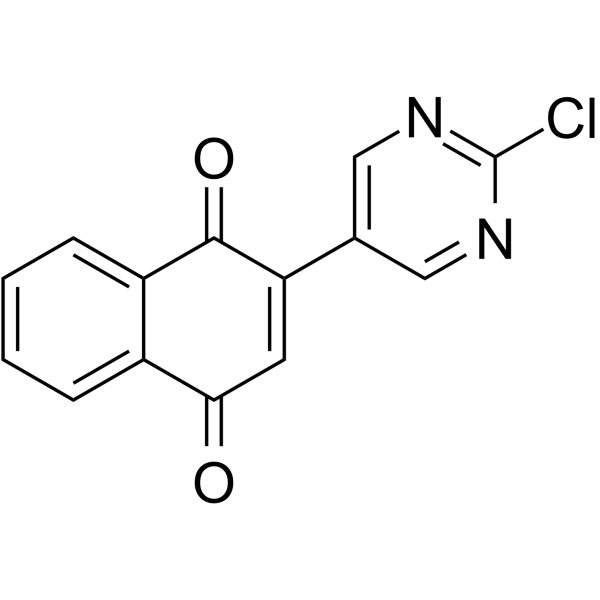
Anti-infective agent 3 (compound 3l) shows antiparasitic activity against P. falciparum and T. brucei rhodesiense, with IC50 values of 0.47 and 0.13 μM, respectively. Anti-infective agent 3 shows antimycobacterial activity against Mycobacterium smegmatis with a MIC of 4 μg/mL .
loading...
    loading...
Cat. No.: HY-146487
CAS No.: 2348-77-8
Target:  

Bacterial Parasite

Research Areas:  

Infection

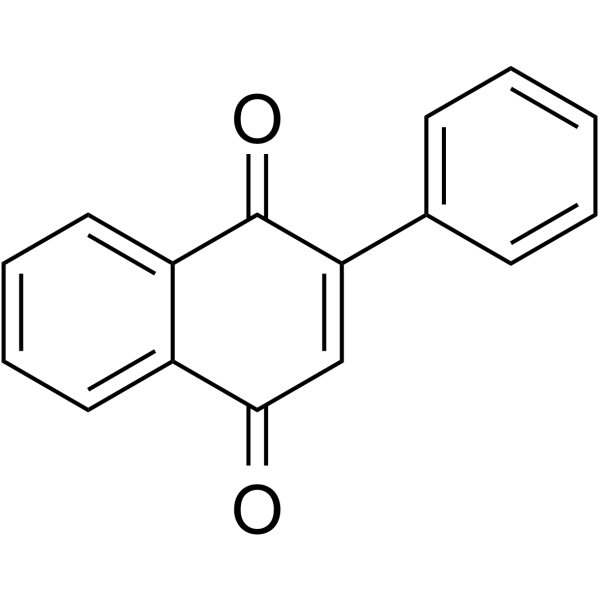
Anti-infective agent 1 (compound 3a) is a potent and selective antiprotozoal and antimycobacterial agent. Anti-infective agent 1 shows antiparasitic activity against P. falciparum and T. brucei rhodesiense, with IC50 values of 10.95 and 0.06 μM, respectively. Anti-infective agent 1 shows antimycobacterial activity against Mycobacterium smegmatis with a MIC of 8 μg/mL .
loading...
    loading...