
82 Results for "

amidation

" in MedChemExpress (MCE) Product Catalog:
Products (82)

82 Results for "amidation" in MCE Product Catalog:

Cat. No.: HY-155880
CAS No.: 80506-64-5
Synonyms: mPEG350-NH2
Research Areas:  

Others

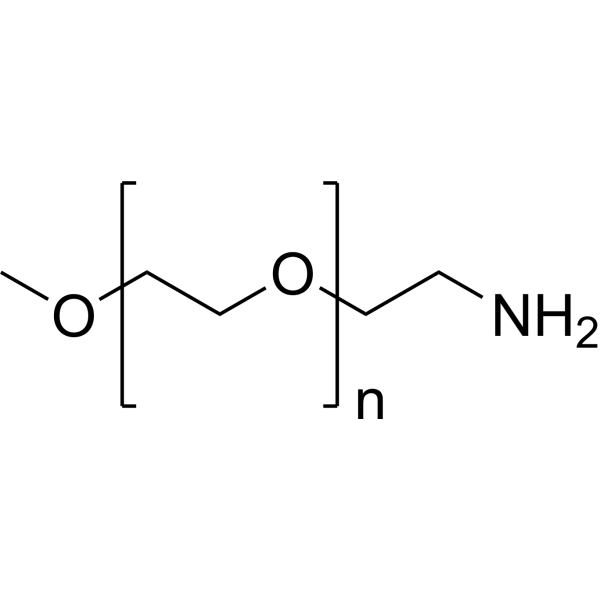
mPEG350-amine (mPEG350-NH2) is a PEG-based amine that serves as a precursor for the synthesis of PEG acrylamide macromonomers. mPEG350-amine is used for the synthesis of polymeric micelles for drug delivery .
loading...
    loading...
Cat. No.: HY-30156
CAS No.: 10592-27-5
Synonyms: 7-Azaindoline
Research Areas:  

Others

2,3-Dihydro-7-azaindole (7-Azaindoline) is a cyclic secondary amine substrate with a fused aromatic ring, which serves as a substrate for hydrogenation reactions. 2,3-Dihydro-7-azaindole undergoes amidation with methyl pyrazine-2-carboxylate under the catalysis of lipase from Pseudomonas stutzeri. 2,3-Dihydro-7-azaindole is often used as an intermediate in organic synthesis, for example, in the preparation of indole compounds .
loading...
    loading...
Cat. No.: HY-P3588
CAS No.: 2920938-90-3
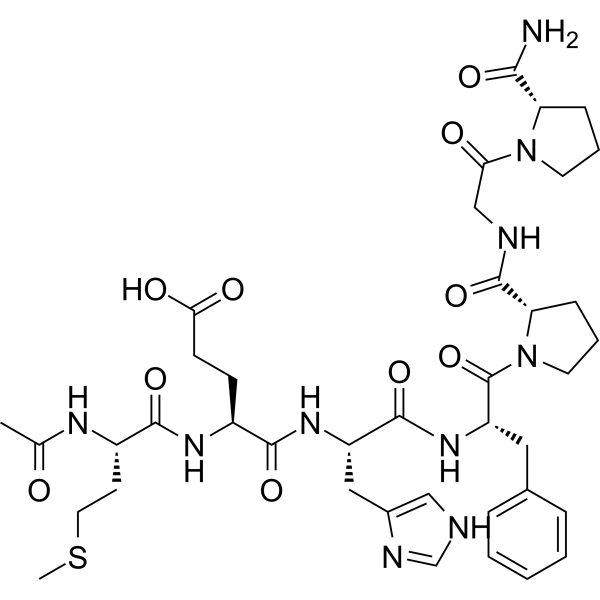
N-Acetyl semax amidate is a derivative of Semax (HY-P1146) (Met-Glu-His-Phe-Pro-Gly-Pro) obtained via N-terminal acetylation and C-terminal amidation, and it exhibits nootropic and neuroprotective activities. N-Acetyl semax amidate exerts neuroprotective effects by upregulating the expression of BDNF and NGF, inhibiting neuronal apoptosis, alleviating oxidative stress, and reducing glutamate excitotoxicity. N-Acetyl semax amidate can be used in research related to central nervous system diseases such as ischemic stroke, cognitive impairment, and neurodegenerative diseases .
loading...
    loading...
Cat. No.: HY-130544
CAS No.: 79583-98-5
Purity:  99.77%
Synonyms: 5-Azidovaleric acid
Research Areas:  

Others

5-Azidopentanoic acid (5-Azidovaleric acid) is a crosslinker/cyclization reagent as well as an azido-containing carboxylic acid. 5-Azidopentanoic acid participates in Cu I-catalyzed azide-alkyne cycloaddition reactions; when used to cap the N-terminus of resin-bound peptides containing propargylglycine residues, it enables head-to-tail cyclodimerization of peptides. 5-Azidopentanoic acid introduces azido functional groups into chitosan via amidation for strain-promoted azide-alkyne cycloaddition click reactions. 5-Azidopentanoic acid acts as an aliphatic bifunctional ligand and capping agent for CdSe tetrapods; its bromo group can be converted to an azido group, which then undergoes catalyst-free alkyne-azide cycloaddition click reactions with ethynyl-terminated poly (3-hexylthiophene) .
loading...
    loading...
Cat. No.: HY-P2932A
Research Areas:  

Neurological Disease

Cholecystokinin-33 free acid is an analogue of Cholecystokinin (HY-P2932). C-terminal amidation is important for binding of Cholecystokinin to its receptors, and removing the amide group would decrease Cholecystokinin activity. Cholecystokinin-33 free acid can be used to study C-terminal amidation of Cholecystokinin-33 .
loading...
    loading...
Cat. No.: HY-W127342
CAS No.: 112-13-0
Synonyms: Decanoic acid chloride
Research Areas:  

Others

Decanoyl chloride is an organic compound belonging to the class of acid chlorides. It is a colorless liquid with a pungent odor and is commonly used as a reagent in various organic chemical reactions, especially in the synthesis of esters, amides and fatty acids. Decanoyl chloride has numerous applications in synthetic organic chemistry, especially in the production of pharmaceuticals, agrochemicals and specialty chemicals. In addition, it can be used as a precursor for the synthesis of surfactants and detergents.
loading...
    loading...
Cat. No.: HY-N0390S15
Synonyms: L-Glutamic acid 5-amide-d4
L-Glutamine-d4 (L-Glutamic acid 5-amide-d4) is the deuterium labeled L-Glutamine (HY-N0390). L-Glutamine is a non-essential amino acid present abundantly throughout the body and involved in many metabolic processes. L-Glutamine provides a source of carbons for oxidation in some cells .
loading...
    loading...
Cat. No.: HY-164575
CAS No.: 1630114-57-6
Research Areas:  

Cancer

NH2-NODAGA is an amino-modified NODAGA-type bifunctional chelator, specifically designed for amidation coupling with targeting ligands via squaric acid (SA), followed by coordination with radionuclides (e.g., 68Ga, 177Lu). NH2-NODAGA can be coupled with diethyl squarate to form a PSMA inhibitor conjugate, which is used in prostate cancer research .
loading...
    loading...
Cat. No.: HY-E70437
CAS No.: 80146-85-6
Synonyms: Tissue-type transglutaminase; TG2; TGase 2
Research Areas:  

Others

Guinea pig liver transglutaminase (Tissue-type transglutaminase) is a calcium-dependent tissue-type transglutaminase and serves as the prototype of intracellular tissue transglutaminases purified from guinea pig liver. Guinea pig liver transglutaminase catalyzes acyl transfer reactions via a ping-pong mechanism, forming a transient thioester acyl-enzyme intermediate that mediates the hydrolysis of glutamine amides, displacement by primary amines, and the formation of isopeptide cross-links between peptide-bound glutamine and the amino groups of lysine or polyamines .
loading...
    loading...
Cat. No.: HY-W128159
CAS No.: 932-17-2
Target:  

Hemoglobin

Research Areas:  

Cancer

N-Acetyl-2-pyrrolidone (No.20) is an N-acetylated amide. N-Acetyl-2-pyrrolidone can induce the differentiation of mouse erythroleukemia cells and has the activity of stimulating proliferation. N-Acetyl-2-pyrrolidone can be used in the research of leukemia differentiation therapy .
loading...
    loading...
Cat. No.: HY-120964
CAS No.: 63155-80-6
Purity:  99.00%
Target:  

Endogenous Metabolite

Research Areas:  

Metabolic Disease

Several different arachidonoyl amino acids, including N-arachidonoyl dopamine (NADA) and N-arachidonoyl serine (ARA-S), have been isolated and characterized from bovine brain.1 During mass spectral lipidomic analysis of rat brain, a series of fatty acyl amides of a third amino acid, taurine, is discovered.2 This novel class of compounds is present in kidney and activates members of the transient receptor potential (TRP) family of calcium channels.3 N-Stearoyl taurine is a prominent amino-acyl endocannabinoid isolated from rat brain during lipidomics profiling.
loading...
    loading...
Cat. No.: HY-121205
CAS No.: 55038-30-7
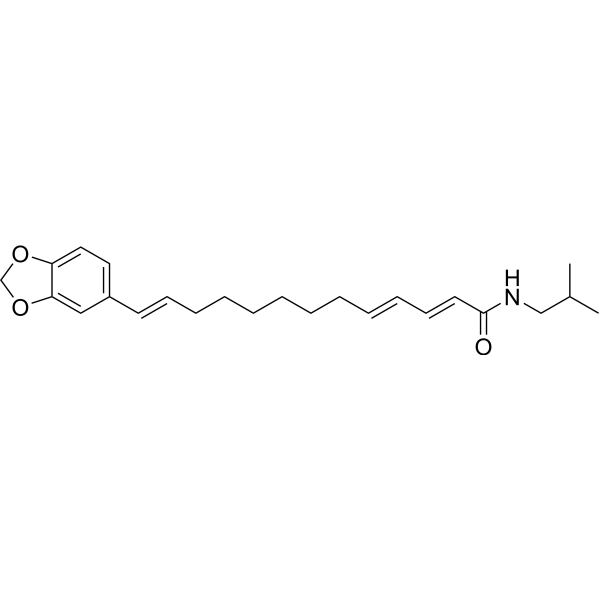
Guineesine can be isolated from Piper longum L .
loading...
    loading...
Cat. No.: HY-150528S
CAS No.: 1219423-91-2
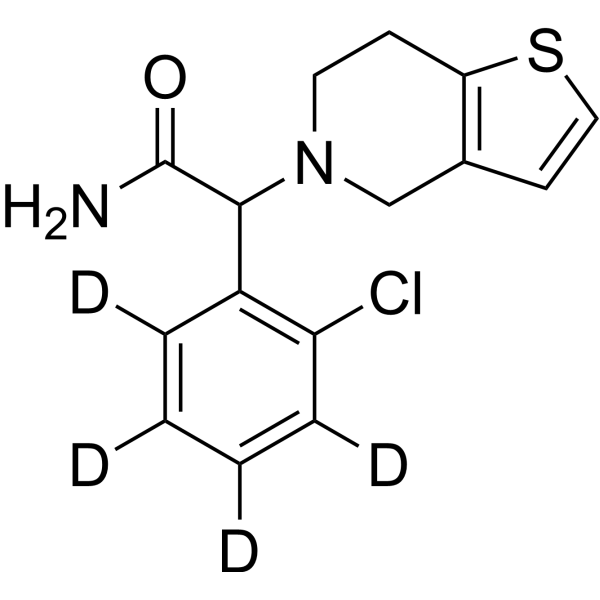
rac-Clopidogrel Amide-d4 is the deuterium labeled rac-Clopidogrel Amide .
loading...
    loading...
Cat. No.: HY-158784
CAS No.: 1175954-87-6
Target:  

FAAH

Research Areas:  

Others

Arachidonoyl m-Nitroaniline (AmNA) is one of several nitroaniline fatty acid amides which can be used to measure fatty acid amide hydrolase (FAAH) activity. Arachidonoyl m-Nitroaniline is a FAAH substrate .
loading...
    loading...
Cat. No.: HY-N12122
CAS No.: 107584-38-3
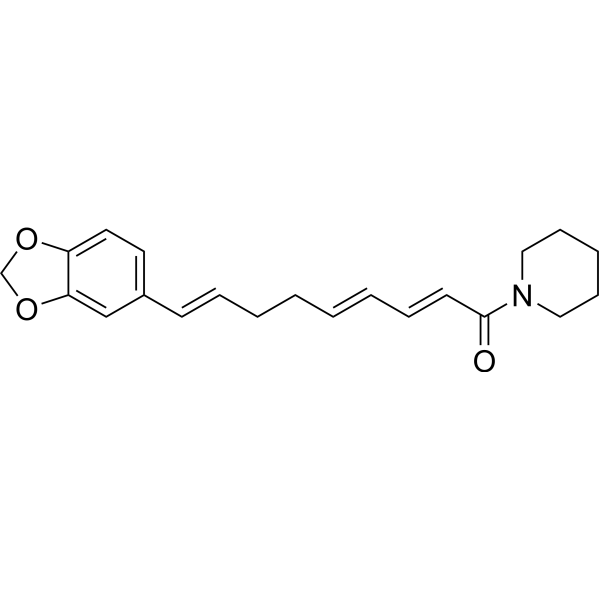
Dehydropipernonaline (Compound 24) is an amide compound. Dehydropipernonaline shows considerable cytotoxicity to L5178Y mouse lymphoma cells (IC508.9μM). Dehydropipernonaline can be used for screening antifungal and cytotoxicity .
loading...
    loading...
Cat. No.: HY-151640
CAS No.: 1021422-85-4
Target:  

ADC Linkers

Research Areas:  

Others

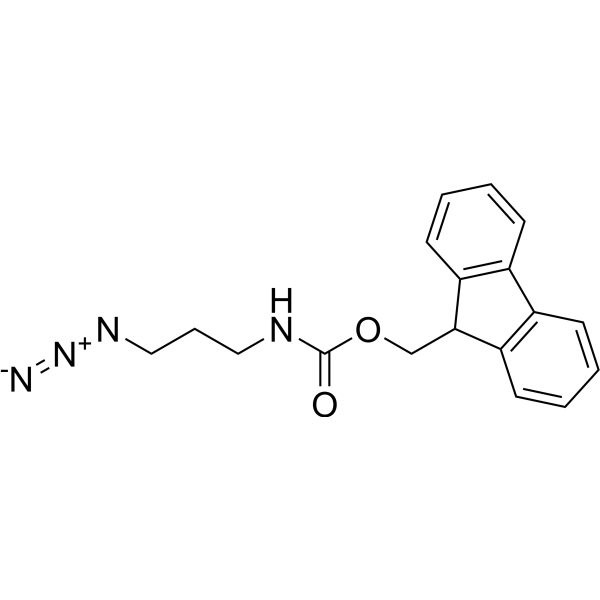
Fmoc-DAP-N3 is a click chemistry reagent containing an azide group. Fmoc-DAP-N3 is a short, linear spacer molecule with Fmoc protected amino function. Fmoc-DAP-N3 can be used in click conjugation and amid bond formation either with small molecules or for bioconjugation with proteins and antibodies . It contains an azide group and can undergo copper-catalyzed azide-alkyne cycloaddition (CuAAc) with molecules containing alkyne groups. It can also undergo ring strain-promoted alkyne-azide cycloaddition (SPAAC) with molecules containing DBCO or BCN groups.
loading...
    loading...
Cat. No.: HY-W010361
CAS No.: 10581-12-1
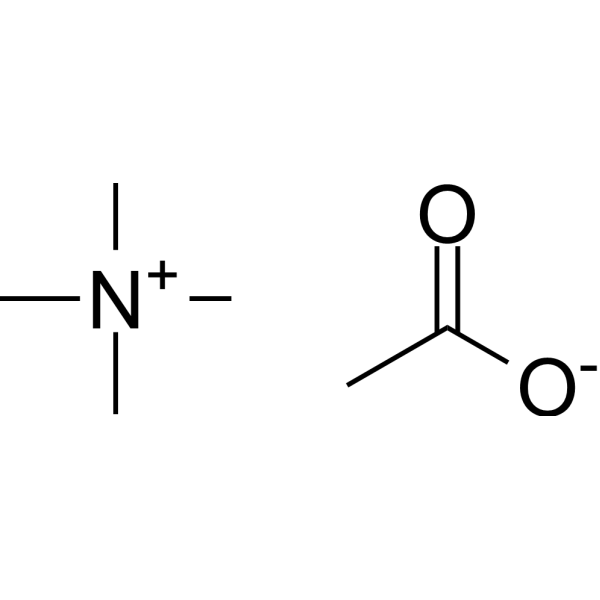
Tetramethylammonium acetate is an organic compound commonly used as a phase transfer catalyst in organic synthesis reactions, especially those involving charged species or polar reagents. It can facilitate the transfer of reactants between two immiscible phases, such as water and organic solvents, by forming stable ion pairs. Additionally, Tetramethylammonium acetate has been used to prepare a variety of organic compounds, including esters, amides, and carboxylic acids. Due to its unique physicochemical properties, it has also been investigated for its potential use in developing new materials such as ionic liquids and liquid crystals. "x" in the formula represents the number of water molecules in the crystal structure, which can vary depending on the preparation method.
loading...
    loading...
Cat. No.: HY-W250129
CAS No.: 94695-48-4
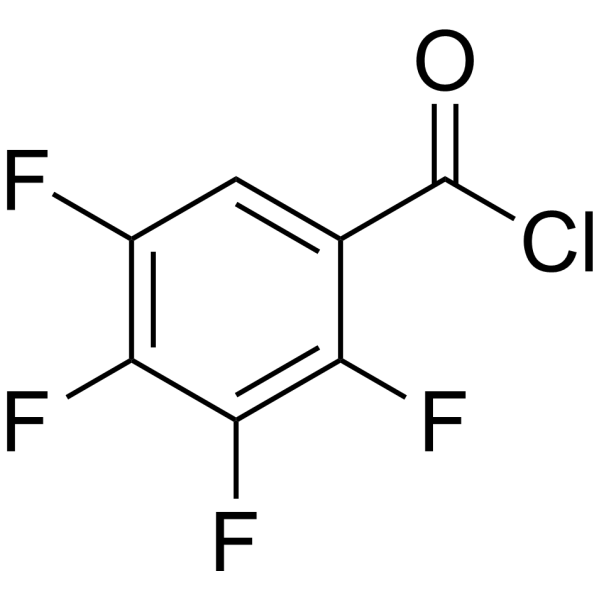
2,3,4,5-Tetrafluorobenzoyl chloride is a fluorinated organic compound that belongs to the class of benzoyl chlorides. It is a colorless liquid with a pungent smell and is mainly used as an intermediate in the synthesis of various pharmaceutical and pesticide compounds. 2,3,4,5-Tetrafluorobenzoyl chloride is an acylating agent that can react with a variety of nucleophiles, including amines, alcohols, and thiols, to form amides, esters, or thioesters, respectively. Its unique fluorine-containing structure can impart desired properties to target molecules, such as increased lipophilicity or increased stability against metabolic degradation. However, due to its high reactivity and potential health hazards, proper safety measures and handling procedures must be followed when using this compound.
loading...
    loading...
Cat. No.: HY-143923S
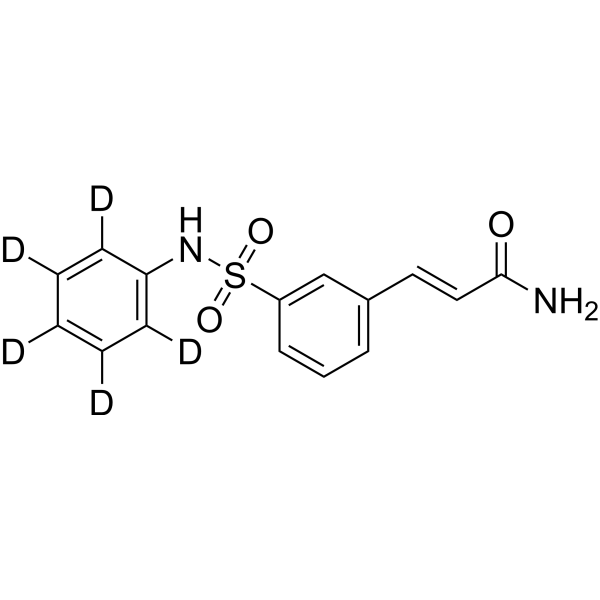
Belinostat amide-d5 is the deuterium labeled Belinostat amide .
loading...
    loading...
Cat. No.: HY-129934S
Synonyms: Lat-NEt-d4
Latanoprost ethyl amide-d4 (Lat-NEt-d4) is deuterium labeled Latanoprost ethyl amide. Latanoprost ethyl amide (Lat-NEt) is a latanoprost analog in which the C-1 carboxyl group has been modified to an N-ethyl amide. Prostaglandin esters have been shown to have ocular hypotensive activity.1 Prostaglandin N-ethyl amides were recently introduced as alternative prostaglandin ocular hypotensive prodrugs. Although it has been claimed that prostaglandin ethyl amides are not converted to the free acids in vivo, studies in our laboratories have shown that bovine and human corneal tissue converts the N-ethyl amides of various prostaglandins to the free acids with a conversion rate of about 2.5 μg/g corneal tissue/hr. Lat-NEt would be expected to show the typical intraocular effects of Latanoprost free acid, but with the much slower hydrolysis pharmacokinetics of the prostaglandin N-amides .
loading...
    loading...

