45 Results for "

behaviour

" in MedChemExpress (MCE) Product Catalog:
Products (45)

45 Results for "behaviour" in MCE Product Catalog:

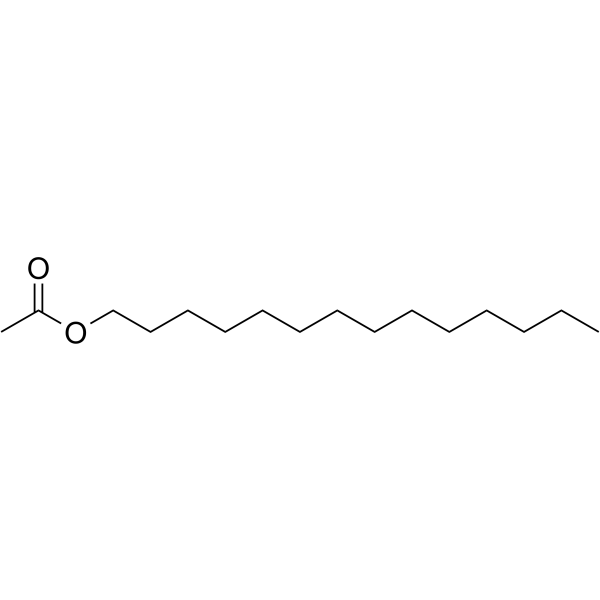
Cat. No.: HY-W042284
CAS No.: 638-59-5
Synonyms: Myristyl acetate
Tetradecyl (Myristyl) acetate is a native sex pheromone component of Yponomeuta rorellus. Tetradecyl acetate elicits orientation behaviour, upwind flight, and landing at the odour source in male Yponomeuta rorellus. Tetradecyl acetate can be used in research on insecticides .
loading...
    loading...
Cat. No.: HY-136786
CAS No.: 67383-44-2
Research Areas:  

Neurological Disease

RU-24213 hydrochloride is a selective D-2 dopamine receptor agonist. RU-24213 hydrochloride is also a KAPPA-opioid receptor antagonist. RU-24213 hydrochloride induces stereotyped behaviors .
loading...
    loading...
Cat. No.: HY-127120
CAS No.: 57648-21-2
Target:  

Dopamine Receptor

Research Areas:  

Neurological Disease

Timiperone has a strong affinity for cerebral dopamine D2 receptor. Timiperone has antipsychotic activity, and inhibits stereotyped behaviour. Timiperone can be used for research of schizophrenia .
loading...
    loading...
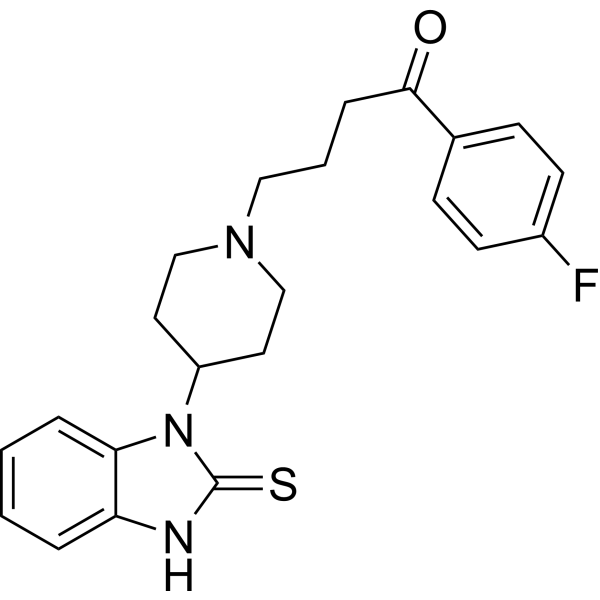
Cat. No.: HY-165624
CAS No.: 140221-50-7
Research Areas:  

Neurological Disease

LY-41 is a 2-aminotetralin (HY-W022362) derivative related to 8-OH-DPAT (HY-112061). LY-41 decreases 5-HT synthesis. LY-41 induces 5-HT motor syndrome. (R)-LY-41 and (S)-LY-41 are novel 5-HT1A receptor agonists .
loading...
    loading...
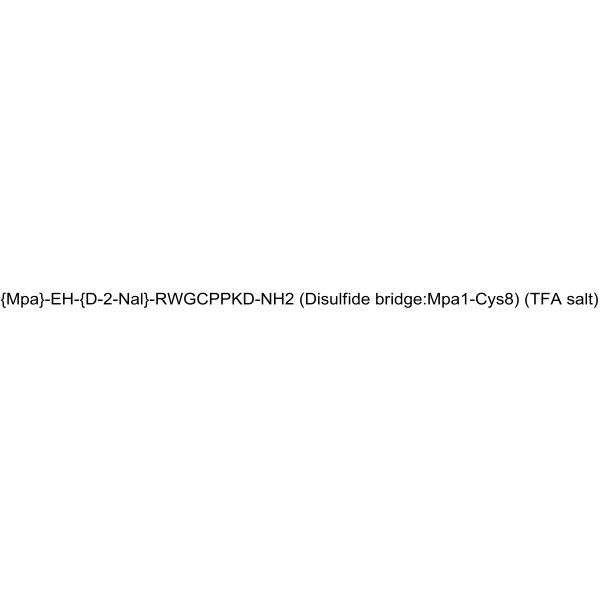
Cat. No.: HY-P1213A
Target:  

Melanocortin Receptor

Research Areas:  

Neurological Disease

JKC363 TFA, a selective melanocortin MC4 receptor antagonist, has a 90-fold higher affinity at the MC4 receptor (IC50=0.5 nM) than at the MC3 receptor (44.9 nM). JKC363 TFA blocks the stimulatory effect of α-MSH on TRH release. Anti-hyperalgesic effect .
loading...
    loading...
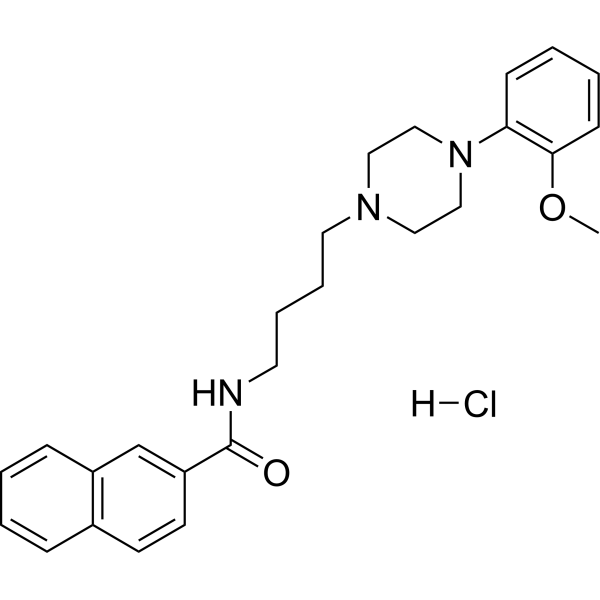
Cat. No.: HY-106660
CAS No.: 314776-92-6
Purity:  99.84%
Target:  

Dopamine Receptor

Research Areas:  

Neurological Disease

BP 897 hydrochloride is a potent and partial dopamine D3 receptor agonist and a weak D2 receptor antagonist. BP 897 hydrochloride displays a high affinity at the dopamine D3 receptor (Ki=0.92 nM) and a 70 times lower affinity at the D2 receptor (Ki=61 nM) .
loading...
    loading...
Cat. No.: HY-N6967R
CAS No.: 23089-26-1
Synonyms: (-)-α-Bisabolol (Standard)
Levomenol (Standard) is the analytical standard of Levomenol. This product is intended for research and analytical applications. Levomenol ((-)-α-Bisabolol), a monocyclic sesquiterpene alcohol, exerts antioxidant, anti-inflammatory, and anti-apoptotic activities. Levomenol also has neuroprotective effects and prevents neuronal damage and memory deficits through reduction of proinflammatory markers induced by permanent focal cerebral ischemia in mice. Levomenol attenuates nociceptive behaviour and central sensitisation in a rodent model of trigeminal neuropathic pain. Orally active .
loading...
    loading...
Cat. No.: HY-B0188AS
CAS No.: 1219804-97-3
Synonyms: Org GB 94-d3
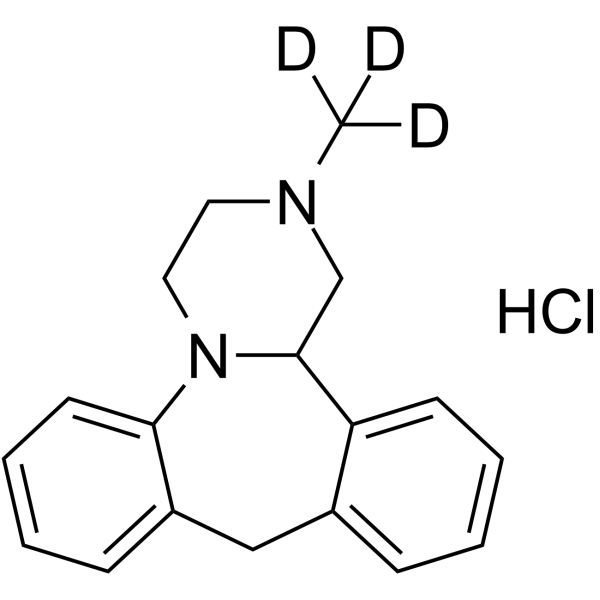
Mianserin-d3 hydrochloride is the deuterium labeled Mianserin. Mianserin (Mianserine) is an orally active H1 receptor antagonist. Mianserin can activate κ-opioid receptor and octopamine receptor. Mianserin increases ERK1/2 and CREB phosphorylation, and antagonizes full κ-opioid agonist and Dynorphin A (HY-P1333)-induced MAPK phosphorylation. Mianserin modulates social and exploratory behaviour, raises electroconvulsive thresholds. Mianserin can be used for the research of neurological disease, such as depression and epilepsy .
loading...
    loading...
Cat. No.: HY-100679B
CAS No.: 1821379-62-7
Target:  

Monoamine Oxidase

Research Areas:  

Neurological Disease

(R)-Pirlindole mesylate is selective and reversible a Monoamine oxidase A (MAO-A) inhibitor with an IC50 of 0.43  μM for MAO-A over MAO-B. (R)-Pirlindole mesylate has an antidepressant activity. (R)-Pirlindole mesylate significantly decreases immobility time of the forced swim test and inhibits Reserpine (HY-N0480)-induced palpebral ptosis in behavioural mice models. (R)-Pirlindole mesylate can be used for depression research .
loading...
    loading...
Cat. No.: HY-119980B
CAS No.: 1254-47-3
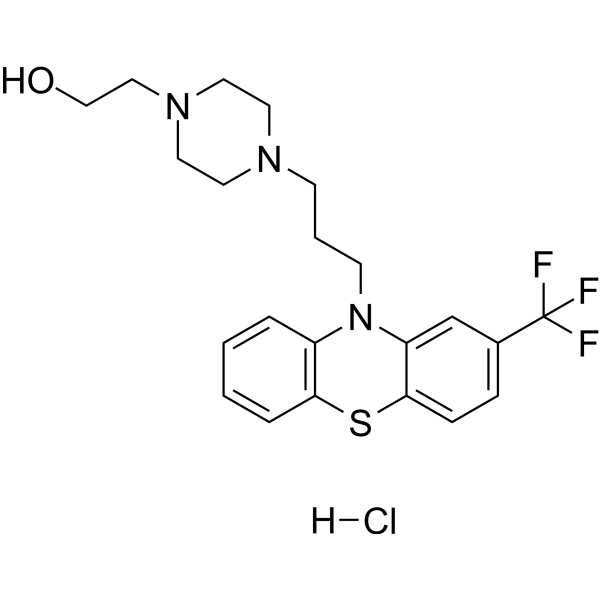
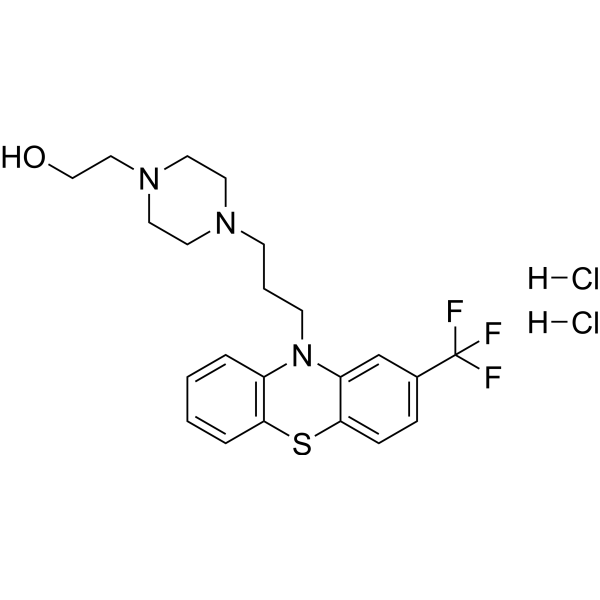
Fluphenazine hydrochloride is a potent, orally active phenothiazine-based dopamine receptor antagonist. Fluphenazine hydrochloride blocks neuronal voltage-gated sodium channels. Fluphenazine hydrochloride acts primarily through antagonism of postsynaptic dopamine-2 receptors in mesolimbic, nigrostriatal, and tuberoinfundibular neural pathways. Fluphenazine hydrochloride can antagonize Methylphenidate-induced stereotyped gnawing and inhibit climbing behaviour in mice. Fluphenazine hydrochloride can be used for researching psychosis and painful peripheral neuropathy associated with diabetes and has potential to inhibit SARS-CoV-2 .
loading...
    loading...
Cat. No.: HY-119980A
CAS No.: 3093-66-1
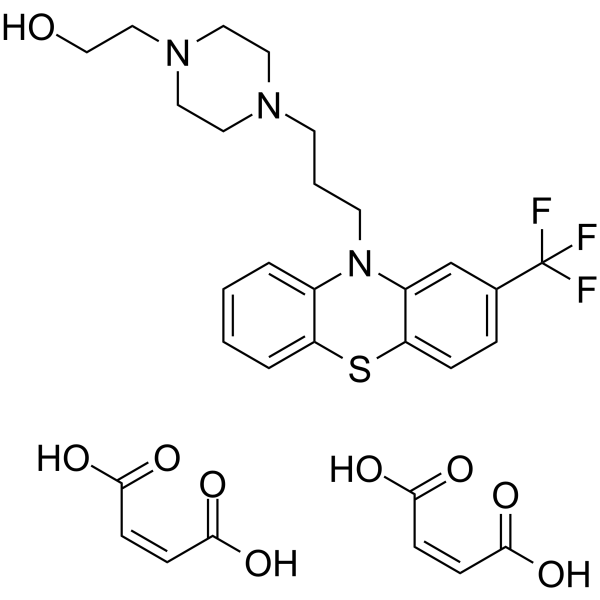
Fluphenazine dimaleate is a potent, orally active phenothiazine-based dopamine receptor antagonist. Fluphenazine dimaleate blocks neuronal voltage-gated sodium channels. Fluphenazine dimaleate acts primarily through antagonism of postsynaptic dopamine-2 receptors in mesolimbic, nigrostriatal, and tuberoinfundibular neural pathways. Fluphenazine dimaleate can antagonize Methylphenidate-induced stereotyped gnawing and inhibit climbing behaviour in mice. Fluphenazine dimaleate can be used for researching psychosis and painful peripheral neuropathy associated with diabetes and has potential to inhibit SARS-CoV-2 .
loading...
    loading...
Cat. No.: HY-106194
CAS No.: 264869-71-8
SLV310 is an orally active dopamine D2 receptor antagonist (Ki: 5 nM) and serotonin reuptake receptor inhibitor. SLV310 antagonizes Apomorphine (HY-12723) induced climbing behaviour and 5-HTP (HY-N0122) induced serotonin syndrome like behaviour in mice (ED50: 5.6 and 5.9 mg/kg, p.o.). SLV310 is an antipsychotic compound and can be used for schizophrenia research .
loading...
    loading...
Cat. No.: HY-172381
Poly(guluronate), low endotoxin is the portion of the Alginate molecule that is responsible for its gelling behaviour. Poly(guluronate), low endotoxin has ionic cross-linking effects .
loading...
    loading...
Cat. No.: HY-107095
CAS No.: 724471-26-5
Synonyms: R317573; CRA5626; TAI041
Target:  

CRFR

Research Areas:  

Neurological Disease

JNJ19567470 (R317573) is a selective, non-peptidergic CRF type 1 receptor (CRF1) antagonist. JNJ19567470 blocks NaLac-induced panic-like behaviour and cardiovascular responses. JNJ19567470 decreases regional glucose utilization in the amygdala, and attenuates anxiety responses .
loading...
    loading...
Cat. No.: HY-114085
CAS No.: 192384-87-5
Target:  

Dopamine Receptor

Research Areas:  

Neurological Disease

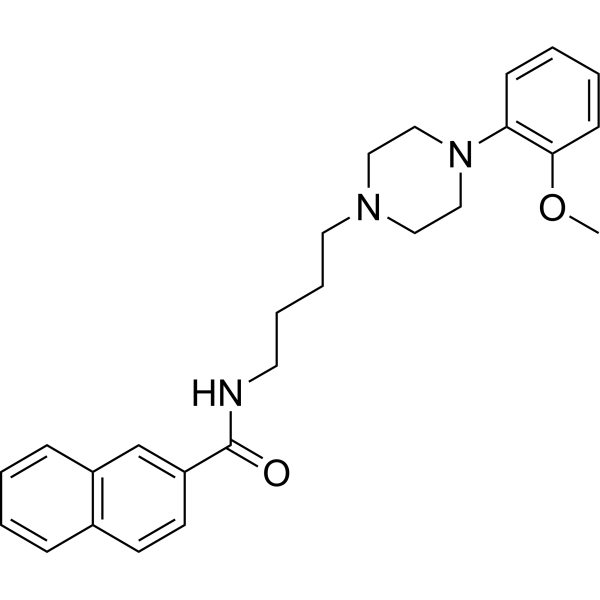
BP 897 is a potent and partial dopamine D3 receptor agonist and a weak D2 receptor antagonist. BP 897 displays a high affinity at the dopamine D3 receptor (Ki=0.92 nM) and a 70 times lower affinity at the D2 receptor (Ki=61 nM) .
loading...
    loading...
Cat. No.: HY-137231A
CAS No.: 1431628-22-6
Target:  

nAChR

Research Areas:  

Neurological Disease

(S)-UFR2709 is a competitive nAChR antagonist and displays higher affinity for α4β2 nAChRs than for α7 nAChRs. (S)-UFR2709 decreases anxiety and reduces ethanol consumption and ethanol preference in alcohol-preferring rats. (S)-UFR2709 acts as an anxiolytic agent and can be used for the study of nicotine addiction .
loading...
    loading...
Cat. No.: HY-10512S
CAS No.: 1216908-63-2
Synonyms: AR 0133418-d3; GSK 3β inhibitor VIII-d3; AR 014418-d3
AR-A014418-d3 is the deuterium labeled AR-A014418. AR-A014418 is a potent, selective, and ATP-competitive GSK3β inhibitor (IC50=104 nM; Ki=38 nM) .
loading...
    loading...
Cat. No.: HY-119980BS
Fluphenazine-d6 (hydrochloride) is deuterium labeled Fluphenazine (hydrochloride). Fluphenazine hydrochloride is a potent, orally active phenothiazine-based dopamine receptor antagonist. Fluphenazine hydrochloride blocks neuronal voltage-gated sodium channels. Fluphenazine hydrochloride acts primarily through antagonism of postsynaptic dopamine-2 receptors in mesolimbic, nigrostriatal, and tuberoinfundibular neural pathways. Fluphenazine hydrochloride can antagonize Methylphenidate-induced stereotyped gnawing and inhibit climbing behaviour in mice. Fluphenazine hydrochloride can be used for researching psychosis and painful peripheral neuropathy associated with diabetes and has potential to inhibit SARS-CoV-2 .
loading...
    loading...
Cat. No.: HY-A0081R
CAS No.: 146-56-5
Fluphenazine (dihydrochloride) (Standard) is the analytical standard of Fluphenazine (dihydrochloride). This product is intended for research and analytical applications. Fluphenazine dihydrochloride is a potent, orally active phenothiazine-based dopamine receptor antagonist. Fluphenazine dihydrochloride blocks neuronal voltage-gated sodium channels. Fluphenazine dihydrochloride acts primarily through antagonism of postsynaptic dopamine-2 receptors in mesolimbic, nigrostriatal, and tuberoinfundibular neural pathways. Fluphenazine dihydrochloride can antagonize Methylphenidate-induced stereotyped gnawing and inhibit climbing behaviour in mice. Fluphenazine dihydrochloride can be used for researching psychosis and painful peripheral neuropathy associated with diabetes and has potential to inhibit SARS-CoV-2 .
loading...
    loading...
Cat. No.: HY-119468R
CAS No.: 32359-34-5
Medifoxamine (Standard) is the analytical standard of Medifoxamine (HY-119468). This product is intended for research and analytical applications. Medifoxamine is an orally active monoamine reuptake inhibitor and antidepressant. Medifoxamine preferentially inhibits presynaptic dopamine reuptake. Medifoxamine acts as an intraocular pressure-lowering agent to reduce intraocular pressure, and also functions as a miotic agent to decrease pupil diameter. Medifoxamine exhibits characteristic properties of antidepressant compounds, including preventing hypothermia induced by Reserpine (HY-N0480) or Apomorphine (HY-12723), potentiating the toxic effects of Yohimbine (HY-N0127) in mice, and reducing immobility behavior in mice and rats in the "behavioral despair" model. Medifoxamine has no anticholinergic activity. Medifoxamine can be used in research related to depression .
loading...
    loading...

