

105 Results for "

catecholamine,

" in MedChemExpress (MCE) Product Catalog:
Products (105)

105 Results for "catecholamine," in MCE Product Catalog:

1
1 Cited Publications
Cat. No.: HY-W041498
CAS No.: 645-33-0
Research Areas:  

Neurological Disease

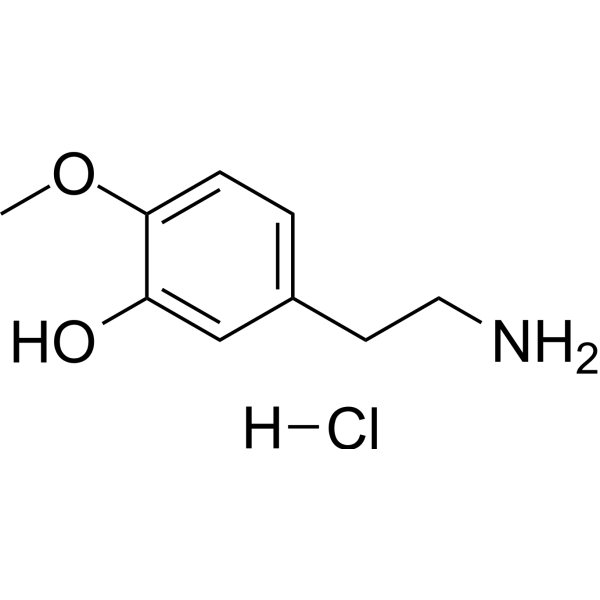
4-O-Methyldopamine hydrochloride is a catecholamine compound that has an inhibitory effect on dihydropteridine reductase .
loading...
    loading...
1
1 Cited Publications
Cat. No.: HY-B1008A
CAS No.: 138-84-1
Synonyms: PABA potassium; p-Aminobenzoic acid potassium
4-Aminobenzoic acid (PABA) potassium is a modifier of catecholamine oxidation reactions. 4-Aminobenzoic acid potassium is promising for research of Parkinson's disease and hypertension .
loading...
    loading...
1
1 Cited Publications
Cat. No.: HY-P81085
Synonyms: Beta 2-adrenergic receptor; beta 2 Adrenergic Receptor; ADRB2R; ADRBR; ADRB2_HUMAN; Adrenergic beta 2 receptor surface; B2AR; BAR; Beta 2 adrenoreceptor; BETA2AR; Catecholamine receptor; beta2-adrenergic receptor. β2-adrenergic receptor;

Host:  

Rabbit

Application:  

WB

Reactivity:  

Human, Mouse, Rat

loading...
    loading...
1
1 Cited Publications
Cat. No.: HY-113416R
CAS No.: 651-48-9
Synonyms: DHEA sulfate (Standard); Prasterone sulfate (Standard)
Dehydroepiandrosterone sulfate (DHEA sulfate; Prasterone sulfate) (Standard) is the analytical standard of Dehydroepiandrosterone sulfate (HY-113416). This product is intended for research and analytical applications. Dehydroepiandrosterone sulfate (DHEA sulfate; Prasterone sulfate) is a neurosteroid and the main secretion product of the adrenal gland. Dehydroepiandrosterone sulfate has both non-competitive antagonist activity of GABAA receptor and agonist activity of σ1 receptor. Dehydroepiandrosterone sulfate can partially penetrate the blood-brain barrier, inhibit GABAA receptor-mediated chloride influx, enhance NMDA receptor activity through σ1 receptors, exert anti-inflammatory, anti-glucocorticoid and antidepressant effects, and increase convulsive sensitivity. Dehydroepiandrosterone sulfate participates in neuroprotection, neurite growth regulation and catecholamine secretion regulation, and can be used in the study of depression, post-traumatic stress disorder (PTSD), Alzheimer's disease, etc. Dehydroepiandrosterone sulfate may also be a biomarker for cardiovascular disease mortality, and its concentration is independently and negatively correlated with mortality .
loading...
    loading...
Cat. No.: HY-B1294
CAS No.: 60719-84-8
Synonyms: Inamrinone
Research Areas:  

Cardiovascular Disease

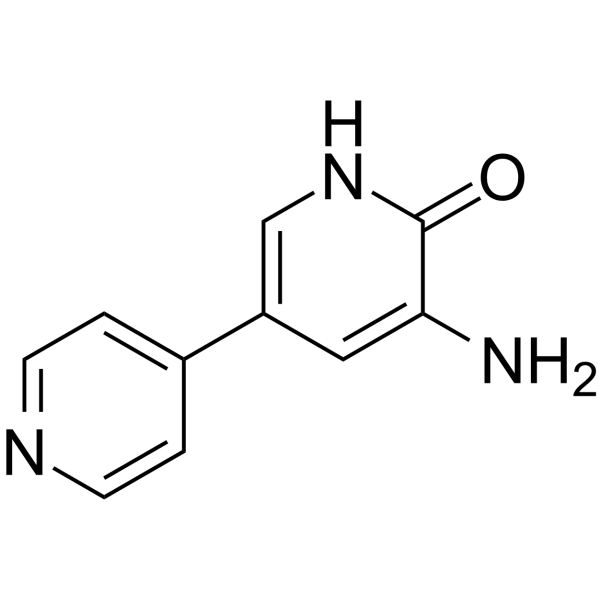
Amrinone (Inamrinone) is a positive inotropic-vasodilator agent. Amrinone is a selective phosphodiesterase III inhibitor that increases cyclic adenosine monophosphate by preventing its breakdown. Amrinone is also an orally active, non-glycosidic and non-catecholamine cardiotonic agent .
loading...
    loading...
Cat. No.: HY-N7142S
CAS No.: 1219803-04-9
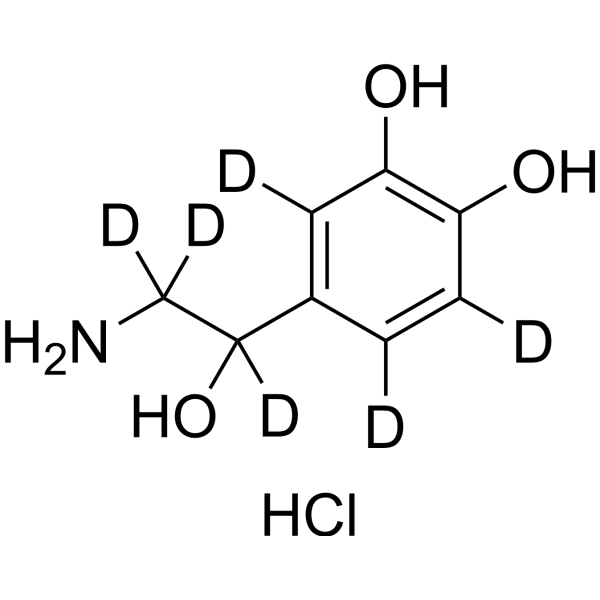
DL-Norepinephrine-d6 hydrochloride is the deuterium labeled DL-Norepinephrine hydrochloride. DL-Norepinephrine hydrochloride is an external racemic catecholamine neurotransmitter, which is an equal mixture of the left-handed (L-, with activity) and right-handed (D-, with very low or no activity) stereoisomers. DL-Norepinephrine hydrochloride after being labeled with tritium can be used as a tracer for the research on Parkinson's disease .
loading...
    loading...
Cat. No.: HY-B0451AR
CAS No.: 62-31-7
Synonyms: ASL279 (Standard)
Dopamine (hydrochloride) (Standard) is the analytical standard of Dopamine (hydrochloride). This product is intended for research and analytical applications. Dopamine hydrochloride (ASL279) is a catecholamine neurotransmitter that is produced in the substantia nigra, ventral tegmental area, and hypothalamus of the brain. Dopamine hydrochloride (ASL279) plays several important roles in the brain and body . Dopamine hydrochloride (ASL279) acts through D2 dopamine receptors to induce endocytosis of VEGFR2, which is critical for promoting angiogenesis .
loading...
    loading...
Cat. No.: HY-B1231
CAS No.: 543-15-7
Synonyms: RP-2831 hydrochloride
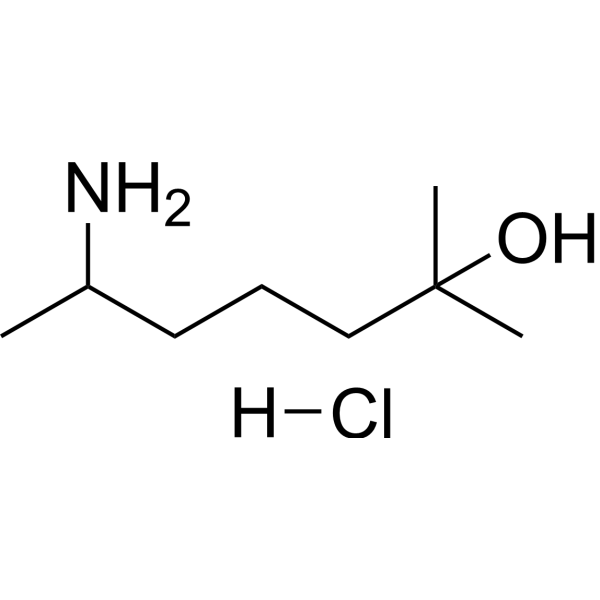
Heptaminol (RP-2831) hydrochloride is a vasoconstrictor used in the study of hypotension, especially orthostatic hypotension. Heptaminol is also a skin cancer proliferation inhibitor that inhibits immune inflammation induced by the tumor promoting factor 12-O-tetradecanoylphorbol-13-acetate (TPA) in an NO-dependent manner. Heptaminol also acts as a sympathomimetic amine, exerting indirect sympathetic effects. Heptaminol is also an antagonist of catecholamine release and uptake and can increase intracellular free calcium levels .
loading...
    loading...
Cat. No.: HY-100634
CAS No.: 14133-90-5
Synonyms: (±)-4-hydroxy Propranolol hydrochloride
Target:  

Adrenergic Receptor

Research Areas:  

Cardiovascular Disease

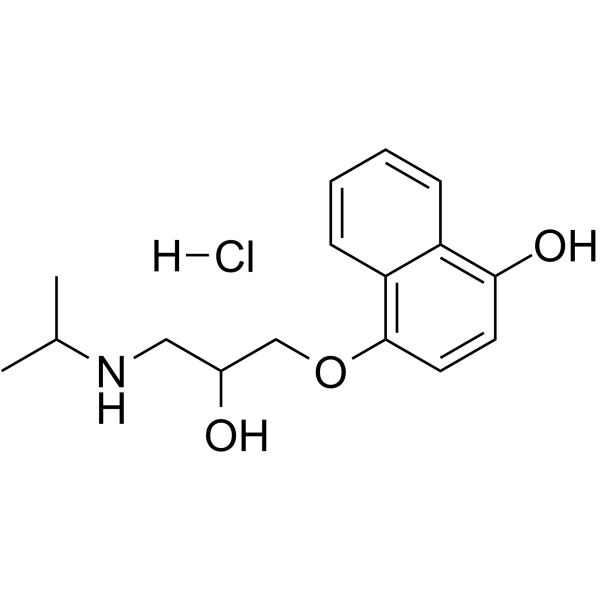
4-Hydroxypropranolol hydrochloride is a non-cardiac selective β-adrenergic receptor antagonist and a metabolite produced after oral administration of Propranolol (HY-B0573B). 4-Hydroxypropranolol hydrochloride also acts as a membrane stabilizer and possesses intrinsic sympathomimetic inhibitory activity. 4-Hydroxypropranolol hydrochloride blocks β-adrenergic receptors to antagonize the effects of catecholamines, acts as a partial β-adrenergic receptor agonist, and induces membrane stabilization. 4-Hydroxypropranolol hydrochloride alters heart rate, left ventricular contractility, and atrioventricular conduction time. 4-Hydroxypropranolol hydrochloride can be used in research related to cardiovascular and cerebrovascular diseases .
loading...
    loading...
Cat. No.: HY-113257
CAS No.: 38339-02-5
Synonyms: DA-4S; Dopamine 4-Sulfate
Target:  

Drug Metabolite

Research Areas:  

Neurological Disease

Dopamine 4-sulfate (DA-4S) is an inactive metabolite of the catecholamine dopamine. It is formed from dopamine by the sulfotransferase (SULT) isoform SULT1A3. Dopamine 4-O-sulfate is found at lower levels in the brain and circulation than dopamine 3-O-sulfate.
loading...
    loading...
Cat. No.: HY-148165
CAS No.: 26524-60-7
Purity:  ≥98.0%
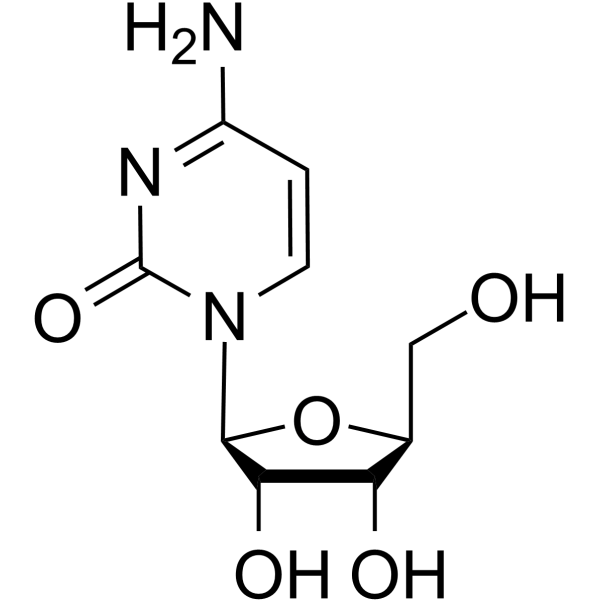
L-Cytidine is the L-configurational form of Cytidine (HY-B0158). L-Cytidine is a pyrimidine nucleoside and a component of RNA. Cytidine regulates glial glutamate cycling, affects cephalin metabolism, catecholamine synthesis and mitochondrial function. L-Cytidine interacts with HSA, which may alter the structure and function of HSA .
loading...
    loading...
Cat. No.: HY-B0451AS7
CAS No.: 2193106-55-5
Synonyms: ASL279-d5 hydrochloride
Dopamine-d5 (hydrochloride) is the deuterium labeled Dopamine (hydrochloride). Dopamine hydrochloride (ASL279) is a catecholamine neurotransmitter that is produced in the substantia nigra, ventral tegmental area, and hypothalamus of the brain. Dopamine hydrochloride (ASL279) plays several important roles in the brain and body . Dopamine hydrochloride (ASL279) acts through D2 dopamine receptors to induce endocytosis of VEGFR2, which is critical for promoting angiogenesis .
loading...
    loading...
Cat. No.: HY-P1271
CAS No.: 142211-96-9
Synonyms: Catestatin (cattle)
Target:  

nAChR

Research Areas:  

Cardiovascular Disease

Catestatin is a 21-amino acid residue, cationic and hydrophobic peptide. Catestatin is an endogenous peptide that regulates cardiac function and blood pressure . Catestatin is a non-competitive nicotinic antagonist acting through nicotinic acetylcholine receptors (nAChRs) to inhibit catecholamine release .
loading...
    loading...
Cat. No.: HY-B0158S7
Synonyms: Cytosine β-D-riboside-13C9; Cytosine-1-β-D-ribofuranoside-13C9
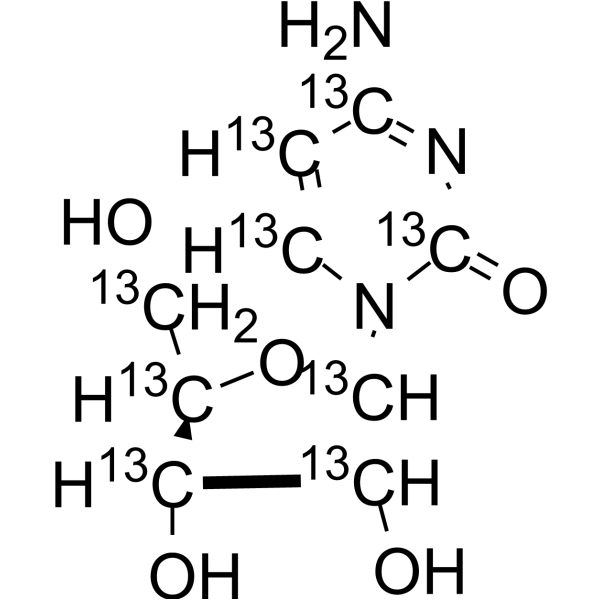
Cytidine- 13C9 (Cytosine β-D-riboside- 13C9) is 13C labeled Cytidine (HY-B0158). Cytidine is a pyrimidine nucleoside and acts as a component of RNA. Cytidine is a precursor of uridine. Cytidine controls neuronal-glial glutamate cycling, affecting cerebral phospholipid metabolism, catecholamine synthesis, and mitochondrial function .
loading...
    loading...
Cat. No.: HY-P1831
CAS No.: 150238-87-2
Synonyms: ProAM N20, Human; PAMP-20, human
Proadrenomedullin (1-20), human is a potent hypotensive and catecholamine release–inhibitory peptide released from chromaffin cells. Proadrenomedullin (1-20) inhibits catecholamine secretion in PC12 pheochromocytoma cells (IC50 ≈ 350 nM) by suppressing Na +/Ca 2+ influx and blocking desensitization. Proadrenomedullin (1-20), human specifically acts on nicotinic cholinergic receptors in a non competitive manner. Proadrenomedullin (1-20), human can be used for research on conditions such as hypertension .
loading...
    loading...
Cat. No.: HY-B0158S6
Synonyms: Cytosine β-D-riboside-15N3; Cytosine-1-β-D-ribofuranoside-15N3
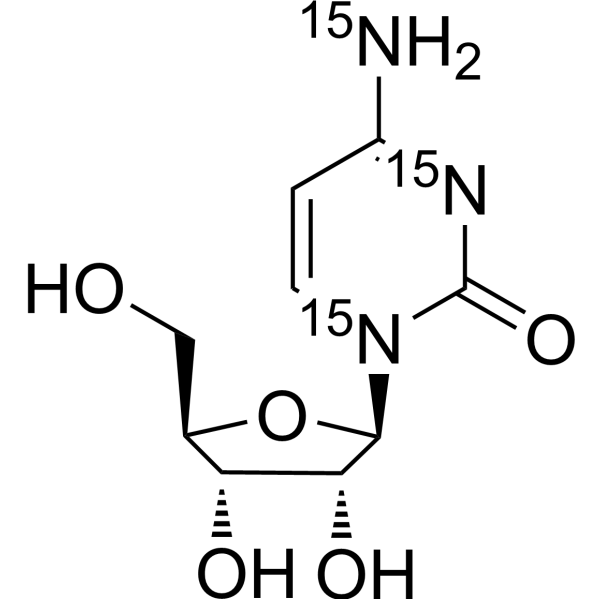
Cytidine- 15N3 is the 15N labeled Cytidine . Cytidine is a pyrimidine nucleoside and acts as a component of RNA. Cytidine is a precursor of uridine. Cytidine controls neuronal-glial glutamate cycling, affecting cerebral phospholipid metabolism, catecholamine synthesis, and mitochondrial function .
loading...
    loading...
Cat. No.: HY-N7142S3
CAS No.: 1219908-83-4
DL-Norepinephrine-d6 is the deuterium labeled DL-Norepinephrine. DL-Norepinephrine is an external racemic catecholamine neurotransmitter, which is an equal mixture of the left-handed (L-, with activity) and right-handed (D-, with very low or no activity) stereoisomers. DL-Norepinephrine after being labeled with tritium can be used as a tracer for the research on Parkinson's disease .
loading...
    loading...
Cat. No.: HY-B0158R
CAS No.: 65-46-3
Synonyms: Cytosine β-D-riboside (Standard); Cytosine-1-β-D-ribofuranoside (Standard)
Cytidine (Standard) is the analytical standard of Cytidine. This product is intended for research and analytical applications. Cytidine is a pyrimidine nucleoside and acts as a component of RNA. Cytidine is a precursor of uridine. Cytidine controls neuronal-glial glutamate cycling, affecting cerebral phospholipid metabolism, catecholamine synthesis, and mitochondrial function . In Vivo:Cytidine decreases glutamate/glutamine levels and induces earlier improvement of depressive symptoms .
loading...
    loading...
Cat. No.: HY-128855
CAS No.: 147025-53-4
Purity:  98.75%
Synonyms: WAL 2014 FU free base
Target:  

mAChR

Research Areas:  

Neurological Disease

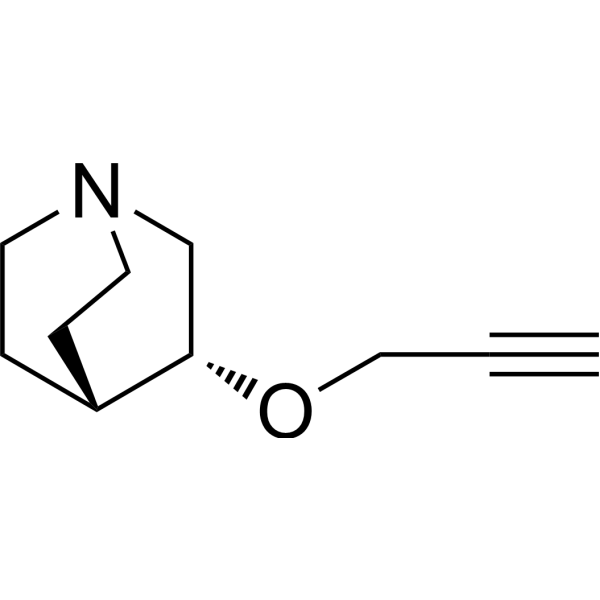
Talsaclidine (WAL 2014 FU) is an orally active, blood-brain barrier-permeable muscarinic M1 receptor agonist. Talsaclidine activates the sympathetic nervous system and promotes adrenal catecholamine release in vivo. Talsaclidine exhibits extensive tissue distribution, kidney-dominant excretion and brain penetration properties, and it can be used in studies related to cholinergic signaling, cognitive function and Alzheimer's disease .
loading...
    loading...
Cat. No.: HY-W010989
CAS No.: 72957-37-0
Gly-His-Lys acetate is a natural, circulating regulatory and antimicrobial tripeptide derived from extracellular matrix proteins. Gly-His-Lys acetate binds Cu 2+ to support copper enzyme activation, antioxidant processes, cellular bioenergetics, and the synthesis of elastin, collagen and catecholamines. Gly-His-Lys acetate regulates cell growth, differentiation and tissue repair, and exerts regenerative, anxiolytic, anti-inflammatory, analgesic and immunosuppressive activities. Gly-His-Lys acetate induces liver degenerative changes. Gly-His-Lys acetate can be used for the research of infections, anxiety, pain-related behaviors and immune-associated liver diseases .
loading...
    loading...

