



107 Results for "

classical

" in MedChemExpress (MCE) Product Catalog:
Products (107)

107 Results for "classical" in MCE Product Catalog:

Cat. No.: HY-P99613
CAS No.: 2231068-83-8
Synonyms: MK-4280; Mavezelimab

Target:  

LAG-3

Research Areas:  

Cancer

Favezelimab (MK-4280) is a humanized monoclonal antibody targeting LAG-3. Favezelimab blocks the interaction between LAG-3 and its ligand, MHC class II molecules. Favezelimab is applicable to research on relapsed/refractory classical Hodgkin lymphoma, relapsed/refractory diffuse large B-cell lymphoma, and relapsed/refractory indolent B-cell lymphoma . For the isotype control of Favezelimab, refer to Human IgG4 (S228P) kappa, Isotype Control (HY-P99003).
loading...
    loading...
Cat. No.: HY-145720
CAS No.: 1639264-46-2
Synonyms: ALN-CC5
Cemdisiran (ALN-CC5) is an N-acetylgalactosamine-conjugated RNAi agent and also a complement component C5 inhibitor. Cemdisiran targets C5 mRNA, cleaves C5 mRNA via the endogenous RNA interference pathway, and inhibits the production of C5 protein in the liver. Cemdisiran exerts a dose-dependent inhibitory effect on total C5 concentrations in cynomolgus monkeys. When used in combination with Pozelimab (HY-P99786) in cynomolgus monkeys, Cemdisiran achieves a more sustained and complete inhibitory effect on complement activity. Cemdisiran can be used in the research of paroxysmal nocturnal hemoglobinuria and other complement-mediated diseases .
loading...
    loading...
Cat. No.: HY-113435
CAS No.: 70741-38-7
Purity:  93.63%
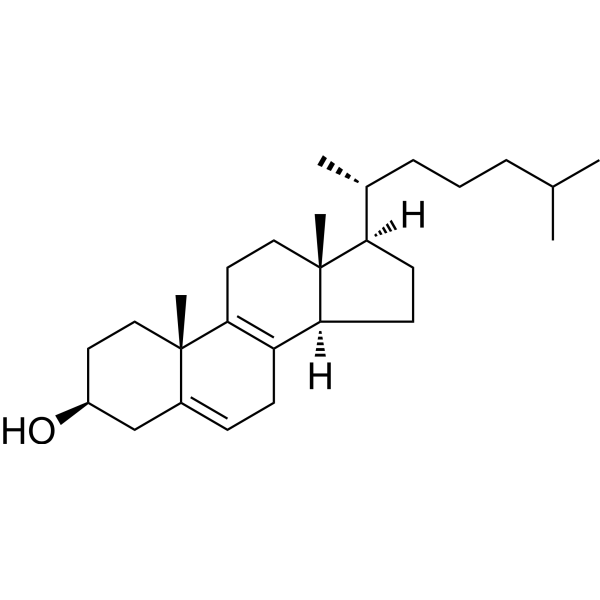
8-Dehydrocholesterol elevated concentration is one of the diagnostic biochemical hallmarks of classical Smith-Lemli-Opitz syndrome (SLOS).
loading...
    loading...
Cat. No.: HY-P990025
CAS No.: 2579031-19-7
Synonyms: ARGX-117

Target:  

Complement System

Research Areas:  

Inflammation/Immunology

Empasiprubar (ARGX-117) is a humanized inhibitory monoclonal antibody targeting complement C2. Empasiprubar binds to the Sushi-2 domain of C2, preventing the formation of C3 pre convertase and inhibiting the activation of classical and lectin pathways upstream of C3 activation. Empasiprubar can prevent complement mediated autoimmune hemolytic anemia and antibody mediated organ transplant rejection. Empasiprubar can prevent neuroglial lymphoconjunctival injury in GM1 antibody mediated mouse models .
loading...
    loading...
Cat. No.: HY-153598
CAS No.: 2782022-40-4
Research Areas:  

Inflammation/Immunology Cancer

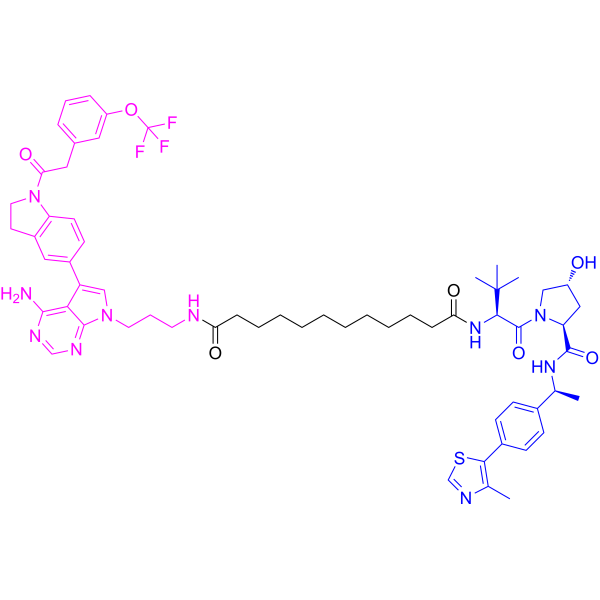
LD4172 is a selective RIPK1 PROTAC degrader with a Ki of 4.8 nM. LD4172 induces RIPK1 protein degradation via ternary complex formation with RIPK1 and VHL E3 ligase, driving ubiquitination and proteasomal breakdown. LD4172 abrogates TNF-induced classical NF-κB signaling in TRAF2-deficient cells, impairing IκBα phosphorylation and degradation, and reducing IL-8 production. LD4172 induces apoptosis and immunogenic cell death in tumor cells, enhances tumor-infiltrating lymphocyte responses, and sensitizes tumors to anti-PD1 therapy. LD4172 acts as a chemical probe for investigating RIPK1 scaffolding functions. LD4172 can be used for the research of melanoma, colon cancer .
loading...
    loading...
Cat. No.: HY-N2996
CAS No.: 107900-76-5
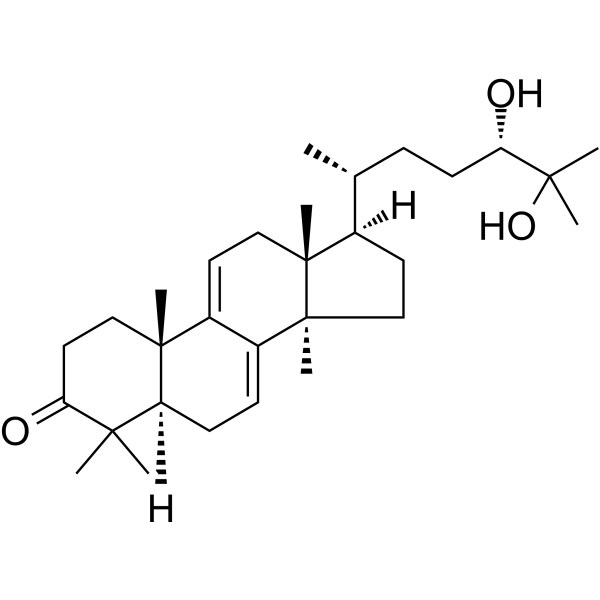
Ganodermanondiol is a melanogenesis inhibitor isolated from the Ganoderma lucidum .Ganodermanondiol exhibits potent cytoprotective effects on tert-butyl hydroperoxide-induced hepatotoxicity . Ganodermanondiol shows significant anti-HIV-1 protease activity with an IC50 of 90 μM . Ganodermanondiol exhibits a strong anticomplement activity against the classical pathway of the complement system with an IC50 of 41.7μM .
loading...
    loading...
Cat. No.: HY-161765
Target:  

HSP STAT

Research Areas:  

Cancer

iHSP110-33 is an inhibitor for heat shock protein 110 (HSP110). iHSP110-33 exhibits antitumor efficacy agaisnt large B-cell lymphoma and classical Hodgkin lymphoma. iHSP110-33 shows a synergistic effect with Selinexor (HY-17536), inhibits the STAT6 phosphorylation, and enhances its antitumor activity. .
loading...
    loading...
Cat. No.: HY-P10600A
Target:  

Ras

Research Areas:  

Others

BIMAX2 acetate is a high affinity nuclear localization signal (NLS) peptide. BIMAX2 acetate can mimic the activity of the classical nuclear localization signal (cNLS) and competitively bind to importin α, thereby inhibiting the binding of cNLS-cargo proteins to importin α. BIMAX2 acetate can be used to study the role of RBBP4 in regulating nuclear import efficiency and cell senescence .
loading...
    loading...
Cat. No.: HY-NP0194C
C1q Protein (rat) is a complement protein and is a recognition molecule of the classical pathway, performs a diverse range of complement and non-complement functions. C1q Protein (rat) binds various ligands derived from self, non-self, and altered self and modulate the functions of immune
and non-immune cells. C1q Protein (rat) can be used for the research of mutiple disease .
loading...
    loading...
Cat. No.: HY-P99109
CAS No.: 2259860-24-5
Synonyms: GLS-010; AB-122; WBP-3055

Target:  

PD-1/PD-L1

Research Areas:  

Cancer

Zimberelimab (GLS-010) is a fully human IgG4 anti-PD-1 monoclonal antibody with an EC50 of 210 pM for human PD-1. Zimberelimab effectively blocks the binding of PD-L1 and PD-L2 to cell-surface PD-1 in CHO-S cells, with IC50 values of 580 pM and 670 pM, respectively. Zimberelimab shows antitumor activities, and can be used for various cancers research, including cervical cancer, non-small cell lung cancer and classical Hodgkin’s lymphoma .
loading...
    loading...
Cat. No.: HY-145720A
Purity:  96.02%
Synonyms: ALN-CC5 sodium
Cemdisiran sodium (ALN-CC5 sodium) is an N-acetylgalactosamine-conjugated RNAi agent and also a complement component C5 inhibitor. Cemdisiran sodium targets C5 mRNA, cleaves C5 mRNA via the endogenous RNA interference pathway, and inhibits the production of C5 protein in the liver. Cemdisiran sodium exerts a dose-dependent inhibitory effect on total C5 concentrations in cynomolgus monkeys. When used in combination with Pozelimab (HY-P99786) in cynomolgus monkeys, Cemdisiran sodium achieves a more sustained and complete inhibitory effect on complement activity. Cemdisiran sodium can be used in the research of paroxysmal nocturnal hemoglobinuria and other complement-mediated diseases .
loading...
    loading...
Cat. No.: HY-P10827A
Target:  

Complement System

Research Areas:  

Inflammation/Immunology

PIC1 PA TFA is the trifluoroacetate salt form of PIC1 PA (HY-P10827). PIC1 PA TFA is a 15-amino acid peptide that is a potent PIC1 analog that inhibits classical complement activation .
loading...
    loading...
Cat. No.: HY-131768
CAS No.: 36940-87-1
Purity:  ≥99.0%
Target:  

Cholinesterase (ChE)

Research Areas:  

Others

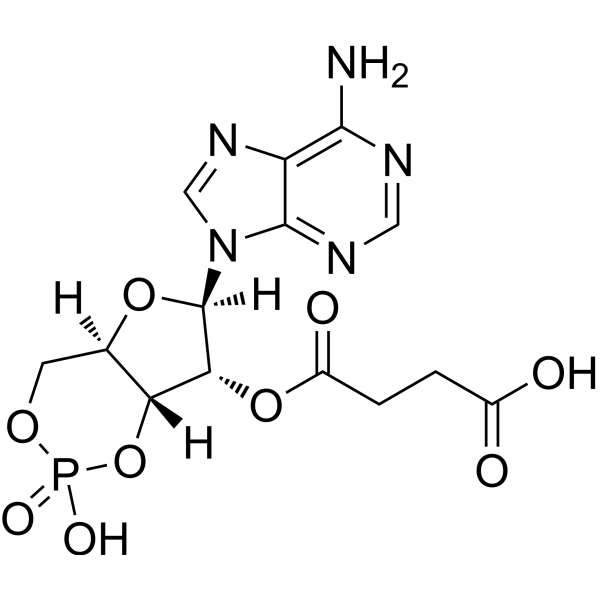
2'-O-Succinyl-cAMP is a cAMP analog that can be covalently coupled to acetylcholinesterase. 2'-O-Succinyl-cAMP conjugate has been used as tracers in a classical heterogeneous competitive enzyme immunoassay allowing the determination of cAMP .
loading...
    loading...
Cat. No.: HY-D1387
CAS No.: 2080300-52-1
Target:  

Fluorescent Dye

Research Areas:  

Cancer

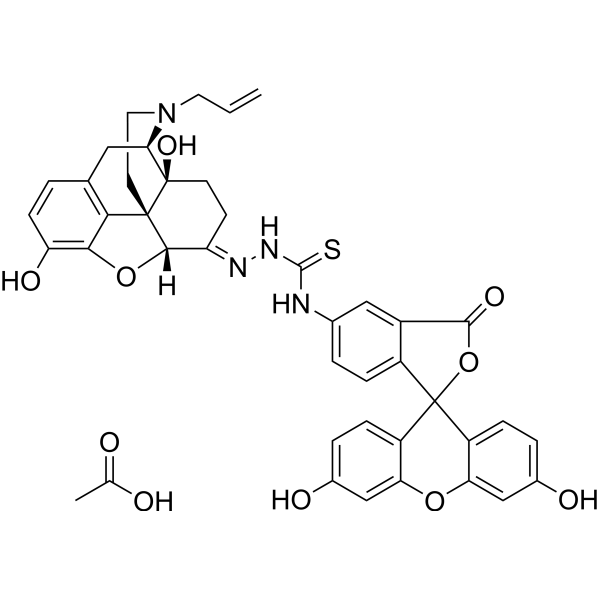
Naloxone fluorescein acetate is a fluorescently labeled naloxone probe used for detecting Opioid Receptor expression. Naloxone fluorescein acetate generates fluorescent signals via flow cytometry, enabling indirect evaluation of classical opioid receptor expression. Naloxone fluorescein acetate is applicable to studies related to opioid receptor expression in canine tumor cells .
loading...
    loading...
Cat. No.: HY-P10529
CAS No.: 247185-97-3
Target:  

Trk Receptor

Research Areas:  

Infection

Ganglioside GM1-binding peptide p3 is a synthetic peptide that can specifically bind to the pentasaccharide part of GM1 ganglioside. The dynamic transformation of Ganglioside GM1-binding peptide p3 may play an important role in the function of GM1 as a multiple receptor, such as in the classical pathway of cholera toxin infection. Ganglioside GM1-binding peptide p3 can be used to study the interaction between GM1 and its ligands .
loading...
    loading...
Cat. No.: HY-124157
CAS No.: 433690-62-1
Purity:  99.78%
Target:  

Melanopsin Receptor

Research Areas:  

Neurological Disease

AA41612 is a melanopsin (Opn4) inhibitor with an IC50 of 15.8 nM, a Ki of 0.43 nM, and a Kd of 0.28 nM. AA41612 competes with retinal for binding to melanopsin, blocks melanopsin activation, and inhibits melanopsin-mediated phototransduction processes without affecting rod- and cone-mediated responses. AA41612 attenuates light-induced melanopsin photocurrents, reduces light-induced cytoplasmic calcium elevation, and weakens high-irradiance pupillary light reflex in mice with induced classical photoreceptor degeneration. AA41612 can be used in studies related to migraine and photophobia .
loading...
    loading...
Cat. No.: HY-P10827
CAS No.: 1356469-36-7
Target:  

Complement System

Research Areas:  

Inflammation/Immunology

PIC1 PA, a 15 amino-acid peptide, is a potent PIC1 analog that inhibits classical pathway mediated complement activation. PIC1 PA functionally disrupts the C1s-C1r-C1r-C1s/MASPs interaction with collagen-like region (CLR) of C1q/MBL, respectively. PIC1 PA specifically binds to the CLR of C1q and bounds to purified C1q with a mean equilibrium dissociation constant (KD) of 33.3 nM .
loading...
    loading...
Cat. No.: HY-13225A
CAS No.: 15585-43-0
Synonyms: RJR-2403; (E)-Metanicotine
Target:  

nAChR

Research Areas:  

Neurological Disease

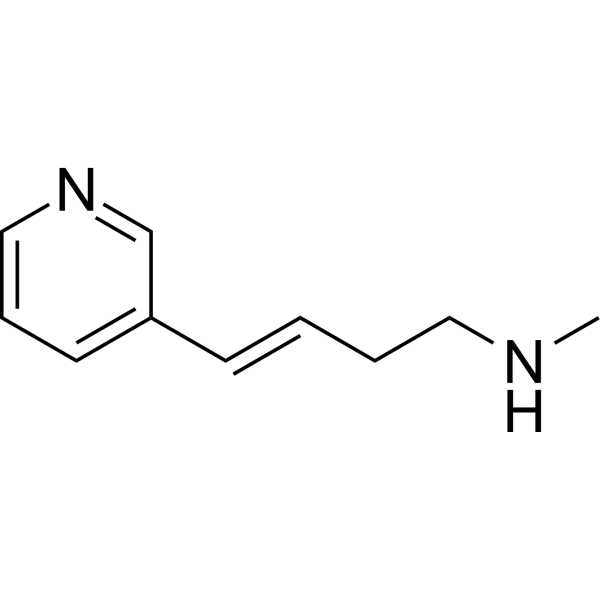
Rivanicline (RJR-2403) is a neuronal nicotinic receptor agonist. Rivanicline is highly selective for the rat brain cortex nAChRs (Ki = 26 nM, EC50 of 732 nM) and α4β2 subtype (Ki = 26 nM, EC50 = 16 μM). Rivanicline can significantly restore the learning impairment and cognitive dysfunction. Rivanicline can be used for the study of neurodegenerative diseases (such as schizophrenia or Alzheimer's disease) .
loading...
    loading...
Cat. No.: HY-118816
CAS No.: 714966-38-8
Synonyms: 11-epi PGF2α-EA; 11β-PGF2α-EA; 11β-Prostamide F2α
Target:  

Drug Metabolite

Research Areas:  

Metabolic Disease

11β-Prostaglandin F2α ethanolamide (11β-PGF2α-EA) is the theoretical hepatic metabolite of PGD2-EA, produced during COX-2 metabolism of the endogenous cannabinoid AEA which is found in brain, liver, and other mammalian tissues.1 AEA can be used directly by COX-2 and specific PG synthase to produce ethanolamide congeners of the classical PGs. PGD2-EA is formed in activated RAW 264.7 cells treated with AEA.
loading...
    loading...
Cat. No.: HY-P1436
CAS No.: 11076-29-2
Target:  

HIV

Research Areas:  

Infection

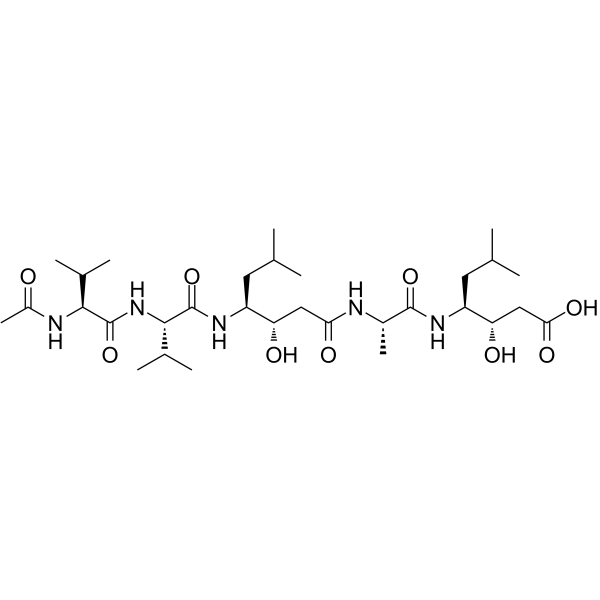
Acetyl-pepstatin is a potent classical inhibitor of aspartic proteases (PRs) with XMRV PR and HIV-1 PR Ki values of 712 nM and 13 nM .
loading...
    loading...

