107 Results for "

ester volatile compound

" in MedChemExpress (MCE) Product Catalog:
Products (107)

107 Results for "ester volatile compound" in MCE Product Catalog:

Cat. No.: HY-W576589
CAS No.: 515-00-4
Target:  

Bacterial

Research Areas:  

Others

(±)-Myrtenol is a volatile compound found in Ips shangrila Cognato .
loading...
    loading...
Cat. No.: HY-115051
CAS No.: 100-72-1
Purity:  98.64%
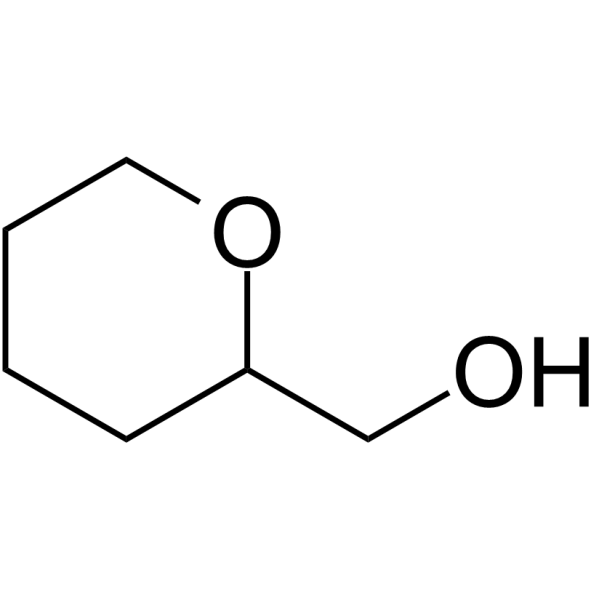
2-Hydroxymethyltetrahydropyran is a volatile compound in Sambucus williamsii (SW) seed oil. SW seed oil has potential antioxidant activity .
loading...
    loading...
Cat. No.: HY-200541
CAS No.: 31499-72-6
Dihydro-α-ionone is a volatile compound found in the essential oil of Persicaria hydropiper L. leaves. The essential oil can inhibit α-glucosidase and α-amylase activities .
loading...
    loading...
Cat. No.: HY-W127442
CAS No.: 2983-38-2
Synonyms: Ethyl 2-Ethylbutyrate
Target:  

Bacterial

Research Areas:  

Others

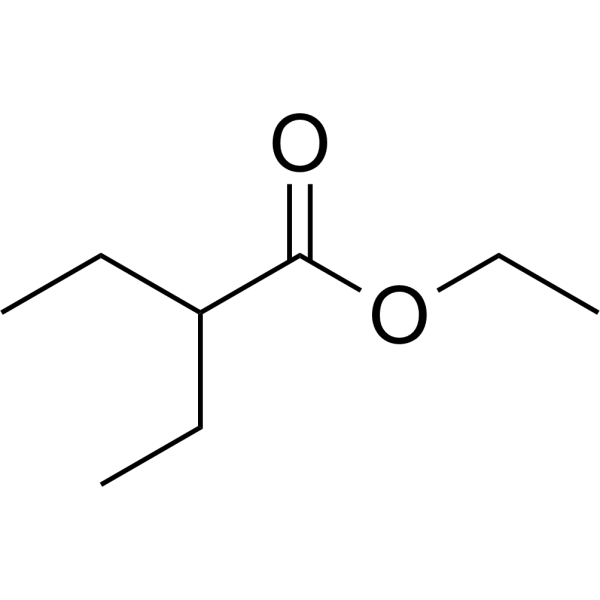
Etzadroxil (Ethyl 2-Ethylbutyrate) is a volatile ester compound. Sulopenem Etzadroxil is an orally available ester proagent form of Sulopenem, an antibiotic with broad-spectrum activities against Gram-positive and Gram-negative bacteria .
loading...
    loading...
Cat. No.: HY-N0349S1
CAS No.: 1581694-95-2
Synonyms: Methyl 4-hydroxybenzoate-13C6
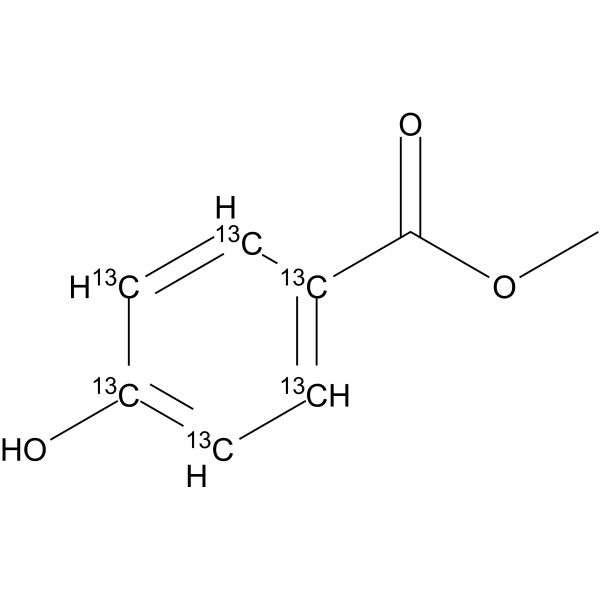
Methyl Paraben- 13C6 (Methyl 4-hydroxybenzoate- 13C6) is a 13C labeled Methyl Paraben (HY-N0349) . Methyl Paraben, isolated from the barks of Tsuga dumosa the methyl ester of p-hydroxybenzoic acid, is a standardized chemical allergen. Methyl Paraben is a stable, non-volatile compound used as an antimicrobial preservative in foods, agents and cosmetics. The physiologic effect of Methyl Paraben is by means of increased histamine release, and cell-mediated immunity .
loading...
    loading...
Cat. No.: HY-W041080R
CAS No.: 1138-52-9
3,5-Di-tert-butylphenol (Standard) is the analytical standard of 3,5-Di-tert-butylphenol (HY-W041080). This product is intended for research and analytical applications. 3,5-Di-tert-butylphenol is an volatile organic compound with anti-biofilm and antifungal activities. 3,5-Di-tert-butylphenol induces accumulation of reactive oxygen species (ROS) in C. albicans cells. 3,5-Di-tert-butylphenol also has antibacterial activities.
loading...
    loading...
Cat. No.: HY-W016638
CAS No.: 479500-35-1
Synonyms: 1-Butyl-1-methylpyrrolidin-1-ium chloride
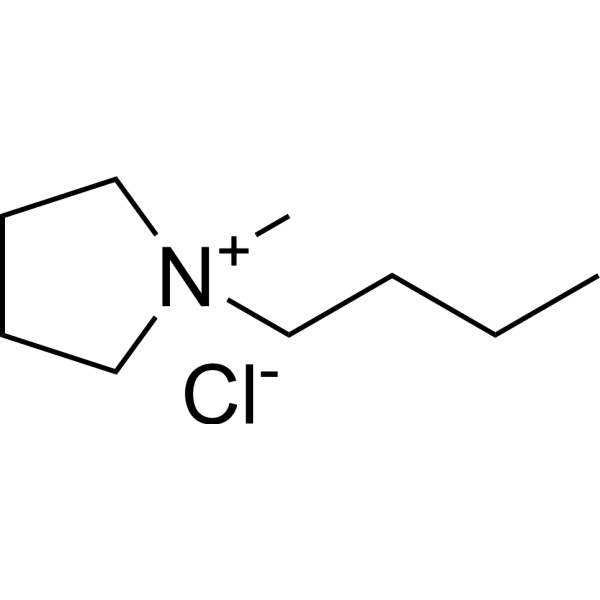
1-Butyl-1-methylpyrrolidin-1-ium chloride, also known as BMIM chloride, belongs to the class of ionic liquids and consists of a positively charged pyrrolidine cation and a negatively charged chloride anion. This compound is commonly used as a solvent for various chemical reactions, especially those involving organic compounds and metals. Its unique physical and chemical properties, such as low volatility, high thermal stability, and tunable solubility, make it useful in a range of applications in catalysis, electrochemistry, and separation science. Furthermore, 1-butyl-1-methylpyrrolidin-1-ium chloride may have potential applications as a green solvent in energy storage devices and various industrial processes.
loading...
    loading...
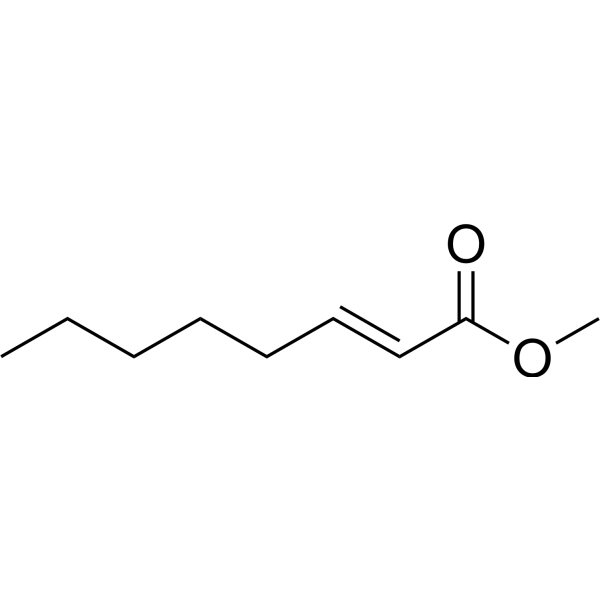
Cat. No.: HY-W039379
CAS No.: 7367-81-9
Synonyms: trans-2-Octenoic acid methyl ester
Methyl (E)-oct-2-enoate is commonly used as an ingredient in perfume, cologne, and food flavor in the perfume and fragrance industry. Its pleasant fragrance and low volatility make it a good choice for adding fruit to various products. A popular choice for incense, in addition to its application in the fragrance and fragrance industry, Methyl (E)-oct-2-enoate is also used as a raw material for the synthesis of other organic compounds, it can be oxidized to form methyl 3-oxobutyrate, Used in the production of pharmaceuticals and agrochemicals. Overall, Methyl (E)-oct-2-enoate is a versatile compound that is used in various industries for its pleasant aroma and reactivity, its fruity and floral notes in fragrances and essences Industry is highly sought after, and its ability to serve as a starting material for other compounds makes it useful in organic synthesis.
loading...
    loading...
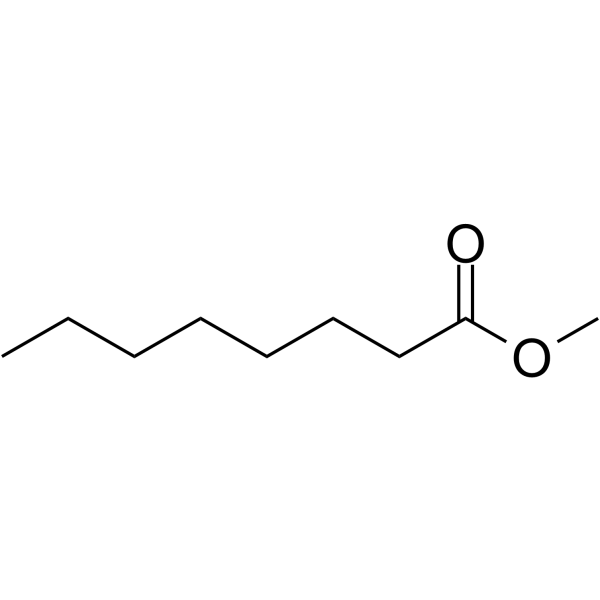
Cat. No.: HY-W087943
CAS No.: 111-11-5
Methyl octanoate is an ester volatile compound with an odor activity value greater than 1. Methyl octanoate helps impart brandy-like and fruity characteristics to persimmon wine. Methyl octanoate has a strong odor of citrus holly, camphor and menthol. Methyl octanoate can serve as an early marker for grape infection by *Coniella vitis*. Methyl octanoate can be used in studies related to grape white rot .
loading...
    loading...
Cat. No.: HY-W088425
CAS No.: 13532-18-8
Methyl 3-(methylthio)propanoate is a volatile compound that can be isolated from green and ripened pineapple .
loading...
    loading...
Cat. No.: HY-N11261
CAS No.: 473-13-2
α-Selinene is a natural product that can be extracted from Psidium guajava L.. α-Selinene is a sesquiterpene compound with volatility .
loading...
    loading...
Cat. No.: HY-W012857
CAS No.: 622-96-8
4-Methylethylbenzene is a volatile aromatic hydrocarbon compound. 4-Methylethylbenzene can be isolated from the essential oil of the peels of Juglans nigra L. .
loading...
    loading...
Cat. No.: HY-W038795
CAS No.: 687-47-8
(S)-Ethyl lactate ((S)-(-)-ethyl lactate) is a volatile compound produced by plant fermentation. (S)-Ethyl lactate cansynergistically attracts palm weevils with specific pheromones and is mainly used for pest monitoring and control research .
loading...
    loading...
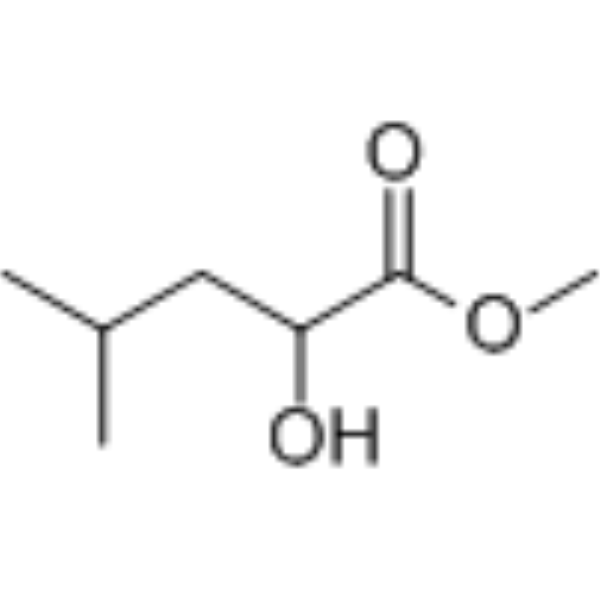
Cat. No.: HY-22167
CAS No.: 40348-72-9
Methyl 2-hydroxy-4-methylvalerate is one of dominant volatile compounds in Zhenjiang aromatic vinegar. Methyl 2-hydroxy-4-methylvalerate is used for charting flavour biosynthesis networks of vinegar microbiota .
loading...
    loading...
Cat. No.: HY-W087058
CAS No.: 1012-72-2
Target:  

Topoisomerase

Research Areas:  

Infection

1,4-Di-tert-butylbenzene is a volatile compound identified in the hexane extracts of corn cob and green millet. 1,4-Di-tert-butylbenzene shows potent inhibition against receptor proteins of Bacterial type II topoisomerase (4PLB and LpxC) in docking analysis .
loading...
    loading...
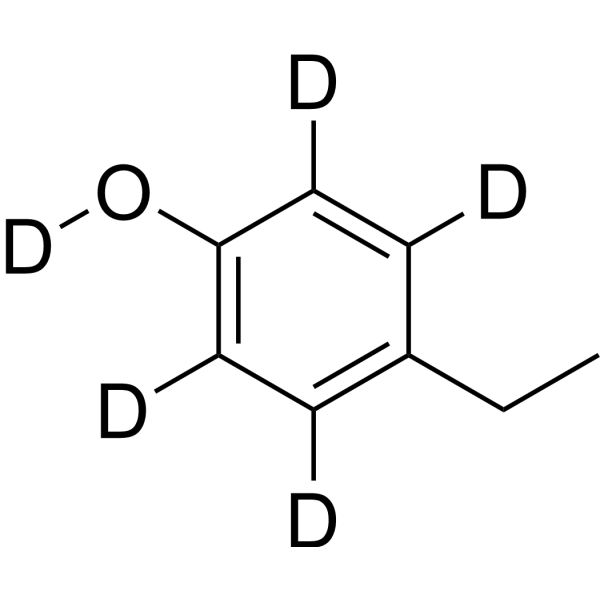
Cat. No.: HY-W012836S
CAS No.: 340256-40-8
4-Ethylphenol-d5 is the deuterium labeled 4-Ethylphenol (HY-W012836). 4-Ethylphenol is a volatile phenolic compound associated with off-odour in wine. 4-Ethylphenol is a phenolic compound that can be synthesized by intestinal flora. 4-Ethylphenol will be converted to 4-ethylphenyl sulfate (HY-W674241) by Lactobacillus plantarum .
loading...
    loading...
Cat. No.: HY-W012836S1
CAS No.: 352431-18-6
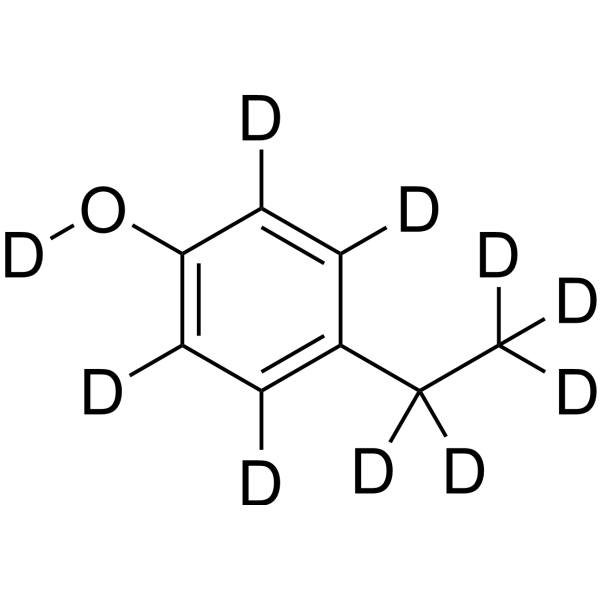
4-Ethylphenol-d10 is the deuterium labeled 4-Ethylphenol (HY-W012836). 4-Ethylphenol is a volatile phenolic compound associated with off-odour in wine. 4-Ethylphenol is a phenolic compound that can be synthesized by intestinal flora. 4-Ethylphenol will be converted to 4-ethylphenyl sulfate (HY-W674241) by Lactobacillus plantarum .
loading...
    loading...
Cat. No.: HY-W012836R
CAS No.: 123-07-9
4-Ethylphenol (Standard) is the analytical standard of 4-Ethylphenol (HY-W012836). This product is intended for research and analytical applications. 4-Ethylphenol is a volatile phenolic compound associated with off-odour in wine. 4-Ethylphenol is a phenolic compound that can be synthesized by intestinal flora. 4-Ethylphenol will be converted to 4-ethylphenyl sulfate (HY-W674241) by Lactobacillus plantarum .
loading...
    loading...
Cat. No.: HY-W010435R
CAS No.: 110-93-0
Synonyms: 6-Methyl-5-hepten-2-one (Standard)
Sulcatone (Standard) (6-Methyl-5-hepten-2-one (Standard)) is the analytical standard of Sulcatone (HY-W010435). This product is intended for research and analytical applications. Sulcatone (6-Methyl-5-hepten-2-one) is a plant-derived volatile organic compound with activities such as insecticidal, antifungal, and blood pressure-lowering effects. Sulcatone also serves as an insect pheromone and an endogenous metabolite, which can be found in feces. Changes in Sulcatone levels can be used for the auxiliary diagnosis of ulcerative colitis.
loading...
    loading...
Cat. No.: HY-W588249
CAS No.: 546-79-2
Sabinene hydrate is a volatile organic compound of a bicyclic monoterpene alcohol. Sabinene hydrate, as a plant secondary metabolite, is naturally present in various plants and their essential oils. Sabinene hydrate exhibits broad-spectrum but varying-intensity antibacterial activity, with the greatest sensitivity to Gram-positive bacteria, especially Bacillus subtilis (MIC = 0.0312 mg/mL) and Staphylococcus aureus (MIC = 0.0625 mg/mL). Sabinene hydrate also shows certain sensitivity to Escherichia coli and Candida albicans, with MIC values of 0.125 mg/mL for both. Sabinene hydrate can be used in the research of the ecological functions of plant defense substances .
loading...
    loading...

