
89 Results for "

fibroblast proliferation

" in MedChemExpress (MCE) Product Catalog:
Products (89)

89 Results for "fibroblast proliferation" in MCE Product Catalog:

Cat. No.: HY-77278
CAS No.: 39932-44-0
Research Areas:  

Others

25-Hydroxytachysterol3 is the metabolite of Vitamin D3 (HY-15398). 25-Hydroxytachysterol3 inhibits the proliferation of epidermal keratinocytes and dermal fibroblasts, stimulates the expression of differentiation- and antioxidant-related genes in keratinocytes. 25-Hydroxytachysterol3 activates vitamin D receptor (VDR) and aryl hydrocarbon receptor (AhR), liver X receptor α/β (LXR α/β) and peroxisome proliferator-activated receptor γ (PPARγ), stimulates the expression of CYP24A1 .
loading...
    loading...
Cat. No.: HY-21075
CAS No.: 488-93-7
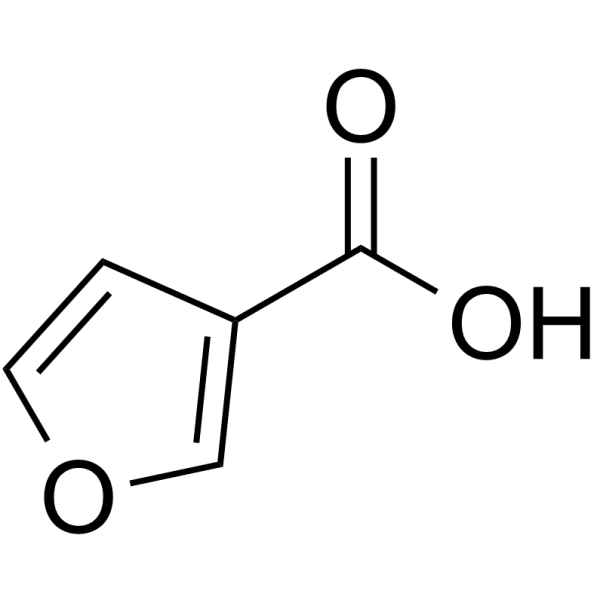
3-Furanoic acid is an active unit, and its derivatives have a wide range of anti-inflammatory activities. 3-Furanoic acid-related derivatives can target inflammation-related signaling pathways and inhibit the proliferation of synovial fibroblasts to exert immunomodulatory effects .
loading...
    loading...
Cat. No.: HY-P3136A
Synonyms: TRV120055 hydrochloride
Target:  

Angiotensin Receptor

Research Areas:  

Cardiovascular Disease

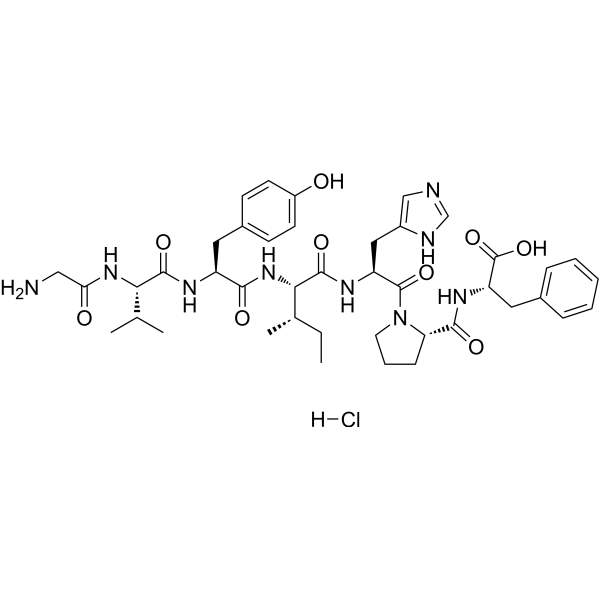
TRV055 (TRV120055) hydrochloride is a G protein-biased agonist of angiotensin II type 1 receptors (AT1Rs). TRV055 hydrochloride induces fibroblast proliferation, overexpression of collagen I and α-SMA, and stress fibre formation in human cardiac fibroblasts. RV055 hydrochloride activates AT1 receptor/Gαq-mediated signaling pathways, upregulates TGF-β1 and p-ERK1/2. RV055 hydrochloride induces collagen secretion in adult rat myofibroblasts at a level comparable to Ang II. RV055 hydrochloride can be used to study the role of G protein-biased signaling of AT1Rs in regulating fibrotic responses [1]
loading...
    loading...
Cat. No.: HY-W134423B
CAS No.: 9002-18-0
Agar, meets USP testing specifications is a high-quality selective growth support and substrate for non-adherent cells. Agar, meets USP testing specifications effectively supports the growth, colony formation and metachromatic matrix production of chondrocytes, and also facilitates the isolation and differentiation of pure chondrocyte strains by restricting the proliferation of fibroblast-like cells. Chondrocytes grown in Agar, meets USP testing specifications can be successfully transferred to a liquid suspension culture system, where they continue to proliferate while retaining the characteristics exhibited during growth in agar .
loading...
    loading...
Cat. No.: HY-158315
Purity:  99.43%
Target:  

Dipeptidyl Peptidase

Research Areas:  

Inflammation/Immunology

NZ-97 is a locally deliverable, lung-retaining dipeptidyl peptidase 4 (DPP4) inhibitor with an IC50 of 18 nM. It exhibits selectivity for DPP8 and DPP9 (with IC50 values of 1.3 μM and 0.6 μM, respectively). NZ-97 inhibits the DPP4 pool in lung-resident cells and epithelial lining fluid, elevates IL-6 and IGF-1 levels, and induces the expansion of type 2 alveolar epithelial cells (AEC2). NZ-97 reduces protein content in bronchoalveolar lavage fluid (BALF), ameliorates lung injury and alleviates pulmonary fibrosis. NZ-97 shows tolerability in untreated Mus musculus mice after intratracheal administration, and does not alter the proliferation or differentiation of lung fibroblasts. NZ-97 can be used in studies related to idiopathic pulmonary fibrosis, acute lung injury and emphysema .
loading...
    loading...
Cat. No.: HY-108649A
CAS No.: 2567869-47-8
Purity:  98.7%
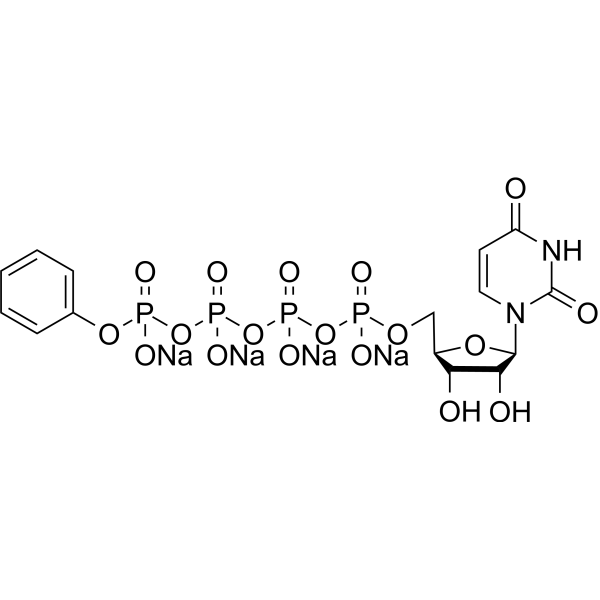
MRS2768 tetrasodium salt is a potent, selective, and metabolically stable P2Y2 receptor agonist with an EC50 of 1.89 μM for the human P2Y2 receptor. MRS2768 tetrasodium salt activates Gq/PLC/PKC signaling, leading to downstream phosphorylation of Akt, eNOS, and ERK, with effects varying by cell type. MRS2768 tetrasodium salt inhibits ENaC via Gq/PKC/Src/Akt to promote natriuresis and lower blood pressure in the kidney. MRS2768 tetrasodium salt activates eNOS to increase NO secretion in endothelial cells. MRS2768 tetrasodium salt drives proliferation via PI3K/Akt in fibroblasts and cancer cells. MRS2768 tetrasodium salt exerts anti-apoptotic effects through PKC/Src/Akt in cardiomyocytes. MRS2768 tetrasodium salt can be applied to investigate P2Y2-dependent pathological processes, including acute kidney injury, chronic kidney disease and renal fibrosis, DOCA-salt induced hypertension, myocardial infarction, pulmonary arterial hypertension, pancreatic cancer, cardiac fibrosis, dry eye disease, as well as shear stress-mediated vascular remodeling and atherosclerosis .
loading...
    loading...
Cat. No.: HY-P4859
CAS No.: 29227-88-1
Synonyms: Pyr-Gly-OH; H-Pyr-Gly-OH
Target:  

Inhibitory Antibodies

Research Areas:  

Others

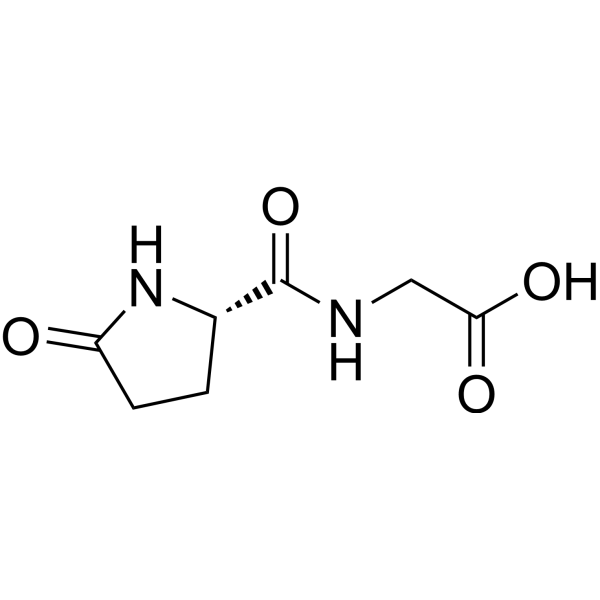
Pyr-Gly is an inhibitory peptide. Pyr-Gly inhibits proliferation of retinal pigment epithelium (RPE) cells and fibroblasts .
loading...
    loading...
Cat. No.: HY-128034
CAS No.: 64005-90-9
Purity:  99.79%
Target:  

PIN1

Research Areas:  

Cancer

PPIase-Parvulin inhibitor (compound B) is a cell-permeable inhibitor targeting PPIase Pin1 and Par14, with IC50s of 1.5 and 1.0 µM, respectively. PPIase-Parvulin inhibitor has anticancer activity and inhibits the growth and proliferation of mouse embryonic fibroblasts (MEFs) .
loading...
    loading...
Cat. No.: HY-14188R
CAS No.: 19774-82-4
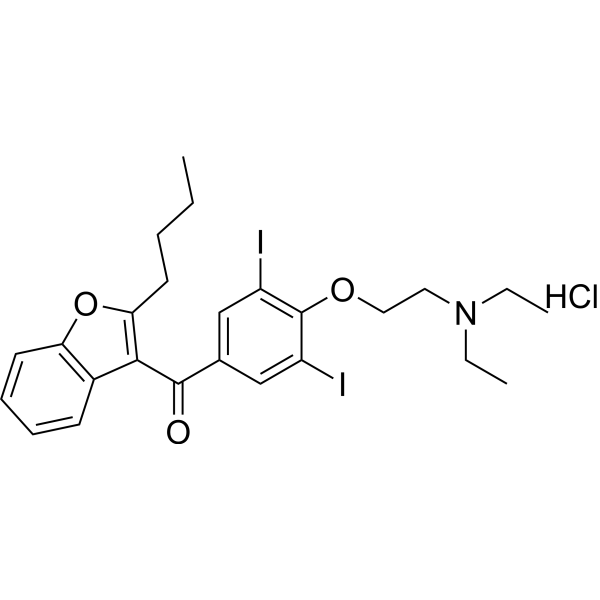
Amiodarone (hydrochloride) (Standard) is the analytical standard of Amiodarone (hydrochloride). This product is intended for research and analytical applications. Amiodarone hydrochloride, a benzofuran-based Class III antiarrhythmic agent, inhibits WT outwardIhERG tails with an IC50 of ∼45 nM . Amiodarone hydrochloride induces cell proliferation and myofibroblast differentiation via ERK1/2 and p38 MAPK signaling in fibroblasts . Amiodarone hydrochloride can be used in the research of both supraventricular and ventricular arrhythmias .
loading...
    loading...
Cat. No.: HY-W442049
CAS No.: 893412-73-2
Synonyms: HPR
Target:  

RAR/RXR

Research Areas:  

Inflammation/Immunology

Hydroxypinacolone retinoate (HPR) is a direct-binding agonist of retinoic acid receptor (RAR). Hydroxypinacolone retinoate has low irritation and high stability; when formulated into nanoparticles, its transdermal efficiency is enhanced, allowing it to penetrate deep into the dermis and achieve sustained release. When used in combination with Retinyl propionate, hydroxypinacolone retinoate promotes fibroblast proliferation and upregulates the gene expression of type IV collagen, CRBP-I and RARB. Hydroxypinacolone retinoate can be used in research related to skin wrinkles and skin aging .
loading...
    loading...
Cat. No.: HY-P5205
CAS No.: 2098351-24-5
Target:  

Bacterial

Research Areas:  

Infection

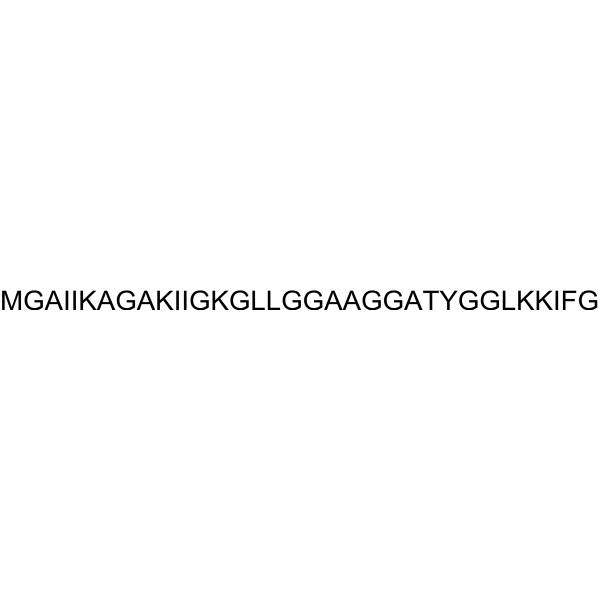
Garvicin KS, GakA is a peptide at sizes of 34 amino acids to form bacteriocin garvicin KS (GarKS), with other 2 peptides, GakB, and GakC. Garvicin KS, GakA inhibits fibroblast viability and proliferation. Garvicin KS, GakA with GakB, is a potent combination with good peptide stability, antimicrobial efficacy, and fibroblast viability/proliferation effects. Garvicin KS peptides inhibit MSSA with MIC values in the order GakB >GakC >GakA .
loading...
    loading...
Cat. No.: HY-P5206
CAS No.: 2098351-25-6
Target:  

Bacterial

Research Areas:  

Infection

Garvicin KS, GakB is a peptide at sizes of 34 amino acids to form bacteriocin garvicin KS (GarKS), with other 2 peptides, GakA, and GakC. Garvicin KS, GakB inhibits fibroblast viability and proliferation. Garvicin KS, GakB with GakA, is a potent combination with good peptide stability, antimicrobial efficacy, and fibroblast viability/proliferation effects. Garvicin KS peptides inhibit MSSA with MIC values in the order GakB >GakC >GakA .
loading...
    loading...
Cat. No.: HY-115550
CAS No.: 1202866-96-3
Purity:  ≥98.0%
Target:  

Parasite

Research Areas:  

Infection

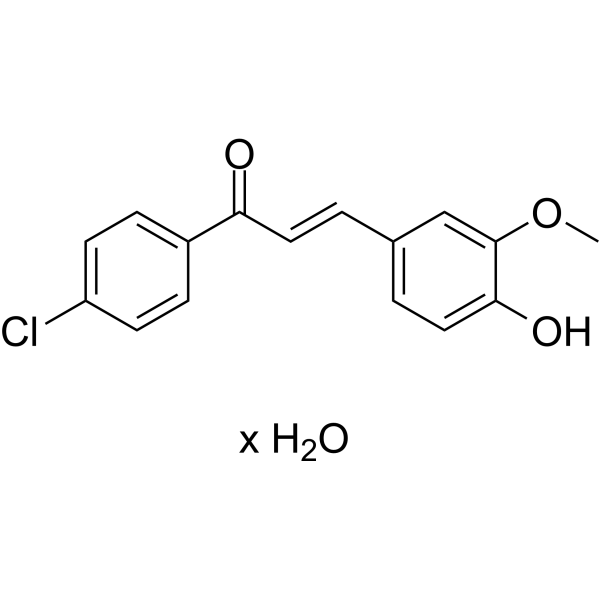
Chalcone 4 hydrate is an anti-parasitic agent. Chalcone 4 hydrate inhibits the growth and proliferation of Babesia and Theileria in vitro. Chalcone 4 hydrate reduces the viability of mammalian fibroblasts and kidney cells in vitro. Chalcone 4 hydrate can be used for the research of parasitic infections .
loading...
    loading...
Cat. No.: HY-14188S
CAS No.: 1216715-80-8
Purity:  99.58%
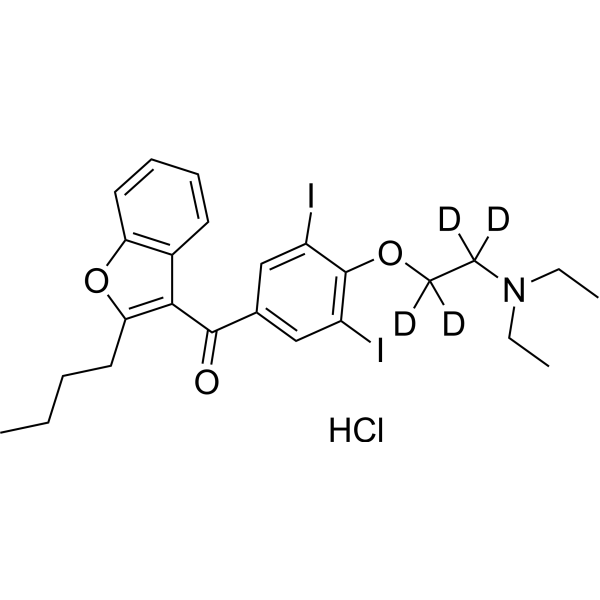
Amiodarone-d4 (hydrochloride) is the deuterium labeled Amiodarone hydrochloride. Amiodarone hydrochloride, a benzofuran-based Class III antiarrhythmic agent, inhibits WT outwardIhERG tails with an IC50 of ~45 nM . Amiodarone hydrochloride induces cell proliferation and myofibroblast differentiation via ERK1/2 and p38 MAPK signaling in fibroblasts . Amiodarone hydrochloride can be used in the research of both supraventricular and ventricular arrhythmias .
loading...
    loading...
Cat. No.: HY-164387
CAS No.: 1259519-20-4
Target:  

EGFR PDGFR VEGFR

Research Areas:  

Cancer

Sutetinib is an orally active inhibitor for tyrosine kinase, that is associated with tumor growth and angiogenesis, such as VEGFR (Ki= 0.009 µM for VEGFR-1/2/3), PDGFR (Ki= 0.008 µM for PDGFR-α/β) and proto-oncogene cKIT. Sutetinib inhibits the proliferation, migration, and tubular structure formation of endothelial cells and fibroblasts, and exhibits board-spectrum antitumor efficacy in vitro and in vivo .
loading...
    loading...
Cat. No.: HY-P5452
CAS No.: 379711-25-8
Target:  

PKC

Research Areas:  

Others

PKCd (8-17) is a biological active peptide. (This peptide is derived from the V1 domain of protein kinase C (PKC)d. It inhibits phorbol 12-myristate 13-acetate (PMA)-induced PKCd translocation and activation. Inhibition of PKCd reduces ischemia damage in cardiac and cerebral cells, induces proliferation of fibroblasts, and inhibits graft coronary artery disease in mice.)
loading...
    loading...
Cat. No.: HY-177739
CAS No.: 1590409-23-6
Research Areas:  

Inflammation/Immunology

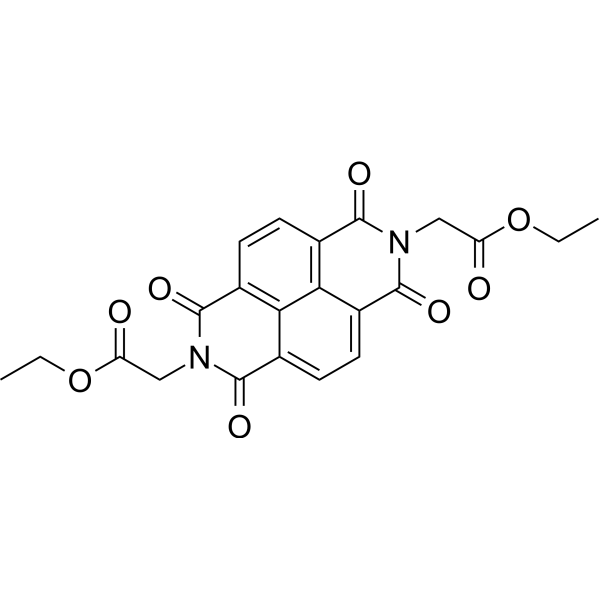
Antifibrotic agent 2 (Compound 636) is a polycyclic pyridinone derivative with antifibrotic activity. Antifibrotic agent 2 reduces the pathological accumulation of fibrosis-related proteins such as fibronectin and collagen, prevents excessive fibrous connective tissue from depositing in organs or tissues, and reverses or delays the remodeling of tissue fibrosisby regulating the abnormal proliferation and activation of fibroblasts. Antifibrotic agent 2 can be used for research on pulmonary fibrosis .
loading...
    loading...
Cat. No.: HY-P10320
Synonyms: Tumstatin (69-88), human
Target:  

PI3K Akt

Research Areas:  

Cardiovascular Disease

T3 Peptide is an active fragment of tumstatin. T3 Peptide binds integrin αvβ3vβ5, activates the PI3K/Akt/p70S6K signaling pathway, and thus stimulates the proliferation and migration of rat cardiac fibroblasts .
loading...
    loading...
Cat. No.: HY-164387A
CAS No.: 1701408-75-4
Target:  

EGFR VEGFR PDGFR

Research Areas:  

Cancer

Sutetinib maleate is the maleate form of Sutetinib (HY-164387). Sutetinib maleate is an orally active inhibitor for tyrosine kinase, that is associated with tumor growth and angiogenesis, such as VEGFR (Ki= 0.009 µM for VEGFR-1/2/3), PDGFR (Ki= 0.008 µM for PDGFR-α/β) and proto-oncogene cKIT. Sutetinib maleate inhibits the proliferation, migration, and tubular structure formation of endothelial cells and fibroblasts, and exhibits board-spectrum antitumor efficacy in vitro and in vivo .
loading...
    loading...
Cat. No.: HY-170934
Target:  

FGFR

Research Areas:  

Cancer

BW710 is an orally active fibroblast growth factor receptor 2 (FGFR2) inhibitor. BW710 inhibits the proliferation of BaF3-FGFR2 cells with an IC50 of 2.8 nM. BW710 abolishes FGFR2 enzymatic activity and is selective against other 75 tyrosine kinases including FGFR1, FGFR3, and FGFR4 at 1 μM. BW710 suppresses the FGFR2 signaling and selectively inhibits FGFR2-driven cancer cell proliferation. BW710 displays reasonable pharmacokinetic properties with an oral bioavailability of 29 % in mice .
loading...
    loading...

