4988 Results for "

expression

" in MedChemExpress (MCE) Product Catalog:
Products (4988)

4988 Results for "expression" in MCE Product Catalog:

Cat. No.: HY-P5642A
Synonyms: RC-101 TFA
Retrocyclin-101 (RC-101) TFA is an artificially synthesized, cyclic-structured θ-defensin, a broad-spectrum agent with antimicrobial (covering viruses, bacteria, and fungi) activity and anti-inflammatory activity. Retrocyclin-101 TFA can inhibit the serine protease activity of ZIKV NS2B-NS3, with an IC50 of 7.20 μM. Retrocyclin-101 TFA has significant inhibitory activity against HIV, SARS-CoV-2, flaviviruses, influenza viruses, HSV-1/2, Staphylococcus aureus, etc. Retrocyclin-101 TFA inhibits the signal transduction mediated by TLR4 and TLR2, reducing the expression of pro-inflammatory cytokines .
loading...
    loading...
Cat. No.: HY-P990134

Target:  

TNF Receptor IFNAR

Research Areas:  

Inflammation/Immunology Cancer

Anti-Mouse CD40L/CD154 Antibody (MR-1) is an anti-mouse CD40L/CD154 IgG monoclonal antibody. Anti-Mouse CD40L/CD154 Antibody (MR-1) reduces the expression of IFN signaling pathway and lowers the level of IFN-β. Anti-Mouse CD40L/CD154 Antibody (MR-1) can prolong the survival time of transplants. Anti-Mouse CD40L/CD154 Antibody (MR-1) can be used for researches on cancer, inflammation conditions and xenotransplantation such as pancreatic cancer and autoimmune cholangitis .
loading...
    loading...
Cat. No.: HY-P990291

Target:  

Fc Receptor (FcR)

Research Areas:  

Inflammation/Immunology Cancer

Anti-Mouse CD16.2 Antibody (9E9) is a Armenian hamster-derived IgG type antibody inhibitor, targeting to mouse CD16.2. Anti-Mouse CD16.2 Antibody (9E9) reacts with mouse CD16.2, also known as FcγRIV (Fc receptor, IgG, low affinity IV). Anti-Mouse CD16.2 Antibody (9E9) inhibits cellular CD16.2 expression and signaling and blocks FcγRIV. Anti-Mouse CD16.2 Antibody (9E9) can be used for the researches of cancer, inflammation and immunology, such as CT26 tumor and lung inflammation .
loading...
    loading...
Cat. No.: HY-P990947
CAS No.: 2868265-50-1
Synonyms: AZD9592 Antibody

Target:  

ADC Antibodies EGFR

Research Areas:  

Cancer

Tilatamig (AZD9592 Antibody) is a human antibody of the Ig (G1-κ_G1-λ2) subtype that targets EGFR/MET. Tilatamig conjugates with the Top1 inhibitor AZ14170133 (HY-145399) to form the antibody-drug conjugate (ADC) Tilatamig samrotecan (HY-171124) (AZD9592). Tilatamig accurately targets NSCLC models including EGFR-mutant, EGFR-wildtype, and EGFR tyrosine kinase inhibitor-treated ones, and its activity correlates with high expression of EGFR, c-MET and SLFN11. Tilatamig is available for in vivo anti-tumor studies in patient-derived xenograft models of non-small cell lung cancer (NSCLC) and head and neck squamous cell carcinoma (HNSCC) .
loading...
    loading...
Cat. No.: HY-P991202
Anti-TSHR Antibody (M22) is a selective agonist targeting TSHR (thyroid-stimulating hormone receptor), acting through competitive binding to the extracellular domain of TSHR. Anti-TSHR Antibody (M22) can mimic the biological effects of thyroid-stimulating hormone (TSH), activating downstream cAMP-PKA and other signaling pathways. Anti-TSHR Antibody (M22) can stimulate the proliferation of thyroid follicular epithelial cells and human umbilical vein endothelial cells (HUVECs), promote angiogenesis and tube formation, cell migration, and also upregulate the expression of angiogenesis-related proteins such as PROX1. Anti-TSHR Antibody (M22) can be used in research areas such as the mechanisms of goiter formation in Graves' disease (GD), angiogenesis regulation, and TSHR antagonist screening .
loading...
    loading...
Cat. No.: HY-P99914
CAS No.: 2559704-23-1
Synonyms: GNC-038
Emfizatamab (GNC-038) is a monoclonal antibody against CD19/CD3E/TNFRSF9/PD-L1. Emfizatamab exhibits antitumor activity, being capable of activating CD3 and 4-1BB signals on T cells, as well as targeting the high expression of CD19 or PD-L1 on tumor cells. Emfizatamab functions as a CD19-specific T cell engager by mediating direct antitumor activity. Emfizatamab can also overcome the inhibition of T cells by PD-L1. Emfizatamab can be used in the research of tumors such as R/R non-Hodgkin lymphoma or acute lymphoblastic leukemia .
loading...
    loading...
Cat. No.: HY-W009203R
CAS No.: 30925-07-6
L-Cystine (dihydrochloride) (Standard) is the analytical standard of L-Cystine (dihydrochloride) (HY-W009203). This product is intended for research and analytical applications. L-Cystine dihydrochloride is the dihydrochloride salt form of L-Cystine (HY-N0394). L-Cystine dihydrochloride elevates Nrf2 protein expression and activates Nrf2 transcription factor. L-cystine dihydrochloride reduces ROS generation and protects against oxidant- or Doxorubicin (HY-15142A)-induced apoptosis. L-Cystine dihydrochloride combined with L-theanine (HY-15121) enhances the production of antigen-specific IgG by increasing glutathione (GSH) levels and T helper 2 (Th2) mediated responses in mice. L-Cystine dihydrochloride is promising for research of cystinuria and kidney stones
loading...
    loading...
Cat. No.: HY-W010037R
CAS No.: 121-00-6
2-(tert-Butyl)-4-methoxyphenol (Standard) is the analytical standard of 2-(tert-Butyl)-4-methoxyphenol. This product is intended for research and analytical applications. 2-tert-Butyl-4-methoxyphenol is a major component of Butylhydroxyanisole (BHA) (HY-B1066). 2-tert-Butyl-4-methoxyphenol is an antioxidant agent, that inhibits expression of Cox2 and Tnfa genes upon stimulation with Lipopolysaccharides (HY-D1056). 2-tert-Butyl-4-methoxyphenol exhibits anti-inflammatory activity, combined with 2,6-di-tert-butyl-4-methylphenol (BHT) .
loading...
    loading...
Cat. No.: HY-W010066R
CAS No.: 28822-73-3
3,4-Dihydroxyphenylglycol (Standard) is the analytical standard of 3,4-Dihydroxyphenylglycol (HY-W010066). This product is intended for research and analytical applications. 3,4-Dihydroxyphenylglycol is a phenolic compound and antioxidant. 3,4-Dihydroxyphenylglycol can be extracted from olive oil. 3,4-Dihydroxyphenylglycol downregulates the expression of proinflammatory enzymes (iNOS, COX-2) and prevents the degradation of IκBα. 3,4-Dihydroxyphenylglycol has antioxidant properties. 3,4-Dihydroxyphenylglycol has shown positive effects on frozen-thawed ram sperm. 3,4-Dihydroxyphenylglycol can be used in the study of inflammatory-related diseases (such as ulcerative colitis) and reproductive health (sperm cryopreservation) .
loading...
    loading...
Cat. No.: HY-W010697S
Cholesteryl linoleate-d11 is the d11-labeled Cholesteryl linoleate (HY-W010697). Cholesteryl linoleate is a cholesteryl ester with antibacterial activity that is present in low-density lipoprotein (LDL) particles, human nasal fluid, and respiratory epithelial secretions. Cholesteryl linoleate is oxidized by 12/15-lipoxygenase in macrophages and participates in selective uptake and efflux via LDL receptor-related protein. Cholesteryl linoleate does not induce endothelial adhesion molecule expression, nor does it induce monocyte binding to endothelial cells. Cholesteryl linoleate liposomal formulations inhibit the growth of multiple bacteria at physiological nasal fluid concentrations and act synergistically with antimicrobial peptides. Cholesteryl linoleate is useful for research related to atherosclerosis and bacterial infections .
loading...
    loading...
Cat. No.: HY-W012278S
CAS No.: 1718-53-2
Synonyms: Tetraphene-d12
Benz[a]anthracene-d12 (Tetraphene-d12) is the deuterated-labeled Benz[a]anthracene (HY-W012278). Benz[a]anthracene (Tetraphene) is a polycyclic aromatic hydrocarbon pollutant and also a ligand of aryl hydrocarbon receptor 2 (AHR2), with a pIC50 of 7.319. Benz[a]anthracene can be detected in spruce needles near aluminum smelters. Exposure to Benz[a]anthracene during zebrafish embryonic stage activates the AHR-CYP1A signaling pathway and induces AHR2 expression, leading to social behavioral deficits that persist into adulthood, accompanied by impaired neuro-immune interaction, while anxiety levels remain unaffected. Benz[a]anthracene can be used in studies related to PAH environmental toxicology, developmental neurotoxicity and biodegradation .
loading...
    loading...
Cat. No.: HY-W012572
CAS No.: 351-50-8
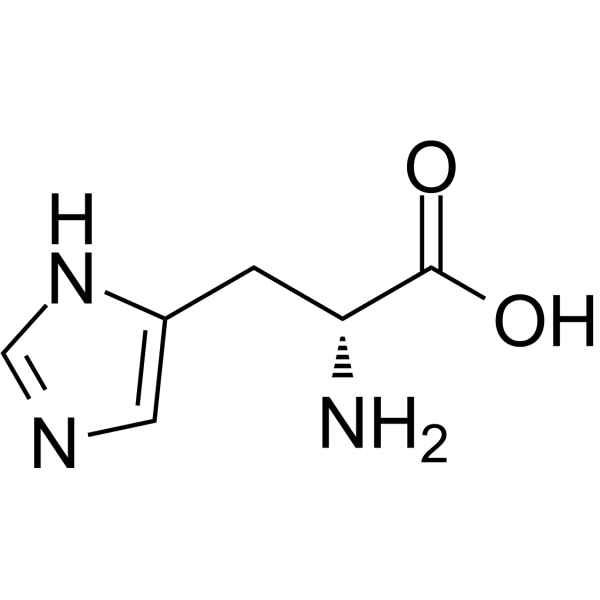
D-Histidine is an anti-biofilm agent that targets bacterial quorum sensing systems (such as RhlI/RhlR pathway) and has antibacterial activity. D-Histidine works by non-covalently binding to bacterial regulatory factors or copper ion complexes, selectively inhibiting bacterial biofilm formation and motility. D-Histidine downregulates quorum sensing-related gene expression, reduces the synthesis of virulence factors (such as alginate and proteases), and interferes with bacterial membrane stability, inhibiting biofilm formation, promoting the disintegration of mature biofilms, and enhancing antibiotic sensitivity. D-Histidine is also an efficient catalyst for the salt-induced peptide formation (SIPF) reaction, which promotes the condensation of amino acids to form dipeptides (such as dialanine and dilysine) by forming a complex with copper ions (Cu 2+) .
loading...
    loading...
Cat. No.: HY-W012572A
CAS No.: 328526-86-9
D-Histidine hydrochloride hydrate is an anti-biofilm agent that targets bacterial quorum sensing systems (such as RhlI/RhlR pathway) and has antibacterial activity. D-Histidine hydrochloride hydrate works by non-covalently binding to bacterial regulatory factors or copper ion complexes, selectively inhibiting bacterial biofilm formation and motility. D-Histidine hydrochloride hydrate downregulates quorum sensing-related gene expression, reduces the synthesis of virulence factors (such as alginate and proteases), and interferes with bacterial membrane stability, inhibiting biofilm formation, promoting the disintegration of mature biofilms, and enhancing antibiotic sensitivity. D-Histidine hydrochloride hydrate is also an efficient catalyst for the salt-induced peptide formation (SIPF) reaction, which promotes the condensation of amino acids to form dipeptides (such as dialanine and dilysine) by forming a complex with copper ions (Cu 2+) .
loading...
    loading...
Cat. No.: HY-W015600
CAS No.: 614-80-2
Synonyms: Orthocetamol
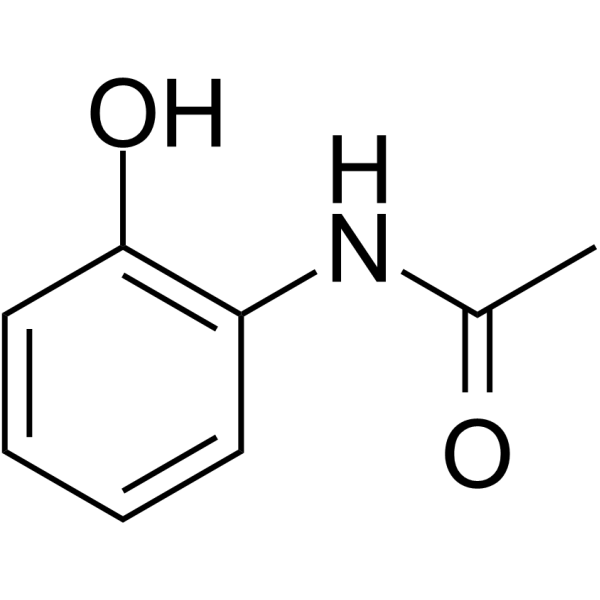
2-Acetamidophenol (Orthocetamol) is a regulator that targets ferroptosis and glutathione metabolic pathways, is the ortho-regioisomer of Paracetamol (HY-66005). 2-Acetamidophenol has anti-atherosclerotic activity, and inhibiting total cholesterol (TC) and triglyceride (TG) in a zebrafish hyperlipidemia model with IC50s for 30 μM and 40 μM, respectively. 2-Acetamidophenol upregulates the expression of glutathione synthesis-related genes (such as GCLC, GCLM, GSS) and iron ion transport genes (such as FPN1, FTH), reduces the accumulation of intracellular reactive oxygen species (ROS) and ferrous ions (Fe 2+), and enhances the activity of glutathione peroxidase GPX4, thereby inhibiting macrophage phagocytosis of oxidized low-density lipoprotein (ox-LDL) and foam cell formation .
loading...
    loading...
Cat. No.: HY-W016773S
CAS No.: 347841-78-5
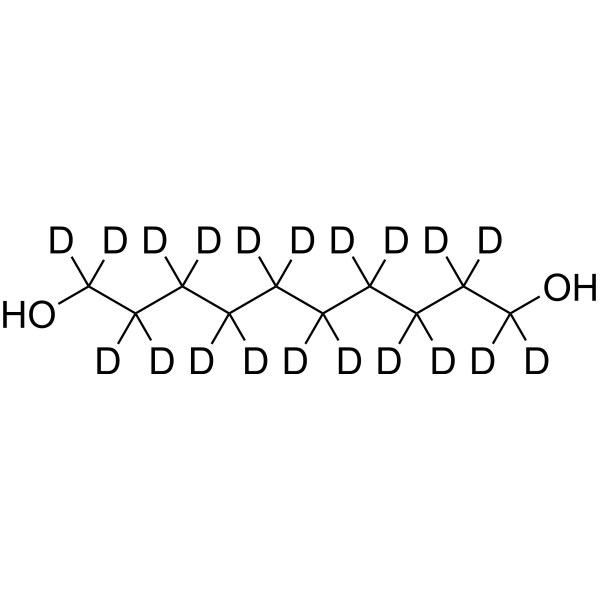
1,10-Decanediol-d20 is the deuterium labeled 1,10-Decanediol . 1,10-Decanediol is a diol compound that can react with α-ketoglutarate (aKG) to generate polymeric microparticles (termed paKG MPs) for the sustained release of aKG, thereby promoting immunosuppressive regulation. Additionally, paKG MPs can bind to dendritic cells (DCs), reducing their glycolysis and mitochondrial respiration in vitro. These metabolic changes lead to the modulation of MHC-II and CD86 expression in DCs and alter the frequency of regulatory T cells (Tregs) as well as T-helper type 1/2/17 cells in vitro. 1,10-Decanediol can be used in research within the field of immunometabolism. can be used as a surfactant/stabilizer in the synthesis of nanomaterials .
loading...
    loading...
Cat. No.: HY-W017443R
CAS No.: 5794-13-8
L-Asparagine monohydrate (Standard) is the analytical standard of L-Asparagine monohydrate (HY-W017443). This product is intended for research and analytical applications. L-Asparagine monohydrate is an essential amino acid for leukemic cells and a substrate for L-Asparaginase. L-Asparaginase is a potent anti-leukemic enzyme that promotes asparagine (Asn) and glutamine (Gln) depletion and inhibits protein biosynthesis in lymphoblasts. Removal of L-asparagine from plasma by L-Asparaginase results in inhibition of RNA and DNA synthesis and subsequent apoptosis. L-Asparaginase has cell-killing ability in vitro and in vivo, and selectively inhibits the growth of cancer cells with low asparagine synthetase (AASNS) expression. L-Asparagine monohydrate can be used as a biomarker and sensor for the study of childhood acute lymphoblastic leukemia .
loading...
    loading...
Cat. No.: HY-W017443S1
CAS No.: 204451-47-8
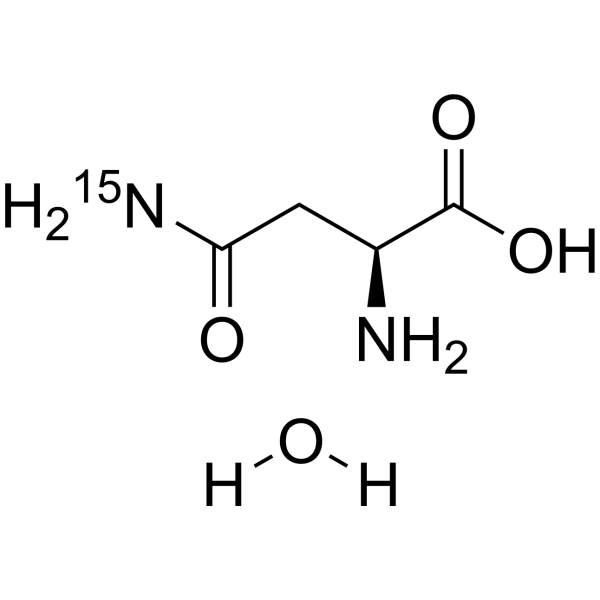
L-Asparagine-amide- 15N monohydrate is the 15N-labeled L-Asparagine monohydrate (HY-W017443). L-Asparagine monohydrate is an essential amino acid for leukemic cells and a substrate for L-Asparaginase. L-Asparaginase is a potent anti-leukemic enzyme that promotes asparagine (Asn) and glutamine (Gln) depletion and inhibits protein biosynthesis in lymphoblasts. Removal of L-asparagine from plasma by L-Asparaginase results in inhibition of RNA and DNA synthesis and subsequent apoptosis. L-Asparaginase has cell-killing ability in vitro and in vivo, and selectively inhibits the growth of cancer cells with low asparagine synthetase (AASNS) expression. L-Asparagine monohydrate can be used as a biomarker and sensor for the study of childhood acute lymphoblastic leukemia .
loading...
    loading...
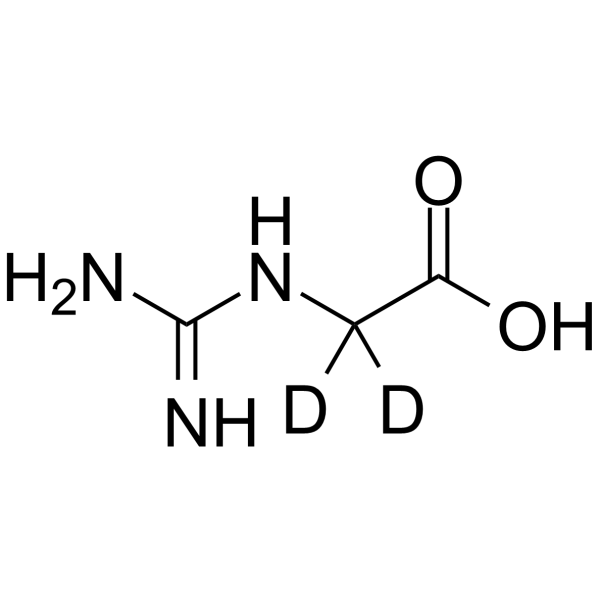
Cat. No.: HY-W021448S
CAS No.: 1173020-63-7
Synonyms: Guanidinoacetic acid-d2
Glycocyamine-d2 (Guanidinoacetic acid-d2) is the deuterium labeled Glycocyamine (HY-W021448). Glycocyamine is a direct precursor of creatine and an orally active energy metabolism regulator and myogenic differentiation inducer. Glycocyamine can activate the Akt/mTOR/S6K signaling pathway via miR-133a-3p and miR-1a-3p, and stimulate the mRNA expression of myogenic differentiation factor 1 (MyoD) and myopoietin (MyoG). Glycocyamine can increase muscle creatine concentration and maintain ATP homeostasis through the creatine phosphate/creatine kinase system. Glycocyamine can be used in research on feed additives for poultry farming.
loading...
    loading...
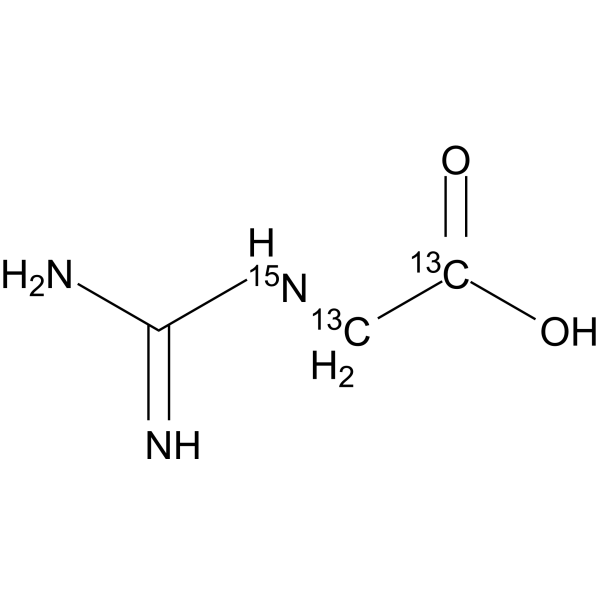
Cat. No.: HY-W021448S1
CAS No.: 2483829-93-0
Synonyms: Guanidinoacetic acid-15N,13C2
Glycocyamine- 15N, 13C2 (Guanidinoacetic acid- 15N, 13C2) is the 13C and 15N labeled Glycocyamine (HY-W021448) . Clycocyamine is a direct precursor of creatine and an orally active energy metabolism regulator and myogenic differentiation inducer. Glycocyamine can activate the Akt/mTOR/S6K signaling pathway via miR-133a-3p and miR-1a-3p, and stimulate the mRNA expression of myogenic differentiation factor 1 (MyoD) and myopoietin (MyoG). Glycocyamine can increase muscle creatine concentration and maintain ATP homeostasis through the creatine phosphate/creatine kinase system. Glycocyamine can be used in research on feed additives for poultry farming.
loading...
    loading...
Cat. No.: HY-W040045R
CAS No.: 18466-51-8
Synonyms: Pelargonidin-3-O-glucoside chloride (Standard)
Callistephin (Pelargonidin 3-O-glucoside) chloride (Standard) is the analytical standard of Callistephin chloride (HY-W040045). This product is intended for research and analytical applications. Callistephin chloride is an anthocyanin. Callistephin chloride regulates the expression of inflammatory (reducing iNOS/TNF-α/COX-2) and apoptosis-related proteins by inhibiting p38 phosphorylation, and enhances the protective effect of Isoflurane (HY-A0134) on microglial cell damage. Callistephin chloride significantly reduces ROS levels, eliminates DPPH free radicals, protects retinal pigment epithelial cells, and inhibits lipid peroxidation. Callistephin chloride can alleviate glutamate excitotoxicity, reduce neuronal apoptosis, and protect cerebellar granule neurons. Callistephin chloride can inhibit the proliferation and metastasis of breast cancer cells by inducing apoptosis.
loading...
    loading...