5240 Results for "

Functional groups

" in MedChemExpress (MCE) Product Catalog:
Products (5240)

5240 Results for "Functional groups" in MCE Product Catalog:

Cat. No.: HY-R04332A
Target:  

MicroRNA

Research Areas:  

Cancer

rno-miR-29b-1-5p agomirs are chemically-modified double-strand miRNA mimics with modified mature miRNA strand: 2 phosphorothioates at the 5' end, 4 phosphorothioates at the 3' end, 3' end cholesterol group, and full-length nucleotide 2'-methoxy modification. They are designed to mimic endogenous miRNAs and recommended for miRNA functional studies. Compared with miRNA mimics, they exhibits enhanced cellular uptake, stability and regulatory activity in vivo.
loading...
    loading...
Cat. No.: HY-R04364A
Target:  

MicroRNA

Research Areas:  

Cancer

rno-miR-344b-1-3p agomirs are chemically-modified double-strand miRNA mimics with modified mature miRNA strand: 2 phosphorothioates at the 5' end, 4 phosphorothioates at the 3' end, 3' end cholesterol group, and full-length nucleotide 2'-methoxy modification. They are designed to mimic endogenous miRNAs and recommended for miRNA functional studies. Compared with miRNA mimics, they exhibits enhanced cellular uptake, stability and regulatory activity in vivo.
loading...
    loading...
Cat. No.: HY-R04481A
Target:  

MicroRNA

Research Areas:  

Cancer

rno-miR-466b-2-3p agomirs are chemically-modified double-strand miRNA mimics with modified mature miRNA strand: 2 phosphorothioates at the 5' end, 4 phosphorothioates at the 3' end, 3' end cholesterol group, and full-length nucleotide 2'-methoxy modification. They are designed to mimic endogenous miRNAs and recommended for miRNA functional studies. Compared with miRNA mimics, they exhibits enhanced cellular uptake, stability and regulatory activity in vivo.
loading...
    loading...
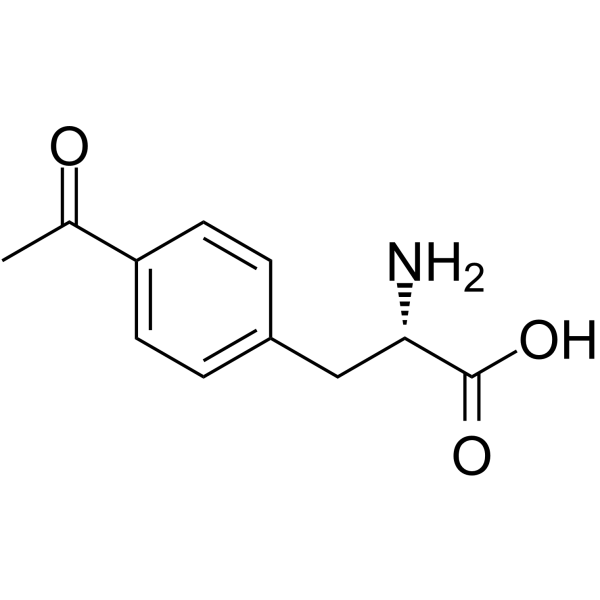
Cat. No.: HY-W102456
CAS No.: 122555-04-8
Synonyms: L-4-Acetylphenylalanine
Research Areas:  

Others

H-Phe(4-Ac)-OH (L-4-Acetylphenylalanine) is a keto-amino acid that can be converted from α-keto acids containing an acetyl group. H-Phe(4-Ac)-OH can be added to the amber position to form mutant Z-domain proteins. H-Phe(4-Ac)-OH is used as a functional amino acid in peptide modification to achieve chemical bonding between peptides and solid surfaces .
loading...
    loading...
Cat. No.: HY-W440835A
Research Areas:  

Inflammation/Immunology

DSPE-PEG400-DBCO is a phospholipid PEG polymer that combines a hydrophobic phospholipid (DSPE), a hydrophilic polyethylene glycol spacer with a molecular weight of 400 Da, and a reactive click chemistry terminal group (DBCO). DSPE-PEG-DBCO migrates to lymph nodes via the endogenous albumin transport system, implants bioorthogonal DBCO docking sites, and enables the enrichment of azide-functionalized vesicles in lymph nodes mediated by click chemistry. DSPE-PEG-DBCO can be used in studies related to atherosclerosis .
loading...
    loading...
Cat. No.: HY-W440835B
Research Areas:  

Inflammation/Immunology

DSPE-PEG600-DBCO is a phospholipid PEG polymer that combines a hydrophobic phospholipid (DSPE), a hydrophilic polyethylene glycol spacer with a molecular weight of 600 Da, and a reactive click chemistry terminal group (DBCO). DSPE-PEG-DBCO migrates to lymph nodes via the endogenous albumin transport system, implants bioorthogonal DBCO docking sites, and enables the enrichment of azide-functionalized vesicles in lymph nodes mediated by click chemistry. DSPE-PEG-DBCO can be used in studies related to atherosclerosis .
loading...
    loading...
Cat. No.: HY-W440835C
Research Areas:  

Inflammation/Immunology

DSPE-PEG1000-DBCO is a phospholipid PEG polymer that combines a hydrophobic phospholipid (DSPE), a hydrophilic polyethylene glycol spacer with a molecular weight of 1000 Da, and a reactive click chemistry terminal group (DBCO). DSPE-PEG-DBCO migrates to lymph nodes via the endogenous albumin transport system, implants bioorthogonal DBCO docking sites, and enables the enrichment of azide-functionalized vesicles in lymph nodes mediated by click chemistry. DSPE-PEG-DBCO can be used in studies related to atherosclerosis .
loading...
    loading...
Cat. No.: HY-W440835D
Research Areas:  

Inflammation/Immunology

DSPE-PEG3400-DBCO is a phospholipid PEG polymer that combines a hydrophobic phospholipid (DSPE), a hydrophilic polyethylene glycol spacer with a molecular weight of 3400 Da, and a reactive click chemistry terminal group (DBCO). DSPE-PEG-DBCO migrates to lymph nodes via the endogenous albumin transport system, implants bioorthogonal DBCO docking sites, and enables the enrichment of azide-functionalized vesicles in lymph nodes mediated by click chemistry. DSPE-PEG-DBCO can be used in studies related to atherosclerosis .
loading...
    loading...
Cat. No.: HY-W440835E
Research Areas:  

Inflammation/Immunology

DSPE-PEG5000-DBCO is a phospholipid PEG polymer that combines a hydrophobic phospholipid (DSPE), a hydrophilic polyethylene glycol spacer with a molecular weight of 5000 Da, and a reactive click chemistry terminal group (DBCO). DSPE-PEG-DBCO migrates to lymph nodes via the endogenous albumin transport system, implants bioorthogonal DBCO docking sites, and enables the enrichment of azide-functionalized vesicles in lymph nodes mediated by click chemistry. DSPE-PEG-DBCO can be used in studies related to atherosclerosis .
loading...
    loading...
Cat. No.: HY-W440835H
Research Areas:  

Inflammation/Immunology

DSPE-PEG10000-DBCO is a phospholipid PEG polymer that combines a hydrophobic phospholipid (DSPE), a hydrophilic polyethylene glycol spacer with a molecular weight of 10000 Da, and a reactive click chemistry terminal group (DBCO). DSPE-PEG-DBCO migrates to lymph nodes via the endogenous albumin transport system, implants bioorthogonal DBCO docking sites, and enables the enrichment of azide-functionalized vesicles in lymph nodes mediated by click chemistry. DSPE-PEG-DBCO can be used in studies related to atherosclerosis .
loading...
    loading...
Cat. No.: HY-D2758
CAS No.: 1911598-65-6
TAMRA DBCO, 5-isomer is a derivative of TAMRA fluorescent isomer with a DBCO functional group. TAMRA DBCO, 5-isomer undergoes strain-promoted azide-alkyne cycloaddition (SPAAC) under copper-free catalytic conditions. TAMRA DBCO, 5-isomer serves as a FRET acceptor for FAM fluorophores. TAMRA DBCO, 5-isomer can label proteins, peptides, nucleic acids and all azide-modified biomolecules, and is suitable for fluorescence imaging and flow cytometry to quantify intracellular SPAAC reactions .
loading...
    loading...
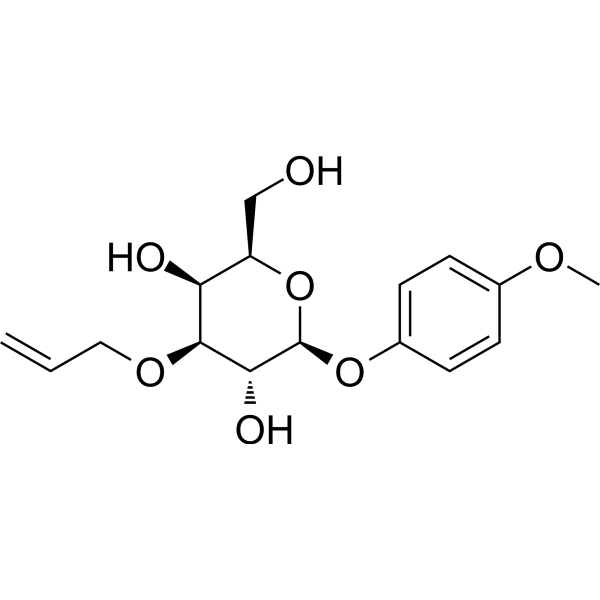
Cat. No.: HY-W145552
CAS No.: 144985-19-3
Synonyms: 4-Methoxyphenyl 3-O-allyl-beta-D-galactopyranoside
4-Methoxyphenyl 3-O-Allyl-β-D-galactopyranoside is an organic compound belonging to the family of galactopyranosides. It is often used as a building block for the synthesis of more complex glycosides and glycoconjugates. 4-Methoxyphenyl 3-O-Allyl-β-D-galactopyranoside has various applications in biochemical research, especially in the study of carbohydrate metabolism and protein-carbohydrate interactions. This compound contains an allyl protecting group that can be selectively removed using palladium-catalyzed conditions to reveal hydroxyl functionality for further chemical modification.
loading...
    loading...
Cat. No.: HY-W243303J
CAS No.: 9003-01-4
Poly(acrylic acid) (MW 250000) is a synthetic cationic electrolyte containing abundant carboxyl groups (-COOH), which exhibits excellent water absorption and retention properties and is often cross-linked to form hydrogels. Poly(acrylic acid) (with a molecular weight of 250,000). Poly(acrylic acid) (MW 250000) can be used as a non-collagenous analog in the biomimetic mineralization research of type I collagen. Poly(acrylic acid) (MW 250000) has pH responsiveness and biocompatibility and is often used as a drug carrier, surface modifier and functional material .
loading...
    loading...
Cat. No.: HY-L226
3,693 compounds

Post-translational modifications (PTMs) refer to chemical modifications that occur on amino acid residues of proteins after translation, involving the addition or removal of specific functional groups. These modifications regulate protein activity, localization, folding, and interactions with other biomolecules. By influencing protein function, PTMs play a crucial role in various pathophysiological processes. Common types of PTMs include protein phosphorylation, methylation, acetylation, ubiquitination, glycosylation, and more.

MCE offers 3,693 PTM-targeting compounds, which can be used for drug screening in cancer, neurodegenerative diseases, metabolic disorders, etc.

Cat. No.: HY-187321A
Synonyms: DPPE-PEG2000-Cys-SRNLIDC
Research Areas:  

Cancer

DPPE-PEG2000-LyP-1 is a functionalized PEGylated lipid conjugate composed of three modular components: dipalmitoylphosphatidylethanolamine (DPPE) as the lipid anchoring group, PEG, and LyP-1 peptide (CGNKRTRGC) (HY-P2526) as the terminal targeting/functional ligand. LyP-1 is a cyclic 9-amino acid peptide that specifically binds to p32/gC1qR protein, which is highly expressed on tumor-associated macrophages, lymphatic endothelial cells, and certain tumor cells. DPPE-PEG2000-LyP-1 can be incorporated into liposomes, lipid nanoparticles (LNPs), or other nanocarriers to confer ligand-directed targeting capability against p32/gC1qR protein on the surface of lymphatic vessels, tumor-associated macrophages, and tumor cells.
loading...
    loading...
Cat. No.: HY-187332A
Synonyms: DSG-PEG2000-Cys-SRNLIDC
Research Areas:  

Cancer

DSG-PEG2000-LyP-1 is a functionalized PEGylated lipid conjugate composed of three modular components: distearoylglycerol (DSG) as the lipid anchoring group, PEG, and LyP-1 peptide (CGNKRTRGC) (HY-P2526) as the terminal targeting/functional ligand. LyP-1 is a cyclic 9-amino acid peptide that specifically binds to p32/gC1qR protein, which is highly expressed on tumor-associated macrophages, lymphatic endothelial cells, and certain tumor cells. DSG-PEG2000-LyP-1 can be incorporated into liposomes, lipid nanoparticles (LNPs), or other nanocarriers to confer ligand-directed targeting capability against p32/gC1qR protein on the surface of lymphatic vessels, tumor-associated macrophages, and tumor cells.
loading...
    loading...
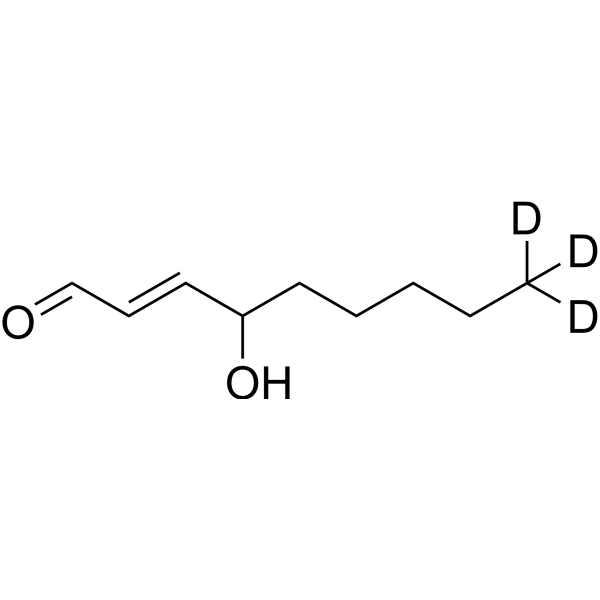
Cat. No.: HY-113466S
CAS No.: 148706-06-3
Purity:  99.0%
Synonyms: 4-HNE-d3
4-Hydroxynonenal-d3 is the deuterium labeled 4-Hydroxynonenal. 4-Hydroxynonenal (4-HNE) is an α,β unsaturated hydroxyalkenal and an oxidative/nitrosative stress biomarker. 4-Hydroxynonenal is a substrate and an inhibitor of acetaldehyde dehydrogenase 2 (ALDH2). 4-Hydroxynonenal can modulate a number of signaling processes mainly through forming covalent adducts with nucleophilic functional groups in proteins, nucleic acids, and membrane lipids. 4-Hydroxynonenal plays an important role in cancer through mitochondria .
loading...
    loading...
Cat. No.: HY-181712
Target:  

IRAK

Research Areas:  

Cancer

IRAK1-IN-2 is an orally active IRAK1 inhibitor and antitumor agent with high selectivity for IRAK4 and other kinases in the same group. IRAK1-IN-2 functionally inhibits IRAK1 and interferes with the TLR/IL-1R signaling pathway. IRAK1-IN-2 suppresses hepatocellular carcinoma-related cellular processes in vitro and in animal models. IRAK1-IN-2 serves as a chemical probe for IRAK1 research and is applicable to studies on hepatocellular carcinoma .
loading...
    loading...
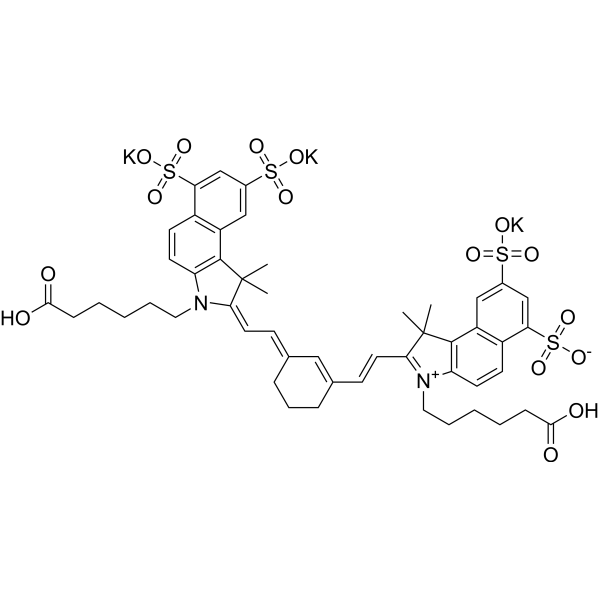
Cat. No.: HY-D1864
Sulfo-Cy7.5 dicarboxylic acid is a dye derivative of Cyanine 7.5 (Cy7.5) (HY-D0926) with carboxylic acid and sulfonate functional groups. The sulfonate ion increases the water solubility of the compound, making it suitable for use in aqueous solutions. Cy7.5 is a near-infrared fluorescent dye commonly used in biomedical research areas such as biomarkers and cell imaging. Sulfo-Cy7.5 dicarboxylic acid can be covalently bound to some biomolecules (especially antibodies, proteins, etc.) to track their location and dynamic changes in biological samples.
loading...
    loading...
Cat. No.: HY-P991906
Synonyms: CD22-4AP Antibody; CAT-02-106 Antibody

Target:  

ADC Antibodies CD22

Research Areas:  

Cancer

TRPH-222 Antibody (CD22-4AP Antibody) is an anti-human CD22 antibody site-specifically modified at one site per heavy chain to express formylglycine (FG), allowing site-specific conjugation of a maytansinoid payload, a protease-insensitive spacer, and a functional group for coupling to an aldehyde on antibody FG residues. TRPH-222 Antibody can generate antibody drug conjugate (ADC) (TRPH-222) with an ADC payload and a linker. TRPH-222 Antibody can be used for the study of NHL (non-Hodgkin's lymphoma) .
loading...
    loading...

