6092 Results for "

forms

" in MedChemExpress (MCE) Product Catalog:
Products (6092)

6092 Results for "forms" in MCE Product Catalog:

Cat. No.: HY-P5423C
Target:  

Inhibitory Antibodies

Research Areas:  

Others

GALA-Cys is a chemically modified GALA peptide (HY-P5423) that retains GALA functions while acquiring strong covalent conjugation capability. GALA-Cys undergoes pH-driven reversible secondary structure transition, rearranges into an amphipathic α-helix, self-oligomerizes, penetrates lipid membranes to form pores, and disrupts lipid bilayers, thereby enabling endosomal escape and cytosolic cargo delivery. GALA-Cys can be conjugated with lipid DPTE for integration into liposomes, self-assembles into a tilted monolayer on gold surfaces, and serves as a pH-responsive coating for particle surface functionalization. GALA-Cys is applicable to studies related to targeted cargo delivery .
loading...
    loading...
Cat. No.: HY-P990219

Target:  

Interleukin Related

Research Areas:  

Infection Inflammation/Immunology

Anti-Mouse IL-2 Antibody (JES6-1A12) is an anti-mouse IL-2 IgG1 monoclonal antibody. Anti-Mouse IL-2 Antibody (JES6-1A12) can inhibit Treg amplification and enhance Th1 response. Anti-Mouse IL-2 Antibody (JES6-1A12) can form a complex with IL-2 for experimentation. Anti-Mouse IL-2 Antibody (JES6-1A12) can be used for research on infection conditions such as malaria .
loading...
    loading...
Cat. No.: HY-P990673
Synonyms: DSTP-3086S Antibody; RG-7450 Antibody

Research Areas:  

Cancer

Vandortuzumab (DSTP-3086S Antibody; RG-7450 Antibody) is a humanized anti-STEAP1 IgG1 antibody and antimitotic agent that can be conjugated with MMAE (HY-15162) to form the antibody-drug conjugate (ADC) Vandortuzumab vedotin. Vandortuzumab vedotin specifically binds to STEAP1 and drives internalization of the complex, releasing the MMAE (HY-15162) payload intracellularly. After binding to tubulin, MMAE inhibits cell division and induces cell death. Vandortuzumab exhibits antitumor activity in preclinical xenograft models of prostate cancer and can be used for research related to metastatic castration-resistant prostate cancer (mCRPC) .
loading...
    loading...
Cat. No.: HY-P991930

Research Areas:  

Cancer

ARX305 Antibody is a high-affinity, humanized anti-CD70 antibody. ARX305 Antibody forms an antibody-drug conjugate (ADC) (ARX305) with the potent microtubule inhibitor PEG4-aminooxy-MMAF (AS269) (HY-128968). As a targeting component, ARX305 Antibody mediates the binding and internalization of ARX305 to CD70-positive tumor cells, whereas the unconjugated ARX305 Antibody exhibits only weak anti-tumor activity in various xenograft and disseminated tumor models. ARX305 Antibody can be used in the research of a variety of solid tumors and hematological malignancies .
loading...
    loading...
Cat. No.: HY-W009356
CAS No.: 34760-60-6
L-Cystine hydrochloride is an orally active extracellular form of L-Cysteine (HY-Y0337), occurring in proteins of plants and animals. L-Cystine hydrochloride elevates Nrf2 protein expression and activates Nrf2 transcription factor. L-Cystine hydrochloride reduces ROS generation and protects against oxidant- or Doxorubicin (HY-15142A)-induced apoptosis. L-Cystine hydrochloride combined with L-theanine (HY-15121) enhances the production of antigen-specific IgG by increasing glutathione (GSH) levels and T helper 2 (Th2) mediated responses in mice. L-Cystine hydrochloride is promising for research of cystinuria and kidney stones
loading...
    loading...
Cat. No.: HY-W010361
CAS No.: 10581-12-1
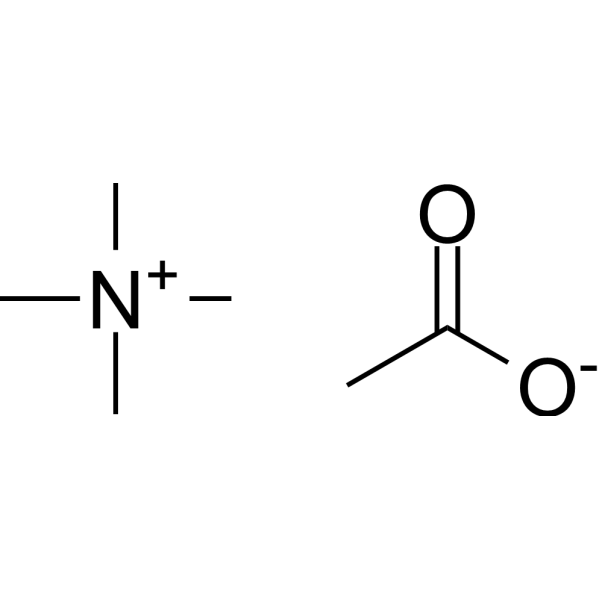
Tetramethylammonium acetate is an organic compound commonly used as a phase transfer catalyst in organic synthesis reactions, especially those involving charged species or polar reagents. It can facilitate the transfer of reactants between two immiscible phases, such as water and organic solvents, by forming stable ion pairs. Additionally, Tetramethylammonium acetate has been used to prepare a variety of organic compounds, including esters, amides, and carboxylic acids. Due to its unique physicochemical properties, it has also been investigated for its potential use in developing new materials such as ionic liquids and liquid crystals. "x" in the formula represents the number of water molecules in the crystal structure, which can vary depending on the preparation method.
loading...
    loading...
Cat. No.: HY-W018746R
CAS No.: 139-33-3
Synonyms: Ethylenediaminetetraacetic acid disodium (Standard)
EDTA (disodium) (Standard) is the analytical standard of EDTA (disodium). This product is intended for research and analytical applications. EDTA disodium salt, also known as ethylenediaminetetraacetic acid disodium, belongs to the chelating agent category, which is formed by chelating a central metal ion with four carboxylate groups and two amine groups. This compound, with its ability to bind and chelate metal ions such as calcium, magnesium and iron, is commonly used in a variety of applications, including industrial, medical and research settings. It is used as a preservative in food and beverage, as a stabilizer in medicine, as a chelating agent in water treatment, and as a reagent in biochemical and biomedical research. In addition, EDTA disodium salt has been studied for potential research effects such as improving heavy metal poisoning and cardiovascular disease.
loading...
    loading...
Cat. No.: HY-W087905
CAS No.: 1889-67-4
Research Areas:  

Others

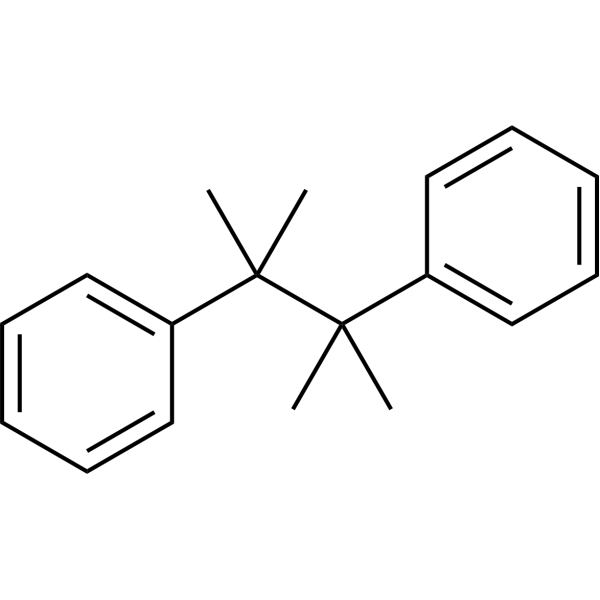
2,3-Dimethyl-2,3-diphenylbutane is a minor product formed during the thermal decomposition of dicumyl peroxide (DCP) in cumene, generated through radical coupling reactions. As an initiator capable of producing free radicals, 2,3-dimethyl-2,3-diphenylbutane promotes cross-linking or decomposition processes via initiating free radical reactions in fields such as polymer polymerization (e.g., modification of polyphenylene oxide processing), organic synthesis (e.g., DCP decomposition reactions), and coal processing (e.g., oxidation stabilization of coal tar pitch), thereby enhancing material properties or reaction efficiency .
loading...
    loading...
Cat. No.: HY-W250129
CAS No.: 94695-48-4
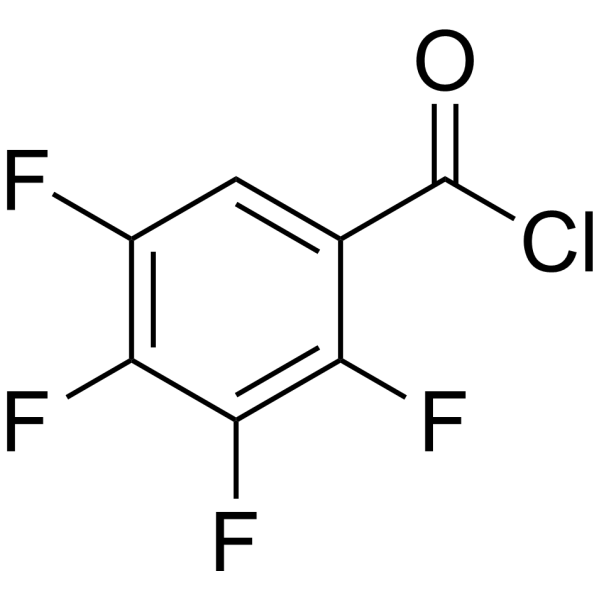
2,3,4,5-Tetrafluorobenzoyl chloride is a fluorinated organic compound that belongs to the class of benzoyl chlorides. It is a colorless liquid with a pungent smell and is mainly used as an intermediate in the synthesis of various pharmaceutical and pesticide compounds. 2,3,4,5-Tetrafluorobenzoyl chloride is an acylating agent that can react with a variety of nucleophiles, including amines, alcohols, and thiols, to form amides, esters, or thioesters, respectively. Its unique fluorine-containing structure can impart desired properties to target molecules, such as increased lipophilicity or increased stability against metabolic degradation. However, due to its high reactivity and potential health hazards, proper safety measures and handling procedures must be followed when using this compound.
loading...
    loading...
Cat. No.: HY-W356181
CAS No.: 95896-78-9
4,8-DiMeIQx is an orally active mutagen, selective dopaminergic neurotoxicant, and DNA damaging agent. 4,8-DiMeIQx can be isolated from cooked beef, sausage, pork, and chicken. 4,8-DiMeIQx induces reverse mutations in *Salmonella typhimurium* TA98 in the presence or absence of S9 mix, and forms DNA adducts in vivo in rat liver. 4,8-DiMeIQx exhibits selective neurotoxicity toward dopaminergic neurons. 4,8-DiMeIQx shows no activity against non-dopaminergic neurons. 4,8-DiMeIQx can be used in studies related to Parkinson's disease and colorectal cancer .
loading...
    loading...
Cat. No.: HY-W440896
Target:  

Liposome

Research Areas:  

Others

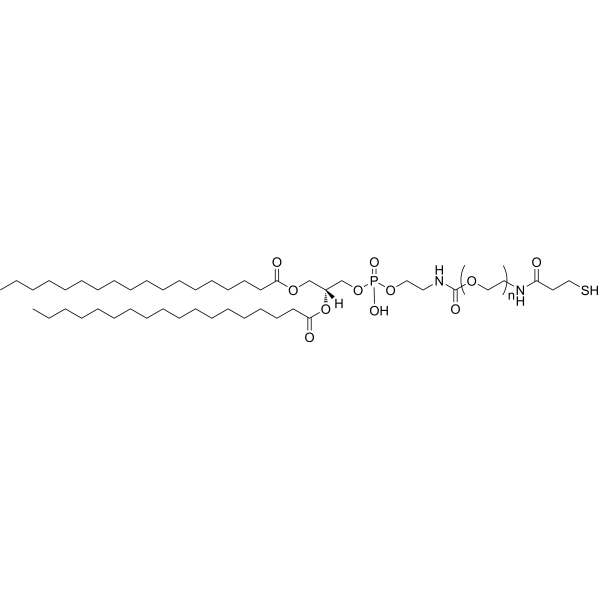
DSPE-PEG2000-SH is an amphiphilic thiol-functionalized DSPE-PEG molecule. DSPE-PEG2000-SH inserts into extracellular vesicle (EV) bilayer membranes via hydrophobic interactions, displaying surface thiol groups to form EV-SH crosslinkers.DSPE-PEG2000-SH enables crosslinking of EV-SH with 8-arm PEG-norbornene via thiol-ene photochemistry to construct hydrogels, with hydrogel mechanical properties tunable via PEG segment molecular weight variation.DSPE-PEG2000-SH can be used to encapsulate agents for drug delivery system, such as mRNA vaccine .
loading...
    loading...
Cat. No.: HY-W563489
CAS No.: 88431-47-4
Synonyms: POCA
Clomoxir (POCA) is a carnitine palmitoyltransferase I (CPT I) inhibitor with hypoglycemic activity. Clomoxir mediates the inhibition of CPT I via its active form POCA-CoA. Clomoxir inhibits long-chain fatty acid oxidation, ketogenesis, gluconeogenesis, de novo synthesis of cholesterol and fatty acids, and also mildly inhibits acetyl-CoA carboxylase. Clomoxir reduces blood glucose levels in various rodent and porcine models, alters plasma NEFA and cholesterol concentrations, induces hepatic lipid accumulation, peroxisome proliferation and mild myocardial hypertrophy in rats, and stimulates the pentose phosphate pathway in cultured human fibroblasts. Clomoxir can be used in diabetes-related research .
loading...
    loading...
Cat. No.: HY-W661499
CAS No.: 37338-80-0
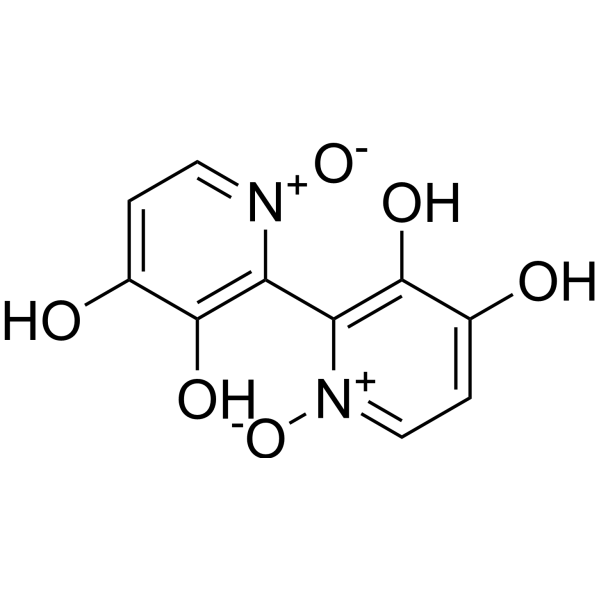
Orellanine, a nephrotoxic alkaloid found in Cortinarius orellanus, is an orally active and selective non-competitive inhibitor of alkaline phosphatase. Orellanine chelates iron, generates reactive oxygen species (ROS), induces DNA scission, forms ortho-semiquinone radicals, downregulates antioxidant defenses, and inhibits mitochondrial function. Orellanine induces caspase 8/9-mediated apoptosis. Orellanine inhibits synthesis of proteins, RNA, DNA, and mitochondrial protein synthesis, with metabolic activation required for cell-free protein synthesis inhibition. Orellanine can be used for the research of metastatic clear cell renal cell carcinoma, acute renal failure, chronic renal insufficiency, and kidney damage .
loading...
    loading...
Cat. No.: HY-W683900A
CAS No.: 58725-46-5
Research Areas:  

Others

(S)-3-Hydroxy-2-palmitamidopropanoic acid (sodium) (Compound C16Ser) is a serinate surfactants. (S)-3-Hydroxy-2-palmitamidopropanoic acid (sodium) can be used to study the effect of fatty acyl chain length on the foam properties. (S)-3-Hydroxy-2-palmitamidopropanoic acid (sodium) has the longer acyl chain, which enhances the intermolecular interaction, thereby facilitating a compact adsorption film at the interface. (S)-3-Hydroxy-2-palmitamidopropanoic acid (sodium) exhibits higher interfacial activity and forms more stable interfacial films under stronger intermolecular interaction .
loading...
    loading...
Cat. No.: HY-W724291
Synonyms: Dioctadecyldimethylammonium-d3 bromide; DODAB-d3
Research Areas:  

Others

Dimethyldioctadecylammonium-d3 bromide (Dioctadecyldimethylammonium-d3 bromide) is the deuterium labeled Dimethyldioctadecylammonium bromide (HY-131119). Dimethyldioctadecylammonium bromide is a synthetic cationic lipid commonly used in gene delivery and vaccine development. Also known as DODAB or DDAB, it consists of a positively charged ammonium head group and two long hydrophobic tails. These properties make it useful for forming liposomes and other lipid-based nanoparticles that can efficiently deliver genetic material into cells. In addition to its applications in biotechnology, DDAB is also used in surfactants, emulsifiers and fabric softeners. However, due to its potential toxicity and irritation, extreme care should be taken when handling DDAB.
loading...
    loading...
Cat. No.: HY-W775362
CAS No.: 3081-14-9
Synonyms: 77PD; DHPPD
Research Areas:  

Others

N,N'-Bis(1,4-dimethylpentyl)-p-phenylenediamine is a substituted p-phenylenediamine. N,N'-Bis(1,4-dimethylpentyl)-p-phenylenediamine scavenges ozone and forms nitroxyl radical. N,N'-Bis(1,4-dimethylpentyl)-p-phenylenediamine xhibits toxicity towards the aqatic bacterium V. fischeri (EC50 = 0.41 mg/L). N,N'-Bis(1,4-dimethylpentyl)-p-phenylenediamine can be used as an antiozonant. N,N'-Bis(1,4-dimethylpentyl)-p-phenylenediamine can be found in river water and sediment .
loading...
    loading...
Cat. No.: HY-W777283
CAS No.: 1189907-75-2
Idebenone- 13C,d3 is the deuterium labeled and 13C-labeled Idebenone (HY-N0303). Idebenone, a well-appreciated mitochondrial protectant, exhibits protective efficacy against neurotoxicity and can be used for the research of Alzheimer's disease, Huntington's disease. Idebenone (oxidised form) has a dose-dependent inhibitory effect on the enzymatic metabolism of arachidonic acid in astroglial homogenates (IC50=16.65 μM) . Idebenone, a coenzyme Q10 analog and an antioxidant, induces apoptotic cell death in the human dopaminergic neuroblastoma SHSY-5Y cells . Idebenone quickly crosses the blood-brain barrier.
loading...
    loading...
Cat. No.: HY-W800696
CAS No.: 2644752-86-1
BP Fluor 430 Azide is a water-soluble, green-fluorescent, azide-activated probe that reacts with terminal alkynes via a copper-catalyzed click reaction (CuAAC). It also reacts with strained cyclooctyne via a copper-free click chemistry reaction to form a stable triazole and does not require a Cu-catalyst or elevated temperatures. BP Fluor 430 is a bright, photostable, green-fluorescent probe with excitation near its absorption maximum at 432 nm and emission maximum at 539 nm. This probe is water soluble and pH-insensitive from pH 4 to pH 10. A next generation probe, BP Fluor 430 Picolyl Azide, is also available for detection of low abundance alkyne-tagged biomolecules.
loading...
    loading...
Cat. No.: HY-Y0531S
CAS No.: 33830-11-4
Synonyms: Tricyclo[3.3.1.1~3,7~]decan-1-ol-d15
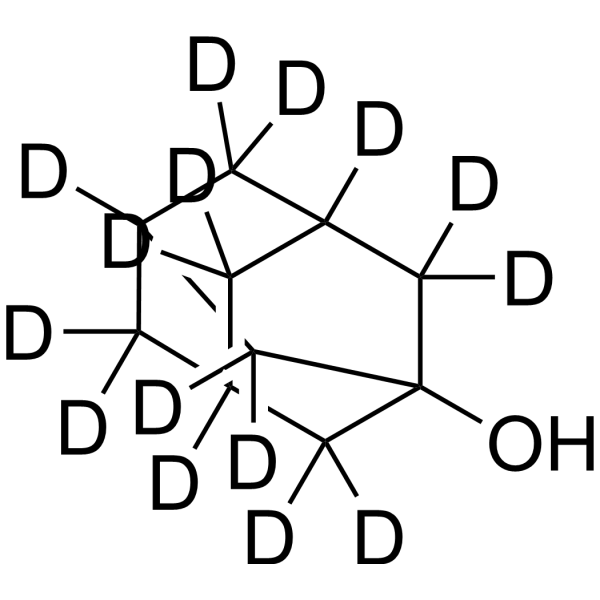
1-Adamantanol-d15 (Tricyclo[3.3.1.1~3,7~]decan-1-ol-d15) is the deuterium labeled 1-Adamantanol (HY-Y0531). 1-Adamantanol (Tricyclo[3.3.1.1~3,7~]decan-1-ol) is a hydroxylated derivative of Adamantane (HY-N2427). 1-Adamantanol serves as a substrate for regioselective hydroxylation reactions in Streptomyces strain SA8. 1-Adamantanol can form acrylate derivatives, which are used as photoresist layer materials .
loading...
    loading...
Cat. No.: HY-Y0532R
CAS No.: 128-09-6
Synonyms: Succinchlorimide (Standard)
N-Chlorosuccinimide (Standard) (Succinchlorimide (Standard)) is the analytical standard of N-Chlorosuccinimide (HY-Y0532). This product is intended for research and analytical applications. N-Chlorosuccinimide (Succinchlorimide) is an oxidizing, hydrolyzable biochemical reagent with bactericidal and amoebicidal activities. N-Chlorosuccinimide can either form N-chloramines via concerted transfer of Cl + or hydrolyze in aqueous solution to produce hypochlorous acid/hypochlorite. N-Chlorosuccinimide is effective in killing Shigella dysenteriae, Escherichia typhi and cysts of Entamoeba histolytica. N-Chlorosuccinimide can be formulated into fast-dispersing, fully soluble water purification tablets. N-Chlorosuccinimide is used in studies related to bacterial infections and parasitic infections .
loading...
    loading...

