6092 Results for "

forms

" in MedChemExpress (MCE) Product Catalog:
Products (6092)

6092 Results for "forms" in MCE Product Catalog:

Cat. No.: HY-Y0543R
CAS No.: 620-02-0
5-Methylfurfural (Standard) is the analytical standard of 5-Methylfurfural. This product is intended for research and analytical applications. 5-Methylfurfural is a chemical that can be utilized as food additive, intermediate in the production of agrochemicals, and precursor of certain anti-cancer natural products. 5-Methylfurfural is formed during the photoexposition of ranitidine hydrochloride. 5-Methylfurfural is an organic compound. 5-Methylfurfural has a strong tendency to be further hydrogenated to 2,5-dimethylfuran (DMF). 5-Methylfurfural can predominantly evoke skin inflammation and barrier disintegration. 5-Methylfurfural degrades native DNA through the formation of single-strand breaks .
loading...
    loading...
Cat. No.: HY-Y1010
CAS No.: 556-52-5
Synonyms: Glycidol
Target:  

Drug Isomer

Research Areas:  

Cancer

Oxiran-2-ylmethanol (Glycidol) is an ester product. Oxiran-2-ylmethanol induces base pair point mutations in bacterial strains and structural chromosome aberrations in cultured cells. Oxiran-2-ylmethanol forms N-(2,3-dihydroxypropyl)valine hemoglobin adducts. Oxiran-2-ylmethanol acts as an animal carcinogen but does not significantly induce micronucleated immature erythrocytes in animal bone marrow. Oxiran-2-ylmethanol enables anionic polymerization to produce linear poly(glycidol). Oxiran-2-ylmethanol can be used for cancer-related research .
loading...
    loading...
Cat. No.: HY-Y1078
CAS No.: 4637-24-5
Synonyms: N-Dimethoxymethyl-N,N-dimethylamine
Research Areas:  

Others

DMF-DMA (N-Dimethoxymethyl-N,N-dimethylamine) is a reagent with both condensation and alkylation functions. DMF-DMA can undergo condensation reactions with active methylene groups or amino groups to generate enamine and imino derivatives, and can also act as an alkylating agent to methylate nitrogen and oxygen atoms in heterocyclic structures. DMF-DMA is widely used in the synthesis of enaminones and dimethylamino imine intermediates, as well as in the construction of heterocyclic backbones such as pyridine, pyrimidine and pyrazole. DMF-DMA can also serve as a polar aprotic co-solvent; although DMF-DMA cannot dissolve cellulose alone, it can form an efficient cellulose dissolution system with diallylimidazolium methoxyacetate .
loading...
    loading...
Cat. No.: HY-L912V0
10,000,000 compounds
With MCE's 40,662 BBs, covering around 273 reaction types, more than 40 million molecules were generated. Compounds which comply with Ro5 criteria were selected. Inappropriate chemical structures, such as PAINS motifs and synthetically difficult accessible, were removed. Based on Morgan Fingerprint, molecular clustering analysis was carried out, and molecules close to each clustering center were extracted to form this drug-like and synthesizable diversity library. These selected molecules have 805,822 unique Bemis-Murcko Scaffolds (BMS) with diversified chemical space. This library is highly recommended for AI-based lead discovery, ultra-large virtual screening and novel lead discovery.
Cat. No.: HY-107442R
CAS No.: 2101200-10-4
PROTAC BRD4-binding moiety 1 (Standard) is the analytical standard of PROTAC BRD4-binding moiety 1 (HY-107442). This product is intended for research and analytical applications. PROTAC BRD4-binding moiety 1 is a ligand for BRD4. PROTAC BRD4-binding moiety 1 binds to cereblon ligand via a linker to form PROTAC to degrade BRD4 (HY-133136) . PROTAC BRD4-binding moiety 1 is a click chemistry reagent, it contains an Alkyne group and can undergo copper-catalyzed azide-alkyne cycloaddition (CuAAc) with molecules containing Azide groups.
loading...
    loading...
Cat. No.: HY-109136R
CAS No.: 1402936-61-1
Synonyms: BAY 1101042 (Standard)
Runcaciguat (Standard) is the analytical standard of Runcaciguat (HY-109136). This product is intended for research and analytical applications. Runcaciguat (BAY 1101042) is a selective, orally active, allosteric activator of soluble guanylate cyclase (sGC) that specifically targets its oxidized and heme-free form. Runcaciguat binds to sGC in a histidine-dependent manner and restores cyclic guanosine monophosphate (cGMP) production under oxidative stress, independent of nitric oxide (NO) or heme. Runcaciguat exhibits renoprotective and cardioprotective activities, such as reduced proteinuria and improved renal function. Runcaciguat is primarily being studied in chronic Kidney disease (CKd) associated with hypertension, diabetes, and metabolic disorders, as well as potential cardiovascular indications such as heart failure with preserved ejection fraction (HFpEF) .
loading...
    loading...
Cat. No.: HY-113357R
CAS No.: 588-30-7
m-Coumaric acid (Standard) is the analytical standard of m-Coumaric acid. This product is intended for research and analytical applications. m-Coumaric acid is a polyphenol metabolite from caffeic acid, formed by the gut microflora and the amount in human biofluids is diet-dependant. m-Coumaric acid is a BBB-penetrant metabolite of chlorogenic acid. m-Coumaric acid stimulates the cerebral nerves in vitro. m-Coumaric acid can evoke neurite outgrowth in hippocampal neuronal cells. m-Coumaric acid can promote neuronal differentiation. m-Coumaric acid increases spontaneous locomotor activity in mice by acting on the central nervous system. m-Coumaric acid inhibits the oxidation of L-dopa by epidermis tyrosinase. m-Coumaric acid attenuates non-catalytic protein glycosylation in retinas of diabetic rats .
loading...
    loading...
Cat. No.: HY-118159
CAS No.: 110231-30-6
Purity:  99.68%
Synonyms: DPPP
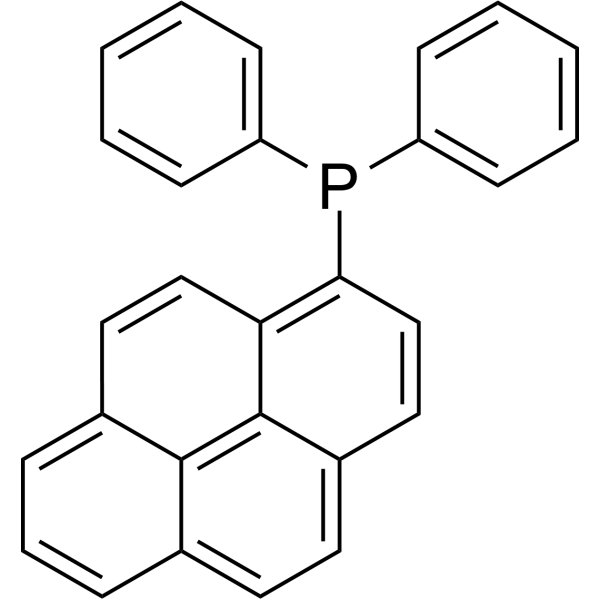
Diphenyl-1-pyrenylphosphine (DPPP) is a functional organic molecule with both fluorescent properties and metal coordination ability, which is commonly used in materials and coordination chemistry research. Upon exposure to ultraviolet light, Diphenyl-1-pyrenylphosphine undergoes photoinduced phosphorus atom oxidation to form O-DPPP, triggering a transition from aggregation-induced emission (AIE) to aggregation-caused quenching (ACQ). Diphenyl-1-pyrenylphosphine reacts stoichiometrically with lipid hydroperoxides to produce fluorescent diphenyl-1-pyrenylphosphine oxide. Diphenyl-1-pyrenylphosphine can insert into cell membranes to monitor lipid peroxidation processes in living cells .
loading...
    loading...
Cat. No.: HY-125954S
Synonyms: UDP-α-D-glucuronic acid-13C,15N2
Uridine diphosphate glucuronic acid- 13C, 15N2 (UDP-α-D-glucuronic acid- 13C, 15N2) is the 13C- and 15N-labeled Uridine diphosphate glucuronic acid (HY-125954). Uridine diphosphate glucuronic acid ammonium (UDP-α-D-glucuronic acid ammonium) is a glucuronic acid donor. Uridine diphosphate glucuronic acid ammonium transfers its glucuronic acid moiety to acceptor molecules, thereby forming "ether" glucuronides, while being converted into uridine 5'-pyrophosphate. Uridine diphosphate glucuronic acid ammonium serves as a substrate for Arabidopsis UDP-GlcA 4-epimerase 1, and undergoes reversible 4-epimerization to generate UDP-α-D-galacturonic acid .
loading...
    loading...
Cat. No.: HY-133535
CAS No.: 2093120-32-0
Synonyms: PA-JF646-NHS
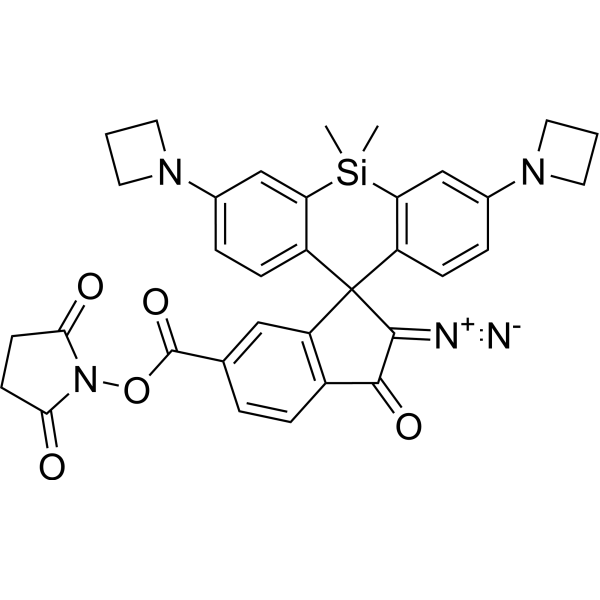
PA Janelia Fluor 646, SE (PA-JF646-NHS) is a photo-activatable fluorescent dye. PA Janelia Fluor 646, SE is a far-red light-excited, 405 nm-activated NHS ester-based dye. Janelia Fluor fluorescent dyes can be chemically conjugated to the specific HaloTag substrate (a chloroalkane ligand) to form a fluorescent ligand, rather than binding directly to the HaloTag protein itself. PA Janelia Fluor 646, SE can achieve extremely low background and single-molecule-level ultra-high-resolution imaging through photo-controlled switching, making it a powerful tool for live cell super-resolution microscopy technology (Ex/Em = 646/664 nm).
loading...
    loading...
Cat. No.: HY-134058S
Synonyms: Butylethylcarbinol-d4
3-Heptanol-d4 (Butylethylcarbinol-d4) is the deuterium labeled 3-Heptanol (HY-134058). 3-Heptanol is a biotransformation product of n-heptane. 3-Heptanol can act as the building block in the synthesis of 4-(3-adamantan-1-yl-ureido)-butyric acid and cyclohexanecarboxylic acid derivatives as sEH inhibitors. 3-Heptanol can be used as a solvent to form microenvironments around single-walled carbon nanotubes. 3-Heptanol can be used in the preperation of substituted pyrimidine derivatives as C1 domain-targeted isophthalate analogs to study their binding affinities towards PKCα isoform .
loading...
    loading...
Cat. No.: HY-134160
CAS No.: 696-06-0
Purity:  99.90%
Synonyms: 5-DHFU; 5-Fluorodihydropyrimidine-2,4-dione; 5-Fluorodihydrouracil
Research Areas:  

Cancer

5,6-Dihydro-5-Fluorouracil (5-DHFU; 5-Fluorodihydropyrimidine-2,4-dione) is the active metabolite of the thymidylate synthase inhibitor prodrug 5-fluorouracil (HY-90006), which is formed from 5-fluorouracil by dihydropyrimidine dehydrogenase (DPD). 5,6-Dihydro-5-Fluorouracil is cytotoxic to HaCaT keratinocytes (IC50=13.5 μM). Intravenous administration of 5,6-Dihydro-5-Fluorouracil (90 mg/kg/wk) in combination with 5-fluorouracil and the DPD inhibitor eniluracil (HY-10533) slows tumor growth in a rat colon cancer model.
loading...
    loading...
Cat. No.: HY-138658
Synonyms: JF526, SE; JF526, NHS
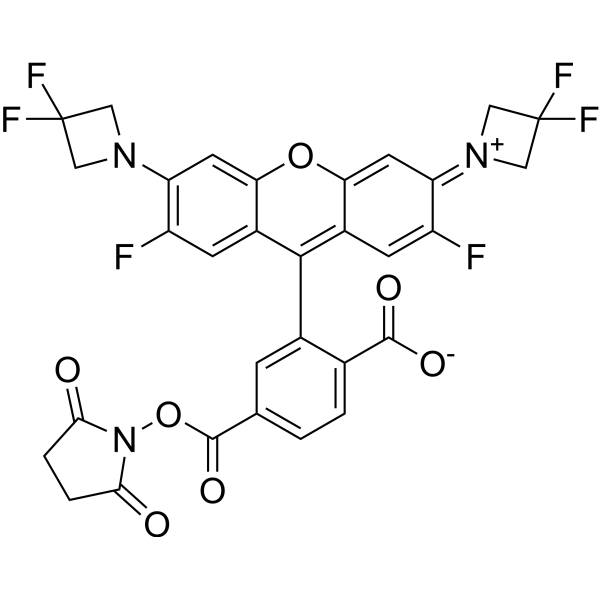
Janelia Fluor 526, SE (JF526,SE) is a fluorogenic yellow fluorescent dye that contains NHS ester group. JF526 is a versatile scaffold for fluorogenic ligands, including labels for genetically encoded self-labeling protein tags and stains for endogenous structures . Janelia Fluor fluorescent dyes can be chemically conjugated to the specific HaloTag substrate (a chloroalkane ligand) to form a fluorescent ligand, rather than binding directly to the HaloTag protein itself. Janelia Fluor products are licensed under U.S. Pat. Nos. 9,933,417, 10,018,624 and 10,161,932 and other patents from Howard Hughes Medical Institute (Ex/Em = 526/550 nm).
loading...
    loading...
Cat. No.: HY-139621
CAS No.: 2916559-62-9
Research Areas:  

Cancer

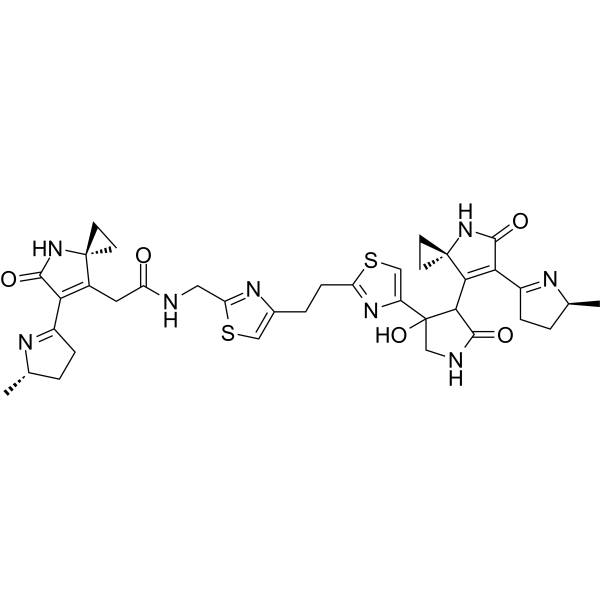
Colibactin 742 is a covalently binding DNA-damaging agent targeting DNA, with an IC50 of 5.2 μM against human cervical cancer cells (HeLa). Colibactin 742 covalently binds to DNA, forming interstrand crosslinks (ICLs), activating the Fanconi anemia DNA repair pathway, inducing γH2AX and FANCD2 foci formation and cell cycle arrest, while exacerbating mismatch repair deficiency (MMRd)-related mutations. Colibactin 742 can mimic the genotoxicity of natural Colibactin while avoiding its instability, and is mainly used in colorectal cancer (CRC) related research, including microbial tumorigenesis mechanisms, DNA damage repair pathways, and mutation signature analysis .
loading...
    loading...
Cat. No.: HY-139972
CAS No.: 2761281-50-7
Purity:  99.42%
PROTAC (H-PGDS)-7 is a selective, linker-free H-PGDS PROTAC degrader with a DC50 of 17.3 pM. PROTAC (H-PGDS)-7 binds to CRBN and forms a ternary complex with H-PGDS, inducing the degradation of H-PGDS via the ubiquitin-proteasome system through polyubiquitination and proteasomal degradation processes. PROTAC (H-PGDS)-7 inhibits the upregulated expression of TNFα, IL-1β, TGFβ1 and CD11b in mice with cardiac hypertrophy models. PROTAC (H-PGDS)-7 can be used in studies related to Duchenne muscular dystrophy and allergic diseases .
loading...
    loading...
Cat. No.: HY-141635
CAS No.: 61012-46-2
Target:  

Endogenous Metabolite

Research Areas:  

Metabolic Disease

cis-11,14-Eicosadienoic acid methyl ester is a more lipid soluble form of the ω-6 C20-2 fatty acid 11(Z),14(Z)-eicosadienoic acid, a naturally occurring PUFA. 11(Z),14(Z)-Eicosadienoic acid competitively inhibits inosine 5’-monophosphate dehydrogenase (Ki=3.1 μM) and inhibits the binding of LTB4 to its receptor on neutrophils (Ki=3.0 μM). Also, serum levels of eicosadienoic acids negatively correlate with degree of sleep disturbance.3 Eicosadienoic acids are converted by desaturases, in vivo, to eicosatrienoic acids, which are potent vasodilators.
loading...
    loading...
Cat. No.: HY-143203
CAS No.: 7266-53-7
Purity:  ≥98.0%
Synonyms: 1-Stearoyl-2-linoleoyl-sn-glycero-3-phosphoethanolamine
Target:  

Liposome

Research Areas:  

Cardiovascular Disease Cancer

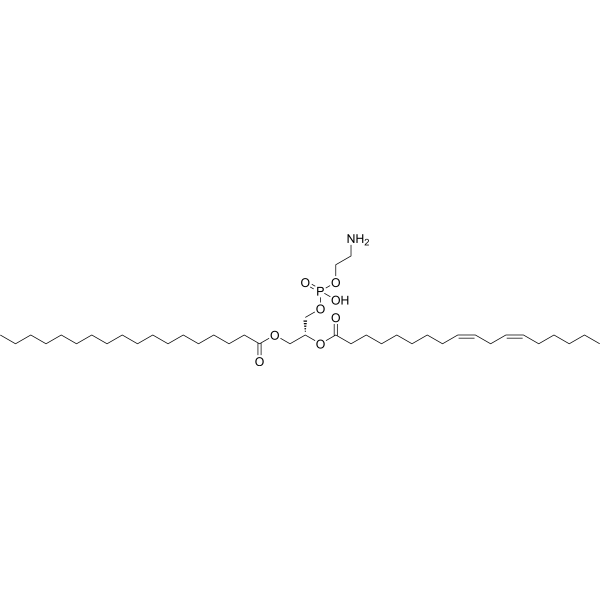
18:0-18:2 PE (1-Stearoyl-2-linoleoyl-sn-glycero-3-phosphoethanolamine) is a glycerophospholipid compound and an essential component of biological cell membranes. 18:0-18:2 PE possesses biological activities including regulation of phospholipid metabolism, antioxidant activity, maintenance of cell membrane fluidity, immune protection, and regulation of signaling pathways. 18:0-18:2 PE in the hot processing process, its unsaturated fatty acids will degrade to form a variety of odor active compounds. 18:0-18:2 PE can be applied in food processing and research on phospholipid metabolism-related diseases .
loading...
    loading...
Cat. No.: HY-152154
CAS No.: 3035008-40-0
Purity:  99.41%
Synonyms: Nampt degrader-2
Target:  

PROTACs NAMPT

Research Areas:  

Cancer

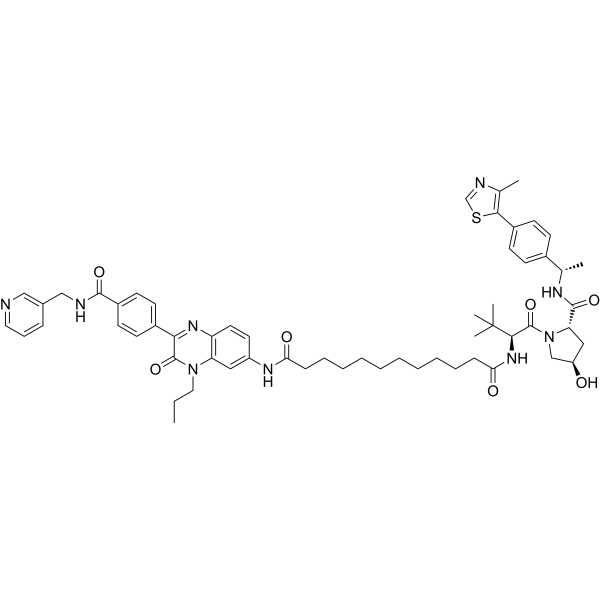
PROTAC NAMPT Degrader-30 is a PROTAC degrader targeting nicotinamide phosphoribosyltransferase (NAMPT), with a DC50 of 8.4 nM in A2780 cells. PROTAC NAMPT Degrader-30 binds to the VHL E3 ligase and forms a ternary complex with NAMPT, which induces ubiquitination and subsequent proteasomal degradation of NAMPT, thereby inhibiting the enzymatic activity of NAMPT. PROTAC NAMPT Degrader-30 reduces intracellular NAD + levels and suppresses tumor cell proliferation. PROTAC NAMPT Degrader-30 exhibits a fluorescence turn-on response to the NAMPT protein, enabling real-time visualization of the NAMPT degradation process in living cells. PROTAC NAMPT Degrader-30 is applicable for research on ovarian cancer .
loading...
    loading...
Cat. No.: HY-153575
Target:  

PROTACs Bacterial

Research Areas:  

Infection

BacPROTAC-1 is a BacPROTAC degrader that induces the degradation of the target protein mSA by recruiting ClpC/ClpC1. BacPROTAC-1 binds to mSA, Bacillus subtilis ClpCNTD and Mycobacterium smegmatis ClpC1NTD with Kd values of 3.9, 2.8 and 0.69 μM, respectively. BacPROTAC-1 forms a ternary complex between the substrate and ClpC, promotes ClpC reassembly and activation, and induces ATP-dependent degradation of mSA and mSA fusion model substrates via the ClpCP or ClpC1P1P2 protease system. BacPROTAC-1 can be used in studies on bacterial targeted protein degradation, bacterial protein homeostasis and antibacterial target discovery .
loading...
    loading...
Cat. No.: HY-153830
CAS No.: 4201-62-1
Synonyms: C16 Lactosylceramide (d18:1/16:0)
LacCer (d18:1/16:0) (C16 Lactosylceramide (d18:1/16:0)) is an endogenous bioactive sphingolipid that can form membrane microdomains with Lyn kinase and the αi subunits of inhibitory G protein-coupled receptors (GPCRs). The levels of LacCer (d18:1/16:0) are elevated in the plasma of insulin-resistant cattle. In a mouse model of Niemann-Pick type C1 disease (a neurodegenerative cholesterol-sphingolipid lysosomal storage disorder), the expression of LacCer (d18:1/16:0) is also upregulated. LacCer (d18:1/16:0) can be used in research on metabolic diseases and neurodegenerative diseases .
loading...
    loading...

