283 Results for "

protons

" in MedChemExpress (MCE) Product Catalog:
Products (283)

283 Results for "protons" in MCE Product Catalog:

Cat. No.: HY-109079
CAS No.: 1902954-60-2
Purity:  99.86%
Synonyms: DWP14012; Fexuprazan
Target:  

Proton Pump

Research Areas:  

Metabolic Disease

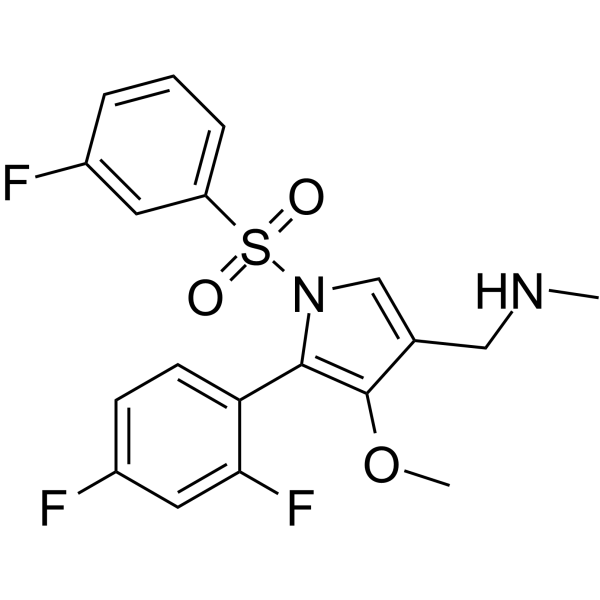
Abeprazan (DWP14012) is a potassium-competitive acid blocker. Abeprazan inhibits H +, K +- ATPase by reversible potassium-competitive ionic binding with no acid activation required. Abeprazan is developed as a potential alternative to proton pump inhibitor for the treatment of acid-related diseases .
loading...
    loading...
Cat. No.: HY-109079A
CAS No.: 1902954-87-3
Purity:  99.87%
Synonyms: DWP14012 hydrochloride; Fexuprazan hydrochloride
Target:  

Proton Pump

Research Areas:  

Metabolic Disease

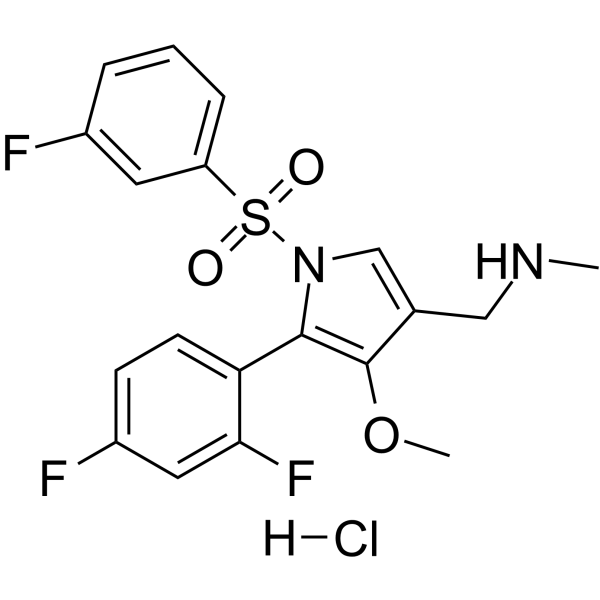
Abeprazan hydrochloride (DWP14012 hydrochloride) is a potassium-competitive acid blocker. Abeprazan hydrochloride inhibits H +, K +- ATPase by reversible potassium-competitive ionic binding with no acid activation required. Abeprazan hydrochloride is developed as a potential alternative to proton pump inhibitor for the treatment of acid-related diseases .
loading...
    loading...
Cat. No.: HY-P10352A
Target:  

Bacterial

Research Areas:  

Infection

Pediocin PA-1 TFA is a class IIa bacteriocin that specifically binds to membrane proteins of susceptible Gram-positive bacteria (such as Listeria monocytogenes) to form voltage-independent hydrophilic pores, leading to dissipation of proton motive force, ATP depletion and cell death. Pediocin PA-1 TFA shows no significant activity against intact Gram-negative bacteria, strains carrying immunity genes and obligate anaerobic commensal gut microbiota, and its bactericidal function depends on the integrity of disulfide bonds, with activity lost upon reduction. Pediocin PA-1 TFA can be used not only as a food biopreservative but also for research on listeriosis .
loading...
    loading...
Cat. No.: HY-139557
CAS No.: 2133852-18-1
Purity:  99.96%
Synonyms: JP-1366
Target:  

Proton Pump

Research Areas:  

Inflammation/Immunology

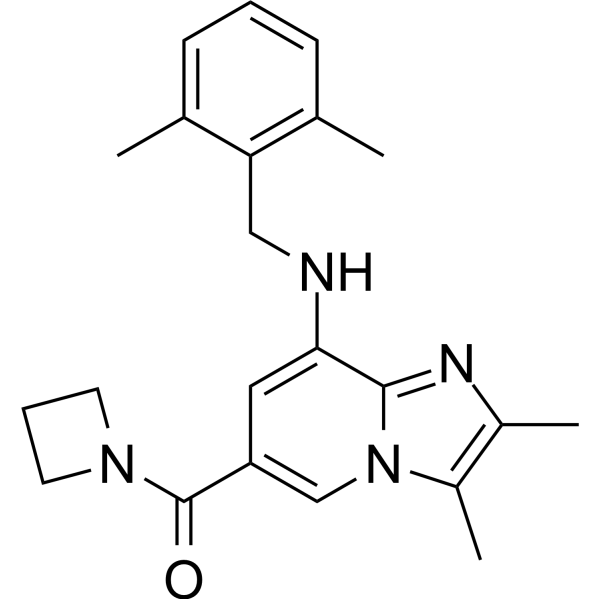
Zastaprazan (JP-1366) is a proton pump inhibitor and a potent potassium-competitive acid blocker. Zastaprazan can be used in the research of gastrointestinal inflammatory diseases or gastric acid-related diseases such as gastroesophageal reflux disease .
loading...
    loading...
Cat. No.: HY-139557A
CAS No.: 2936619-43-9
Synonyms: JP-1366 citrate
Target:  

Proton Pump

Research Areas:  

Inflammation/Immunology

Zastaprazan (JP-1366) citrate is a Proton pump inhibitor and potent potassium-competitive acid blocker. Zastaprazan citrate can be used in the research of gastrointestinal inflammatory diseases or gastric acid-related diseases such as gastroesophageal reflux disease .
loading...
    loading...
Cat. No.: HY-100705
CAS No.: 20357-25-9
Purity:  98.76%
Synonyms: 6-Nitroveratraldehyde
Target:  

Drug Intermediate

Research Areas:  

Neurological Disease

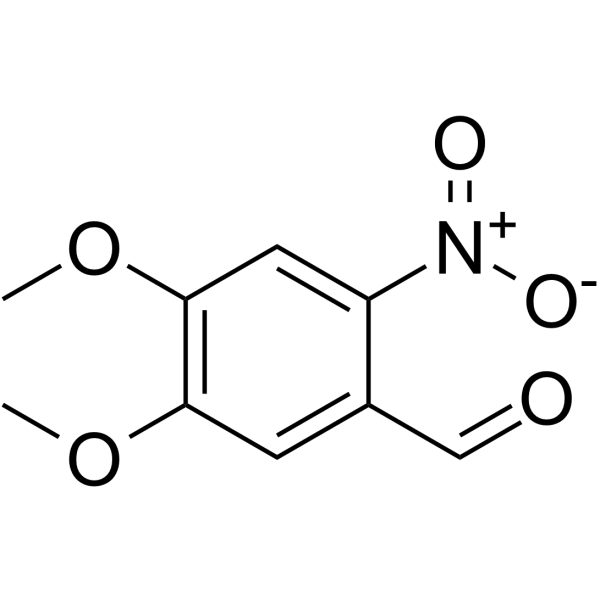
DMNB (6-Nitroveratraldehyde) is a photolabile proton donor that releases acidic substances when excited at a wavelength of 405 nM. DMNB can be used for the synthesis of no-carrier-added 6-[18F]fluoro-L-DOPA (6-FDOPA). DMNB is also applicable to the preparation of o-nitroaryl-bis (5-methylfur-2-yl) methanes and the synthesis of alpha-asarone (HY-N0700). DMNB is an enzyme involved in the non-homologous end joining (NHEJ) pathway responsible for DNA double-strand break (DSB) repair. DMNB can be used in PET studies of the dopaminergic system .
loading...
    loading...
Cat. No.: HY-Y0286
CAS No.: 506-87-6
Synonyms: Hartshorn salt, 99%
Ammonium carbonate (Ammonium carbonate), 99% is a solid amino compound that functions as a buffer, pH regulator, pore-forming agent, and electrocatalytic oxidation substrate. Ammonium carbonate, 99% is a GRAS-grade direct food additive with no restricted daily intake specified by FAO/WHO, and it shows no acute skin toxicity, clinical signs of toxicity, or effects on body weight in rats. Ammonium carbonate, 99% undergoes electrocatalytic oxidation in alkaline solutions with a Pt/C catalyst (carbonate adsorption interferes with activity). Ammonium carbonate, 99% can serve as a fuel for low-temperature polymer fuel cells and anion exchange membrane fuel cells (with performance superior to pure ammonia), and can also form pores in the carrier-free Pt cathode catalyst layer after low-temperature decomposition, thereby enhancing catalyst activity under low-humidity conditions and the performance of proton exchange membrane fuel cells .
loading...
    loading...
Cat. No.: HY-D0077
CAS No.: 195136-58-4
Synonyms: Oregon green 488
Target:  

Fluorescent Dye

Research Areas:  

Others

2',7'-Difluorofluorescein (Oregon green 488) is a fluorescein derivative and a pH-sensitive fluorescent probe (pKa ~4.7). Upon excitation at 488 nm, 2',7'-Difluorofluorescein exhibits pH-sensitive fluorescence intensity through the formation of dianions, while its pH sensitivity decreases under excitation at 450 nm, allowing its use in ratiometric pH analysis. 2',7'-Difluorofluorescein can be used for the quantitative analysis of pH values in the range of 2-7 in submicron aerosol particles. 2',7'-Difluorofluorescein undergoes buffer-mediated and buffer-free excited-state proton transfer between different protonated forms, and its cationic form undergoes rapid excited-state deprotonation. 2',7'-Difluorofluorescein is resistant to photodegradation, maintains stable absorption and fluorescence properties within the physiological pH range, and serves as a fluorescent protein label, a component of Ca 2+ indicators, a fluorescent imaging agent, and an anisotropy probe .
loading...
    loading...
Cat. No.: HY-W140203
CAS No.: 2963-66-8
Target:  

Fluorescent Dye

Research Areas:  

Others

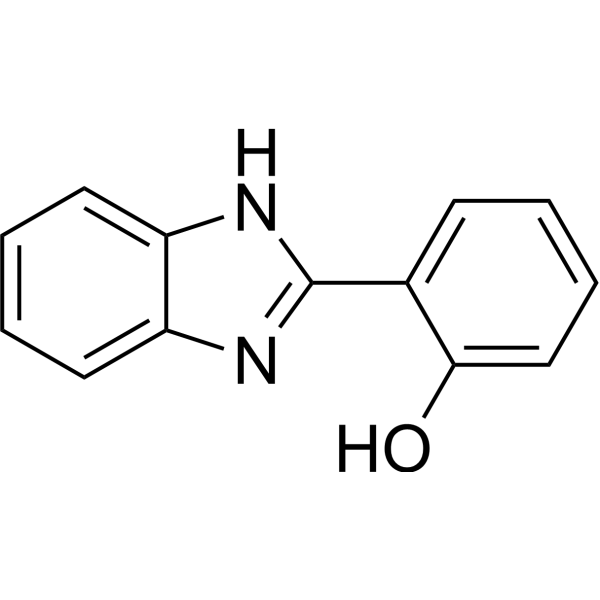
2-(2′-Hydroxyphenyl) benzimidazole is the most extensively studied excited-state intramolecular proton transfer (ESIPT) molecule, exhibiting normal and tautomer emissions. 2-(2′-Hydroxyphenyl) benzimidazole has been applied as a fluorescent probe in various systems .
loading...
    loading...
Cat. No.: HY-P10817
Corza6 is a potent and selective human voltage-gated proton channel (hHv1) peptide inhibitor. Corza6 binds to the external voltage sensor domain (VSD) loop in hHv1 with a Kd of ~1 nM at the natural, hyperpolarized resting membrane potential (RMP) of mammalian cells. Corza6 allows capacitation in sperm and permits sustained reactive oxygen species (ROS) production in white blood cells (WBCs) .
loading...
    loading...
Cat. No.: HY-P10352
CAS No.: 111745-56-3
Target:  

Bacterial

Research Areas:  

Infection

Pediocin PA 1 is a class IIa bacteriocin that specifically binds to membrane proteins of susceptible Gram-positive bacteria (such as Listeria monocytogenes) to form voltage-independent hydrophilic pores, leading to dissipation of proton motive force, ATP depletion and cell death. Pediocin PA 1 shows no significant activity against intact Gram-negative bacteria, strains carrying immunity genes and obligate anaerobic commensal gut microbiota, and its bactericidal function depends on the integrity of disulfide bonds, with activity lost upon reduction. Pediocin PA 1 can be used not only as a food biopreservative but also for research on listeriosis .
loading...
    loading...
Cat. No.: HY-W016371
CAS No.: 33216-52-3
Synonyms: 3,4,5-threechlorine pyridine
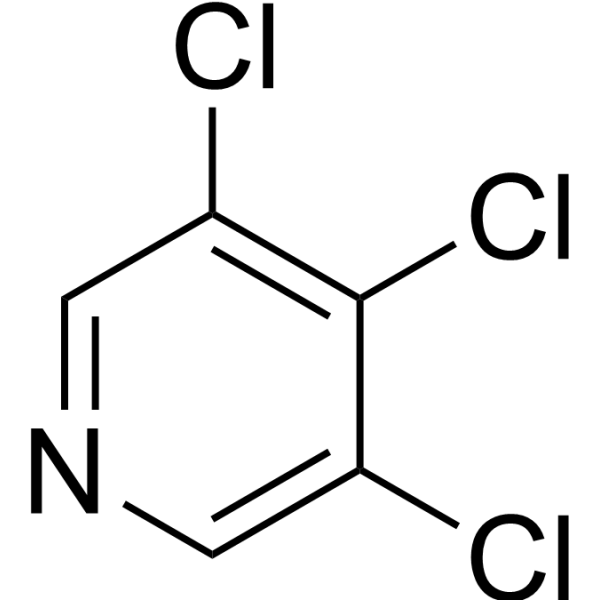
3,4,5-Trichloropyridine is a chlorinated pyridine compound and also serves as an internal standard for quantitative proton nuclear magnetic resonance spectroscopy .
loading...
    loading...
Cat. No.: HY-I0259
CAS No.: 118-46-7
8-Amino-2-naphthol is a photoactive charge transfer compounds, which can be used as fluorescent probe. 8-Amino-2-naphthol undergoes excited-state proton transfer (ESPT) to form a zwitterion under acidic conditions, where the photoacidity of its hydroxyl group is regulated by the protonation state of the amino group, enabling pH to act as an on/off switch for photoacidity. 8-Amino-2-naphthol is also utilized as chiral organocatalyst .
loading...
    loading...
Cat. No.: HY-P10817A
Corza6 TFA is a potent and selective human voltage-gated proton channel (hHv1) peptide inhibitor. Corza6 TFA binds to the external voltage sensor domain (VSD) loop in hHv1 with a Kd of ~1 nM at the natural, hyperpolarized resting membrane potential (RMP) of mammalian cells. Corza6 TFA allows capacitation in sperm and permits sustained reactive oxygen species (ROS) production in white blood cells (WBCs) .
loading...
    loading...
Cat. No.: HY-75070
CAS No.: 3886-70-2
Research Areas:  

Others

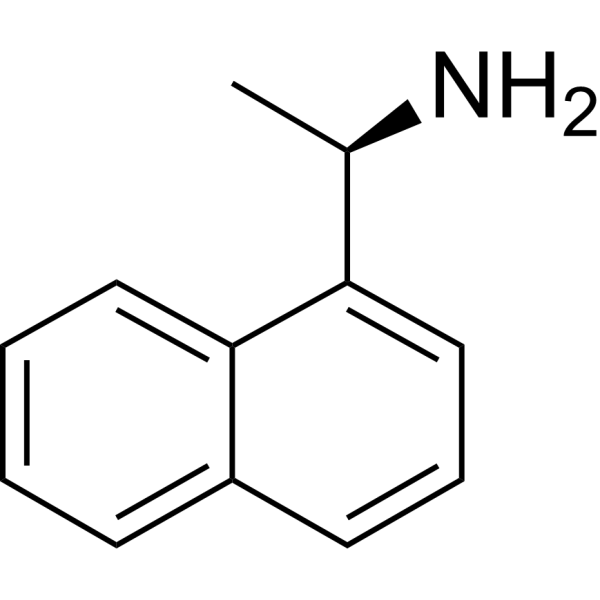
(+)-1-(1-Naphthyl)ethylamine ((+)-1-(1-NEA)) is a chiral modifier used to introduce enantioselectivity in catalytic hydrogenation reactions. 1-NEA can undergo H-D exchange with D2 in solution to form N-D bonds. That is, 1-NEA can complete Pt surface adsorption and protonation through amine N atoms, indicating that NEA molecules have the potential to impart enantioselectivity to Pt hydrogenation catalysts .
loading...
    loading...
Cat. No.: HY-100560S
CAS No.: 721948-65-8
Purity:  98.69%
Synonyms: (S)​-​(+)​-​Abscisic acid-d6; ABA-d6
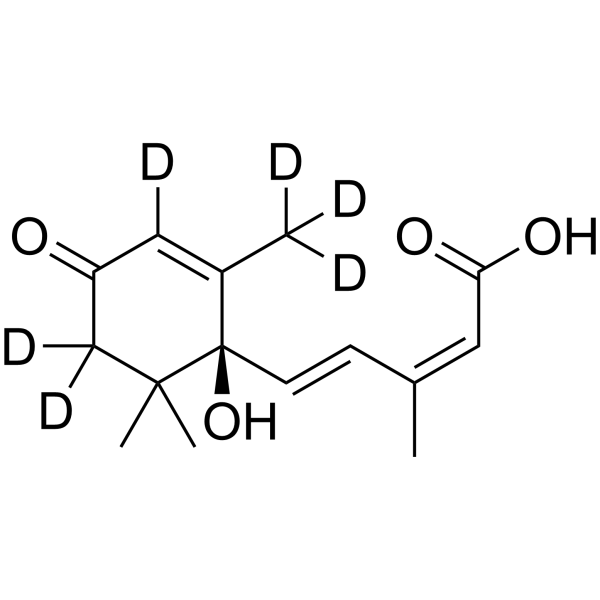
Abscisic acid-d6 is deuterium labeled Abscisic acid. Abscisic acid inhibits proton pump (H +-ATPase) .
loading...
    loading...
Cat. No.: HY-W015987
CAS No.: 84418-43-9
Synonyms: Fmoc-NH2
Research Areas:  

Others

9-Fluorenylmethyl carbamate (Fmoc-NH2) is an amide compound with an Fmoc protecting group, which can be used as a photobase initiator to prepare organosilane-based proton exchange membranes .
loading...
    loading...
Cat. No.: HY-W007648
CAS No.: 3196-73-4
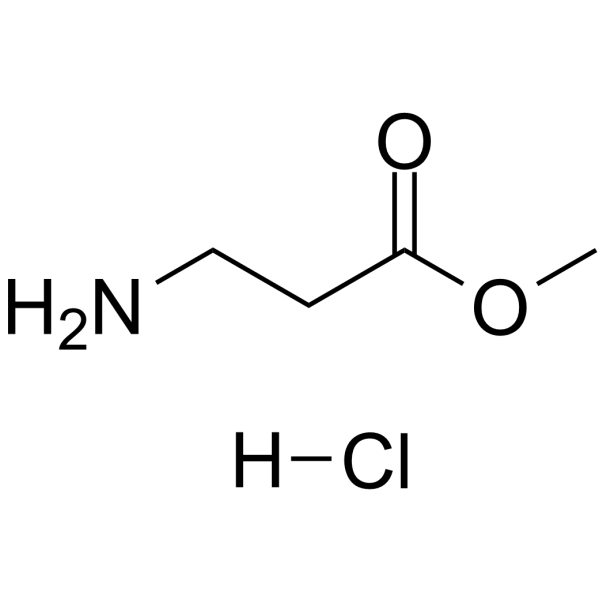
Synonyms: β-Alanine methyl ester hydrochloride
Methyl 3-aminopropanoate hydrochloride (β-Alanine methyl ester hydrochloride) is a β-alanine derivative with antioxidant activity. Methyl 3-aminopropanoate hydrochloride reduces oxidation-related changes in Glycine max soybean oil and degummed Glycine max soybean oil at frying temperatures, including the loss of olefinic protons and bis-allylic protons as well as the formation of polymerized triglycerides. Methyl 3-aminopropanoate hydrochloride contributes to the synthesis of the Bcl-2 inhibitor probe Nap-4 .
loading...
    loading...
Cat. No.: HY-W035904
CAS No.: 539-80-0
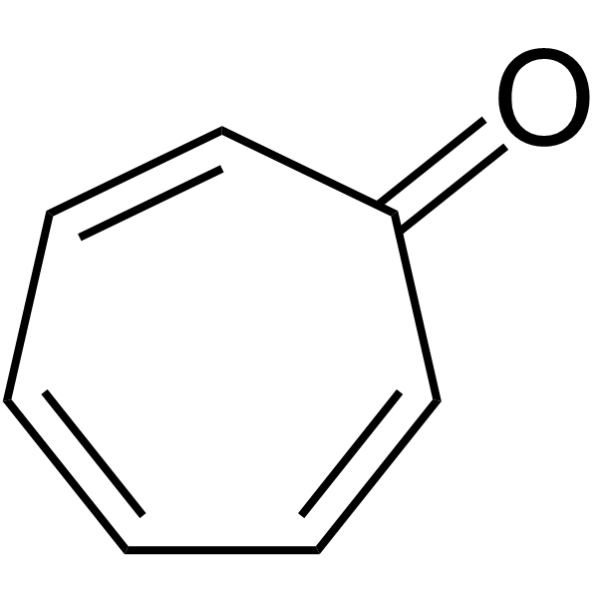
Synonyms: Cycloheptatrienone
Tropone (Cycloheptatrienone) is a non-benzenoid aromatic natural product that acts as a membrane reverse transporter and metal chelator. Tropone disrupts the proton motive force by affecting the transmembrane proton gradient and functions as a quorum sensing signal through LuxR-type transcriptional regulators. Tropone exhibits broad-spectrum antibiotic, anticancer, algicidal, and probiotic activities. As a virulence factor toxic to rice seedlings, Tropone promotes biofilm formation in Burkholderia plantarii and induces neurotoxicity involving mitochondrial and cytoskeletal damage, increased Ca 2+ influx, and oxidative stress. Tropone is used in the study of bacterial infections .
loading...
    loading...
Cat. No.: HY-113654
CAS No.: 1026876-55-0
Target:  

TRP Channel

Research Areas:  

Others

AMG 7905 is a hypothermia-inducing transient receptor potential vanilloid type 1 (TRPV1) antagonist. AMG 7905 potentiates TRPV1 channels activation by protons and drives the reflectory inhibition of thermogenesis and tail-skin vasoconstriction, while potently blocking channel activation by capsaicin .
loading...
    loading...

