779 Results for "

Dose-dependent

" in MedChemExpress (MCE) Product Catalog:
Products (779)

779 Results for "Dose-dependent" in MCE Product Catalog:

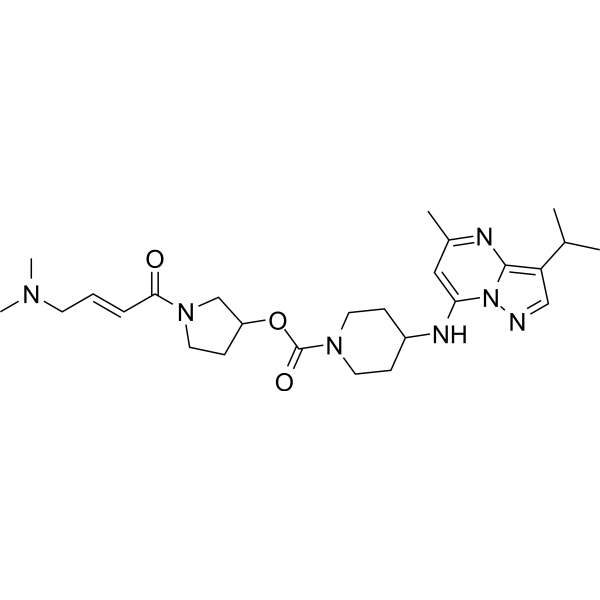
Cat. No.: HY-111137
CAS No.: 916890-10-3
Synonyms: XC-302 free base
Target:  

Akt

Research Areas:  

Cancer

Puquitinib (XC-302 free base) is a multi-target inhibitor with the activity of inducing autophagy in nasopharyngeal carcinoma cells by inhibiting the PI3K/AKT/mTOR signaling pathway. Puquitinib was able to inhibit the proliferation of CNE-2 cells, showing a dose-dependent antiproliferative effect. Puquitinib induced the formation of autophagosomes and autolysosomes in CNE-2 cells, which were observed by fluorescence microscopy and electron microscopy. Puquitinib promoted the formation of LC3-II and increased the expression of beclin 1, while reducing the level of p62. Puquitinib inhibited the PI3K/AKT/mTOR pathway by reducing the expression of p-AKT and p-mTOR. Puquitinib also induced apoptosis in CNE-2 cells, and when autophagy was inhibited, the apoptosis rate was reduced, which means that autophagy may interact with apoptosis to induce cell death .
loading...
    loading...
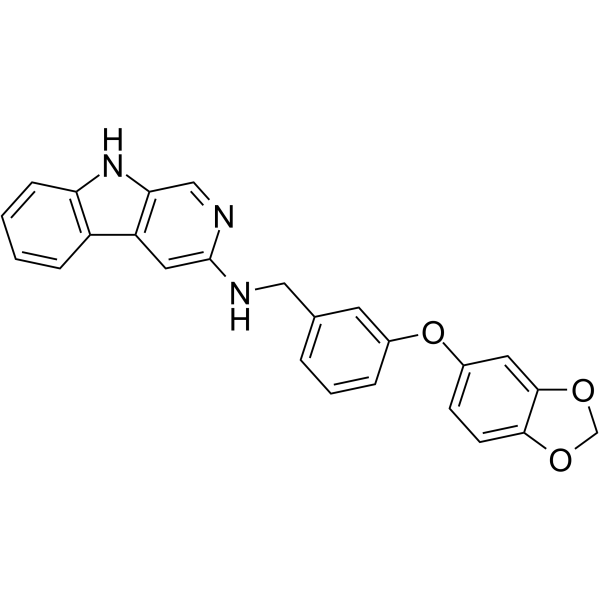
Cat. No.: HY-111527
CAS No.: 896203-18-2
Purity:  99.92%
Target:  

Calcium Channel

Research Areas:  

Neurological Disease

PPZ2 is a diacylglycerol (DAG)-activated TRPC3/TRPC6/TRPC7 channel activator with activity in promoting neuronal development and survival. PPZ2 activates recombinant TRPC3/TRPC6/TRPC7 channels in a dose-dependent manner without affecting other TRPC channels. PPZ2 elicits cation currents and calcium ion (Ca(2+)) influx in cultured central neurons. PPZ2 is able to induce BDNF-like neurite outgrowth and neuroprotection, an effect that disappears after TRPC3/TRPC6/TRPC7 knockdown or inhibition. PPZ2 also increases the activation of the calcium-dependent transcription factor cAMP response element binding protein. The effects of PPZ2 suggest that calcium signaling mediated by activation of DAG-activated TRPC channels plays an important role in its neurotrophic effects .
loading...
    loading...
Cat. No.: HY-121501
CAS No.: 121024-51-9
Target:  

Endogenous Metabolite

Research Areas:  

Others

Tyrostatin is a peptide inhibitor isolated from Kitasatospora sp. 55. It has a Ki value of 6 nM against serine carboxyl protease (PSCP) from Pseudomonas sp. 101, a Ki value of 2.1 nM against carboxyl protease (XSCP) from Xanthomonas sp. T-22, and a Ki value of 2.6 nM against carboxyl protease (PCP) from Pseudomonas sp. 101. Tyrostatin forms a reversible covalent hemiacetal bond with Ser287 at the active site of PSCP, where Tyr at the P1 position and Leu at the P2 position occupy the S1-S4 subsites of the enzyme. Tyrostatin inhibits the activity of XSCP, specifically blocks the autocatalytic maturation process of PCP precursor under acidic conditions, and also inhibits the protease activity of mature and recombinant PCP in a dose-dependent manner. Tyrostatin does not inhibit KSCP or alcohol-resistant protease J-4, and can serve as a tool for identifying the catalytic residues of PCP .
loading...
    loading...
Cat. No.: HY-15616
CAS No.: 457893-92-4
Target:  

Melanocortin Receptor

Research Areas:  

Cancer

BMS-470539 is a synthetic MC-1R agonist with potent anti-inflammatory properties. BMS-470539 selectively activates human and murine MC-1R with EC50 values ??of 16.8 nM and 11.6 nM, respectively. In vitro studies have shown that BMS-470539 is able to dose-dependently inhibit TNF-alpha-induced NF-kB activation in human melanoma cells expressing MC-1R. In vivo, subcutaneous injection of BMS-470539 into BALB/c mice effectively inhibited LPS-induced TNF-alpha production with an ED50 of approximately 10 μmol/kg and a pharmacodynamic half-life of approximately 8 hours. It also significantly reduced leukocyte infiltration in a lung inflammation model and attenuated paw swelling in a delayed-type hypersensitivity model, highlighting its efficacy as an anti-inflammatory agent through MC-1R modulation .
loading...
    loading...
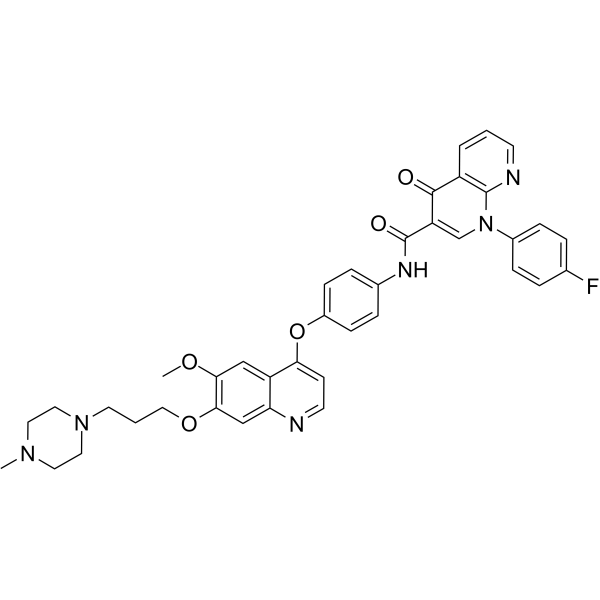
Cat. No.: HY-159941
CAS No.: 2200453-71-8
Target:  

α-synuclein

Research Areas:  

Neurological Disease

tau-0N4R-IN-1 (Compound 6T) is an BBB-penetrable inhibitor of tau 0N4R oligomerization. tau-0N4R-IN-1 effectively inhibits the fibrosis of tau 0N4R, 2N3R, and 2N4R, exhibits an anti-seeding effect on tau in vitro, reduces the oligomerization of α-syn dose-dependently, and prevents formation of α-syn inclusions. tau-0N4R-IN-1 is stable in mouse microsomes and reduces plaques in brain tissues from AD patients. tau-0N4R-IN-1 has good pharmacokinetic properties in mice .
loading...
    loading...
Cat. No.: HY-175870A
CAS No.: 3024878-21-2
Target:  

Ras ERK

Research Areas:  

Cancer

(7R)-Eras-4001 is an orally active KRAS mutant inhibitor with remarkable selectivity for H-RAS and N-RAS. (7R)-Eras-4001 effectively suppresses cancer cell viability by blocking downstream signaling pathways mediated by RAF family proteins, inhibiting the formation of the KRAS G12D-RAF1 RBD complex and the phosphorylation of ERK1/2. (7R)-Eras-4001 induces tumor growth inhibition and regression in a dose-dependent manner, and also reduces plasma ERK1/2 phosphorylation levels. (7R)-Eras-4001 exerts a synergistic effect with anti-PD-1 Cetuximab (HY-P9905). (7R)-Eras-4001 can be used in research on non-small cell lung cancer, pancreatic cancer, colorectal cancer, and ovarian cancer .
loading...
    loading...
Cat. No.: HY-184290
CAS No.: 3062852-59-6
Research Areas:  

Neurological Disease Cancer

PRMT5-IN-56 is a PRMT5⋅MTA complex inhibitor with an IC50 of 0.2 nM, oral activity, and blood-brain barrier penetration. PRMT5-IN-56 inhibits PRMT5 methyltransferase activity in an MTA-cooperative manner, suppresses symmetrical dimethylarginine levels in MTAP-deficient cells. PRMT5-IN-56 suppresses proliferation of MTAP-deleted cancer cells with high selectivity over MTAP-wild type cells. PRMT5-IN-56 induces dose-dependent tumor growth inhibition in subcutaneous xenograft models, inhibits intracranial tumor progression, and prolongs survival in orthotopic brain xenograft models. PRMT5-IN-56 exhibits high intrinsic permeability, good oral bioavailability, and a high brain-to-plasma ratio. PRMT5-IN-56 can be used for the research of MTAP-deleted cancers and glioblastoma .
loading...
    loading...
Cat. No.: HY-B1067B
CAS No.: 154-68-7
Synonyms: Phenazoline phosphate
Target:  

Histamine Receptor

Research Areas:  

Neurological Disease Endocrinology

Antazoline phosphate is an H1 receptor antagonist that affects the activity of the central nervous system, has a potent antiarrhythmic effect . Antazoline phosphate is a histamine H1 receptor antagonist with anticholinergic and antiviral properties. Antazoline phosphate can prevent histamine from acting on target cells through a reversible competition effect on histamine receptor sites of these cells. Antazoline phosphate can exert an antiallegic effect and prevent the occurrence of physiological reactions from the effect of blocking as well as inhibiting H1 receptor. Antazoline phosphate can effectively reduce HBV DNA in the extracellular supernatant in a dose-dependent manner, with EC50 of 2.910 μmol/L in HepAD38 cells. Antazoline phosphate also has a significant inhibitory effect on HBV DNA in the extracellular supernatant of Huh7 cells (EC50 = 2.349 μmol/L). Antazoline phosphate has anti-arrhythmic effect in acute myocardial infarctions. Antazoline phosphate can be studied in research for cardiovascular diseases, and HBV .
loading...
    loading...
Cat. No.: HY-W680886
CAS No.: 152623-93-3
6-APDB is a class of monoamine neurotransmitter releaser and Monoamine Transporter modulator that exerts selective effects on human monoamine transporters and acts as a partial agonist at 5-HT2 family receptors. For NET, 6-APDB has an IC50 of 0.56 μM and a Ki of 18 μM; for SERT, it has an IC50 of 2.3 μM and a Ki of 23 μM; for DAT, it has an IC50 of 33 μM and a Ki of >30 μM, and affinity for rat and mouse TAAR1, with Ki values of 1.0 μM and 0.21 μM, respectively. 6-APDB inhibits norepinephrine and 5-HT reuptake, mediates the release of three types of monoamine neurotransmitters, shows a dose-dependent biphasic locomotor effect in mice, and fully substitutes the discriminative stimulus effect of MDMA. 6-APDB shows no significant cytotoxicity at high concentrations, and possesses empathogenic psychoactivity, potential hallucinogenic effects, and behavioral effects associated with intermittent abuse .
loading...
    loading...
Cat. No.: HY-N16632
CAS No.: 123134-23-6
1-O-Caffeoylglycerol is a compound with anti-inflammatory activity found in Sorghum bicolor. 1-O-Caffeoylglycerol significantly inhibits LPS (HY-D1056) induced NO production (IC50 = 18.5 μM) and dose dependently inhibits iNOS protein expression. 1-O-Caffeoylglycerol can be used for research on inflammatory conditions .
loading...
    loading...
Cat. No.: HY-139342
CAS No.: 2326428-25-3
Purity:  98.87%
Target:  

CDK

Research Areas:  

Cancer

CDK7-IN-4 (compound I) is a potent CDK7 (Cyclin-dependent kinase 7) inhibitor. CDK7-IN-4 shows anticancer activity. CDK7-IN-4 inhibits the in vitro growth of cancer cell lines from a variety of histologies including colon , breast , lung , ovary and stomach , in a dose dependent manner .
loading...
    loading...
Cat. No.: HY-144132
CAS No.: 2478584-74-4
Research Areas:  

Cancer

αβ-Tubulin-IN-1 is a potent and orally active αβ-Tubulin inhibitor. αβ-Tubulin-IN-1 induces cell cycle arrest at G2/M and efficient apoptosis. αβ-Tubulin-IN-1 inhibits tumor cell migration and Metastasis. αβ-Tubulin-IN-1 shows significant antitumor efficacy in a dose dependent manner .
loading...
    loading...
Cat. No.: HY-14840A
CAS No.: 949925-07-9
Synonyms: (R)-Carphedon; (R)-Fonturacetam; MRZ 9547
(R)-Phenylpiracetam (MRZ 9547) is a dopamine transporter (DAT) inhibitor (Ki: 14.8 μM; IC50: 65.5 μM). (R)-Phenylpiracetam can be used for the research of the neurological or neuropsychiatric disorders .
loading...
    loading...
Cat. No.: HY-106863
CAS No.: 86615-96-5
Target:  

Adrenergic Receptor

Research Areas:  

Metabolic Disease

BRL 35135 is a potent and selective β3-adrenergic receptor agonist. BRL 35135 can dose dependently increase energy expenditure, reduce weight, and only reduce fat without reducing muscle protein. BRL 35135 can significantly improve glucose tolerance and insulin sensitivity. BRL 35135 can be used to study metabolic conditions such as obesity and diabetes .
loading...
    loading...
Cat. No.: HY-145865
CAS No.: 2581082-16-6
Target:  

Apoptosis

Research Areas:  

Cancer

Antiproliferative against-3 (comp 33) shows a prominent activity against Hela (IC50 = 0.21 µM), A549 (IC50 = 0.39 µM), and MCF-7 (IC50 = 0.33 µM), respectively. Antiproliferative against-3 (comp 33) also dose dependently induces apoptosis by arresting A549 cells at G1 phase .
loading...
    loading...
Cat. No.: HY-114950R
CAS No.: 114798-36-6
Synonyms: Losartan Carboxaldehyde (Standard); DuP 167 (Standard)
EXP3179 (Standard) (Losartan Carboxaldehyde (Standard)) is the analytical standard of EXP3179 (HY-114950). This product is intended for research and analytical applications. EXP3179 is a metabolite of Losartan (HY-17512). EXP3179 binds to AT1R with an affinity of 20 nM and blocks ANGII-induced AT1R signaling, inhibiting ERK1/2 activation. EXP3179 reduces NADPH oxidase activity. EXP3179 inhibits Phenylephrine (HY-B0769)-induced aortic contraction through an endothelium-dependent, NO-dependent mechanism. EXP3179 dose-dependently inhibits type I collagen-induced platelet aggregation and activation through GPVI binding, reducing platelet adhesion to the injured site. EXP3179 lowers blood pressure in normotensive and spontaneously hypertensive rats and mice. EXP3179 can be used for research on type 2 diabetes, hypertensive heart disease, hypertension, thrombosis, and coronary artery disease .
loading...
    loading...
Cat. No.: HY-181193
Research Areas:  

Infection

PROTAC SARS-CoV-2 Mpro degrader-7 is a SARS-CoV-2 main protease (Mpro) PROTAC degrader with a DC50 of 0.985 μM. PROTAC SARS-CoV-2 Mpro degrader-7 promotes K48-linked polyubiquitination of SARS-CoV-2 Mpro, leading to proteasome-dependent degradation via the ubiquitin-proteasome system.PROTAC SARS-CoV-2 Mpro degrader-7 forms a ternary complex with SARS-CoV-2 Mpro and CRBN E3 ubiquitin ligase to enable viral protease ubiquitination.PROTAC SARS-CoV-2 Mpro degrader-7 exhibits a high selectivity index, and induces dose-dependent degradation of SARS-CoV-2 Mpro in stable cells expressing the viral protease.PROTAC SARS-CoV-2 Mpro degrader-7 can be used for the research of COVID-19 .
loading...
    loading...
Cat. No.: HY-182671
CAS No.: 2409965-28-0
Target:  

PI3K Btk Apoptosis

Research Areas:  

Cancer

SRX3305 is an BTK/PI3K/BRD4 inhibitor with IC50s of 6.5 nM, 15 nM, and 4 nM toward BTK, PI3Kɑ and PI3Kδ, respectively. SRX3305 attenuates chronic lymphocytic leukemia (CLL) and mantle cell lymphoma (MCL) cell proliferation and promotes apoptosis in a dose-dependent fashion. SRX3305 yields potent anti-tumor effects but spares healthy bystander cells. SRX3305 inhibits the activation-induced proliferation of primary CLL cells in vitro and effectively blocks microenvironment-mediated survival signals. SRX3305 blocks CLL cell migration toward CXCL-12 and CXCL-13. SRX3305 maintains its anti-tumor effects in Ibrutinib (HY-10997)-resistant CLL cells. SRX3305 can be used for research in CLL, diffuse large B-cell lymphoma (DLBCL) and MCL .
loading...
    loading...
Cat. No.: HY-184158
HATC is a HIF-1α AUTAC degrader. HATC links HIF-1α to LC3 to form a ternary complex that undergoes degradation via the autophagy-lysosome fusion pathway. HATC induces dose-dependent HIF-1α degradation in multiple cell types. HATC reduces visceral fat accumulation, hepatic lipid deposition, senescent cell aggregation, and bone loss; alleviates age-related intervertebral disc degeneration, liver dysfunction, kyphosis, and alveolar dilation; decreases circulating lactic acid levels; improves physical performance; and reverses age-related changes in granulocyte proportions. HATC extends median and maximum lifespan, reduces transcriptomic age, and causes no obvious persistent toxicity. HATC can be used in the research of age-related diseases (pink: LC3 ligand (HY-50759); blue: HIF-1α ligand (HY-P10426); Linker: (HY-W008264)) .
loading...
    loading...
Cat. No.: HY-W720629
CAS No.: 21420-37-1
Cyanamide- 15N2 is the 15N-labeled Cyanamide (HY-Y0070). Cyanamide is a cell division and plant growth inhibitor, as well as an allelochemical derived from Vicia villosa. Cyanamide inhibits root growth and biomass accumulation in a dose-dependent manner by disrupting the formation of mitotic spindles and phragmoplast complexes, reducing the number of mitotic cells and blocking the cell cycle. The effects of Cyanamide are partially reversible after removal from low-concentration environments. Cyanamide is also a specific inhibitor of aldehyde dehydrogenase (ALDH). Although Cyanamide has no direct effect on tumor growth, it can significantly enhance the anti-tumor efficacy of Cyclophosphamide (HY-17420) at non-toxic doses by inhibiting the inactivation of Cyclophosphamide. Cyanamide enables Cyclophosphamide to exert equivalent therapeutic effects at lower doses, effectively inhibiting the growth of primary and metastatic tumors and prolonging the lifespan of tumor-bearing mice. Cyanamide is commonly used in studies related to ha-1 hepatoma and rls lymphosarcoma .
loading...
    loading...

