97 Results for "

ADME

" in MedChemExpress (MCE) Product Catalog:
Products (97)

97 Results for "ADME" in MCE Product Catalog:

Cat. No.: HY-W142428
CAS No.: 3055-93-4
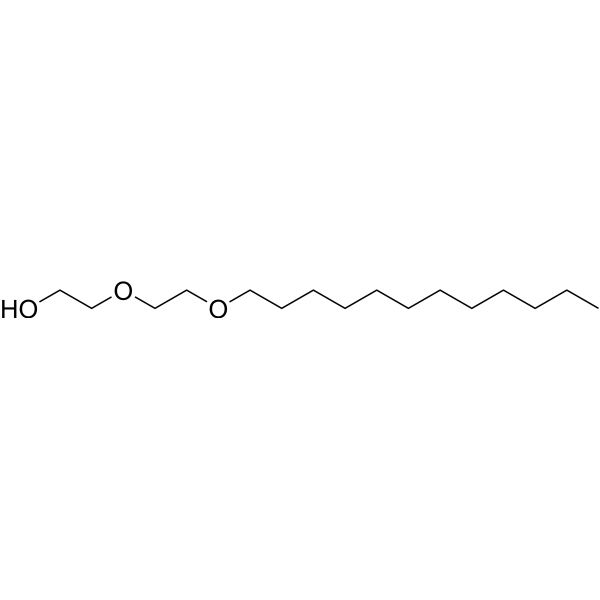
Synonyms: Diethylene glycol monododecyl ether
Research Areas:  

Others

PEG 2 lauryl ether can be used as an excipient. Pharmaceutical excipients, or pharmaceutical auxiliaries, refer to other chemical substances used in the pharmaceutical process other than pharmaceutical ingredients. Pharmaceutical excipients generally refer to inactive ingredients in pharmaceutical preparations, which can improve the stability, solubility and processability of pharmaceutical preparations. Pharmaceutical excipients also affect the absorption, distribution, metabolism, and elimination (ADME) processes of co-administered drugs .
loading...
    loading...
Cat. No.: HY-W131101
CAS No.: 26658-19-5
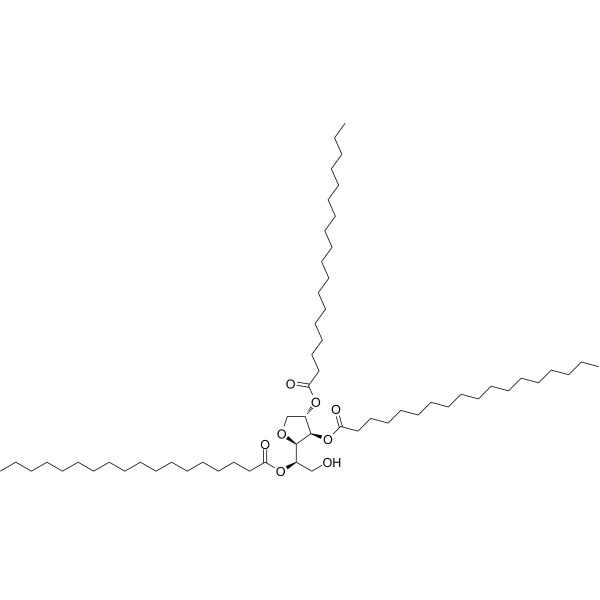
Sorbitan tristearate is a non-ionic surfactant, with a synergistic effect on skin permeability. Sorbitan tristearate can be used as an excipient, such as emulsifier. Pharmaceutical excipients, or pharmaceutical auxiliaries, refer to other chemical substances used in the pharmaceutical process other than pharmaceutical ingredients. Pharmaceutical excipients generally refer to inactive ingredients in pharmaceutical preparations, which can improve the stability, solubility and processability of pharmaceutical preparations. Pharmaceutical excipients also affect the absorption, distribution, metabolism, and elimination (ADME) processes of co-administered drugs .
loading...
    loading...
Cat. No.: HY-154703
CAS No.: 12511-31-8
Research Areas:  

Others

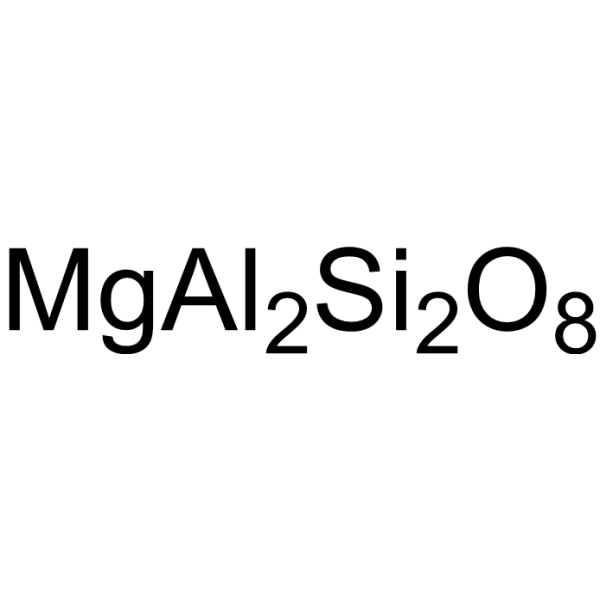
Aluminum magnesium silicate can be used as an excipient, such as adsorbent, stabilizer, suspending agent, disintegrant for tablet and capsule, binder for tablet, thickener. Pharmaceutical excipients, or pharmaceutical auxiliaries, refer to other chemical substances used in the pharmaceutical process other than pharmaceutical ingredients. Pharmaceutical excipients generally refer to inactive ingredients in pharmaceutical preparations, which can improve the stability, solubility and processability of pharmaceutical preparations. Pharmaceutical excipients also affect the absorption, distribution, metabolism, and elimination (ADME) processes of co-administered drugs .
loading...
    loading...
Cat. No.: HY-27979
CAS No.: 9010-88-2
Research Areas:  

Others

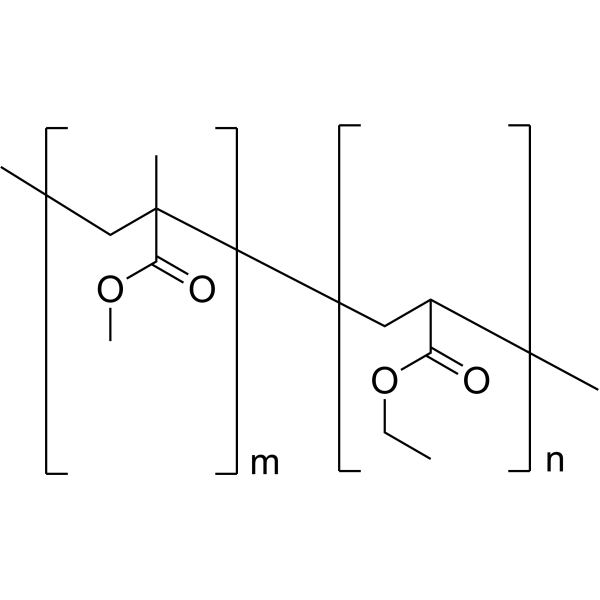
Ethyl acrylate-methyl methacrylate copolymer can be used as an excipient, such as sustained-release coating materials, matrix sustained-release tablet binders and retarders. Pharmaceutical excipients, or pharmaceutical auxiliaries, refer to other chemical substances used in the pharmaceutical process other than pharmaceutical ingredients. Pharmaceutical excipients generally refer to inactive ingredients in pharmaceutical preparations, which can improve the stability, solubility and processability of pharmaceutical preparations. Pharmaceutical excipients also affect the absorption, distribution, metabolism, and elimination (ADME) processes of co-administered drugs .
loading...
    loading...
Cat. No.: HY-16622A
CAS No.: 1005407-76-0
Target:  

LPL Receptor

Research Areas:  

Others

GSK1842799, an alkyl-substituted biaryl amino alcohol, is a selective S1P1 modulator developed for multiple sclerosis (MS). Upon phosphorylation, GSK1842799-P exhibited subnanomolar S1P1 agonist activity with over 1000-fold selectivity over S1P3. The compound showed good oral bioavailability, rapid in vivo conversion to GSK1842799-P, and significant lymphocyte count reduction at 0.1 mg/kg. It matched FTY720 efficacy at 3 mg/kg in the mouse EAE model and achieved comparable plasma levels to FTY-720 phosphate in cynomolgus monkeys. With favorable ADME, PK/PD properties, and toxicology, GSK1842799 advanced to further clinical development .
loading...
    loading...
Cat. No.: HY-157041
CAS No.: 3017151-83-3
Target:  

MAGL

Research Areas:  

Cancer

MAGL-IN-10 is areversible monoacylglycerol lipase (MAGL) inhibitor with very good ADME properties and low in vivo toxicity.MAGL-IN-10 can be used for the research ofcancer, neurological disorders and inflammatory pathologies .
loading...
    loading...
Cat. No.: HY-124364
CAS No.: 1578153-27-1
Target:  

HBV Cytochrome P450

Research Areas:  

Infection Metabolic Disease

RO6889678 is a highly potent HBV capsid formation inhibitor with a complex absorption, distribution, metabolism, and excretion (ADME) profile. RO6889678 is a potent inducer of CYP3A4 and coregulated proteins in human hepatocytes. RO6889678 is metabolized by a combination of CYP3A4-mediated oxidation and UDP-glucuronosyltransferase UGT1A3- and UGT1A1-mediated direct glucuronidation .
loading...
    loading...
Cat. No.: HY-106016
CAS No.: 119229-64-0
Target:  

Cholinesterase (ChE)

Research Areas:  

Others

HP 184 is an acetylcholine release (ChE) stimulator whose ADME properties can be altered by replacing hydrogen with deuterium .
loading...
    loading...
Cat. No.: HY-155103
CAS No.: 2961381-94-0
Target:  

Proteasome Parasite

Research Areas:  

Infection

Antitrypanosomal agent 15 (compound 26) is an orally active, brain-penetrant, selective inhibitor against Trypanosoma cruzi proteasome, with an pIC50 of 7.4 and <4 for T. cruzi and human proteasome, respectively. Antitrypanosomal agent 15 has favorable ADME properties and can be used for Chagas disease study .
loading...
    loading...
Cat. No.: HY-131342
CAS No.: 1798787-27-5
Purity:  99.69%
Target:  

Btk

Research Areas:  

Inflammation/Immunology

BIIB068 is a potent, selective, reversible and orally active BTK inhibitor with an IC50 of 1 nM and a Kd of 0.3 nM. BIIB068 shows more >400-fold selective for BTK than other kinases. BIIB068 has the potential for autoimmune diseases research .
loading...
    loading...
Cat. No.: HY-147919
CAS No.: 2445277-57-4
Target:  

Fungal

Research Areas:  

Infection

Antifungal agent 33 (compound 4e) is a potent antifungal agent. Antifungal agent 33 exhibits remarkable antifungal activity against C. albicans, with a MIC of 16 μg/mL. Antifungal agent 33 shows potent inhibitory activity against Lanosterol 14α-demethylase (CYP51), with an IC50 of 0.19 μg/mL .
loading...
    loading...
Cat. No.: HY-163415
CAS No.: 906728-07-2
Target:  

Monoamine Oxidase

Research Areas:  

Neurological Disease

MAO-IN-5 (Compound ZINC000016952895) is a monoamine oxidase (MAO) inhibitor. According to the prediction of Swiss ADME, MAO-IN-5 can inhibit the CYP enzyme family, has blood-brain barrier (BBB) permeability, and has a high gastrointestinal absorption rate. MAO-IN-5 can be used in the study of neurological diseases .
loading...
    loading...
Cat. No.: HY-139562
CAS No.: 2314378-09-9
Target:  

FXR

Research Areas:  

Metabolic Disease

BMS-986318 is a potent nonbile acid FXR agonist with EC50s of 53 and 350 nM in the FXR Gal4 and SRC-1 recruitment assays, respectively. BMS-986318 has a suitable ADME profile, and demonstrates efficacy in the mouse bile duct ligation model of liver cholestasis and fibrosis.BMS-986318 can be used for the research of nonalcoholic steatohepatitis .
loading...
    loading...
Cat. No.: HY-147549
CAS No.: 2492436-35-6
Target:  

Parasite

Research Areas:  

Infection

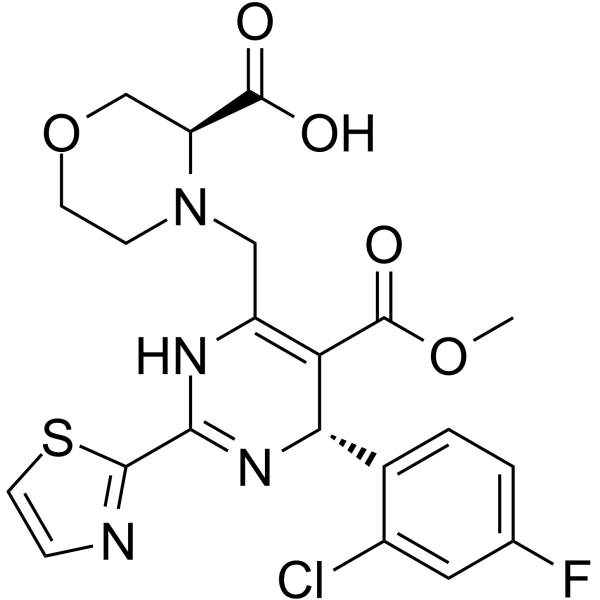
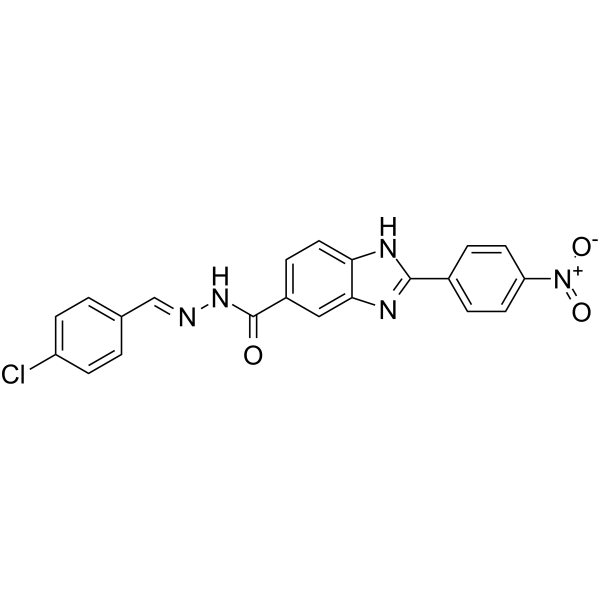
Antitrypanosomal agent 6 (compound 18a) is a potent and antitrypanosomal agent with favorable ADME properties. Antitrypanosomal agent 6 is > 2-fold more potent against Trypanosoma brucei (T. brucei) than Nifurtimox, with an IC50 value of 0.47 μM. Antitrypanosomal agent 6 has strong interaction to DNA and can bind with high selectivity to AT-rich DNA .
loading...
    loading...
Cat. No.: HY-147550
CAS No.: 2492436-38-9
Target:  

Parasite

Research Areas:  

Infection

Antitrypanosomal agent 7 (compound 18c) is a potent and antitrypanosomal agent with favorable ADME properties. Antitrypanosomal agent 7 is > 2-fold more potent against Trypanosoma brucei (T. brucei) than Nifurtimox, with an IC50 value of 0.71 μM. Antitrypanosomal agent 7 has strong interaction to DNA and can bind with high selectivity to AT-rich DNA .
loading...
    loading...
Cat. No.: HY-178168
Target:  

AMPK CDK

Research Areas:  

Neurological Disease

ARUK2010694 (Compound 20) is a potent and selective NUAK1 inhibitor with a pIC50 of 8.7. ARUK2010694 also inhibits CDK2, CDK4 and CDK6 activity, with inhibitory rate of 13%, 63% and 32% at 1 μM. ARUK2010694 can be used for the research of neurological disease, such as Alzheimer’s disease (AD) .
loading...
    loading...
Cat. No.: HY-155518
CAS No.: 2952533-47-8
Target:  

IRAK

Research Areas:  

Inflammation/Immunology

IRAK4-IN-25 (compound 38) is an orally acitve and potent IRAK4 inhibitor (IC50=7.3 nM), with low clearance (Cl=12 mL/min/kg). IRAK4-IN-25 inhibits production of pro-inflammatory cytokines, and shows in vitro safety and ADME profiles. IRAK4-IN-25 can be used for research in inflammatory and autoimmune disorders .
loading...
    loading...
Cat. No.: HY-B2106C
CAS No.: 2765321-63-7
Research Areas:  

Others

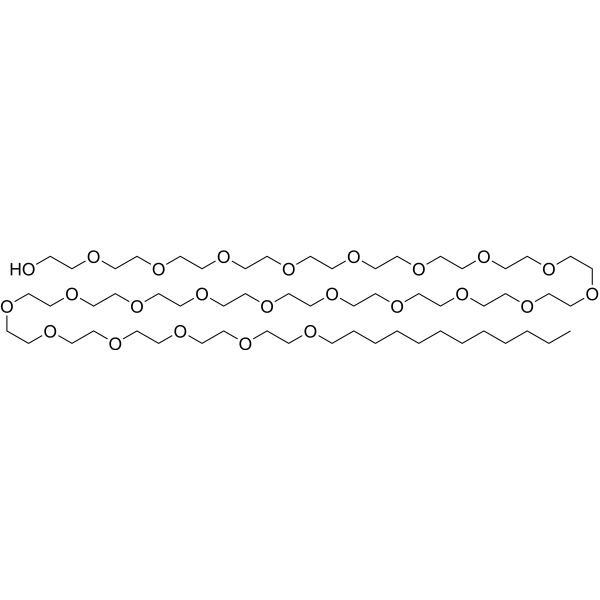
PEG 23 lauryl ether can be used as an excipient. Pharmaceutical excipients, or pharmaceutical auxiliaries, refer to other chemical substances used in the pharmaceutical process other than pharmaceutical ingredients. Pharmaceutical excipients generally refer to inactive ingredients in pharmaceutical preparations, which can improve the stability, solubility and processability of pharmaceutical preparations. Pharmaceutical excipients also affect the absorption, distribution, metabolism, and elimination (ADME) processes of co-administered drugs .
loading...
    loading...
Cat. No.: HY-W127624D
CAS No.: 13149-83-2
Research Areas:  

Others

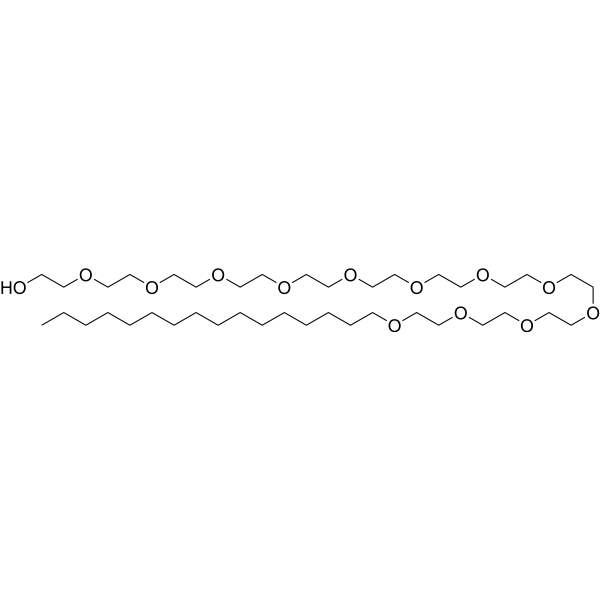
PEG 12 cetostearyl ether can be used as an excipient. Pharmaceutical excipients, or pharmaceutical auxiliaries, refer to other chemical substances used in the pharmaceutical process other than pharmaceutical ingredients. Pharmaceutical excipients generally refer to inactive ingredients in pharmaceutical preparations, which can improve the stability, solubility and processability of pharmaceutical preparations. Pharmaceutical excipients also affect the absorption, distribution, metabolism, and elimination (ADME) processes of co-administered drugs .
loading...
    loading...
Cat. No.: HY-175245
Target:  

Carbonic Anhydrase

Research Areas:  

Cancer

hCA-IN-1 (Compound 5u) is an hCA inhibitor with Ki values of 159.2, 4.8, 15.5, and 2 nM against hCA I, hCA II, hCA IX, and hCA XII, respectively. hCA-IN-1 exhibits broad-spectrum anticancer activity against melanoma, breast, and colon cancer cells. ADME predictions indicate that hCA-IN-1 has good solubility and oral bioavailability. hCA-IN-1 can be used in tumor research .
loading...
    loading...

