

97 Results for "

ADME

" in MedChemExpress (MCE) Product Catalog:
Products (97)

97 Results for "ADME" in MCE Product Catalog:

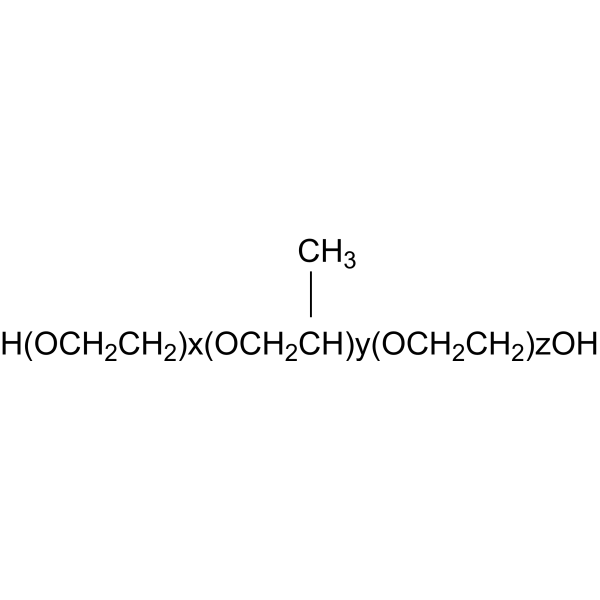
Cat. No.: HY-D1005F
CAS No.: 9003-11-6
Synonyms: PEG-PPG-PEG, 2500(Average Mn)
Poloxamer 182 (L62) can be used as an excipient, such as Emulsifier, solubilizer, lubricant, etc. Pharmaceutical excipients, or pharmaceutical auxiliaries, refer to other chemical substances used in the pharmaceutical process other than pharmaceutical ingredients. Pharmaceutical excipients generally refer to inactive ingredients in pharmaceutical preparations, which can improve the stability, solubility and processability of pharmaceutical preparations. Pharmaceutical excipients also affect the absorption, distribution, metabolism, and elimination (ADME) processes of co-administered drugs .
loading...
    loading...
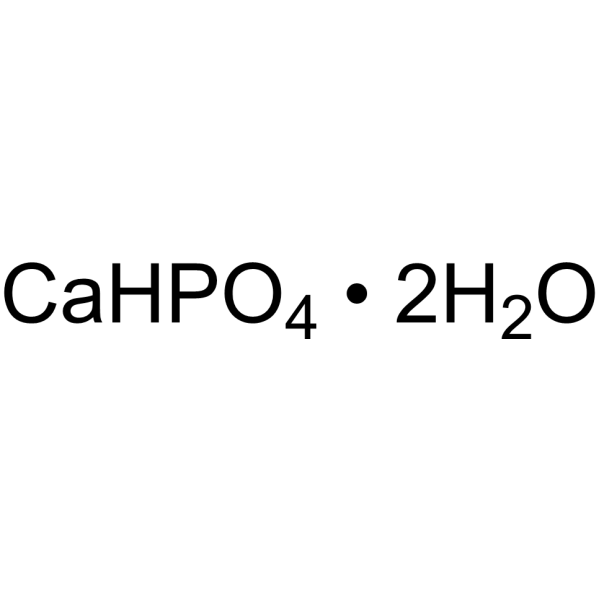
Cat. No.: HY-Y0708
CAS No.: 7789-77-7
Synonyms: Calcium phosphate dihydrate
Research Areas:  

Others

Calcium hydrogen phosphate dihydrate (Calcium phosphate dihydrate) can be found quite frequently in urinary calculi stones. Calcium hydrogen phosphate dihydrate can be used as an excipient, such as diluent, adsorbent. Pharmaceutical excipients, or pharmaceutical auxiliaries, refer to other chemical substances used in the pharmaceutical process other than pharmaceutical ingredients. Pharmaceutical excipients generally refer to inactive ingredients in pharmaceutical preparations, which can improve the stability, solubility and processability of pharmaceutical preparations. Pharmaceutical excipients also affect the absorption, distribution, metabolism, and elimination (ADME) processes of co-administered drugs .
loading...
    loading...
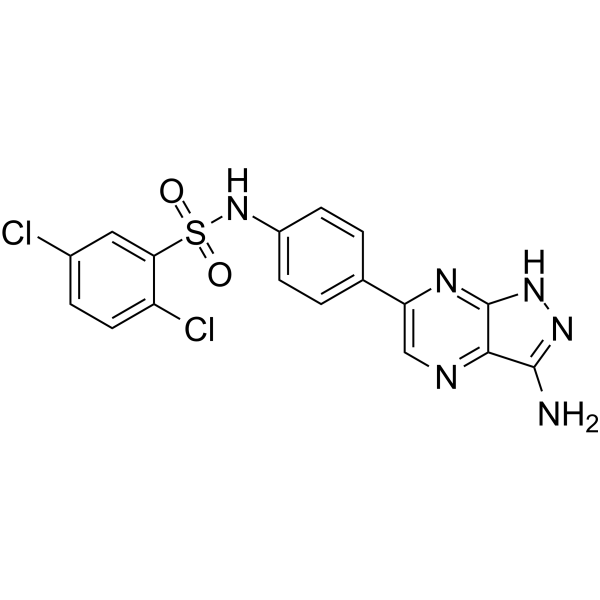
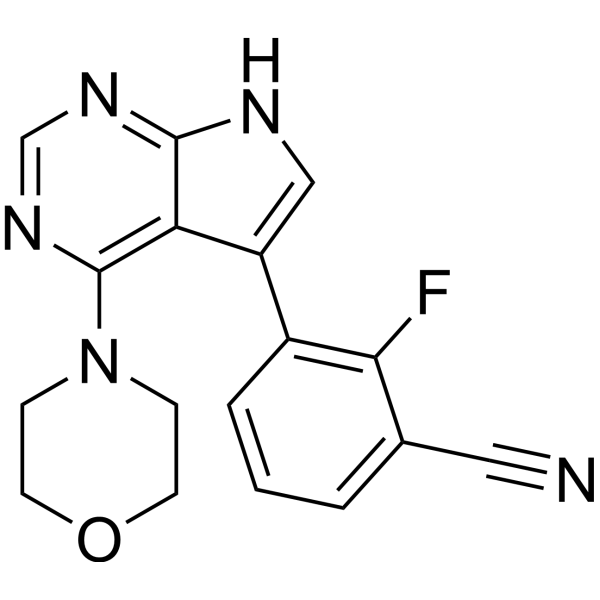
Cat. No.: HY-135893
CAS No.: 1426214-64-3
Purity:  98.36%
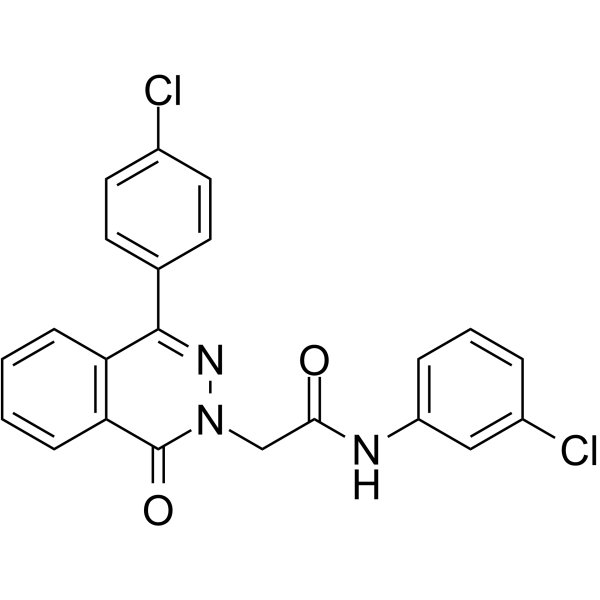
SGK1-IN-2 (Compound 14h) is a selective, ATP-competitive SGK1 inhibitor, with an IC50 of 0.005 μM at 10 μM ATP and an IC50 of 0.025 μM at 500 μM ATP. SGK1-IN-2 can be used in studies of cancer, hypertension and diabetes .
loading...
    loading...
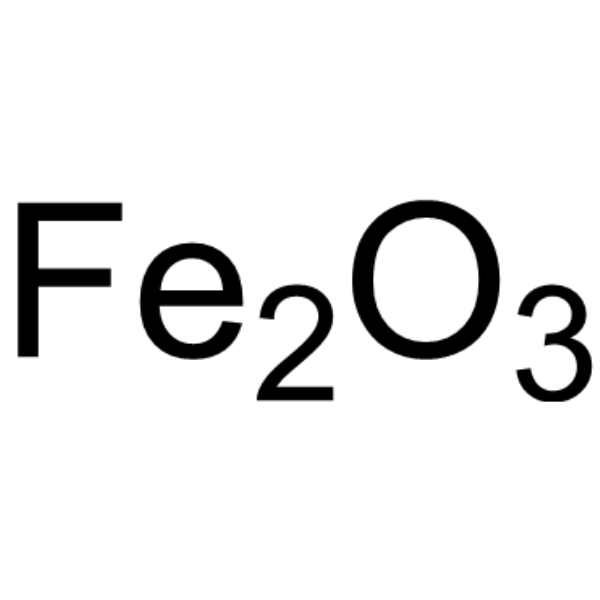
Cat. No.: HY-154696A
CAS No.: 1309-37-1
Research Areas:  

Others

Ferric oxide, red can be used as an excipient, such as colorant. Pharmaceutical excipients, or pharmaceutical auxiliaries, refer to other chemical substances used in the pharmaceutical process other than pharmaceutical ingredients. Pharmaceutical excipients generally refer to inactive ingredients in pharmaceutical preparations, which can improve the stability, solubility and processability of pharmaceutical preparations. Pharmaceutical excipients also affect the absorption, distribution, metabolism, and elimination (ADME) processes of co-administered drugs .
loading...
    loading...
Cat. No.: HY-154630
CAS No.: 25231-21-4
Purity:  99.92%
Research Areas:  

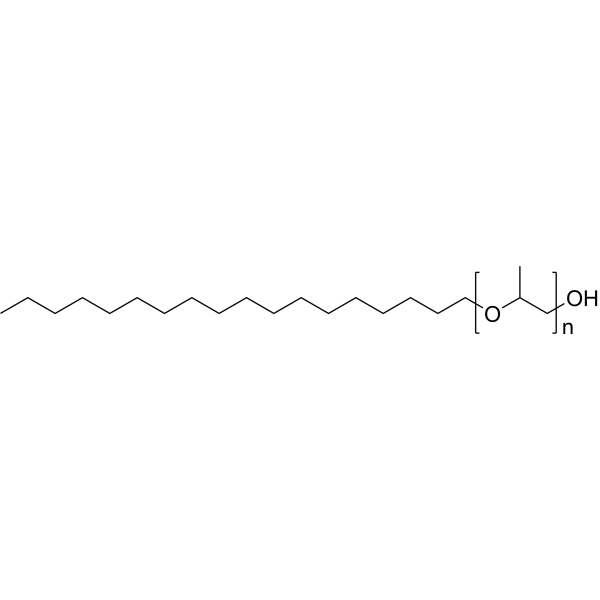
Others

Polyoxypropylene stearyl ether can be used as an excipient, such as surfactant, softener, lubricating, wetting, plasticizing, solubilizing and dispersing properties. Pharmaceutical excipients, or pharmaceutical auxiliaries, refer to other chemical substances used in the pharmaceutical process other than pharmaceutical ingredients. Pharmaceutical excipients generally refer to inactive ingredients in pharmaceutical preparations, which can improve the stability, solubility and processability of pharmaceutical preparations. Pharmaceutical excipients also affect the absorption, distribution, metabolism, and elimination (ADME) processes of co-administered drugs .
loading...
    loading...
Cat. No.: HY-154639
CAS No.: 68439-49-6
Polyoxyl 20 Cetostearyl Ether can be used as an excipient, such as Emulsifier and solubilizer for emulsions and creams, etc. Pharmaceutical excipients, or pharmaceutical auxiliaries, refer to other chemical substances used in the pharmaceutical process other than pharmaceutical ingredients. Pharmaceutical excipients generally refer to inactive ingredients in pharmaceutical preparations, which can improve the stability, solubility and processability of pharmaceutical preparations. Pharmaceutical excipients also affect the absorption, distribution, metabolism, and elimination (ADME) processes of co-administered drugs .
loading...
    loading...
Cat. No.: HY-178317
Target:  

PARP Apoptosis

OUL312 is a potent PARP10 inhibitor (IC50 = 20 nM), showing more than 75-fold greater selectivity for PARP15 (IC50 = 1500 nM). OUL312 is also at least 18-fold higher than all other human enzymes in the family. OUL312 has a good ADME profile, is able to enter cells, is not toxic, and effectively rescues human cells from PARP10-induced apoptosis at sub-micromolar concentrations. OUL312 can be used for the study of cervical cancer .
loading...
    loading...
Cat. No.: HY-134098
CAS No.: 6938-94-9
Purity:  ≥98.0%
Synonyms: Adipic acid diisopropyl ester
Research Areas:  

Others

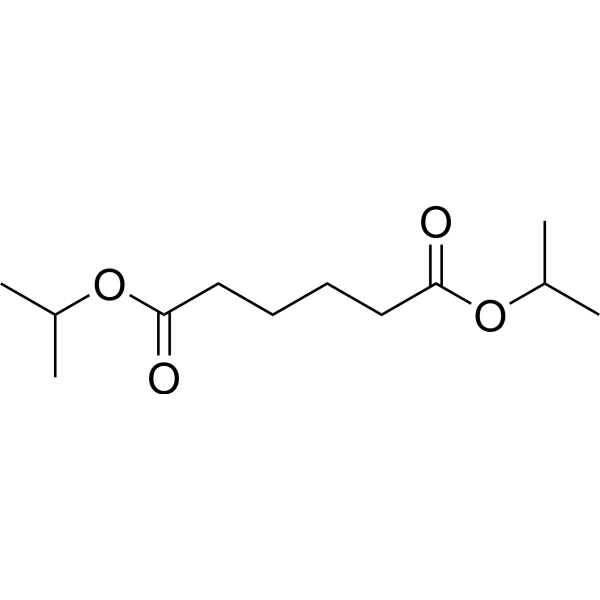
Diisopropyl adipate is an alternative plasticizer and a TRPA1 activator. Diisopropyl adipate activates TRPA1 and enhances FITC-induced contact hypersensitivity (CHS).Diisopropyl adipate also serves as an ingredient in cosmetics and drug formulations topically applied to the skin. Diisopropyl adipate can be used as an excipient, such as emollients, plasticizers. Pharmaceutical excipients, or pharmaceutical auxiliaries, refer to other chemical substances used in the pharmaceutical process other than pharmaceutical ingredients. Pharmaceutical excipients generally refer to inactive ingredients in pharmaceutical preparations, which can improve the stability, solubility and processability of pharmaceutical preparations. Pharmaceutical excipients also affect the absorption, distribution, metabolism, and elimination (ADME) processes of co-administered drugs .
loading...
    loading...
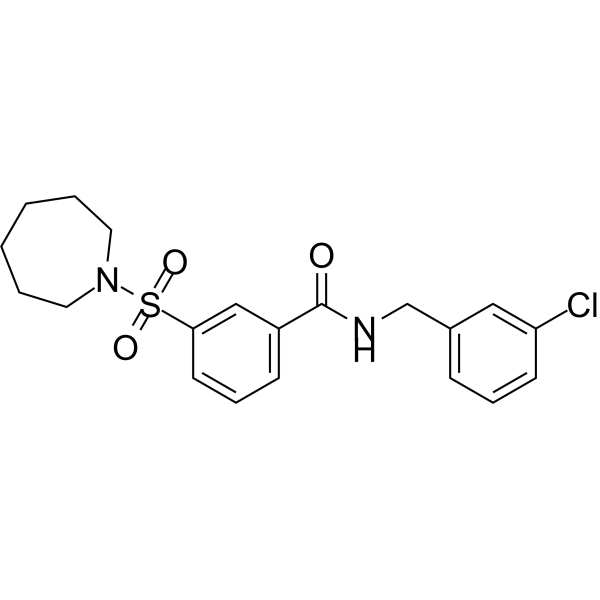
Cat. No.: HY-18172
CAS No.: 1228439-36-8
Target:  

Potassium Channel

Research Areas:  

Neurological Disease

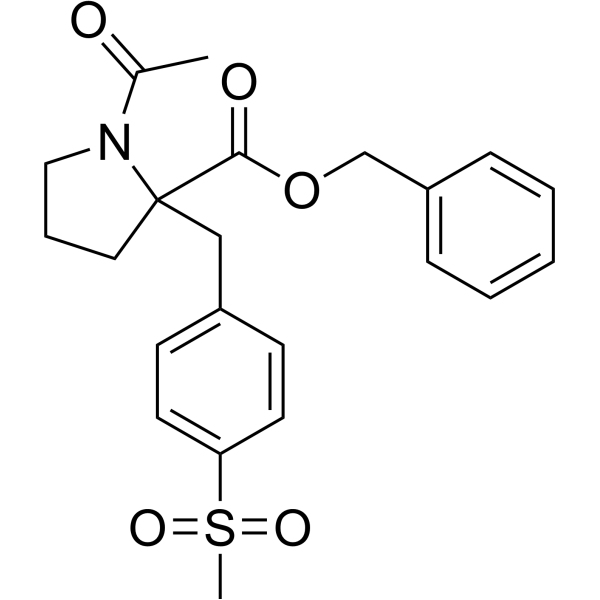
KCC2 blocker 1 is an orally active and selective K +-Cl - cotransporter KCC2 blocker with an IC50 of 1 μM. KCC2 blocker 1 is a benzyl prolinate .
loading...
    loading...
Cat. No.: HY-175741
CAS No.: 3094992-69-2
Target:  

Topoisomerase Parasite

Research Areas:  

Infection

IID432 is a potent, orally active, and covalent inhibitor of Trypanosoma cruzi topoisomerase II. IID432 shows an EC50 of 8 nM against T. cruzi intracellular amastigotes, exhibits excellent oral bioavailability (52% in rats), favorable ADME properties, and no S1P pathway modulation. IID432 achieves relapse-free cure in a chronic T. cruzi infection mouse model, can be used for the study of Chagas disease .
loading...
    loading...
Cat. No.: HY-147027
CAS No.: 684234-55-7
Purity:  99.48%
PARP-1-IN-2 (compound 11g) is a potent PARP1 inhibitor, with an IC50 of 149 nM, and ADME prediction indicates it has high blood-brain barrier permeability. PARP1-IN-2 shows significantly potent anti-proliferative activity against Human lung adenocarcinoma epithelial cell line A549. PARP1-IN-2 can induce A549 cells apoptosis .
loading...
    loading...
Cat. No.: HY-154739A
CAS No.: 112945-52-5
Research Areas:  

Others

Amorphous silica can be used as an excipient, such as viscosifier, suspending agent, tablet disintegrating agent, adsorbent dispersing agent as liquid in powders. Pharmaceutical excipients, or pharmaceutical auxiliaries, refer to other chemical substances used in the pharmaceutical process other than pharmaceutical ingredients. Pharmaceutical excipients generally refer to inactive ingredients in pharmaceutical preparations, which can improve the stability, solubility and processability of pharmaceutical preparations. Pharmaceutical excipients also affect the absorption, distribution, metabolism, and elimination (ADME) processes of co-administered drugs .
loading...
    loading...
Cat. No.: HY-W013482
CAS No.: 94-18-8
Synonyms: Benzyl Paraben
Research Areas:  

Others

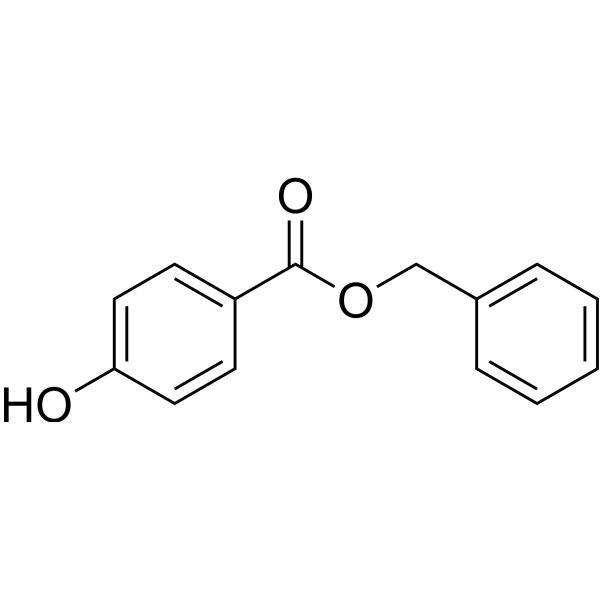
Benzyl 4-hydroxybenzoate is a prominent material. Benzyl 4-hydroxybenzoate can be used as an excipient, such as bacteriostatic agent, preservative. Pharmaceutical excipients, or pharmaceutical auxiliaries, refer to other chemical substances used in the pharmaceutical process other than pharmaceutical ingredients. Pharmaceutical excipients generally refer to inactive ingredients in pharmaceutical preparations, which can improve the stability, solubility and processability of pharmaceutical preparations. Pharmaceutical excipients also affect the absorption, distribution, metabolism, and elimination (ADME) processes of co-administered drugs .
loading...
    loading...
Cat. No.: HY-149767
CAS No.: 2882934-64-5
Target:  

SARS-CoV

Research Areas:  

Infection

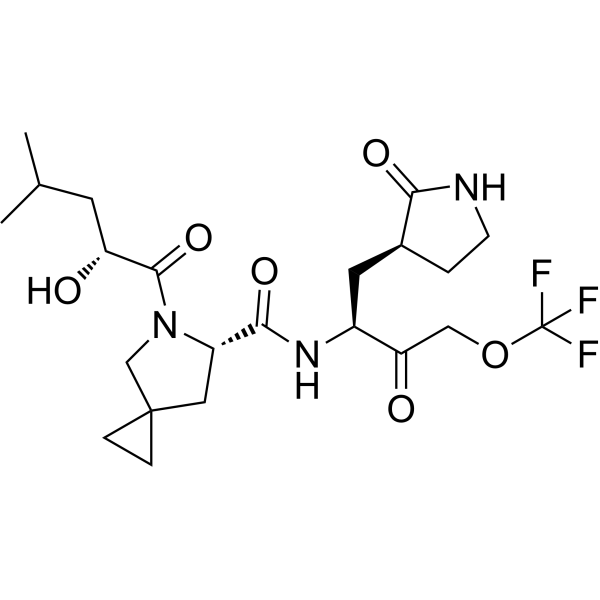
CMX990 is a SARS-CoV-2 3CL protease inhibitor. The EC90s for inhibiting SARS-CoV-2 were 9.6 nM and 101 nM in human bronchial epithelial cells (HBECs) and HeLa-ACE2 cells, respectively. CMX990 has good ADME and pharmacokinetic properties .
loading...
    loading...
Cat. No.: HY-114301A
CAS No.: 2703582-76-5
Purity:  99.84%
Target:  

Sodium Channel

Research Areas:  

Neurological Disease

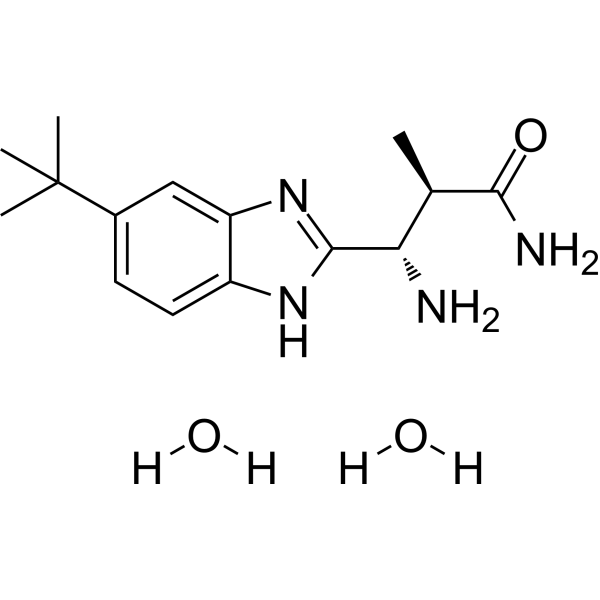
PF-06305591 dihydrate is a potent and highly selective voltage gated sodium channel NaV1.8 blocker, with an IC50 of 15 nM. An excellent preclinical in vitro ADME and safety profile .
loading...
    loading...
Cat. No.: HY-47822
CAS No.: 851873-40-0
Target:  

Sirtuin

Research Areas:  

Neurological Disease

WAY-354574 is an active molecule targeting deacetylase (Sirtuin) for the study of Huntington's disease (HD) .
loading...
    loading...
Cat. No.: HY-148353
CAS No.: 1527474-15-2
Target:  

LRRK2

Research Areas:  

Neurological Disease

PF-06455943 is a leucine rich repeat kinase 2 (LRRK2) inhibitor with IC50 value of 3 nM. PF-06455943 also is a PET radioligand. PF-06455943 can be used for the research of ADME/neuro PK characterization and Parkinson disease (PD) .
loading...
    loading...
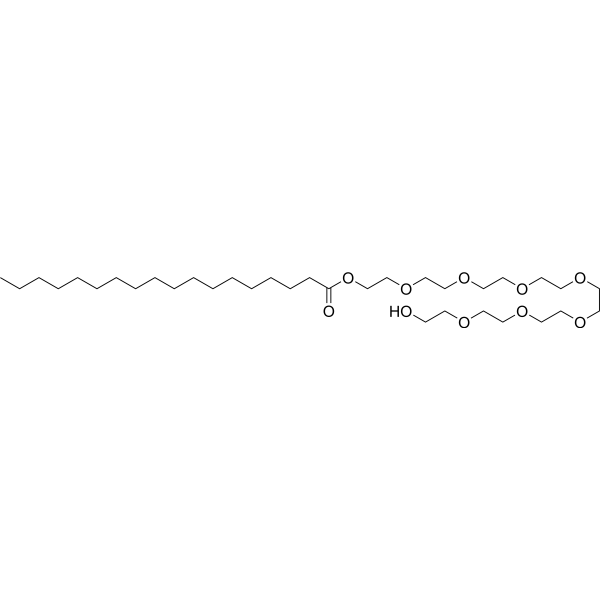
Cat. No.: HY-101530A
CAS No.: 70802-40-3
Synonyms: PEG 8 stearate
Research Areas:  

Others

Polyoxyl 8 stearate can be used as an excipient. Pharmaceutical excipients, or pharmaceutical auxiliaries, refer to other chemical substances used in the pharmaceutical process other than pharmaceutical ingredients. Pharmaceutical excipients generally refer to inactive ingredients in pharmaceutical preparations, which can improve the stability, solubility and processability of pharmaceutical preparations. Pharmaceutical excipients also affect the absorption, distribution, metabolism, and elimination (ADME) processes of co-administered drugs .
loading...
    loading...
Cat. No.: HY-154634
CAS No.: 69430-24-6
Research Areas:  

Others

Cyclomethicone can be used as an excipient, such as emollients, humectants, thickeners. Pharmaceutical excipients, or pharmaceutical auxiliaries, refer to other chemical substances used in the pharmaceutical process other than pharmaceutical ingredients. Pharmaceutical excipients generally refer to inactive ingredients in pharmaceutical preparations, which can improve the stability, solubility and processability of pharmaceutical preparations. Pharmaceutical excipients also affect the absorption, distribution, metabolism, and elimination (ADME) processes of co-administered drugs .
loading...
    loading...
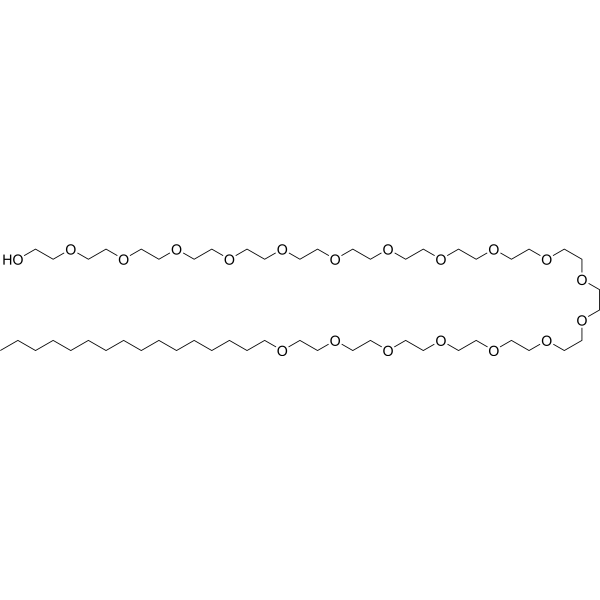
Cat. No.: HY-W127624A
CAS No.: 31832-14-1
Research Areas:  

Others

PEG 18 cetostearyl ether can be used as an excipient. Pharmaceutical excipients, or pharmaceutical auxiliaries, refer to other chemical substances used in the pharmaceutical process other than pharmaceutical ingredients. Pharmaceutical excipients generally refer to inactive ingredients in pharmaceutical preparations, which can improve the stability, solubility and processability of pharmaceutical preparations. Pharmaceutical excipients also affect the absorption, distribution, metabolism, and elimination (ADME) processes of co-administered drugs .
loading...
    loading...

