84 Results for "

diffusion

" in MedChemExpress (MCE) Product Catalog:
Products (84)

84 Results for "diffusion" in MCE Product Catalog:

Cat. No.: HY-W040074
CAS No.: 23273-91-8
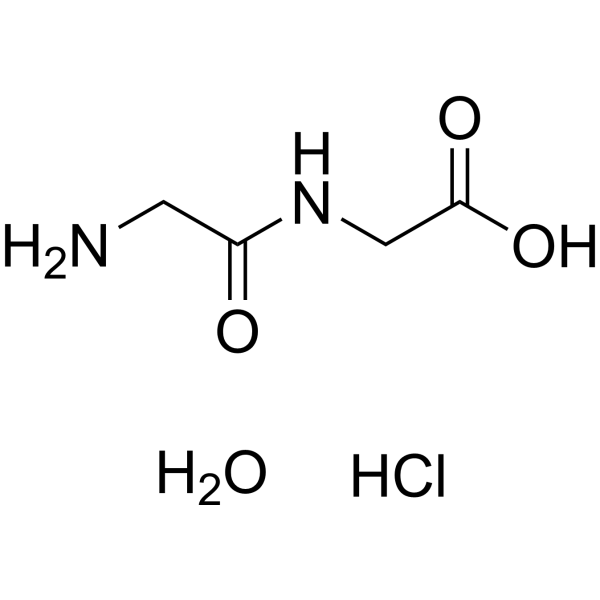
Synonyms: Diglycine hydrochloride hydrate; Gly-Gly (HCl H2O)
Glycylglycine hydrochloride hydrate is a non-selective Glycylglycine hydrochloride hydrate dipeptidase substrate and iNOS inhibitor. Glycylglycine hydrochloride hydrate can cross the cell membrane by passive diffusion and is hydrolyzed to glycine in the cell, participating in energy metabolism and antioxidant processes. Glycylglycine hydrochloride hydrate promotes spermatogonial stem cells (SSCs) proliferation, inhibits astrocyte overactivation and reduces nitric oxide (NO) release, while upregulating the expression of neurotrophic factors (such as PDGFA, FGF2, CNTF) to support nerve myelin repair. Glycylglycine hydrochloride hydrate can be used to study male reproductive biology (such as SSCs proliferation regulation) and neurodegenerative diseases (such as neuroprotective mechanisms in multiple sclerosis) .
loading...
    loading...
Cat. No.: HY-128443R
CAS No.: 122-19-0
Synonyms: BDMSAC (Standard)
Research Areas:  

Others

Benzyldimethylstearylammonium chloride (Standard) (BDMSAC (Standard)) is the analytical standard of Benzyldimethylstearylammonium chloride (HY-128443). This product is intended for research and analytical applications. Benzyldimethylstearylammonium chloride is a quaternary ammonium cationic surfactant and a mixed-type corrosion inhibitor. Benzyldimethylstearylammonium chloride adsorbs onto the surface of cold-rolled steel through a combined effect of physisorption and chemisorption, forming a hydrophobic protective barrier that blocks active sites and restricts the diffusion of corrosive media, while simultaneously inhibiting the anodic iron dissolution reaction and the cathodic hydrogen evolution reaction, and reducing the corrosion rate in acidic media. Benzyldimethylstearylammonium chloride is used in research related to various fields such as fungicides, wastewater treatment, and detergents .
loading...
    loading...
Cat. No.: HY-B0396R
CAS No.: 161715-24-8
Synonyms: L084 (Standard)
Research Areas:  

Infection

Tebipenem pivoxil (Standard) (L084 (Standard)) is the analytical standard of Tebipenem pivoxil (HY-B0396). This product is intended for research and analytical applications. Tebipenem pivoxil (L084 hydrobromide) is an orally active carbapenem Antibiotic. Tebipenem pivoxil acts as a substrate of OATP1A2 with high affinity for this transporter (Km = 41.1 μM) . Tebipenem pivoxil achieves intestinal absorption via carrier-mediated uptake and simple diffusion. Tebipenem pivoxil inhibits the growth of Gram-positive bacteria, Gram-negative bacteria, multidrug-resistant bacteria, and pathogens producing extended-spectrum β-lactamases. Tebipenem pivoxil eliminates intestinal infection pathogens and reduces mortality in septic mice. Tebipenem pivoxil can be used in research related to bacterial pneumonia, severe gastrointestinal infections, bacterial sepsis, complicated urinary tract infections, and acute pyelonephritis .
loading...
    loading...
Cat. No.: HY-130562
CAS No.: 2444-65-7
Synonyms: 4-Des-dimethylaminotetracycline; 4-De(dimethylamino)-tc; CMT-1
Target:  

Antibiotic Bacterial

Research Areas:  

Others

DDA-tetracycline is a tetracycline derivative (4-des-dimethylaminotetracycline, also called CMT-1) .DDA-tetracycline is subject to conflicting classification, with one source noting no definitive identity or classification, and specifying the abbreviation 'DDA' may refer to the disk diffusion agar method rather than the reagent itself .
loading...
    loading...
Cat. No.: HY-N18411
CAS No.: 1401-54-3
Tanacetin is a sesquiterpenoid compound discovered in the whole herb of Crossostephium chinense (L.) Makino. Sesquiterpene lactones, the class to which Tanacetin belongs (e.g., constituents of plants in the Tanacetum genus), inhibit the inflammatory mediators prostaglandins and leukotrienes. Tanacetin crosses intestinal cell monolayers primarily via transcellular passive diffusion, and no significant first-pass metabolism occurs during its intestinal absorption. Tanacetin is used in research related to diabetes, migraine, and rheumatoid arthritis .
loading...
    loading...
Cat. No.: HY-W587665
CAS No.: 2496-92-6
Target:  

Insecticide

Research Areas:  

Infection

Demeton-S sulfoxide is a systemic insecticide. When Demeton-S sulfoxide is topically applied to cotton stems, it is absorbed and transported to cotton leaves, whereas its penetration and diffusion capabilities are limited when it is topically applied to young lemon leaves .
loading...
    loading...
Cat. No.: HY-D3485
CAS No.: 216854-76-1
Dexamethasone fluorescein is a fluorescently labeled steroid conjugate that binds to glucocorticoid receptors. Dexamethasone fluorescein binds to glucocorticoid receptors. Dexamethasone fluorescein serves as a marker for evaluating the delivery of drugs via subconjunctival injection and intratympanic administration. Sustained transscleral diffusion is achieved when Dexamethasone fluorescein is delivered via fibrin sealant. Dexamethasone fluorescein can be used to investigate the binding and localization of glucocorticoid receptors .
loading...
    loading...
Cat. No.: HY-118260
CAS No.: 130905-04-3
Target:  

Adrenergic Receptor

Research Areas:  

Endocrinology

Phendioxan is a compound with binding activity at the α(1)-adrenaline receptor subtype. The facilitated membrane diffusion of phendioxan is thought to be associated with improved α(1d)-AR affinity. Docking simulations of phendioxan at biological targets supported the stoichiometric analysis and revealed the importance of polar, electrostatic, hydrophobic, and shape effects of its phenoxy terminal orthogonal substituents on ligand binding .
loading...
    loading...
Cat. No.: HY-19688
CAS No.: 57695-04-2
Synonyms: WR 6026
Sitamaquine (WR 6026) is an orally active Antileishmanial agent and Succinate dehydrogenase inhibitor. Sitamaquine accumulates in the acidocalcisomes of Leishmania, induces organelle alkalization, and crosses the plasma membrane of Leishmania via temperature- and energy-independent diffusion. Sitamaquine disrupts oxidative phosphorylation in Leishmania, induces mitochondrial depolarization, oxidative stress, elevated intracellular calcium, plasma membrane depolarization, and Apoptosis-like cell death. Sitamaquine can be used in the research of leishmaniasis .
loading...
    loading...
Cat. No.: HY-D3196
CAS No.: 1198157-60-6
AG2 is a glucose uptake tracer and two-photon fluorescent probe. AG2 is taken up by cells via glucose-specific transport systems, rather than passive diffusion; it preferentially accumulates in cancer cells and colon cancer tissues compared with normal cells and tissues; it mainly localizes to mitochondria, with a small amount also distributed in the cytoplasm and cell membrane. AG2 can be used for colon cancer research .
loading...
    loading...
Cat. No.: HY-B0377A
CAS No.: 125193-62-6
Synonyms: MK-208 hydrochloride
Famotidine hydrochloride (MK-208 hydrochloride) is an orally active and highly selective histamine H2 receptor antagonist. It inhibits gastric acid secretion by blocking the Gs signaling pathway, and regulates intracellular cAMP and ERK pathways. Famotidine hydrochloride inhibits TLR3-mediated inflammatory pathways, and reduces the expression of various inflammatory mediators and interferon-related genes. Famotidine hydrochloride scavenges DPPH and nitric oxide free radicals, alleviates oxidative stress damage in gastric tissue, inhibits proMMP-9, improves vascular endothelial permeability, and restores the normal physiological functions of neutrophils and eosinophils. Famotidine hydrochloride crosses intestinal epithelial cells via facilitated diffusion and passive diffusion, blocks paracellular cation transport, and increases intestinal transepithelial electrical resistance. Famotidine hydrochloride reduces serum levels of transaminases and alkaline phosphatase, exerts analgesic effects and gastric protective effects simultaneously. Famotidine hydrochloride can be used in studies related to COVID-19, liver injury and acute gastric ulcer .
loading...
    loading...
Cat. No.: HY-D3240
CAS No.: 2375541-43-6
Photoactive NTR probe (Compound 1) is a covalent crosslinker and Fluorescent indicator targeting Nitroreductase. The Photoactive NTR probe undergoes a sequential activation process: it is first activated via nitroreductase-mediated nitro-to-amino conversion, and then forms a fluorescent product upon photoactivation. The Photoactive NTR probe can form covalent adducts with the side chains of cysteine, tyrosine, lysine and histidine in adjacent proteins to reduce fluorophore diffusion. The Photoactive NTR probe enables super-resolution (STORM) imaging of active mitochondrial nitroreductase microdomains in living cells .
loading...
    loading...
Cat. No.: HY-180784
Hypoglycemic agent 4 (Compound 5b) is a tetrahydroacridine derivative with orally active hypoglycemic activity. Hypoglycemic agent 4 has a good binding affinity for the key diabetic targets: DPP-IV, SGLT1, and GLUT2. Hypoglycemic agent 4 can inhibit glucose diffusion. Hypoglycemic agent 4 can reduce fasting blood sugar in Streptozotocin (HY-13753)-induced diabetic rats and its effect is comparable to Gliclazide (HY-B0753). Hypoglycemic agent 4 can be used for research of type 2 diabetes .
loading...
    loading...
Cat. No.: HY-D3047I
Target:  

Fluorescent Dye

Research Areas:  

Others

Rhodamine B-Dextran (chloride) (MW 500000) is a Rhodamine B (HY-Y0016)-labeled dextran with a molecular weight of 500000. Rhodamine B-Dextran (chloride) (MW 500000) is a fluorescent dye used to track the diffusion of macromolecules in ex vivo human skin. Rhodamine B-Dextran (chloride) (MW 500000) is delivered to skin layers via the Nanopatch microneedle array, which physically disrupts the stratum corneum and dermal-epidermal junction barriers to deposit the dye directly into epidermal and dermal regions; fluorescence is detected via multiphoton microscopy, and fluorescence intensity is assumed to be roughly proportional to dye concentration .
loading...
    loading...
Cat. No.: HY-W583729
CAS No.: 26023-30-3
Research Areas:  

Others

DL-Poly (lactic acid) is a biodegradable poly (α-hydroxy acid) matrix and a coating material for controlled drug release. DL-Poly (lactic acid) is classified as a drug release retardant, which degrades into natural lactic acid monomers, an intermediate product of carbohydrate metabolism, enabling complete drug delivery that lasts for several weeks. Its drug release rate is affected by the pH of the surrounding environment .
loading...
    loading...
Cat. No.: HY-B0396B
CAS No.: 1381788-20-0
Synonyms: L084 hydrobromide
Target:  

Antibiotic Bacterial OAT

Research Areas:  

Infection

Tebipenem pivoxil hydrobromide (L084 hydrobromide) is an orally active carbapenem Antibiotic. Tebipenem pivoxil hydrobromide acts as a substrate of OATP1A2 with high affinity for this transporter (Km = 41.1 μM) . Tebipenem pivoxil hydrobromide achieves intestinal absorption via carrier-mediated uptake and simple diffusion. Tebipenem pivoxil hydrobromide inhibits the growth of Gram-positive bacteria, Gram-negative bacteria, multidrug-resistant bacteria, and pathogens producing extended-spectrum β-lactamases. Tebipenem pivoxil hydrobromide eliminates intestinal infection pathogens and reduces mortality in septic mice. Tebipenem pivoxil hydrobromide can be used in research related to bacterial pneumonia, severe gastrointestinal infections, bacterial sepsis, complicated urinary tract infections, and acute pyelonephritis .
loading...
    loading...
Cat. No.: HY-D0005
CAS No.: 4733-39-5
Target:  

Amyloid-β

Research Areas:  

Neurological Disease

Bathocuproine is a phenanthroline chelator that binds specifically to Cu +. Bathocuproine preferentially binds Cu + over Cu 2+ to form a chromogenic complex, which is used to detect the oxidation state of copper in biomolecules. Bathocuproine undergoes concentration-dependent self-association to form dimers, and it can engage in aromatic stacking interactions with aromatic residues of (Kd ≈ 1 mM). Bathocuproine is applicable to research related to Alzheimer's disease .
loading...
    loading...
Cat. No.: HY-D3085
CAS No.: 2882924-23-2
SSR-LDs is a fluorescent probe for lipid droplet polarity detection and lipid droplet imaging. SSR-LDs exhibits polarity-dependent fluorescence: it produces intense short-wavelength emission in low-polarity environments, while generating weak long-wavelength emission in high-polarity environments. SSR-LDs enters cells via free diffusion, specifically targets lipid droplets, and is unaffected by intracellular viscosity or pH values ranging from 4.5 to 9.0. SSR-LDs shows variable Ex/Em wavelengths in different solvents, including 590/663 nm in THF, 600/660 nm in mouse tissue and in vivo imaging, and an excitation wavelength of 580 nm with an emission wavelength range of 610-750 nm in cell imaging. SSR-LDs can be used for research related to fatty liver, liver injury and hepatitis .
loading...
    loading...
Cat. No.: HY-W010514R
CAS No.: 1460-57-7
trans-Cyclohexane-1,2-diol (Standard) is the analytical standard of trans-Cyclohexane-1,2-diol (HY-W010514). This product is intended for research and analytical applications. trans-Cyclohexane-1,2-diol (TCHD) is a transient dilator of the nuclear pore complex (NPC). By interacting with the hydrophobic core (FG nucleoporin) of the NPC, trans-Cyclohexane-1,2-diol can disrupt the NPC structure and reversibly increase the permeability of the nuclear pore, allowing macromolecules larger than 40 kDa (such as plasmid DNA) to enter the cell nucleus by passive diffusion, thereby enhancing the nuclear import efficiency of non-viral vectors. trans-Cyclohexane-1,2-diol can improve the efficiency of in vitro electrotransfection or lipid-mediated gene transfection, especially significantly increasing gene expression in differentiated airway epithelial cells .
loading...
    loading...

