89 Results for "

learning. memory

" in MedChemExpress (MCE) Product Catalog:
Products (89)

89 Results for "learning. memory" in MCE Product Catalog:

Cat. No.: HY-107719
CAS No.: 81338-23-0
Target:  

iGluR

Research Areas:  

Neurological Disease

D-AP7 is a specific NMDA receptor antagonist with inhibitory activity against epileptiform activity. D-AP7 attenuated neuronal activation in spot activity by reducing the duration and number of exogenously induced bursts. D-AP7 also increased the amplitude of secondary action potentials, which may restore neuronal activity in some epileptiform bursts. D-AP7 showed anxiogenic effects and impaired memory consolidation in passive avoidance learning .
loading...
    loading...
Cat. No.: HY-17638A
CAS No.: 1169392-27-1
Synonyms: DSP-3235 (sebacate); KGA-3235 (sebacate); GSK-1614235 (sebacate)
Target:  

SGLT

Research Areas:  

Neurological Disease

Mizagliflozin sebacate (DSP-3235 sebacate) is a sodium-glucose cotransporter inhibitor with activity in improving vascular cognitive impairment caused by small vessel disease. Mizagliflozin sebacate improves blood flow and reverses vascular cognitive impairment by inhibiting neuronal SGLT1 activity. Mizagliflozin sebacate also showed the ability to increase the survival rate of IL-1β-treated PC12HS cells. Mizagliflozin sebacate promotes improvements in spatial learning and memory caused by small vessel disease in mouse models .
loading...
    loading...
Cat. No.: HY-149287
Target:  

Cholinesterase (ChE)

Research Areas:  

Neurological Disease

hAChE/hBACE-1-IN-1 (compounds 5d) is an orally active inhibitor of hAChE with blood-brain permeability. hAChE/hBACE-1-IN-1 inhibits hAChE and hBACE-1 with IC50 values of 0.076 and 0.23 μM, respectively. hAChE/hBACE-1-IN-1 inhibits Aβ1-42 aggregation and improves mouse learning and memory ability. hAChE/hBACE-1-IN-1 can be used to research in Alzheimer's disease .
loading...
    loading...
Cat. No.: HY-162681
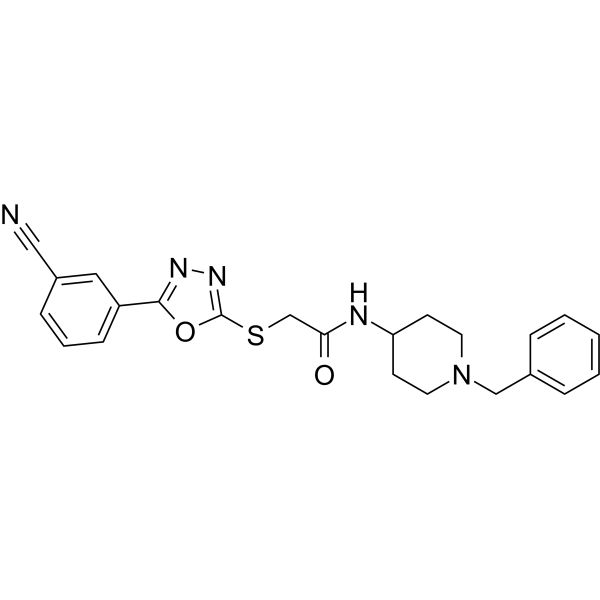
eeAChE-IN-3 (compound YS3g) is an orally active, potent EeAChE and IL-6 inhibitor with IC50s of 0.54 μM, 0.49 μM, 8.54 μM and 0.57 μM for EeAChE, RatAChE, RatBuChE and IL-6, respectively. eeAChE-IN-3 improves STZ (HY-13753) (Streptozotocin; HY-13753)-induced learning and memory impairment in mice. eeAChE-IN-3 has the potential for Alzheimer's disease (AD) research .
loading...
    loading...
Cat. No.: HY-168966
CAS No.: 2097493-39-3
Research Areas:  

Neurological Disease

JNJ-54082730 (Compound 1) is the orally active inhibitor for phosphodiesterase (PDE) that inhibits PDE2A, PDE3B, and PDE10A2 with IC50s of 0.95 nM, 6.17 μM (pIC50=5.21) and 87.1 nM (pIC50=7.06), respectively. JNJ-54082730 modulates the activity of AMPA receptor, enhance the synaptic plasticity and promotes the learning and memory function in rats models. JNJ-54082730 can cross blood-brain barrier .
loading...
    loading...
Cat. No.: HY-103430
CAS No.: 108179-91-5
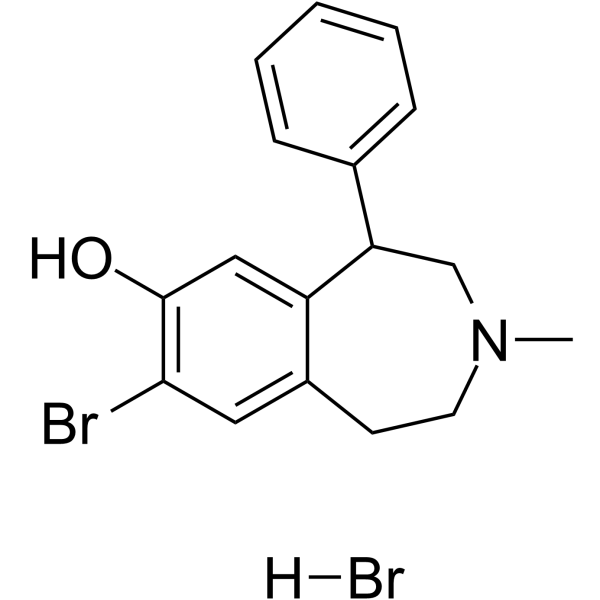
SKF-83566 hydrobromide is an orally active, blood-brain barrier-permeable D1/D5 dopamine receptor antagonist with a Ki value of approximately 0.4-0.56 nM. SKF-83566 hydrobromide modulates locomotor behavior and spatial memory by blocking D1 receptors and inhibits glioblastoma progression by targeting the DRD1/c-Myc/UHRF1 pathway. SKF-83566 hydrobromide acts as an inhibitor of the dopamine transporter (DAT) and adenylyl cyclase 2 (AC2). SKF-83566 hydrobromide competitively binds to DAT to inhibit dopamine reuptake and non-competitively inhibits AC2 activity, thereby reducing cAMP accumulation. SKF-83566 hydrobromide is used in research areas such as dopaminergic system mechanisms, learning and memory, targeted intervention for glioblastoma, AC2 pathophysiology, antiparasitic drug screening, and synaptic plasticity (the "gating effect") .
loading...
    loading...
Cat. No.: HY-N2183R
CAS No.: 18609-17-1
Synonyms: Quercetin 3-O-sophoroside (Standard)
Baimaside (Standard) is the analytical standard of Baimaside. This product is intended for research and analytical applications. Baimaside (Quercetin 3-O-sophoroside) is a flavonoid cholinergic function modulator that binds to SARS-CoV-2-related targets. Baimaside regulates the expression of cholinergic system-related proteins and acetylcholine levels, improves scopolamine-induced learning and memory impairment, protects hippocampal neurons, inhibits pollen protein fluorescence, and protects pollen DNA. Its biosynthesis is regulated by multiple enzymes. Baimaside is completely absorbed in rats, undergoes phase Ⅱ metabolism and gut microbiota decomposition, and inhibits the invasion and proliferation of SARS-CoV-2 and its variants, making it suitable for research related to Alzheimer's disease and COVID-19 .
loading...
    loading...
Cat. No.: HY-175841
CAS No.: 3075165-36-2
Tau Protein Phosphorylation-IN-1 is a tau protein phosphorylation inhibitor that potently protects PC12 cells against Aβ25–35-induced cytotoxicity (EC50 = 1.93 μM), and can penetrate the blood-brain barrier (BBB).Tau Protein Phosphorylation-IN-1 reverses the hyperphosphorylation of tau, significantly inhibits the expression of certain immune-related cytotoxic factors, suppresses the MAPK and NF-κB signaling pathways, and significantly inhibits the expression of RAGE and the apoptosis factors Bax/Bcl-2, both in vitro and in vivo. Tau Protein Phosphorylation-IN-1 relieves nerve damage, and improves learning and memory in an Alzheimer’s disease (AD) mouse model. Tau Protein Phosphorylation-IN-1 can be used for AD research .
loading...
    loading...
Cat. No.: HY-123320S
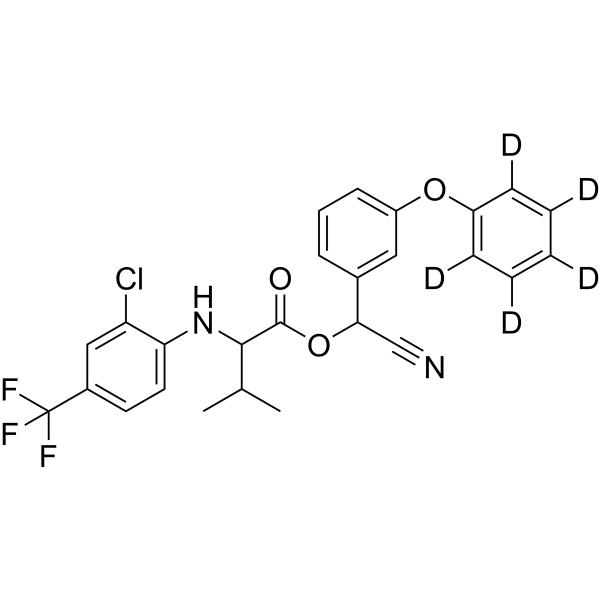
Fluvalinate-d5 is the deuterated-labeled Fluvalinate (HY-123320). Fluvalinate is an orally active acaricide classified as a sodium channel inhibitor. Fluvalinate delays sodium channel closure, prolongs cell membrane depolarization, inhibits the excitability of honeybee brain neurons, and exerts a central nervous system inhibitory effect. Fluvalinate negatively affects the learning ability, memory ability, sucrose responsiveness, and survival of honeybees. Fluvalinate potentiates pentobarbital-induced hypnosis, reduces spontaneous activity in mice, and decreases the total white blood cell count and absolute lymphocyte count in mice. Fluvalinate induces acute toxic symptoms in rats, acts as a cholinergic stimulant, and induces the production of hepatic enzymes in rats. Fluvalinate causes the death of Varroa jacobsoni sensitive to τ-Fluvalinate (HY-B2021). Fluvalinate can be used in studies related to mite pest control .
loading...
    loading...
Cat. No.: HY-B1953S
CAS No.: 1793071-39-2
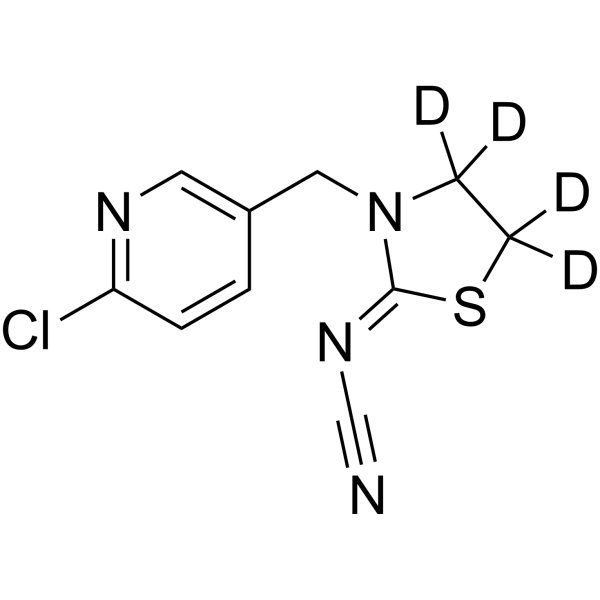
Thiacloprid-d4 is the deuterium labeled Thiacloprid. Thiacloprid is an orally active neurotoxic insecticide and also a nAChR agonist. Thiacloprid reduces the viability of healthy cells, depletes reduced glutathione, and increases MDA levels, thereby inducing cytotoxicity and oxidative stress damage. In practical applications, Thiacloprid has lower acute toxicity to honeybees than other compounds of the same class such as Imidacloprid (HY-B0838), but it still significantly impairs the learning and memory function, immune capacity and survival status of honeybees. Thiacloprid induces intestinal microbial dysbiosis and reduces survival rate in middle-aged honeybees, increases the risk of premature collapse in bumblebee colonies, and significantly decreases the final colony weight and reproductive output. Thiacloprid is used in broad-spectrum agricultural pest control, often alone or in combination with Deltamethrin (HY-B1971), and meets the pest management needs of various crops including potatoes, cabbages, various fruits and vegetables, and nuts .
loading...
    loading...
Cat. No.: HY-162812
H3R antagonist 4 (compound 11L) was a dual inhibitor of cholinesterase and histamine receptor (H3R), with corresponding IC50 of 7.04 μM (eeAChE), 9.73 μM (hAChE)(reversible) and 1.09 nM (H3R) , respectively. H3R antagonist 4 inhibited the aggregation of Aβ1-42 induced by itself and Cu 2+ (95.48% and 88.63%) , and degraded the Aβ1-42 fibrils induced by itself and Cu 2+ (80.16% and 89.30%) . H3R antagonist 4 chelate biometals such as Cu 2+, Zn 2+, Al 3+, and Fe 2+. H3R antagonist 4 significantly reduced tau protein hyperphosphorylation induced by Aβ1-42 and inhibited RSL-3-induced apoptosis and ferroptosis in PC12 cells. H3R antagonist 4 had the best blood-brain barrier permeability and intestinal absorption in hCMEC/D3 and hPepT1-MDCK cells.H3R antagonist 4 ameliorates learning and memory impairment in a mouse model of Alzheimer's disease induced by scopolamine (HY-N0296) .
loading...
    loading...
Cat. No.: HY-100406R
CAS No.: 150145-89-4
Synonyms: (+)-MCPG (Standard)
Research Areas:  

Neurological Disease

(S)-MCPG (Standard) is the analytical standard of (S)-MCPG (HY-100406). This product is intended for research and analytical applications. (S)-MCPG ((+)-MCPG) is a potent group I/II metabotropic glutamate receptor (mGluRs) antagonist and the active isomer of (RS)-MCPG (HY-100371) . (S)-MCPG can be used for the study of the function of mGluRs in spatial learning .
loading...
    loading...
Cat. No.: HY-114239
CAS No.: 1353949-71-9
Target:  

Amyloid-β

Research Areas:  

Neurological Disease

JBPOS-0101 is a phenyl carbamate compound. JBPOS-0101 exhibits neuroprotective and antiepileptic effects. JBPOS-0101 can attenuate the accumulation of in 5XFAD mouse brains and rescue the deficits in learning and memory. JBPOS-0101 can be used for the research of neurological disease, such as Alzheimer's disease (AD) .
loading...
    loading...
Cat. No.: HY-N20637
CAS No.: 176182-04-0
Polygalasaponin XXXII is an orally active cognitive enhancer. Polygalasaponin XXXII promotes the phosphorylation of ERK, CREB, Synapsin I and TrkB. Polygalasaponin XXXII enhances basal synaptic transmission. Polygalasaponin XXXII attenuates Scopolamine (HY-N0296)-induced cognitive impairment and improves hippocampus-dependent learning and memory abilities. Polygalasaponin XXXII can be used in research related to cognitive dysfunction .
loading...
    loading...
Cat. No.: HY-P11629
KBP-336 is a dual amylin and calcitonin receptor agonist (DACRA). KBP-336 exhibits antidiabetic and insulin-sensitizing properties, improves glucose levels, spatial learning, and memory in diabetic rats, and reduces blood glucose. KBP-336 also alleviates pain-like symptoms in osteoarthritis rats. KBP-336 also promotes weight and fat reduction. KBP-336 is useful for research on diabetes, obesity, and arthritis .
loading...
    loading...
Cat. No.: HY-184596
CAS No.: 3055537-47-5
Target:  

mGluR

Research Areas:  

Neurological Disease

VU6066098 is a blood-brain barrier penetrant, orally active inhibitor of metabotropic glutamate receptor subtype 2 (mGlu2), with IC50 values of 77 nM and 111 nM against human and rat targets, respectively. VU6066098 induces antidepressant-like activity, inhibits psychosis-like hyperlocomotion, enhances recognition memory and associative learning, and reverses cognitive deficits caused by blast-related traumatic brain injury. VU6066098 can be used in research on major depressive disorder, schizophrenia, Alzheimer's disease, and traumatic brain injury .
loading...
    loading...
Cat. No.: HY-183341
sEH/AChE-IN-5 is a selective, orally active and brain-penetrant acetylcholinesterase (AChE) and soluble epoxide hydrolase (sEH) dual inhibitor with IC50 values of 1.7 nM and 0.7 nM. sEH/AChE-IN-5 mediates neuroprotection and anti-inflammation via reduced TNF-α, IL-1β, IL-6, iNOS. sEH/AChE-IN-5 improves Scopolamine (HY-N0296)-induced learning and memory deficits mice. sEH/AChE-IN-5 can be used for the research of Alzheimer's disease .
loading...
    loading...
Cat. No.: HY-184742
AJ-4 is an orally active, blood-brain barrier-permeable GSK-3β/AChE inhibitor, with an IC50 of 4.7 nM against GSK-3β and 2.97 μM against AChE. AJ-4 increases the level of phosphorylated GSK-3β and reduces the expression of Amyloid-β and phosphorylated Tau. AJ-4 improves scopolamine-induced learning and memory impairment and alleviates hippocampal neuron damage in AD mice. AJ-4 can be used for the research of Alzheimer's disease .
loading...
    loading...
Cat. No.: HY-181649
CAS No.: 401501-66-4
Target:  

Sigma Receptor

Research Areas:  

Neurological Disease

S1R agonist 3 is a potent, selective and brain-penetrant sigma-1 receptor (S1R) agonist with a Ki of 1.5 nM. S1R agonist 3 reduces hyperlocomotion in wfs1abKO zebrafish larvae without affecting locomotion in wildtype wfs1abWT zebrafish larvae. S1R agonist 3 reverses Aβ25-35 (HY-P0128)-induced learning and memory impairments. S1R ligand 1 can be used for the research of Alzheimer’s disease .
loading...
    loading...
Cat. No.: HY-117710A
CAS No.: 1531586-58-9
AD-35 free base is an orally active, blood-brain barrier-permeable acetylcholinesterase inhibitor with an IC50 of 793 nM. AD-35 free base inhibits metal-induced amyloid-β aggregation and disassembles preformed amyloid-β aggregates. In rat models of cognitive impairment, AD-35 free base attenuates Aβ25-35-induced astrocyte activation, TNF-α and IL-1β release, inhibits ERK phosphorylation, and alleviates learning and memory deficits. AD-35 free base can be used for research on Alzheimer's disease .
loading...
    loading...

