


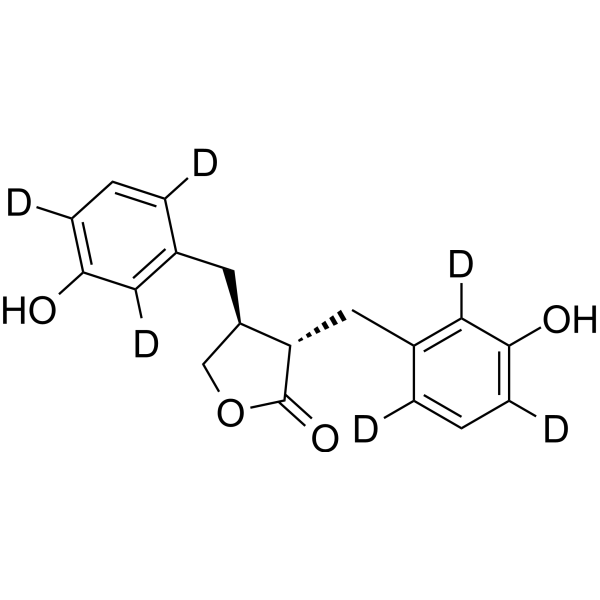

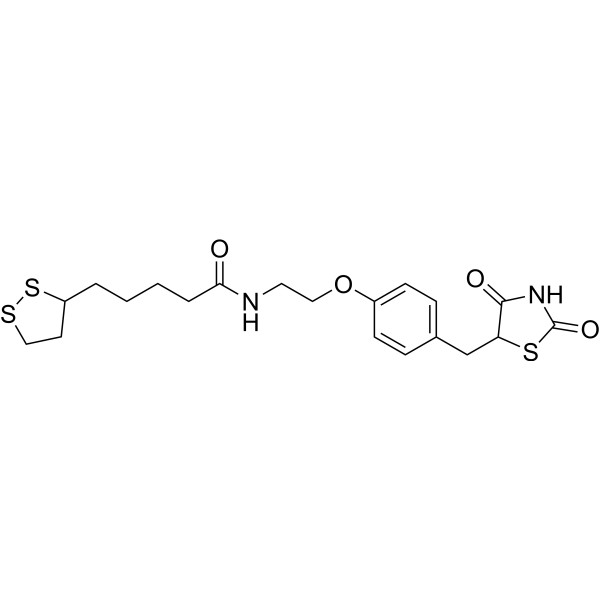


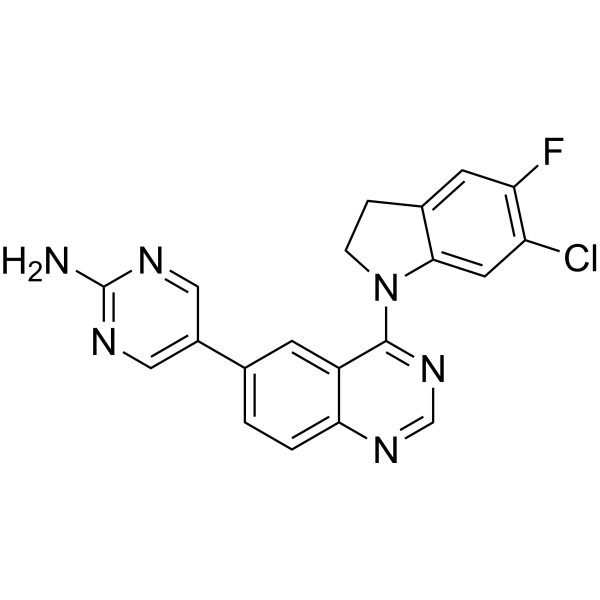
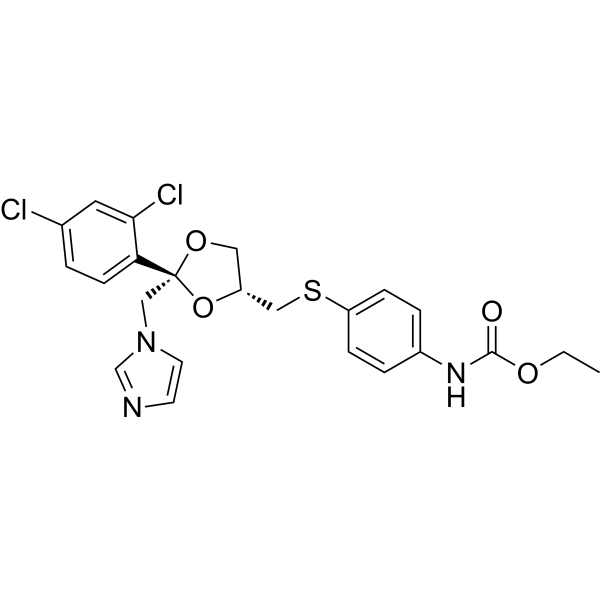


Scientific Reviews
Product Guides
Blogs
Topics
Targeted therapy! The Capetin Prize winning "Click Chemistry" can be used like this!Targeted therapy! The Nobel Prize winning "Click Chemistry" can be used like this!2025-02-06



90 Results for "radiosensitization" in MCE Product Catalog:
Radiotherapy is a common treatment for various cancers, and more than 50% of cancer patients require radiotherapy during the disease treatment. With advances in radiation technology and a better understanding of tumor biology, the efficacy of radiation therapy has gradually improved, and more and more patients have benefited from it. However, even with the use of advanced radiotherapy techniques, there are still many malignant tumor cells with low sensitivity to radiation, leading to the radiation effect is not ideal. To solve this problem, radiosensitizers have received more and more attention. Radiosensitizer is a kind of drug that can enhance the radiosensitivity of tumor cells and improve the effect of radiotherapy. Radiation sensitizers act in a variety of ways, such as killing hypoxic cells, enhancing DNA damage, inhibiting DNA damage repair, and blocking cell cycle progression, making tumor cells more susceptible to radiation damage and death than surrounding normal cells.
MCE designs a unique collection of 39 compounds with definite reported radiosensitization. It can be used for drug combination research in anti-cancer treatment.
DNA damage response (DDR) is a fundamental mechanism for maintaining genomic stability. When DNA damage occurs, such as single- or double-strand breaks or replication fork stalling, cells rely on key proteins including ATM, ATR, PARP, and DNA-PK to sense the damage and transmit signals, thereby regulating DNA repair, cell-cycle arrest, and cell death. Inhibition of specific DNA repair or checkpoint pathways can prevent tumor cells from effectively repairing accumulated DNA damage, ultimately leading to tumor cell death.
MCE DNA Damage Repair Inhibitor Library contains 1,544 compounds, focusing on key nodes involved in DNA damage response and DNA repair. The library covers multiple DNA repair and cell-cycle checkpoint pathways, providing a systematic compound screening tool for research on precision oncology, synthetic lethality, drug resistance mechanisms, and chemo- or radiosensitization.

Scientific Reviews
Product Guides
Blogs
Topics
Targeted therapy! The Capetin Prize winning "Click Chemistry" can be used like this!Targeted therapy! The Nobel Prize winning "Click Chemistry" can be used like this!2025-02-06
Protocols
Targeted therapy! The Capetin Prize winning "Click Chemistry" can be used like this!Targeted therapy! The Nobel Prize winning "Click Chemistry" can be used like this!2025-02-06



