

90 Results for "

radiosensitization

" in MedChemExpress (MCE) Product Catalog:
Products (90)

90 Results for "radiosensitization" in MCE Product Catalog:

Cat. No.: HY-162002
CAS No.: 2765448-96-0
Target:  

ATM/ATR

Research Areas:  

Cancer

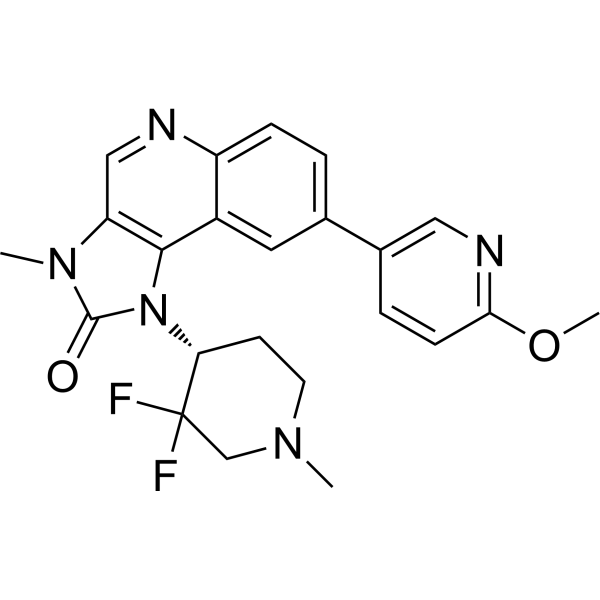
WSD0628 is a brain penetrant and potent ATM inhibitor with profound radiosensitizing effect .
loading...
    loading...
Cat. No.: HY-46866
CAS No.: 34348-59-9
Isoegomaketone is an orally active apoptosis inducer and radiosensitizer. Isoegomaketone regulates multiple key signaling pathways such as PI3K/AKT/mTOR, NF-κB, MAPK, cleaves Caspase family proteins and PARP, and modulates Bax, AIF and endoplasmic reticulum stress proteins. Isoegomaketone also induces autophagy and keratinocyte proliferation, effectively reduces the levels of inflammatory factors and oxidative stress, inhibits adipocyte differentiation, and resensitizes TRAIL-resistant cancer cells. Isoegomaketone can be applied to research related to colorectal cancer, melanoma, lung cancer, prostate cancer, liver cancer, as well as rheumatoid arthritis and obesity .
loading...
    loading...
Cat. No.: HY-P99296
CAS No.: 725735-28-4
Synonyms: CNTO 95; Anti-Human CD51 Recombinant Antibody

Target:  

Integrin Apoptosis

Research Areas:  

Cancer

Intetumumab (CNTO 95) is a human monoclonal antibody targeting αv integrin, with a Kd value of 1-24 nM. Through high-affinity binding to αv integrin, Intetumumab inhibits its interaction with extracellular matrix proteins (such as vitronectin and fibronectin), thereby blocking the downstream focal adhesion kinase signaling pathway. This further inhibits the adhesion, migration and invasion of tumor cells as well as the proliferation of vascular endothelial cells, promotes cell apoptosis, and exerts anti-tumor and anti-angiogenic effects. Intetumumab can be used in research related to head and neck cancer, non-small cell lung cancer and uterine serous papillary carcinoma .
loading...
    loading...
Cat. No.: HY-123290
CAS No.: 744198-19-4
Purity:  98.06%
Target:  

Glutaminase

Research Areas:  

Cancer

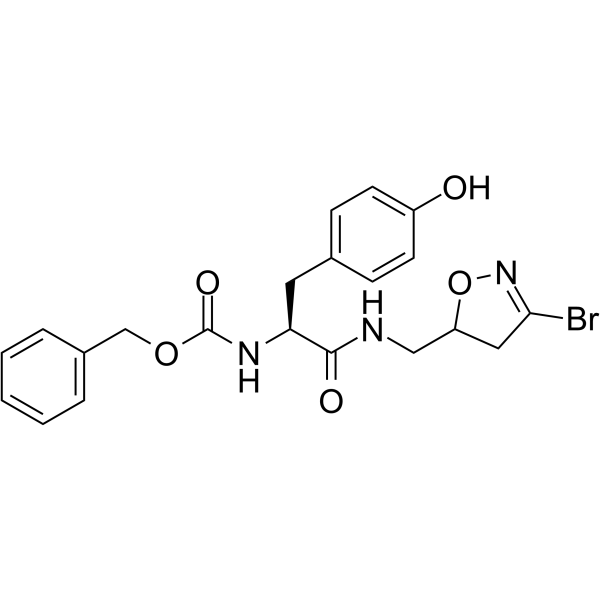
KCC009, a transglutaminase 2 (TG2) inhibitor, induces p53-independent radiosensitization .
loading...
    loading...
Cat. No.: HY-152147
CAS No.: 2770263-77-7
Purity:  99.38%
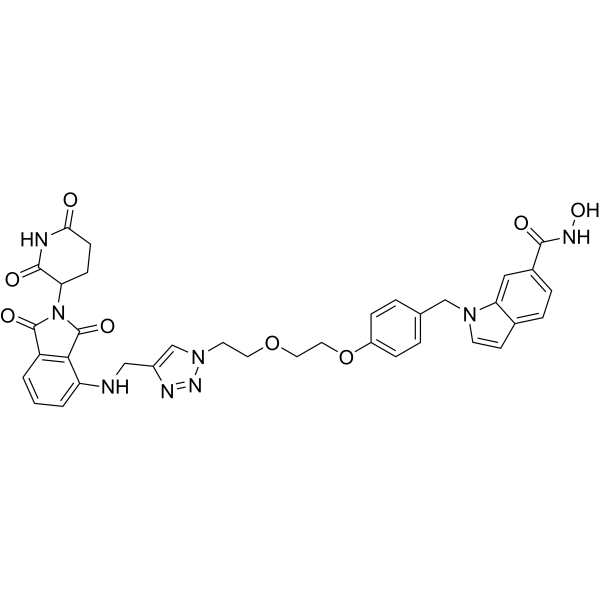
SZUH280 is a selective HDAC8 PROTAC degrader with a DC50 of 0.58 μM. SZUH280 recruits the CRBN E3 ubiquitin ligase to mediate polyubiquitination and proteasomal degradation of HDAC8, and exhibits higher selectivity for HDAC8 over other HDAC family members. SZUH280 induces apoptosis and G2/M cell cycle arrest in cancer cells. SZUH280 impairs DNA damage repair and promotes radiosensitization in cancer cells. SZUH280 inhibits the proliferation of cancer cells. SZUH280 is used in research related to lung cancer and breast cancer .
loading...
    loading...
Cat. No.: HY-112030
CAS No.: 10025-99-7
Purity:  ≥98.0%
Synonyms: Potassium tetrachloroplatinate(Ⅱ)
Research Areas:  

Cancer

Dipotassium tetrachloroplatinate (Potassium tetrachloroplatinate (Ⅱ)) is an important reagent for the preparation of other platinum coordination complexes. Dipotassium tetrachloroplatinate acts as a radiosensitizer to enhance the killing effect of hyperthermia. Dipotassium tetrachloroplatinate serves as a catalyst. Dipotassium tetrachloroplatinate exhibits antitumor activity .
loading...
    loading...
Cat. No.: HY-124813
CAS No.: 2083618-79-3
Purity:  99.29%
Synonyms: 113B7
Target:  

FAK EGFR MMP NF-κB SDCBP

Research Areas:  

Cancer

PDZ1i (113B7) is a inhibitor of MDA-9/Syntenin, with selective binding to the PDZ1 domain. PDZ1i inhibits radiation-induced invasion of glioblastoma (GBM) cells, radiosensitizes GBM cells, and impairs GBM-related signaling pathways (including Src/EphA2, EGFRvIII/FAK, and NF-κB). PDZ1i reduces radiation-induced secretion of invasion-related proteases (MMP-2, MMP-9, ADAM9). PDZ1i shows anti-tumor effects in nude mice bearing intracranial U1242-luc xenografts or GBM xenografts. PDZ1i can be used for the study of glioblastoma (GBM), breast cancer and prostate cancer .
loading...
    loading...
Cat. No.: HY-P99148

Target:  

TNF Receptor

Anti-Mouse TNF alpha Antibody (TN3-19.12) is an anti-mouse TNF alpha IgG antibody inhibitor derived from host Armenian Hamster. Anti-Mouse TNF alpha Antibody (TN3-19.12) neutralizes cytotoxic activity in supernatants obtained from LNC-8 cells. Anti-Mouse TNF alpha Antibody (TN3-19.12) reduces the symptoms and severity of EAE (experimental allergic encephalomyelitis) in LNC-8 cells xenograft mice models. Anti-Mouse TNF alpha Antibody (TN3-19.12) prevents diabetes in NOD mice. Anti-Mouse TNF alpha Antibody (TN3-19.12) shows apparent radiosensitizing effect in CD2F1 mice .
loading...
    loading...
Cat. No.: HY-B0332R
CAS No.: 58-27-5
Synonyms: Vitamin K3 (Standard)
Menadione (Standard) is the analytical standard of Menadione. This product is intended for research and analytical applications. Menadione is a naphthoquinone that is converted into active vitamin K2 in the body. Menadione is a potential anticancer agent and radiosensitizer .
loading...
    loading...
Cat. No.: HY-134596
CAS No.: 2416910-59-1
Purity:  99.92%
Target:  

E1/E2/E3 Enzyme

Research Areas:  

Cancer

SENP1-IN-3 is a specific deSUMOylation protease 1 (SENP1) inhibitor extracted from patent CN110627860, Compound 17. SENP1-IN-3 is developed for tumor radiosensitivity enhancement .
loading...
    loading...
Cat. No.: HY-116972
CAS No.: 22668-01-5
Purity:  99.86%
Synonyms: SR 2508
Research Areas:  

Cancer

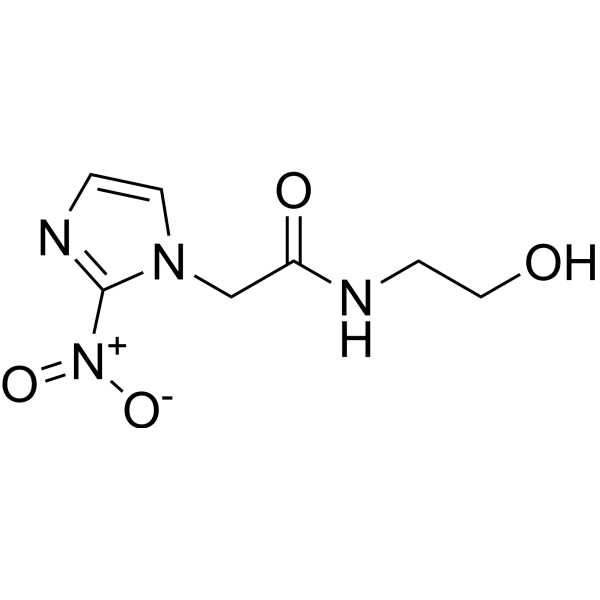
Etanidazole (SR 2508), a 2-nitroimidazole compound, is a hypoxic radiosensitizer used in cancer diagnosis and chemotherapy research .
loading...
    loading...
Cat. No.: HY-164279
CAS No.: 1207615-74-4
Target:  

DNA/RNA Synthesis

Research Areas:  

Cancer

YTR107 is a radiation sensitizer. YTR107 binds to nucleophosmin1 (NPM1) and inhibits pentamer formation. YTR107 inhibits recruitment of nucleophosmin to sites of DNA damage, suppresses repair of DNA double strand breaks, and enhances radiosensitization .
loading...
    loading...
Cat. No.: HY-154253
CAS No.: 59090-48-1
Purity:  99.67%
Synonyms: 5-AmdU; α-Azidothymidine
Research Areas:  

Cancer

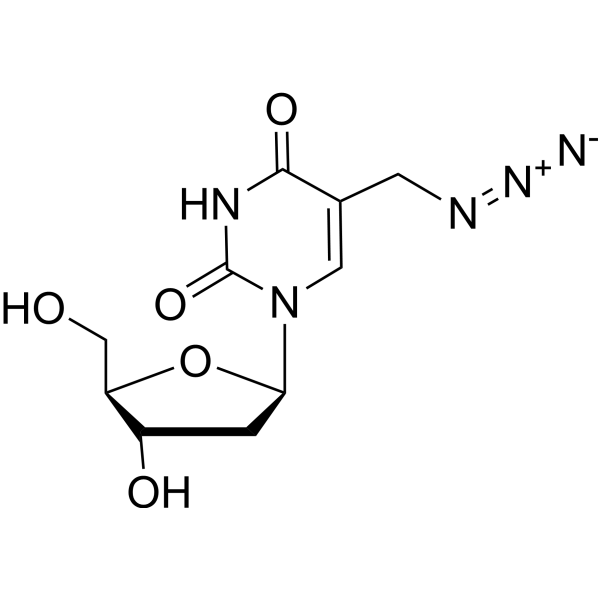
5-Azidomethyl-2'-deoxyuridine (5-AmdU) is a purine nucleoside analog. 5-Azidomethyl-2'-deoxyuridine demonstrates effective radiosensitization in EMT6 tumor cells. . 5-Azidomethyl-2'-deoxyuridine is a click chemistry reagent, it contains an Azide group and can undergo copper-catalyzed azide-alkyne cycloaddition reaction (CuAAc) with molecules containing Alkyne groups. It can also undergo strain-promoted alkyne-azide cycloaddition (SPAAC) reactions with molecules containing DBCO or BCN groups.
loading...
    loading...
Cat. No.: HY-168574
CAS No.: 3059333-98-8
Target:  

PROTACs Sirtuin Apoptosis

Research Areas:  

Cancer

SZU-B6 is an orally active SIRT6 PROTAC degrader with DC50 values of 45 nM in SK-HEP-1 cells and 154 nM in Huh-7 cells, respectively. SZU-B6 mediates proteasome-dependent degradation of SIRT6 by recruiting the CRBN E3 ubiquitin ligase. SZU-B6 impairs DNA damage repair and promotes radiosensitization of cancer cells. SZU-B6 induces cell cycle arrest and apoptosis in cancer cells. SZU-B6 inhibits the proliferation of liver cancer cells. SZU-B6 suppresses the tumor growth of hepatocellular carcinoma and intrahepatic cholangiocarcinoma in mice. SZU-B6 can be used in research related to hepatocellular carcinoma and intrahepatic cholangiocarcinoma .
loading...
    loading...
Cat. No.: HY-16055
CAS No.: 220913-32-6
Synonyms: AR-67; DB 67
Research Areas:  

Cancer

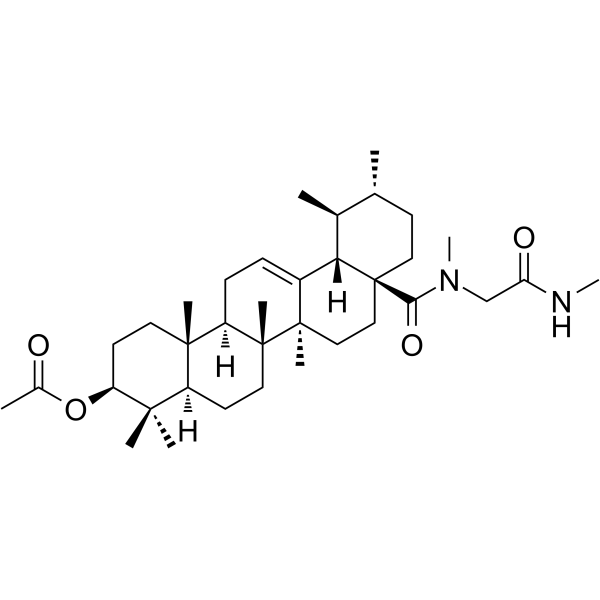
Silatecan (AR-67) is a blood-brain barrier-permeable derivative of Camptothecin (HY-16560), DNA topoisomerase I inhibitor, an anticancer agent, and a radiosensitizer. Silatecan potently radiosensitizes wild-type p53 gliomas. Silatecan can be used in research related to glioma, leukemia, non-small cell lung cancer, colon cancer, ovarian cancer, renal cancer, prostate cancer, breast cancer, cervical cancer, gastric cancer, nasopharyngeal cancer, and uterine cancer .
loading...
    loading...
Cat. No.: HY-162477
CAS No.: 1563260-97-8
Target:  

Cathepsin Apoptosis

Research Areas:  

Cancer

TS-24 is an inhibitor for cathepsin S, with an IC50 of 4.3 μM. TS-24 exhibits radiosensitizing activity in wild type breast cancer susceptibility gene 1 (BRCA1) and in TNBC xenograft mice model, through induction of apoptosis .
loading...
    loading...
Cat. No.: HY-143230
CAS No.: 890056-27-6
Synonyms: OGX-011
Target:  

Apoptosis

Research Areas:  

Cancer

Custirsen (OGX-011) is an antisense oligonucleotide that targets clusterin mRNA. Custirsen induces apoptosis by activating Bax, triggering mitochondrial translocation and cytochrome c release. Custirsen acts as a chemosensitizer, radiosensitizer and hormone sensitizer. Custirsen can be used in research related to prostate cancer, non-small cell lung cancer and metastatic breast cancer .
loading...
    loading...
Cat. No.: HY-162002A
CAS No.: 2765449-10-1
Target:  

ATM/ATR

Research Areas:  

Cancer

(S)-WSD0628 (Compound 28) is the S-isomer of WSD0628 (HY-162002). (S)-WSD0628 is the inhibitor for ATM that inhibits the phosphorylation of ATM in MCF-7 cell with IC50 <100 nM. (S)-WSD0628 exhibits radiosensitizing activity. (S)-WSD0628 can cross blood-brain barrier .
loading...
    loading...
Cat. No.: HY-13742
CAS No.: 93265-81-7
Purity:  99.59%
Synonyms: IPdR
Target:  

HSV

Research Areas:  

Cancer

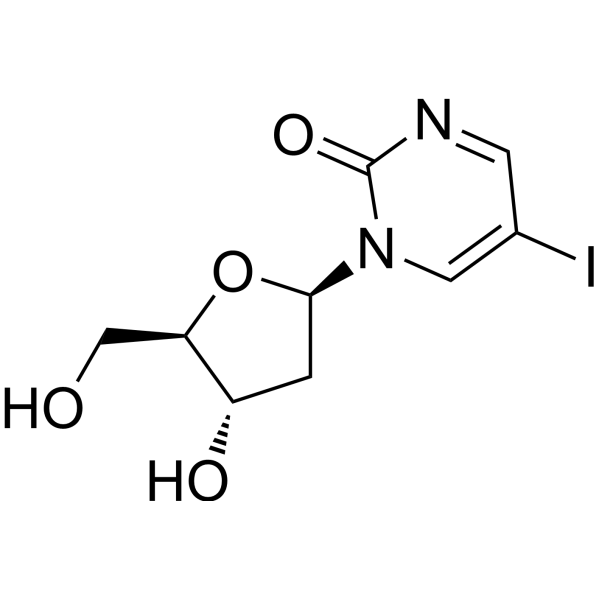
Ropidoxuridine (IPdR) is a novel orally available, halogenated thymidine analog and is a potential radiosensitizer for use in human tumors.
loading...
    loading...
Cat. No.: HY-W076740
CAS No.: 6974-78-3
Synonyms: 8-Bromo-9H-purin-6-amine
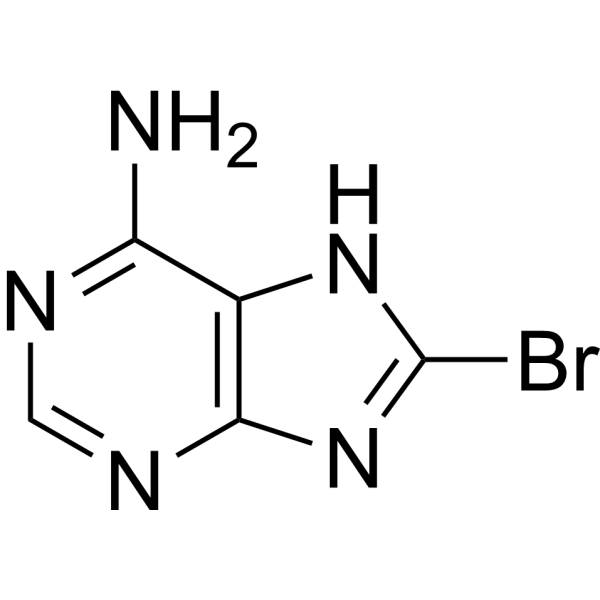
8-Bromoadenine (8-Bromo-9H-purin-6-amine) is a DNA radiosensitizer that inhibits DNA single-strand break repair in cells. 8-Bromoadenine is a brominated derivative of adenine, and radioactive adenine can be prepared by replacing bromine with deuterium .
loading...
    loading...

