
261 Results for "

membrane function

" in MedChemExpress (MCE) Product Catalog:
Products (261)

261 Results for "membrane function" in MCE Product Catalog:

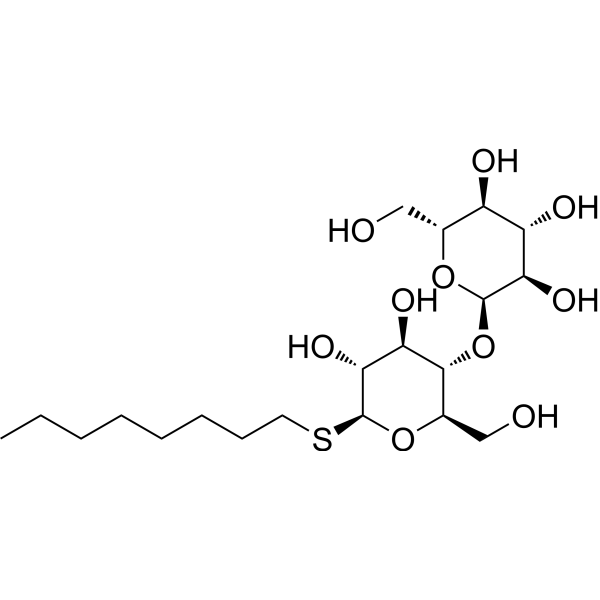
Cat. No.: HY-W250181
CAS No.: 148616-91-5
Synonyms: Octyl β-D-thiomaltopyranoside
Octyl thiomaltoside (OTM) is a nonionic detergent commonly used in the purification and crystallization of membrane proteins. It belongs to the family of maltoside detergents and has a hydrophilic head group and a lipophilic tail group, enabling it to interact with water-soluble and membrane-bound proteins. OTMs are known for their ability to solubilize integral membrane proteins without disrupting their structure or function, making them an invaluable tool in biochemical and biophysical research. In addition to protein research, OTMs are used in a variety of other applications, including drug delivery systems, nanotechnology, and diagnostic analysis.
loading...
    loading...
Cat. No.: HY-B0887R
CAS No.: 52645-53-1
Synonyms: NRDC-143 (Standard)
Permethrin (Standard) is the analytical standard of Permethrin. This product is intended for research and analytical applications. Permethrin (NRDC-143) is an insecticide, acaricide, and insect repellent; functions as a neurotoxin, affecting neuron membranes by prolonging sodium channel activation.
loading...
    loading...
Cat. No.: HY-166257
CAS No.: 38621-58-8
Synonyms: Psychosine 3′-O-sulfate; Psychosine 3′-sulfate
Research Areas:  

Metabolic Disease

Lyso-sulfatide (bovine) is a phospholipid component derived from sphingolipid catabolism and a potent factor Xa inhibitor and anticoagulant. Lyso-sulfatide (bovine) binds directly to factor Xa and inhibits prothrombin activation mediated by the prothrombinase complex, thereby prolonging factor Xa-induced plasma clotting time and suppressing thrombin generation. Lyso-sulfatide (bovine) serves as a reliable lipid membrane mimic for studying cell membrane structure, function, and molecular interactions .
loading...
    loading...
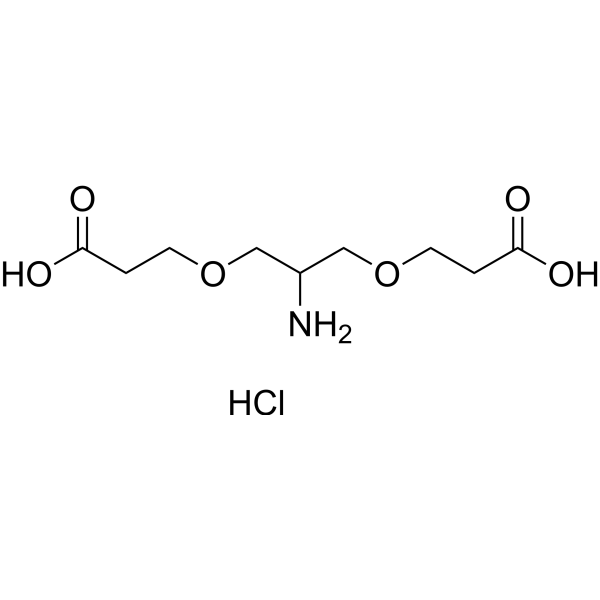
Cat. No.: HY-23212A
CAS No.: 2421153-68-4
Research Areas:  

Cancer

2-Amino-1,3-bis(carboxylethoxy)propane hydrochloride is a non-protein amino acid, sulfamic acid.2-Amino-1,3-bis(carboxylethoxy)propane hydrochloride contains one amino group and two terminal carboxylic acids.2-Amino-1,3-bis(carboxylethoxy)propane hydrochloride has a variety of physiological functions, including maintaining the stability of cell membranes, regulating cholesterol metabolism, supporting the normal function of the nervous system, participating in collagen synthesis, and anti-oxidation .
loading...
    loading...
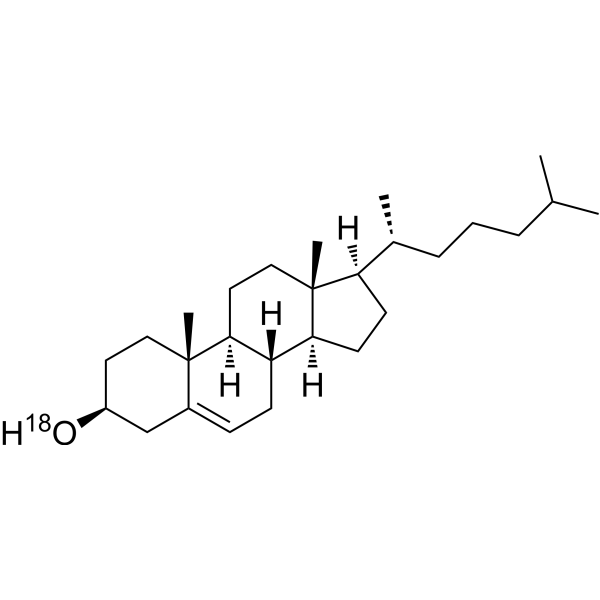
Cat. No.: HY-N0322S8
CAS No.: 59613-51-3
Cholesterol- 18O is the 18O-labeled Cholesterol. Cholesterol is the major sterol in mammals. It is making up 20-25% of structural component of the plasma membrane. Plasma membranes are highly permeable to water but relatively impermeable to ions and protons. Cholesterol plays an important role in determining the fluidity and permeability characteristics of the membrane as well as the function of both the transporters and signaling proteins . Cholesterol is also an endogenous estrogen-related receptor α (ERRα) agonist .
loading...
    loading...
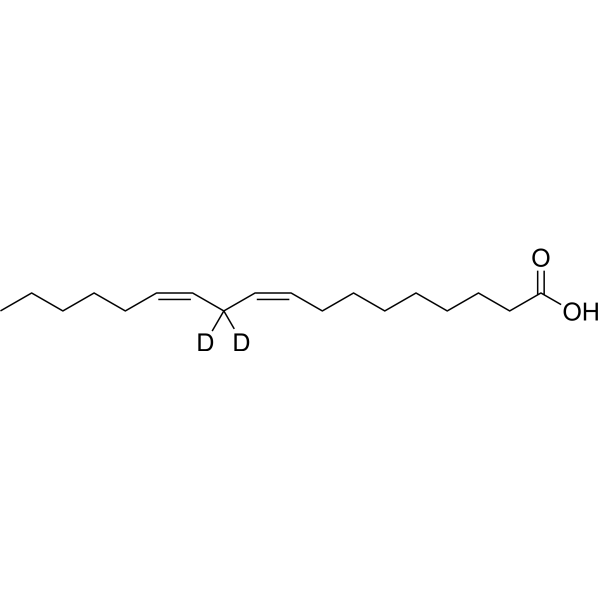
Cat. No.: HY-N0729S5
CAS No.: 31447-29-7
Synonyms: Deulinoleic acid
Target:  

Endogenous Metabolite

Research Areas:  

Metabolic Disease

Linoleic Acid-d2 is the deuterium labeled Linoleic acid. Linoleic acid is a common polyunsaturated (PUFA) found in plant-based oils, nuts and seeds. Linoleic acid is a part of membrane phospholipids, and functions as a structural component to maintain a certain level of membrane fluidity of the transdermal water barrier of the epidermis. Linoleic acid induces red blood cells and hemoglobin damage via oxidative mechanism .
loading...
    loading...
Cat. No.: HY-N0729S1
CAS No.: 2055171-21-4
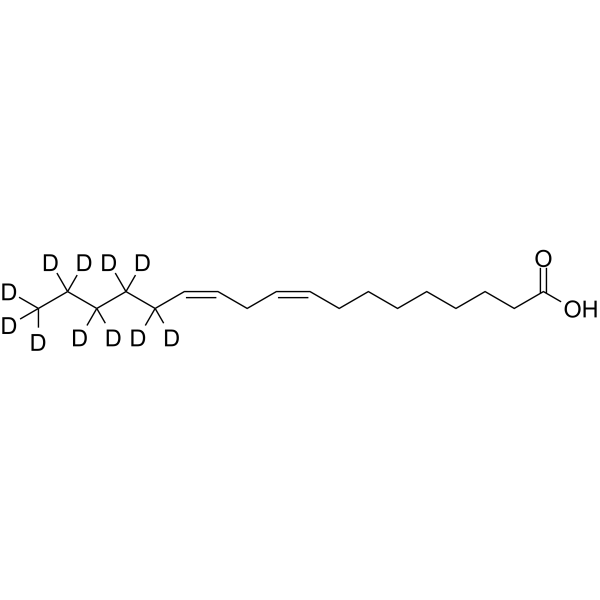
Linoleic acid-d11 is the deuterium labeled Linoleic acid. Linoleic acid is a common polyunsaturated (PUFA) found in plant-based oils, nuts and seeds. Linoleic acid is a part of membrane phospholipids, and functions as a structural component to maintain a certain level of membrane fluidity of the transdermal water barrier of the epidermis. Linoleic acid induces red blood cells and hemoglobin damage via oxidative mechanism .
loading...
    loading...
Cat. No.: HY-137016
CAS No.: 54364-02-2
Target:  

HCN Channel

Research Areas:  

Neurological Disease

8-Pcpt-cGMP is an agonist for cyclic nucleotide-gated (CNG) channel with an EC50 of 0.5 μM. 8-Pcpt-cGMP exhibits good membrane permeability. 8-Pcpt-cGMP can be used in studies about the function of CNG channels in visual signal transduction and olfactory transduction .
loading...
    loading...
Cat. No.: HY-133569
CAS No.: 2244458-40-8
Target:  

CFTR

Research Areas:  

Others

ARN23765 is a corrector for F508del-CFTR with an EC50 of 38 pM in human bronchial epithelial cells. ARN23765 improves the maturation and function of F508del-CFTR on the cell membrane, affects the ions transport and secretion, and corrects the pathological mechanism of cystic fibrosis (CF) .
loading...
    loading...
Cat. No.: HY-154993
CAS No.: 2956809-71-3
Research Areas:  

Infection

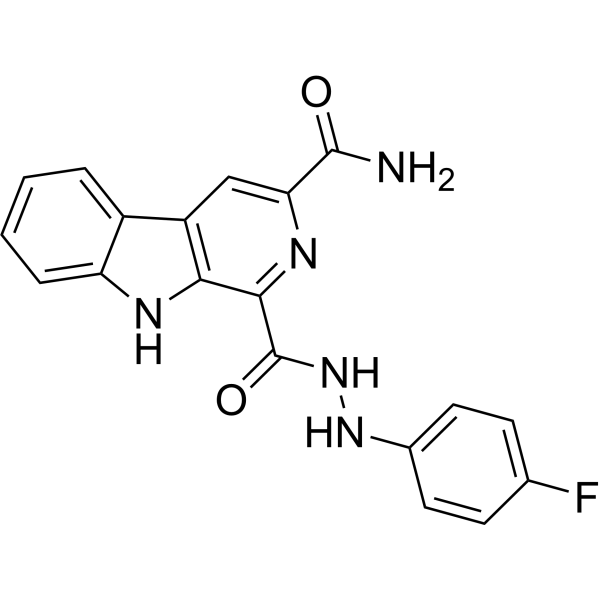
Gamma-Glutamyl Transferase-IN-1 (compound 4de) is a β-carboline 1-hydrazide inhibitor with antifungal and antibacterial activities, targeting to glutamyltransferase. Gamma-Glutamyl Transferase-IN-1 acts function by resulting the accumulation of reactive oxygen species, destruction of cell membranes, and dysregulation of histone acetylation .
loading...
    loading...
Cat. No.: HY-154996
CAS No.: 2956809-82-6
Research Areas:  

Infection

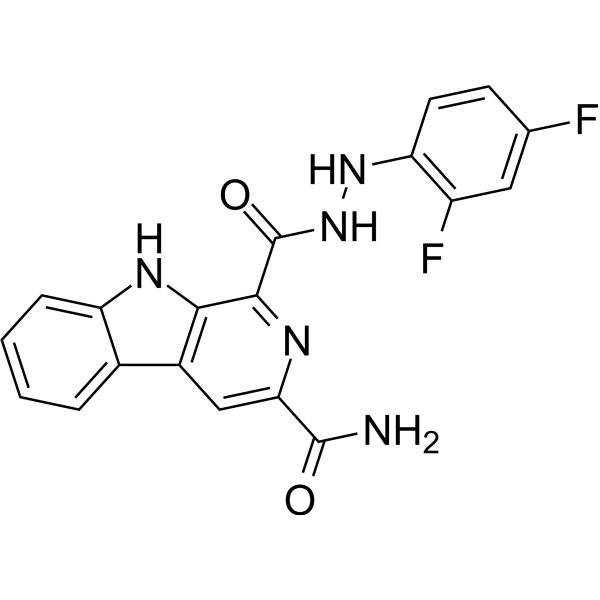
Gamma-Glutamyl Transferase-IN-2 (compound 4dq) is a β-carboline 1-hydrazide inhibitor with antifungal and antibacterial activities, targeting to glutamyltransferase. Gamma-Glutamyl Transferase-IN-2 acts function by resulting the accumulation of reactive oxygen species, destruction of cell membranes, and dysregulation of histone acetylation .
loading...
    loading...
Cat. No.: HY-173499
CAS No.: 3077339-88-6
Target:  

FKBP CDK

Research Areas:  

Cancer

HLDA-212 is a non-covalent RIPTAC that targets FKBP (target protein, TP) and multiple CDK (effector protein, EP). HLDA-212 binds to FKBP and CDK to form a stable ternary complex (TP:RIPTAC:EP), and induces cell death by blocking FKBP function. HLDA-212 selectively inhibits the proliferation of CDK-expressing cells and accumulates in CDK-expressing cells in a CDK-dependent manner. HLDA-212 exhibits antiproliferative activity in 293_HFL cells (with a GI50 of 0.011 μM). HLDA-212 holds promise for the treatment of cancers with high FKBP expression .
loading...
    loading...
Cat. No.: HY-16121
CAS No.: 244072-26-2
Target:  

Cathepsin

Research Areas:  

Others

CAA-0225 is a tissue protease L inhibitor that inhibits rat liver tissue protease L with a IC50 value of 1.9 nM. CAA-0225 can participate in the degradation of autophagosome membrane markers LC3-II and GABARAP (HY-P72639), improve cardiac function in mice with reperfusion injury, and kill and eliminate Trypanosoma brucei parasites [1][2][3].
loading...
    loading...
Cat. No.: HY-W422288
CAS No.: 79156-75-5
Synonyms: (Rac)-Ketoconazol; (Rac)-R 41400
Target:  

Fungal Cytochrome P450

Research Areas:  

Infection

(Rac)-Ketoconazole ((Rac)-R 41400) is an antifungal imidazole compound with oral activity. (Rac)-Ketoconazole interferes with ergosterol synthesis by inhibiting cytochrome P450-dependent 14α-sterol demethylase (CYP51), a key enzyme on the fungal cell membrane, leading to membrane dysfunction and ultimately inhibition of fungal growth and reproduction. (Rac)-Ketoconazole is indicated for studies of fungal infections .
loading...
    loading...
Cat. No.: HY-134939
CAS No.: 943022-11-5
Target:  

Drug Derivative

Research Areas:  

Others

thio-Miltefosine is a modulator of rafts in membrane tissue. Rafts are nanoscale aggregates of different lipids and proteins that profoundly affect cellular function. Thio-Miltefosine modulates membrane phase behavior on cell-derived giant plasma membrane vesicles .
loading...
    loading...
Cat. No.: HY-W838254
CAS No.: 322647-32-5
Research Areas:  

Others

1,2-Dipentadecanoyl-sn-glycero-3-phospho-(1'-rac-glycerol) sodium functions as an activator for the protein kinase C family and is an anionic phospholipid found in mitochondrial and microsomal membranes, playing a crucial role in the composition of lung surfactant, particularly within the membranes of lamellar bodies in the lungs.
loading...
    loading...
Cat. No.: HY-123266
CAS No.: 620931-39-7
Research Areas:  

Infection

D011-2120 functions as an antiviral agent by inhibiting microtubule polymerization, disrupting the Golgi complex, and preventing viral trafficking to the plasma membrane during the virus egress process.
loading...
    loading...
Cat. No.: HY-B0887S1
Synonyms: NRDC-143-d9
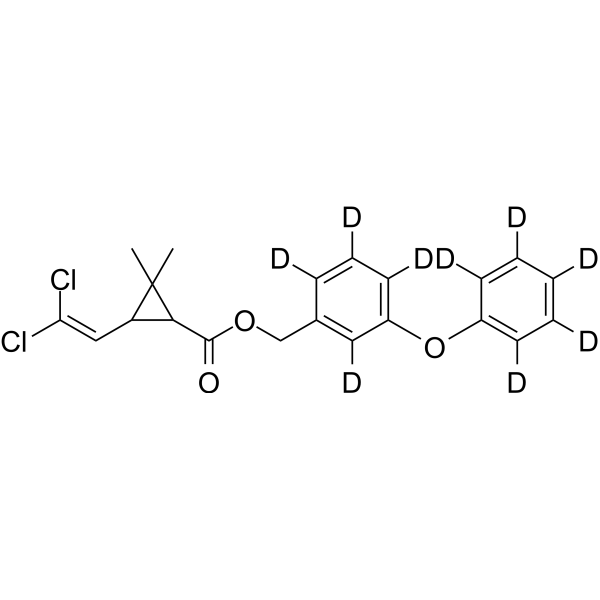
Permethrin-d9 is the deuterium labeled Permethrin. Permethrin (NRDC-143) is an insecticide, acaricide, and insect repellent; functions as a neurotoxin, affecting neuron membranes by prolonging sodium channel activation.
loading...
    loading...
Cat. No.: HY-P2493
CAS No.: 627079-23-6
Target:  

HIV

Research Areas:  

Others

(Cys47)-HIV-1 tat Protein (47-57) has membrane translocation function and can be used to derivatize the surface of magnetic pharmaceuticals and substantially facilitated their uptake into target cells .
loading...
    loading...
Cat. No.: HY-W839203
CAS No.: 37070-48-7
Synonyms: 1,2-Didocosanoyl-sn-glycero-3-phosphocholine; PC(22:0/22:0)
Target:  

Endogenous Metabolite

Research Areas:  

Others

22:0 PC (1,2-Didocosanoyl-sn-glycero-3-phosphocholine), a type of phosphatidylcholine, functions as a lung surfactant and is characterized as an amphipathic molecule predominantly found in the outer leaflets of biological membrane bilayers.
loading...
    loading...

