



Gamma-Glutamyl Transferase-IN-2
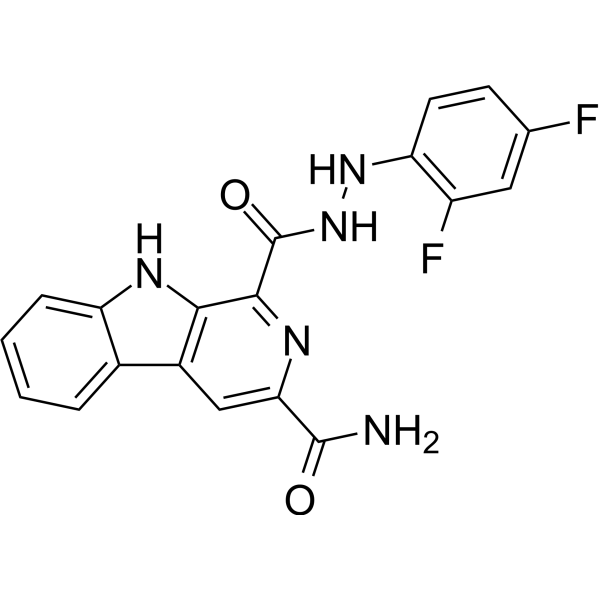
Gamma-Glutamyl Transferase-IN-2 (compound 4dq) is a β-carboline 1-hydrazide inhibitor with antifungal and antibacterial activities, targeting to glutamyltransferase. Gamma-Glutamyl Transferase-IN-2 acts function by resulting the accumulation of reactive oxygen species, destruction of cell membranes, and dysregulation of histone acetylation.
For research use only. We do not sell to patients.
- CAS No.: 2956809-82-6
- Formula: C19H13F2N5O2
- Molecular Weight:381.34
-
Storage:
Please store the product under the recommended conditions in the Certificate of Analysis.

To place orders, for customer services and technical support, please contact: MedChemExpress USA
Tel: 609-228-6898 E-mail: [email protected] [email protected]


-
 Biological Activity
-
Chemical Information
- Protocols
- Purity & Documentation
- References
-
 Help & FAQs




Biological Activity
Description
IC50 & Target
Gamma-Glutamyl Transferase[1]


Chemical Information
-
CAS No. 2956809-82-6
-
Molecular Weight 381.34
-
Formula C19H13F2N5O2
-
SMILES
O=C(C1=NC(C(N)=O)=CC2=C1NC3=CC=CC=C32)NNC4=C(C=C(C=C4)F)F
-
Shipping
Room temperature in continental US; may vary elsewhere.
-
Storage
Please store the product under the recommended conditions in the Certificate of Analysis.

Protocols
-
Research Protocol for Infectious Diseases
Infectious-disease experiments test how pathogens interact with host barriers, innate immune receptors, inflammatory signaling, pathogen replication, and tissue injury; pattern-recognition receptors such as TLRs, RIG-I-like receptors, NOD-like receptors, and inflammasomes detect microbial molecules and activate NF-κB, interferon, and cytokine responses. The central hypothesis is that infection severity reflects the balance between pathogen burden and host response: protective inflammation restricts pathogen growth, whereas excessive or mislocalized inflammation contributes to tissue damage and disease phenotype. Unresolved questions include which host pathways are protective versus pathogenic, why some infection models fail to translate to human disease, and which combined readouts best predict clinically relevant infection outcomes.
-
ROS/oxidative-stress fluorescent staining
ROS/oxidative-stress fluorescent staining uses cell-permeant fluorogenic probes that become fluorescent after oxidation inside cells or tissues; commonly used examples include DCFH-DA/DCFDA for broad cellular oxidant detection, DHE for superoxide-related signal detection, MitoSOX for mitochondrial superoxide-related signal detection, and CellROX probes for oxidative-stress-associated fluorescence readouts. The assay detects probe oxidation rather than a single ROS species unless the probe and analysis method have been chemically validated for that species. DCFH-DA enters cells, is deacetylated by intracellular esterases to DCFH, and produces fluorescent DCF after oxidation, so the readout is used as an operational measure of total cellular oxidative stress rather than a species-specific ROS measurement. DHE and MitoSOX can report superoxide-related oxidation, but red fluorescence alone can include non-specific ethidium-like oxidation products; HPLC or optimized spectral approaches are


Purity & Documentation
References

Calculators
Concentration (start) × Volume (start) = Concentration (final) × Volume (final)


Gamma-Glutamyl Transferase-IN-2 Related Classifications
HY-154996 Related Classifications
 Powered by Bioz