
1129 Results for "

ca2

" in MedChemExpress (MCE) Product Catalog:
Products (1129)

1129 Results for "ca2" in MCE Product Catalog:

Cat. No.: HY-N9554
CAS No.: 150881-27-9
WIN-64821 is a secondary metabolite produced by Aspergillus species, and acts as a Neurokinin Receptor antagonist. The Ki values of WIN-64821 for NK1, NK2 and NK3 receptors are 0.24 (human astrocytoma cells), 0.26 (rat duodenum) and 15.2 (guinea pig forebrain) μM, respectively. WIN-64821 inhibits apamin-induced contraction of rat vas deferens, blocks substance P-induced contraction of guinea pig ileum and Ca 2+ efflux in human astrocytoma cells. WIN-64821 is applicable to analgesic and anti-inflammatory research [2].
loading...
    loading...
Cat. No.: HY-P3187
CAS No.: 9025-53-0
Target:  

DNA/RNA Synthesis

Research Areas:  

Others

Exo-1,4-β-xylosidase is an exonuclease that specifically acts on the β-1,4 glycosidic bonds at the non-reducing ends of xylan and xylooligosaccharides. Exo-1,4-β-xylosidase is Ca 2+-dependent and reversibly binds to metal ions to catalyze the hydrolysis of β-1,4 glycosidic bonds, thereby degrading xylan to produce xylose. Exo-1,4-β-xylosidase can be used in research fields such as lignocellulose bioconversion, bioethanol production, and optimization of xylan saccharification processes [2].
loading...
    loading...
Cat. No.: HY-P5912
Target:  

iGluR Calcium Channel

Research Areas:  

Neurological Disease

GluN1 (356-385) is a polypeptide targeting NMDAR GluN1. GluN1 (356-385) induces the production of autoantibodies, which reduce the density of cell surface NMDAR clusters, impair long-term potentiation, and decrease NMDAR-mediated Ca 2+ influx. As an immunogen, GluN1 (356-385) induces symptoms similar to anti-NMDAR encephalitis, including memory loss, in mice. GluN1 (356-385) can be used to establish a mouse model that mimics the pathogenesis of anti-NMDAR encephalitis. GluN1 (356-385) is applicable to research related to anti-NMDAR encephalitis .
loading...
    loading...
Cat. No.: HY-W002006
CAS No.: 6642-31-5
Research Areas:  

Others

6-Amino-1,3-dimethyluracil is a 6-aminouracil derivative and also functions as an organic thermal stabilizer for polyvinyl chloride (PVC). Its compatibility with PVC is lower than that of Ca 2+/Zn 2+ stabilizers and alkyl-substituted bis(6-amino-1,3-dimethyluracil-5-yl)methane derivatives. 6-Amino-1,3-dimethyluracil can be used to prepare PVC films, which exhibit lower transparency compared to PVC films stabilized by its derived bis-uracil compounds .
loading...
    loading...
Cat. No.: HY-W011235R
CAS No.: 57226-68-3
Norfluoxetine hydrochloride (Standard) is the analytical standard of Norfluoxetine hydrochloride (HY-W011235). This product is intended for research and analytical applications. Norfluoxetine hydrochloride is the active metabolite of the antidepressant Fluoxetine (HY-B0102); it is also a TREK-2 K2P potassium channel inhibitor. Norfluoxetine hydrochloride exhibits neuroimmunological activity, induces apoptosis in primary microglial cells, and inhibits the release of pro-inflammatory factors. Norfluoxetine hydrochloride inhibits high-threshold voltage-gated Ca 2+ currents in neurons with an EC50 of 20.4 μM. Norfluoxetine hydrochloride can be used in research related to depression, ischemic stroke, and epilepsy [2] .
loading...
    loading...
Cat. No.: HY-W011235S
CAS No.: 1188265-34-0
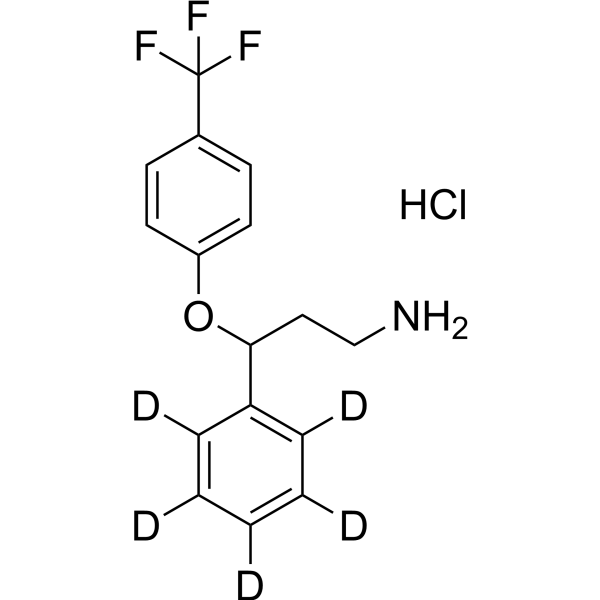
Norfluoxetine-d5 hydrochloride is the d5-labeled Norfluoxetine hydrochloride (HY-W011235). Norfluoxetine hydrochloride is the active metabolite of the antidepressant Fluoxetine (HY-B0102); it is also a TREK-2 K2P potassium channel inhibitor. Norfluoxetine hydrochloride exhibits neuroimmunological activity, induces apoptosis in primary microglial cells, and inhibits the release of pro-inflammatory factors. Norfluoxetine hydrochloride inhibits high-threshold voltage-gated Ca 2+ currents in neurons with an EC50 of 20.4 μM. Norfluoxetine hydrochloride can be used in research related to depression, ischemic stroke, and epilepsy [2] .
loading...
    loading...
Cat. No.: HY-W134005
CAS No.: 29932-54-5
Synonyms: Ethylenediaminetetraacetic acid magnesium disodium tetrahydrate
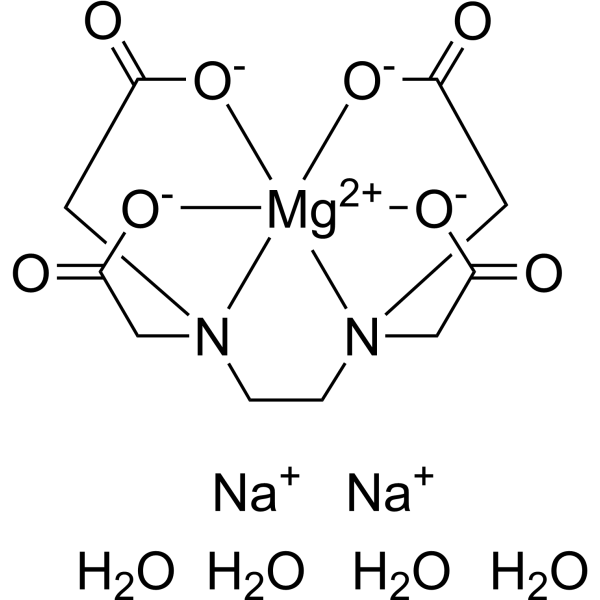
Mg(Ⅱ)-EDTA (Ethylenediaminetetraacetic acid magnesium) disodium tetrahydrate is a divalent metal chelator and ferroptosis inducer. Mg (Ⅱ)-EDTA disodium tetrahydrate reduces E-cadherin expression by chelating Ca 2+ on the surface of tumor cells, thereby triggering cell dissociation and inducing epithelial-mesenchymal transition (EMT). Mg (Ⅱ)-EDTA disodium tetrahydrate further chelates lysosomal iron to form EDTA-Fe, induces ferroptosis through the Fenton reaction, and synergistically enhances immune responses to inhibit tumor metastasis. Mg (Ⅱ)-EDTA (disodium tetrahydrate) can be used in tumor-related research .
loading...
    loading...
Cat. No.: HY-W250149
CAS No.: 1914-99-4
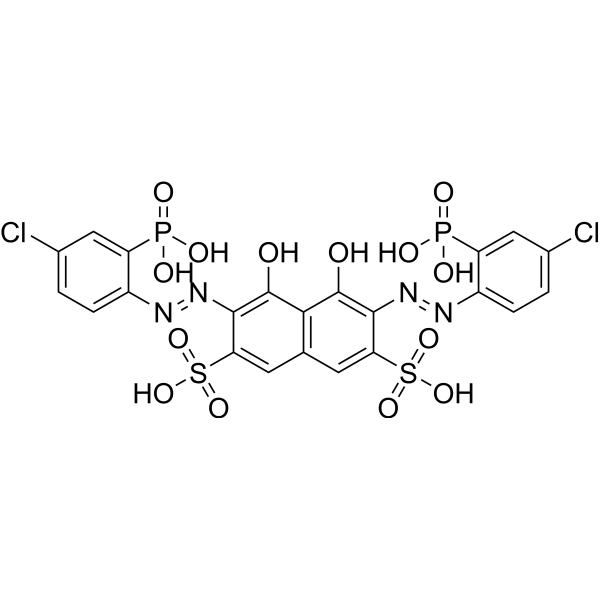
Chlorophosphonazo III is a cell membrane-permeable contrast agent and spectrophotometric reagent. Chlorophosphonazo III forms stable 1:1 complexes with intracellular calcium, magnesium, uranium, titanium, zirconium, thorium, scandium, equivalent actinides and protactinium. Chlorophosphonazo III generates photoacoustic signals correlated with Ca 2+ concentrations, which is applicable for imaging 3D tumor cell cultures and tumor spheroids. Chlorophosphonazo III exhibits no cytotoxicity, can be used for spectrophotometric detection of target ions, and the absorbance of its complexes remains stable for up to one week within the pH range of 2.2 to 7.0 [2].
loading...
    loading...
Cat. No.: HY-Y1422I
CAS No.: 9001-62-1
Lipase, Pseudomonas fluorescens (Immobilized) is an immobilized biocatalyst derived from Pseudomonas fluorescens. Lipase, Pseudomonas fluorescens (Immobilized) efficiently catalyzes the hydrolysis, esterification and transesterification of triacylglycerols in solvent-free systems, and is particularly suitable for biodiesel production from soybean oil and selective modification of oils rich in EPA and DHA. Lipase, Pseudomonas fluorescens (Immobilized) exhibits optimal activity at pH 8.5 and 45°C, and retains residual activity after repeated cycles of use. Lipase, Pseudomonas fluorescens (Immobilized) is activated by Ca 2+, but inhibited by Co 2+, Ni 2+, Fe 3+, Fe 2+ and EDTA [2].
loading...
    loading...
Cat. No.: HY-P71742
Purity:  ≥ 90%, as determined by reducing SDS-PAGE.
Synonyms: HSPA5; Heat Shock 70kDa Protein 5 (Glucose-Regulated Protein, 78kDa); Prev. GRP78; HSP70 Family Protein 5; BiP; Heat Shock 70kD Protein 5 (Glucose-Regulated Protein, 78kD); Immunoglobulin Heavy Chain-Binding Protein; Endoplasmic Reticulum Lumenal ca(2+)-B
Species:  
Mouse
Source:  
P. pastoris
loading...
    loading...
Cat. No.: HY-P72239
Purity:  ≥ 90%, as determined by reducing SDS-PAGE.
Synonyms: HSPA5; Heat Shock 70kDa Protein 5 (Glucose-Regulated Protein, 78kDa); Prev. GRP78; HSP70 Family Protein 5; BiP; Heat Shock 70kD Protein 5 (Glucose-Regulated Protein, 78kD); Immunoglobulin Heavy Chain-Binding Protein; Endoplasmic Reticulum Lumenal ca(2+)-B
Species:  
Human
Source:  
E. coli
loading...
    loading...
Cat. No.: HY-P790088
Purity:  ≥ 95%, as determined by reducing SDS-PAGE.
Synonyms: HSPA5; Heat Shock 70kDa Protein 5 (Glucose-Regulated Protein, 78kDa); Prev. GRP78; HSP70 Family Protein 5; BiP; Heat Shock 70kD Protein 5 (Glucose-Regulated Protein, 78kD); Immunoglobulin Heavy Chain-Binding Protein; Endoplasmic Reticulum Lumenal ca(2+)-B
Species:  
Human
Source:  
Sf9 insect cells
loading...
    loading...
Cat. No.: HY-P704486
Purity:  ≥ 90%, as determined by reducing SDS-PAGE.
Synonyms: HSPA5; Heat Shock 70kDa Protein 5 (Glucose-Regulated Protein, 78kDa); Prev. GRP78; HSP70 Family Protein 5; BiP; Heat Shock 70kD Protein 5 (Glucose-Regulated Protein, 78kD); Immunoglobulin Heavy Chain-Binding Protein; Endoplasmic Reticulum Lumenal ca(2+)-B
Species:  
Human
Source:  
P. pastoris
loading...
    loading...
Cat. No.: HY-P87013
Synonyms: ca(2+)/calmodulin-dependent protein kinase phosphatase N antibody; caMKN antibody; caMKP-N antibody; caMKP-nucleus antibody; KIAA1072 antibody; Nuclear calmodulin dependent protein kinase phosphatase antibody; Partner of PIX 1 antibody; Partner of PIX-alpha antibody; Partner of PIXA antibody; POPX1 antibody; ca(2+)/calmodulin-dependent protein kinase phosphatase N antibody; caMKN antibody; caMKP-N antibody; caMKP-nucleus antibody; KIAA1072 antibody; Nuclear calmodulin dependent protein kinase phosphatase antibody; Partner of PIX 1 antibody; Partner of PIX-alpha antibody; Partner of PIXA antibody; POPX1 antibody; PP2CH antibody; Ppm1e antibody; PPM1E_HUMAN antibody; Protein phosphatase 1E antibody; Protein phosphatase Mg2+/Mn2+ dependent 1E antibody;

Host:  

Rabbit

Application:  

WB

Reactivity:  

Human

loading...
    loading...
Cat. No.: HY-101360R
CAS No.: 10045-45-1
Synonyms: 1-Ethyl-2-benzimidazolinone (Standard)
1-EBIO (1-Ethyl-2-benzimidazolinone) (Standard) is the analytical standard of 1-EBIO (HY-101360). This product is intended for research and analytical applications. 1-EBIO is an activator of Ca 2+ sensitive K + channels wirh an EC50 of 136 μM for KCa3.1. 1-EBIO induces Cl - secretion, K + conductance, membrane hyperpolarization, and afterhyperpolarisation currents. 1-EBIO reduces epileptiform activity, seizure incidence, and rescues cells from Ionomycin (HY-13434)-induced death [2] .
loading...
    loading...
Cat. No.: HY-121235R
CAS No.: 17737-65-4
Synonyms: SCH-10304 (Standard)
Clonixin (SCH-10304) (Standard) is the analytical standard of Clonixin. This product is intended for research and analytical applications. Clonixin is an orally active non-steroidal anti-inflammatory agent (NSAID) that inhibits COX synthesis. Clonixin acts as a voltage-gated L-type calcium channel blocker, exerts vasodilatory effects by antagonizing Ca 2+ in vascular smooth muscle. Clonixin inhibits TGF-β, reduces lung coefficient, immune cell infiltration level, oxidative stress response, airway resistance, hydroxyproline content and collagen deposition. Clonixin can be used in research related to inflammation such as idiopathic pulmonary fibrosis and moderate to severe pain [2] .
loading...
    loading...
Cat. No.: HY-136903
CAS No.: 854402-59-8
SNJ-1945 is an orally active, blood-brain barrier-penetrant Calpain inhibitor. SNJ-1945 inhibits Cathepsin L, Cathepsin B, and Ca 2+ -independent proteases. SNJ-1945 suppresses ROS production and downregulates Cyclooxygenase-2 and Caspase-1. SNJ-1945 alleviates left ventricular systolic dysfunction, reduces cerebral ischemia-induced injury, and decreases the score of experimental autoimmune encephalomyelitis in mouse models. SNJ-1945 can be used in research related to post-cardiac arrest reperfusion injury, Parkinson's disease, multiple sclerosis, and proliferative retinopathy [2] .
loading...
    loading...
Cat. No.: HY-145536
CAS No.: 150399-99-8
α-D-Glucose-1-phosphate disodium tetrahydrate is a derivative of D-glucose (HY-B0389). α-D-Glucose-1-phosphate disodium tetrahydrate serves as a starting material for glucuronic acid synthesis. Glucuronic acid acts as a Ca 2+ chelator and also functions as a biosynthetic substrate for the production of linear maltooligosaccharides or α,α-trehalose. α-D-Glucose-1-phosphate disodium tetrahydrate can be used as a cytostatic compound, Antibiotic, and immunosuppressant essential for heart disease management. α-D-Glucose-1-phosphate disodium tetrahydrate is applicable to the research of heart disease [2].
loading...
    loading...
Cat. No.: HY-160099S
Synonyms: WIT003-d2
20-5,14-HEDE-d2 (WIT003-d2) is the deuterated-labeled 20-5,14-HEDE (HY-160099). 20-5,14-HEDE (WIT003) is an analog of 20-HETE. 20-5,14-HEDE activates PI3K/Akt signaling pathway, thereby exhibiting anti-apoptotic and cell survival promoting effects. 20-5,14-HEDE is the agonist for 20-HETE that increases intracellular Ca 2+ concentrations, thereby enhancing vasoconstriction [2].
loading...
    loading...
Cat. No.: HY-160099S2
Synonyms: WIT003-d2-2
20-5,14-HEDE-d2 (WIT003-d2) is the deuterated-labeled 20-5,14-HEDE (HY-160099). 20-5,14-HEDE (WIT003) is an analog of 20-HETE. 20-5,14-HEDE activates PI3K/Akt signaling pathway, thereby exhibiting anti-apoptotic and cell survival promoting effects. 20-5,14-HEDE is the agonist for 20-HETE that increases intracellular Ca 2+ concentrations, thereby enhancing vasoconstriction [2].
loading...
    loading...

