128 Results for "

cardiac function

" in MedChemExpress (MCE) Product Catalog:
Products (128)

128 Results for "cardiac function" in MCE Product Catalog:

Cat. No.: HY-B0124S3
CAS No.: 2308764-57-8
Zonisamide- 15N,d4 is the 15N- and deuterium labeled Zonisamide (HY-B0124). Zonisamide (AD 810) is an orally active carbonic anhydrase inhibitor, with Kis of 35.2 and 20.6 nM for hCA II and hCA V, respectively. Zonisamide exerts neuroprotective effects through anti-apoptosis and upregulating MnSOD levels. Zonisamide also increases the expression of Hrd1, thereby improving cardiac function in AAC rats. Zonisamide can be used in studies of seizure, parkinson’s disease and cardiac hypertrophy .
loading...
    loading...
Cat. No.: HY-P992108
CAS No.: 3061442-66-5
Synonyms: RELAX10

Research Areas:  

Cardiovascular Disease

Efadirelaxin alfa (RELAX10) is a highly selective agonist of relaxin/insulin-like family peptide receptor RXFP1. After subcutaneous administration in animal experiments, Efadirelaxin alfa exhibits a significantly prolonged terminal half-life (7 days in mice, 3.75 days in rats), and shows no activity against related receptors such as RXFP2 and RXFP3. Efadirelaxin alfa has significant anti-cardiac hypertrophy and anti-fibrotic effects. Efadirelaxin alfa effectively attenuates and reverses cardiac hypertrophy and collagen deposition by regulating the TGF-β1/Smad2 and AKT/eNOS signaling pathways. Efadirelaxin alfa improves cardiac systolic function without causing fluctuations in blood pressure or heart rate, demonstrating favorable safety. Efadirelaxin alfa is currently mainly used in studies related to heart failure .
loading...
    loading...
Cat. No.: HY-19091
CAS No.: 123297-52-9
ICI-170777 is an orally active cardiotonic agent and type III Phosphodiesterase inhibitor, with an IC50 of 2.5 μM against cyclic AMP phosphodiesterase type III from canine cardiac fractions. ICI-170777 inhibits Aldrin epoxidase and pentobarbital metabolism. It enhances β-adrenergic receptor-mediated positive inotropic effects without causing chronotropic effects, while also exerting balanced arteriolar/venular vasodilator, platelet aggregation inhibitor and smooth muscle relaxant activities. ICI-170777 restores cardiac function in an acute canine heart failure model, exhibits additive effects when combined with Ouabain (HY-B1457), and shows no significant activity against multiple receptor classes or non-cardiac systems. ICI-170777 can be used in research related to congestive heart failure .
loading...
    loading...
Cat. No.: HY-B1562D
CAS No.: 62697-41-0
Target:  

Adrenergic Receptor

Research Areas:  

Metabolic Disease

(S)-Bopindolol is a β-adrenergic receptor blocker that can be used to prevent, inhibit, can be used to reduce muscle mass and/or functional loss and/or decreased bone density caused by weight loss. (S)-Bopindolol can protect the myocardium and/or cardiac function, or prevent low blood pressure and/or increased heart rate during weight loss .
loading...
    loading...
Cat. No.: HY-P2819A
CAS No.: 9001-80-3
Phosphofructokinase,Bacillus stearothermophilus is a glycolytic enzyme and also an allosteric activation target of fructose-2,6-bisphosphate. PFK1 supports cardiac glycolysis to maintain normal cardiac function and mediates adaptive responses to pressure overload. Upregulated expression and activity of PFK1 are associated with the alleviation of pathological changes induced by pressure overload, including diastolic dysfunction, interstitial fibrosis and myocardial hypertrophy. Inhibition of PFK1 redirects glucose carbon flux to the pentose phosphate pathway. PFK1 promotes proliferation, migration and glycolysis of colorectal cancer cells, reduces apoptosis and decreases their radiosensitivity, and shows higher expression levels in radioresistant tumors. PFK1 can be used in research related to diastolic dysfunction heart failure and colorectal cancer .
loading...
    loading...
Cat. No.: HY-103192R
CAS No.: 40297-09-4
Synonyms: RMI12330A (Standard)
MDL12330A (Standard) is the analytical standard of MDL12330A (HY-103192). MDL12330A (RMI12330A) is an adenylyl cyclases inhibitor. MDL12330A can inhibit KV channels, increases insulin secretion and Ca 2+ levels. MDL12330A accentuates contractions in uterine rings and inhibits cardiac functions. MDL12330A can be used for the research of endocrinology, metabolic and cardiovascular disease .
loading...
    loading...
Cat. No.: HY-184190
ERG-IN-7 is a Nav1.5, Cav1.2 and Kv11.1 inhibitor with IC50 values of 10.34 μM, 21.01 μM, and 16.385 μM for human Nav1.5, Cav1.2, and Kv11.1, respectively. ERG-IN-7 prolongs action potentials, reduces conduction velocity, and restores cardiac function. ERG-IN-7 can be used for the research of ventricular arrhythmia .
loading...
    loading...
Cat. No.: HY-N8421
CAS No.: 83-94-3
Tabernanthine is a negative chronotropic and negative inotropic agent that selectively acts on sinoatrial node receptors, regulating heart rhythm and myocardial contractility. Tabernanthine exhibits atropine resistance and direct non-cholinergic binding properties, acting directly on the sinoatrial node rather than relying on vagal nerve or cholinergic pathways to exert its key activity of slowing heart rate and weakening myocardial contractility. Tabernanthine is useful in cardiovascular pharmacology research, particularly in the areas of sinoatrial node function regulation, mechanisms related to bradycardia, and studies of cardiac receptor subtype differences .
loading...
    loading...
Cat. No.: HY-P11847
CAS No.: 3124030-35-6
Research Areas:  

Cardiovascular Disease

AT1R-agonist-1 is an angiotensin II type 1 receptor (AT1R) agonist with a Ki value of 1.4 nM. AT1R-agonist-1 exhibits low Gαq activity, retains β-arrestin recruitment function, and accesses the deep allosteric pocket inside AT1R via its flexible side chain. AT1R-agonist-1 possesses positive inotropic effects (enhancing cardiac contractile function) and causes almost no increase in blood pressure. AT1R-agonist-1 can be used for research on conditions such as refractory cardiogenic shock .
loading...
    loading...
Cat. No.: HY-175746
CAS No.: 3036141-78-0
Target:  

CX3CR1

Research Areas:  

Cardiovascular Disease

AZD0233 is an orally active CX3CR1 antagonist. AZD0233 modulates the CX3CR1/CX3CL1 signaling axis via immunomodulatory effects. AZD0233 has improved physicochemical properties, metabolic stability, low toxicity and CYP inhibition. AZD0233 improves cardiac function and reduces macrophages and fibrotic scar in mice model of dilated cardiomyopathy. AZD0233 can be used for cardiovascular diseases like dilated cardiomyopathy research .
loading...
    loading...
Cat. No.: HY-179580
CAS No.: 3047548-70-6
Research Areas:  

Inflammation/Immunology

EL244 is a dua Autotaxin (ATX) (IC50 = 50 nM) inhibitor and PPARγ (IC50 = 1.3 μM; Kd = 1.3 μM) agonist. EL244 demonstrates low cytotoxicity in human HepG2 cells (EC50 = 81.2 μM) with minimal inhibition of the cardiac hERG potassium channel (12% at 25 μM). EL244 significantly reduces pulmonary Lysophosphatidic Acid (LPA) levels, attenuates fibrosis, and restores respiratory function with limited systemic absorption in vivo. EL244 can be used for idiopathic pulmonary fibrosis and interstitial lung disease (ILD) research .
loading...
    loading...
Cat. No.: HY-106698
CAS No.: 57475-17-9
Brovincamine is an orally active slow Ca 2+ channel blocker and vasodilator. Brovincamine reduces Ca 2+ influx across the plasma membrane by blocking Ca 2+ channels. Brovincamine inhibits catecholamine secretion, cholinergic function, autonomic parasympathetic nervous system activity, cerebrovascular resistance, and nerve stimulation-induced convulsive responses. Brovincamine induces cerebrovascular, coronary, and intracranial vasodilation, improves cerebral cortical microcirculation, enhances cerebral metabolic activity, and increases capillary clearance efficiency. Brovincamine can be used in research related to cerebral ischemic diseases, cardiac ischemic diseases, and normal-tension glaucoma .
loading...
    loading...
Cat. No.: HY-109065
CAS No.: 1184662-54-1
Synonyms: DSP-6952 free base
Target:  

5-HT Receptor

Research Areas:  

Endocrinology

Minesapride (DSP-6952 free base) is an orally active, selective 5-HT4 receptor partial agonist. Minesapride enhances gastrointestinal motility, colonic transit and defecation function, and inhibits visceral hypersensitivity. Minesapride does not inhibit/induce cytochrome P450 isozymes, has no significant affinity for hERG, and does not trigger the risk of cardiac ischemia via coronary vasoconstriction. Minesapride can be used in research related to constipation-predominant irritable bowel syndrome, chronic constipation, atonic constipation, spastic constipation, functional constipation and functional dyspepsia .
loading...
    loading...
Cat. No.: HY-109065A
CAS No.: 1184661-33-3
Synonyms: DSP-6952 hydrobromide
Target:  

5-HT Receptor

Research Areas:  

Endocrinology

Minesapride hydrobromide (DSP-6952 hydrobromide) is an orally active, selective 5-HT4 receptor partial agonist. Minesapride hydrobromide enhances gastrointestinal motility, colonic transit and defecation function, and inhibits visceral hypersensitivity. Minesapride hydrobromide does not inhibit/induce cytochrome P450 isozymes, has no significant affinity for hERG, and does not trigger the risk of cardiac ischemia via coronary vasoconstriction. Minesapride hydrobromide can be used in research related to constipation-predominant irritable bowel syndrome, chronic constipation, atonic constipation, spastic constipation, functional constipation and functional dyspepsia .
loading...
    loading...
Cat. No.: HY-N0430
CAS No.: 3486-66-6
Synonyms: Coptisin
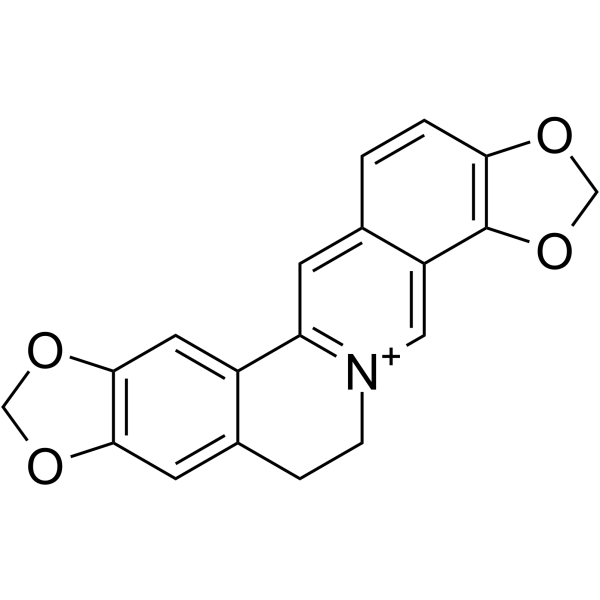
Coptisine is an orally active and brain-penetrant alkaloid found in Coptis chinensis. Coptisine is a reversible, uncompetitive IDO inhibitor with a Ki of 5.8 μM and an IC50 of 6.3 μM. Coptisine suppresses neuroinflammation, reduces Aβ plaque burden and shows neuroprotective activity. Coptisine shows anti-inflammation activity by blocking NF-κB, MAPK, and PI3K/Akt activation. Coptisine inhibits cancer cells proliferation, induces DNA damage, G2/M phase cell cycle arrest, apoptosis, ROS production and mitochondrial dysfunction. Coptisine inhibits Rho/ROCK pathway activation, reduces arrhythmia, limits cardiac injury marker release, reduces infarct size, and preserves cardiac function in rat myocardial ischemia/reperfusion models. Coptisine downregulates HMGCR and upregulates LDLR and CYP7A1 to modulate cholesterol metabolism, reduces abnormal serum lipid levels, and promotes fecal bile acid excretion. Coptisine can be used for the research of cancer, hypercholesterolemia, Alzheimer’s disease, inflammatory disorders and cardiovascular disease .
loading...
    loading...
Cat. No.: HY-174400
SGLT2-IN-2 (Compound E9) is an inhibitor of SGLT2. SGLT2-IN-2 significantly enhances the inhibition of SGLT2, NHE1, and SOD enzyme activity. SGLT2-IN-2 has protective effect on the glucose-free DMEM-induced injured cardiomyocytes. SGLT2-IN-2 significantly improves cardiac function in TAC-induced HF mice and inhibits cardiomyocyte hypertrophy as well as collagen deposition. SGLT2-IN-2 can ameliorate myocardial tissue damage and enhance mitochondrial autophagy in injured cardiomyocytes, thereby increasing survival rates in HF mice .
loading...
    loading...
Cat. No.: HY-W207224
CAS No.: 287177-12-2
Target:  

MAP4K

F1386-0303 is a highly selective MAP4K4 inhibitor with an IC50 of 34 nM against human targets. F1386-0303 exerts cardiomyocyte protective and function-preserving effects through mechanisms such as alleviating oxidative stress, inhibiting caspases, and maintaining mitochondrial membrane potential, while it does not interfere with the activity of Doxorubicin (HY-15142A) in cancer cells. F1386-0303 is rapidly cleared and has no bioavailability in mice, but it is well-suited as a tool compound for target validation. F1386-0303 can be applied to studies related to cardiac ischemia-reperfusion injury, Doxorubicin-induced cardiotoxicity, myocardial infarction and other related conditions .
loading...
    loading...
Cat. No.: HY-L227
195 compounds

Amino acids are the fundamental components that sustain life activities, playing roles in ATP generation, promoting nucleotide synthesis, and maintaining cellular redox balance. Moreover, dysregulation of amino acid consumption is a significant potential regulatory mechanism leading to impaired anti-tumor immunity in immune cells. The normal functioning of immune cells relies on amino acid metabolic pathways to obtain energy and materials, and upon activation, they reprogram their metabolism to support growth, proliferation, and effector functions. Additionally, metabolic disorders of specific amino acids (such as branched-chain amino acids, glutamine, and arginine) can exacerbate mitochondrial dysfunction and oxidative stress, thereby promoting myocardial fibrosis and cardiac cell damage. Therefore, conducting research related to amino acid metabolism holds promise for discovering potential drugs for diseases related to cancer, immunity, and metabolism.

MCE can provide 195 kinds of metabolites of amino acid metabolic pathways, which can be used for drug screening in various diseases such as cancer, immune disorders, metabolic diseases, mitochondrial-targeted diseases

Cat. No.: HY-W016414
CAS No.: 78-40-0
Triethyl phosphate is a versatile phosphate ester compound. Triethyl phosphate induces rapid and short-acting anesthesia, and exhibits hypotensive, smooth muscle relaxant, and cardiac inhibitory effects. Triethyl phosphate also modulates cholinergic toxicity; its anesthetic effect shows sex- and age-dependency in rodents, and it interacts with SKF 525-A (HY-B1311) to alter the duration of anesthesia .
loading...
    loading...
Cat. No.: HY-112879R
CAS No.: 1334850-99-5
Mito-TEMPO (Standard) is the analytical standard of Mito-TEMPO (HY-112879). This product is intended for research and analytical applications. Mito-TEMPO is a mitochondria-targeted antioxidant. Mito-TEMPO induces mitophagy by activating the PINK1/ParKin pathway, inhibits NLRP3 inflammasome activation, restores mitochondrial membrane potential, and improves renal function and podocyte injury. Mito-TEMPO regulates Ca 2+ homeostasis, inhibits Bnip3 overexpression, shortens action potential duration, and exerts antiarrhythmic effects. Mito-TEMPO reverses premature senescence, reduces trabecular bone loss, and decreases cell apoptosis. Mito-TEMPO can be used in studies of chronic Kidney disease, age-related cardiac dysfunction, postmenopausal osteoporosis, and ischemic stroke .
loading...
    loading...

