121 Results for "

soft

" in MedChemExpress (MCE) Product Catalog:
Products (121)

121 Results for "soft" in MCE Product Catalog:

Cat. No.: HY-184619
Due to their unique physical and chemical properties, noble metal nanoparticles, represented by platinum, gold, silver, and palladium, have been extensively studied by many scientists. Palladium is a noble metal belonging to the platinum group elements. Its elemental form is a silvery-white transition metal, soft in texture and possessing good ductility and malleability. Palladium nanoparticles, due to their unique physical, chemical, and electronic properties, have shown remarkable application potential in multiple fields. PEI surface modification of palladium nanoparticles can significantly improve their dispersibility, stability, and biocompatibility, and facilitate further coupling with other biomolecules or fluorescent molecules.
loading...
    loading...
Cat. No.: HY-17509R
CAS No.: 169590-41-4
Synonyms: SC 046 (Standard); SC 46 (Standard); SC 59046 (Standard)
Deracoxib (SC 046; SC 59046) (Standard) is the analytical standard of Deracoxib (HY-17509). This product is intended for research and analytical applications. Deracoxib, an orally active COX-2 inhibitor, is a veterinary nonsteroidal anti-inflammatory agent used exclusively in dogs. Deracoxib inhibits the COX-2 enzyme to reduce the production of prostaglandins, effectively controlling pain and inflammation after canine soft tissue surgery. Deracoxib reduces the inhibition of COX-1 and lowers the risk of gastrointestinal side effects. Deracoxib induces tumor cell cycle arrest and apoptosis, and shows anti-tumor activity in canine osteosarcoma, breast tumors and bladder transitional cell carcinomas
loading...
    loading...
Cat. No.: HY-P992433
Target:  

LILRB

Research Areas:  

Cancer

OR502 is a humanized IgG1 monoclonal antibody targeting LILRB2 (ILT4/CD85d), with a Kd value of 1.18 nM. OR502 binds to LILRB2 with high affinity and blocks its interaction with HLA class I ligands, relieving myeloid cell-mediated immunosuppression, restoring CD8 + T cell function, and reprogramming the immunosuppressive macrophage phenotype, thereby simultaneously enhancing both innate and adaptive antitumor immune responses. OR502 can be used in the research of cancers and advanced cancers (including melanoma, non-small cell lung cancer, sarcoma/soft tissue cancer, and urothelial carcinoma) .
loading...
    loading...
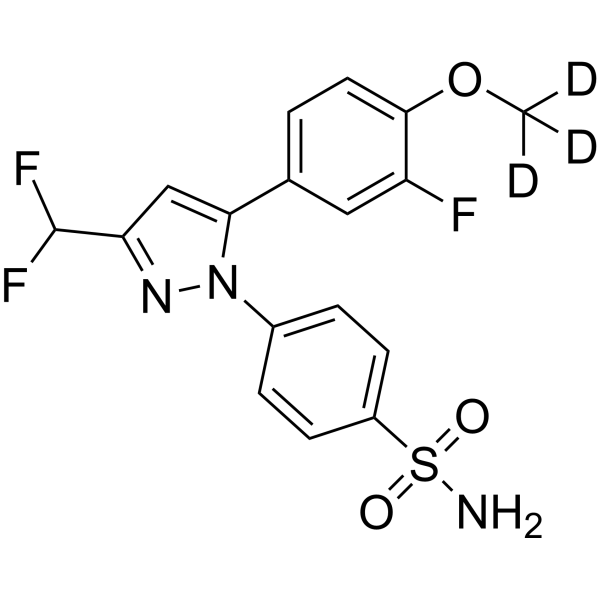
Cat. No.: HY-17509S
CAS No.: 2012598-48-8
Synonyms: SC 046-d3; SC 46-d3; SC 59046-d3
Deracoxib-d3 (SC 046-d3; SC 59046-d3) is the deuterium labeled Deracoxib (HY-17509). Deracoxib, an orally active COX-2 inhibitor, is a veterinary nonsteroidal anti-inflammatory agent used exclusively in dogs. Deracoxib inhibits the COX-2 enzyme to reduce the production of prostaglandins, effectively controlling pain and inflammation after canine soft tissue surgery. Deracoxib reduces the inhibition of COX-1 and lowers the risk of gastrointestinal side effects. Deracoxib induces tumor cell cycle arrest and apoptosis, and shows anti-tumor activity in canine osteosarcoma, breast tumors and bladder transitional cell carcinomas.
loading...
    loading...
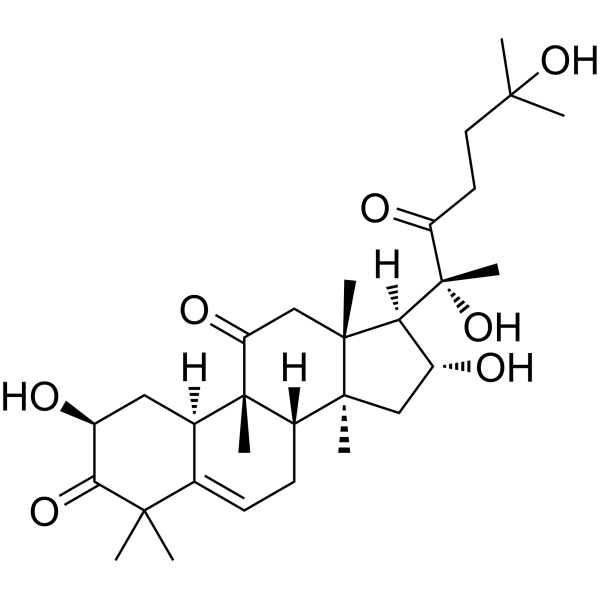
Cat. No.: HY-N11080
CAS No.: 55903-92-9
Cucurbitacin R is an orally active anti-inflammatory agent. Cucurbitacin R is isolated from the roots of Cayaponia tayuya. Cucurbitacin R inhibits Cyclooxygenase-2. Cucurbitacin R inhibits Interleukin-6-induced STAT3 activation and cytokine production, blocks NF-κB activation, and selectively prevents NFAT nuclear translocation without affecting Calcineurin activity. Cucurbitacin R inhibits TNF-α production and Nitric-oxide synthase-2 expression. Cucurbitacin R reduces joint damage, soft tissue swelling, paw edema, ear edema, inflammatory cell infiltration, and epithelial thickness. Cucurbitacin R can be used for research on arthritis and delayed-type hypersensitivity .
loading...
    loading...
Cat. No.: HY-W703540
CAS No.: 1794780-24-7
Synonyms: SC 046-d4; SC 46-d4; SC 59046-d4
Deracoxib-d4 (SC 046-d4; SC 59046--d4) is deuterium labeled Deracoxib (HY-17509). Deracoxib, an orally active COX-2 inhibitor, is a veterinary nonsteroidal anti-inflammatory agent used exclusively in dogs. Deracoxib inhibits the COX-2 enzyme to reduce the production of prostaglandins, effectively controlling pain and inflammation after canine soft tissue surgery. Deracoxib reduces the inhibition of COX-1 and lowers the risk of gastrointestinal side effects. Deracoxib induces tumor cell cycle arrest and apoptosis, and shows anti-tumor activity in canine osteosarcoma, breast tumors and bladder transitional cell carcinomas.
loading...
    loading...
Cat. No.: HY-163573
CAS No.: 3033990-61-0
Target:  

DNA/RNA Synthesis

Research Areas:  

Cancer

FANCM-BTR PPI-IN-1 (Compound 32) is a FANCM/BTR interaction inhibitor that blocks the localization of FANCM to telomeres. FANCM-BTR PPI-IN-1 exhibits anticancer activity against osteosarcoma .
loading...
    loading...
Cat. No.: HY-W392100C
CAS No.: 36890-68-3
Synonyms: PCL-diol (MW 10000)
Polycaprolactone diol (MW 10000) is a biocompatible, biodegradable polymer and also a castor oil-based polyurethane additive. Polycaprolactone diol (MW 10000) is used in studies of wound dressings and non-absorbable suture biomaterials .
loading...
    loading...
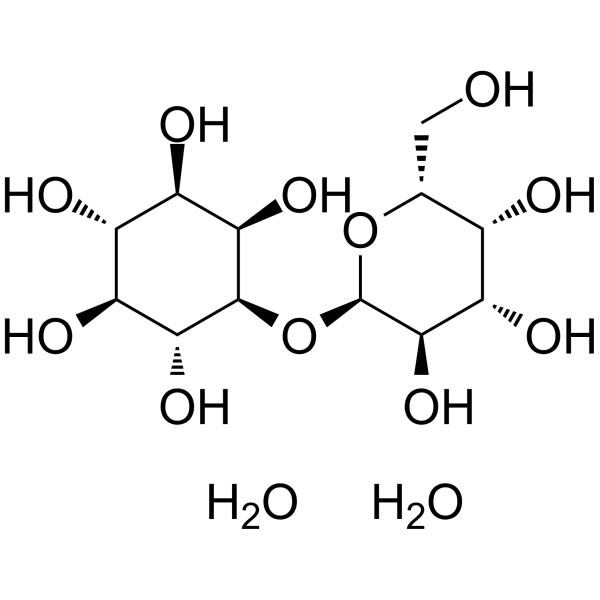
Cat. No.: HY-135258
CAS No.: 1217474-91-3
Purity:  ≥98.0%
Target:  

Galectin Fungal

Research Areas:  

Others

Galactinol dihydrate is a disaccharide carbohydrate serving as a galactosyl donor, which belongs to the raffinose family oligosaccharide pathway and acts as an important osmoprotectant. Galactinol dihydrate not only induces disease resistance in plants against fungal and bacterial pathogens, but also significantly enhances plant tolerance to abiotic stresses such as drought, high salinity, low temperature and oxidative damage. In addition, Galactinol dihydrate has the ability to scavenge hydroxyl radicals, can act as a signaling component for root colonization-induced systemic resistance, and is positively correlated with seed longevity in various crops, making it a potential biomarker for evaluating seed vigor. Therefore, Galactinol dihydrate can be used in the research of various plant diseases including fungal leaf spot, bacterial angular leaf spot, gray mold and soft rot .
loading...
    loading...
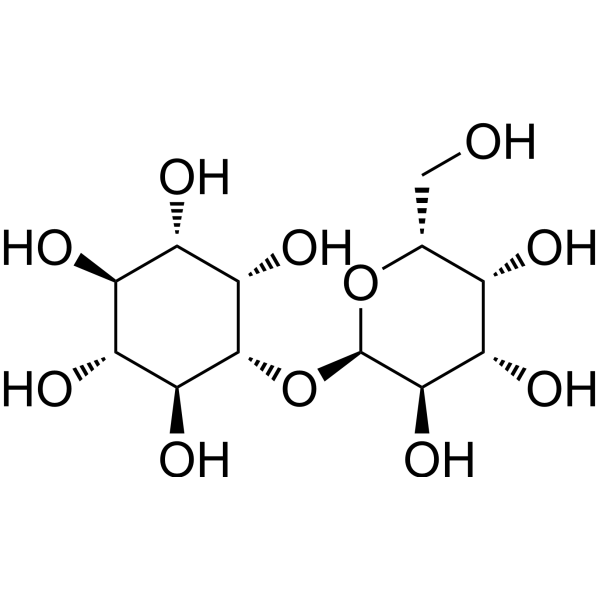
Cat. No.: HY-N9497
CAS No.: 3687-64-7
Category:  

Natural Products

Target:  

Galectin Fungal

Galactinol is a disaccharide carbohydrate serving as a galactosyl donor, which belongs to the raffinose family oligosaccharide pathway and acts as an important osmoprotectant. Galactinol not only induces disease resistance in plants against fungal and bacterial pathogens, but also significantly enhances plant tolerance to abiotic stresses such as drought, high salinity, low temperature and oxidative damage. In addition, Galactinol has the ability to scavenge hydroxyl radicals, can act as a signaling component for root colonization-induced systemic resistance, and is positively correlated with seed longevity in various crops, making it a potential biomarker for evaluating seed vigor. Therefore, Galactinol can be used in the research of various plant diseases including fungal leaf spot, bacterial angular leaf spot, gray mold and soft rot .
loading...
    loading...
Cat. No.: HY-W115727A
CAS No.: 9003-05-8
Synonyms: PAM,Anion,Mw 14-16 million
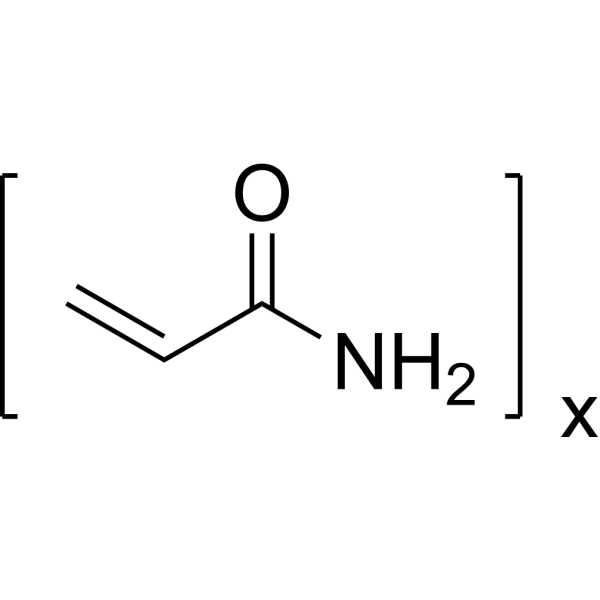
Polyacrylamide, Anion, Mw 14-16 million is a multifunctional high molecular weight anionic polyacrylamide copolymer. The anionic properties of Polyacrylamide, Anion, Mw 14-16 million enable it to be used as a flocculant to achieve charge neutralization and aggregation, while its high molecular weight properties provide viscoelastic properties for fluid applications. Polyacrylamide series materials can maintain enzyme activity in enzyme immobilization, achieve controlled release as a drug carrier, respond to temperature/pH stimulation as a smart material, and can also be used for in vitro toxin adsorption and soft tissue filling through mechanisms such as physical embedding, covalent bonding or chemical cross-linking. Polyacrylamide can be used in biomedical engineering, environmental management and industrial applications .
loading...
    loading...
Cat. No.: HY-W115727B
CAS No.: 9003-05-8
Synonyms: PAM,Anion,Mw 18 million
Polyacrylamide,Anion,Mw 18 million (PAM,Anion,Mw 18 million) is a multifunctional high molecular weight anionic polyacrylamide copolymer. The anionic properties of Polyacrylamide,Anion,Mw 18 million enable it to be used as a flocculant to achieve charge neutralization and aggregation, while its high molecular weight properties provide viscoelastic properties for fluid applications. Polyacrylamide series materials can maintain enzyme activity in enzyme immobilization, act as drug carriers to achieve controlled release, serve as smart materials responding to temperature/pH stimuli, and be used for in vitro toxin adsorption and soft tissue filling through mechanisms such as physical entrapment, covalent binding or chemical crosslinking. Polyacrylamide finds applications in biomedical engineering, environmental management and industrial applications .
loading...
    loading...
Cat. No.: HY-112531B
CAS No.: 25249-16-5
Research Areas:  

Others

Poly(2-hydroxyethyl methacrylate) (Mv 300000) is a biocompatible, optically transparent, hydrophilic, and non-degradable polymer with excellent cytocompatibility, eliciting a minimal immunological response from host tissue. Poly(2-hydroxyethyl methacrylate) (Mv 300000) can be used for different biomedical applications, such as bone tissue regeneration, wound dressings and drug delivery .
loading...
    loading...
Cat. No.: HY-184617
Due to their unique physical and chemical properties, noble metal nanoparticles, represented by platinum, gold, silver, and palladium, have been extensively studied by many scientists. Palladium is a noble metal belonging to the platinum group elements. Its elemental form is a silvery-white transition metal, soft in texture and possessing good ductility and malleability. Palladium nanoparticles, due to their unique physical, chemical, and electronic properties, have shown remarkable application potential in multiple fields. The preparation methods for palladium nanoparticles mainly include chemical reduction and physical reduction methods. Chemical reduction generally involves adding a reducing agent to reduce palladium ions to elemental palladium. Common reducing agents used include sodium citrate, sodium borohydride, and hydrogen gas. Because the chemical reduction process is relatively fast, protective agents such as polyvinylpyrrolidone (PVP) are generally added to prevent palladium particles from agglomerating.
loading...
    loading...
Cat. No.: HY-D2264
CAS No.: 1632296-13-9
Target:  

Fluorescent Dye

Research Areas:  

Others

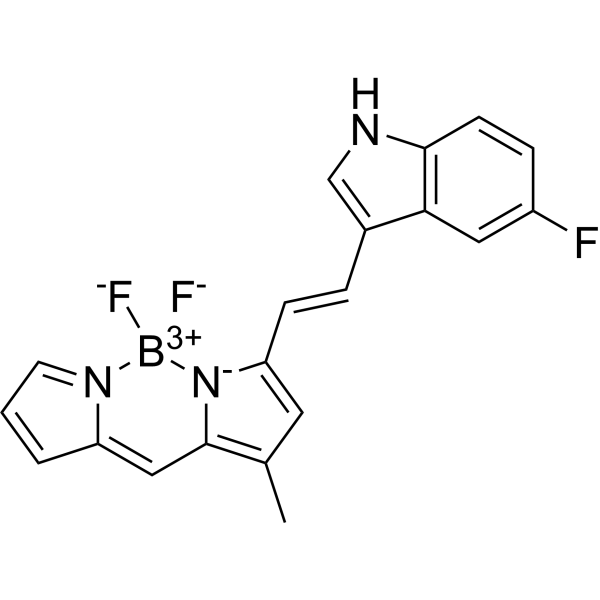
Caffeine Orange (Compound 1) is a fluorescent probe for caffeine detection. Caffeine Orange is a BODIPY backbone-based probe that exhibits a turn-on fluorescence response upon binding to caffeine. The detection mechanism of Caffeine Orange relies on its binding with caffeine in aqueous media, which triggers an increase in fluorescence intensity; under irradiation with a 532 nm light source, the presence of caffeine produces orange fluorescence, with an excitation wavelength of 530 nm and an emission wavelength centered at approximately 620 nm .
loading...
    loading...
Cat. No.: HY-183053
CAS No.: 1922152-09-7
UCP1173, propargyl-linked antifolate, is an antibacterial agent. UCP1173 inhibits DHFR enzymes, with IC50 values of 0.014 μM for DfrB, 0.19 μM for DfrG, 0.27 μM for DfrA, and 0.091 μM for DfrK. UCP1173 inhibits growth of Staphylococcus aureus clinical isolates carrying dfrA, dfrG, or dfrK resistance genes. UCP1173 can be used for the research of bacterial infections .
loading...
    loading...
Cat. No.: HY-100516
CAS No.: 265114-23-6
Purity:  98.02%
Synonyms: UR-8880
Target:  

COX Cytochrome P450

Research Areas:  

Inflammation/Immunology

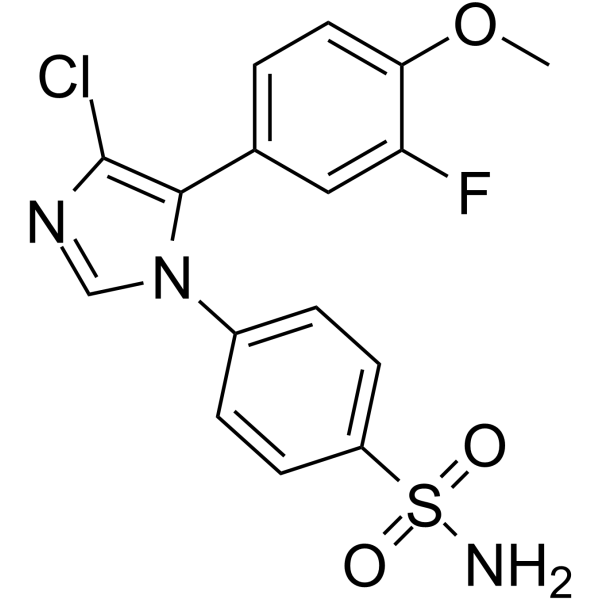
Cimicoxib (UR-8880) is an orally active, blood-brain barrier-permeable COX-2 inhibitor that also exerts targeted inhibition on CYP2D15. It has an IC50 of 66 nM against hCOX-2, an IC50 of 1.6 μM against canine CYP2D15, and an IC50 of 0.056 μM against feline CYP2D15. By inhibiting the COX-2 pathway to reduce the production of thromboxane B2 and prostaglandin E2, Cimicoxib exerts antipyretic, anti-inflammatory and analgesic effects. Cimicoxib is metabolized by CYP2D15 to form demethyl-cimicoxib, undergoes glucuronidation via UDP-glucuronosyltransferases, and exhibits biphasic elimination kinetics in beagle dogs. Cimicoxib is widely used in studies of inflammatory diseases, osteoarthritis, and perioperative pain associated with orthopedic or soft tissue surgeries .
loading...
    loading...
Cat. No.: HY-B0561S4
Spironolactone-d6-1 is the deuterium labeled Spironolactone (HY-B0561). Spironolactone is an aldosterone antagonist that acts on the aldosterone mineralocorticoid receptor (IC50=24 nM) and androgen receptor (IC50=77 nM), promotes podocyte autophagy and regulates pain. Spironolactone improves hypertension-related vascular hypertrophy and remodeling by reducing angiotensin II (Ang II)-induced inflammation, reduces aldosterone-induced vascular and soft tissue calcification through PIT1-dependent signaling, and alleviates vascular dysfunction in type II diabetic mice by reducing oxidative stress and restoring NO/GC signaling; at low concentrations, it and its metabolites can interfere with aldosterone biosynthesis in the adrenal cortex and inhibit voltage-dependent Ca 2+ channels to exert antihypertensive effects .
loading...
    loading...
Cat. No.: HY-100516R
CAS No.: 265114-23-6
Synonyms: UR-8880 (Standard)
Cimicoxib (Standard) is the analytical standard of Cimicoxib. This product is intended for research and analytical applications. Cimicoxib (UR-8880) is an orally active, blood-brain barrier-permeable COX-2 inhibitor that also exerts targeted inhibition on CYP2D15. It has an IC50 of 66 nM against hCOX-2, an IC50 of 1.6 μM against canine CYP2D15, and an IC50 of 0.056 μM against feline CYP2D15. By inhibiting the COX-2 pathway to reduce the production of thromboxane B2 and prostaglandin E2, Cimicoxib exerts antipyretic, anti-inflammatory and analgesic effects. Cimicoxib is metabolized by CYP2D15 to form demethyl-cimicoxib, undergoes glucuronidation via UDP-glucuronosyltransferases, and exhibits biphasic elimination kinetics in beagle dogs. Cimicoxib is widely used in studies of inflammatory diseases, osteoarthritis, and perioperative pain associated with orthopedic or soft tissue surgeries .
loading...
    loading...
Cat. No.: HY-182517
CAS No.: 2225980-49-2
Target:  

TRP Channel

Research Areas:  

Inflammation/Immunology

AG1529 is a TRPV1 inhibitor and capsaicinoid-based soft agent with a human TRPV1 IC50 of 0.9-0.93 μM. AG1529 reversibly blocks capsaicin-evoked TRPV1 activation, binds to the TRPV1 capsaicin binding site, moderately affects pH-induced TRPV1 gating, and does not alter voltage- or heat-mediated TRPV1 responses. AG1529 suppresses TRPV1-mediated neuronal excitability, reduces capsaicin- and pH-evoked neuronal firing, abolishes histaminergic and inflammation-mediated TRPV1 sensitization. AG1529 exhibits anti-nociceptive and antipruritic effects, attenuates in vivo hyperalgesia and pruritus, dose-dependently reduces acute histaminergic itch in rodents, and mildly blocks hTRPA1 and hTRPM8 channel activity. AG1529 undergoes hydrolysis and dermal deactivation, minimizes TRPV1-associated side reactions, does not evoke capsaicin-like burning sensation, and does not disrupt physiological thermal regulation. AG1529 can be used for the research of inflammatory cutaneous nociception and acute histaminergic pruritus .
loading...
    loading...

