123 Results for "

Polyphenols

" in MedChemExpress (MCE) Product Catalog:
Products (123)

123 Results for "Polyphenols" in MCE Product Catalog:

Cat. No.: HY-N18732
CAS No.: 93456-04-3
Category:  

Extract

Target:  

Others

Terminalia arjuna extract is a natural compound derived from the Terminalia arjuna tree, rich in bioactive components such as triterpenoids, flavonoids, tannins, and polyphenols. Terminalia arjuna extract has cardioprotective effects, helping to strengthen the myocardium, lower cholesterol levels, stabilize blood pressure, and prevent thrombosis.
loading...
    loading...
Cat. No.: HY-N1902S2
4-Hydroxyphenylacetic acid-d2 is the deuterium labeled 4-Hydroxyphenylacetic acid (HY-N1902). 4-hydroxyphenylacetic acid, a major microbiota-derived metabolite of polyphenols, is involved in the antioxidative action. 4-hydroxyphenylacetic acid induces expression of Nrf2 .
loading...
    loading...
Cat. No.: HY-N19065
Category:  

Extract

Target:  

Bacterial

Dalchini extract is rich in various bioactive compounds, including cinnamaldehyde, eugenol, tannins, polyphenols, and aromatic essential oils. Dalchini extract helps regulate blood sugar levels and improve insulin sensitivity. It also possesses anti-inflammatory, antioxidant, and antibacterial properties, which help enhance immune function, prevent infection, and reduce inflammation.
loading...
    loading...
Cat. No.: HY-N9868
CAS No.: 423170-79-0
(-)-Phaselic acid is a protein protectant that can be isolated from red clover (Trifolium pratense) leaves. (-)-Phaselic acid is synthesized through an acyl transfer reaction between caffeoyl-CoA and malic acid catalyzed by the HCT2 enzyme. As a substrate for endogenous polyphenol oxidase (PPO), its oxidation to o-quinone can inhibit protein degradation during forage storage. (-)-Phaselic acid can be used to improve the protein preservation performance of forage crops such as alfalfa, reducing nutritional losses during storage and environmental nitrogen pollution .
loading...
    loading...
Cat. No.: HY-181448
Synonyms: Inositol hexaphosphate hexalithium; SNF472 hexalithium
Phytic acid (Inositol hexaphosphate hexalithium) hexalithium is an orally active compound. Phytic acid hexalithium can be derived from the seeds of legumes. Phytic acid is a [PO4] 3- storage depot and precursor for other inositol phosphates and pyrophosphates. Phytic acid hexalithium attenuates oligomers and upregulates Autophagy protein. Phytic acid hexalithium can be used in cardiovascular disease, metabolic disease, nervous system disease and cancer research .
loading...
    loading...
Cat. No.: HY-13653R
CAS No.: 989-51-5
Purity:  98.05%
Synonyms: EGCG(Standard); Epigallocatechol Gallate (Standard)
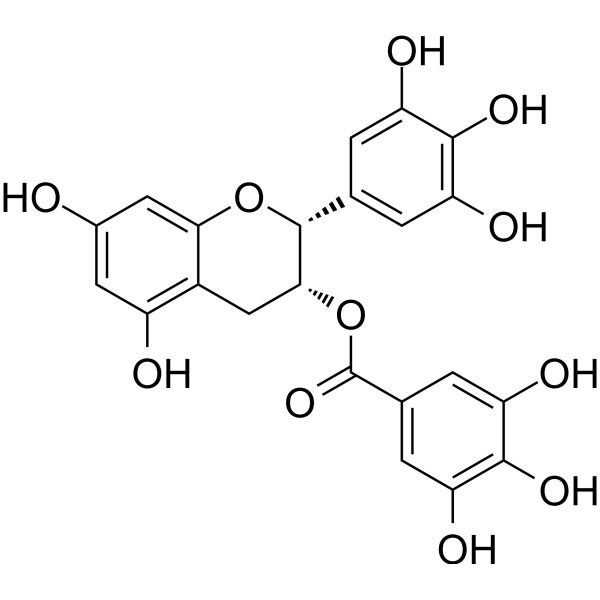
(-)-Epigallocatechin Gallate (Standard) is the analytical standard of (-)-Epigallocatechin Gallate. This product is intended for research and analytical applications. (-)-Epigallocatechin Gallate (EGCG) is a major polyphenol in green tea, which can inhibit cell proliferation and induce cell apoptosis. (-)-Epigallocatechin Gallate inhibits glutamate dehydrogenase 1/2 (GDH1/2, GLUD1/2) activity. (-)-Epigallocatechin Gallate has a potent anticancer, antioxidant and anti-inflammatory properties against various types of cancers such as colorectal cancer, myeloid leukemia, thyroid carcinoma .
loading...
    loading...
Cat. No.: HY-178381S
3-Hydroxyhippuric acid-d4 is the deuterium labeled 3-Hydroxyhippuric acid (HY-113085). 3-Hydroxyhippuric acid is an acyl glycine. 3-Hydroxyhippuric acid inhibits kynureninase (Ki = 60 μM). 3-Hydroxyhippuric acid is found in higher concentrations in autistic group than in the controls. 3-Hydroxyhippuric acid is a marker of Clostridium species, and has a positive correlation with the level of Clostridia. 3-Hydroxyhippuric acid is one of the main metabolites formed from the catechin diet and wine polyphenol diets .
loading...
    loading...
Cat. No.: HY-13653S1
Synonyms: EGCG-d4; Epigallocatechol Gallate-d4
(-)-Epigallocatechin Gallate-d4 (EGCG-d4) is the deuterium labeled (-)-Epigallocatechin Gallate (HY-13653). (-)-Epigallocatechin Gallate (EGCG) is a major polyphenol in green tea, which can inhibit cell proliferation and induce cell apoptosis. (-)-Epigallocatechin Gallate inhibits glutamate dehydrogenase 1/2 (GDH1/2, GLUD1/2) activity. (-)-Epigallocatechin Gallate has a potent anticancer, antioxidant and anti-inflammatory properties against various types of cancers such as colorectal cancer, myeloid leukemia, thyroid carcinoma .
loading...
    loading...
Cat. No.: HY-174260
CAS No.: 3081915-81-0
Research Areas:  

Neurological Disease

Neuroprotective agent 11 (Compound 1a) is an orally active polyphenol compound with significant protective effects against cerebral ischemia. The main activities of Neuroprotective agent 11 include inhibiting neuronal inflammation and apoptosis, reducing cerebral infarction volume, and improving behavioral symptoms of cerebral ischemic mice. Neuroprotective agent 11 exerts its regulatory mechanism by downregulating the expression of inflammatory factors (iNOSCOX-2) and apoptotic proteins (cleaved-Caspase3, p53). Neuroprotective agent 11 can be used in the study of cerebral ischemia-related diseases (such as ischemic stroke) .
loading...
    loading...
Cat. No.: HY-107208R
CAS No.: 29106-51-2
Synonyms: (-)-Procyanidin B4 (Standard)
Procyanidol B4 (Standard) is the analytical standard of Procyanidol B4 (HY-107208). This product is intended for research and analytical applications. Procyanidol B4 ((-)-Procyanidin B4) is an orally active polyphenol found in Q.gilva. Procyanidol B4 exerts antioxidant activity by scavenging DPPH (HY-112053) (IC50: 12.15 μM) and Nitro blue tetrazolium chloride (NBT) (HY-15925) (IC50: 8.67 μM). Procyanidol B4 exhibits anti-inflammatory activity by inhibiting the expression of COX-2 and IL-1β and iNOS .
loading...
    loading...
Cat. No.: HY-113357
CAS No.: 588-30-7
Purity:  99.84%
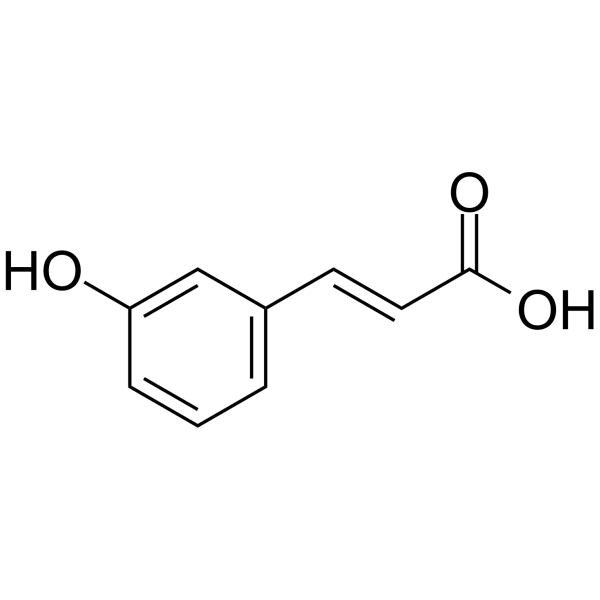
m-Coumaric acid is a polyphenol metabolite from caffeic acid, formed by the gut microflora and the amount in human biofluids is diet-dependant. m-Coumaric acid is a BBB-penetrant metabolite of chlorogenic acid. m-Coumaric acid stimulates the cerebral nerves in vitro. m-Coumaric acid can evoke neurite outgrowth in hippocampal neuronal cells. m-Coumaric acid can promote neuronal differentiation. m-Coumaric acid increases spontaneous locomotor activity in mice by acting on the central nervous system. m-Coumaric acid inhibits the oxidation of L-dopa by epidermis tyrosinase. m-Coumaric acid attenuates non-catalytic protein glycosylation in retinas of diabetic rats .
loading...
    loading...
Cat. No.: HY-B1890R
CAS No.: 7295-85-4
Synonyms: rel-Cianidanol (Standard); rel-Catechuic acid (Standard)
(±)-Catechin (Standard) is the analytical standard of (±)-Catechin. This product is intended for research and analytical applications. (±)-Catechin (rel-Cianidanol) is the racemate of the green tea polyphenol Catechin. Catechin has anticancer activity and induces apoptosis. (±)-Catechin has two forms, (+)-Catechin and its enantiomer (-)-Catechin. (+)-Catechin inhibits cyclooxygenase-1 (COX-1) with an IC50 of 1.4 μM. (-)-Catechin can effectively promote hBM-MSC adipocyte differentiation and increase adiponectin and PPARγ levels. (±)-Catechin has anti-tumor, anti-obesity, anti-diabetic, anti-cardiovascular, anti-infectious, hepatoprotective and neuroprotective effects .
loading...
    loading...
Cat. No.: HY-N17566
CAS No.: 83475-36-9
Eukovoside is a cinnamic acid derivative found in Euphrasia regelii with anti-inflammatory, antioxidant, antibacterial, antiallergic, and antihistamine activity. Eukovoside can be used for the research of hyperglycemic diseases, eye inflammation, upper respiratory passages inflammation, hay fever, conjunctivitis, colds, influenza, sinusitis .
loading...
    loading...
Cat. No.: HY-170017S
Synonyms: EGCG-d3/d4; Epigallocatechol Gallate-d3/d4
(-)-Epigallocatechin Gallate-d3/d4 (EGCG-d3/d4) is the deuterium labeled (-)-Epigallocatechin Gallate (HY-13653). (-)-Epigallocatechin Gallate (EGCG) is a major polyphenol in green tea, which can inhibit cell proliferation and induce cell apoptosis. (-)-Epigallocatechin Gallate inhibits glutamate dehydrogenase 1/2 (GDH1/2, GLUD1/2) activity. (-)-Epigallocatechin Gallate has a potent anticancer, antioxidant and anti-inflammatory properties against various types of cancers such as colorectal cancer, myeloid leukemia, thyroid carcinoma .
loading...
    loading...
Cat. No.: HY-B1890S
CAS No.: 1261254-33-4
Synonyms: rel-Cianidanol-13C3; rel-Catechuic acid-13C3
(±)-Catechin- 13C3 (rel-Cianidanol- 13C3) is the 13C-labeled (±)-Catechin (HY-B1890). (±)-Catechin (rel-Cianidanol) is the racemate of the green tea polyphenol Catechin. Catechin has anticancer activity and induces apoptosis. (±)-Catechin has two forms, (+)-Catechin and its enantiomer (-)-Catechin. (+)-Catechin inhibits cyclooxygenase-1 (COX-1) with an IC50 of 1.4 μM. (-)-Catechin can effectively promote hBM-MSC adipocyte differentiation and increase adiponectin and PPARγ levels. (±)-Catechin has anti-tumor, anti-obesity, anti-diabetic, anti-cardiovascular, anti-infectious, hepatoprotective and neuroprotective effects .
loading...
    loading...
Cat. No.: HY-113357R
CAS No.: 588-30-7
m-Coumaric acid (Standard) is the analytical standard of m-Coumaric acid. This product is intended for research and analytical applications. m-Coumaric acid is a polyphenol metabolite from caffeic acid, formed by the gut microflora and the amount in human biofluids is diet-dependant. m-Coumaric acid is a BBB-penetrant metabolite of chlorogenic acid. m-Coumaric acid stimulates the cerebral nerves in vitro. m-Coumaric acid can evoke neurite outgrowth in hippocampal neuronal cells. m-Coumaric acid can promote neuronal differentiation. m-Coumaric acid increases spontaneous locomotor activity in mice by acting on the central nervous system. m-Coumaric acid inhibits the oxidation of L-dopa by epidermis tyrosinase. m-Coumaric acid attenuates non-catalytic protein glycosylation in retinas of diabetic rats .
loading...
    loading...
Cat. No.: HY-129440
CAS No.: 68573-24-0
Purity:  99.03%
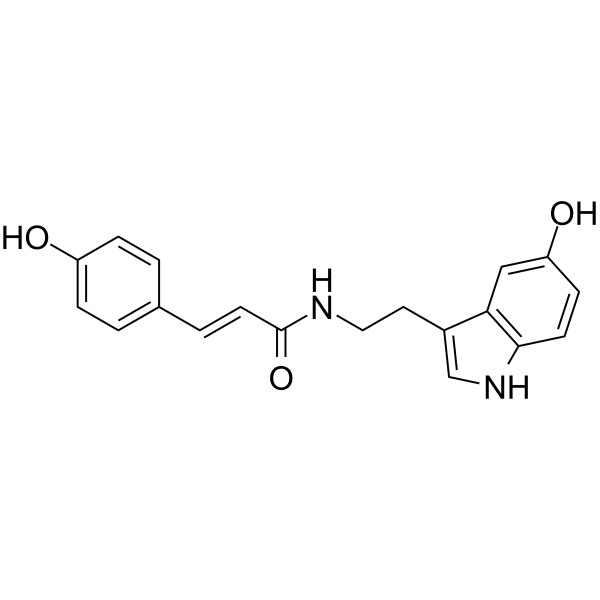
N-(p-Coumaroyl) Serotonin is an orally active polyphenol found in safflower seeds with potent anti-inflammatory, antioxidant, and antitumor activities. N-(p-Coumaroyl) Serotonin suppresses NF‑κB, TLR4/MyD88 and MAPK signaling, activates NQO1/HO‑1 pathways, and inhibits pro‑inflammatory cytokines, iNOS and COX‑2 and ROS production. N-(p-Coumaroyl) Serotonin induces S‑phase arrest and apoptosis in glioblastoma cells, reduces atherosclerotic lesions, and alleviates renal and vascular injuries. N-(p-Coumaroyl) Serotonin acts as a vasodilator, regulates calcium dynamics. N-(p-Coumaroyl) Serotonin can be used for the research of neurodegenerative diseases, atherosclerosis, glioblastoma, and acute renal failure .
loading...
    loading...
Cat. No.: HY-L094
2,064 compounds

The health benefits deriving from the consumption of certain foods have been common knowledge. All foods are made up of chemical substances. Chemicals in foods are largely harmless and often desirable. At present, numerous researchers have been focused on the beneficial role played by certain food components in the close relationship between food intake and health status. For example, polyphenols, a common class of compounds among foods, are well-known antioxidants, which may play a role in the prevention of several diseases including type 2 diabetes, cardiovascular diseases, and some types of cancer.

MCE supplies a unique collection of 2,064 compounds from variety of foods. All compounds are with specific food source(s). MCE Food-Sourced Compound Library is the useful tool to discover molecules with pharmaceutical activity from foods.

Cat. No.: HY-W250183
CAS No.: 9005-00-9
Synonyms: Polyethylene glycol octadecyl ether (n~10, average Mn~711)
Research Areas:  

Others

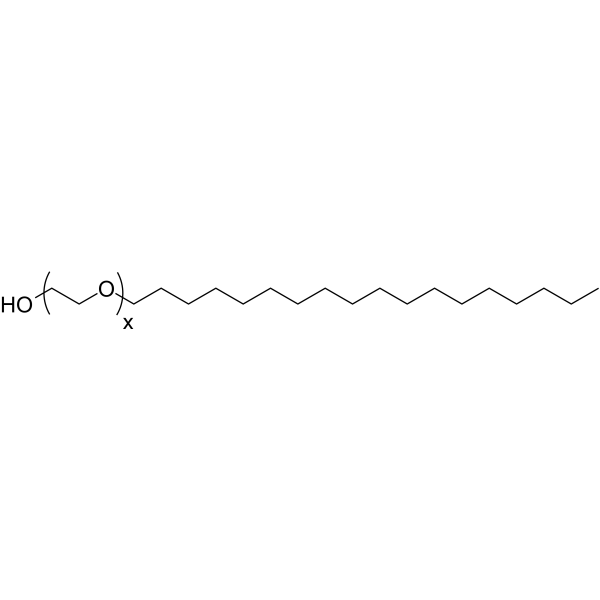
Polyoxyethylene (10) stearyl ether (Polyethylene glycol octadecyl ether (n~10, average Mn~711)) is a nonionic surfactant. Polyoxyethylene (10) stearyl ether reduces interfacial tension through its amphiphilic structure, stabilizes emulsions via steric hindrance, and forms micelles for solubilization. Polyoxyethylene (10) stearyl ether can serve as a biomaterial or organic compound for life science-related research.
loading...
    loading...
Cat. No.: HY-129440R
CAS No.: 68573-24-0
N-(p-Coumaroyl) Serotonin (Standard) is the analytical standard of N-(p-Coumaroyl) Serotonin (HY-129440). This product is intended for research and analytical applications. N-(p-Coumaroyl) Serotonin is an orally active polyphenol found in safflower seeds with potent anti-inflammatory, antioxidant, and antitumor activities. N-(p-Coumaroyl) Serotonin suppresses NF‑κB, TLR4/MyD88 and MAPK signaling, activates NQO1/HO‑1 pathways, and inhibits pro‑inflammatory cytokines, iNOS and COX‑2 and ROS production. N-(p-Coumaroyl) Serotonin induces S‑phase arrest and apoptosis in glioblastoma cells, reduces atherosclerotic lesions, and alleviates renal and vascular injuries. N-(p-Coumaroyl) Serotonin acts as a vasodilator, regulates calcium dynamics. N-(p-Coumaroyl) Serotonin can be used for the research of neurodegenerative diseases, atherosclerosis, glioblastoma, and acute renal failure .
loading...
    loading...

