130 Results for "

tissue engineering

" in MedChemExpress (MCE) Product Catalog:
Products (130)

130 Results for "tissue engineering" in MCE Product Catalog:

Cat. No.: HY-184779
CAS No.: 29435-48-1
Synonyms: PHB
Research Areas:  

Others

Poly[(R)-3-hydroxybutyrate] (PHB) is a polyhydroxyalkanoate polymer with biocompatibility and processability. Poly[(R)-3-hydroxybutyrate] can be used to prepare drug delivery nanoparticles and tissue engineering scaffolds. Poly[(R)-3-hydroxybutyrate] is applicable to research related to drug delivery, tissue engineering and wound dressing materials .
loading...
    loading...
Cat. No.: HY-W013021R
CAS No.: 498-66-8
Norbornene (Standard) is the analytical standard of Norbornene (HY-W013021). This product is intended for research and analytical applications. Norbornene is a bicyclic compound. Norbornene polymers can be used in tissue engineering and drug release system .
loading...
    loading...
Cat. No.: HY-D2652
Cy5 HA MA (MW 100000) is a hyaluronic acid methacrylate labeled with CY5 (HY-D0821). Cy5 HA MA (MW 100000) is widely used in the fields of biolabeling and imaging, drug delivery and tissue engineering and regenerative medicine (Ex/Em = 633/670 nm).
loading...
    loading...
Cat. No.: HY-D2682
Cy7 HA MA (MW 5000) is a hyaluronic acid methacrylate labeled with CY7 (HY-D0825). Cy7 HA MA (MW 5000) is widely used in the fields of biolabeling and imaging, drug delivery and tissue engineering and regenerative medicine (Ex/Em = 740/770 nm).
loading...
    loading...
Cat. No.: HY-W115785
CAS No.: 1332-07-6
Research Areas:  

Metabolic Disease

Zinc borate is a bioactive inorganic substance with properties including osteogenic induction, pro-angiogenesis, antioxidation, antimutagenesis and cytotoxicity. In the field of bone tissue engineering, Zinc borate is often incorporated into chitosan scaffolds. By releasing zinc ions and borate ions, Zinc borate induces the differentiation of human dental pulp stem cells into osteoblasts, upregulates the expression of bone-related genes and promotes calcium deposition. Zinc borate also promotes angiogenesis by upregulating key factors such as vascular endothelial growth factor. Zinc borate exhibits antioxidant capacity to scavenge free radicals, and can specifically reduce mutagenicity under specific conditions. Zinc borate reduces the survival rate of mouse fibroblasts, but it can still be used in studies related to bone tissue engineering .
loading...
    loading...
Cat. No.: HY-158217B
Synonyms: Gelatin Methacryloyl, 90% methacrylation, Green Fluorescent
Green Fluorescent Gelatin Methacryloyl (Green Fluorescent GelMA) is methacryloyl gelatin (GelMA) with green fluorescence, which is obtained by "grafting" fluorescent molecules on GelMA. Green Fluorescent Gelatin Methacryloyl acts as a scaffold and can be used to engineer tissue analogs from the vasculature to cartilage and bone, allowing cells to proliferate and spread . GelMA, 90% methacrylation, Green Fluorescent needs to self-assemble into fibrous hydrogel under the action of photoinitiator LAP (HY-44076), and target bioactive adhesion sites, play an inherent supporting role for tissue cells and biodegradable activity.
Application: cell culture, biological 3D printing, tissue engineering, etc.
loading...
    loading...
Cat. No.: HY-158227A
Synonyms: DexMA (MW 500000)
Dextran Methacryloyl (MW 500000) is a methacryloyl dextran that converts into cell matrix gels. Dextran Methacryloyl (MW 500000) formed gels that had no cytotoxic effects on fibroblasts, but cells adhered only inefficiently in long-term experiments . Dextran Methacryloyl (MW 500000) needs to self-assemble into fibrous hydrogel under the action of photoinitiator LAP (HY-44076), and target bioactive adhesion sites, play an inherent supporting role for tissue cells and biodegradable activity.
Application: cell culture, biological 3D printing, tissue engineering, etc.
loading...
    loading...
Cat. No.: HY-W115727E
CAS No.: 9003-05-8
Synonyms: PAM,average Mn 150000
Polyacrylamide, average Mn 150000 (PAM, average Mn 150000) is a versatile, high-molecular-weight polyacrylamide copolymer. Polyacrylamide series materials can maintain enzyme activity in enzyme immobilization, act as drug carriers to achieve controlled release, serve as smart materials responding to temperature/pH stimuli, and be used for in vitro toxin adsorption and soft tissue filling through mechanisms such as physical entrapment, covalent binding or chemical crosslinking. Polyacrylamide finds applications in biomedical engineering, environmental management and industrial applications .
loading...
    loading...
Cat. No.: HY-W250313
CAS No.: 26100-51-6
Synonyms: PLA
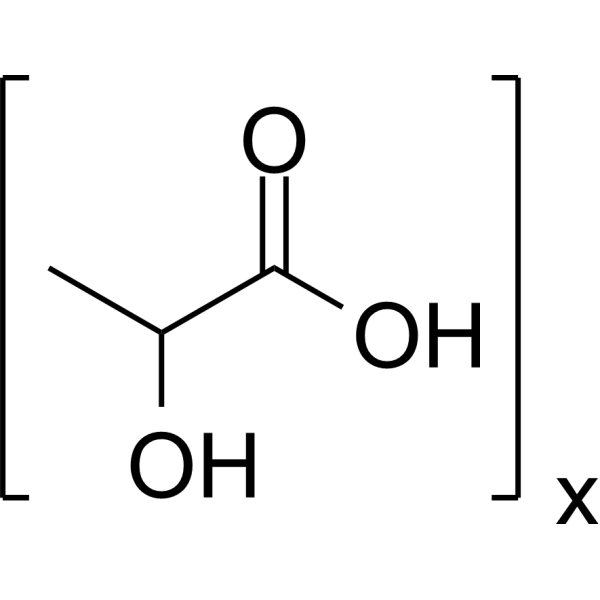
Polylactic acid (PLA) is a biodegradable and biocompatible polymer widely used as a carrier for drug delivery systems and a structural material for tissue engineering and medical implants. Polylactic acid acts as a controlled release matrix through the hydrolysis mechanism of ester bonds, gradually releasing the encapsulated drug and metabolizing to non-toxic lactic acid. Polylactic acid has adjustable degradation rate, mechanical properties and the ability to composite with other polymers, and can be used in local or systemic drug delivery, orthopedic fixation devices and 3D printed bone regeneration scaffolds .
loading...
    loading...
Cat. No.: HY-P2263A
Target:  

Inhibitory Antibodies

Research Areas:  

Inflammation/Immunology

KLD-12 TFA is the TFA salt form of KLD-12 (HY-P2263). KLD-12 TFA is a self a 12-residue self-assembling peptide that is used in tissue-engineering. KLD-12 TFA combined with SDF-1 self-assembled polypeptide enhances chondrogenic differentiation of bone marrow stromal cells (BMSCs). KLD-12 TFA hydrogel can fill full-thickness osteochondral defects in situ and improve cartilage repair .
loading...
    loading...
Cat. No.: HY-B2221C
CAS No.: 9000-11-7
Synonyms: Carboxymethyl cellulose CM-32; CM-32
CM Cellulose CM-32 (Carboxymethyl cellulose) is a cellulose derivative. CM Cellulose CM-32 has a wide range of applications in the biomedical field, including tissue engineering, wound dressing, absorbent nonwovens, fabrication of 3D-scaffolds for biocompatible implants, artificial organs or mimics of extracellular polymeric matrix and diagnosis of various diseases. CM Cellulose CM-32 can decrease osteoclasts formation. CM Cellulose CM-32 can be used as a biological material or organic compound for life science related research .
loading...
    loading...
Cat. No.: HY-P4198
CAS No.: 2375600-56-7
Synonyms: Fmoc-Sar10
Research Areas:  

Others

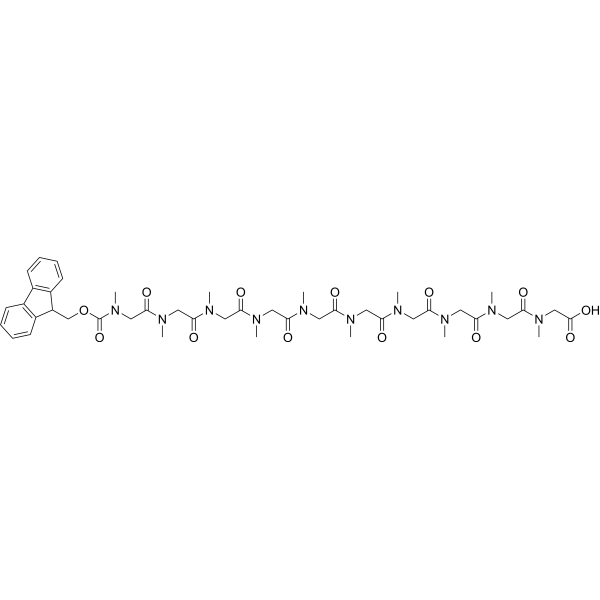
Fmoc-N(Me)-Sar10 (Fmoc-Sar10) is an Fmoc-protected derivative of a methylated sarcosine decamer, which supports cell adhesion, proliferation, and maintenance of cell phenotype. Fmoc-N(Me)-Sar10 is primarily used in peptide synthesis to introduce enzymatically stable spacer sequences. By mimicking the extracellular matrix (ECM), Fmoc-N(Me)-Sar10 provides a 3D growth microenvironment for cells and is mainly used in tissue engineering and 3D cell culture, particularly suitable for in vitro culture studies of cells such as chondrocytes .
loading...
    loading...
Cat. No.: HY-P5284
CAS No.: 1613231-49-4
Target:  

Inhibitory Antibodies

Research Areas:  

Others

RALA peptide is a cationic amphiphilic delivery agent targeting cell membranes, which forms nanoparticles through electrostatic interactions with anionic drugs. RALA peptide has pH-responsive binding properties, which can enhance the α-helical conformation in an acidic environment and destroy the endosomal membrane, promote the release of drugs into the cytoplasm, and exert efficient intracellular delivery activity. RALA peptide can be used in cancer research (enhancing the activity of bisphosphonates against prostate cancer and breast cancer cells) and bone tissue engineering (promoting osteoblast collagen deposition and extracellular matrix mineralization) .
loading...
    loading...
Cat. No.: HY-W888515
Research Areas:  

Neurological Disease

mPEG-PCL is an amphiphilic biodegradable block copolymer composed of hydrophilic methoxy poly (ethylene glycol) (mPEG) and hydrophobic poly (ε-caprolactone) (PCL). mPEG-PCL possesses excellent biocompatibility and can form delivery carriers such as micelles and nanoparticles. Through its amphiphilic block structure, mPEG-PCL forms nanocarriers and encapsulates hydrophobic molecules, thereby enhancing the loading capacity of hydrophobic molecules, reducing burst release, and achieving sustained release. mPEG-PCL can be used in research on nanodelivery, tissue engineering, and ocular delivery systems related to age-related macular degeneration (AMD) .
loading...
    loading...
Cat. No.: HY-W015891
CAS No.: 502-44-3
ε-Caprolactone is a 7-membered cyclic ester identified in Rubus arcticus L, and it is also a versatile monomer. ε-Caprolactone serves as an intermediate to derive various functional polymer materials. ε-Caprolactone is applicable to relevant research in fields such as biomedicine and material synthesis .
loading...
    loading...
Cat. No.: HY-W015891R
CAS No.: 502-44-3
ε-Caprolactone (Standard) is the analytical standard of ε-Caprolactone (HY-W015891). This product is intended for research and analytical applications. ε-Caprolactone is a 7-membered cyclic ester identified in Rubus arcticus L, and it is also a versatile monomer. ε-Caprolactone serves as an intermediate to derive various functional polymer materials. ε-Caprolactone is applicable to relevant research in fields such as biomedicine and material synthesis .
loading...
    loading...
Cat. No.: HY-W015891S
CAS No.: 1219802-08-0
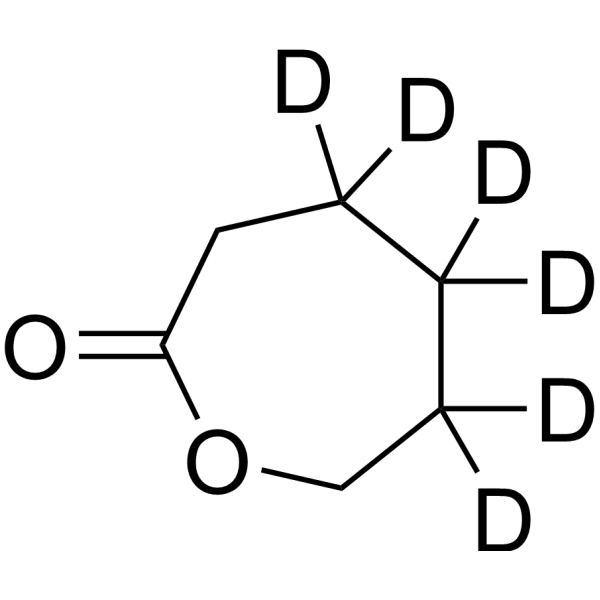
ε-Caprolactone-d6 is the deuterated-labeled ε-Caprolactone (HY-W015891). ε-Caprolactone is a 7-membered cyclic ester identified in Rubus arcticus L, and it is also a versatile monomer. ε-Caprolactone serves as an intermediate to derive various functional polymer materials. ε-Caprolactone is applicable to relevant research in fields such as biomedicine and material synthesis .
loading...
    loading...
Cat. No.: HY-137006
CAS No.: 57360-69-7
Target:  

Fluorescent Dye

Research Areas:  

Others

MTT Formazan is a purple water-insoluble product formed by the reduction of yellow soluble MTT by succinate dehydrogenase in the mitochondria of viable cells. The amount of MTT Formazan produced is proportional to cellular metabolic activity, and it can serve as an indicator for evaluating cell viability and proliferation. MTT Formazan exhibits solvent-dependent solubility properties, and its absorbance value can be measured by spectrophotometry to reflect cellular status. MTT Formazan also supports the assessment of cell viability in bacterial MTT assays. MTT Formazan can be used in photoacoustic microscopy to enhance the imaging effect of viable cells, especially in applications in the fields of three-dimensional cell culture and tissue engineering .
loading...
    loading...
Cat. No.: HY-P11428
CAS No.: 2425606-55-7
Research Areas:  

Others

DBCO-cyclo (RGDfK) is a clickable DBCO-modified cyclic RGD peptide, and also a DBCO derivative of cyclo (RGDfK) (HY-P0023). DBCO-cyclo (RGDfK) is synthesized via an amide coupling reaction between DBCO-NHS ester and cyclo (RGDfK). DBCO-cyclo (RGDfK) can react with azide groups through copper-free click chemistry (SPAAC) to immobilize RGD peptides onto biomaterials or hydrogels. The RGD sequence in DBCO-cyclo (RGDfK) is recognizable by cellular integrins and promotes cell adhesion. DBCO-cyclo (RGDfK) can be used in studies related to tissue engineering, 3D cell culture, and surface functionalization of biomaterials .
loading...
    loading...
Cat. No.: HY-W584165
CAS No.: 13983-17-0
Wollastonite is a white, chain-structured pyroxene silicate mineral with biocompatibility, biodegradability, osteogenicity and antibacterial properties. Wollastonite induces transient pulmonary inflammatory responses, reversible alveolar macrophage responses, early inflammatory/proliferative mesothelial cell responses, ROS production, and mild chronic pulmonary interstitial inflammation in rats. Wollastonite induces osteogenic differentiation, promotes bone growth, supports angiogenesis, and facilitates the formation of hydroxycarbonate apatite on its surface. Wollastonite enhances the strength, bioactivity and biodegradability of hydroxyapatite scaffolds, and is used to construct porous bone tissue engineering scaffolds. Wollastonite is applied in research related to diseases such as bronchitis, decreased lung function and bone defects .
loading...
    loading...