1204 Results for "

SPAAC

" in MedChemExpress (MCE) Product Catalog:
Products (1204)

1204 Results for "SPAAC" in MCE Product Catalog:

Cat. No.: HY-19314R
CAS No.: 1011529-10-4
Synonyms: RO-0622 (Standard); FNC (Standard)
Research Areas:  

Infection

Azvudine (Standard) is the analytical standard of Azvudine. This product is intended for research and analytical applications. Azvudine (RO-0622) is a potent nucleoside reverse transcriptase inhibitor (NRTI), with antiviral activity on HIV, HBV and HCV. Azvudine exerts highly potent inhibition on HIV-1 (EC50s ranging from 0.03 to 6.92 nM) and HIV-2 (EC50s ranging from 0.018 to 0.025 nM). Azvudine inhibits NRTI-resistant viral strains . Azvudine is a click chemistry reagent, it contains an Azide group and can undergo copper-catalyzed azide-alkyne cycloaddition reaction (CuAAc) with molecules containing Alkyne groups. It can also undergo strain-promoted alkyne-azide cycloaddition (SPAAC) reactions with molecules containing DBCO or BCN groups.
loading...
    loading...
Cat. No.: HY-111640
CAS No.: 1282040-14-5
Purity:  99.90%
Research Areas:  

Infection

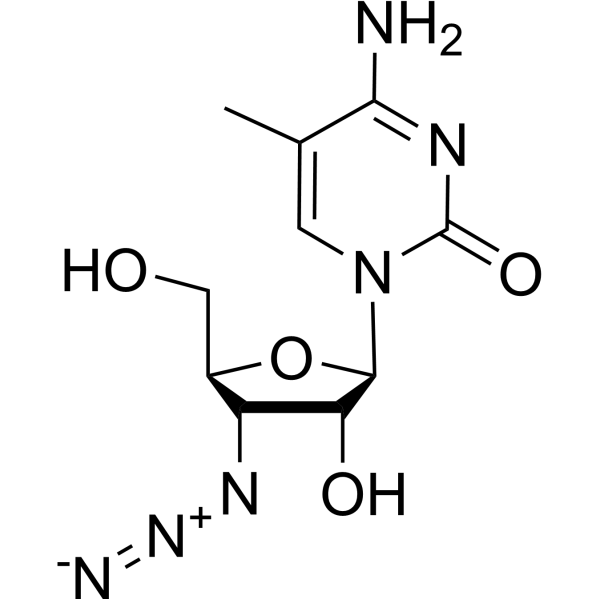
3'-Azido-3'-deoxy-5-methylcytidine (CS-92) is a potent xenotropic murine leukemia-related retrovirus (XMRV) inhibitor with a CC50 of 43.5 μM in MCF-7 cells. 3'-Azido-3'-deoxy-5-methylcytidine also inhibits HIV-1 reverse transcriptase with an EC50 of 0.06 μM in peripheral blood mononuclear (PBM) cells . 3'-Azido-3'-deoxy-5-methylcytidine is a click chemistry reagent, it contains an Azide group and can undergo copper-catalyzed azide-alkyne cycloaddition reaction (CuAAc) with molecules containing Alkyne groups. It can also undergo strain-promoted alkyne-azide cycloaddition (SPAAC) reactions with molecules containing DBCO or BCN groups.
loading...
    loading...
Cat. No.: HY-133736
CAS No.: 2704602-92-4
Purity:  99.73%
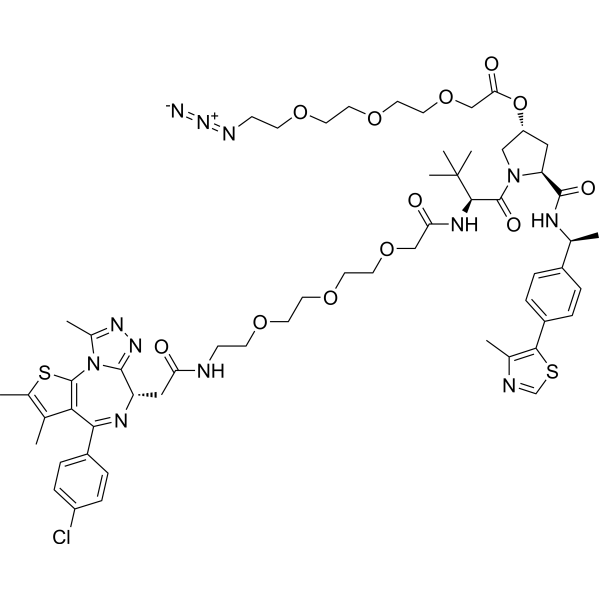
PROTAC BRD4 Degrader-5-CO-PEG3-N3 is a PROTAC-linker Conjugate for PAC, comprises the BRD4 degrader (MZ 1 (HY-107425) analog) and PEG-based linker. PROTAC BRD4 Degrader-5-CO-PEG3-N3 is a click chemistry reagent, it contains an Azide group and can undergo copper-catalyzed azide-alkyne cycloaddition reaction (CuAAc) with molecules containing Alkyne groups. It can also undergo strain-promoted alkyne-azide cycloaddition (SPAAC) reactions with molecules containing DBCO or BCN groups. PROTAC BRD4 Degrader-5-CO-PEG3-N3 can be used for the research of HER2-positive breast cancer .
loading...
    loading...
Cat. No.: HY-140213
CAS No.: 166388-57-4
Purity:  ≥97.0%
Synonyms: N3-PEG2-CH2CH2NH2
Research Areas:  

Cancer

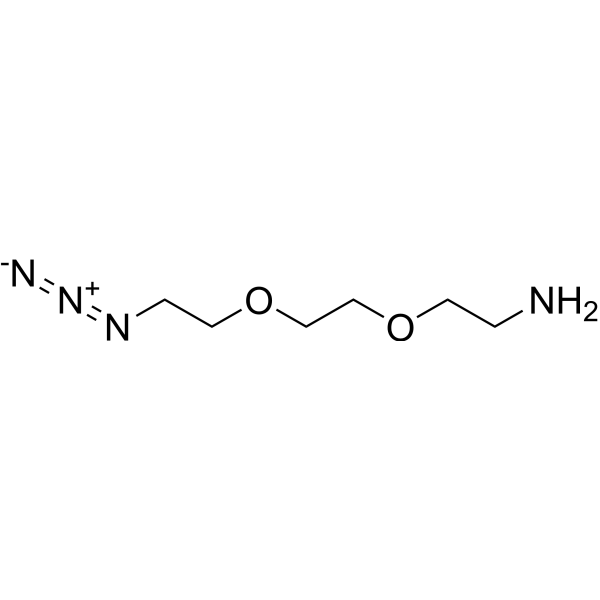
Azido-PEG2-C2-amine (N3-PEG2-CH2CH2NH2) is a PEG-based PROTAC linker that can be used in the synthesis of PROTACs . Azido-PEG2-C2-amine is also a non-cleavable 2 unit PEG ADC linker used in the synthesis of antibody-drug conjugates (ADCs) . Azido-PEG2-C2-amine is a click chemistry reagent, it contains an Azide group and can undergo copper-catalyzed azide-alkyne cycloaddition reaction (CuAAc) with molecules containing Alkyne groups. It can also undergo strain-promoted alkyne-azide cycloaddition (SPAAC) reactions with molecules containing DBCO or BCN groups.
loading...
    loading...
Cat. No.: HY-145149S
Duostatin 5- 13C,d3 is the 13C-labeled Duostatin 5 (HY-145149). Duostatin 5 is a ADC Cytotoxin designed based on MMAF (HY-15579) and can be used to synthesize ADCs. The preparation of Duostatin 5 has the advantages of fewer synthetic steps, simple operation, less difficulty in quality control, and more stable chemical synthesis process. Duostatin 5 can be linked to the antibody targeting 5T4 (ZV05) by cross-linking with interchain cysteines through a disubstituted C-Lock linker. Duostatin 5 is a click chemistry reagent. It contains an azide group and can undergo copper-catalyzed azide-alkyne cycloaddition (CuAAc) with molecules containing alkyne groups. It can also undergo ring strain-driven alkyne-azide cycloaddition (SPAAC) with molecules containing DBCO or BCN groups[1][2].
loading...
    loading...
Cat. No.: HY-151744
CAS No.: 1993119-45-1
Target:  

ADC Linkers

Research Areas:  

Others

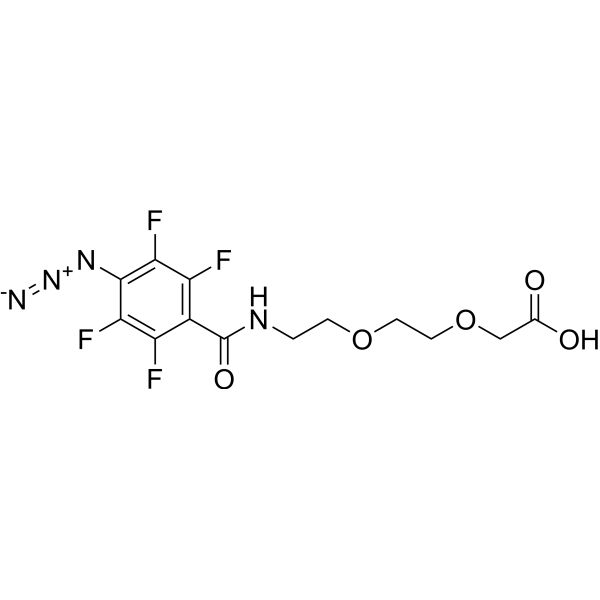
N3-TFBA-O2Oc is a click chemistry reagent containing an azide group and an aryl group. Aryl azides are well-known precursors of nitrenes and have been introduced by Fleet et al. as versatile photoaffinity labeling agents to probe biological receptors. This type of compounds has been used as photo-cross linker (λmax=258 nm) in estrogen receptor studies and for direct surface coating of carbon and organic based polymers . N3-TFBA-O2Oc is a click chemistry reagent, it contains an Azide group and can undergo copper-catalyzed azide-alkyne cycloaddition reaction (CuAAc) with molecules containing Alkyne groups. It can also undergo strain-promoted alkyne-azide cycloaddition (SPAAC) reactions with molecules containing DBCO or BCN groups.
loading...
    loading...
Cat. No.: HY-154310
Research Areas:  

Cancer

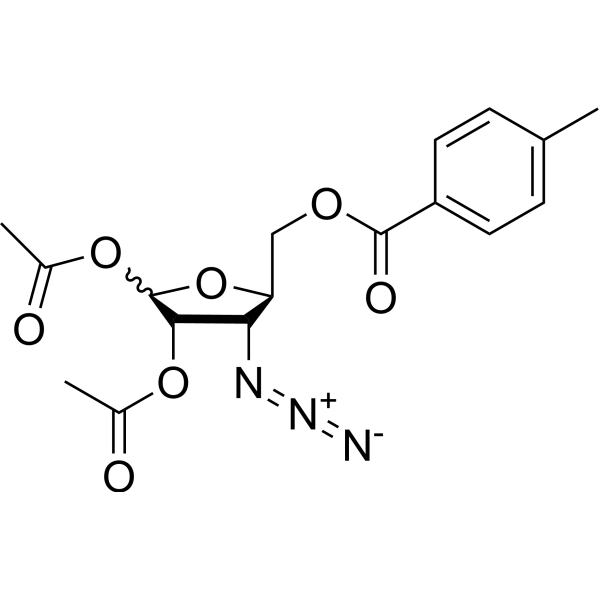
1,2-Di-O-acetyl-3-azido-3-deoxy-5-O-(4-methyl) benzoyl-L-ribofuranose is a purine nucleoside analog. Purine nucleoside analogs have broad antitumor activity targeting indolent lymphoid malignancies. Anticancer mechanisms in this process rely on inhibition of DNA synthesis, induction of apoptosis, etc . 1,2-Di-O-acetyl-3-azido-3-deoxy-5-O-(4-methyl) benzoyl-L-ribofuranose is a click chemistry reagent, it contains an Azide group and can undergo copper-catalyzed azide-alkyne cycloaddition reaction (CuAAc) with molecules containing Alkyne groups. It can also undergo strain-promoted alkyne-azide cycloaddition (SPAAC) reactions with molecules containing DBCO or BCN groups.
loading...
    loading...
Cat. No.: HY-154318
CAS No.: 120143-22-8
Research Areas:  

Cancer

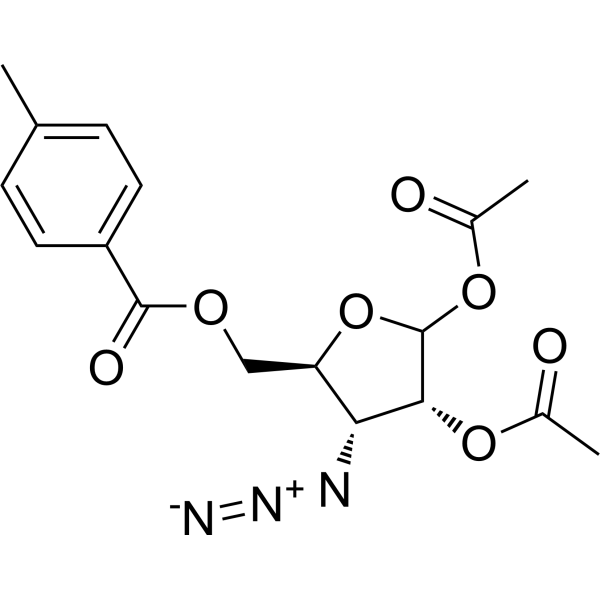
1,2-Di-O-acetyl-3-azido-3-deoxy-5-O-(4-methyl)benzoyl-D-ribofuranose is a purine nucleoside analog. Purine nucleoside analogs have broad antitumor activity targeting indolent lymphoid malignancies. Anticancer mechanisms in this process rely on inhibition of DNA synthesis, induction of apoptosis, etc . 1,2-Di-O-acetyl-3-azido-3-deoxy-5-O-(4-methyl)benzoyl-D-ribofuranose is a click chemistry reagent, it contains an Azide group and can undergo copper-catalyzed azide-alkyne cycloaddition reaction (CuAAc) with molecules containing Alkyne groups. It can also undergo strain-promoted alkyne-azide cycloaddition (SPAAC) reactions with molecules containing DBCO or BCN groups.
loading...
    loading...
Cat. No.: HY-154341
CAS No.: 2095417-30-2
Research Areas:  

Others

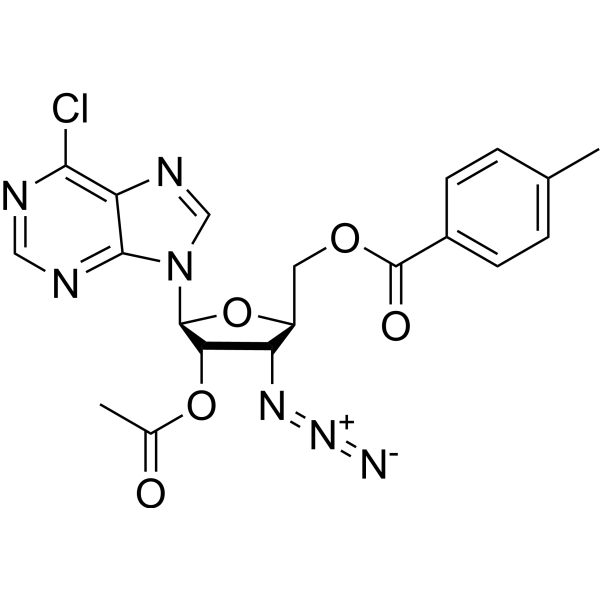
9-[2'-O-Acetyl-3'-azido-3'-deoxy-5'-O-toluoyl-b-L-ribofuranosyl)-6-chloropurine is a purine nucleoside analog. Purine nucleoside analogs have broad antitumor activity targeting indolent lymphoid malignancies. Anticancer mechanisms in this process rely on inhibition of DNA synthesis, induction of apoptosis, etc . 9-[2'-O-Acetyl-3'-azido-3'-deoxy-5'-O-toluoyl-b-L-ribofuranosyl)-6-chloropurine is a click chemistry reagent, it contains an Azide group and can undergo copper-catalyzed azide-alkyne cycloaddition reaction (CuAAc) with molecules containing Alkyne groups. It can also undergo strain-promoted alkyne-azide cycloaddition (SPAAC) reactions with molecules containing DBCO or BCN groups.
loading...
    loading...
Cat. No.: HY-154678
CAS No.: 1333126-30-9
Research Areas:  

Cancer

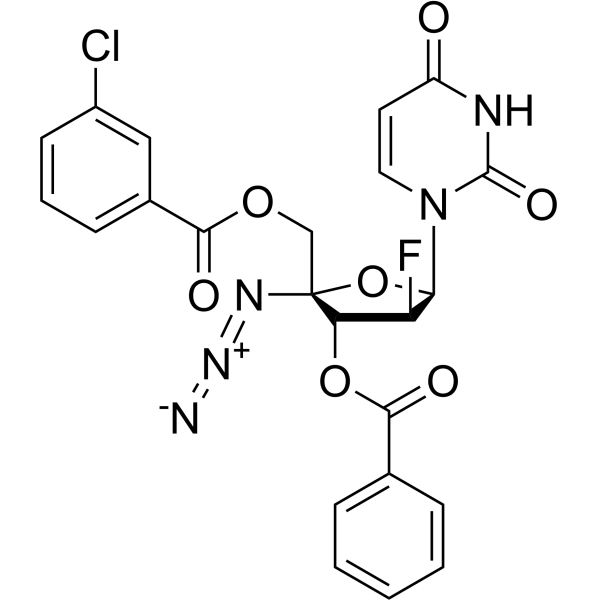
4’-Azido-3’-O-benzoyl-5’-O-(m-chlorobenzoyl)-2’-deoxy-2’-fluoro-beta-D-arabinouridine is a purine nucleoside analog. Purine nucleoside analogs have broad antitumor activity targeting indolent lymphoid malignancies. Anticancer mechanisms in this process rely on inhibition of DNA synthesis, induction of apoptosis, etc . 4’-Azido-3’-O-benzoyl-5’-O-(m-chlorobenzoyl)-2’-deoxy-2’-fluoro-beta-D-arabinouridine is a click chemistry reagent, it contains an Azide group and can undergo copper-catalyzed azide-alkyne cycloaddition reaction (CuAAc) with molecules containing Alkyne groups. It can also undergo strain-promoted alkyne-azide cycloaddition (SPAAC) reactions with molecules containing DBCO or BCN groups.
loading...
    loading...
Cat. No.: HY-42489
CAS No.: 252881-73-5
Research Areas:  

Cancer

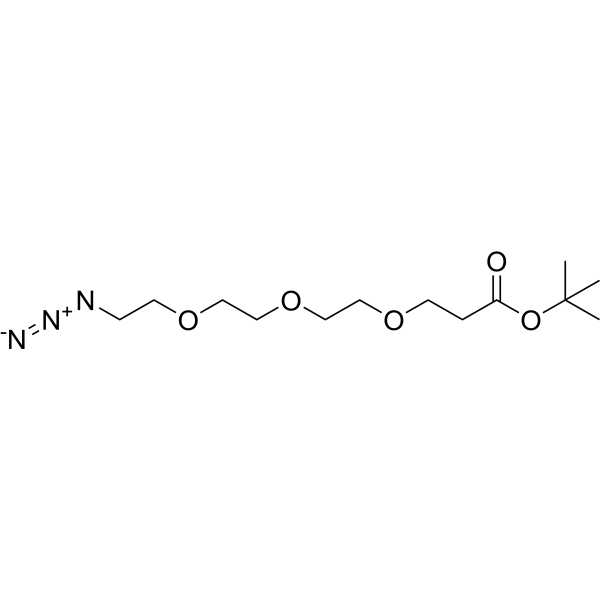
N3-PEG3-CH2CH2-Boc is a cleavable 3 unit PEG ADC linker used in the synthesis of antibody-drug conjugates (ADCs) . N3-PEG3-CH2CH2-Boc is also a PEG- and Alkyl/ether-based PROTAC linker that can be used in the synthesis of PROTACs . N3-PEG3-CH2CH2-Boc is a click chemistry reagent, it contains an Azide group and can undergo copper-catalyzed azide-alkyne cycloaddition reaction (CuAAc) with molecules containing Alkyne groups. It can also undergo strain-promoted alkyne-azide cycloaddition (SPAAC) reactions with molecules containing DBCO or BCN groups.
loading...
    loading...
Cat. No.: HY-42490
CAS No.: 1056024-94-2
Research Areas:  

Inflammation/Immunology Cancer

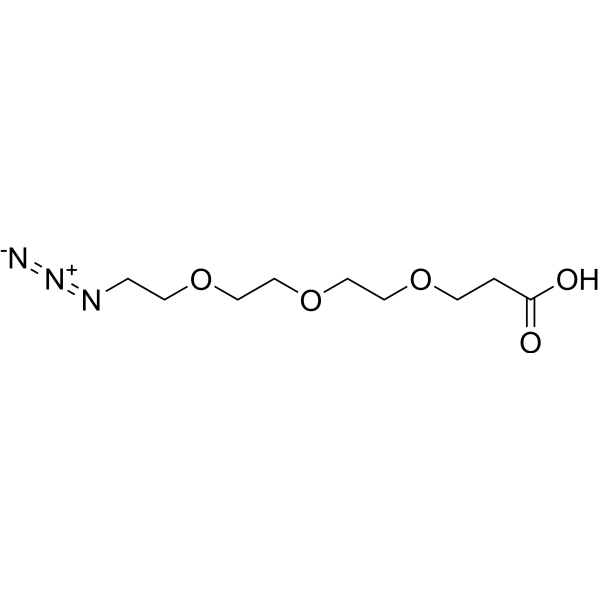
N3-PEG3-CH2CH2COOH a PEG-based PROTAC linker can be used in the synthesis of BI-3663 (HY-111546), BI-4216 and BI-0319. Azido-PEG3-acid is also a non-cleavable 3 unit PEG ADC linker used in the synthesis of antibody-drug conjugates (ADCs). N3-PEG3-CH2CH2COOH is a click chemistry reagent, it contains an Azide group and can undergo copper-catalyzed azide-alkyne cycloaddition reaction (CuAAc) with molecules containing Alkyne groups. It can also undergo strain-promoted alkyne-azide cycloaddition (SPAAC) reactions with molecules containing DBCO or BCN groups.
loading...
    loading...
Cat. No.: HY-W039939
CAS No.: 56883-39-7
Synonyms: 2-ADG, 98%
2-Azido-2-deoxy-D-glucose, 98% (2-ADG, 98%) is a substrate of O-GlcNAc transferase (OGT). 2-Azido-2-deoxy-D-glucose, 98% can be transferred from UDP-GlcAz to proteins in vitro via OGT mediation. When delivered as AcGlcAz, 2-Azido-2-deoxy-D-glucose, 98% enables the labeling and investigation of O-GlcNAc-modified nuclear and cytoplasmic proteins in cells. 2-Azido-2-deoxy-D-glucose, 98% undergoes strain-promoted [3+2] azide-alkyne cycloaddition (SPAAC) with technetium- 99m-labeled dibenzocyclooctyne derivatives in vivo. 2-Azido-2-deoxy-D-glucose, 98% can be used in sarcoma-related research .
loading...
    loading...
Cat. No.: HY-W127719
CAS No.: 96087-38-6
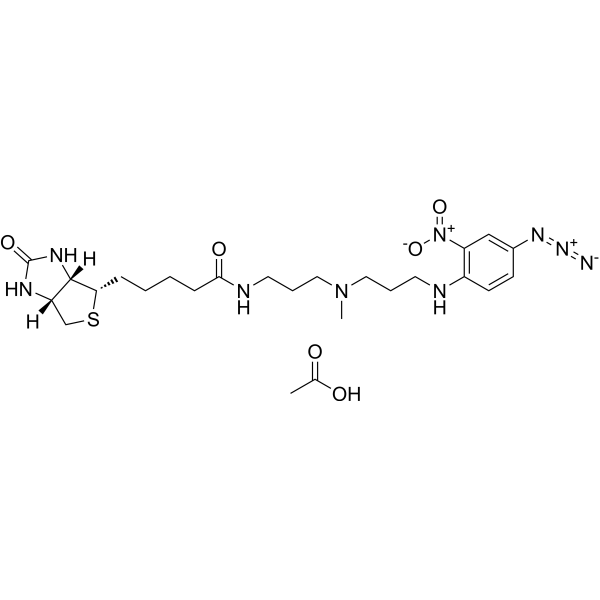
Photobiotin (acetate)It is a biological probe used to study biochemical processes such as protein interactions and enzymatic reactions. It is a molecule containing a photosensitive group, which can be combined with specific target molecules (such as proteins, nucleic acids, etc.) through photochemical cross-linking technology, so as to realize the labeling and detection of these molecules. During the photosensitive crosslinking process, Photobiotin (acetate)Can participate in the formation of covalent bonds and form stable compounds. In addition, the compound also has high biocompatibility and biological activity, so it is widely used in the field of biomedical research, such as enzymatic research, proteomics, western blotting and other aspects. Photobiotin (acetate) is a click chemistry reagent, it contains an Azide group and can undergo copper-catalyzed azide-alkyne cycloaddition reaction (CuAAc) with molecules containing Alkyne groups. It can also undergo strain-promoted alkyne-azide cycloaddition (SPAAC) reactions with molecules containing DBCO or BCN groups.
loading...
    loading...
Cat. No.: HY-103601R
CAS No.: 1797406-81-5
Synonyms: VH032-PEG4-N3 (Standard); VHL Ligand-Linker Conjugates 5 (Standard); E3 ligase Ligand-Linker Conjugates 4 (Standard)
(S,R,S)-AHPC-PEG4-N3 (Standard) is the analytical standard of (S,R,S)-AHPC-PEG4-N3 (HY-103601). This product is intended for research and analytical applications. (S,R,S)-AHPC-PEG4-N3 is a synthesized E3 ligase ligand-linker conjugate that incorporates the (S,R,S)-AHPC based VHL ligand and 4-unit PEG linker used in PROTAC technology. (S,R,S)-AHPC-PEG4-N3 is a click chemistry reagent, it contains an Azide group and can undergo copper-catalyzed azide-alkyne cycloaddition reaction (CuAAc) with molecules containing Alkyne groups. It can also undergo strain-promoted alkyne-azide cycloaddition (SPAAC) reactions with molecules containing DBCO or BCN groups.
loading...
    loading...
Cat. No.: HY-131027
Purity:  99.87%
Synonyms: JF646, Azide
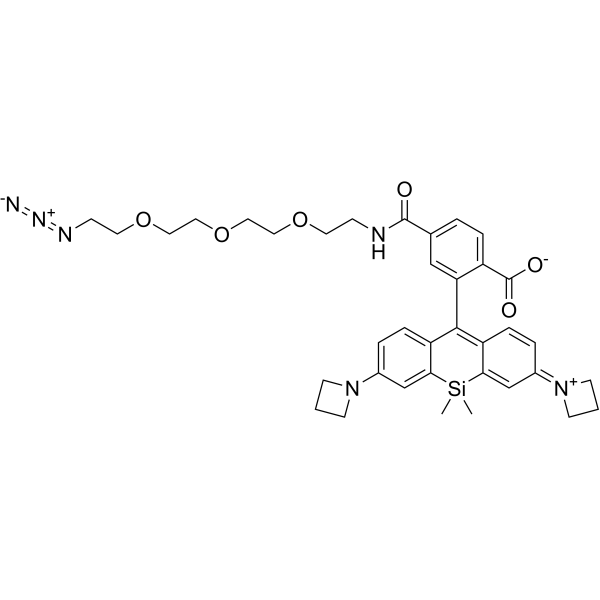
Janelia Fluor 646, Azide (JF646, Azide) is a red fluorogenic fluorescent dye containing a click chemistry group Azide. Janelia Fluor 646, Azide can be used for live-cell imaging experiments . Janelia Fluor fluorescent dyes can be chemically conjugated to the specific HaloTag substrate (a chloroalkane ligand) to form a fluorescent ligand, rather than binding directly to the HaloTag protein itself. Janelia Fluor products are licensed under U.S. Pat. Nos. 9,933,417, 10,018,624 and 10,161,932 and other patents from Howard Hughes Medical Institute. Janelia Fluor 646, Azide is a click chemistry reagent, it contains an Azide group and can undergo copper-catalyzed azide-alkyne cycloaddition reaction (CuAAc) with molecules containing Alkyne groups. It can also undergo strain-promoted alkyne-azide cycloaddition (SPAAC) reactions with molecules containing DBCO or BCN groups (Ex/Em = 646/664 nm).
loading...
    loading...
Cat. No.: HY-151791
CAS No.: 2300155-90-0
Target:  

ADC Linkers

Research Areas:  

Others

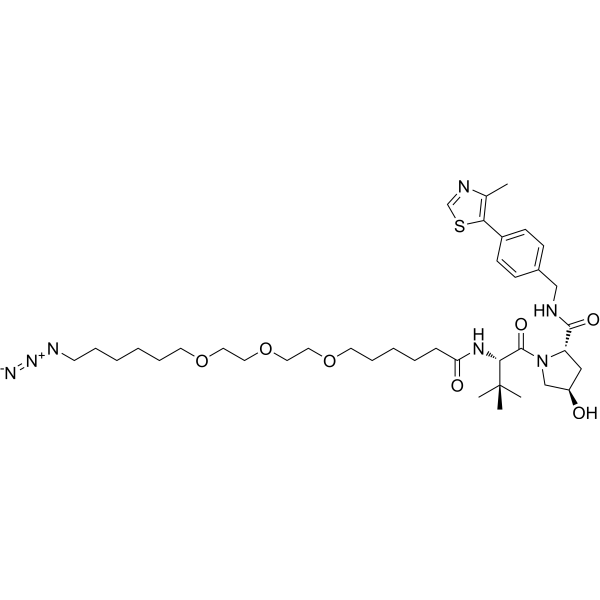
(S,R,S)-AHPC-C6-PEG3-butyl-N3 is a click chemistry reagent containing an azide group. (S,R,S)-AHPC-C6-PEG3-butyl-N3 serves as crosslinker-E3 ligase ligand conjugate, Click reactive protein degrader building block for PROTAC research, Template for synthesis of targeted protein degrader, VH032 conjugate . (S,R,S)-AHPC-C6-PEG3-butyl-N3 is a click chemistry reagent, it contains an Azide group and can undergo copper-catalyzed azide-alkyne cycloaddition reaction (CuAAc) with molecules containing Alkyne groups. It can also undergo strain-promoted alkyne-azide cycloaddition (SPAAC) reactions with molecules containing DBCO or BCN groups.
loading...
    loading...
Cat. No.: HY-D1850
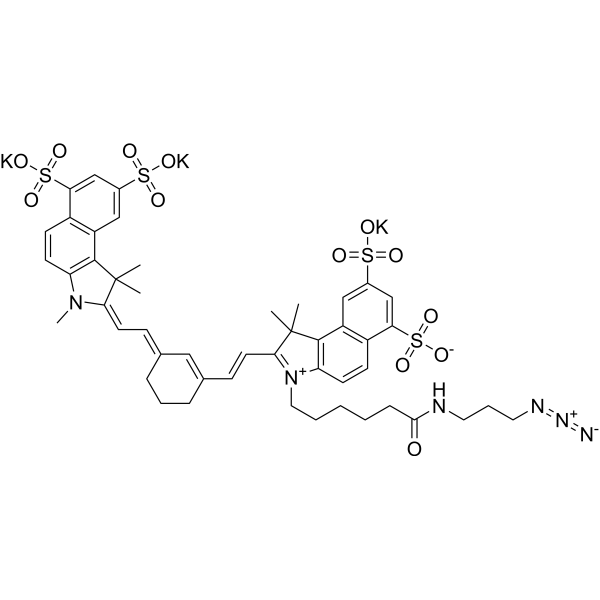
Sulfo-Cy7.5 azide is a Cyanine 7.5 (Cy7.5) (HY-D0926) dye derivative with azide and sulfonate functional groups. The sulfonate ion increases the water solubility of the compound, making it suitable for use in aqueous solutions. Cy7.5 is a near-infrared fluorescent dye commonly used for biolabeling and cell imaging. The azide group of Sulfo-Cy7.5 azide can react chemically with molecules containing alkyne functionality, such as alkyne or cyclooctyne, to form covalent bonds. Therefore, Sulfo-Cy7.5 azide can bind to biomolecules such as proteins and antibodies to track their location and dynamic changes in biological samples. It contains an azide group and can undergo copper-catalyzed azide-alkyne cycloaddition (CuAAc) with molecules containing alkyne groups. It can also undergo ring strain-promoted alkyne-azide cycloaddition (SPAAC) with molecules containing DBCO or BCN groups.
loading...
    loading...
Cat. No.: HY-103600R
CAS No.: 2101200-09-1
Synonyms: VH032-PEG1-N3 (Standard); VHL Ligand-Linker Conjugates 9 (Standard); E3 ligase Ligand-Linker Conjugates 3 (Standard)
(S,R,S)-AHPC-PEG1-N3 (Standard) is the analytical standard of (S,R,S)-AHPC-PEG1-N3 (HY-103600). This product is intended for research and analytical applications. (S,R,S)-AHPC-PEG1-N3 (VH032-PEG1-N3) is a synthesized E3 ligase ligand-linker conjugate that incorporates the (S,R,S)-AHPC based VHL ligand and 1-unit PEG linker used in PROTAC technology. (S,R,S)-AHPC-PEG1-N3 is a click chemistry reagent, it contains an Azide group and can undergo copper-catalyzed azide-alkyne cycloaddition reaction (CuAAc) with molecules containing Alkyne groups. It can also undergo strain-promoted alkyne-azide cycloaddition (SPAAC) reactions with molecules containing DBCO or BCN groups.
loading...
    loading...
Cat. No.: HY-151738
CAS No.: 1935981-35-3
Target:  

ADC Linkers

Research Areas:  

Others

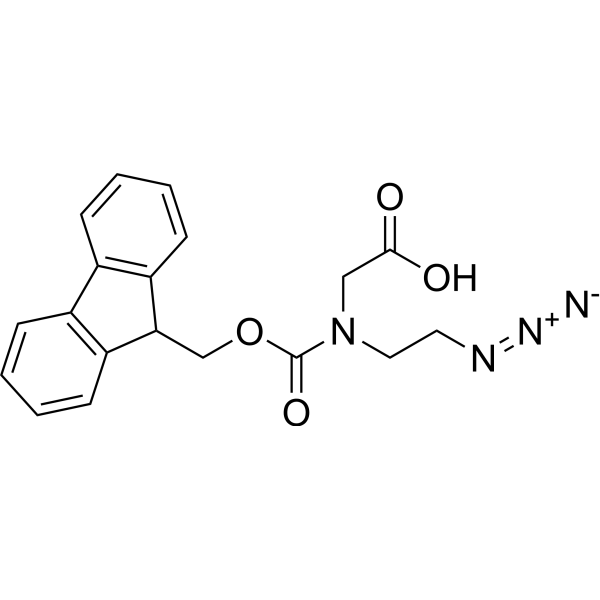
Fmoc-Aeg(N3)-OH is a click chemistry reagent containing an Azide. Alkylating the Nitrogen of an amide bond results in peptoid structures, which leads to conformational restrains, like N-methylation and allows backbone derivatisation. Altering cytotoxicity, bacterial cell selectivity and receptor pharmacology through formation of peptoid derivatives have been published for Cilengitide, Piscidin 1, and MC3, MC4 and MC5 receptor agonist. This building block enables design of macrocycles through intermolecular crosslinking or backbone stabilization through intermolecular ring-closure. This compound is a potential building block for the construction of (customized) peptide nucleic acids (PNAs) and for peptoid synthesis . Fmoc-Aeg(N3)-OH is a click chemistry reagent, it contains an Azide group and can undergo copper-catalyzed azide-alkyne cycloaddition reaction (CuAAc) with molecules containing Alkyne groups. It can also undergo strain-promoted alkyne-azide cycloaddition (SPAAC) reactions with molecules containing DBCO or BCN groups.
loading...
    loading...

