
238 Results for "

Diffuse

" in MedChemExpress (MCE) Product Catalog:
Products (238)

238 Results for "Diffuse" in MCE Product Catalog:

Cat. No.: HY-172519
CAS No.: 2295907-44-5
Target:  

Histone Demethylase

Research Areas:  

Cancer

LSD1-IN-41 (compound 7) is a potent and selective LSD1 inhibitor. LSD1-IN-41 can be used for diffuse intrinsic pontine glioma (DIPG) research when combined with HDAC inhibitors .
loading...
    loading...
Cat. No.: HY-187629
CAS No.: 2202678-04-2
Research Areas:  

Cancer

HH2853 is an orally active EZH1/EZH2 inhibitor, with an IC50 of 9.26 nM for EZH1 and IC50 values ranging from 2.21 to 3.75 nM for both wild-type and mutant EZH2 . HH2853 simultaneously inhibits the methyltransferase activities of EZH1 and EZH2, blocks the compensatory pathway that arises following EZH2 inhibition, and reduces H3K27me3 levels. HH2853 upregulates the expression of c-Myc and TfR-1 to induce intracellular iron accumulation, and stabilizes GPX4 via HSPA5 to suppress ferroptosis. HH2853 combined with Erastin (HY-15763) synergistically inhibits EZH2 wild-type DLBCL cell proliferation. HH2853 alone shows weak activity against EZH2 wild-type DLBCL and is well tolerated. HH2853 is applicable for research related to diffuse large B-cell lymphoma, non-Hodgkin's lymphoma, epithelioid sarcoma, and follicular lymphoma .
loading...
    loading...
Cat. No.: HY-P11280A
Target:  

Melanocortin Receptor

Research Areas:  

Cancer

PRAME peptide (425-433) acetate is a proteasome-degraded peptide derived from the cancer-testis antigen PRAME (Preferentially Expressed Antigen in Melanoma). PRAME peptide (425-433) acetate is restricted by HLA-A*02:01 and can serve as a target for bispecific T cell engager therapy in the context of major histocompatibility complex I presentation. PRAME peptide (425-433) acetate shows application potential in various malignant tumors and is widely suitable for research related to solid tumors, melanoma, ovarian cancer, endometrial cancer, and lung cancer (including lung adenocarcinoma and lung squamous cell carcinoma). PRAME peptide (425-433) acetate can be used to explore disease of triple-negative breast cancer, diffuse large B-cell lymphoma, and head and neck squamous cell carcinoma .
loading...
    loading...
Cat. No.: HY-116762
CAS No.: 202284-85-3
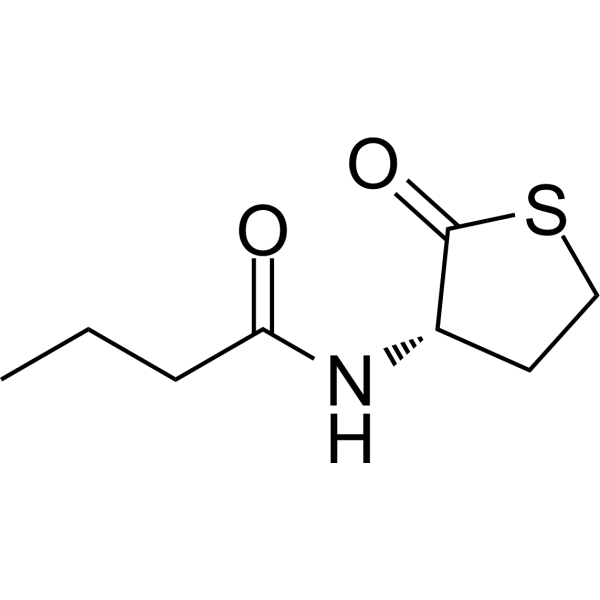
Quorum sensing is a regulatory system used by bacteria to control gene expression in response to increased cell density. The control of bacterial infection by quenching the quorum sensing system of bacteria is a promising research area. The expression of specific target genes, such as transcriptional regulators belonging to the LuxIR protein family, is coordinated by the synthesis of diffusible acyl homoserine lactone (AHL) molecules. N-butyryl-L-Homocysteine thio-lactone is an analog of N-butyryl-L-homoserine lactone, a small, diffusible signaling molecule involved in quorum sensing, thereby controlling gene expression and cellular metabolism . N-butyryl-L-homocysteine thiolactone induces violacein expression in Viola viola mutants that normally fail to produce AHL.
loading...
    loading...
Cat. No.: HY-150109
CAS No.: 2650188-32-0
Purity:  99.45%
Synonyms: Purinostat mesylate
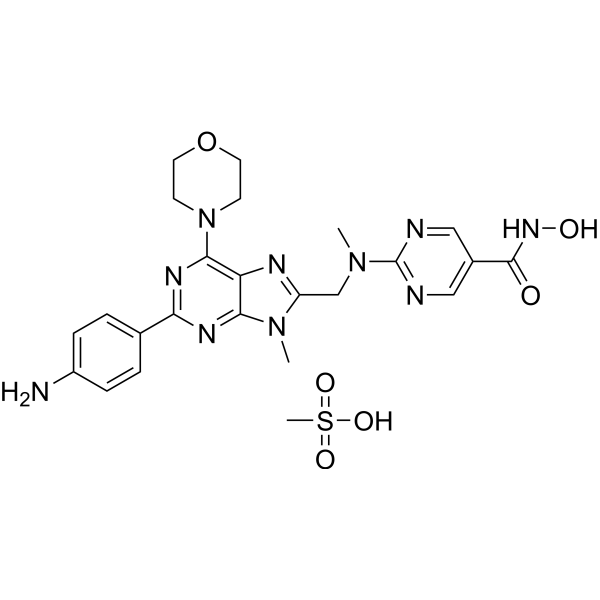
Puzerinostat mesylate (Purinostat mesylate) is a highly selective class I/IIb histone deacetylase (HDAC) inhibitor, with IC50 values of 0.81 nM, 1.4 nM, 1.7 nM, 3.8 nM, 11.5 nM, and 1.1 nM against HDAC1, HDAC2, HDAC3, HDAC8, HDAC6, and HDAC10, respectively. Puzerinostat mesylate enhances glutamine metabolism by upregulating GLS1. Puzerinostat mesylate induces cell Apoptosis and downregulates the expression of BCR-ABL and c-MYC. Puzerinostat mesylate delays the progression of Ph + B-cell acute lymphoblastic leukemia and prolongs the survival of relevant mouse models. Puzerinostat mesylate regulates the immune microenvironment. Puzerinostat mesylate can be used in research related to chronic myeloid leukemia, Philadelphia chromosome-positive B-cell acute lymphoblastic leukemia, relapsed/refractory multiple myeloma, relapsed/refractory lymphoma, diffuse large B-cell lymphoma, and double-expression lymphoma .
loading...
    loading...
Cat. No.: HY-150109A
CAS No.: 1929583-17-4
Synonyms: Purinostat
Puzerinostat (Purinostat) is a highly selective class I/IIb histone deacetylase (HDAC) inhibitor, with IC50 values of 0.81 nM, 1.4 nM, 1.7 nM, 3.8 nM, 11.5 nM, and 1.1 nM against HDAC1, HDAC2, HDAC3, HDAC8, HDAC6, and HDAC10, respectively. Puzerinostat enhances glutamine metabolism by upregulating GLS1. Puzerinostat induces cell Apoptosis and downregulates the expression of BCR-ABL and c-MYC. Puzerinostat delays the progression of Ph + B-cell acute lymphoblastic leukemia and prolongs the survival of relevant mouse models. Puzerinostat regulates the immune microenvironment. Puzerinostat can be used in research related to chronic myeloid leukemia, Philadelphia chromosome-positive B-cell acute lymphoblastic leukemia, relapsed/refractory multiple myeloma, relapsed/refractory lymphoma, diffuse large B-cell lymphoma, and double-expression lymphoma .
loading...
    loading...
Cat. No.: HY-B0373S1
CAS No.: 1189700-74-0
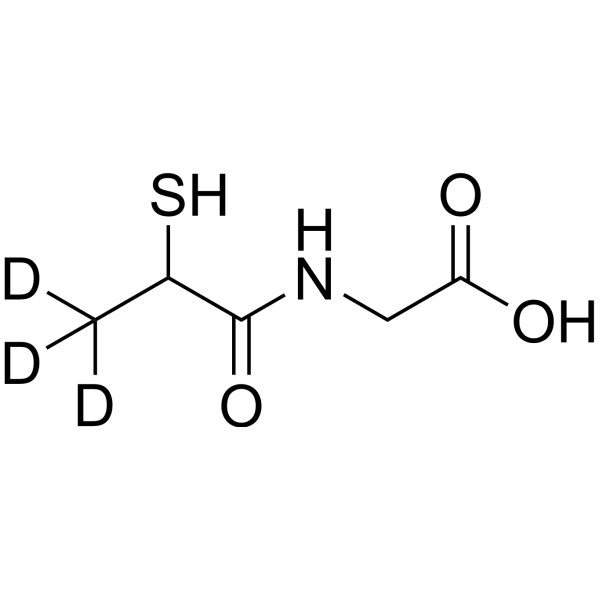
Tiopronin-d3 is the deuterium labeled Tiopronin. Tiopronin is a diffusible antioxidant, an antidote to heavy metal poisoning and a radioprotective agent. Tiopronin can control the rate of cystine precipitation and excretion and has the potential for cystinuria, rheumatoid arthritis and hepatic disorders .
loading...
    loading...
Cat. No.: HY-181547
CAS No.: 2963606-11-1
Target:  

Btk

Research Areas:  

Cancer

HBC-12551 is an orally active BTK inhibitor (IC50 in HEK293 cells: 1.31 nM for BTK; 2.18 nM for BTK C481S). HBC-12551 has antitumor activity against diffuse large B-cell lymphoma .
loading...
    loading...
Cat. No.: HY-153357
CAS No.: 2416130-57-7
Purity:  98.16%
Target:  

PROTACs Btk c-Myc NF-κB

Research Areas:  

Inflammation/Immunology Cancer

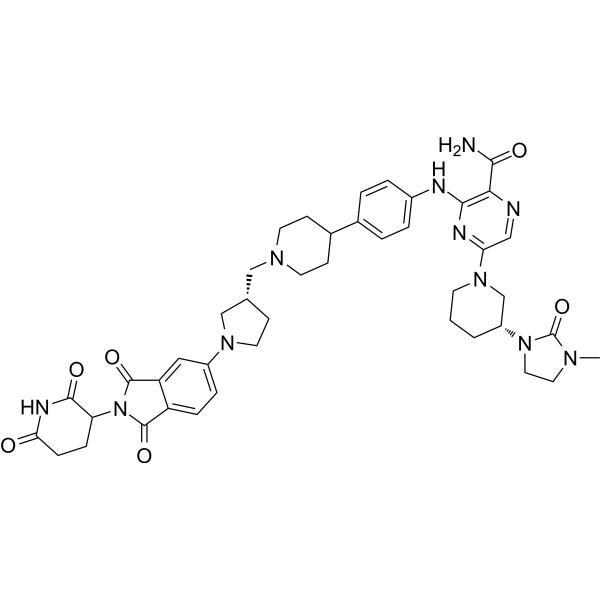
NRX-0492 is an orally active BTK PROTAC degrader, with a binding IC50 of 1.2 nM for both wild-type BTK and BTK T474I, and 2.7 nM for BTK C481S, and exhibits cellular DC50 values of 0.1 nM and 0.2 nM against wild-type BTK and BTK C481S, respectively. NRX-0492 catalyzes the ubiquitination and proteasomal degradation of wild-type and drug-resistant mutant BTK by recruiting the CRBN E3 ubiquitin ligase complex. NRX-0492 inhibits the BCR signaling pathway and its downstream NF-κB/MYC transcriptional program, achieves rapid and sustained degradation in primary CLL cells, and exhibits extremely low cytotoxicity. NRX-0492 degrades BTK, inhibits tumor cell proliferation and activation, and significantly suppresses tumor growth in xenograft models. NRX-0492 can be used in research related to chronic lymphocytic leukemia and diffuse large B-cell lymphoma .
loading...
    loading...
Cat. No.: HY-B0373R
CAS No.: 1953-02-2
Tiopronin (Standard) is the analytical standard of Tiopronin. This product is intended for research and analytical applications. Tiopronin is a diffusible antioxidant, an antidote to heavy metal poisoning and a radioprotective agent. Tiopronin can control the rate of cystine precipitation and excretion and has the potential for cystinuria, rheumatoid arthritis and hepatic disorders .
loading...
    loading...
Cat. No.: HY-W011404R
CAS No.: 60-01-5
Synonyms: Glyceryl tributyrate (Standard)
Tributyrin (Glyceryl tributyrate), a neutral short-chain fatty acid triglyceride, is a stable and rapidly absorbed proagent of Butyric Acid. Tributyrin diffuses through biological membranes and is metabolized by intracellular lipases, releasing effective butyrate directly into the cell in vivo. Tributyrin has potent antiproliferative, proapoptotic and differentiation-inducing effects .
loading...
    loading...
Cat. No.: HY-155939
CAS No.: 2863635-04-3
Purity:  98.30%
Target:  

TGF-β Receptor

Research Areas:  

Cancer

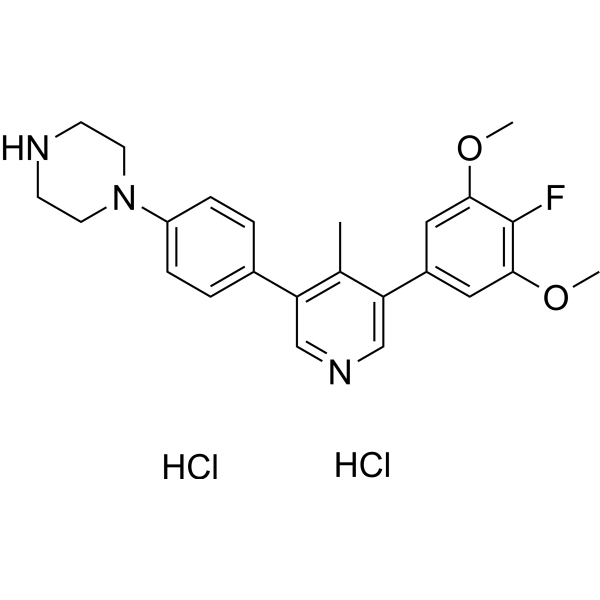
M4K2163 dihydrochloride is a potent, selective, blood-brain barrier (BBB) permeable activin receptor-like kinase-2 (ALK2) inhibitor, with an IC50 of 19 nM. M4K2163 dihydrochloride can be used in the research of diffuse intrinsic pontine glioma (DIPG) .
loading...
    loading...
Cat. No.: HY-182959
Hsp70TAC PD-1 Degrader-2 is a PD-L1 Hsp70TAC (Hsp70-targeting Chimeras) degrader with Kd values of 0.36 μM. Hsp70TAC PD-1 Degrader-2 forms a ternary complex with Hsp70 and PD-L1 to drive PD-L1 degradation. Hsp70TAC PD-1 Degrader-2 induces degradation of mature membrane-bound PD-L1 in an Hsp70-dependent manner and via caveolin-mediated endocytosis and lysosomal trafficking. Hsp70TAC PD-1 Degrader-2 accumulates preferentially in tumor cells with elevated Hsp70 expression for tumor-selective PD-L1 degradation. Hsp70TAC PD-1 Degrader-2 can be used for the research of cancer, such as breast invasive carcinoma, glioblastoma multiforme, diffuse large b-cell lymphoma . (Pink: PD-1/PD-L1 ligand (HY-19745A); Blue: Hsp70 ligand (HY-182979); Black: linker (HY-182982)).
loading...
    loading...
Cat. No.: HY-180166
Target:  

BCL6

Research Areas:  

Cancer

BCL6-IN-12 (Compound 11e) is a BCL6 inhibitor with a Kd of 0.81 μM. BCL6-IN-12 binds to the BTB domain of BCL6. BCL6-IN-12 can be used in the research of diffuse large B-cell lymphoma .
loading...
    loading...
Cat. No.: HY-147091
CAS No.: 2685873-44-1
Purity:  98.15%
Research Areas:  

Cancer

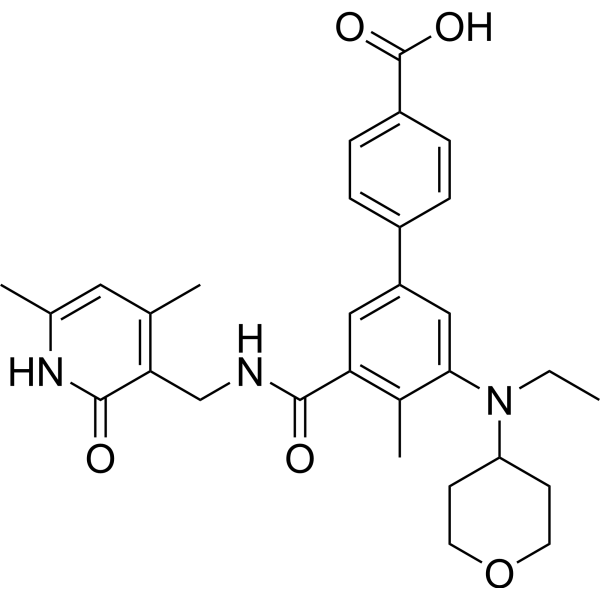
Tazemetostat de(methyl morpholine)-COOH (compound 7) is a ligand for the PROTAC target protein EZH2, which can be used to synthesis of EZH2 degraders (PROTACs). EZH2 degraders have potent cell viability inhibition in diffuse large B-cell lymphoma (DLBCL) and other subtypes of lymphoma .
loading...
    loading...
Cat. No.: HY-133876
CAS No.: 114041-00-8
Purity:  99.76%
Synonyms: DiA
4-Di-16-ASP is a green fluorescent membrane dye. 4-Di-16-ASP is a lipophilic aminostyryl probe with a broad emission spectrum (can be detected with green, orange or even red filters). It is commonly used for neuronal membrane tracing (it diffuses faster than DiO) .
loading...
    loading...
Cat. No.: HY-P4544
CAS No.: 1926163-57-6
Target:  

MALT1 NF-κB MMP

Research Areas:  

Cancer

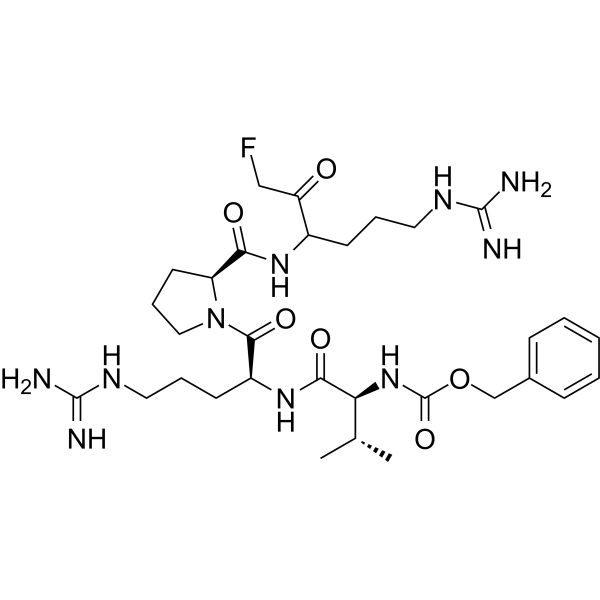
Z-Val-Arg-Pro-DL-Arg-Fluoromethylketone is an irreversible MALT1 protein inhibitor. Z-Val-Arg-Pro-DL-Arg-Fluoromethylketone inhibits the growth and invasion of diffuse large B-cell lymphoma by inhibiting MALT1-induced NF-κB activation and MMP expression .
loading...
    loading...
Cat. No.: HY-P991051

Target:  

Interleukin Related

Research Areas:  

Inflammation/Immunology

GSK-2330811 is a humanized IgG1 antibody that targets Oncostatin M (OSM). GSK-2330811 has the potential for the study of diffuse cutaneous systemic sclerosis (dcSSc). The isotype control for GSK-2330811 can refer to Human IgG1 kappa, Isotype Control (HY-P99001) .
loading...
    loading...
Cat. No.: HY-P991545

Target:  

CD20

Research Areas:  

Cancer

BVX20 is a human monoclonal antibody that binds to CD20. BVX20 can kill B-cells through recruiting the immune system. BVX20 can be studied in research for relapsed or chemotherapy-resistant follicular B-cell NHL and CD20-positive diffuse large B-cell NHL .
loading...
    loading...
Cat. No.: HY-121282B
CAS No.: 24360-97-2
Synonyms: Pecazine acetate
Target:  

Apoptosis MALT1

Research Areas:  

Others

Mepazine acetate (Pecazine acetate) is a drug that has the activity to inhibit the protease activity of MALT1. Mepazine acetate is often used to study the role of MALT1 in biology. Treatment of mouse bone marrow precursor cells with mepazine acetate strongly inhibited RANK ligand (RANKL)-induced osteoclast formation. Mepazine acetate also inhibited the expression of multiple osteoclast markers such as TRAP, feline hepsin K, and calcitonin. The protective effect of mepazine acetate was not affected by MALT1 deficiency. The mechanism of action of mepazine acetate may involve MALT1-independent mechanisms, and this aspect needs to be considered in future studies .
loading...
    loading...

