200 Results for "

modulation

" in MedChemExpress (MCE) Product Catalog:
Products (200)

200 Results for "modulation" in MCE Product Catalog:

Cat. No.: HY-182745
Target:  

VEGFR Apoptosis

Research Areas:  

Cancer

VEGFR-2-IN-85 is a strong VEGFR-2 inhibitor, with an IC50 value of 0.23 μM. VEGFR-2-IN-85 exhibits potent cytotoxic activity against multiple cancer cell lines with minimal toxicity toward normal cells. VEGFR-2-IN-85 also impairs cancer cell migration, likely through modulation of the VEGFR-2/p-Akt pathway. VEGFR-2-IN-85 can induce apoptosis through modulation of Caspase-3, Bax and Bcl-2. VEGFR-2-IN-85 arrests cell cycle at the G2/M phase and has anti-angiogenic activity. VEGFR-2-IN-85 is a targeted radiosensitizer enhancing radiation-induced cytotoxicity. VEGFR-2-IN-85 can be used for research on cancers such as non-small cell lung cancer, breast cancer, and liver cancer .
loading...
    loading...
Cat. No.: HY-17389R
CAS No.: 6902-77-8
Synonyms: (+)-Genipin (Standard)
Genipin (Standard) is the analytical standard of Genipin. This product is intended for research and analytical applications. Genipin ((+)-Genipin) is a natural crosslinking reagent derived from Gardenia jasminoides Ellis fruits. Genipin inhibits UCP2 (uncoupling protein 2) in cells. Genipin has a variety of bioactivities, including modulation on proteins, antitumor, anti-inflammation, immunosuppression, antithrombosis, and protection of hippocampal neurons. Genipin also can be used for type 2 diabetes research .
loading...
    loading...
Cat. No.: HY-176904
CAS No.: 2559747-12-3
Research Areas:  

Cancer

JPS004 is a PROTAC degrader targeting HDAC1, HDAC2 and HDAC3. JPS004 induces extensive transcriptomic changes in human colon cancer cell line HCT116, including downregulation of HDAC complex components and cell cycle regulatory machinery, modulation of the AKT/mTOR signaling pathway, and upregulation of FOXO-mediated apoptosis and autophagy related genes. JPS004 can be used in colon cancer-related research .
loading...
    loading...
Cat. No.: HY-N0728S
CAS No.: 145191-04-4
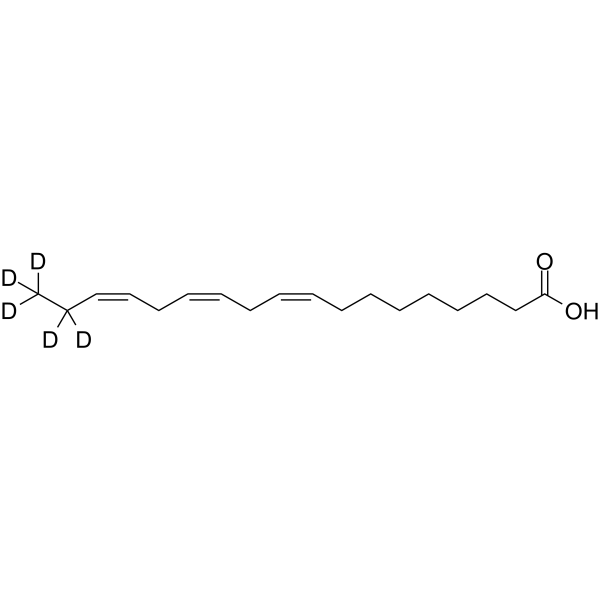
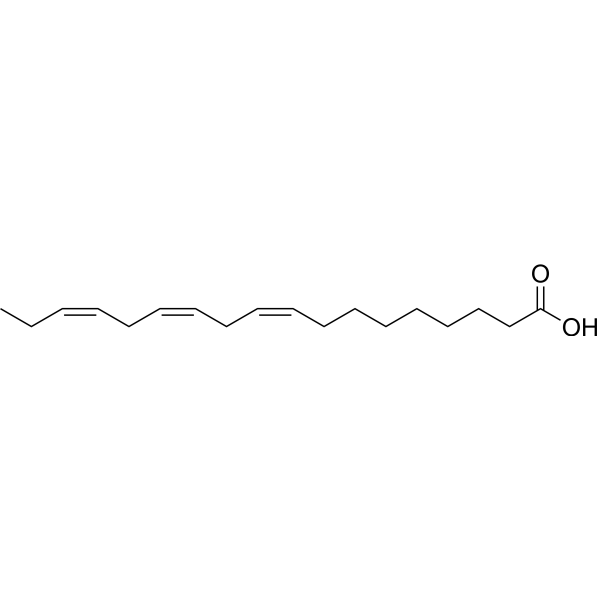
α-Linolenic acid-d5 is the deuterium labeled α-Linolenic acid. α-Linolenic acid, isolated from seed oils, is an essential fatty acid that cannot be synthesized by humans. α-Linolenic acid can affect the process of thrombotic through the modulation of PI3K/Akt signaling. α-Linolenic acid possess the anti-arrhythmic properties and is related to cardiovascular disease and cancer .
loading...
    loading...
Cat. No.: HY-N0728S2
CAS No.: 1622944-40-4
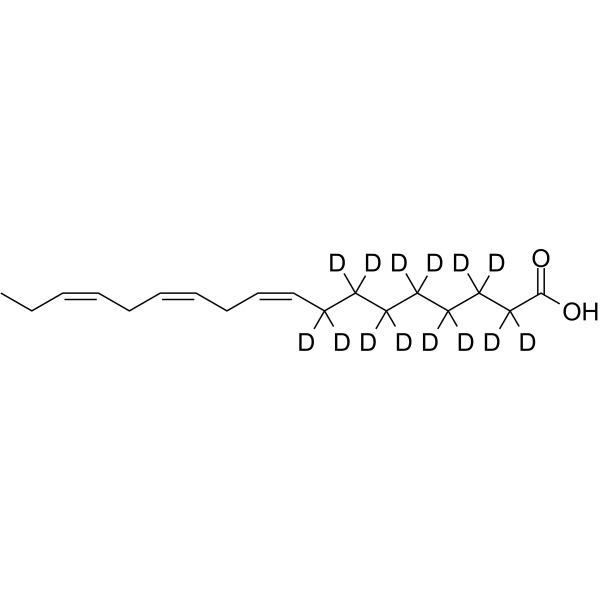
α-Linolenic acid-d14 is the deuterium labeled α-Linolenic acid. α-Linolenic acid, isolated from seed oils, is an essential fatty acid that cannot be synthesized by humans. α-Linolenic acid can affect the process of thrombotic through the modulation of PI3K/Akt signaling. α-Linolenic acid possess the anti-arrhythmic properties and is related to cardiovascular disease and cancer .
loading...
    loading...
Cat. No.: HY-N0728S3
CAS No.: 287111-28-8
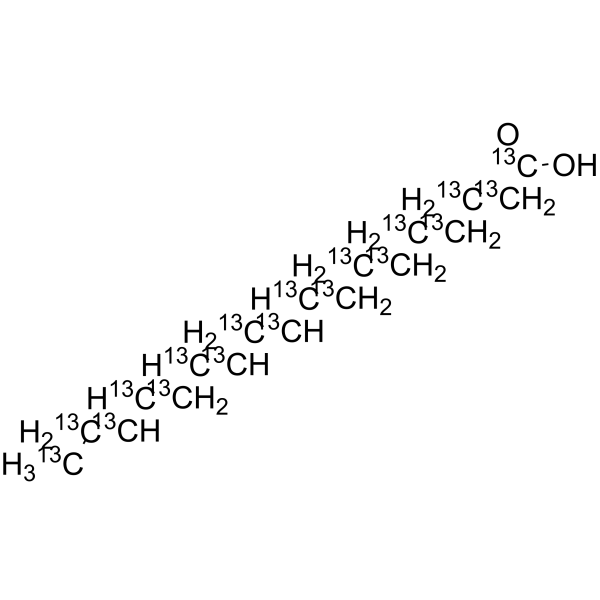
α-Linolenic acid- 13C18 is the 13C labeled α-Linolenic acid. α-Linolenic acid, isolated from seed oils, is an essential fatty acid that cannot be synthesized by humans. α-Linolenic acid can affect the process of thrombotic through the modulation of PI3K/Akt signaling. α-Linolenic acid possess the anti-arrhythmic properties and is related to cardiovascular disease and cancer .
loading...
    loading...
Cat. No.: HY-103320B
Purity:  99.07%
Target:  

CaSR

Research Areas:  

Metabolic Disease

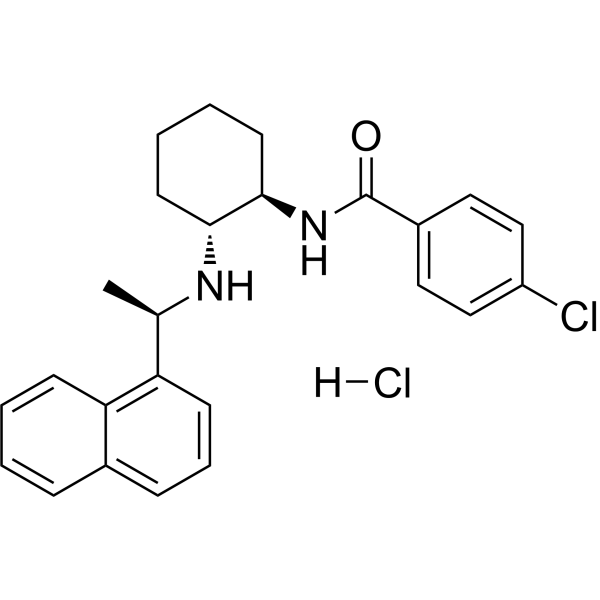
(1R,2R)-Calhex 231 hydrochloride is the isomer of Calhex 231 hydrochloride (HY-103320A), and can be used as an experimental control. Calhex 231 hydrochloride is a CaSR inhibitor via negative allosteric modulation. Calhex 231 hydrochloride blocks Ca 2+-induced accumulation of [ 3H]inositol phosphate with an IC50 of 0.39 μM in HEK293 cells. Calhex 231 hydrochloride has the potential for diabetic cardiomyopathy (DCM) treatment .
loading...
    loading...
Cat. No.: HY-11062R
CAS No.: 36945-98-9
Synonyms: AG-3-5 (Standard)
Icilin (Standard) is the analytical standard of Icilin (HY-11062). This product is intended for research and analytical applications. Icilin (AG-3-5) is a super-agonist of the transient receptor potential M8 (TRPM8) ion channel. Icilin activates TRPM8 in EGTA in a dose-dependent manner (EC50=1.4 μM). Icilin is a "super-cooling agent" . Icilin attenuates autoimmune neuroinflammation through modulation of the T-cell response .
loading...
    loading...
Cat. No.: HY-118012
CAS No.: 392237-10-4
Target:  

Flavivirus

Research Areas:  

Infection

Flaviviruses-IN-1 is an inhibitor of several viruses belonging to the Flaviviridae family, with activity to inhibit viral infection. Flaviviruses-IN-1 is able to specifically inhibit multiple viruses of the Flaviviridae family. The mechanism of action of Flaviviruses-IN-1 is related to the modulation of the host cell immune response to viral infection. Flaviviruses-IN-1 was identified as a potential candidate compound in a high-throughput screening. Flaviviruses-IN-1 provides a new strategy for inhibiting infections caused by the Flaviviridae family .
loading...
    loading...
Cat. No.: HY-170999
CAS No.: 2705841-17-2
Research Areas:  

Cancer

Antitumor agent-196 (Compound 6a (β, β, β)) is an artemisinin-based oligomer with anticancer activity, showing an IC50 of 90 nM against MCF-7 breast cancer cells. Antitumor agent-196 promotes Apoptosis by regulating the Bax-caspase 3 signaling pathway, and induces Ferroptosis through the modulation of key signaling molecules, including GPX4. Antitumor agent-196 holds promising potential for further research in the field of cancer therapy .
loading...
    loading...
Cat. No.: HY-178043
Research Areas:  

Others

BTR2038 is a BTR2000-based heterobifunctional PROTAC that induces the degradation of BRD9 by recruiting the CUL3 KLHL20 E3 ubiquitin ligase. BTR2038 consists of a BRD9 bromodomain ligand derived from a BI-7273 analog, a linker, and the macrocyclic KLHL20 ligand BTR2000. BTR2038 is applicable for research related to KLHL20-recruited targeted protein degradation and BRD9 modulation .
loading...
    loading...
Cat. No.: HY-B0715S3
CAS No.: 1185878-97-0
Synonyms: BL-191-d3; Oxpentifylline-d3
Pentoxifylline-d3 (BL-191-d3) is deuterium labeled Pentoxifylline. Pentoxifylline (BL-191), a haemorheological agent, is an orally active non-selective phosphodiesterase (PDE) inhibitor, with immune modulation, anti-inflammatory, hemorheological, anti-fibrinolytic and anti-proliferation effects. Pentoxifylline can be used for the research of peripheral vascular disease, cerebrovascular disease and a number of other conditions involving a defective regional microcirculation .
loading...
    loading...
Cat. No.: HY-N0728R
CAS No.: 463-40-1
α-Linolenic acid (Standard) is the analytical standard of α-Linolenic acid. This product is intended for research and analytical applications. α-Linolenic acid, isolated from Perilla frutescens, is an essential fatty acid that cannot be synthesized by humans. α-Linolenic acid can affect the process of thrombotic through the modulation of PI3K/Akt signaling. α-Linolenic acid possess the anti-arrhythmic properties and is related to cardiovascular disease and cancer .
loading...
    loading...
Cat. No.: HY-N6703S
Synonyms: (+)-ar-Turmerone-d3
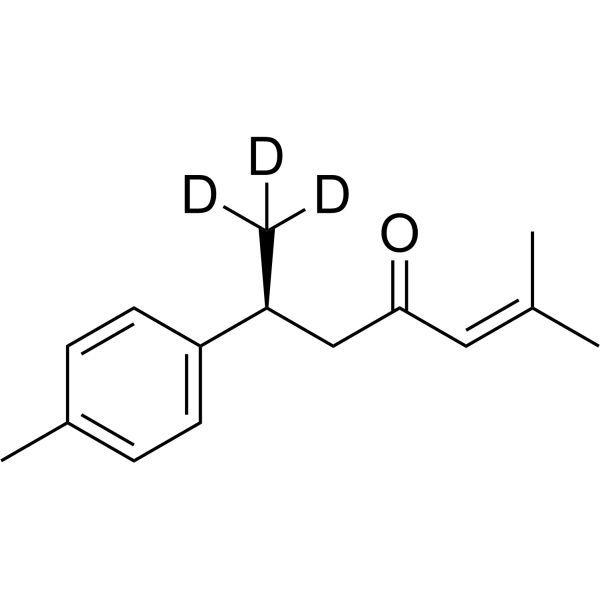
ar-Turmerone-d3 is the deuterium labeled ar-Turmerone. ar-Turmerone ((+)-ar-Turmerone) is an orally active and major bioactive compound of the herb Curcuma longa with anti-tumorigenesis and anti-inflammatory activities. ar-Turmerone induces apoptosis in U937 cells. ar-Turmerone exerts positive modulation on murine DCs. ar-Turmerone induces NSC proliferation in vitro and in vivo, and can be used for various neurologic disorders study .
loading...
    loading...
Cat. No.: HY-W004283R
CAS No.: 1002-84-2
α-Linolenic acid (Standard) is the analytical standard of α-Linolenic acid. This product is intended for research and analytical applications. α-Linolenic acid, isolated from Perilla frutescens, is an essential fatty acid that cannot be synthesized by humans. α-Linolenic acid can affect the process of thrombotic through the modulation of PI3K/Akt signaling. α-Linolenic acid possess the anti-arrhythmic properties and is related to cardiovascular disease and cancer .
loading...
    loading...
Cat. No.: HY-14406
CAS No.: 148700-85-0
Target:  

Neurokinin Receptor

Research Areas:  

Neurological Disease Cancer

L-733060 is a selective neurokinin-1 (NK-1) receptor antagonist. L-733060 mainly regulates pain transmission and neural plasticity by blocking the binding of Substance P (P substance) to the NK-1 receptor. L-733060 blocks the promoting effect of Substance P on long-term potentiation (LTP) in the hippocampus. L-733060 reverses the orofacial hyperalgesia induced by experimental occlusal interference (EOI) in rats. L-733060 hydrochloride inhibits neurogenic plasma extravasation at a dose that does not cause adverse cardiovascular effects in rodents, and also acts as an anti-tumor agent. L-733060 can be used for the study of chronic orofacial pain .
loading...
    loading...
Cat. No.: HY-162415
CAS No.: 2760585-35-9
Target:  

c-Fms Apoptosis

Research Areas:  

Cancer

CSF1R-IN-22 (Compound C19) is an orally effective CSF-1R selective inhibitor (IC50<6 nM). CSF1R-IN-22 enhances the secretion of CXCL9 from M2 macrophages, increases CD8 + T cell infiltration. CSF1R-IN-22 boosts anti-tumor immune responses of anti-PD-1, and induces apoptosis in tumor cells. CSF1R-IN-22 can effectively reprogram M2-like TAMs (tumor-associated macrophages) to the M1 phenotype and reshape the TME by inducing the recruitment of CD8 + T cells into tumors and reducing the infiltration of immunosuppressive Tregs and MDSCs .
loading...
    loading...
Cat. No.: HY-103202A
CAS No.: 157066-76-7
Target:  

Adrenergic Receptor

Research Areas:  

Cardiovascular Disease

SNAP5089 is a selective α1A-adrenoceptor antagonist with over 1700-fold selectivity for the α1A subtype, which may have implications for the treatment of hypertension and benign prostatic hypertrophy. SNAP5089 demonstrates significant receptor affinity compared to other clinical drugs, emphasizing its potential therapeutic advantages. SNAP5089's high affinity aligns with its suitability for conditions where precise α1A modulation is desirable.
loading...
    loading...
Cat. No.: HY-103455
CAS No.: 177583-70-9
Target:  

Estrogen Receptor/ERR

Research Areas:  

Others

ZK164015 is an estrogen-glucocorticoid receptor chimera that can be used as a compound screening tool to evaluate tissue-selective estrogen activity. ZK164015 was used to evaluate its effects on ER function in osteoblasts in studies based on green fluorescent protein (GFP)-receptor chimeras. In osteoblast-like (ROS and U2OS) and breast cancer (MCF7) cells, ZK164015 showed different effects in response to ER agonists, including modulation of ERE-luc activity and effects on nuclear mobility.
loading...
    loading...
Cat. No.: HY-159923
CAS No.: 2131199-52-3
Target:  

Opioid Receptor

Research Areas:  

Neurological Disease

BPRMU191 is a μ-opioid receptor (MOR) modulator that converts small-molecule morphinan antagonists into G protein-biased MOR agonists, thereby inducing MOR-dependent activation and analgesic effects. Co-administration of BPRMU191 with morphinan antagonists provides analgesia while reducing side effects such as gastrointestinal dysfunction, antinociceptive tolerance, and dependency-related adverse effects. BPRMU191, in combination with morphinan antagonists, offers a potential strategy for studying severe pain management and G protein-coupled receptor modulation .
loading...
    loading...

