203 Results for "

Fermentation

" in MedChemExpress (MCE) Product Catalog:
Products (203)

203 Results for "Fermentation" in MCE Product Catalog:

Cat. No.: HY-W747504
CAS No.: 91700-93-5
Synonyms: Dihydroherbimycin A
TAN-420E (Dihydroherbimycin A) is an antibiotic, that can be isolated from the fermentation product of Streptomyces hygroscopicus. TAN-420E exhibits cytotoxicity in cancer cells P-388 and KB. TAN-420E scavenges DPPH free radicals with an IC50 of 1.3 μM .
loading...
    loading...
Cat. No.: HY-W168309A
CAS No.: 141632-15-7
Trans-Caffeic aldehyde is a type of phenylpropanoid compound, which was discovered in the secondary metabolites of the actinomycete Acrocarpospora punica. Trans-Caffeic aldehyde does not exhibit inhibitory activity against NO production in the mouse macrophage (RAW 264.7) model induced by LPS (HY-D1056) .
loading...
    loading...
Cat. No.: HY-178088
CAS No.: 2232226-16-1
L-731120 is an alkyl citrate zargozaga acid A analogue, which is secondary metabolite produced by fungal fermentation. L-731120 shows inhibitory activity against squalene synthase (SQS) (IC50 = 260 nM). L-731120 can inhibit the synthesis of cholesterol in the liver. L-731120 can be used for the research of infection and metabolic disease, such as hypercholesterolemia .
loading...
    loading...
Cat. No.: HY-E71088
Research Areas:  

Others

(R)-2-Hydroxyisocaproyl-CoA dehydratase (EC 4.2.1.157) , isolated from the bacterium Peptoclostridium difficile, is involved in the reductive branch of L-leucine fermentation. It catalyses an α/β-dehydration, which depends on the reductive formation of ketyl radicals on the substrate generated by injection of a single electron from the ATP-dependent activator protein HadI.
loading...
    loading...
Cat. No.: HY-W015650
CAS No.: 19005-93-7
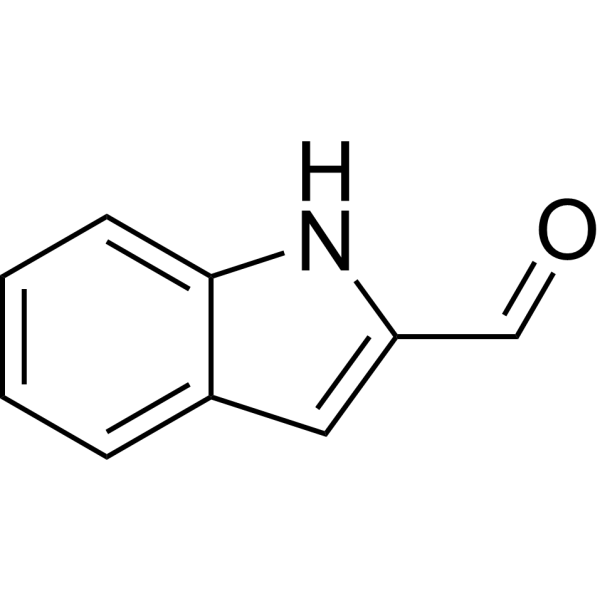
Indole-2-carbaldehyde is an indole derivative that can be used to reduce or remove localized fat deposits and/or tighten loose skin and soft tissues. Indole-2-carbaldehyde can be isolated from the fermentation broth of the coral symbiotic actinomycete Pseudonocardia sp. SCSIO 11457 and is used in cosmetic applications or pharmaceutical production .
loading...
    loading...
Cat. No.: HY-W751750
Synonyms: Ethyl carbamate; Carbamic acid ethyl ester; Ethylurethane
Urethane- 13C, 15N (Ethyl carbamate- 13C, 15N) is the 13C- and 15N-labeled Urethane (HY-B1207). Urethane (Ethyl carbamate), the ethyl ester of carbamic acid, is a byproduct of fermentation found in various food products. Urethane has the ability to suppress bacterial, protozoal, sea urchin egg, and plant tissue growth in vitro .
loading...
    loading...
Cat. No.: HY-12361R
CAS No.: 133413-70-4
PF 1022A (Standard) is the analytical standard of PF 1022A. This product is intended for research and analytical applications. PF 1022A is a cyclooctadepsipeptide with broadspectrum anthelmintic properties produced by fermentation of the fungus Mycelia sterilia. PF 1022A is a channel-forming ionophore. PF 1022A showes strong anthelmintic activities against Ascaridia galli in chickens. PF 1022A also can be used for angiostrongyliasis research[1][2][3].
loading...
    loading...
Cat. No.: HY-B0519AS
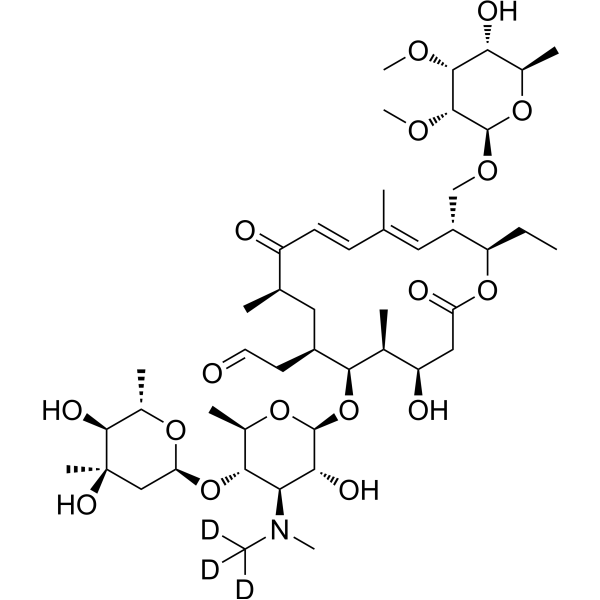
Tylosin-d3 is the deuterium labeled Tylosin. Tylosin (Tylosin A) is a macrolide antibiotic found naturally as a fermentation product of Streptomyces fradiae. Tylosin exerts potent antimicrobial activity against Gram-positive bacteria. Tylosin is widely used as a feed additive for promoting animal growth. Tylosin is used for veterinary purposes against bacterial dysentery and respiratory diseases in poultry, pigs and cattle .
loading...
    loading...
Cat. No.: HY-126386A
CAS No.: 9032-75-1
Research Areas:  

Others

Pectinase, aspergillus aculeatus is a pectin-degrading enzyme with the activity of catalyzing the decomposition of pectin into galacturonic acid. Pectinase, aspergillus aculeatus can be applied in a variety of industrial fields, including juice extraction and clarification, vegetable oil extraction, wine clarification, cocoa and coffee fermentation, paper bleaching, plant fiber degumming, cotton bioscouring, bioenergy production, wastewater treatment, and use as a poultry feed additive to reduce feed viscosity .
loading...
    loading...
Cat. No.: HY-B0519AR
CAS No.: 1401-69-0
Tylosin (Standard) is the analytical standard of Tylosin. This product is intended for research and analytical applications. Tylosin (Tylosin A) is a macrolide antibiotic found naturally as a fermentation product of Streptomyces fradiae. Tylosin exerts potent antimicrobial activity against Gram-positive bacteria. Tylosin is widely used as a feed additive for promoting animal growth. Tylosin is used for veterinary purposes against bacterial dysentery and respiratory diseases in poultry, pigs and cattle .
loading...
    loading...
Cat. No.: HY-B0519BR
CAS No.: 1405-53-4
Tylosin (phosphate) (Standard) is the analytical standard of Tylosin (phosphate). This product is intended for research and analytical applications. Tylosin phosphate is a macrolide antibiotic found naturally as a fermentation product of Streptomyces fradiae. Tylosin tartrate exerts potent antimicrobial activity against Gram-positive bacteria. Tylosin phosphate is widely used as a feed additive for promoting animal growth. Tylosin phosphate is used for veterinary purposes against bacterial dysentery and respiratory diseases in poultry, pigs and cattle .
loading...
    loading...
Cat. No.: HY-E71087
Research Areas:  

Others

(R)-2-Hydroxyglutaryl-CoA dehydratase (EC 4.2.1.167) from the bacteria Acidaminococcus fermentans and Clostridium symbiosum are involved in the fermentation of L-glutamate. (R)-2-Hydroxyglutaryl-CoA dehydratase (EC 4.2.1.167) contains [4F-4S] clusters, FMNH2 and riboflavin. It must be activated by an activator protein. Once activated, it can catalyse many turnovers.
loading...
    loading...
Cat. No.: HY-N1780
CAS No.: 2033-89-8
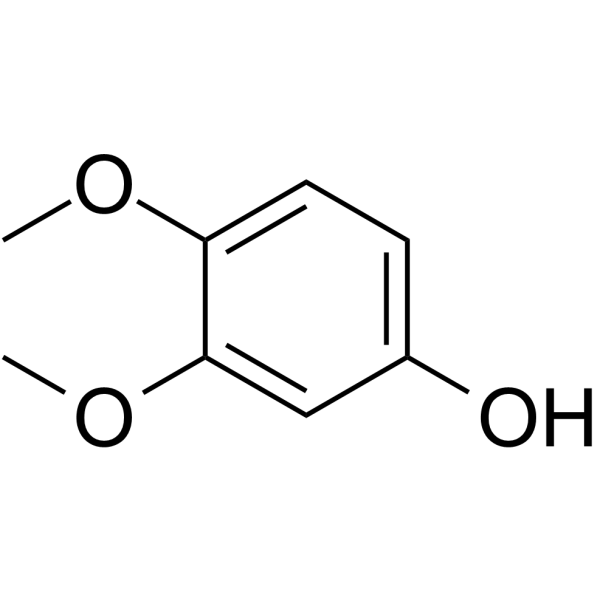
3,4-Dimethoxyphenol is a plant-derived phenylpropanoid compound and can use as a whitening agent in cosmetics. 3,4-Dimethoxyphenol exhibits broad-spectrum antimicrobial activity. 3,4-Dimethoxyphenol has tyrosinase-inhibiting activity. 3,4-Dimethoxyphenol has potent antioxidant effect isolated from the bacterial fermentation broth. 3,4-Dimethoxyphenol can be used for the study of infection .
loading...
    loading...
Cat. No.: HY-Y0051S
CAS No.: 1219193-98-2
Synonyms: 2-Hydroxymethyl-5-furfural-13C6; 2-Formyl-5-hydroxymethylfuran-13C6
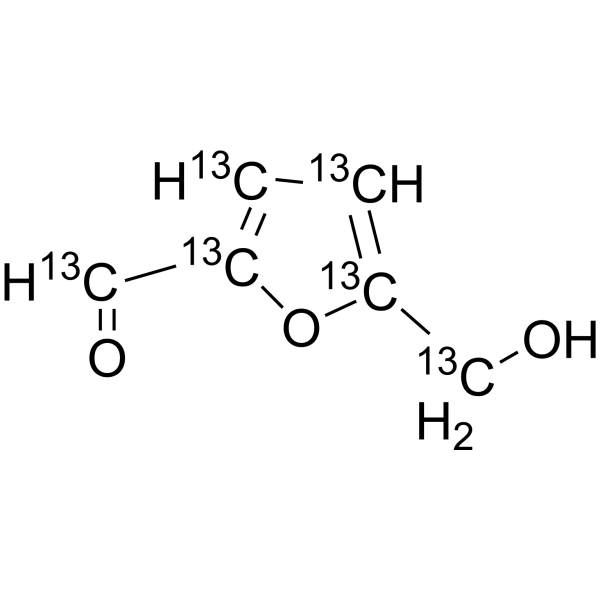
5-Hydroxymethylfurfural- 13C6 (2-Hydroxymethyl-5-furfural- 13C6; 2-Formyl-5-hydroxymethylfuran- 13C6) is a 13C labeled 5-Hydroxymethylfurfural (HY-Y0051). 5-Hydroxymethylfurfural (2-Hydroxymethyl-5-furfural), derived from Cornus officinalis, inhibits yeast growth and fermentation as stressors.
loading...
    loading...
Cat. No.: HY-B0519R
CAS No.: 74610-55-2
Tylosin (tartrate) (Standard) is the analytical standard of Tylosin (tartrate). This product is intended for research and analytical applications. Tylosin tartrate is a macrolide antibiotic found naturally as a fermentation product of Streptomyces fradiae. Tylosin tartrate exerts potent antimicrobial activity against Gram-positive bacteria. Tylosin tartrate is widely used as a feed additive for promoting animal growth. Tylosin tartrate is used for veterinary purposes against bacterial dysentery and respiratory diseases in poultry, pigs and cattle .
loading...
    loading...
Cat. No.: HY-N11615R
CAS No.: 5654-87-5
Tylosin (tartrate) (Standard) is the analytical standard of Tylosin (tartrate). This product is intended for research and analytical applications. Tylosin tartrate is a macrolide antibiotic found naturally as a fermentation product of Streptomyces fradiae. Tylosin tartrate exerts potent antimicrobial activity against Gram-positive bacteria. Tylosin tartrate is widely used as a feed additive for promoting animal growth. Tylosin tartrate is used for veterinary purposes against bacterial dysentery and respiratory diseases in poultry, pigs and cattle .
loading...
    loading...
Cat. No.: HY-N6745S
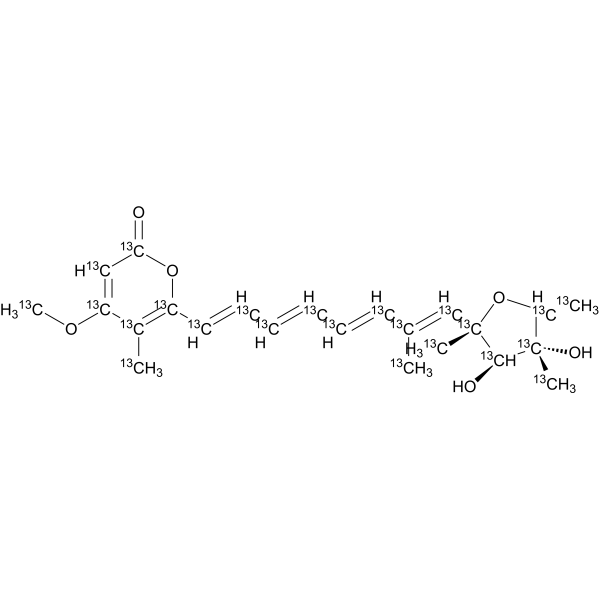
Citreoviridin- 13C23 is 13C labeled 2,3-Pentanedione (HY-W012998). 2,3-Pentanedione is a common constituent of synthetic flavorings and is used to impart a butter, strawberry, caramel, fruit, rum, or cheese flavor in beverages, ice cream, candy, baked goods, gelatins, and puddings. 2,3-Pentanedione also occurs naturally as a fermentation product in beer, wine, and yogurt and is releasedduring roasting of coffee beans .
loading...
    loading...
Cat. No.: HY-N7059
CAS No.: 96-82-2
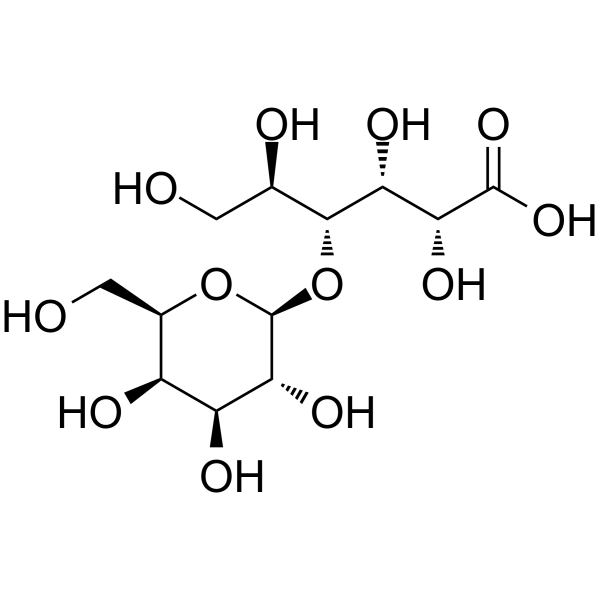
Lactobionic acid is a bionic acid that can be naturally found in the Caspian Sea yogurt and chemically constituted of a gluconic acid bonded to a galactose. Lactobionic acid has antioxidant, antimicrobial, chelating, stabilizer, acidulant, and moisturizing properties. Lactobionic acid can be obtained by electrolytic methods, microbial fermentation or biocatalytic approaches. Lactobionic acid can be used in foodstuffs, to produce new functional products and against food-borne pathogens. Lactobionic acid inhibits DNA repair and protein synthesis, induction of oxidative stress and inhibition of metabolic pathways against MRSA .
loading...
    loading...
Cat. No.: HY-P11751A
RES-701-3 peptide TFA is a class II lasso peptide. RES-701-3 peptide TFA can be isolated from the fermentation broth of Streptomyces species. RES-701-3 peptide TFA potently inhibits the binding of ET-1 to ETB, with an IC50 of approximately 5-10 nM. RES-701-3 peptide TFA is applicable to research related to systemic hypertension, myocardial infarction, and myocardial ischemia .
loading...
    loading...
Cat. No.: HY-W012998R
CAS No.: 600-14-6
2,3-Pentanedione (Standard) is the analytical standard of 2,3-Pentanedione. This product is intended for research and analytical applications. 2,3-Pentanedione is a common constituent of synthetic flavorings and is used to impart a butter, strawberry, caramel, fruit, rum, or cheese flavor in beverages, ice cream, candy, baked goods, gelatins, and puddings. 2,3-Pentanedione also occurs naturally as a fermentation product in beer, wine, and yogurt and is releasedduring roasting of coffee beans .
loading...
    loading...

