1918 Results for "

phase

" in MedChemExpress (MCE) Product Catalog:
Products (1918)

1918 Results for "phase" in MCE Product Catalog:

Cat. No.: HY-111175
CAS No.: 905978-63-4
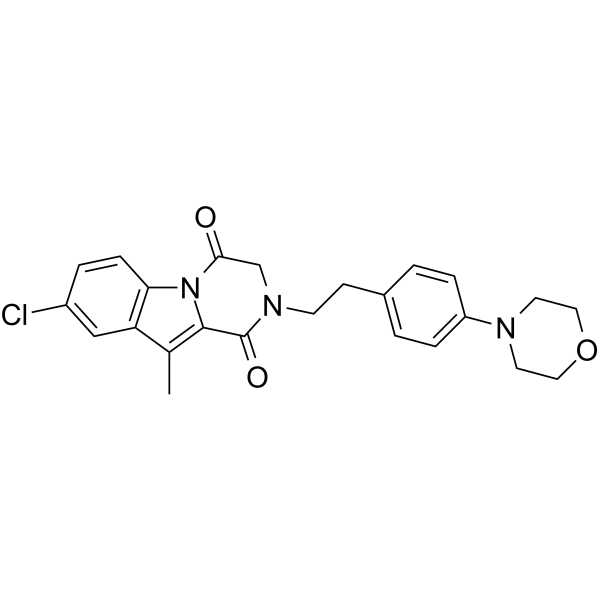
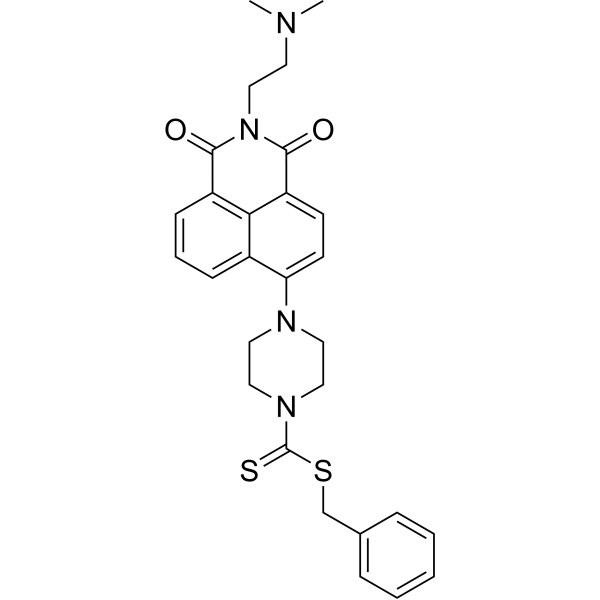
IG-105 is an orally active and potent tubulin inhibitor that competitively inhibits [ 3H] colchicine binding to tubulin with an IC50 of 0.6 μM and inhibits tubulin polymerization with an IC50 of 3 μM. IG-105 inhibits microtubule polymerization by binding to the colchicine pocket of tubulin, induces G2-M phase arrest, and subsequently activates the caspase cascade through Bcl-2 inactivation and p53 upregulation, inducing apoptosis. IG-105 effectively overcomes multidrug resistance as a non-Pgp substrate. IG-105 can be used for research on leukemia, breast cancer, liver cancer, prostate cancer, lung cancer, melanoma, pancreatic cancer, and colon cancer .
loading...
    loading...
Cat. No.: HY-114041S
Synonyms: RvE1-d4
Resolvin E1-d4 (RvE1-d4) is deuterium labeled Resolvin E1. Resolvin E1 (RvE1), a potent endogenous pro-resolving mediator of inflammation, is derived from omega-3 fatty acid eicosapentaenoic acid (EPA). Resolvin E1 is endogenously biosynthesized from EPA in the presence of Aspirin during the spontaneous resolution phase of acute inflammation, where specific cell-cell interactions occur. Resolvin E1 possesses unique counterregulatory actions that inhibit polymorphonuclear leukocyte (PMN) transendothelial migration. Resolvin E1 also acts as a potent inhibitor of leukocyte infiltration, dendritic cell migration, and IL-12 production .
loading...
    loading...
Cat. No.: HY-119737R
CAS No.: 64902-72-3
Chlorsulfuron (Standard) is the analytical standard of Chlorsulfuron (HY-119737). This product is intended for research and analytical applications. Chlorsulfuron is an acetolactate synthase inhibitor and selective systemic herbicide. Chlorsulfuron blocks the synthesis of branched-chain amino acids (valine and isoleucine), thereby inhibiting protein synthesis, cell growth, and cell division. Chlorsulfuron blocks G1 and G2 phase cell cycle progression in plant root tip cells without directly interfering with mitosis or DNA synthesis. Chlorsulfuron completely inhibits germination of non-target terrestrial plants and is highly toxic to aquatic macrophytes. Chlorsulfuron has low toxicity to mammals, birds and bees, and moderate toxicity to fish and aquatic invertebrates. Chlorsulfuron can be used in studies related to herbicides, plant cell cycles and ecotoxicology .
loading...
    loading...
Cat. No.: HY-119831
CAS No.: 71294-60-5
Rohitukine is an orally active CDK9/T1 inhibitor with an IC50 of 0.3 μM. Rohitukine blocks ATP binding sites of CDK2/A and CDK9/T1, suppresses PPARγ, AKT, mTOR, C/EBPα, SREBP-2, and NF-κB signaling, and increases hepatic LXRα expression. Rohitukine induces S-phase cell cycle arrest, ROS generation, apoptosis, and exhibits anti-inflammatory activity. Rohitukine can be used for the research of leukemia, pancreatic cancer, prostate cancer, breast cancer, CNS cancer, ovarian cancer, lung cancer, dyslipidemia, inflammatory diseases, inflammatory bowel disease, and arthritis .
loading...
    loading...
Cat. No.: HY-120105
CAS No.: 170747-33-8
NSC666715 is a DNA polymerase β (Pol-β) inhibitor. NSC666715 directly and specifically interacts with Pol-β, interferes with its binding to damaged DNA, blocks its dRP lyase activity, and inhibits Pol-β-mediated SN- and LP-BER. NSC666715 induces AP site accumulation and S-phase cell cycle arrest, and triggers senescence and apoptosis (apoptosis) via the p53/p21 pathway in colorectal cancer cells. NSC666715 enhances TMZ (HY-17364)-induced DNA damage, senescence and apoptosis, and potentiates the cytotoxicity of TMZ. NSC666715 inhibits tumor growth in colon cancer xenograft models. NSC666715 can be used in research related to colorectal cancer .
loading...
    loading...
Cat. No.: HY-123364
CAS No.: 856414-54-5
Sargachromanol E is an apoptosis inducer, anti-inflammatory agent, and anti-aging agent. Sargachromanol E activates caspase-3, mediates PARP cleavage, downregulates Bcl-xL and upregulates Bax levels, and drives sub-G1 phase cell cycle arrest, inhibits LPS-induced COX-2 and iNOS transcription and expression (NO: IC50 = 6.99 μg/mL), reduces p38 MAPK and ERK1/2 phosphorylation levels, and suppresses the release of pro-inflammatory mediators such as TNF-α, IL-1β, and prostaglandin E2 (PGE2). Sargachromanol E can be used for research on skin aging, leukemia, oral squamous cell carcinoma, and inflammation-related studies .
loading...
    loading...
Cat. No.: HY-12455
CAS No.: 118292-34-5
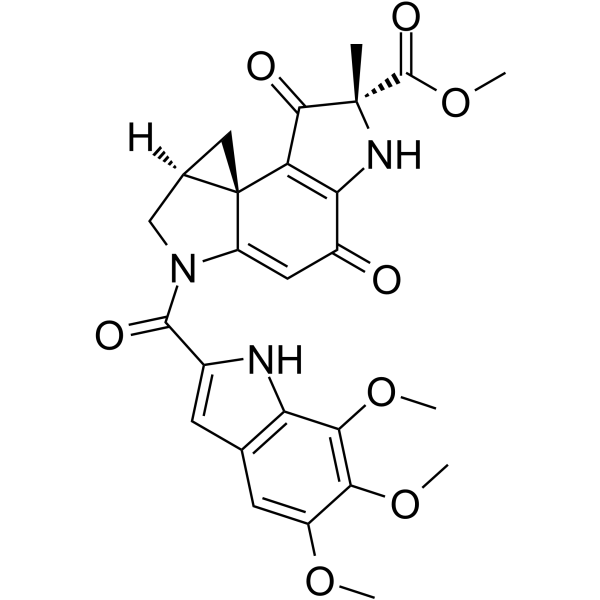
Duocarmycin A is an antitumor antibiotic and DNA alkylating agent with broad-spectrum antibacterial activity, which can serve as a payload for synthesizing antibody-drug conjugates (ADCs). Duocarmycin A selectively binds to the AT-rich minor groove of DNA, forms covalent adducts by alkylating the adenine N3 residue, thereby disrupting DNA structure and inhibiting its replication and transcription. Duocarmycin A induces apoptosis, sub-G1 phase accumulation and chromatin condensation, reduces the levels of pro-caspase-3/9, and induces p53-independent p21 expression. Duocarmycin A is widely used in the research of various malignancies, including leukemia, sarcoma, glioblastoma, as well as multiple solid tumor models such as lung cancer, breast cancer, and colorectal cancer .
loading...
    loading...
Cat. No.: HY-13270R
CAS No.: 141430-65-1
Synonyms: E7010 (Standard)
ABT-751 (Standard) is the analytical standard of ABT-751. This product is intended for research and analytical applications. ABT-751 (E7010) is a novel, highly orally bioavailable sulfonamides antimitotic compound and tubulin binder. It prevents tubulin aggregation by binding to the colchicine site on β-tubulin, leading to cell cycle arrest in G2/M phase and inducing apoptosis, thus effectively preventing cell division. ABT-751 induces autophagy by inhibiting the AKT/MTOR signaling pathway. ABT-751 showed significant inhibition against various types of cancer cells, including lung, gastric, colon, and breast cancer .
loading...
    loading...
Cat. No.: HY-134061
CAS No.: 116511-28-5
Purity:  99.47%
Target:  

Apoptosis Mitosis

Research Areas:  

Cancer

Arecaidine propargyl ester hydrobromide is an agonist of M2 muscarinic acetylcholine receptors and has the activity of inhibiting tumor cell proliferation. The application of arecaidine propargyl ester hydrobromide has shown that it can reduce the number of ovarian cancer cells in vitro and induce apoptosis and the production of reactive oxygen species (ROS) at specific concentrations. Arecaidine propargyl ester hydrobromide can also arrest cells at the G2/M phase of the cell cycle and increase the percentage of abnormal mitosis. Arecaidine propargyl ester hydrobromide is more sensitizing to ovarian surface epithelial cells with higher M2 receptor levels than to cancer cells. Arecaidine propargyl ester hydrobromide exhibits the effect of lowering arterial blood pressure when interacting with the cardiovascular system in a natural physiological state, indicating its potential pharmacological application .
loading...
    loading...
Cat. No.: HY-14149R
CAS No.: 81098-60-4
Synonyms: R 51619 (Standard); (±)-Cisaprid (Standard)
Cisapride (R 51619) (Standard) is the analytical standard of Cisapride (HY-14149). This product is intended for research and analytical applications. Cisapride (R 51619) is an orally active, selective 5-HT4 receptor agonist with an EC50 of 140 nM. Cisapride also acts as an hERG potassium channel blocker with an IC50 of 9.4 nM. Cisapride exerts gastrointestinal prokinetic effects by activating 5-HT4 receptors, but it also blocks the hERG potassium channel responsible for the repolarization phase of cardiac action potentials, delaying repolarization and thus prolonging the action potential duration . Cisapride can be used in research related to gastrointestinal dysfunction, gastroesophageal reflux disease, functional dyspepsia, chronic gastritis, gastroparesis, ulcerative colitis and necrotizing enterocolitis .
loading...
    loading...
Cat. No.: HY-14149S
CAS No.: 2738376-71-9
Synonyms: R51619-d6; (±)-Cisaprid-d6
Cisapride-d6 (R51619-d6) is the deuterated-labeled Cisapride (HY-14149). Cisapride (R 51619) is an orally active, selective 5-HT4 receptor agonist with an EC50 of 140 nM. Cisapride also acts as an hERG potassium channel blocker with an IC50 of 9.4 nM. Cisapride exerts gastrointestinal prokinetic effects by activating 5-HT4 receptors, but it also blocks the hERG potassium channel responsible for the repolarization phase of cardiac action potentials, delaying repolarization and thus prolonging the action potential duration . Cisapride can be used in research related to gastrointestinal dysfunction, gastroesophageal reflux disease, functional dyspepsia, chronic gastritis, gastroparesis, ulcerative colitis and necrotizing enterocolitis .
loading...
    loading...
Cat. No.: HY-142117S
Purity:  99.25%
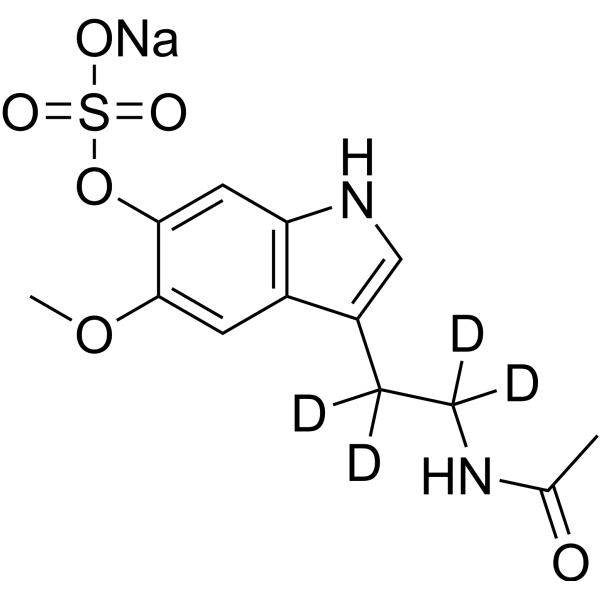
6-Sulfatoxymelatonin-d4 sodium is the deuterated-labeled 6-Sulfatoxymelatonin sodium (HY-W587817). 6-Sulfatoxymelatonin sodium is a metabolite of Melatonin (HY-B0075) and serves as a detection marker for Melatonin. 6-Sulfatoxymelatonin sodium shows a decreasing trend with increasing age, and its urinary excretion is closely correlated with plasma Melatonin levels, which can reflect changes in the secretion phase of melatonin. 6-Sulfatoxymelatonin sodium is associated with reduced risks of diabetic retinopathy and coronary heart disease, and can act as a biomarker for microvascular and macrovascular complications of type 2 diabetes mellitus. 6-Sulfatoxymelatonin sodium can be used in studies related to type 2 diabetes mellitus and coronary heart disease .
loading...
    loading...
Cat. No.: HY-147825
CAS No.: 2492429-45-3
Target:  

EGFR Raf Apoptosis

Research Areas:  

Cancer

EGFR/BRAFV600E-IN-1 (Compound 23) is a potent EGFR and BRAF V600E dual inhibitor with IC50s of 0.08 and 0.15 µM, respectively. EGFR/BRAFV600E-IN-1 induces apoptosis and cell cycle arrest in both pre-G1 and G2/M phases. EGFR/BRAFV600E-IN-1 exhibits antiproliferative activity againist A-549, MCF-7, Panc-1, HT-29 with IC50s of 1.2, 0.79, 1.3, and 1.23 µM, respectively .
loading...
    loading...
Cat. No.: HY-149407
Research Areas:  

Cancer

Multi-kinase-IN-4 (compound 5d) is multi-targeted kinase inhibitor, including VEGFR2, EGFR, HER2, and CDK2, with IC50 values of 0.33, 0.22, 0.18 and 2.09 μM, respectively. Multi-kinase-IN-4 shows broad-spectrum anti-cancer activities against HepG2, MCF-7, MDA-231, and HeLa cell lines (IC50 = 1.94–7.1 µM), but exhibits lower toxicity in the WI-38 cells (IC50 = 40.85 µM). Multi-kinase-IN-4 induces apoptosis and arrests cell cycle at S phase in HepG2 cells. Multi-kinase-IN-4 has the potential for the research of cancer .
loading...
    loading...
Cat. No.: HY-149717
CAS No.: 2378641-43-9
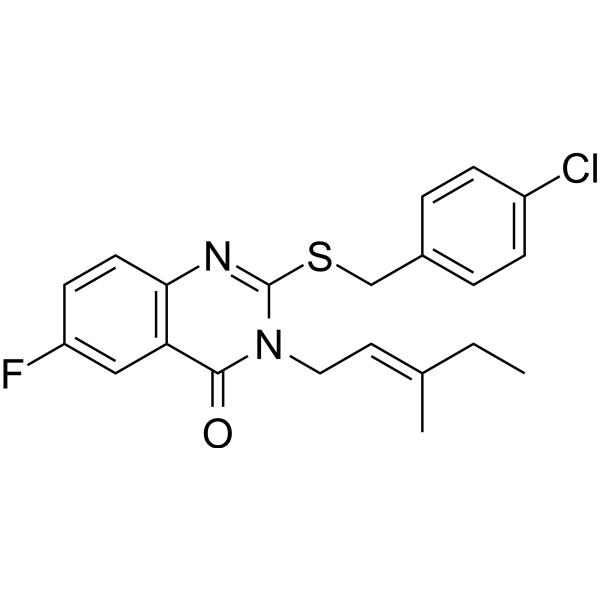
Antitumor agent-122 is a potent multi-target antitumor agent that exerts its effects through the induction of ferroptosis, autophagy, apoptosis, and cell cycle arrest. In the ferroptosis pathway, Antitumor agent-122 inhibits GPX4 expression and upregulates FACL4 expression, increasing intracellular lipid peroxidation and ferrous ion levels. In the autophagy pathway, Antitumor agent-122 induces autophagy by inhibiting the AKT/mTOR signaling pathway. In the apoptosis and cell cycle pathways, Antitumor agent-122 arrests cells at the G1/S phase and subsequently promots mitochondrial pathway-mediated apoptosis. Antitumor agent-122 can be used in the research of solid tumors including gastric, liver, ovarian, and bladder cancers .
loading...
    loading...
Cat. No.: HY-154636
CAS No.: 8012-95-1
Research Areas:  

Endocrinology

Liquid Paraffin is a petroleum-derived mixture of saturated hydrocarbons and an orally active fecal lubricant. Liquid Paraffin is widely used in studies of constipation and fecal incontinence in children through its lubricating effect and the osmotic effect generated by its conversion to hydroxy fatty acids. Liquid Paraffin has high safety, is non-carcinogenic, and does not affect fat-soluble vitamin levels with long-term use. Liquid Paraffin does not cause abdominal pain or electrolyte disorders, but may lead to lipoid pneumonia and granulomas caused by rectal administration. Liquid Paraffin can also be used as a phase change material for thermal energy storage, or combined with nanoparticles to form a protective boundary film to reduce mechanical wear .
loading...
    loading...
Cat. No.: HY-15466A
CAS No.: 2242053-82-1
Synonyms: CH5132799 methanesulfonate
Target:  

PI3K Apoptosis mTOR Akt

Research Areas:  

Cancer

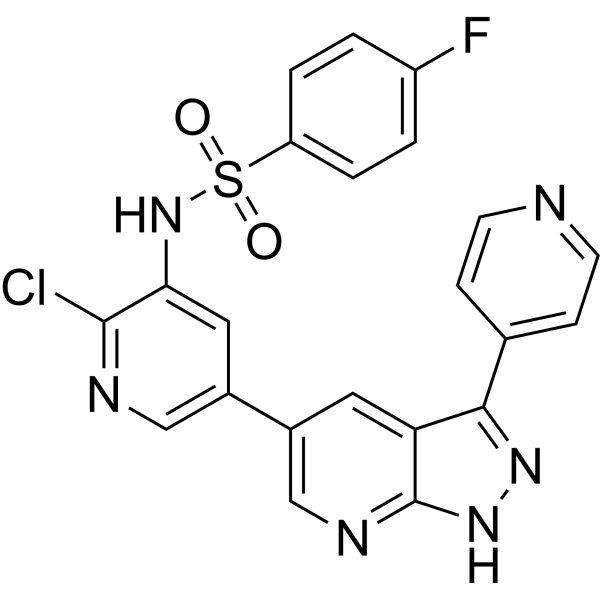
Izorlisib (CH5132799) methanesulfonate is an orally active, selective Class I PI3K inhibitor with an IC50 value of 14 nM against PI3Kα. Izorlisib methanesulfonate specifically inhibits Class I PI3K (particularly PI3Kα and its mutants) and blocks the PI3K/Akt/mTOR pathway; this leads to cell cycle arrest at the G1 phase and apoptosis without triggering feedback activation of Akt by competitively binding to the ATP-binding site of PI3K. Izorlisib methanesulfonate can be used in research on cancers harboring PIK3CA mutations or PTEN loss (such as breast, ovarian, prostate, and endometrial cancers) .
loading...
    loading...
Cat. No.: HY-155066
CAS No.: 2641899-38-7
Purity:  99.45%
Target:  

PI3K mTOR Apoptosis

Research Areas:  

Cancer

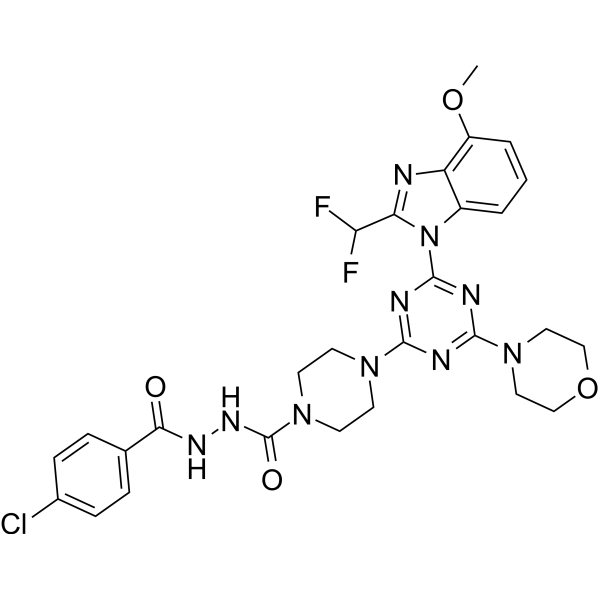
FD274 is a highly potent PI3K/mTOR dual inhibitor with IC50s of 0.65 nM, 1.57 nM, 0.65 nM, 0.42 nM, and 2.03 nM against PI3Kα/β/γ/δ and mTOR, respectively. FD274 exhibits significant anti-proliferation of AML cell lines (HL-60 and MOLM-16). FD274 arrests HL-60 cell cycle at G1 phase and increases apoptosis. FD274 demonstrates dose-dependent inhibition of tumor growth in the HL-60 xenograft model. FD274 has the potential for acute myeloid leukemia research .
loading...
    loading...
Cat. No.: HY-157125
CAS No.: 3026856-46-9
Target:  

PI3K Apoptosis

Research Areas:  

Cancer

PI3Kα-IN-14 (compound F8) is a selective PI3Kα inhibitor with an IC50 of 0.14 nM. PI3Kα-IN-14 induces a great decrease in mitochondrial membrane which caused cell cycle arrest at G1 phase and apoptosis in U87-MG cells. PI3Kα-IN-14 shows significant anti-proliferative activities against three tumor-derived cell lines (PC-3: IC50 of 0.28 μM; HCT-116: IC50 of 0.57 μM; and U87-MG: IC50 of 1.37 μM) .
loading...
    loading...
Cat. No.: HY-158310
CAS No.: 2956724-20-0
Purity:  99.54%
SOS1/EGFR-IN-1 (compound SE-9) is a dual-target inhibitor for the prostate cancer. SOS1/EGFR-IN-1 inhibits effectively SOS1(IC50=42.13±1.55 nM) and EGFR(IC50=1.01±0.04 nM) by inhibiting their downstream effector molecules. SOS1/EGFR-IN-1 induces apoptosis and G1 phase cell cycle arrest, reducing angiogenesis and migration. SOS1/EGFR-IN-1 shows significant antitumor effects in prostate cancer cells PC-3 (IC50=0.45±0.03 μM) .
loading...
    loading...

