2097 Results for "

multiple

" in MedChemExpress (MCE) Product Catalog:
Products (2097)

2097 Results for "multiple" in MCE Product Catalog:

Art. -Nr.: HY-P990259

Forschungsgebiete:  

Inflammation/Immunology Cancer

Anti-Mouse CD96 Antibody (3.3) is a rat-derived anti-mouse CD96 IgG1 λ type antibody inhibitor. Anti-Mouse CD96 Antibody (3.3) blocks binding of CD155 to CD96. Anti-Mouse CD96 Antibody (3.3) can enhance the antitumor efficacy of multiple immune-checkpoint inhibitors. Anti-Mouse CD96 Antibody (3.3) shows potent anti-tumor and anti-metastatic activity in various tumor models. Anti-Mouse CD96 Antibody (3.3) can be used for the researches of cancer and inflammation, such as mammary carcinoma .
loading...
    loading...
Art. -Nr.: HY-P991358
Synonyms: LFA-102; X213

Forschungsgebiete:  

Cancer

XOMA-213 (LFA-102; X213) is a human monoclonal antibody (mAb) targeting the prolactin receptor (PRLR), with a Kd value of 2 nM against the human target. XOMA-213 blocks PRL-induced cell proliferation and inhibits the activation of multiple PRLR ligands, including PRL and human growth hormone (hGH). XOMA-213 suppresses PRL-induced phosphorylation of Stat5, Akt and ERK1/2 in cells. XOMA-213 induces tumor regression, delays disease progression, and inhibits PRLR signaling as well as tumor growth. XOMA-213 can be used in research related to breast cancer .
loading...
    loading...
Art. -Nr.: HY-W002942
CAS. Nr.: 6640-50-2
Synonyms: 1,2,3,4-Tetrahydroquinolin-8-ol; 8-hydroxy-1,2,3,4-tetrahydroquinoline
Ferroptosis-IN-21 is a ferroptosis inhibitor that protects against renal I/R injury by suppressing ferroptosis and directly scavenging peroxyl radicals. Ferroptosis-IN-21 displays broad-spectrum anti-ferroptotic efficacy across multiple inducers in renal tubular epithelial cells, with nanomolar potency and robust suppression of lipid Reactive Oxygen Species (ROS). Ferroptosis-IN-21 significantly ameliorates renal I/R injury in mice, reducing histological damage, functional impairment, and inflammatory cytokine expression, while decreasing lipid peroxidation biomarkers such as 4-hydroxynonenal. Ferroptosis-IN-12 can be used for research in the field of ferroptosis-targeted drug development .
loading...
    loading...
Art. -Nr.: HY-W013706
CAS. Nr.: 35908-31-7
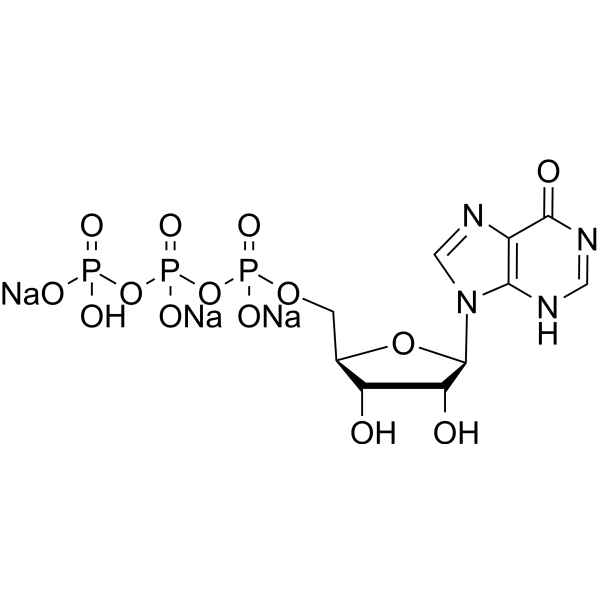
Synonyms: ITP trisodium salt; Inosine triphosphate trisodium salt
Inosine-5'-triphosphate trisodium salt is a nucleotide analogue that acts on multiple G proteins and is widely used in G protein-related research. It can bind to the α -subunit of G proteins and participate in G protein-mediated signal transduction as a substitute for GTP. Its mechanism of action is to interact with the nucleotide-binding site of the G protein α -subunit, affecting the activity and function of G proteins. In the research field, it is mainly used to explore the role of the G protein signaling pathway in cellular physiological and pathological processes. For example, in HL-60 leukemia cells, its impact on G protein-mediated signal transduction can be studied .
loading...
    loading...
Art. -Nr.: HY-W075517
CAS. Nr.: 59061-53-9
Synonyms: 2-Methylimidazole zinc salt
Target:  

Caspase Pyroptosis MOFs

Forschungsgebiete:  

Cancer

ZIF-8 (2-Methylimidazole zinc salt) is a caspase-1/Gasdermin D activator and a pH- and stimulus-responsive inducer of drug release, which serves as a highly efficient drug delivery carrier. ZIF-8 is a metal-organic framework (MOF). ZIF-8 activates the caspase-1/Gasdermin D-dependent pyroptosis pathway, induces pyroptosis, necrosis and immunogenic cell death, initiates in situ anti-tumor immunity, reprograms the immunosuppressive tumor microenvironment and inhibits tumor proliferation. ZIF-8 is applicable to related research on multiple cancers including colorectal cancer and breast cancer .
loading...
    loading...
Art. -Nr.: HY-W116336B
CAS. Nr.: 1314-13-2
Zinc oxide, 99.99% metals basis is a versatile wide-bandgap semiconductor with superior comprehensive properties. Zinc oxide, 99.99% metals basis serves as raw material for Schottky diodes, functional nanostructures, sensors, energy harvesters and photocatalysts for hydrogen production. Zinc oxide, 99.99% metals basis acts as a non-toxic antibacterial agent and selective cytotoxin against multiple bacteria, fungi and spores. Zinc oxide, 99.99% metals basis induces cancer cell death. Zinc oxide, 99.99% metals basis is applicable to drug delivery, biosensing, bioimaging and researches on cancer, microbial infections and skin diseases .
loading...
    loading...
Art. -Nr.: HY-W698249
CAS. Nr.: 299-29-6
Target:  

Ferroptosis Bacterial

Forschungsgebiete:  

Cardiovascular Disease Infection

Ferrous gluconate is a highly water-soluble iron-containing agent with high bioavailability and bactericidal activity. As a non-heme iron, Ferrous gluconate is used for meat product fortification and improvement of iron deficiency anemia. Ferrous gluconate induces ferroptosis in E. coli through Fe 2+ infiltration, reactive oxygen species burst, lipid peroxidation and direct interaction with DNA. Ferrous gluconate also downregulates the SOS responsive transcriptional repressor LexA. In addition, Ferrous gluconate regulates multiple key pathways in E. coli such as fatty acid metabolism, iron-sulfur cluster assembly and pyruvate metabolism, and is applied in studies related to *E. coli* infection and iron deficiency anemia .
loading...
    loading...
Art. -Nr.: HY-L926
2,109 compounds

Cysteine proteases (CPs), a key enzyme family regulating physiological metabolism and mediating pathological processes (e.g., abnormal bone resorption, tumour invasion, and pathogen infection), represent a core therapeutic target for disease intervention via the development of specific inhibitors. Currently reported CP covalent inhibitors encompass diverse structural types, including epoxides, aziridine, and activated double bonds (vinyl sulphones, α,β-unsaturated ketones), providing clear structural references for the development of novel CP covalent inhibitors.

This compound library contains multiple warheads that specifically target cysteine proteases, serving as a powerful tool for the efficient discovery of novel covalent inhibitors against this enzyme family.

Art. -Nr.: HY-W1118851
CAS. Nr.: 3050683-64-9
Forschungsgebiete:  

Inflammation/Immunology

(S)-VAV1 degrader-1 is a VAV1 molecular glue degrader with DC50 = 3.07 nM. (S)-VAV1 degrader-1 is used for research on VAV1-related diseases, such as inflammation and immune-related diseases .
loading...
    loading...
Art. -Nr.: HY-P85920
Synonyms: Interferon regulatory factor 4; IRF 4; IRF-4; Irf4; IRF4_HUMAN; LSIRF; Lymphocyte specific interferon regulatory factor; Lymphocyte specific IRF; Lymphocyte-specific interferon regulatory factor; multiple myeloma oncogene 1; MUM 1; MUM1; NF EM5; NF-EM5; NFEM5; PU.1 interaction partner; Sfpi1/PU.1 interaction partner; Transcriptional activator PIP

Host:  

Mouse

Application:  

IHC-P, WB, ICC/IF, ELISA

Reactivity:  

Human

loading...
    loading...
Art. -Nr.: HY-103019AR
CAS. Nr.: 1610358-53-6
Synonyms: (±)-BAY-1251152 (Standard); (±)-VIP152 (Standard)
Forschungsgebiete:  

Cancer

(±)-Enitociclib (Standard) is the analytical standard of (±)-Enitociclib (HY-103019A). This product is intended for research and analytical applications. (±)-Enitociclib ((±)-BAY-1251152) is the racemic mixture of Enitociclib (HY-103019E). Enitociclib is a selective CDK9 inhibitor and apoptosis inducer. Enitociclib inhibits CDK9 activity and reduces the phosphorylation of Ser2 in the carboxyl-terminal domain (CTD) of RNA polymerase Pol II, thereby downregulating the transcription of key oncogenes such as MYC and MCL1. Enitociclib has anti-proliferative activity targeting MYC+ lymphoma and multiple myeloma (MM) cells, and has synergistic effects with Bortezomib (HY-10227) and Lenalidomide (HY-A0003), and can be used in the research of hematological malignancies .
loading...
    loading...
Art. -Nr.: HY-111493
CAS. Nr.: 1802525-61-6
Reinheit:  99.80%
Target:  

LRRK2 STAT Apoptosis

Forschungsgebiete:  

Cancer

LRRK2 inhibitor 1 is a LRRK2 inhibitor. LRRK2 inhibitor 1 blocks STAT1 phosphorylation and the expression of interferon-stimulated genes, and inhibits intracellular innate immune responses. LRRK2 inhibitor 1 enhances oncolytic virus infection, replication and viral protein expression in tumor cells, promotes tumor cell apoptosis, and cooperates with oncolytic viruses to reduce tumor cell viability. LRRK2 inhibitor 1 enhances the oncolytic activity of multiple oncolytic viruses, and inhibits the growth of glioma xenografts when used in combination with oncolytic viruses. LRRK2 inhibitor 1 can be used in research related to various cancers such as lung cancer, colorectal cancer and liver cancer .
loading...
    loading...
Art. -Nr.: HY-115541
CAS. Nr.: 1877286-69-5
BRD4-IN-41 is a BRD4 inhibitor with an IC50 of 34 nM. BRD4-IN-41 also inhibits JAK2, FLT3, RET, ROS1, NTRK3, PDGFRb, and FGFR1 kinases with IC50 values ranging from 0.9 nM to 43 nM. BRD4-IN-41 inhibits acetyl-lysine binding site of BRD4, downregulates c-MYC, reduces phosphorylated STAT3 levels, induces G1 cell cycle arrest and apoptosis, thereby inhibiting cancer cells growth. BRD4-IN-41 can be used for the research of cancer, such as multiple myeloma and acute myeloid leukemia .
loading...
    loading...
Art. -Nr.: HY-117733
CAS. Nr.: 176050-48-9
Zerumin A is an anti-angiogenic agent that acts on multiple molecular targets related to angiogenesis (including kdr/VEGFR2, angpt1, angpt2, tie1, and tie2). Zerumin A specifically inhibits the proliferation and migration of human umbilical vein endothelial cells (HUVECs) by regulating the VEGF-VEGFR and ANGPT-TIE signaling pathways, and dose-dependently inhibits angiogenesis (10-20 μM significantly inhibits zebrafish embryo angiogenesis). Zerumin A can be used in the research of cancer and angiogenesis-related inflammatory diseases. Zerumin A can be naturally extracted from the 95% ethanol extract of the fruits, seeds, and pericarp of Alpinia caerulea (R.Br.) Bentham (a plant of the Alpinia genus in the Zingiberaceae family) .
loading...
    loading...
Art. -Nr.: HY-117881
CAS. Nr.: 210236-47-8
Target:  

Opioid Receptor

Forschungsgebiete:  

Neurological Disease

CJ-15208 is a potent and selective κ-opioid receptor antagonist with significant opioid activity. CJ-15208 exhibited strong analgesic effects in the warm water tail withdrawal test in mice and was mediated through multiple opioid receptors. The stereoisomers of CJ-15208 exhibited different opioid activity characteristics, for example, one stereoisomer exhibited κ-opioid receptor antagonism, while the other exhibited δ-opioid receptor antagonism. All stereoisomers of CJ-15208 had no significant effects on respiration. The stereoisomers of CJ-15208 did not lead to the development of drug tolerance, which makes it potential in the further development of safe opioid analgesics .
loading...
    loading...
Art. -Nr.: HY-12355S
CAS. Nr.: 2104759-32-0
Synonyms: BAF-312-d11
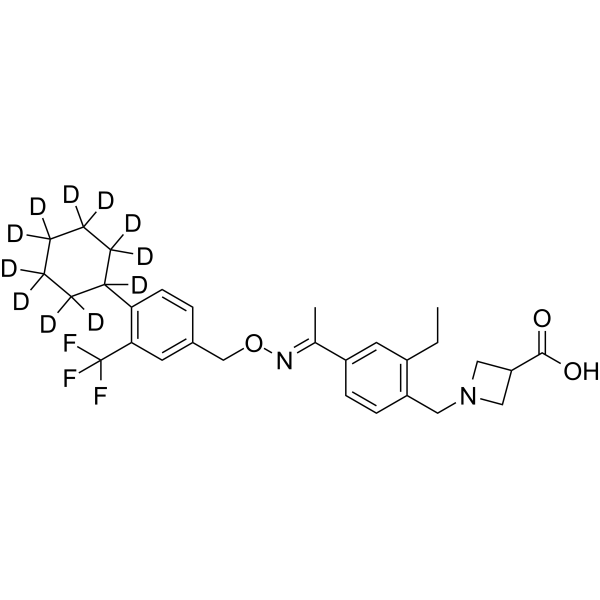
Siponimod-d11 (BAF-312-d11) is deuterium labeled Siponimod (HY-12355). Siponimod is an orally active, blood-brain barrier penetrant dual agonist of S1P1/S1P5, with EC50 values of 0.39 nM and 0.98 nM, respectively. Siponimod induces S1P1 internalization, activates GIRK channels, inhibits lymphocyte egress, reduces peripheral lymphocyte counts, triggers transient bradycardia, prevents synaptic neurodegeneration, promotes remyelination, alleviates demyelination, and prevents the loss of GABAergic interneurons. Siponimod can be used in research related to multiple sclerosis.
loading...
    loading...
Art. -Nr.: HY-136818
CAS. Nr.: 95833-19-5
Target:  

Histamine Receptor

Forschungsgebiete:  

Endocrinology

DA 4643 (hydrochloride) is an H2 receptor antagonist with the chemical name 2-guanidino-4 (3-methylaminomethyleneiminophenyl) thiazole dihydrochloride. It has a weak interaction with cytochrome P-450 and has a less inhibitory effect on P-450 than cimetidine and tiotidine. DA 4643 (hydrochloride) is able to inhibit both enzymatic and non-enzymatic lipid peroxidation reactions. This inhibition may not be achieved by inhibiting agent metabolizing enzymes, but rather due to the antioxidant properties of the compound itself. Compared with other H2 receptor antagonists such as cimetidine, ranitidine and tiotidine, DA 4643 (hydrochloride) shows a unique effect in lipid peroxidation inhibition. These properties make DA 4643 (hydrochloride) a potential H2 receptor antagonist with multiple mechanisms of action.
loading...
    loading...
Art. -Nr.: HY-156584
CAS. Nr.: 1626364-18-8
Target:  

Endogenous Metabolite

Forschungsgebiete:  

Infection

ODE-Bn-PMEG is an antiviral compound with strong inhibitory activity against HPV-11, -16, and -18. ODE-Bn-PMEG effectively reduced transient amplification of viral DNA in transfected cells at concentrations well below its cytotoxic levels. ODE-Bn-PMEG showed increased uptake in human foreskin fibroblasts and was able to be efficiently converted to the active antiviral metabolite PMEG diphosphate in vitro. The P-chiral enantiomer of ODE-Bn-PMEG showed comparable antiviral activity, indicating its potential application against multiple HPV types. ODE-Bn-PMEG is a promising candidate for local inhibition of HPV-16, HPV-18, and other high-risk types .
loading...
    loading...
Art. -Nr.: HY-165298
CAS. Nr.: 2504949-52-2
Target:  

PROTACs FGFR ERK

Forschungsgebiete:  

Cancer

DGY-09-192 is a PROTAC FGFR1/2 degrader (FGFR1: DC50 = 4.35 nM; FGFR2: DC50 = 70 nM). DGY-09-192 preferentially degrades wild-type FGFR1/2 and multiple FGFR2 fusion proteins (including FGFR2-PHGDH and FGFR2-OPTN). DGY-09-192 suppresses downstream FGFR signaling (reducing phosphorylation of FRS2 Y196 and ERK1/2 T202/Y204) in vitro and vivo. DGY-09-192 can be used for the study of FGFR-driven cancers .
loading...
    loading...
Art. -Nr.: HY-168943C
PLGA nanoparticles, 1μm, are biodegradable tumor-targeting nanocarriers that can serve as drug delivery enhancers and multidrug resistance inhibitors. PLGA nanoparticles, 1μm, passively enriched through the EPR effect and actively targeted via ligand-mediated endocytosis, can encapsulate various antitumor active molecules. PLGA nanoparticles, 1μm can specifically recognize multiple types of tumor cells and improve cellular uptake, cytotoxicity and antiproliferative effects after modification with ligands such as transferrin, folic acid, and RGD. PLGA nanoparticles, 1μm can encapsulate various therapeutic drugs and can be surface modified to achieve targeting, imaging, and prolonged circulation time, making them suitable for cancer-related research .
loading...
    loading...

