
215 Results for "

Encapsulation

" in MedChemExpress (MCE) Product Catalog:
Products (215)

215 Results for "Encapsulation" in MCE Product Catalog:

Cat. No.: HY-W035129
CAS No.: 1426827-79-3
Research Areas:  

Others

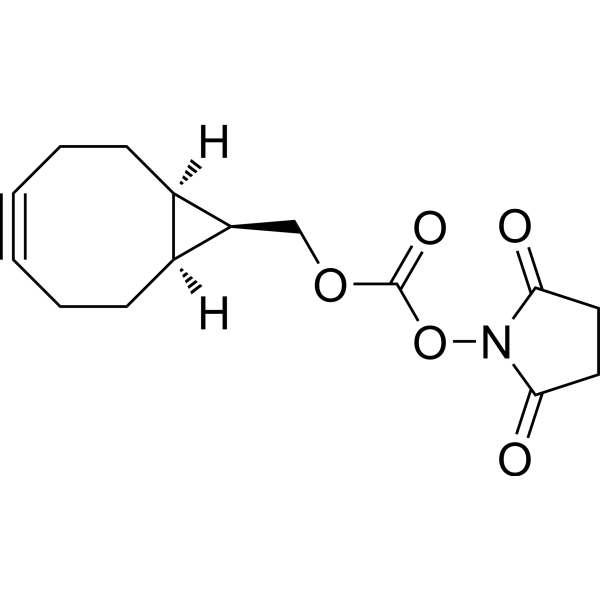
endo-BCN-NHS carbonate is an elastin-like protein (ELP) modification reagent. endo-BCN-NHS carbonate can react with lysine residues in ELP to make ELP carry BCN groups, and then cross-link ELP through strain-promoted azide-alkyne cycloaddition (SPAAC) reaction. endo-BCN-NHS carbonate promotes hydrogel formation. endo-BCN-NHS carbonate is mainly used in cell encapsulation related research .
loading...
    loading...
Cat. No.: HY-W1052178
Synonyms: Folate-PEG2000-Cholesterol
FA-PEG2000-Cholesterol (Folate-PEG2000-Cholesterol) is a multifunctional drug delivery system composed of Folic acid (HY-16637), polyethylene glycol (PEG), and Cholesterol (HY-N0322). Folic acid (FA) has a high affinity for folic acid receptors and can be used to target cell membrane receptors for drug delivery. Cholesterol can improve the circulation time of encapsulated drugs .
loading...
    loading...
Cat. No.: HY-W1052178A
Synonyms: Folate-PEG3400-Cholesterol
FA-PEG3400-Cholesterol (Folate-PEG3400-Cholesterol) is a multifunctional drug delivery system composed of Folic acid (HY-16637), polyethylene glycol (PEG), and Cholesterol (HY-N0322). Folic acid (FA) has a high affinity for folic acid receptors and can be used to target cell membrane receptors for drug delivery. Cholesterol can improve the circulation time of encapsulated drugs .
loading...
    loading...
Cat. No.: HY-W1052178B
Synonyms: Folate-PEG5000-Cholesterol
FA-PEG5000-Cholesterol (Folate-PEG5000-Cholesterol) is a multifunctional drug delivery system composed of Folic acid (HY-16637), polyethylene glycol (PEG), and Cholesterol (HY-N0322). Folic acid (FA) has a high affinity for folic acid receptors and can be used to target cell membrane receptors for drug delivery. Cholesterol can improve the circulation time of encapsulated drugs .
loading...
    loading...
Cat. No.: HY-W1052178C
Synonyms: Folate-PEG10000-Cholesterol
FA-PEG10000-Cholesterol (Folate-PEG10000-Cholesterol) is a multifunctional drug delivery system composed of Folic acid (HY-16637), polyethylene glycol (PEG), and Cholesterol (HY-N0322). Folic acid (FA) has a high affinity for folic acid receptors and can be used to target cell membrane receptors for drug delivery. Cholesterol can improve the circulation time of encapsulated drugs .
loading...
    loading...
Cat. No.: HY-W1052178D
Synonyms: Folate-PEG1000-Cholesterol
FA-PEG1000-Cholesterol (Folate-PEG1000-Cholesterol) is a multifunctional drug delivery system composed of Folic acid (HY-16637), polyethylene glycol (PEG), and Cholesterol (HY-N0322). Folic acid (FA) has a high affinity for folic acid receptors and can be used to target cell membrane receptors for drug delivery. Cholesterol can improve the circulation time of encapsulated drugs .
loading...
    loading...
Cat. No.: HY-W1052178E
Synonyms: Folate-PEG400-Cholesterol
FA-PEG400-Cholesterol (Folate-PEG400-Cholesterol) is a multifunctional drug delivery system composed of Folic acid (HY-16637), polyethylene glycol (PEG), and Cholesterol (HY-N0322). Folic acid (FA) has a high affinity for folic acid receptors and can be used to target cell membrane receptors for drug delivery. Cholesterol can improve the circulation time of encapsulated drugs .
loading...
    loading...
Cat. No.: HY-W1052178H
Synonyms: Folate-PEG600-Cholesterol
FA-PEG600-Cholesterol (Folate-PEG600-Cholesterol) is a multifunctional drug delivery system composed of Folic acid (HY-16637), polyethylene glycol (PEG), and Cholesterol (HY-N0322). Folic acid (FA) has a high affinity for folic acid receptors and can be used to target cell membrane receptors for drug delivery. Cholesterol can improve the circulation time of encapsulated drugs .
loading...
    loading...
Cat. No.: HY-125619
CAS No.: 19191-91-4
Purity:  99.86%
Target:  

Liposome

Research Areas:  

Others

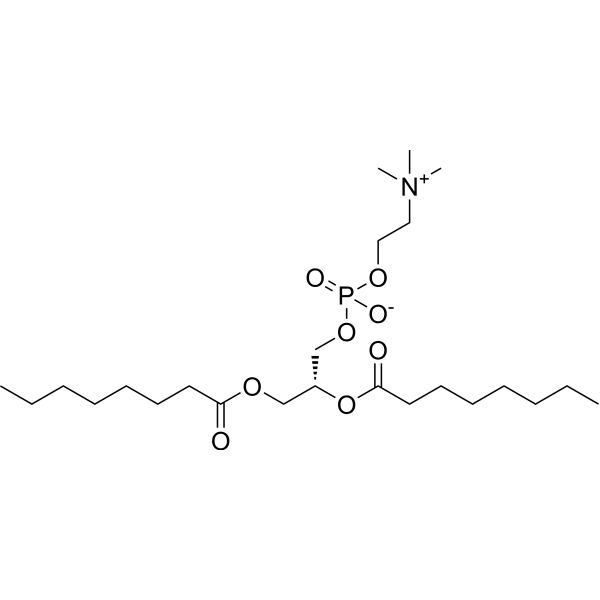
1,2-dioctanoyl-sn-glycero-3-phosphocholine, is a phospholipid commonly used as a component of liposome formulations and drug delivery systems. 1,2-dioctanoyl-sn-glycero-3-phosphocholine has unique chemical properties that allow it to form stable bilayers and vesicles, allowing drug encapsulation and delivery to specific targets in the body. It acts as a stabilizer and emulsifier, which can improve the solubility and bioavailability of drugs.
loading...
    loading...
Cat. No.: HY-149037
CAS No.: 179075-30-0
Synonyms: N4-Spermine cholesteryl carbamate
Research Areas:  

Others

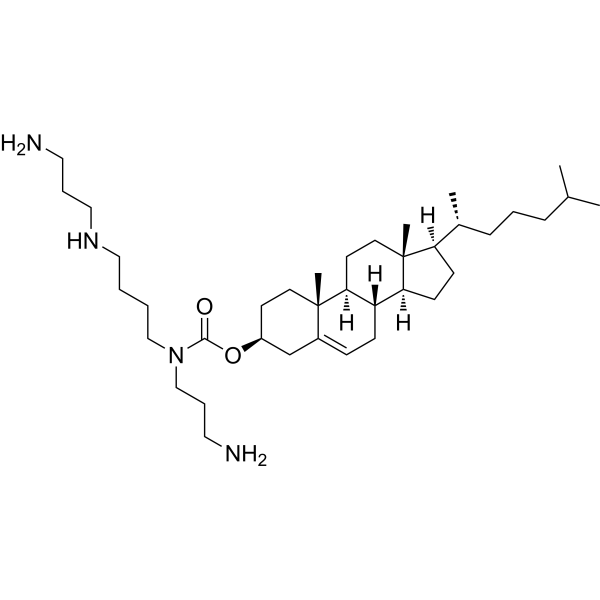
GL67 (N4-Spermine cholesteryl carbamate) is a cationic lipid that serves as a non-viral siRNA delivery vector and a non-viral gene transfer vector. GL67 enhances the encapsulation efficiency of siRNA in liposomal formulations and promotes the cellular uptake of siRNA across cancer cell membranes. GL67 mediates the transduction of plasmid DNA into cells. GL67 can be used in drug delivery-related research .
loading...
    loading...
Cat. No.: HY-188101
Target:  

mRNA

Research Areas:  

Cancer

CD19 CAR mRNA (Human)-LNP is a lipid nanoparticle (LNP) encapsulating CD19 CAR mRNA (Human). CD19 CAR mRNA (Human) can express a CAR protein targeting human CD19. CD19 CAR mRNA can trigger transient CAR expression, allowing T cells to be targeted without permanent genetic modification. CD19 CAR mRNA can be used in cancer research such as lymphoma and leukemia.
loading...
    loading...
Cat. No.: HY-188110
Target:  

mRNA

Research Areas:  

Others

Cas9-T2A-GFP mRNA-LNP is a lipid nanoparticle (LNP) encapsulating Cas9-T2A-GFP mRNA. Cas9-T2A-GFP mRNA encodes a Cas9 nuclease gene with two nuclear localization signals (NLS) and green fluorescent protein (GFP), which can be used for genome engineering experiments.
loading...
    loading...
Cat. No.: HY-P11759
Target:  

Drug Derivative

Research Areas:  

Cancer

Myr-transportan-Cys is a derivative of the cell-penetrating peptide Transportan (HY-P1732), and its conjugated myristoyl group (Myr) enhances the interaction between the peptide and cell membranes. Myr-transportan-Cys integrates three key delivery functions: nucleic acid condensation, cell penetration, and endosomal escape. Myr-transportan-Cys can form immunostimulatory tandem peptide nanocomplexes (iTPNCs) for encapsulating and delivering immunostimulatory oligonucleotide cargos to tumors .
loading...
    loading...
Cat. No.: HY-Y1310A
CAS No.: 9005-38-3
Sodium alginate is an anionic straight chain polysaccharide. Sodium alginate can be obtained from different species of algae. Sodium alginate has different properties, such as pH-sensitivity, nontoxicity, nonimmunogenicity. Sodium alginate has weak gelation, viscosity, and film-forming properties. Sodium alginate can be utilized to prepare gels and film materials for food preservation. Sodium alginate is a versatile functional biomaterial for viscosity enhancement, stabilizer, matrixing agent, encapsulation polymer, bioadhesive and film former .
loading...
    loading...
Cat. No.: HY-108303
CAS No.: 80729-79-9
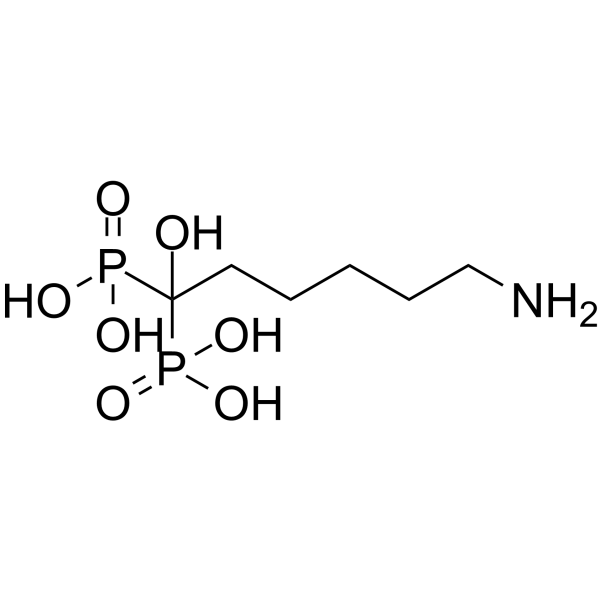
Neridronate sodium is a bisphosphonate. Bisphosphonates initiate the Apoptotic process. Neridronate sodium reduces the levels of bone resorption, bone turnover markers, the degree of back pain, and the risk of fractures. Neridronate sodium inhibits capillary tube formation. Neridronate sodium itself has weak anticancer activity, but liposomal encapsulation enhances this activity. Neridronate sodium can be used in research related to demineralizing metabolic bone diseases, thalassemia-associated osteoporosis, chronic inflammatory diseases, cancer, and osteogenesis imperfecta .
loading...
    loading...
Cat. No.: HY-119443
CAS No.: 79778-41-9
Purity:  ≥98.0%
Target:  

Apoptosis

Neridronate is a bisphosphonate. Bisphosphonates initiate the Apoptotic process. Neridronate sodium reduces the levels of bone resorption, bone turnover markers, the degree of back pain, and the risk of fractures. Neridronate inhibits capillary tube formation. Neridronate itself has weak anticancer activity, but liposomal encapsulation enhances this activity. Neridronate can be used in research related to demineralizing metabolic bone diseases, thalassemia-associated osteoporosis, chronic inflammatory diseases, cancer, and osteogenesis imperfecta .
loading...
    loading...
Cat. No.: HY-W099617
CAS No.: 2277-23-8
Synonyms: 1-Decanoyl-rac-glycerol
Research Areas:  

Others

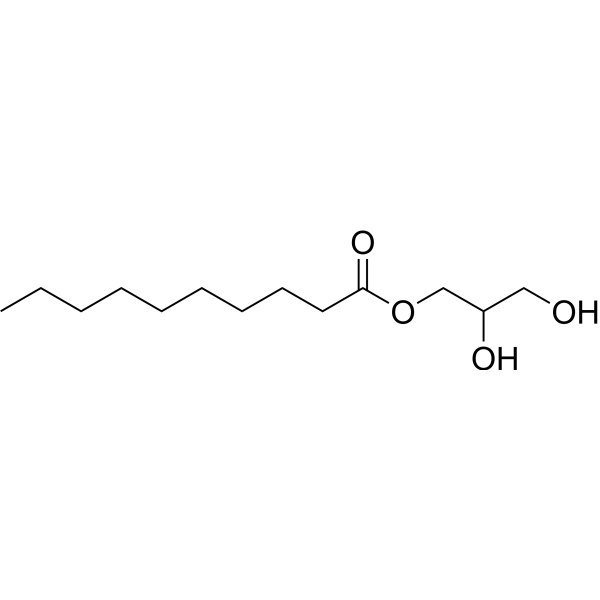
2,3-Dihydroxypropyl decanoate (1-Decanoyl-rac-glycerol) is a derivative of Decanoic acid (HY-W015309) and a non-ionic surfactant, with an IC50 > 100 μM against Shp2-PTP, VHR and HePTP. 2,3-Dihydroxypropyl decanoate is found in the roots of Angelica dahurica (Baizhi). 2,3-Dihydroxypropyl decanoate acts as a component of reverse micelle systems for the encapsulation of proteins and nucleic acids .
loading...
    loading...
Cat. No.: HY-101530B
CAS No.: 9004-99-3
Synonyms: PEG 40 stearate
Research Areas:  

Others

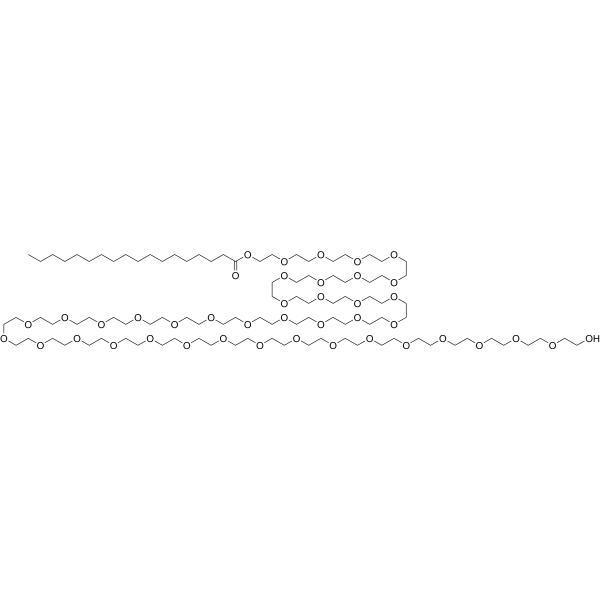
Polyoxyl 40 stearate (PEG 40 stearate) is a nonionic surfactant formed by the esterification of stearic acid with polyethylene glycol (PEG) containing approximately 40 ethoxy units, it is used in pharmaceutical preparations, nanodrug carriers, emulsification systems and biomedical materials. Polyoxyl 40 stearate can serve as a matrix component of solid lipid nanoparticles to achieve controlled release of encapsulated antifungal drugs; it can also act as a base material for solid lipid nanoparticles for vaginal administration, and polymerizable groups can be introduced via modification with acryloyl chloride .
loading...
    loading...
Cat. No.: HY-149037A
Purity:  98.60%
Synonyms: N4-Spermine cholesteryl carbamate pentahydrochloride
Research Areas:  

Others

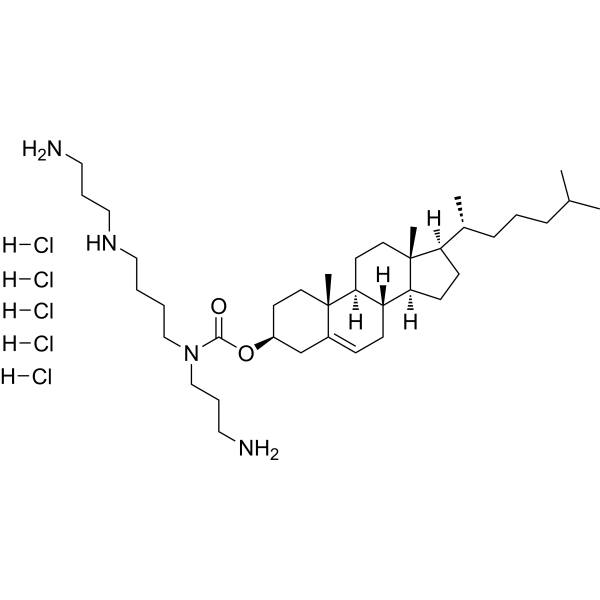
GL67 pentahydrochloride (N4-Spermine cholesteryl carbamate pentahydrochloride) is a cationic lipid that serves as a non-viral siRNA delivery vector and a non-viral gene transfer vector. GL67 pentahydrochloride enhances the encapsulation efficiency of siRNA in liposomal formulations and promotes the cellular uptake of siRNA across cancer cell membranes. GL67 pentahydrochloride mediates the transduction of plasmid DNA into cells. GL67 pentahydrochloride can be used in drug delivery-related research .
loading...
    loading...
Cat. No.: HY-154644
CAS No.: 8030-76-0
Research Areas:  

Cancer

Soya Lecithin is a phospholipid mixture that can be used as a drug delivery vehicle and is a pharmaceutical excipient. Soya Lecithin can form a lipid bilayer structure through self-assembly, and its binding properties are amphiphilic (hydrophilic head and hydrophobic tail), encapsulating hydrophobic drugs. Soya Lecithin forms stable nanoliposomes or microemulsions, improves the solubility and cellular uptake efficiency of poorly soluble drugs (such as Curcumin (HY-N0005)), and exerts activities such as enhancing drug delivery and regulating cell proliferation .
loading...
    loading...

