205 Results for "

Modifier

" in MedChemExpress (MCE) Product Catalog:
Products (205)

205 Results for "Modifier" in MCE Product Catalog:

Cat. No.: HY-P1218A
Target:  

Sodium Channel

Research Areas:  

Neurological Disease

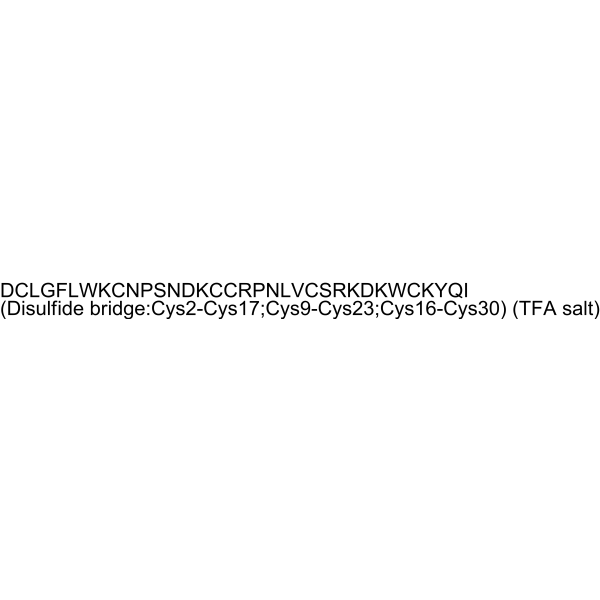
Phrixotoxin 3 TFA is a potent blocker of voltage-gated sodium channels, with IC50s of 0.6, 42, 72, 288, 610 nM for NaV1.2, NaV1.3, NaV1.4, NaV1.1 and NaV1.5, respectively. Phrixotoxin 3 TFA modulates voltage-gated sodium channels with properties similar to those of typical gating-modifier toxins, both by causing a depolarizing shift in gating kinetics and by blocking the inward component of the sodium current .
loading...
    loading...
Cat. No.: HY-P81662
Synonyms: GCLM; GLCLR; Glutamate--cysteine ligase regulatory subunit; GCS light chain; Gamma-ECS regulatory subunit; Gamma-glutamylcysteine synthetase regulatory subunit; Glutamate--cysteine ligase Modifier subunit

Host:  

Rabbit

Application:  

WB, IHC-P, ICC/IF, IP, FC

Reactivity:  

Human, Mouse, Rat

loading...
    loading...
Cat. No.: HY-P86557
Synonyms: GCLM; GLCLR; Glutamate--cysteine ligase regulatory subunit; GCS light chain; Gamma-ECS regulatory subunit; Gamma-glutamylcysteine synthetase regulatory subunit; Glutamate--cysteine ligase Modifier subunit

Host:  

Rabbit

Application:  

WB, IHC-P, ICC/IF, IP, ELISA

Reactivity:  

Human, Mouse, Rat

loading...
    loading...
Cat. No.: HY-W015114R
CAS No.: 63512-50-5
Synonyms: (S)-2-Hydroxyglutaric acid disodium (Standard)
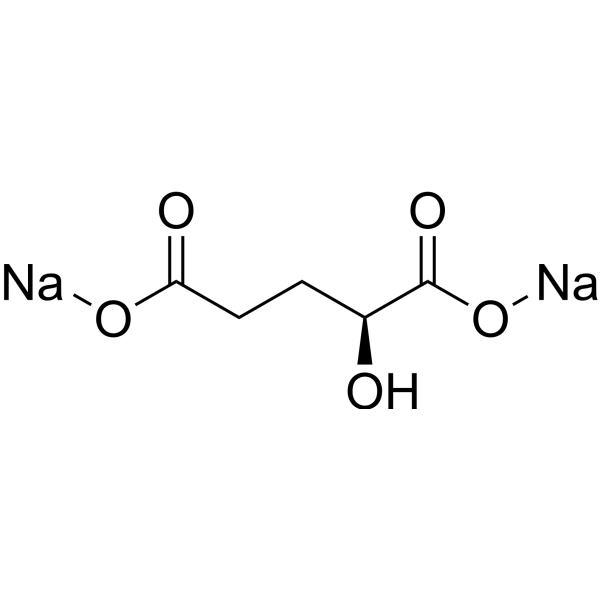
L-2-Hydroxyglutaric acid (disodium) (Standard) is the analytical standard of L-2-Hydroxyglutaric acid (disodium). This product is intended for research and analytical applications. L-2-Hydroxyglutaric acid disodium is an epigenetic modifier and putative oncometabolite in renal cancer. L-2-Hydroxyglutaric acid disodium can inhibit histone demethylases and hence promote histone methylation . L-2-Hydroxyglutaric acid inhibits mitochondrial creatine kinase (Mi-CK) activity with Km and Ki of 2.52 mM and 11.13 mM, respectively .
loading...
    loading...
Cat. No.: HY-W243303J
CAS No.: 9003-01-4
Poly(acrylic acid) (MW 250000) is a synthetic cationic electrolyte containing abundant carboxyl groups (-COOH), which exhibits excellent water absorption and retention properties and is often cross-linked to form hydrogels. Poly(acrylic acid) (with a molecular weight of 250,000). Poly(acrylic acid) (MW 250000) can be used as a non-collagenous analog in the biomimetic mineralization research of type I collagen. Poly(acrylic acid) (MW 250000) has pH responsiveness and biocompatibility and is often used as a drug carrier, surface modifier and functional material .
loading...
    loading...
Cat. No.: HY-P85493
Synonyms: CBX 3; CBX3; CBX3_HUMAN; Chromobox homolog 3; HP1 gamma homolog, Drosophila; Chromobox homolog 3; Chromobox protein homolog 3; GAMMA; HECH; Heterochromatin like protein 1; Heterochromatin protein 1 homolog gamma; Heterochromatin protein HP1 gamma; HP1 gamma; HP1 gamma homolog; HP1Hs gamma; Modifier 2 protein.

Host:  

Mouse

Application:  

WB, ICC/IF, IP, IHC-P

Reactivity:  

Mouse, Human, Monkey, Hamster, Rat

loading...
    loading...
Cat. No.: HY-L039
3,231 compounds

Techniques for reprogramming somatic cells create new opportunities for drug screening, disease modeling, artificial organ development, and cell therapy. The development of reprogramming techniques has grown exponentially since Yamanaka reprogrammed somatic cells to become induced pluripotent stem cells (iPSCs) using four transcription factors, OCT4, SOX2, KLF4, and c-MYC in 2006. Despite the development of efficient reprogramming methods, most methods are inappropriate for clinical applications because they carry the risk of integrating exogenous genetic factors or use oncogenes. Alternative approaches, such as those based on miRNA, non-viral genes, non-integrative vectors, and small molecules, have been studied as possible solutions to the problems. Among these alternatives, small molecules are attractive options for clinical applications. Reprogramming using small molecules is inexpensive and easy to control in a concentration- and time-dependent manner. It offers a high level of cell permeability, ease of synthesis and standardization, and it is appropriate for mass-producing cells.

MCE Reprogramming Compound Library contains a unique collection of 3,231 compounds that act on reprogramming signaling pathways. These compounds are potential stimulators for reprogramming. This library is a useful tool for researching reprogramming and regenerative medicine.

Cat. No.: HY-117570
CAS No.: 2226201-97-2
Purity:  98.03%
Target:  

PDI

Research Areas:  

Neurological Disease

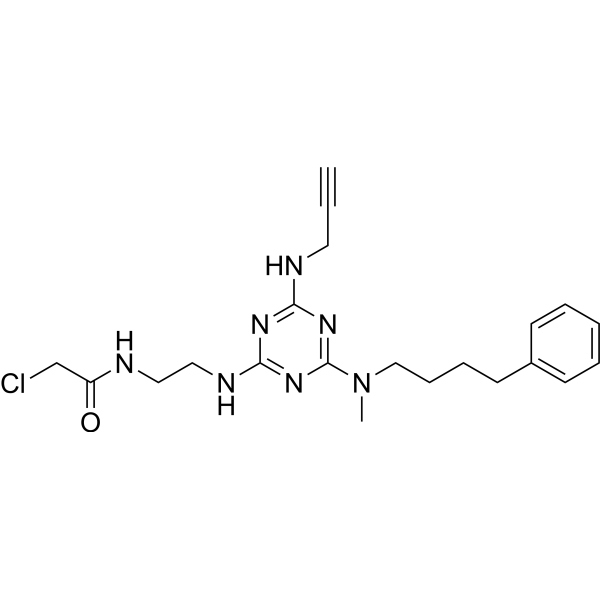
KSC-34, a covalent modifier of protein disulfide isomerase A1 (PDIA1), is also a selective and potent a-site inhibitor of PDIA1 with an IC50 of 3.5 μM. KSC-34 displays a 30-fold selectivity for a domain over a′ domain and displays high selectivity for PDIA1 in complex proteomes with minimal engagement of other members of the PDI family . KSC-34 is a click chemistry reagent, it contains an Alkyne group and can undergo copper-catalyzed azide-alkyne cycloaddition (CuAAc) with molecules containing Azide groups.
loading...
    loading...
Cat. No.: HY-W1061747
Research Areas:  

Others

endo-BCN-PEG3 Phosphoramidite is a nucleic acid phosphoramidite modifier containing an endo-bicyclononyne (BCN) group and a PEG3 spacer, enabling site-specific incorporation of endo-BCN-PEG3 into DNA or RNA during solid-phase oligonucleotide synthesis. endo-BCN-PEG3 Phosphoramidite introduces a BCN group that can undergo copper-free strain-promoted azide-alkyne cycloaddition (SPAAC) with azide-containing molecules or inverse electron demand Diels-Alder (IEDDA) reactions with tetrazines, enabling post-synthetic oligonucleotide labeling and bioconjugation.
loading...
    loading...
Cat. No.: HY-W127770
CAS No.: 569-61-9
Synonyms: Basic red 9
Target:  

Fluorescent Dye

Research Areas:  

Infection

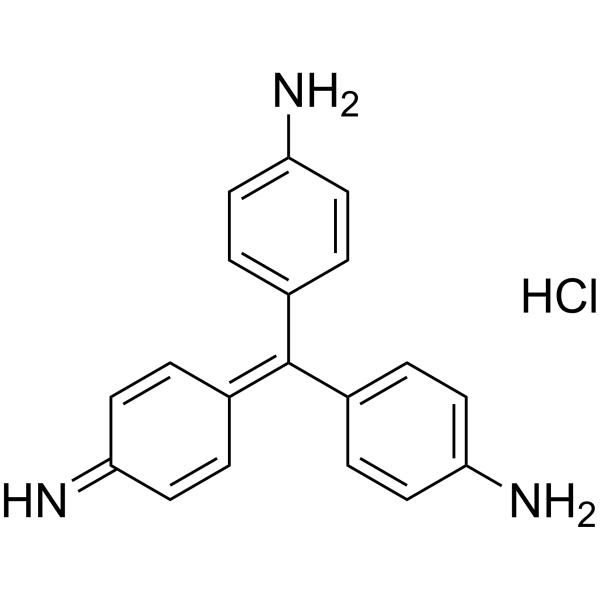
Pararosaniline hydrochloride (Basic red 9) is a pH-responsive basic dye, as a biological stain to track certain proteins. The pH of the acidified Pararosaniline hydrochloride reagent has a significant effect on the color and the maximum absorption wavelength (λmax) of the reaction system, with its optimum pH 0.48 and a λmax at 549 nm. Pararosaniline hydrochloride is also a strong modifier of RNA splicing. Pararosaniline hydrochloride has been used in the analysis of SO2 and formaldehyde and staining of bacteria or other organisms. Pararosaniline hydrochloride is extensively used in industries like textile, printing, paper, cosmetic, and leather .
loading...
    loading...
Cat. No.: HY-W020780
CAS No.: 724722-89-8
Synonyms: mPEG5000-Maleimide
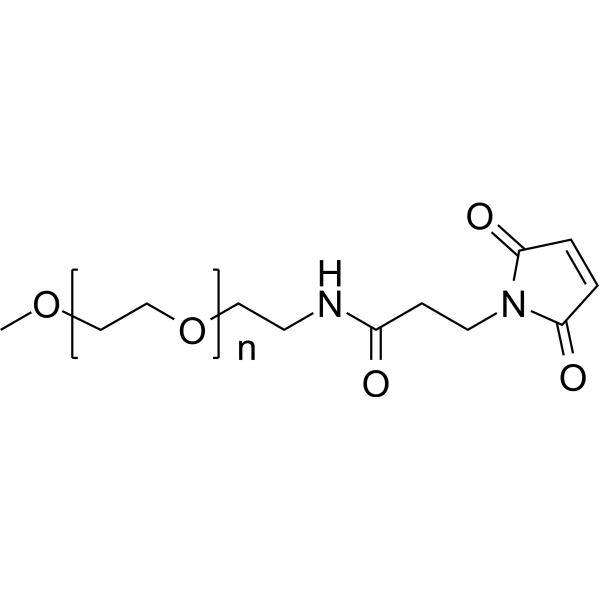
mPEG5000-Mal (mPEG5000-Maleimide) is a PEG-derived selective covalent binding agent for sulfhydryl groups (RSGs), which can form irreversible thioether bonds with sulfhydryl groups under near-neutral conditions via the maleimide group. The mechanism of action of mPEG5000-Mal can be divided into two categories: firstly, as an enzyme modifier, it binds to target proteins through hydrophobic interactions, hydrogen bonds, and van der Waals forces, altering the protein's secondary structure; secondly, as a nanoparticle surface modifier, it covalently binds to sulfhydryl groups on the surface of red blood cells, changing the surface properties and morphology of the red blood cells, leading to their phagocytosis by macrophages of the reticuloendothelial system. mPEG5000-Mal can react with free cysteine in proteins, increasing the apparent molecular weight of the modified protein by 10-15 kDa for detection purposes. mPEG5000-Mal can enhance the thermal stability and catalytic activity of enzymes, and improve the macrophage targeting of nanoparticles, enabling targeted drug delivery. mPEG5000-Mal can be applied in enzyme engineering research in the food industry and in oncology, assisting radiotherapy by inhibiting tumor-associated macrophage infiltration and enhancing anti-tumor immune responses .
loading...
    loading...
Cat. No.: HY-P70974
Purity:  ≥ 95%, as determined by reducing SDS-PAGE.
Synonyms: SUMO2; SMT3 (Suppressor Of Mif Two 3, Yeast) Homolog 2; Prev. SMT3H2; SMT3 Suppressor Of Mif Two 3 Homolog 2; SMT3B; Sentrin 2; Small Ubiquitin-Related Modifier 2; Sentrin-2; Ubiquitin-Like Protein SMT3B; SUMO-3; SMT3 Homolog 2; SUMO-2; HSMT3; Smt3B; SMT3
Species:  
Human
Source:  
E. coli
loading...
    loading...
Cat. No.: HY-P85405
Synonyms: UBA7; UBE1L; UBE2; Ubiquitin-like Modifier-activating enzyme 7; Ubiquitin-activating enzyme 7; D8; Ubiquitin-activating enzyme E1 homolog

Host:  

Rabbit

Application:  

WB, IHC-P, IHC-F, FC, IF-Tissue

Reactivity:  

Human, Mouse, Rat

loading...
    loading...
Cat. No.: HY-P811091
Synonyms: UBE1DC1, UBA5, Ubiquitin-like Modifier-activating enzyme 5, Ubiquitin-activating enzyme 5, ThiFP1, UFM1-activating enzyme, Ubiquitin-activating enzyme E1 domain-containing protein 1

Host:  

Rabbit

Application:  

WB, IHC-P

Reactivity:  

Human, Mouse, Rat

loading...
    loading...
Cat. No.: HY-P1218B
Target:  

Sodium Channel

Research Areas:  

Neurological Disease

Phrixotoxin 3-NH2 TFA is a derivative of Phrixotoxin 3 TFA (HY-P1218A). Phrixotoxin 3 TFA is a potent blocker of voltage-gated sodium channels, with IC50s of 0.6, 42, 72, 288, 610 nM for NaV1.2, NaV1.3, NaV1.4, NaV1.1 and NaV1.5, respectively. Phrixotoxin 3 TFA modulates voltage-gated sodium channels with properties similar to those of typical gating-modifier toxins, both by causing a depolarizing shift in gating kinetics and by blocking the inward component of the sodium current .
loading...
    loading...
Cat. No.: HY-W133907
CAS No.: 55566-30-8
Tetrakis (hydroxymethyl) phosphonium sulfate is a protein crosslinker and hydrogel modifier. Tetrakis (hydroxymethyl) phosphonium sulfate covalently binds to primary and secondary amines of amino acids or proteins via a Mannich-type reaction, thereby constructing stable crosslinking bonds between protein molecules. Tetrakis (hydroxymethyl) phosphonium sulfate not only regulates the gelation time and storage modulus of recombinant elastin-like protein hydrogels, but also exhibits excellent cytocompatibility, and supports the differentiation and growth of embryonic stem cells and neural cells in a three-dimensional encapsulation environment. Tetrakis (hydroxymethyl) phosphonium sulfate is suitable for protein-based hydrogel systems, especially for applications related to cell encapsulation .
loading...
    loading...
Cat. No.: HY-P82072
Synonyms: UBA1; A1S9T; UBE1; Ubiquitin-like Modifier-activating enzyme 1; Protein A1S9; Ubiquitin-activating enzyme E1

Host:  

Rabbit

Application:  

WB, IHC-P, ICC/IF, FC

Reactivity:  

Human, Mouse, Rat

loading...
    loading...
Cat. No.: HY-P86509
Synonyms: Ubiquitin-like Modifier-activating enzyme ATG7; ATG12-activating enzyme E1 ATG7; Autophagy-related protein 7; APG7-like; hAGP7; Ubiquitin-activating enzyme E1-like protein;

Host:  

Rabbit

Application:  

WB, IHC-P, ICC/IF, IP, ELISA

Reactivity:  

Human, Mouse, Rat

loading...
    loading...
Cat. No.: HY-W744986
Synonyms: (2S)-2-Hydroxyglutaric acid-d5 disodium
L-2-Hydroxyglutaric acid-d5 disodium ((2S)-2-Hydroxyglutaric acid-d5 disodium) is the deuterium labeled L-2-Hydroxyglutaric acid disodium (HY-W015114). L-2-Hydroxyglutaric acid disodium is an epigenetic modifier and putative oncometabolite in renal cancer. L-2-Hydroxyglutaric acid disodium can inhibit histone demethylases and hence promote histone methylation . L-2-Hydroxyglutaric acid inhibits mitochondrial creatine kinase (Mi-CK) activity with Km and Ki of 2.52 mM and 11.13 mM, respectively .
loading...
    loading...
Cat. No.: HY-P811370
Synonyms: SMT3B, SMT3H2, SUMO2, Small ubiquitin-related Modifier 2, SUMO-2, HSMT3, SMT3 homolog 2, SUMO-3, Sentrin-2, Ubiquitin-like protein SMT3B, Smt3B

Host:  

Rabbit

Application:  

WB, ICC/IF

Reactivity:  

Human, Mouse, Rat

loading...
    loading...

