54 Results for "

β-amyloid precursor protein

" in MedChemExpress (MCE) Product Catalog:
Products (54)

54 Results for "β-amyloid precursor protein" in MCE Product Catalog:

24
24 Publications Verification
Cat. No.: HY-16659
CAS No.: 754240-09-0
Target:  

Ras

Research Areas:  

Neurological Disease Cancer

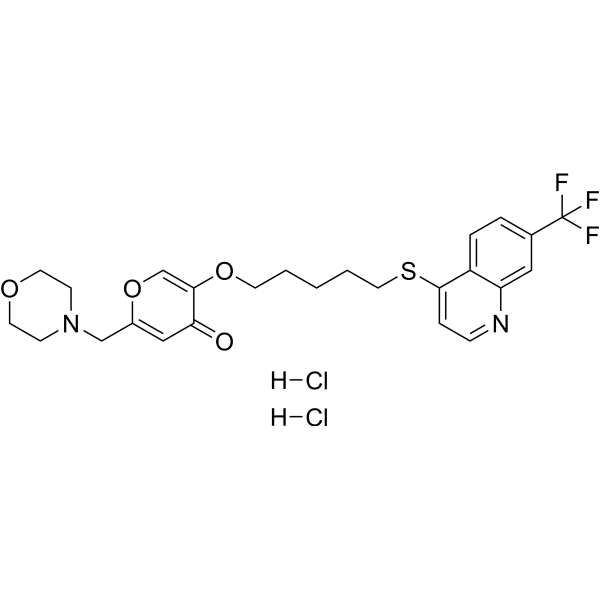
EHT 1864 is an inhibitor of Rac family small GTPases. EHT 1864 directly binds and impairs the ability of this small GTPase to engage critical downstream effectors required for growth transformation. The Kd values are 40, 50, 60, and 230 nM for Rac1, Rac1b, Rac2 and Rac3, respectively. EHT 1864 also potently inhibits other Rac-dependent transformation processes, Tiam1- and Ras-mediated growth transformation. EHT 1864 prevents Aβ 40 and Aβ 42 production in vivo. EHT 1864 dependently suppresses the release of migrasomes from podocytes induced by LPS, PAN, or HG .
loading...
    loading...
9
9 Cited Publications
Cat. No.: HY-103315
CAS No.: 68099-86-5
Purity:  99.98%
Synonyms: CERM 1978; Org 5730 hydrochloride
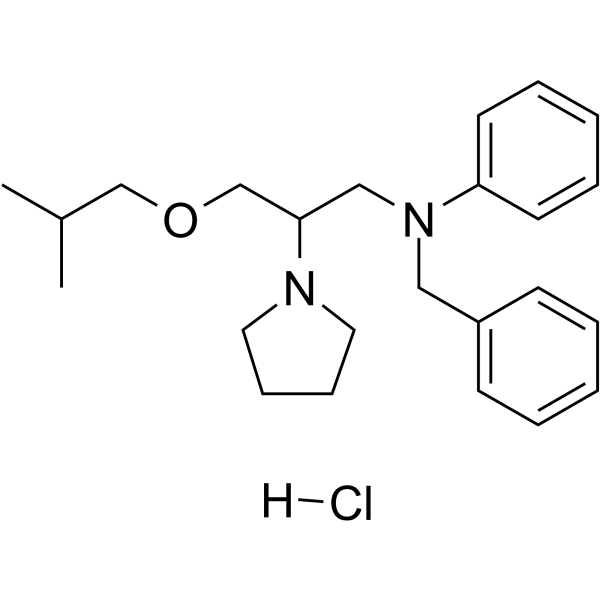
Bepridil hydrochloride (CERM 1978; Org 5730 hydrochloride) is an orally active non-selective calcium channel antagonist with multi-ion channel blocking activity. Bepridil hydrochloride modulates Calmodulin, the 20S proteasome, T-type/L-type calcium channels, cardiac sodium channels, multiple potassium channels, γ-secretase, β-secretase, and mitoKATP/sarcKATP channels. Bepridil hydrochloride acts as a hydroxyl radical scavenger, regulates mitochondrial and intracellular calcium handling, and exerts antiarrhythmic, antianginal, and cardioprotective effects. Bepridil hydrochloride alters amyloid precursor protein processing, reduces β-amyloid and thalamic calcium levels, restores seladin-1/DHCR24 expression, and improves sensorimotor recovery after cerebral ischemia. Bepridil hydrochloride also exhibits potent inhibitory effects on SARS-CoV-2 replication. Bepridil hydrochloride is used in studies related to stable angina, arrhythmias, cerebral ischemia, Alzheimer's disease, and SARS-CoV-2 infection .
loading...
    loading...
9
9 Cited Publications
Cat. No.: HY-16952
CAS No.: 64706-54-3
Synonyms: CERM 1978 free base; Org 5730
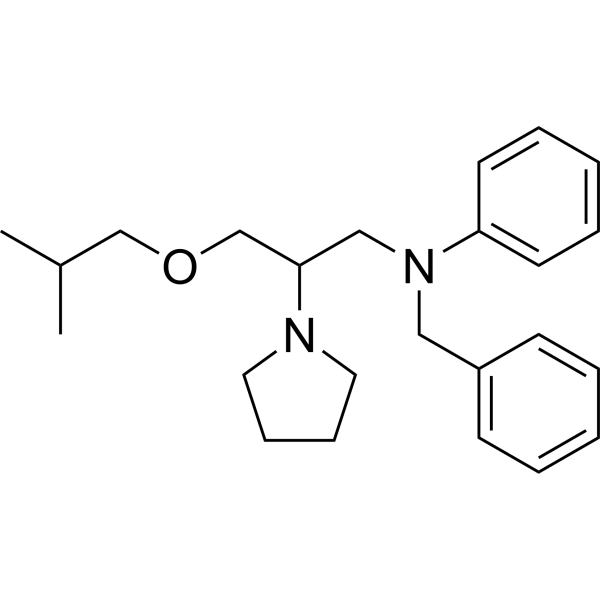
Bepridil (CERM 1978 (free base); Org 5730) is an orally active non-selective calcium channel antagonist with multi-ion channel blocking activity. Bepridil modulates Calmodulin, the 20S proteasome, T-type/L-type calcium channels, cardiac sodium channels, multiple potassium channels, γ-secretase, β-secretase, and mitoKATP/sarcKATP channels. Bepridil acts as a hydroxyl radical scavenger, regulates mitochondrial and intracellular calcium handling, and exerts antiarrhythmic, antianginal, and cardioprotective effects. Bepridil alters amyloid precursor protein processing, reduces β-amyloid and thalamic calcium levels, restores seladin-1/DHCR24 expression, and improves sensorimotor recovery after cerebral ischemia. Bepridil also exhibits potent inhibitory effects on SARS-CoV-2 replication. Bepridil is used in studies related to stable angina, arrhythmias, cerebral ischemia, Alzheimer's disease, and SARS-CoV-2 infection .
loading...
    loading...
9
9 Cited Publications
Cat. No.: HY-16952A
CAS No.: 74764-40-2
Synonyms: CERM 1978 hydrate; Org 5730 hydrochloride hydrate
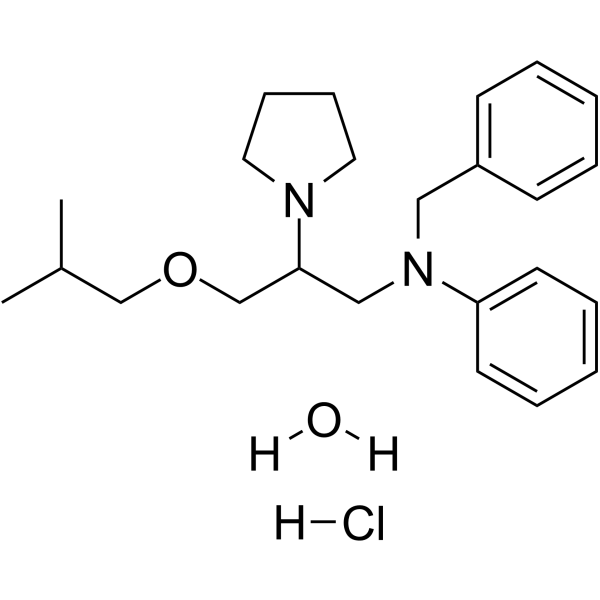
Bepridil hydrochloride hydrate (CERM 1978 hydrate; Org 5730 hydrochloride hydrate) is an orally active non-selective calcium channel antagonist with multi-ion channel blocking activity. Bepridil hydrochloride hydrate modulates Calmodulin, the 20S proteasome, T-type/L-type calcium channels, cardiac sodium channels, multiple potassium channels, γ-secretase, β-secretase, and mitoKATP/sarcKATP channels. Bepridil hydrochloride hydrate acts as a hydroxyl radical scavenger, regulates mitochondrial and intracellular calcium handling, and exerts antiarrhythmic, antianginal, and cardioprotective effects. Bepridil hydrochloride hydrate alters amyloid precursor protein processing, reduces β-amyloid and thalamic calcium levels, restores seladin-1/DHCR24 expression, and improves sensorimotor recovery after cerebral ischemia. Bepridil hydrochloride hydrate also exhibits potent inhibitory effects on SARS-CoV-2 replication. Bepridil hydrochloride hydrate is used in studies related to stable angina, arrhythmias, cerebral ischemia, Alzheimer's disease, and SARS-CoV-2 infection .
loading...
    loading...
2
2 Cited Publications
Cat. No.: HY-13438
CAS No.: 1227163-84-9
Purity:  99.91%
Target:  

Beta-secretase

Research Areas:  

Neurological Disease

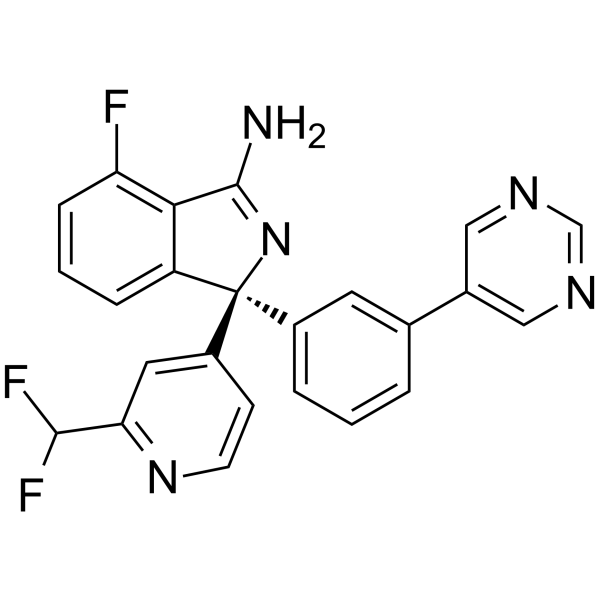
AZD3839 is an orally available, selective, reversible inhibitor of the β-site amyloid precursor protein cleaving enzyme BACE1 that can cross the blood-brain barrier. AZD3839 inhibits recombinant human BACE1 with a Ki=26.1 nM. AZD3839 inhibits A40 production in SH-SY5Y cells with an IC50 of 4.8 nM. AZD3839 binds to BACE1 and reduces the Aβ amyloid produced by the cleavage of amyloid precursor protein (APP) by BACE1 and γ-secretase. AZD3839 can be used in the field of Alzheimer's disease research .
loading...
    loading...
2
2 Cited Publications
Cat. No.: HY-N0541
CAS No.: 69884-00-0
Synonyms: Ginsenoside A1
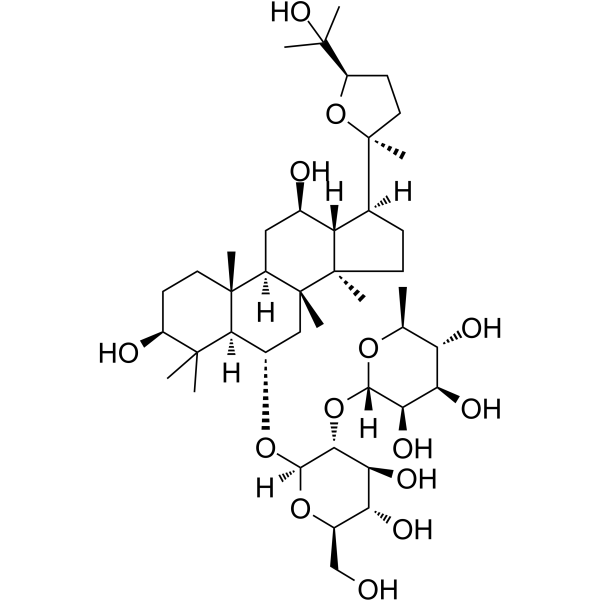
Pseudoginsenoside F11 is an orally active neuroprotective agent. Pseudoginsenoside F11 reduces the expression of β-amyloid precursor protein, inhibits the production of 1-40, downregulates the expression of JNK2, p53 and activated Caspase 3, and restores the activities of SOD and Glutathione peroxidase. Pseudoginsenoside F11 inhibits the excessive activation of μ-Calpain and restores the level of neuronal Nitric oxide synthase. Pseudoginsenoside F11 reduces infarct volume, alleviates cerebral edema, decreases neuronal loss, improves neurological deficits and enhances long-term functional outcomes in transient cerebral ischemia models. Pseudoginsenoside F11 antagonizes Methamphetamine-induced behavioral deficits, dopamine level reduction and neurotoxicity without altering the baseline behaviors of normal mice. Pseudoginsenoside F11 can be used in studies related to Alzheimer's disease, transient cerebral ischemic injury and Methamphetamine-induced neurotoxicity .
loading...
    loading...
1
1 Cited Publications
Cat. No.: HY-16009
CAS No.: 116839-68-0
Synonyms: (+)-Phenserine; ANVS401
Buntanetap ((+)-Phenserine) is a selective acetylcholinesterase inhibitor. Buntanetap is a multiple neurotoxic protein translation inhibitor with oral activity, including amyloid precursor protein (APP), α-synuclein (αSYN) and huntingtin protein (HTT). Buntanetap reduces the production of β-amyloid precursor protein by blocking its mRNA translation. Buntanetap has anti-inflammatory effects and can be used in the study of Alzheimer's disease and Parkinson's disease .
loading...
    loading...
1
1 Cited Publications
Cat. No.: HY-16009B
CAS No.: 865795-23-9
Synonyms: (+)-Phenserine L-Tartrate; ANVS401 L-Tartrate
Target:  

Amyloid-β

Research Areas:  

Neurological Disease

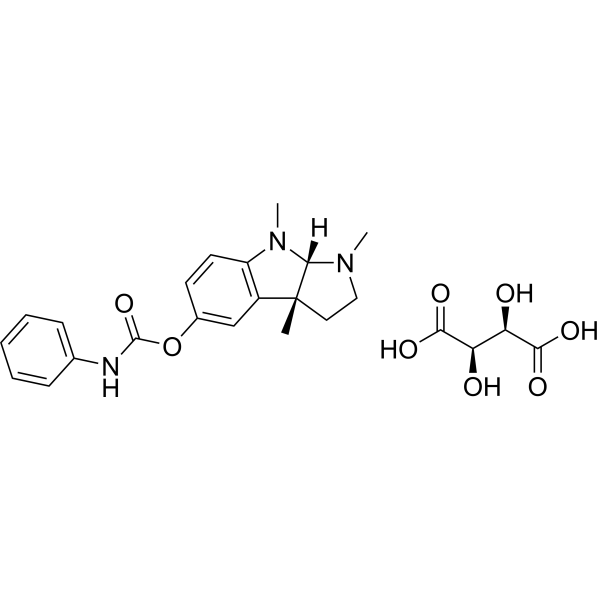
Buntanetap L-Tartrate (Phenserine L-Tartrate) is a selective AChE inhibitor (IC50 = 22.2 nM). Buntanetap is a multiple neurotoxic protein translation inhibitor with oral activity, including amyloid precursor protein (APP), α-synuclein (αSYN) and huntingtin protein (HTT). Buntanetap reduces the production of β-amyloid precursor protein by blocking its mRNA translation. Buntanetap has anti-inflammatory effects and can be used in the study of Alzheimer's disease and Parkinson's disease .
loading...
    loading...
1
1 Cited Publications
Cat. No.: HY-P704352
Purity:  ≥ 95%, as determined by reducing SDS-PAGE.
Synonyms: APP; PreA4; Prev. AD1; CVAP; Alzheimer Disease amyloid A4 protein Homolog; Beta-amyloid precursor protein; amyloid-Beta precursor protein; Testicular Tissue protein Li 2; amyloid precursor protein; Beta-amyloid Peptide(1-40); Alpha-SAPP; Beta-amyloid Pept
Species:  
Human
Source:  
HEK293
loading...
    loading...
Cat. No.: HY-103374
CAS No.: 101246-66-6
Purity:  99.55%
Synonyms: (-)-Eseroline phenylcarbamate; (-)-Phenserine
Research Areas:  

Neurological Disease

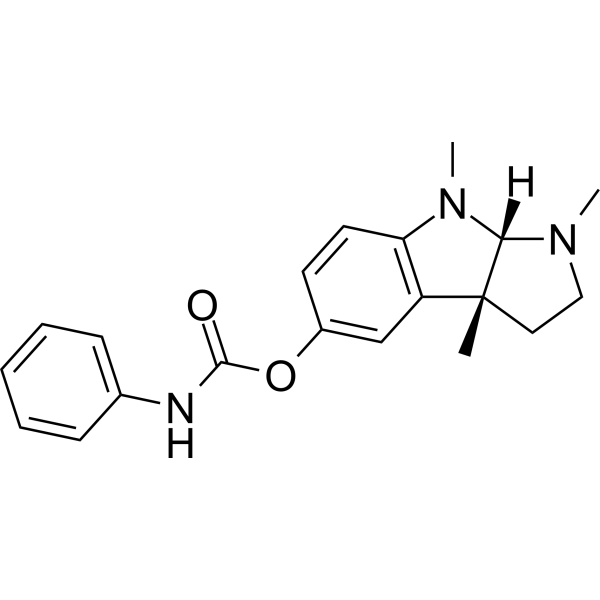
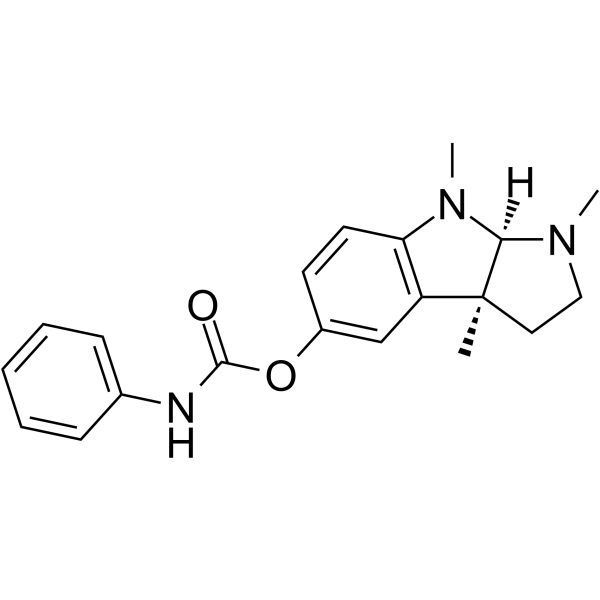
Phenserine ((-)-Eseroline phenylcarbamate) is a derivative of Physostigmine (HY-N6608) and is a potent, noncompetitive, long-acting and selective AChE inhibitor. Phenserine reduces β-amyloid precursor protein (APP) and β-amyloid peptide (Aβ) formation. Phenserine improves cognitive performance and attenuates the progression of Alzheimer's disease .
loading...
    loading...
Cat. No.: HY-137315
CAS No.: 1462868-88-7
Purity:  99.01%
Research Areas:  

Neurological Disease

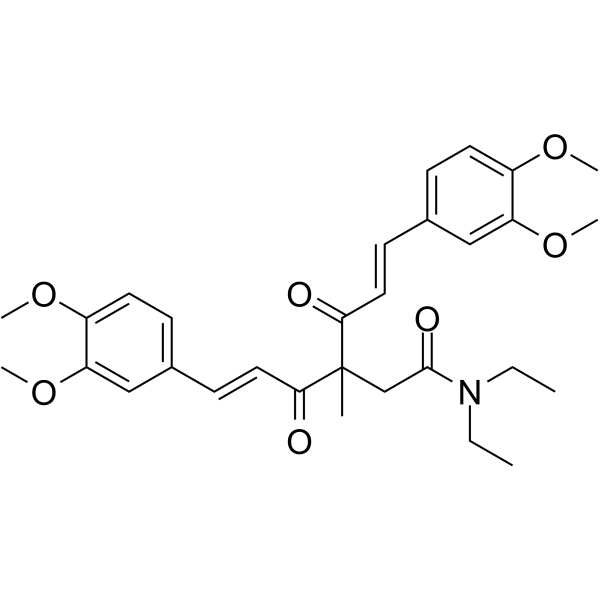
TML-6, an orally active curcumin derivative, inhibits the synthesis of the β-amyloid precursor protein and β-amyloid (Aβ). TML-6 can upregulate Apo E, suppress NF-κB and mTOR, and increase the activity of the anti-oxidative Nrf2 gene. TML-6 has the potential for Alzheimer’s disease (AD) research .
loading...
    loading...
Cat. No.: HY-P2765
CAS No.: 9075-65-4
Synonyms: GPDH, rabbit muscle; α-Glycerophosphate dehydrogenase, rabbit muscle; Glycerol phosphate dehydrogenase, rabbit muscle
Research Areas:  

Metabolic Disease

Glycerol‑3‑phosphate dehydrogenase, rabbit muscle (GPDH; α-Glycerophosphate dehydrogenase; Glycerol phosphate dehydrogenase) is an NADH-dependent oxidoreductase derived from rabbit muscle that participates in glycolysis, gluconeogenesis, and the glycerol‑3‑phosphate shuttle metabolic pathway. Glycerol‑3‑phosphate dehydrogenase, rabbit muscle uses NADH as a reducing equivalent donor, and its substrate binding relies on the phosphate-binding site in the active center; it catalyzes the reversible reduction of dihydroxyacetone phosphate to L‑α‑glycerol‑3‑phosphate. The catalytic activity of the enzymatic reaction of Glycerol‑3‑phosphate dehydrogenase, rabbit muscle is regulated by pH and divalent metal ions. Glycerol‑3‑phosphate dehydrogenase, rabbit muscle can be used in metabolism-related studies .
loading...
    loading...
Cat. No.: HY-P1894
CAS No.: 315229-44-8
Target:  

Amyloid-β

Research Areas:  

Neurological Disease

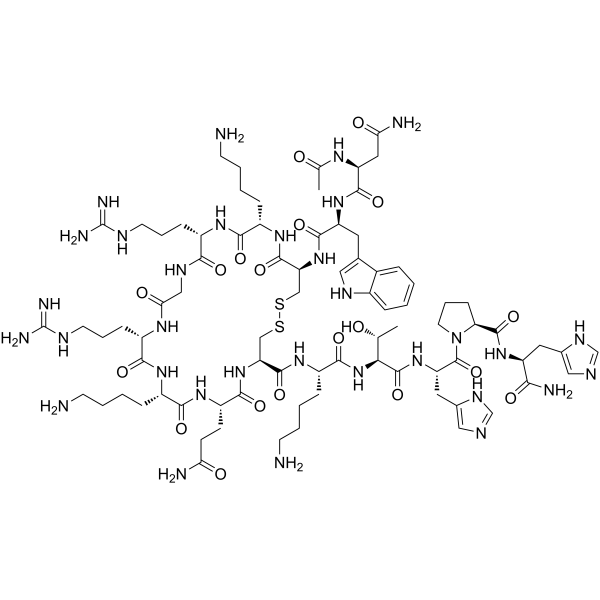
β-Amyloid Protein Precursor 770 (135-155) is a peptide of amyloid precursor protein isoform (APP 770). APP 770 produces Aβ40/42 .
loading...
    loading...
Cat. No.: HY-171347
CAS No.: 1255700-88-9
Target:  

γ-secretase Amyloid-β

Research Areas:  

Neurological Disease

gamma-secretase modulator 6 (Example 50) is a gamma-secretase modulator. gamma-secretase modulator 6 inhibits Aβ42 secretion in HEK cell line stably expressing APP (Aβ amyloid precursor protein) (pIC50: 8.1). gamma-secretase modulator 6 can be used for research of Alzheimer's disease .
loading...
    loading...
Cat. No.: HY-P1894A
Target:  

Amyloid-β

Research Areas:  

Neurological Disease

β-Amyloid Protein Precursor 770 (135-155) TFA is a peptide of amyloid precursor protein isoform (APP 770). APP 770 produces Aβ40/42 .
loading...
    loading...
Cat. No.: HY-P5940
CAS No.: 289634-54-4
Target:  

Inhibitory Antibodies

Research Areas:  

Neurological Disease

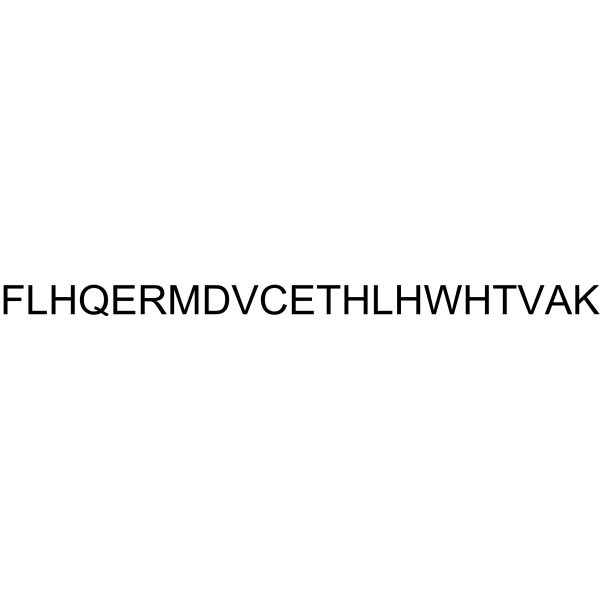
β-Amyloid precursor protein (96-110), cyclized (human) is an amyloid precursor protein. β-Amyloid precursor protein (96-110), cyclized (human) can be used in study Alzheimer’s disease .
loading...
    loading...
Cat. No.: HY-P2765A
CAS No.: 9075-65-4
Synonyms: GPDH, microorganism; α-Glycerophosphate dehydrogenase, microorganism; Glycerol phosphate dehydrogenase, microorganism
Research Areas:  

Metabolic Disease

Glycerol-3-phosphate dehydrogenase, microorganism (GPDH; α-Glycerophosphate dehydrogenase; Glycerol phosphate dehydrogenase) is an NADH-dependent oxidoreductase derived from microorganism that participates in glycolysis, gluconeogenesis, and the glycerol‑3‑phosphate shuttle metabolic pathway. Glycerol-3-phosphate dehydrogenase, microorganism uses NADH as a reducing equivalent donor, and its substrate binding relies on the phosphate-binding site in the active center; it catalyzes the reversible reduction of dihydroxyacetone phosphate to L‑α‑glycerol‑3‑phosphate. The catalytic activity of the enzymatic reaction of Glycerol-3-phosphate dehydrogenase, microorganism is regulated by pH and divalent metal ions. Glycerol-3-phosphate dehydrogenase, microorganism can be used in metabolism-related studies .
loading...
    loading...
Cat. No.: HY-137315S
CAS No.: 2673270-28-3
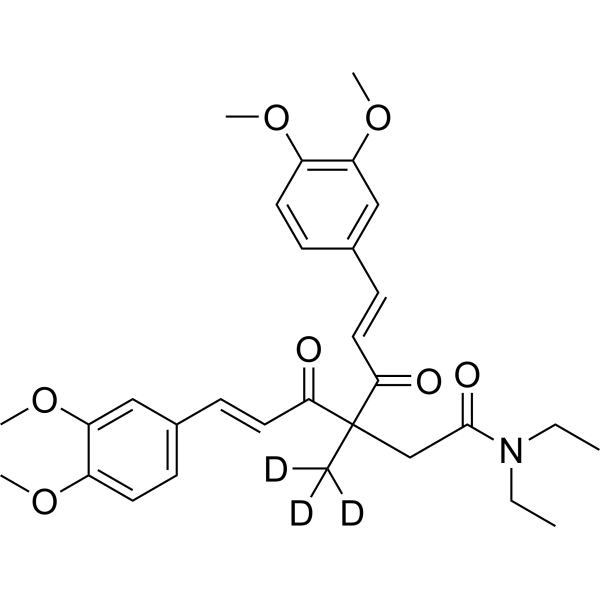
TML-6-d3 is the deuterium labeled TML-6. TML-6, an orally active curcumin derivative, inhibits the synthesis of the β-amyloid precursor protein and β-amyloid (Aβ). TML-6 can upregulate Apo E, suppress NF-κB and mTOR, and increase the activity of the anti-
loading...
    loading...
Cat. No.: HY-177646
CAS No.: 2572991-83-2
Synonyms: ALN-APP
Mivelsiran (ALN-APP) is an siRNA targeting the β-amyloid precursor protein (APP). Mivelsiran induces sequence-specific degradation of APP mRNA via RNA interference, thereby reducing the levels of APP protein and downstream amyloid cleavage products. Mivelsiran reduces β-amyloid protein levels in the brain, alleviates neuroinflammation, and attenuates microglial proliferation. Mivelsiran can be used for research on early-onset Alzheimer's disease .
loading...
    loading...
Cat. No.: HY-177646A
Synonyms: ALN-APP sodium
Mivelsiran (ALN-APP) sodium is an siRNA targeting the β-amyloid precursor protein (APP). Mivelsiran sodium induces sequence-specific degradation of APP mRNA via RNA interference, thereby reducing the levels of APP protein and downstream amyloid cleavage products. Mivelsiran sodium reduces β-amyloid protein levels in the brain, alleviates neuroinflammation, and attenuates microglial proliferation. Mivelsiran sodium can be used for research on early-onset Alzheimer's disease .
loading...
    loading...

