Search Result
Results for "
β-glucosidases
" in MedChemExpress (MCE) Product Catalog:
5
Biochemical Assay Reagents
| Cat. No. |
Product Name |
Target |
Research Areas |
Chemical Structure |
-
- HY-100944
-
-
-
- HY-123633
-
|
|
Glycosidase
|
Others
|
|
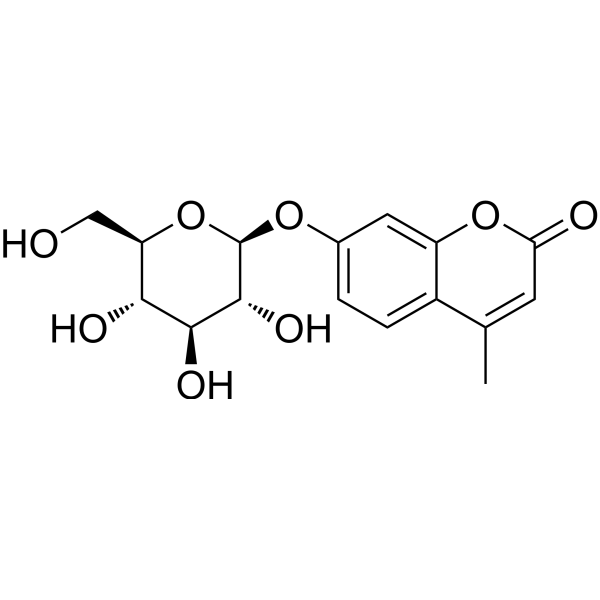
4-Methylumbelliferyl β-D-Glucopyranoside, a β-D-glucoside, is a fluorogenic substrate for β-glucosidase, utilizes to assay β-glucosidase activity . 4-Methylumbelliferyl β-D-Glucopyranoside releases the highly fluorescent 4-methylumbelliferyl (4-MU), which has an emission maximum at 445-454 nm. The excitation maximum for 4-MU is pH-dependent: 330, 370, and 385 nm at pH 4.6, 7.4, and 10.4, respectively .
|
-
-
- HY-P2775
-
|
|
Glycosidase
|
Others
|
|
β-Glucosidase, almond is the rate-limiting enzyme in cellulose degradation. β-Glucosidase is a major group among glycoside hydrolases. β-Glucosidase is involved in the degradation of cellulose in soils and has potential for monitoring soil quality .
|
-
-
- HY-N2022
-
|
|
Glycosidase
|
Inflammation/Immunology
Cancer
|
|
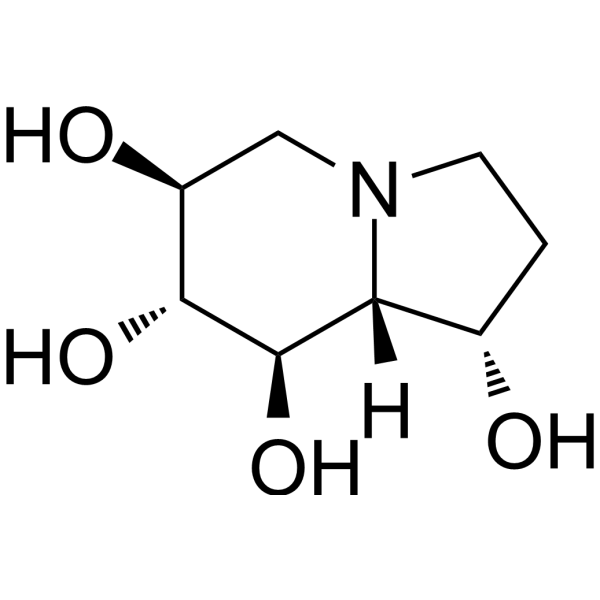
Castanospermine is a natural alkaloid that can be extracted from black beans or the Moreton Bay chestnut tree (Castanospermum australae). Castanospermine is an α/ β-glucosidase inhibitor. Castanospermine has anti-inflammatory, antiviral replication and anti-metastatic effects on prostate cancer. Castanospermine can be used as an immunosuppressant to prevent transplant rejection .
|
-
-
- HY-14829
-
|
D-Isofagomine; Isofagomine
|
Glycosidase
|
Neurological Disease
|
|
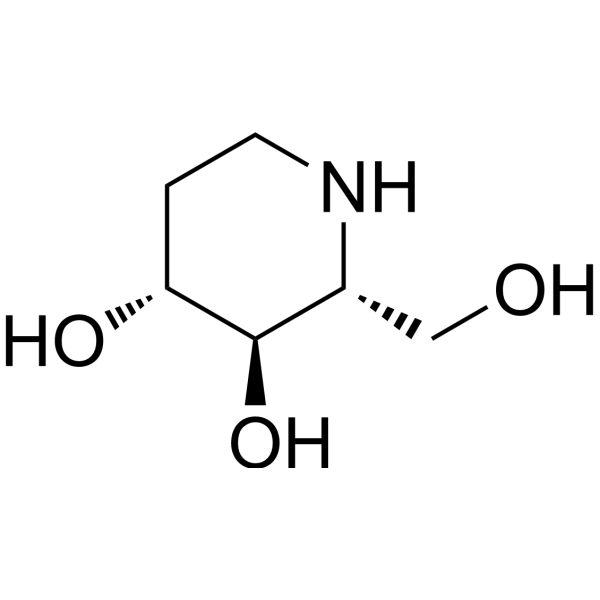
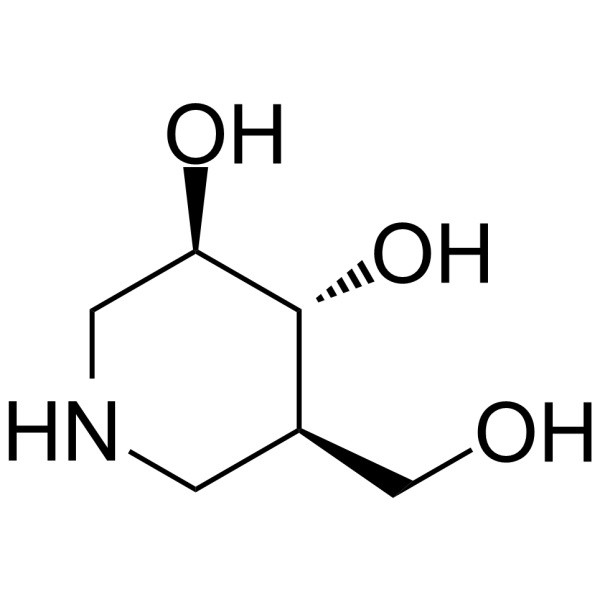
Afegostat is a pharmacological chaperone, which specifically and reversibly binds acid-β-glucosidase (GCase) in the endoplasmic reticulum (ER) with high affinity .
|
-
-
- HY-15927
-
|
|
Biochemical Assay Reagents
|
Metabolic Disease
|
|
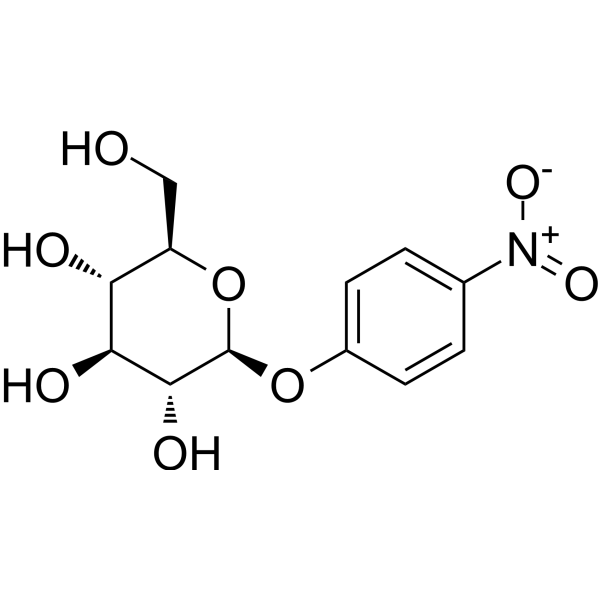
4-Nitrophenyl β-D-glucopyranoside is a chromogenic substrate for β-glucosidase. 4-Nitrophenyl β-D-glucopyranoside is converted to a colored product, p-nitrophenol that is easily detected spectrophotometrically at 405 nm when used in a β-glycosidase assay. 4-Nitrophenyl β-D-glucopyranoside is hydrolysed through intramolecular nucleophilic catalysis by the phosphate group in the 2-position. 4-Nitrophenyl β-D-glucopyranoside is promising for research of postmenopausal osteoporosis .
|
-
-
- HY-13005
-
|
D-Fagomine
|
Glycosidase
|
Metabolic Disease
|
|
Fagomine is a mild glycosidase inhibitor. The Ki of the iminosugar Fagomine is 4.8 μM, 39 μM, and 70 μM for Amyloglucosidase (A.niger), β-Glucosidase (bovine), and Isomaltase (yeast), respectively.
|
-
-
- HY-E70038
-
|
|
Endogenous Metabolite
|
Metabolic Disease
|
Endoglycoceramidase II (EGCase II) is an endo-β-glucosidase that releases intact glycans from ceramides in glycosphingolipids. Endoglycoceramidase II catalyzes the hydrolysis of β-glycosidic linkages between oligosaccharides and ceramides in various glycosphingolipids .
|
-
-
- HY-137827
-
|
p-Nitrophenyl β-D-Cellobioside
|
Glycosidase
|
Others
|
|
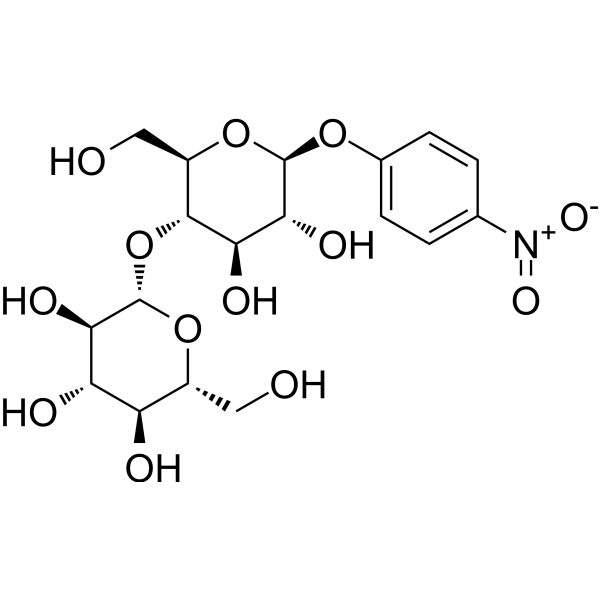
4-Nitrophenyl β-D-Cellobioside (p-Nitrophenyl β-D-cellobioside) is a cellotriose analog. 4-Nitrophenyl β-D-Cellobioside is hydrolyzed by β-glucosidases such as TxGH116 and ThCel7B. 4-Nitrophenyl β-D-Cellobioside can also be hydrolyzed by exoglucanases and endoglucanases to produce p-nitrophenol (PNP). 4-Nitrophenyl β-D-Cellobioside can be used to detect cellulase activity .
|
-
-
- HY-14829E
-
|
D-Isofagomine D-Tartrate; Isofagomine D-Tartrate
|
Glycosidase
|
Neurological Disease
|
|
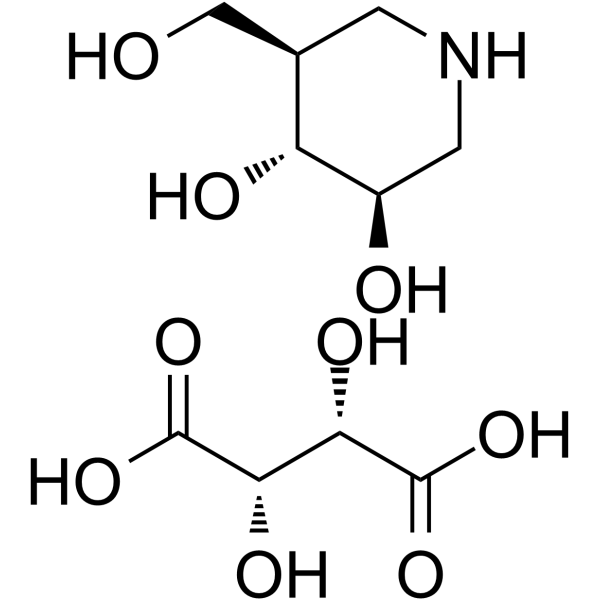
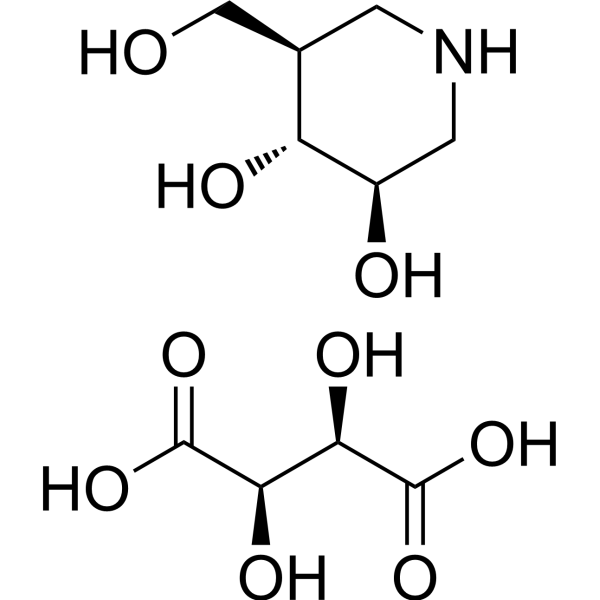
Afegostat D-Tartrate is a pharmacological chaperone, which specifically and reversibly binds acid-β-glucosidase (GCase) in the endoplasmic reticulum (ER) with high affinity .
|
-
-
- HY-156838
-
|
|
Glycosidase
|
Others
|
|
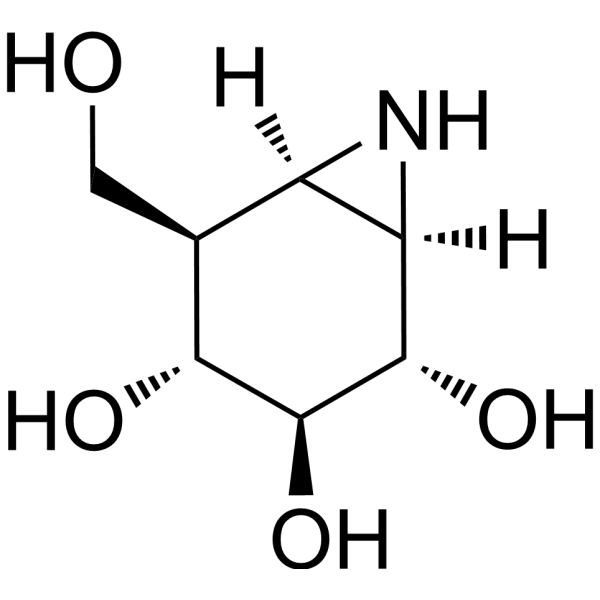
Cyclophellitol aziridine is a cyclophenol analogue and a potent β-glucosidase inhibitor .
|
-
-
- HY-W039859
-
-
-
- HY-136868
-
|
3-Phenoxazone 7-(β-D-glucopyranoside),98%
|
Biochemical Assay Reagents
|
Others
|
|
Resorufin-β-D-glucopyranoside, 98% (3-Phenoxazone 7-(β-D-glucopyranoside), 98%) can be used to detect and quantify β-glucosidase activity in various biological samples.
|
-
-
- HY-148672
-
|
|
Glycosidase
|
Others
|
|
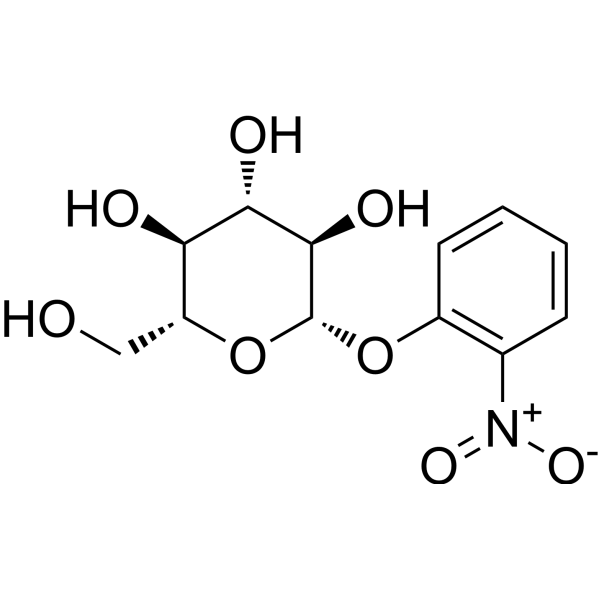
2-Nitrophenyl a-D-glucopyranoside is a substrate of β-glucosidase .
|
-
-
- HY-14829F
-
|
5-epi-Isofagomine
|
Glycosidase
|
Metabolic Disease
|
|
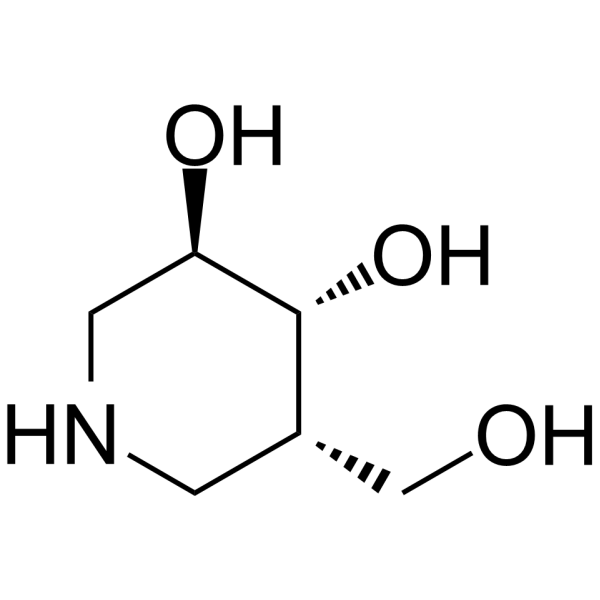
L-Afegostat (5-epi-Isofagomine) is a glycosidase inhibitor. L-Afegostat is an iminosugar that can be used for the synthesis of carbohydrates. L-Afegostat shows enzyme inhibition to β-Glucosidase with an Ki of 30 μM .
|
-
-
- HY-N2022R
-
|
|
Reference Standards
Glycosidase
|
Inflammation/Immunology
Cancer
|
|
Castanospermine is a natural alkaloid that can be extracted from black beans or the Moreton Bay chestnut tree (Castanospermum australae). Castanospermine is an α/ β-glucosidase inhibitor. Castanospermine has anti-inflammatory, antiviral replication and anti-metastatic effects on prostate cancer. Castanospermine can be used as an immunosuppressant to prevent transplant rejection .
|
-
-
- HY-N14904
-
|
|
Glycosidase
|
Infection
|
|
Panosialin D can inhibit α,β-glucosidase and mannose glycosidase. Panosialin D does not inhibit the influenza virus, but it has weak anti-microbial effect .
|
-
-
- HY-W013254
-
|
|
Glycosidase
|
Others
|
|
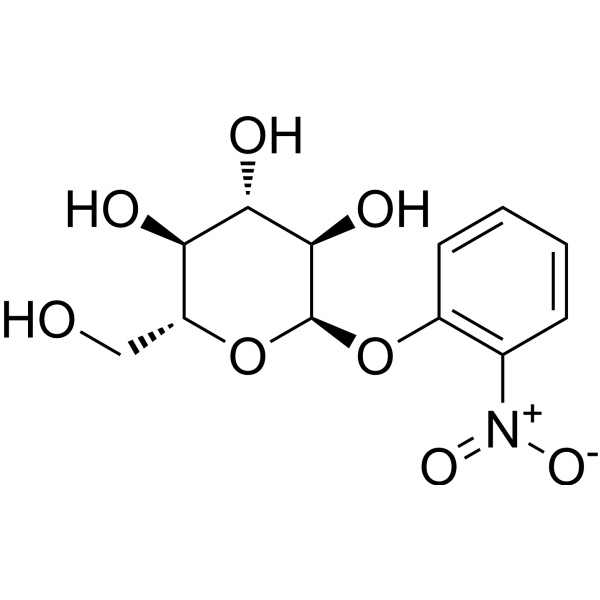
2-Nitrophenyl β-D-glucopyranoside is a substrate for β-glucosidase. 2-Nitrophenyl β-D-glucopyranoside can be used to test β-glucosidase activity .
|
-
-
- HY-14829B
-
|
AT 2101; D-Isofagomine tartrate; Isofagomine tartrate
|
Glycosidase
|
Neurological Disease
|
|
Afegostat tartrate is a pharmacological chaperone, which specifically and reversibly binds acid-β-glucosidase (GCase) in the endoplasmic reticulum (ER) with high affinity .
|
-
-
- HY-W288349
-
-
-
- HY-14829H
-
|
|
Glycosidase
|
Neurological Disease
|
|
Afegostat TFA is a pharmacological chaperone, which specifically and reversibly binds acid-β-glucosidase (GCase) in the endoplasmic reticulum (ER) with high affinity .
|
-
-
- HY-N14907
-
|
|
Glycosidase
|
Infection
|
|
Panosialin wA can inhibit α,β-glucosidase and mannose glycosidase. Panosialin wA does not inhibit the influenza virus, but it has weak anti-microbial effect .
|
-
-
- HY-W357142
-
-
-
- HY-N2383
-
|
(1R,2S,3S,4S,6R)-4-Amino-6-(hydroxymethyl)cyclohexane-1,2,3-triol
|
Glycosidase
|
Metabolic Disease
|
|
Validamine competitively inhibits β-glucosidase in a pH-dependent and dose-dependent manner, with an IC50 value of 2.92mM, and the maximum inhibitory ability is at the optimum pH value of this enzyme .
|
-
-
- HY-W721582
-
|
|
Glycosidase
|
Others
|
|
β,β-Trehalose is a analog of trehalose. β,β-Trehalose can support the growth of shoot tips of Cuscuta. β,β-Trehalose can be cleaved by nonspecific β-glucosidase .
|
-
-
- HY-E70281
-
|
rEGCase II
|
Biochemical Assay Reagents
|
Metabolic Disease
|
|
Recombinant endoglycoceramidase II (rEGCase II) is an endo-β-glucosidase releasing the complete glycan from ceramide in glycosphingolipids. Recombinant endoglycoceramidase II catalyzes the hydrolysis of the β-glycosidic linkage between oligosaccharides and ceramides in various glycosphingolipids .
|
-
-
- HY-N10519
-
|
|
Others
|
Others
|
|
Cellooctaose is an oligosaccharide, consisting of eight glucose residues. Cellooctaose is a low-cost polysaccharides in fermentation to hold on Lactococcus lactis recombinant strain growth. Cellooctaose is the substrate of beta-glucosidase (E.C. 3.2.1.21) .
|
-
-
- HY-135670
-
|
|
Glycosidase
|
Metabolic Disease
|
|
Glycosidase-IN-1 (Compound 9) is a glycosidase inhibitor synthesized from D-mannose. Glycosidase-IN-1 be used to synthesize some immunosuppressive agents and β-glucosidase inhibitors. Glycosidase-IN-1 has hypoglycemic activity .
|
-
-
- HY-121586
-
|
Bay g 6575
|
Lipoxygenase
|
Cardiovascular Disease
|
|
Nafazatrom (Bay g 6575) is an orally active cardioprotective agent that protects against ischemic damage. Nafazatrom dose-dependently inhibits neutrophil aggregation, superoxide anion generation, arachidonic acid metabolism, and to a lesser extent the release of β-glucosidase, platelet aggregation or arachidonic acid in vitro. Acid metabolism has no significant effect. In a dog ischemia-reperfusion model, Nafazatrom (10 mg/kg; po) reduced infarct size and the occurrence of arrhythmias and rescued ischemic myocardial function without affecting any hemodynamic changes. The basis of Nafazatrom's cardioprotection may be inhibition of neutrophil function and cellular infiltration in vitro .
|
-
-
- HY-P2775B
-
|
|
Glycosidase
|
Metabolic Disease
|
|
β-Glucosidase, Rhizobium etli (EC 3.2.1.21), is a glucosidase that acts on the β1→4 glycosidic bond connecting two glucose molecules or glucose-substituted molecules (e.g., disaccharide cellobiose). β-Glucosidase is an exonuclease specific for a variety of β-D-glycosidic substrates. β-Glucosidase catalyzes the hydrolysis of the terminal non-reducing residues of β-D-glucosides, releasing glucose.
|
-
-
- HY-P2775C
-
|
|
Glycosidase
|
Metabolic Disease
|
|
β-Glucosidase, Clostridium thermocellum (EC 3.2.1.21), is a glucosidase that acts on the β1→4 glycosidic bond connecting two glucose molecules or glucose-substituted molecules (e.g., disaccharide cellobiose). β-Glucosidase is an exonuclease specific for a variety of β-D-glycosidic substrates. β-Glucosidase catalyzes the hydrolysis of the terminal non-reducing residues of β-D-glucosides, releasing glucose.
|
-
-
- HY-P2775D
-
|
|
Glycosidase
|
Metabolic Disease
|
|
β-Glucosidase, Bacteroides fragilis (EC 3.2.1.21), is a glucosidase that acts on the β1→4 glycosidic bond connecting two glucose molecules or glucose-substituted molecules (e.g., disaccharide cellobiose). β-Glucosidase is an exonuclease specific for a variety of β-D-glycosidic substrates. β-Glucosidase catalyzes the hydrolysis of the terminal non-reducing residues of β-D-glucosides, releasing glucose.
|
-
-
- HY-N3169
-
|
(+)-Nyasicol
|
Others
|
Others
|
|
Nyasicol ((+)-Nyasicol) is an enzymatic (β-glucosidase) hydrolysis product of Compound 3 .
|
-
-
- HY-P2775A
-
|
|
Glycosidase
|
Metabolic Disease
|
|
β-Glucosidase(thermostable) is a glucosidase enzyme located in on the brush border of the small intestine that acts upon β1->4 bonds linking two glucose or glucose-substituted molecules (i.e., the disaccharide cellobiose). β-Glucosidase(thermostable) is an exocellulase with specificity for a variety of beta-D-glycoside substrates. It catalyzes the hydrolysis of terminal non-reducing residues in beta-D-glucosides with release of glucose.
|
-
-
- HY-E71305H
-
|
|
Glycosidase
|
Others
|
|
β-Glucosidase 1A, Saccharophagus degradans (EC 3.2.1.21) is a glucosidase enzyme that acts upon β1->4 bonds linking two glucose or glucose-substituted molecules (i.e., the disaccharide cellobiose) . β-Glucosidase is one of the cellulases, enzymes involved in the decomposition of cellulose and related polysaccharides; more specifically, an exocellulase with specificity for a variety of beta-D-glycoside substrates. It catalyzes the hydrolysis of terminal non-reducing residues in beta-D-glucosides with release of glucose.
|
-
-
- HY-E71305K
-
|
|
Glycosidase
|
Others
|
|
β-Glucosidase 1A, Thermus thermophilus (EC 3.2.1.21) is a glucosidase enzyme that acts upon β1->4 bonds linking two glucose or glucose-substituted molecules (i.e., the disaccharide cellobiose) . β-Glucosidase is one of the cellulases, enzymes involved in the decomposition of cellulose and related polysaccharides; more specifically, an exocellulase with specificity for a variety of beta-D-glycoside substrates. It catalyzes the hydrolysis of terminal non-reducing residues in beta-D-glucosides with release of glucose.
|
-
-
- HY-E71305A
-
|
|
Glycosidase
|
Others
|
|
β-Glucosidase 1A, Caldicellulosiruptor saccharolyticus (EC 3.2.1.21) is a glucosidase enzyme that acts upon β1->4 bonds linking two glucose or glucose-substituted molecules (i.e., the disaccharide cellobiose) . β-Glucosidase is one of the cellulases, enzymes involved in the decomposition of cellulose and related polysaccharides; more specifically, an exocellulase with specificity for a variety of beta-D-glycoside substrates. It catalyzes the hydrolysis of terminal non-reducing residues in beta-D-glucosides with release of glucose.
|
-
-
- HY-E71305I
-
|
|
Glycosidase
|
Others
|
|
β-Glucosidase 1A, Thermobifida fusca (EC 3.2.1.21) is a glucosidase enzyme that acts upon β1->4 bonds linking two glucose or glucose-substituted molecules (i.e., the disaccharide cellobiose) . β-Glucosidase is one of the cellulases, enzymes involved in the decomposition of cellulose and related polysaccharides; more specifically, an exocellulase with specificity for a variety of beta-D-glycoside substrates. It catalyzes the hydrolysis of terminal non-reducing residues in beta-D-glucosides with release of glucose.
|
-
-
- HY-E71305B
-
|
|
Glycosidase
|
Others
|
|
β-Glucosidase 1A, Clostridium cellulovorans (EC 3.2.1.21) is a glucosidase enzyme that acts upon β1->4 bonds linking two glucose or glucose-substituted molecules (i.e., the disaccharide cellobiose) . β-Glucosidase is one of the cellulases, enzymes involved in the decomposition of cellulose and related polysaccharides; more specifically, an exocellulase with specificity for a variety of beta-D-glycoside substrates. It catalyzes the hydrolysis of terminal non-reducing residues in beta-D-glucosides with release of glucose.
|
-
-
- HY-E71305D
-
|
|
Glycosidase
|
Others
|
|
β-Glucosidase 1A, Bacillus halodurans (EC 3.2.1.21) is a glucosidase enzyme that acts upon β1->4 bonds linking two glucose or glucose-substituted molecules (i.e., the disaccharide cellobiose) . β-Glucosidase is one of the cellulases, enzymes involved in the decomposition of cellulose and related polysaccharides; more specifically, an exocellulase with specificity for a variety of beta-D-glycoside substrates. It catalyzes the hydrolysis of terminal non-reducing residues in beta-D-glucosides with release of glucose.
|
-
-
- HY-E71305
-
|
|
Glycosidase
|
Others
|
|
β-Glucosidase 1A, Bacillus halodurans (EC 3.2.1.21) is a glucosidase enzyme that acts upon β1->4 bonds linking two glucose or glucose-substituted molecules (i.e., the disaccharide cellobiose) . β-Glucosidase is one of the cellulases, enzymes involved in the decomposition of cellulose and related polysaccharides; more specifically, an exocellulase with specificity for a variety of beta-D-glycoside substrates. It catalyzes the hydrolysis of terminal non-reducing residues in beta-D-glucosides with release of glucose.
|
-
-
- HY-E71305J
-
|
|
Glycosidase
|
Others
|
|
β-Glucosidase 1A, Thermotoga petrophila (EC 3.2.1.21) is a glucosidase enzyme that acts upon β1->4 bonds linking two glucose or glucose-substituted molecules (i.e., the disaccharide cellobiose) . β-Glucosidase is one of the cellulases, enzymes involved in the decomposition of cellulose and related polysaccharides; more specifically, an exocellulase with specificity for a variety of beta-D-glycoside substrates. It catalyzes the hydrolysis of terminal non-reducing residues in beta-D-glucosides with release of glucose.
|
-
-
- HY-E71305E
-
|
|
Glycosidase
|
Others
|
|
β-Glucosidase 1A, Pectobacterium carotovorum (EC 3.2.1.21) is a glucosidase enzyme that acts upon β1->4 bonds linking two glucose or glucose-substituted molecules (i.e., the disaccharide cellobiose) . β-Glucosidase is one of the cellulases, enzymes involved in the decomposition of cellulose and related polysaccharides; more specifically, an exocellulase with specificity for a variety of beta-D-glycoside substrates. It catalyzes the hydrolysis of terminal non-reducing residues in beta-D-glucosides with release of glucose.
|
-
-
- HY-E71305C
-
|
|
Glycosidase
|
Others
|
|
β-Glucosidase 1A, Paenibacillus polymyxa (EC 3.2.1.21) is a glucosidase enzyme that acts upon β1->4 bonds linking two glucose or glucose-substituted molecules (i.e., the disaccharide cellobiose) . β-Glucosidase is one of the cellulases, enzymes involved in the decomposition of cellulose and related polysaccharides; more specifically, an exocellulase with specificity for a variety of beta-D-glycoside substrates. It catalyzes the hydrolysis of terminal non-reducing residues in beta-D-glucosides with release of glucose.
|
-
-
- HY-E71306
-
|
|
Glycosidase
|
Others
|
|
β-Glucosidase 3A, Bacteroides ovatus (EC 3.2.1.21) is a glucosidase enzyme that acts upon β1->4 bonds linking two glucose or glucose-substituted molecules (i.e., the disaccharide cellobiose) . β-Glucosidase is one of the cellulases, enzymes involved in the decomposition of cellulose and related polysaccharides; more specifically, an exocellulase with specificity for a variety of beta-D-glycoside substrates. It catalyzes the hydrolysis of terminal non-reducing residues in beta-D-glucosides with release of glucose.
|
-
-
- HY-W292085
-
|
|
Biochemical Assay Reagents
|
Others
|
|
6-Chloro-1H-indol-3-yl β-D-glucopyranoside can be used to detect chromogenic medium for studying yeast with β-glucosidase activity .
|
-
-
- HY-N18350
-
|
|
Glycosidase
Drug Derivative
|
Others
|
|
26-Degluco-torvoside H (Compound 4) is a Furostanol glycoside derivative. 26-Degluco-torvoside H forms via hydrolysis of Torvoside H by β-glucosidase from Solanum torvum leaves .
|
-
-
- HY-100944R
-
|
|
Reference Standards
Glycosidase
|
Neurological Disease
|
|
Conduritol B epoxide (Standard) is the analytical standard of Conduritol B epoxide (HY-100944). This product is intended for research and analytical applications. Conduritol B epoxide is an irreversible covalently bound acid β-glucosidase (GCase) inhibitor.
|
-
-
- HY-N18019
-
|
|
Drug Metabolite
|
Metabolic Disease
|
|
Tetrahydro bellidifolin (Compound 1a) is the aglycone obtained from the hydrolysis of Tetrahydroswertianolin (HY-N18018) by β-glucosidase. Tetrahydro bellidifolin exhibits significant hepatoprotective activity and reduce serum ALT levels. Tetrahydro bellidifolin can be used for the research of liver injury .
|
-
-
- HY-E71288
-
|
|
Biochemical Assay Reagents
|
Others
|
|
β-D-Glucopyranosyl abscisate β-glucosidase (EC 3.2.1.175) hydrolzes the biologically inactive β-D-Glucopyranosyl ester of abscisic acid to produce active abscisate. Abscisate is a phytohormone critical for plant growth, development and adaption to various stress conditions. The enzyme does not hydrolyse β-D-Glucopyranosyl zeatin.
|
-
- HY-125426
-
|
|
Glycosidase
Dengue Virus
|
Infection
|
|
ToP-DNJ is a selective endoplasmic reticulum α-glucosidase II (GluII) inhibitor with an IC50 value of 9.0 μM. ToP-DNJ selectively inhibits the two catalytic reactions of GluII, and exhibits stronger activity in the first step of converting di-glycosylated glycans to mono-glycosylated glycans. ToP-DNJ exhibits anti-DENV activity. ToP-DNJ can be used in studies related to dengue virus infection .
|
-
| Cat. No. |
Product Name |
Type |
-
- HY-W357142
-
|
|
Fluorescent Dyes
|
|
3-Acetylumbelliferyl β-D-Glucopyranoside is a fluorogenic substrate for β-glucosidase and can be used as a positive control substrates for β-D-glucosidase .
|
| Cat. No. |
Product Name |
Type |
-
- HY-15927
-
|
|
Biochemical Assay Reagents
|
|
4-Nitrophenyl β-D-glucopyranoside is a chromogenic substrate for β-glucosidase. 4-Nitrophenyl β-D-glucopyranoside is converted to a colored product, p-nitrophenol that is easily detected spectrophotometrically at 405 nm when used in a β-glycosidase assay. 4-Nitrophenyl β-D-glucopyranoside is hydrolysed through intramolecular nucleophilic catalysis by the phosphate group in the 2-position. 4-Nitrophenyl β-D-glucopyranoside is promising for research of postmenopausal osteoporosis .
|
-
- HY-W039859
-
|
|
Biochemical Assay Reagents
|
|
2-Chloro-4-nitrophenyl β-D-glucopyranoside, 98% is a substrate for β-glucosidase, used as a bacterial growth medium.
|
-
- HY-136868
-
|
3-Phenoxazone 7-(β-D-glucopyranoside),98%
|
Biochemical Assay Reagents
|
|
Resorufin-β-D-glucopyranoside, 98% (3-Phenoxazone 7-(β-D-glucopyranoside), 98%) can be used to detect and quantify β-glucosidase activity in various biological samples.
|
-
- HY-W288349
-
|
|
Biochemical Assay Reagents
|
|
8-Quinolinyl β-D-glucopyranoside is an 8-hydroxyquinoline glucoconjugate that can be cleaved in vitro by β-glucosidase .
|
-
- HY-W292085
-
|
|
Biochemical Assay Reagents
|
|
6-Chloro-1H-indol-3-yl β-D-glucopyranoside can be used to detect chromogenic medium for studying yeast with β-glucosidase activity .
|
| Cat. No. |
Product Name |
Category |
Target |
Chemical Structure |
-
- HY-N2022
-
-
-
- HY-13005
-
-
-
- HY-N2022R
-
-
-
- HY-N14904
-
-
-
- HY-N14907
-
-
-
- HY-N2383
-
|
(1R,2S,3S,4S,6R)-4-Amino-6-(hydroxymethyl)cyclohexane-1,2,3-triol
|
Microorganisms
Ketones, Aldehydes, Acids
Source Classification
|
Glycosidase
|
|
Validamine competitively inhibits β-glucosidase in a pH-dependent and dose-dependent manner, with an IC50 value of 2.92mM, and the maximum inhibitory ability is at the optimum pH value of this enzyme .
|
-
-
- HY-W721582
-
-
-
- HY-N10519
-
-
-
- HY-N3169
-
-
-
- HY-N18350
-
-
-
- HY-N18019
-
-
Your information is safe with us. * Required Fields.
Inquiry Information
- Product Name:
- Cat. No.:
- Quantity:
- MCE Japan Authorized Agent: